Archives

outh African President Says ‘Boycotts Never Really Work’ Despite BDS Support


outh African President Says ‘Boycotts Never Really Work’ Despite BDS Support

Ailin Vilches Arguello


South Africa’s President Cyril Ramaphosa attends the 20th East Asia Summit (EAS), as part of the 47th ASEAN Summit in Kuala Lumpur, Malaysia, Oct. 27, 2025. Photo: REUTERS/Hasnoor Hussain

South African President Cyril Ramaphosa insisted that “boycott politics doesn’t work” following the Trump administration’s announced absence from a summit in his country later this month — despite his ruling party’s ongoing support for the boycott, divestment, and sanctions (BDS) movement against Israel.

On Wednesday, Ramaphosa urged US President Donald Trump to reconsider his decision to boycott the G20 Leaders’ Summit, scheduled for Nov. 22-23 in Johannesburg, northeastern South Africa.

Ramaphosa criticized Washington for “giving up the very important role that they should be playing as the biggest economy in the world” in its decision to skip the summit — the first to be held in Africa.

“It is unfortunate that the United States has decided not to attend the G20. All I can say in my experience in politics is that boycotts never really work. They have a very contradictory effect,” the South African leader told reporters outside parliament in Cape Town.

Trump, who has previously accused the South African government of human rights abuses against white minorities — including land seizures and killings — called the decision to host the G20 summit in the country a “total disgrace.”

“No US government official will attend [the summit] as long as these human rights abuses continue,” he wrote in a post on Truth Social. 

However, the South African government has strongly rejected any claims of genocide, saying such accusations are “widely discredited and unsupported by reliable evidence.”

Ramaphosa reaffirmed that the summit will proceed as scheduled, regardless of Washington’s absence.

“The G20 will go on. All other heads of state will be here, and in the end, we will take fundamental decisions. And their absence is their loss,” he said.

“The US needs to think again whether boycott politics actually works, because in my experience, it doesn’t work. It’s better to be inside the tent rather than being outside the tent,” he continued. 

Despite such claims, Ramaphosa’s ruling African National Congress (ANC) party has officially endorsed the BDS campaign against Israel for years.

The BDS movement seeks to isolate the Jewish state internationally as a step toward its eventual elimination. Leaders of the campaign have repeatedly stated their goal is to destroy the world’s only Jewish state.

In 2012, the ANC announced its full backing of the BDS movement, urging “all South Africans to support the programs and campaigns of the Palestinian civil society which seek to put pressure on Israel to engage with the Palestinian people to reach a just solution.”

Following Ramaphosa’s comments this week, it remains unclear why he continues to back anti-Israel boycotts if he believes they don’t work.

Since the start of the war in Gaza, the South African government has been one of Israel’s fiercest critics, actively confronting the Jewish state on the international stage.

Beyond its open hostility toward Israel, South Africa has actively supported Hamas, hosting officials from the Palestinian terrorist group and expressing solidarity with their “cause.”

In one instance, Ramaphosa led a crowd at an election rally in a chant of “From the river to the sea, Palestine shall be free” — a popular slogan among anti-Israel activists that has been widely interpreted as a genocidal call for the destruction of the Jewish state, which is located between the Jordan River and the Mediterranean Sea.

Since December 2023, South Africa has also been pursuing its case before the International Court of Justice accusing Israel of committing “state-led genocide” in its defensive war against Hamas in Gaza.

Israeli leaders have condemned the case as an “obscene exploitation” of the Genocide Convention, noting that the Jewish state is targeting terrorists who use civilians as human shields in its military campaign.


Zawartość publikowanych artykułów i materiałów nie reprezentuje poglądów ani opinii Reunion’68,
ani też webmastera Blogu Reunion’68, chyba ze jest to wyraźnie zaznaczone.
Twoje uwagi, linki, własne artykuły lub wiadomości prześlij na adres:
webmaster@reunion68.com


Can the ADL go back to defending the Jews?


Can the ADL go back to defending the Jews?

Jonathan S. Tobin


Under fire from the left for speaking up against Mamdani and resented by the right for a decade of partisanship and woke betrayal, the organization stands at a crossroads.
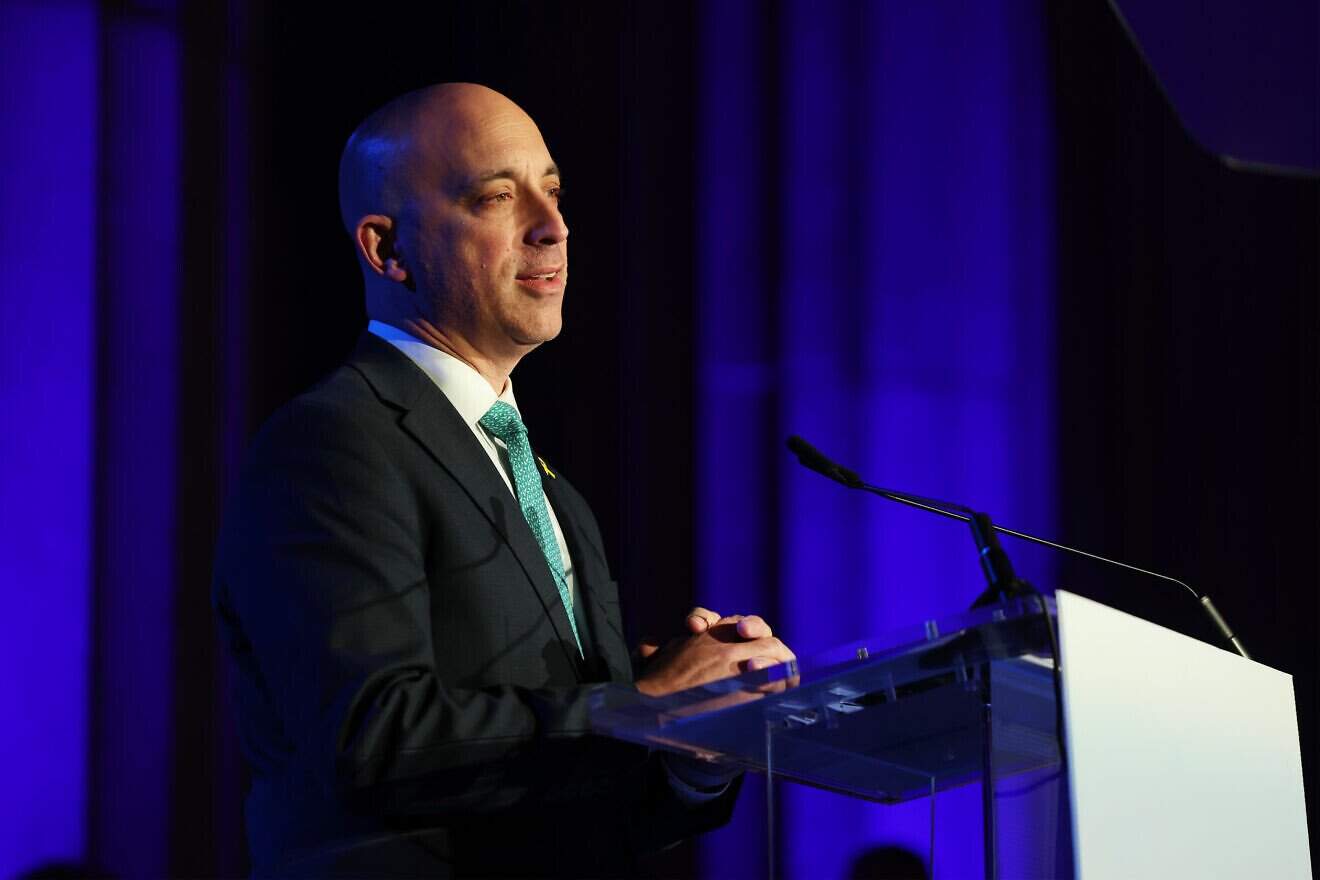
WASHINGTON, DC – NOVEMBER 10: Jonathan Greenblatt speaks onstage at the 2025 Washington DC Concert Against Hate at Andrew W. Mellon Auditorium on November 10, 2025 in Washington, DC. (Photo by Tasos Katopodis/Getty Images for ADL)

The Anti-Defamation League is being accused by The New York TimesMSNBC, left-wing Jewish organizations and the antisemitic Council of American-Islamic Relations (CAIR) of Islamophobia and unfairness to New York City Mayor-elect Zohran Mamdani. But for those who are hoping that the Jewish defense group will return to its mission of defending the Jewish people and drop its decade-long detour into woke partisanship, that’s a hopeful sign.

After years of showing every indication that it was not merely useless in the battle against antisemitism but increasingly aligned with those enabling a dangerous growth of left-wing Jew-hatred, the ADL is starting to try to do its job again. Like many liberal Jews, the organization’s leaders were not merely shocked but caught completely off guard by the reaction to the Hamas-led Palestinian-Arab attack on Israel on Oct. 7, 2023. The surge of antisemitism coming from the political left that manifested itself on the streets of American cities and on college campuses was too obvious and devastating for the ADL to ignore.

A Mamdani monitor

The election of a mayor of the city with the world’s largest Jewish population who has a history of antisemitic language and activity has placed the ADL at a crossroads. If it is to continue as a group tasked with the job of defending Jews against hate, it must stand up against Mamdani. In response to the very real possibility of his using City Hall to engage in BDS campaigns or otherwise follow the same pattern of hostility to Jewish concerns he has demonstrated throughout his life, the ADL set up a “Mamdani Monitor” webpage and tipline as a resource for the embattled Jews of New York.

That has put it in the crosshairs of the political left. The Islamists of CAIR, along with their left-wing Jewish allies—who represent the minority of New York Jews who voted for Mamdani, whether because or in spite of his anti-Israel stances—consider this to be discriminatory, if not Islamophobic.

This not only demonstrates that almost all of what is now termed “Islamophobia” is merely criticism of Muslim antisemitism. The above groups also claim the ADL isn’t being as tough on the administration of President Donald Trump as it is on the mayor-elect.

That’s something of a joke, because the ADL spent most of the last 10 years not merely bashing Trump and conservatives, but actively cooperating in efforts to oppose them.

The question is: Has the ADL been sufficiently mugged by reality to persist not merely in efforts to hold Mamdani accountable, but also to acknowledge the way Jew-hatred has become normative on the political left and recognize that the Democratic Party has been increasingly dominated by its intersectional progressive base? That will be no easy feat for a group that has done its best to alienate conservatives.

Conservative backlash

Though Jew-hatred is also a serious problem on the right, most conservatives remain overwhelmingly philosemitic and allies of the Jewish community and Israel. This is not the case on the left.

That was made obvious after the assassination of right-wing activist Charlie Kirk. During the days that followed his murder, it was revealed that the ADL had maintained a webpage labeling Turning Point USA, the organization founded by the late Christian Zionist, as an “extremist hate group.” At the same time, another webpage in the ADL database said that the left-wing Antifa domestic terror group “wasn’t normally violent.”

Both pages were soon deleted by the ADL, but as part of the backlash against its misguided partisanship, the FBI terminated its relationship with the group. Given the way the organization had aligned itself against Trump—falsely accusing him of antisemitism, while cooperating with the efforts of the Biden administration and Silicon Valley oligarchs to silence conservative speech on the Internet and de-monetize their opponents—that was both predictable and understandable.

This raises the question as to whether it will be possible for the group to salvage its reputation and do the hard work of fighting Jew-hatred wherever it is to be found. As one of the wealthiest Jewish organizations—it passed the $100 million mark in annual fundraising a few years ago—with active offices around the country, it has the resources to do the job for which it was founded. That was 1915, in the wake of the lynching of Leo Frank—a Jew falsely convicted of murder—by an antisemitic Georgia mob. Yet, the Mamdani Monitor notwithstanding, it’s far from clear that the ADL’s current leadership has the will or courage to do so.

A turn to the left

The ADL is that rarity among the many national Jewish organizations founded in the late 19th and early 20th centuries that hasn’t long since become obsolete. To the contrary, with antisemitism surging, it still has a vital mission that the Jewish community desperately needs for it—or some replacement—to perform.

The problem is that in recent years, it seemed to be abandoning its original mission in favor of becoming just another liberal NGO aimed at promoting left-wing causes and the political agenda of its Democratic Party allies. This was apparent from the moment its longtime national director, Abe Foxman, retired in 2015 and was replaced by former Clinton and Obama administration staffer Jonathan Greenblatt.

Foxman was a conventional political liberal on most issues and distrustful of conservatives. But there was never any doubt that he was solely interested in fighting antisemitism wherever it was to be found. He was also disliked by the political left for his staunch defense of Israel. But from the start of his tenure, Greenblatt reoriented the group away from its traditional work toward one that put it in sync with left-wing allies.

Unlike Foxman, Greenblatt was a  relentless partisan who didn’t hesitate to stick the ADL’s nose where it didn’t belong—such as when he announced his opposition to Trump’s nomination of Justice Brett Kavanaugh to the U.S. Supreme Court moments after it was announced.

After that, it was all downhill for the ADL, as the organization imported toxic left-wing doctrines like critical race theory and intersectionality into its anti-hate education programs and hired staff who were primarily focused on pursuing liberal political causes rather than on fighting Jew-hatred.

This wasn’t merely bad judgement. It was a lapse that more or less put the group that the Jewish community depended upon to speak up for it on the side of those who were enabling and supporting a growing movement of left-wing antisemites. By endorsing the antisemitic and anti-Israel Black Lives Matter movement, as well as supporting progressive ideologies that labeled Jews as “white” oppressors, it essentially backed the stigmatizing of the Jewish community and Israel. And by joining the Biden administration’s efforts to censor conservatives in the name of suppressing hate speech, Greenblatt burned his bridges with the very people whom he should have been treating as allies in the fight against the rising tide of left-wing Jew-hatred.

The ADL’s efforts to stay in sync with liberal, left-wing and minority groups—who were once allied with Jews on the left, but who abandoned them after Oct. 7—have been a fiasco. For example, even as it sought to react to the wave of antisemitic activity on college campuses over the past two years, it failed to support Trump’s efforts to roll back the very DEI policies responsible for the problem.

Under these circumstances, there’s good reason for ADL’s critics to remain deeply skeptical of its willingness or ability to respond effectively to the challenge of 21st– century antisemitism.

Moreover, as the Manhattan Institute’s Jesse Arm writes, the focus on raising money to combat antisemitism, such as the enormous sums being donated to the ADL, is itself a waste of scarce resources and effort. He argues, as has scholar Ruth Wisse, that the traditional model of promoting Holocaust education as the standard response to Jew-hatred embraced by the group has failed to produce the intended effect.

This is a moment in history when left-wingers are falsely accusing Israelis of being Nazis, while cheering on Palestinians who actually want to commit Jewish genocide, and when right-wingers are smearing Jews (and Christians) who support Israel as “Israel Firsters” and thereby disloyal. These phenomena render the ADL’s standard responses as obsolete, if not counterproductive.

Redefining Jewish defense

Institutions where Jews once felt at home—from K-12 schools to Ivy League universities—are now hostile environments where the only way to avoid ostracism is to be a “good Jew”: to disavow Zionism and the elements of Jewish identity that the left detests. That means that ADL’s popular “no place for hate” and other programs aimed at making people be nicer to each other do little or nothing to help. Worse, they may persuade some observers that the stubborn willingness of the Jews to defend themselves is the problem, not those who hate them.

What is needed are focused political campaigns aimed at supporting allies who will stand with Jews when they are under siege. An actual self-defense effort to deter intimidation and violence against Jews may also be of more use than the standard community-relations and interfaith programs that liberals swear by but led to nothing other than disappointment. Just as important, rather than enabling legacy groups like the ADL to grandstand and issue press releases, funds might be better spent on strengthening Jewish identity with greater support for Jewish education and experiences, such as camps and trips to Israel. That will do more to prepare Jews to withstand the current surge of hate against them than anything Greenblatt can do or say.

Nevertheless, the task of monitoring and responding to antisemitism is still necessary and the ADL has the resources to perform it. Even those of us who have lamented the group’s failures and bitterly criticized its profound misjudgments are ready to cheer it on when, as with its first steps to put Mamdani on notice that the Jews aren’t afraid to stand up to him, the group shows a willingness to do its job. But if it falters under left-wing criticism, or refuses to ally with those on the right who are ready to fight Jew-hatred, its plug will have to be pulled.


Jonathan S. Tobin is editor-in-chief of the Jewish News Syndicate, a senior contributor for The Federalist, a columnist for Newsweek and a contributor to many other publications. He covers the American political scene, foreign policy, the U.S.-Israel relationship, Middle East diplomacy, the Jewish world and the arts. He hosts the JNS “Think Twice” podcast, both the weekly video program and the “Jonathan Tobin Daily” program, which are available on all major audio platforms and YouTube. Previously, he was executive editor, then senior online editor and chief political blogger, for Commentary magazine. Before that, he was editor-in-chief of The Jewish Exponent in Philadelphia and editor of the Connecticut Jewish Ledger. He has won more than 60 awards for commentary, art criticism and other writing. He appears regularly on television, commenting on politics and foreign policy. Born in New York City, he studied history at Columbia University.


Zawartość publikowanych artykułów i materiałów nie reprezentuje poglądów ani opinii Reunion’68,
ani też webmastera Blogu Reunion’68, chyba ze jest to wyraźnie zaznaczone.
Twoje uwagi, linki, własne artykuły lub wiadomości prześlij na adres:
webmaster@reunion68.com


Próbowała przekonać terrorystów, że nienawidzi Izraela. I tak ją torturowali.

„Błagała ich, żeby przeczytali jej liczne wpisy i artykuły w Internecie, w których wspiera prawa Palestyńczyków i krytykuje izraelski rząd.”


Próbowała przekonać terrorystów, że nienawidzi Izraela. I tak ją torturowali.

Daniel Greenfield


Nie, to nie ma nic wspólnego z 7 października ani z izraelskimi zakładnikami. To historia Elizabeth Tsurkov, lewicowej przeciwniczki Izraela, która została porwana przez szyickich islamskich terrorystów podczas „badań”, czyli rozmów z terrorystami w Iraku.

Opisywałem już sprawę Tsurkov w zeszłym roku.

Nikczemna kariera Tsurkov w dużej mierze opierała się na szerzeniu ataków na Izrael. Po tym, jak w 2014 roku Hamas porwał i zamordował trzech izraelskich nastolatków, Tsurkov opublikowała tekst w New York Times zatytułowany „Israel Is Helping Hamas” („Izrael pomaga Hamasowi”), w którym szyderczo stwierdziła: „nie można szturchać gniazda szerszeni i twierdzić, że działa się w samoobronie, gdy te zaczynają żądlić. Tak właśnie rozpoczęła się kolejna runda walk między Izraelem a Hamasem.”

Potem narzekała, że „gdy bojownicy odpalili rakiety ze Strefy Gazy, Izrael rozpoczął operację Ochronny Brzeg, mimo że żaden Izraelczyk nie ucierpiał od tych pocisków.”

W nowszych artykułach, takich jak „Jak izraelska okupacja wróciła do domu” i „Izrael wie, że ujdzie mu na sucho atak na pogrzeb Shireen Abu Aqleh”, Tsurkov ostro krytykowała Izrael. Po fali brutalnych ataków islamskich terrorystów bezwstydnie ubolewała, że „izraelskie media głównego nurtu szybko wróciły do swego nawyku skupiania się na żydowskich ofiarach przemocy.”

Elizabeth Tsurkov przez dekadę szerzyła obrzydliwe oszczerstwa pod adresem Izraela, oskarżając państwo żydowskie o ludobójstwo i apartheid. Udzielała wywiadów najbardziej zajadłym antyizraelskim aktywistom, takim jak Peter Beinart, Matt Duss czy Lara Friedman, a jej wpisy były chętnie cytowane przez prohamasowskie media.

Była też zatrudniona przez organizację, która zdawała się mieć powiązania z sunnickim Bractwem Muzułmańskim.

Pomimo tego wszystkiego, Izrael i Stany Zjednoczone podjęły wielki wysiłek, by ją uwolnić. Teraz, gdy już odzyskała wolność, odwdzięcza się im, publikując kolejne ataki na Izrael.

Tymczasem New York Times, który nie okazuje współczucia niewinnym ofiarom islamskiego terroryzmu, opublikował bardzo empatyczny artykuł, w którym Tsurkov opowiada o torturach i gwałcie, których doznała z rąk szyickich terrorystów.

Jest tam jednak jeden znamienny moment — gdy próbuje przekonać terrorystów, że ona także nienawidzi Izraela.

Początkowo jej porywacze nie wiedzieli, że jest Izraelką, i, jak powiedziała, wyglądało na to, że została uprowadzona dla okupu. Miesiąc po uprowadzeniu sytuacja się pogorszyła, gdy odnaleźli na jej telefonie dowody jej izraelskiego obywatelstwa. Oskarżyli ją o bycie izraelskim szpiegiem, czemu ona sama, jak i izraelscy urzędnicy cytowani przez Timesa, stanowczo zaprzeczają.

Błagała ich, by przeczytali jej liczne wpisy i artykuły w Internecie, w których wspiera prawa Palestyńczyków i krytykuje izraelski rząd. Nie przekonało ich to.

Kiedy nie przyznała się do winy, jak twierdzi, „torturowali ją”.

Zaskakujące, że dżihadyści nie byli zainteresowani „jej licznymi artykułami i wpisami” przeciwko Izraelowi. Dla nich była po prostu kolejną niewierną. To coś, czego środowisko Queers for Palestine wciąż nie jest w stanie zrozumieć. Podobnie jak Tsurkov, która już wróciła do swoich dawnych, złośliwych zagrywek.

Może myśli, że jeśli napisze jeszcze więcej artykułów i postów przeciwko Izraelowi, to następnym razem dżihadyści potraktują ją łagodniej.

Ponieważ Tsurkov jest z pochodzenia Rosjanką, a nie Izraelką, przypomina się historia żony Mołotowa, Poliny, która została aresztowana i zesłana do gułagu — mimo (lub właśnie z powodu) pozycji swojego męża — przez Stalina, który nie znosił jej żydowskiego pochodzenia. Kiedy po śmierci Stalina Beria powiedział jej, że dyktator nie żyje, ona zemdlała, bo dla niej ten morderczy tyran był nadal niemal bóstwem. Pomimo lat w gułagu nie zdołała niczego się nauczyć.


Link do oryginału: https://jihadwatch.org/2025/11/she-tried-to-tell-the-terrorists-she-hates-israel-they-tortured-her-anyway / Jihad Watch, 7 listopada 2025


Zawartość publikowanych artykułów i materiałów nie reprezentuje poglądów ani opinii Reunion’68,
ani też webmastera Blogu Reunion’68, chyba ze jest to wyraźnie zaznaczone.
Twoje uwagi, linki, własne artykuły lub wiadomości prześlij na adres:
webmaster@reunion68.com


„Palestine 36”: Sprawa zaginionych Żydów


„Palestine 36”: Sprawa zaginionych Żydów

Sheri Oz


Jak arcydzieło kina usuwa Żydów z ich własnej historii.

Film uznawany za „epickie arcydzieło” to oficjalny kandydat Palestyny do Oscara. Obsadzony gwiazdami i dysponujący dużym budżetem, Palestine 36 ma być ostateczną filmową opowieścią o arabskim powstaniu z 1936 roku.

A jednak, mimo całej swojej rangi i rozmachu, ten film stanowi majstersztyk w zakresie fałszowania historii.

Oficjalny zwiastun szybko przedstawia swoją podstawową tezę:


„Więź między nami a naszą ziemią. Trwała tysiące lat.”

Dwa proste zdania przedstawiające Palestyńczyków jako starożytny i nieprzerwanie obecny naród na tej ziemi. Na tej podstawie film buduje swą narrację – i tym samym dopuszcza się poważnego aktu fałszerstwa: systematycznego wymazania całego narodu – społeczności żydowskiej – z ich własnej historii na ziemi Izraela.

Żydzi. Sama do nich należę, więc to nie jest dla mnie coś abstrakcyjnego.

Film całkowicie zniekształca historyczną rzeczywistość powstania arabskiego z 1936 roku.


Brakujący trzeci uczestnik

Powstanie arabskie z 1936 roku było konfliktem trójstronnym:

  • arabskie milicje nacjonalistyczne,
  • siły brytyjskiego mandatu tłumiące powstanie,
  • społeczność żydowska w Palestynie mandatowej, będąca celem ataków z użyciem broni palnej, bomb oraz napaści na wsie.

Tymczasem narracja filmu opiera się wyłącznie na Palestyńczykach i Brytyjczykach.

Żydzi nie są ukazani jako społeczność, ba – nawet nie jako ludzie z twarzami i imionami. Istnieją jedynie jako problem do usunięcia.


Co pokazuje zwiastun, a czego uczy historia

0:00–0:08 – Roszczenie wyłączności od starożytności

Dialog w tle napisów początkowych:


„Więź między nami a naszą ziemią. Trwała tysiące lat.”

Nie ma tu żadnego uznania dla istnienia wielu starożytnych ludów zamieszkujących te tereny. Zwiastun przypisuje nieprzerwaną własność ziemi Arabom.


0:20 – Czy „brak hebrajskiego” oznacza „brak Żydów”?

Zobaczyć można tablicę dworcową w Jerozolimie z napisem tylko w języku angielskim i arabskim.
Tymczasem zgodnie z prawem mandatu brytyjskiego, napisy publiczne musiały być trójjęzyczne: angielskie, arabskie i hebrajskie.


0:23 – Oskarżenie o kradzież ziemi

Prawda: Żydzi kupowali ziemię – często po cenach wyższych niż rynkowe – od arabskich właścicieli z Bejrutu i Damaszku, od państwa osmańskiego i lokalnych właścicieli prywatnych. Według historyka Kennetha W. Steina, w latach 1930–1936 sprzedaż ziemi Żydom rosła gwałtownie.

Nie było żadnej kradzieży. A jednak w 0:26 brytyjski urzędnik mówi do starszego Araba:


„Brytyjski sąd przekazał twoją ziemię osadnikom.”


0:29 – Obrona przedstawiona jako agresja kolonialna

Zestawienie obrazu i tekstu pełni funkcję narracyjną: scena przedstawia agresję kolonialną, ale w rzeczywistości chodzi o akcję „Wieża i Palisada” (Homa u’Migdal), czyli budowę ufortyfikowanych osiedli przez społeczność żydowską w odpowiedzi na ataki podczas powstania arabskiego. Osiedla te wznoszono często w ciągu jednego dnia na ziemiach należących do Żydów.

Pokazanie tych społeczności bez wyjaśnienia, przed czym się broniły, nie jest zwykłym zabiegiem artystycznym – to akt świadomego fałszowania historii.

0:31 – Odwrócenie rzeczywistości i demonizacja.

Historia mówi coś innego:

W 1947 roku przywódcy żydowscy zgodzili się na rozwiązanie dwupaństwowe zgodnie z propozycją ONZ. Strona arabska je odrzuciła i wybrała wojnę, zamiast zgodzić się na współistnienie.

To znajduje potwierdzenie w dokumentach dyplomatycznych, archiwach ONZ i każdej rzetelnej analizie okresu mandatu.


0:33–0:34 – Oskarżenie Brytyjczyków o brak reakcji na rzekome zagrożenie ze strony Żydów

Dialog: „Brytyjczycy nie podejmą żadnych działań. Dlaczego myślisz, że oni [Żydzi] się zbroją?”

Tymczasem w rzeczywistości Brytyjczycy konfiskowali broń Żydów i aresztowali tych, którzy próbowali się bronić.


0:34 – Jedyni mówiący Żydzi w zwiastunie

Żydowskie kobiety proszą Jeremy’ego Ironsa, brytyjskiego Wysokiego Komisarza:


„Prosimy o pomoc w ochronie naszych wiosek.”

Irons wykorzystuje ich prośbę jako okazję do moralizowania:


„Proszę was o wiarę, że Arabowie i Żydzi mogą żyć razem. Z waszą pomocą możemy stworzyć zjednoczoną i pokojową Ziemię Świętą.”

To jedno zdanie symbolizuje wycofanie się Wielkiej Brytanii z obietnicy wobec Żydów w sposób cyniczny i bezwzględny.

Po tej scenie Żydzi znikają.


1:08 – Arabski pacyfista

1:34 – Emocjonalny punkt kulminacyjny

Zwiastun ukazuje Palestyńczyków jako postaci z bogatym życiem społecznym i emocjonalnym, Brytyjczyków jako pełnych dobrej woli zarządców, a Żydów – jako niemal zupełnie niewidocznych. Jeden moment, jedna prośba – i potem cisza.


Zmiana kontekstu

W niespełna dwie minuty Palestyńczycy zostają ukazani jako pełnoprawni bohaterowie złożonego społeczeństwa, Brytyjczycy jako moralny autorytet i siła porządkowa, a Żydzi – jako milczący problem, o którym mówi się, ale którego nie pokazuje.


Drugi zwiastun

Na stronie IMDb dostępna jest inna wersja zwiastuna. Zobaczmy, co się w niej pojawia nowego.

0:19 – Dziecko pyta matkę, dlaczego Żydzi przybyli na ich ziemię. Odpowiedź:


(nie została przytoczona w tekście źródłowym)

To zdanie przepisuje historię, sugerując, że Żydzi przybyli, bo „inne kraje ich nie chciały”. W rzeczywistości sześć milionów zostało zamordowanych w Europie, a 850 tysięcy Żydów wypędzono z krajów arabskich.

0:37 – Żydowscy „koloniści” zostają pokazani jako ci, którzy podpalają arabską ziemię.

1:37 – Narracja:

„Jeden wolny naród.”

Ale czy Arabowie mieszkający wówczas w Palestynie mandatowej byli jednym narodem, wolnym czy nie? Nie. Jak pisze archeolog Bliskiego Wschodu, van der Steen: „Przynależność plemienna, sojusze, waśnie, walki o władzę – wszystko to charakteryzowało kulturę i społeczeństwo Palestyny i Transjordanii w okresie osmańskim.”

A jednak to właśnie w „jeden wolny naród” mają uwierzyć widzowie – zgodnie z linią propagandową.


To nie przypadek. Skąd popłynęły pieniądze.


Kto chciał tej wersji historii?

Źródła finansowania Palestine 36:

  • Doha Film Institute (Katar)
  • Red Sea Film Festival Foundation (Arabia Saudyjska)
  • BBC Film
  • BFI (publiczne fundusze brytyjskie)

Porównanie z innymi filmami.

Tylko jeden film całkowicie wymazuje społeczność żydowską.

Ten, który został sfinansowany wspólnie przez rządy arabskie i brytyjskie instytucje kultury.

Uniwersytety i aktywizm

Film prezentowany jest na festiwalu TIFF, zaplanowany jest również pokaz na AFI Fest, London Film Festival, a także podczas „Palestine Week” organizowanego na uczelniach przez Students for Justice in Palestine i podobne grupy.

Ten film jest zaprojektowany tak, by stać się „dowodem” w aktywizmie politycznym. Wystarczy obejrzeć zwiastun, by zrozumieć, jak potężny będzie ten „dowód”.

Kto teraz uwierzy, że Żydzi są rdzennymi mieszkańcami ziemi Izraela? Że byli tam, zanim Arabowie podbili Bliski Wschód i Afrykę Północną?


Jak mogła wyglądać uczciwa opowieść

Można opowiedzieć palestyńską historię bez wymazywania Żydów.

Film mógł pokazać żydowskich i arabskich rolników – obie społeczności uwięzione między polityką brytyjską a narastającą przemocą, żyjące na tej samej ziemi, ale z różnymi marzeniami.

Zdecydowano inaczej.


Zakończenie

Powstanie z 1936 roku nie było tylko konfliktem między Arabami a Brytyjczykami. Żydzi nie byli marginalni. Byli społecznością i stroną konfliktu – budowali farmy, miasta, szkoły, instytucje kultury. Byli atakowani właśnie dlatego, że tam byli.

Film nie tylko pomija Żydów. On ich celowo usuwa. To nie jest kino. Gdy wymazanie jest tak systematyczne, mamy do czynienia z propagandą.

Dla widzów, krytyków filmowych i organizatorów festiwali wybór będzie prosty – pochwalą film za jego „epicką estetykę”, jednocześnie przyjmując bez zastrzeżeń jego polityczne kłamstwo.

Link do oryginału: https://ozsheri.substack.com/p/palestine-36-the-case-of-the-missing?utm_source=post-email-title&;publication_id=2255824&post_id=177777108&utm_campaign=email-post-title&isFreemail=true&r=36uf0r&triedRedirect=true&utm_medium=email  

Israel Diaries, 2 października 2025


Sheri Oz – Urodzona w Kanadzie w 1951 roku, w wieku 26 lat wyemigrowała do Izraela, gdzie studiowała rolnictwo, po studiach wróciła do Kanady, studiowała psychologię. W 1986 wróciła do Izraela zajmując się psychoterapią rodzin. Autorka książki  Overcoming Childhood Sexual Trauma: A Guide to Breaking Through the Wall of Fear for Practitioners and Survivors


Zawartość publikowanych artykułów i materiałów nie reprezentuje poglądów ani opinii Reunion’68,
ani też webmastera Blogu Reunion’68, chyba ze jest to wyraźnie zaznaczone.
Twoje uwagi, linki, własne artykuły lub wiadomości prześlij na adres:
webmaster@reunion68.com


Israeli Ambassador Sounds Alarm on Rising Antisemitism in Germany as Left Party Youth Wing Targets Jews as ‘Traitors’


Israeli Ambassador Sounds Alarm on Rising Antisemitism in Germany as Left Party Youth Wing Targets Jews as ‘Traitors’

Ailin Vilches Arguello


Pro-Hamas demonstrators marching in Munich, Germany. Photo: Reuters/Alexander Pohl

Israel’s ambassador to Germany, Ron Prosor, has warned of a rising wave of antisemitism in the European country, particularly from left-wing groups, as the youth wing of Germany’s Left Party continues to spread anti-Israel rhetoric and harasses Zionists, labeling them “traitors.”

In a new interview with the German news outlet Berliner Morgenpost, Prosor said that the local Jewish community is living in fear amid an increasingly hostile climate, noting that it is “better not to walk down Sonnenallee in Neukölln wearing a Star of David.”

“In 2025, Jewish men and women fear attending university or riding the subway because they are visibly Jewish. That schools, community centers, and synagogues require round-the-clock police protection is not normal,” the Israeli diplomat said.

Prosor also highlighted the growing threat of left-leaning antisemitism, saying it is even more dangerous than antisemitism from the political right or from Islamist extremists.

“Left-wing antisemitism, in my view, is even more dangerous because it masks its intentions. It has long operated on the thin line between free speech and incitement,” he said.

“Across Europe, this is visible on university campuses and theaters. Many present themselves as educated, moral, and progressive — yet the line separating free speech from incitement was crossed long ago,” he continued. “Israel is demonized and delegitimized day after day, and it is Jews everywhere who ultimately suffer the consequences.”

His comments came after Germany’s Left Party youth wing last week passed an anti-Israel resolution labeling the world’s lone Jewish state a “colonial and racist state project,” sparking controversy within both the local Jewish community and the party’s senior leadership.

During the Left Youth’s 18th Federal Congress last weekend, Jewish delegates reported being harassed by fellow party members — branded “traitors” and even warned of an internal “purge.”

According to local media reports, several participants left early after colleagues allegedly threatened to show up at their hotel rooms at night.

Now, the youth group is set to vote next week on a motion falsely accusing Israel of committing genocide in Gaza, as well as another measure calling for support of the boycott, divestment, and sanctions (BDS) movement, which seeks to isolate the Jewish state internationally as a step toward its eventual elimination.

Earlier this year, the Berlin Office for the Protection of the Constitution — the agency responsible for monitoring extremist groups and reporting to the German Interior Ministry — designated BDS as a “proven extremist endeavor hostile to the constitution.” The agency also described the campaign’s “anti-constitutional ideology, which denies Israel’s right to exist.” That followed Germany’s federal domestic intelligence agency, the Federal Office for the Protection of the Constitution (BfV), last year classifying BDS as a “suspected extremist case” with links to “secular Palestinian extremism.”

Prosor in his interview condemned the Left Youth’s latest resolution and the harassment of Jewish members, saying “the red line has been crossed.”

“The youth wing of the Left Party is showing the true face of left-wing antisemitism, which would otherwise remain well hidden,” the Israeli diplomat wrote in a post on X.

“By justifying terror, turning a blind eye to antisemitism, and denying Israel’s right to exist, the Left Party has abandoned its moral compass and integrity. All that remains is extremism, radical ideology, and violence,” Prosor continued.


Amid increasing political pressure to clearly distance itself from the youth wing, senior leaders of Germany’s Left Party are now facing growing scrutiny.

While the youth group is technically independent, it relies financially on the main party.

After meeting Wednesday night, the party’s executive committee issued a statement saying there was “broad agreement that the approved motion is inconsistent with the positions of the Left Party.”

“Antisemitism and the downplaying of antisemitic positions contradict the core values of the Left,” the statement read.

“Intimidation, pressure, and exclusion have no place in a left-wing youth organization, and even less in the political culture we uphold as the Left,” it continued.

However, intimidation of dissenting voices and anti-Israel rhetoric are not new within the Left Party, following a pattern of previous antisemitic incidents within the organization.

For example, Berlin’s former Culture Senator, Klaus Lederer, and other prominent members left the organization last year following an antisemitic scandal at a party conference in Berlin.


Zawartość publikowanych artykułów i materiałów nie reprezentuje poglądów ani opinii Reunion’68,
ani też webmastera Blogu Reunion’68, chyba ze jest to wyraźnie zaznaczone.
Twoje uwagi, linki, własne artykuły lub wiadomości prześlij na adres:
webmaster@reunion68.com