
Archive | 2014/08/07

Hamas’ Phony Statistics on Civilian Deaths

Gatestone InstituteHamas’ Phony Statistics on Civilian Deaths

by Alan M. Dershowitz
August 7, 2014 at 4:20 pm

It’s a mystery why so many in the media accept as gospel Hamas-supplied figures on the number of civilians killed in the recent war. Hamas claims that of the more than 1800 Palestinians killed close to 90% were civilians. Israel, on the other hand, says that close to half of them were combatants. The objective facts support a number much closer to Israel’s than to Hamas’.

Even human rights group antagonistic to Israel acknowledge, according to a New York Times report, that Hamas probably counts among the “civilians killed by Israel” the following groups: Palestinians killed by Hamas as collaborators; Palestinians killed through domestic violence; Palestinians killed by errant Hamas rockets or mortars; and Palestinians who died naturally during the conflict. I wonder if Hamas also included the reported 162 children who died while performing child slave labor in building their terror tunnels. Hamas also defines combatants to include only armed fighters who were killed while fighting Israelis. They exclude Hamas supporters who build tunnels, who allow their homes to be used to store and fire rockets, Hamas policemen, members of the Hamas political wing and others who work hand in hand with the armed terrorists.
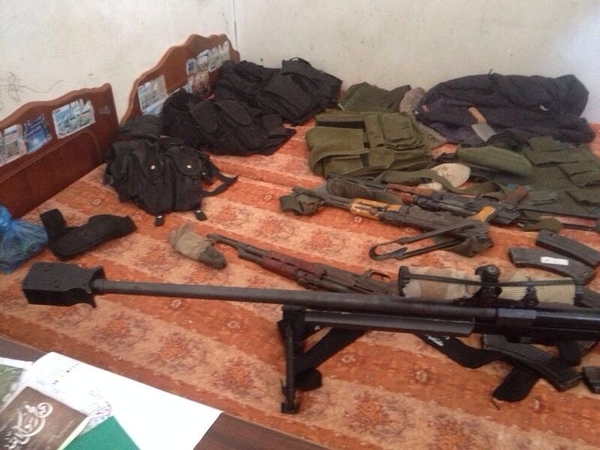
Several years ago I came up with a concept which I call, the “continuum of civilianality”—an inelegant phrase that is intended to convey the reality that who is a civilian and who is a combatant is often a matter of degree. Clearly every child below the age in which he or she is capable of assisting Hamas is a civilian. Clearly every Hamas fighter who fires rockets, bears arms, or operates in the tunnels is a combatant. Between these extremes lie a wide range of people, some of whom are closer to the civilian end, many of whom who are closer to the combatant end. The law of war has not established a clear line between combatants and civilians, especially in the context of urban warfare where people carry guns at night and bake bread during the day, or fire rockets during the day and go back home to sleep with their families at night. (Interestingly the Israeli Supreme Court has tried to devise a functional definition of combatants in the murky context of urban guerrilla warfare.)

More about “Hamas’ Phony Statistics”


The Tricycle Theatre and the UK Jewish Film Festival


The Tricycle Theatre and the UK Jewish Film Festival

‘We have been contacted by several patrons who have been given misleading information about the Tricycle and the UK Jewish Film Festival. We would like to set down an accurate account.

The Tricycle has always welcomed the Festival and wants it to go ahead. We have proudly hosted the UK Jewish Film Festival for many years. However, given the situation in Israel and Gaza, we do not believe that the festival should accept funding from any party to the current conflict. For that reason, we asked the UK Jewish Film Festival to reconsider its sponsorship by the Israeli Embassy. We also offered to replace that funding with money from our own resources. The Tricycle serves many communities and celebrates different cultures and through difficult, emotional times must aim for a place of political neutrality.

We regret that, following discussions, the chair of the UKJFF told us that he wished to withdraw the festival from the Tricycle.

To be clear, at this moment, the Tricycle would not accept sponsorship from any government agency involved in the conflict. We hope to find a way to work with the UK Jewish Film Festival to allow the festival to go ahead at the Tricycle as it has done so successfully for the past 8 years.’ Indhu Rubasingham

A comment from Nicholas Hytner: ’I greatly regret the UKJFF’s decision to leave the Tricycle cinema. Indhu Rubasingham and the Tricycle board could not have made clearer their commitment to Jewish culture or their desire to host a festival that would have included films from all over the world, including Israel. It is entirely understandable that they felt obliged to insist that no government agency should sponsor the festival. The Tricycle serves a diverse community with a notably diverse repertoire and it has a clear responsibility to make no statement about the dispute that is behind the current conflict. It greatly saddens me that the UKJFF have unwisely politicised a celebration of Jewish culture and I deplore any misrepresentation of the Tricycle’s position. I support Indhu Rubasingham and the Tricycle without reservation.’

A comment from Dominic Cooke: ‘The Tricycle is a venue with a history of celebrating plural cultures and viewpoints. A central strand of this work is the platform it has given to Jewish artists, a recent example of which was Indhu Rubasingham’s delightful production of Paper Dolls, which was set in Israel. The UK Jewish Film Festival is similarly plural in spirit, giving voice to a diverse range of Jewish talents and viewpoints. As two organisations celebrating diversity, they seem to me to be a perfect match, which is why the UKJFF’s decision to withdraw from the Tricycle is so very sad.

By taking funding from the Israeli government, the UKJFF are coercing the artists, supporters and the venue involved in the festival into a public association with the actions of a government they may not agree with. This runs counter to the values of pluralism which are central to the Tricycle’s identity. That is why I fully support the Tricycle in their effort to encourage the UKJFF to accept their offer of alternative funding and hugely regret the Festival’s decision to force the theatre’s hand by withdrawing the festival.’

A comment from Philip Himberg: ‘I am the Artistic Director of a major American theatre company, and the author of Paper Dolls, a play set in Israel, which looks at the warm and loving relationship between an Israeli citizen and his caretaker. The play’s world premiere was exquisitely produced by the Tricycle Theatre in its world premiere in 2013, and sensitively directed by Indhu Rubasingham. I believe, without a doubt, that as regards the current crisis in the Middle East, the Tricycle must remain neutral by refusing sponsorship from any government directly involved in the conflict. As a great lover of Jewish theatrical culture, (I will soon be supporting the development of a new Yiddish language opera), there was a clear way for the UKJFF’s celebration of diverse Jewish culture to go forward at the Tricycle – but at this particular moment in time, utilizing funds from any of the governments in power in the region would be taking an unfair political stand.’


Klip MEMRI TV przedstawiający szejka we włoskim meczecie, który wzywa Allaha do zabicia Żydów “


THE MIDDLE EAST MEDIA RESEARCH INSTITUTESeria Specjalnych Komunikatów – Nr 5816

Klip MEMRI TV przedstawiający szejka we włoskim meczecie, który wzywa Allaha do zabicia Żydów “do ostatniego”, doprowadził do jego wydalenia przez włoskie ministerstwo spraw wewnętrznych

Klip MEMRI TV opublikowany 4sierpnia 2014 r. pokazywał szejka Abd Al-Barra Al-Rawdhiego podczas kazania piątkowego w meczecie Al-Rahma w San Donà di Piave, pod Wenecją we Włoszech, wzywającego Allaha, by “policzył [Żydów] jednego za drugim i zabił ich do ostatniego”. Następnie wezwał on Allaha, by “zamienił ich żywność w truciznę i uczynił powietrze, którym oddychają piekielnie gorącym”. Kazanie zostało zamieszczone w Internecie 29 lipca 2014 r. (obejrzyj klip w MEMRI TV tutaj ).

5 sierpnia 2014 r. włoskie ministerstwo spraw wewnętrznych oświadczyło, że wydala szejka [1] pisząc w oświadczeniu, że powodem wydalenia były słowa szejka, które “poważnie zakłócają pokój, narażają bezpieczeństwo narodowe i [stanowią] dyskryminację religijną”. Włoski minister spraw wewnętrznych Angelino Alfano, powiedział: „Wygłaszanie kazań antysemickich, które wyraźnie podżegają do przemocy i nienawiści sekciarskiej nie jest do zaakceptowania. Niech moja decyzja w tym wypadku będzie ostrzeżeniem dla tych, którzy sądzą, że można nauczać nienawiści we Włoszech”.

Gazeta włoska “Il Fatto Quotidiano” doniosła o wydaleniu szejka i napisała, że klip wideo z kazaniem został opublikowany przez MEMRI. Doniesienie zawierało także fragment klipu MEMRI TV [2] . Podobne informacje pojawiły się w większości mediów włoskich.

Poinformowano, że społeczność muzułmańska w regionie Veneto zaaprobowała decyzję ministra. Bouchaib Tanji, przewodniczący Federacji Islamskiej Veneto oraz stowarzyszenia Assalam (Pokój), powiedział: “Islam jest religią pokoju. Nie wolno pozwolić tym, którzy głoszą śmierć, na wchodzenie do meczetów” [3] .

Przypisy:

[1] Interno.gov.it/mininterno/export/sites/default/it/sezioni/sala_stampa/
notizie/sicurezza/2014_08_05_espulsione_imam_Albdelbar.html

[2] Ilfattoquotidiano.it, 5 sierpnia 2014. [3] Ansa.it/english/news, 5 sierpnia 2014.