Archive | January 2018

Aharon Appelfeld – An Israeli author focused intently on the past.

Aharon Appelfeld – An Israeli author focused intently on the past.

SHOSHANA OLIDORT


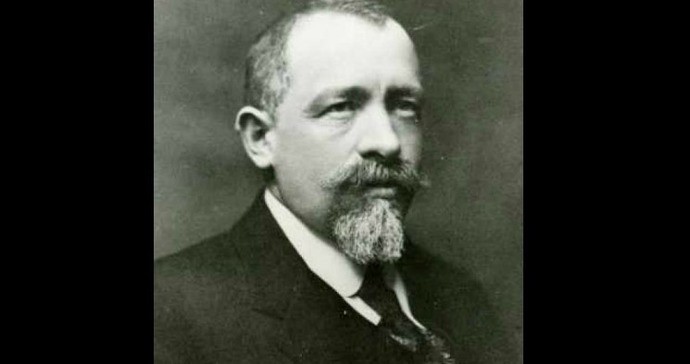
Aharon Appelfeld

One of Israel‘s most revered and prolific authors, Aharon Appelfeld was born in Czernowitz, Bukovina (now Ukraine) in 1932, to assimilated, upper middle class Jews. An only child, Appelfeld enjoyed a warm and happy childhood. But it was to be short lived. In 1939, the Germans invaded the region and his mother was killed. Appelfeld and his father were imprisoned in a Ukrainian concentration camp.

After being separated from his father (the two would meet again, 20 years later, in Israel), the young Appelfeld somehow managed to escape the camp. He spent the next three years hiding in forests, occasionally working for strangers in exchange for shelter and food. Eventually, he became a cook in the Soviet army.

Once the war ended, Appelfeld joined other survivors as they trekked through Europe towards Italy. From there, he set sail for Palestine, where he arrived as a 14-year-old boy, alone, uneducated, bereft of family, language, and home.

Appelfeld in Israel
Appelfeld’s early years in Israel were difficult. Zionist propaganda at the time insisted that the past was a needless burden that ought to be cast away. “Forget the Diaspora and root yourself in the present!” was a slogan Appelfeld heard often.

Living in a youth village populated largely by young survivors, and then serving in Israel’s military, Appelfeld found that the languages of his youth, primarily the German of his parents and the Yiddish he had picked up from his Orthodox grandparents, as well as his Russian, Ukrainian, Ruthenian, and Romanian, were fast slipping away. And so, he feared, were his memories.

But not all memories can easily be wiped away. In his memoir, The Story of a Life (2003), Appelfeld writes:

“I have forgotten much, even things that were very close to me–places in particular, dates, and the names of people–and yet, I can still sense those days in every part of my body. Whenever it rains, it’s cold, or a fierce wind is blowing, I am taken back to the ghetto, to the camp, or to the forests where I spent many days. Memory, it seems, has deep roots in the body.”

Appelfeld focuses his writing intently on the past. In this regard he stands apart from other Israeli literary luminaries–Amos Oz, A.B. Yehoshua, David Grossman–whose novels are largely focused on contemporary Israeli life. Though Appelfeld writes in Hebrew, his stories are all centered on European Jewry, both before and during the Holocaust. But Appelfeld does not think this makes him any less an Israeli writer. “I write about rootless people,” he has said, and Israel is a “society of immigrants.”

After completing his army service, Appelfeld enrolled at the Hebrew University in Jerusalem. It was his first formal education since first grade, when his schooling was cut short by the outbreak of World War II. At university, Appelfeld first began to write. However, “not being rooted in the language, not being rooted in the culture,” as he’s recalled, his early efforts amounted to “more a kind of stuttering than writing.” And yet, out of those stutterings emerged one of Israel’s finest writers. Indeed, Appelfeld’s bare style and Hemingway-esque prose still retain the innocent quality of uncertain stutterings.

To date, Appelfeld has authored more than 30 books including novels, short story collections, and a memoir. His works have been translated into more than 20 languages, and he is the recipient of several major awards, including the coveted Israel Prize and France’s Prix Médicis.

Communicating the Unimaginable
As critics have pointed out, Appelfeld’s works often focus on the outer margins of the Holocaust. Rather than the collective trauma of European Jewry, Appelfeld has said that he is interested in “the individual victim and his spiritual struggle.”

Tzili (1983), one of the author’s most acclaimed novels, tells the story of a dim-witted, young girl, Tzili, who spends the war years much like Appelfeld himself did, wandering from village to village, searching for food and finding shelter by passing herself off as a gentile. Tzili’s limited intelligence makes it difficult for her to articulate complex thoughts and emotions, but the sense of loneliness and dread that pervade her very being is palpable. The irony, of course, is that the war left even the most intelligent people at a loss, unable to communicate the unimaginable.

Badenheim 1939 (1979), another of Appelfeld’s highly-praised works, is set in a resort town in Austria, mostly populated by assimilated Jews, on the eve of World War II. The town’s annual summer arts festival gets off to a disappointing start when artists fail to arrive, without giving any notice. Soon, the roads leading out of the town are blocked off and all Jews are instructed to register with the “Sanitation Department.” Eventually, the visitors learn that a transport is being arranged–one that will take them to Poland, where, they imagine, they will be able to start their lives anew. Though confused, the characters remain, for the most part, oblivious and happily naïve. Even once the cattle cars arrive, the Jews fail to recognize what awaits them.

Many of Appelfeld’s works aren’t directly related to the Holocaust at all. Laish (1994), for example, is set decades before the war. And yet, it communicates a similar sense of fear and isolation. The book’s protagonist, Laish, a young orphan, is part of an eclectic convoy of Jews–among them thieves, rabbis, widows, and the aged–that is making its way toward the Promised Land. Numerous delays and distractions over the course of many years–including thefts, heavy rains, infighting, and an outbreak of typhoid–interrupt the course of the journey, time and again. Ostensibly, the only thing uniting the group is a common destination. But underlying this aspiration there seems to be a much deeper bond, one born out of a shared sense of rootlessness.

Children are central to many of the Appelfeld’s works, and he often has children narrating his stories. “Every serious writer retains his inner child, because that is his innocence,” Appelfeld has said. “The child within you is your first encounter with the world.”

For Appelfeld, “to be a Jewish writer is a heavy obligation.” As a survivor of the Holocaust, he feels a sense of responsibility toward the past, toward the memories of his parents and grandparents and the world they inhabited. Although he is often referred to as a Holocaust writer, Appelfeld resents being labeled as such. He has said that he does not see himself as a “chronicler of the war…I don’t feel that I write about the past.” Rather, literature, according to Appelfeld, “is an enduring present…an attempt to bring time into an ongoing present.”


twoje uwagi, linki, wlasne artykuly, lub wiadomosci przeslij do: webmaster@reunion68.com



‘Bookkeeper of Auschwitz’ loses final appeal against jail term


‘Bookkeeper of Auschwitz’ loses final appeal against jail term

David Millward


Oskar Groening listening to the verdict of his trial at court in Lueneburg, northern Germany CREDIT: AFP

Oskar Gröning, dubbed the “bookkeeper of Auschwitz”, has lost his final appeal against being sent to jail.

The 96-year-old former SS guard had been sentenced to four years imprisonment for being an accessory to the murder of 300,000 people at the concentration camp.

Gröning’s legal team argued that sending him to jail at the age of 96 would violate his right to life.

However, Germany’s Constitutional Court ruled against Gröning, who had been allowed to live at home pending his appeal.

“The high age of the applicant is in itself not sufficient to refrain from enforcing the criminal penalty,” the court ruled, adding that appropriate health care was available in prison.

Before joining the SS, Gröning trained as a bank teller. He worked at the Auschwitz-Birkenau concentration camp from September 1942 to October 1944, confiscating valuables and money from prisoners as they arrived.

He was charged with complicity in the murder of 300,000 Jews during only a few weeks as they arrived at the camp in the summer of 1944.

He was just 21 when he arrived at the camp. An enthusiastic Nazi, Gröning’s duties included inspecting luggage and sending money and valuables to the SS offices in Berlin, where the proceeds were used to finance the war effort.

Although he was not accused of murdering prisoners himself, the court held that he had seen enough of the violence to know that mass murder was taking place.

During the trial Gröning acknowledged his “moral guilt”, but it was left to the court to decide his legal culpability.

He was one of 6,500 SS personnel working at the camp, of whom only 50 were ever convicted.


twoje uwagi, linki, wlasne artykuly, lub wiadomosci przeslij do: webmaster@reunion68.com


75 lat temu w warszawskim getcie doszło do pierwszego zbrojnego wystąpienia

75 lat temu w warszawskim getcie doszło do pierwszego zbrojnego wystąpienia

mjs/ ls/


Przywódca ŻOB Mordechaj Anielewicz. Źródło: Wikimedia Commons

75 lat temu, 18 stycznia 1943 roku, w warszawskim getcie doszło do pierwszego zbrojnego wystąpienia członków Żydowskiej Organizacji Bojowej przeciwko Niemcom. Była to reakcja na rozpoczęcie przez nazistów kolejnej, tzw. styczniowej akcji wysiedleńczej do obozu zagłady w Treblince.

W tym czasie warszawskim getcie pozostało ok. 60 tys. osób narodowości żydowskiej. Cztery miesiące wcześniej Niemcy zakończyli w getcie tzw. wielką akcję likwidacyjną, w wyniku której w ciągu dwóch miesięcy wywieziono do Treblinki i zagazowano 300 tys. osób.

Świadomość, że naziści dążą do całkowitej eksterminacji Żydów, zmieniła charakter żydowskiego ruchu oporu. Powstały organizacje zbrojne – Żydowska Organizacja Bojowa i Żydowski Związek Wojskowy. Jesienią 1942 r. na terenie getta mieszkańcy zaczęli budować tunele, bunkry i schrony. Większość z nich nie miała już złudzeń, co do niemieckich planów i zdawała sobie sprawę, że ludność wywożona z getta jest mordowana.

Akcję deportacji 8 tys. Żydów zarządził Heinrich Himmler, który 9 stycznia 1943 r. dokonał osobistej inspekcji terenów getta. Tym razem Niemcy napotkali zorganizowany opór zbrojny. Pierwsza akcja bojowa została przeprowadzona na rogu ul. Niskiej i Zamenhofa, gdzie członkowie ŻOB dowodzeni przez Modechaja Anielewicza zaatakowali zbrojnie Niemców, prowadzących kolumnę Żydów na Umschlagplatz. W ciągu czterech dni nierównej walki poległo kilkuset Żydów. Naziści wywieźli w tym czasie ok. 4-6 tys. osób, ale potem akcja została przerwana.

Walki wybuchły na nowo rankiem 19 kwietnia 1943 r., kiedy 850 żołnierzy Waffen-SS uzbrojonych w karabiny maszynowe, miotacze płomieni, działka, wozy pancerne i czołgi wkroczyło na teren getta bramą od strony Nalewek. Zostali oni zaatakowani przez żydowskich powstańców, którzy w pierwszym starciu odnieśli sukces. Po południu tego samego dnia, liczniejsze i lepiej uzbrojone oddziały niemieckie ponownie wkroczyły na teren getta. Dowodził nimi gen. SS Juergen Stroop.

W walkach wzięło udział ok. tysiąca słabo uzbrojonych powstańców. Niemcy przeciwstawili im ponad 2 tys. żołnierzy Wehrmachtu, SS oraz pomocniczych oddziałów ukraińskich, litewskich i łotewskich. Przeciwko powstańcom użyte zostały pojazdy opancerzone oraz artyleria.

Przez blisko miesiąc warszawskie getto prowadziło bój z wojskami niemieckimi. Najcięższe walki toczyły się w rejonie ul. Zamenhoffa i Nalewek oraz na pl. Muranowskim. Niemcy systematycznie posuwali się w głąb getta. Paląc i niszcząc dom po domu zmuszali ludność cywilną do opuszczania bunkrów i schronów.

Podejmowane w ograniczonym zakresie przez polskie podziemie (nieliczne oddziały Kedywu, Socjalistycznej Organizacji Bojowej i GL) próby pomocy osamotnionym bojownikom żydowskim zakończyły się niepowodzeniem.

8 maja Niemcy odkryli i otoczyli ogromny schron przy ul. Miłej 18, w którym znajdowało się kilkuset ludzi, w tym sztab ŻOB i ponad 100 żydowskich bojowników. Na wezwanie Niemców cywile wyszli, natomiast większość powstańców razem z dowódcą Mordechajem Anielewiczem popełniła samobójstwo.

Powstanie, pomimo apeli rządu polskiego w Londynie, nie wywołało żadnych reakcji aliantów. W proteście przeciwko obojętności świata wobec tragedii narodu żydowskiego, 12 maja 1943 r. członek Rady Narodowej RP w Londynie Szmul Zygielbojm popełnił samobójstwo.

Powstańcy w małych, rozproszonych grupach walczyli do 16 maja 1943 r. Tego dnia gen. Stroop ogłosił koniec akcji pacyfikacyjnej i na znak zwycięstwa rozkazał wysadzić w powietrze Wielką Synagogę na Tłomackiem.

Getto warszawskie zostało zrównane z ziemią. Według raportów gen. Stroopa od 20 kwietnia do 16 maja 1943 r. w wykrytych i zlikwidowanych bunkrach znajdowało się ponad 56 tys. Żydów. Około 6 tys. zginęło na miejscu w walce, na skutek pożarów czy zaczadzenia. 7 tys. Żydów naziści zamordowali na terenie getta, tyle samo wysłano do Treblinki. Pozostała grupa ok. 36 tys. została wysłana do innych obozów, przede wszystkim do Auschwitz i Majdanka.

Straty niemieckie wynieść miały według tych samych raportów kilkunastu zabitych i kilkudziesięciu rannych. Źródła żydowskie i polskie podają, że były one kilkakrotnie wyższe.

Spośród żołnierzy ŻOB powstanie w getcie przeżyło kilkudziesięciu. Większość z nich jednak nie doczekała końca wojny, zginęli walcząc w oddziałach partyzanckich, w Powstaniu Warszawskim lub zostali wydani Niemcom. Wojnę przeżyło tylko kilku, w tym dwaj członkowie dowództwa ŻOB – Icchak Cukierman i Marek Edelman. W walkach na terenie getta śmierć ponieśli także niemal wszyscy żołnierze Żydowskiego Związku Wojskowego.


twoje uwagi, linki, wlasne artykuly, lub wiadomosci przeslij do: webmaster@reunion68.com



Trump Denies US Embassy to Be Moved to Jerusalem Within a Year

Trump Denies US Embassy to Be Moved to Jerusalem Within a Year

by Reuters and Algemeiner Staff


US President Donald Trump smiles during an interview with Reuters at the White House, Jan. 17, 2018. Photo: Reuters / Kevin Lamarque.

President Donald Trump denied on Wednesday that the planned relocation of the US embassy in Israel to Jerusalem would take place within a year, after Prime Minister Benjamin Netanyahu said he expected the controversial move to happen by then.

In early December, Trump recognized Jerusalem as Israel’s capital and set in motion the process of moving the embassy from Tel Aviv.

Secretary of State Rex Tillerson said last month the embassy move was “probably no earlier than three years out, and that’s pretty ambitious,” a timeframe that administration officials have attributed to the logistics of finding and securing a site as well as arranging housing for diplomats.

Netanyahu, according to Israeli reporters traveling with him on a trip to India, said on Wednesday: “My solid assessment is that it will go much faster than you think — within a year from now.”

Asked about Netanyahu’s comment, Trump told Reuters in an interview that was not the case. “By the end of the year? We’re talking about different scenarios — I mean obviously that would be on a temporary basis. We’re not really looking at that. That’s no.“

Trump — whose decision on the embassy move fulfilled a campaign pledge — promised, however, that it would be “a beautiful embassy but not one that costs $1.2 billion,” referring to what he says was the cost of the new US embassy in London.

Trump last week canceled a trip to London to open the new diplomatic mission, blaming his White House predecessor Barack Obama for selling off the old one for “peanuts” in a bad deal.

He acknowledged that the embassy move in Britain was agreed under former President George W. Bush but said it was built under Obama and “came out tremendously over budget.”


twoje uwagi, linki, wlasne artykuly, lub wiadomosci przeslij do: webmaster@reunion68.com


ŻIH Newsletter 18 – 25 stycznia 2018

ŻIH Newsletter 18 – 25 stycznia 2018

ŻIH


KONKURS IM. MAJERA BAŁABANA NA NAJLEPSZE PRACE MAGISTERSKIE I DOKTORSKIE O ŻYDACH I IZRAELU

W dniu 8 stycznia 2018 r. ruszyła ósma edycja Konkursu im. Majera Bałabana organizowanego co dwa lata przez Żydowski Instytut Historyczny.

Oprawione prace konkursowe wraz z kompletem wymaganych dokumentów należy zgłaszać do dnia2 marca 2018 r. Wyniki konkursu ogłoszone zostaną w lipcu 2018 r. na stronie internetowej ŻIH. Prace oceniać będzie jury składające się z naukowców ŻIH oraz Uniwersytetu Warszawskiego. Przewodniczącym jury jest prof. dr hab. Andrzej Żbikowski, a sekretarzem dr Agnieszka Żółkiewska.

więcej
ABRAHAM LEWIN, AUTOR DZIENNIKA Z GETTA WARSZAWSKIEGO
„Przelewają naszą krew bez ustanku, niby wodę”
18 stycznia, godz. 18:00 – 21:00

O Abrahamie Lewinie — warszawskim nauczycielu, autorze dziennika z getta warszawskiego i członku zespołu Oneg Szabat rozmawiać będą dr Katarzyna Person i prof. Paweł Śpiewak, kurator wystawy stałej „Czego nie mogliśmy wykrzyczeć światu”.

Prowadzenie: dr Piotr Paziński, redaktor naczelny czasopisma Midrasz. Fragmenty Dziennika Abrahama Lewina przeczyta Janusz Chabior.

Spotkanie odbędzie się w ramach cyklu „Czwartki na Tłomackiem”.
więcej
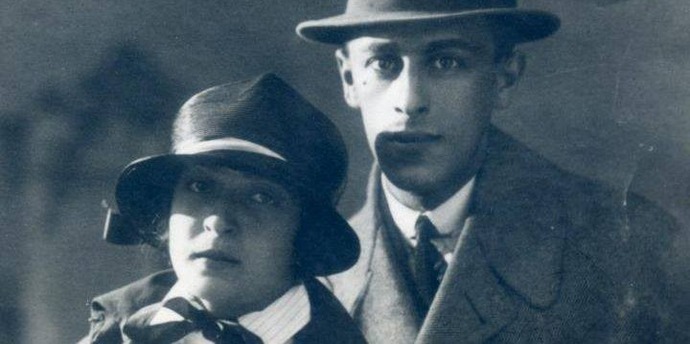
KALMAN SEGAL — ŻYCIE I TWÓRCZOŚĆ
21 stycznia 2018, godz. 15.00 – 16.30
 
Zapraszamy do Księgarni na Tłomackiem na dyskusję panelową poświęconą życiu i twórczości poety i prozaika Kalmana Segala, pisarza dwujęzycznego żyjącego na pograniczu dwóch kultur.

W spotkaniu udział weźmie dr hab. Magdalena Ruta (Uniwersytet Jagielloński) oraz Maciej Harna, który zagra na lutni arabskiej.

Spotkanie poprowadzi Joanna Sarnecka z Fundacji na Rzecz Kultury „Walizka”.
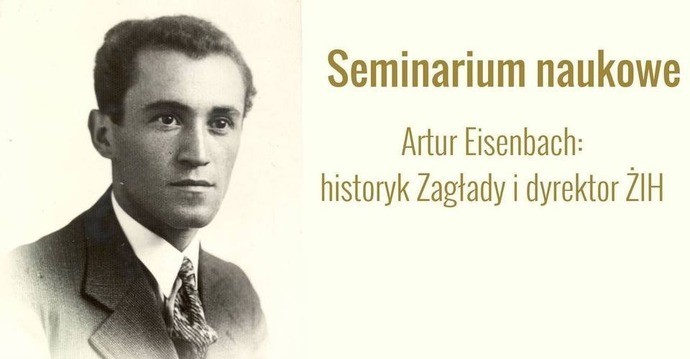
ARTUR EISENBACH: HISTORYK ZAGŁADY I DYREKTOR ŻIH

23 stycznia 2018, godz. 11.00

Profesor Artur Eisenbach był wieloletnim pracownikiem naukowym Żydowskiego Instytutu Naukowego, jego dyrektorem w latach 1966 — 1968, badaczem historii Żydów polskich w XIX wieku oraz historii Zagłady.

Seminarium poprowadzi Estera Flieger z Uniwersytetu Łódzkiego. 

NA SPOTKANIU DWÓCH ŚWIATÓW – CYFROWE UZUPEŁNIENIE WYSTAWY STAŁEJ 
25 stycznia 2018, godz. 18.00W 2017 r. otwarto w ŻIH wystawę stałą „Czego nie mogliśmy wykrzyczeć światu”, na której prezentowane są unikalne zbiory grupy Oneg Szabat. W tym samym roku rozpoczął też działanie edukacyjny portal Delet uzupełniający wystawę stałą.
Podczas spotkania kierownik Działu Digitalizacji ŻIH, Krzysztof Czajka — Kalinowski, opowie o celach, działaniu i możliwościach tego portalu.Spotkanie odbędzie się w ramach cyklu “Czwartki na Tłomackiem”.
WYSTAWA STAŁA „CZEGO NIE MOGLIŚMY WYKRZYCZEĆ ŚWIATU” POŚWIĘCONA
TWÓRCOM I LOSOM PODZIEMNEGO ARCHIWUM GETTA WARSZAWY

Na wystawie po raz pierwszy udostępniamy dokumenty Podziemnego Archiwum Getta Warszawy. Wystawa jest jednym z kluczowych elementów programu Oneg Szabat.
Tłomackie 3/5, siedziba Żydowskiego Instytutu im. Emanuela Ringelbluma i Stowarzyszenia Żydowski Instytut Historyczny w Polsce. Zapraszamy!

 
Wszystkie osoby pragnące nas odwiedzić proszone są o zakup biletu przez stronę www.tickets.jhi.pl

Oprowadzanie po wystawie odbywa się dwa razy dziennie od poniedziałku do piątku: o godz. 11:00 po angielsku i o godz. 14:00 po polsku. 

WYSTAWA CZASOWA “MIEJSCE. TŁOMACKIE 3/5”
,
Agata Madejska | Ronit Porat | Anna Orłowska
22 listopada 2017 – 4 marca 2018

Na zaproszenie Żydowskiego Instytutu Historycznego im. Emanuela Ringelbluma, artystki: Agata Madejska, Ronit Porat i Anna Orłowska stworzyły prace, w których odnoszą się do wybranych wątków związanych z historią budynku Instytutu oraz jego najbliższego otoczenia. 
Bodźcem do tych artystycznych rozważań jest zbudowany na miejscu Wielkiej Synagogi i przypominający o jej braku „Błękitny Wieżowiec”, w którego lustrzanej powierzchni odbija się stojący obok gmach ŻIH-u. 

BADANIE OPINII NA TEMAT WYSTAWY STAŁEJ I CZASOWEJ W ŻIH

Zapraszamy do wypełnienia naszej ankiety internetowej!
 
Celem badania jest poznanie Państwa opinii na temat wystawy stałej „Czego mogliśmy wykrzyczeć światu” oraz wystawy czasowej w Żydowskim Instytucie Historycznym im. Emanuela Ringelbluma. 
Odpowiedź na nasze pytania zajmie Państwu ok. 5 minut. Ankieta jest anonimowa.
GODZINY OTWARCIA I CENY BILETÓW
 
WYSTAWA STAŁA I CZASOWA
Poniedziałek – Piątek: 09:00 – 18:00
Niedziela: 10:00 – 18:00
Ostatnie wejście o godzinie 17:00.
 
CZYTELNIA
Poniedziałek – Czwartek: 09.00 – 19.00

Piątek: 09.00 – 15.00

CENY BILETÓW
Bilet normalny – 12zł (indywidualny), 10 zł (grupowy)

Bilet ulgowy – 7zł (indywidualny), 6 zł (grupowy)

 Bilet z przewodnikiem PL – 20zł
Bilet z przewodnikiem ANG – 30zł
W niedzielę zwiedzanie wystawy jest bezpłatne.


twoje uwagi, linki, wlasne artykuly, lub wiadomosci przeslij do: webmaster@reunion68.com