Archive | 2018/01/21

Elity III RP oddały historię walkowerem

 width=Elity III RP oddały historię walkowerem

   Jan Grabowski


11 listopada. Marsz Niepodległości (fot. Dariusz Borowicz/AG)

Trudno jest dziś wskazać kraj, w którym fałszowanie historii narobiłoby takich szkód jak w Polsce. Trudno też o społeczeństwo, w którym świadomość zagrożeń płynących z tego faktu byłaby równie słaba.

11 listopada ub.r. 60 tys. ludzi przemaszerowało ulicami Warszawy we współorganizowanym przez neofaszystowskie organizacje Marszu Niepodległości. I nie ma znaczenia, czy ludzie ci identyfikowali się w większym czy mniejszym stopniu z ideologią faszystowską. Ważne, że uczestniczyli w tej demonstracji. W Kanadzie, gdzie mieszkam, polska tematyka pojawia się w głównych wydaniach dzienników rzadko, Marsz Niepodległości znalazł się we wszystkich telewizjach, jak zresztą w większości krajów. Jak doszło do tego, że dla świata Polska stała się symbolem brunatnej fali, która rozlewa się po wschodniej Europie?

Prawica zawłaszcza historię

Wypychanie Polski poza nawias rodziny demokratycznych narodów – proces, którego jesteśmy świadkami – nie byłoby możliwe bez zawłaszczenia historii Polski przez nacjonalistyczną prawicę. Odbyło się to, co gorsza, przy milczącym przyzwoleniu partii centrowych i lewicowych oraz przy aprobacie opinii publicznej. To ostatnie łatwo zrozumieć, gdy się patrzy na hurraoptymistyczny przekaz nacjonalistów: nie ma w nim miejsca na krytyczną refleksję o własnej przeszłości, jest odmieniana przez wszystkie przypadki duma narodowa – choćby nijak się to miało do faktów. Bo któż nie chce usłyszeć o sobie, że postępował wyłącznie dobrze.

Propaganda musi trafiać w upodobania, bo inaczej ponosi klęskę.
Przekonali się o tym już PRL-owscy eksperci próbujący wtłoczyć do głów
Polakom miłość do Związku Radzieckiego czy niechęć do religii i Kościoła.

Łatwiej serwować nieprawdy, półprawdy czy przesłodzone mity o „żołnierzach wyklętych”, ogólnonarodowej walce z komunizmem, powszechnym ratowaniu Żydów w czasie wojny czy narodowym męczeństwie, które stało się wręcz polskim znakiem firmowym. Trudniej rzetelnie uczyć historii. Tymczasem ludzie na diecie narodowego samouwielbienia są najbardziej podatni na przekaz populistów i nacjonalistów.

To, że zakłamywaniem historii zajmują się nacjonaliści i populiści, nie dziwi. Przeraża to, że bezrefleksyjnie wpisują się w takie działanie ludzie o poglądach demokratycznych. Możemy piętnować rządzących dziś Polską prawicowych demagogów, ale to poprzednie rządy i elity III RP oddały historię walkowerem w ich ręce, gdy nieudolnie próbowały się przypodobać prawicowemu elektoratowi. To przecież były prezydent Bronisław Komorowski ustanowił święto „żołnierzy wyklętych”, a niedawni ministrowie kultury bili w narodowe werble.

Toksyczna infantylizacja polskiej historii króluje dziś choćby w zdobytym przez władze Muzeum II Wojny Światowej, gdzie nowa dyrekcja wyświetla zwiedzającym żałosny filmik sprowadzający naszą historię XX w. do stereotypów, męczeństwa i klisz ociekających narodowym samozadowoleniem. Wstyd.

IPN narzędziem polityki państwa

Na dyskusję o polskiej historii cieniem kładzie się też działalność IPN-u, instytucji, której odpowiednika – jeżeli chodzi o środki i wpływy – próżno szukać za granicą. Oddany w ręce partyjnych nominatów, zasilony milionami z budżetu państwa stał się potężnym ośrodkiem manipulacji historią. To nie jest dziś placówka naukowa, lecz narzędzie polityki państwa. Tymczasem jej książki i artykuły wchodzą w obieg naukowy i przyczyniają się do dalszego upolitycznienia oraz wykoślawienia najnowszej historii.

Szef największej partii opozycyjnej Grzegorz Schetyna zapowiedział likwidację IPN-u po wygranych wyborach. Byłby to krok w dobrą stronę, ale jak mu wierzyć? Przecież kilka dni później posłowie opozycji, w rzadkim geście jedności z rządzącą prawicą, uhonorowali NSZ – organizację wyrosłą na etosie polskiego przedwojennego faszyzmu.

Czy interpretacje polskiej historii pozostaną na zawsze skansenem, który od świata krytycznej historiografii dzieli coraz większy dystans? Czy młodzi Polacy muszą wchodzić w życie obarczeni zbiorem mitów i półprawd? Czy triumfująca „edukacja bezwstydu” to główny cel polskiej myśli historycznej?

Jerzy Andrzejewski pisał 70 lat temu:
Nie pragnę szkalować własnego narodu. Każde z gorzkich słów, które pada tu pod adresem Polaków, uderza i we mnie samego. Nie uwolnimy się od zaborczych i daleko sięgających macek własnej historii, dopóki nie przełamiemy w sobie tych wszystkich spaczeń, które nam historia wszczepiła.

Słowa Andrzejewskiego były na czasie w roku 1946 i są aktualne do dziś.


Jan Grabowski – historyk, profesor Uniwersytetu w Ottawie, współzałożyciel Centrum Badań nad Zagładą Żydów w Instytucie Socjologii i Filozofii PAN


twoje uwagi, linki, wlasne artykuly, lub wiadomosci przeslij do: webmaster@reunion68.com



THE CHALLENGE OF SEEKING THE UNITY OF THE JEWISH PEOPLE

THE CHALLENGE OF SEEKING THE UNITY
OF THE JEWISH PEOPLE

RICHARD D. HEIDEMAN


It is evident that all sides have their qualms and issues with others, so we should constantly remind ourselves that what unites us should be far greater than that which divides us.

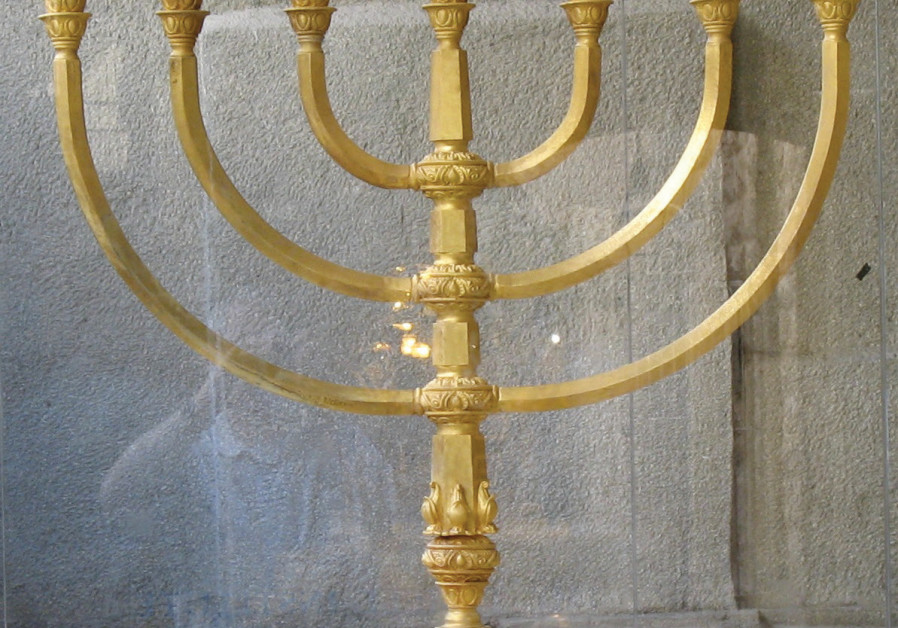
A reconstruction of the Temple’s menorah, created by the Temple Institute in the Old City’s Jewish Quarter. (photo credit: Wikimedia Commons)

The Jerusalem Talmud describes the Jewish people as a body. As with all bodies, different limbs while having different functions and responsibilities, need to be moving in concert and unison for the unit as a whole to operate fully.

The year 2017 has presented various events, statements and actions leading to a clear malfunction and a series of miscommunications among the Jewish people.

Like the Talmudic allusion to the Jewish people of a body, each limb and part experiences the world differently from a multitude of angles.

Issues of prayer, conversion, politics, language and beliefs make it clear not only that Israelis and Jews in the Diaspora have different experiences but that on a number of issues we also see the world quite differently.

The challenge before us is what we can do to ensure a greater understanding within the Jewish community, in Israel, in the US and around the world, to mandate a deeper understanding about that which motivates and arouses those who approach central issues from opposing views and on opposite sides.

The parts of our community are not hearing one another; perhaps we are not even listening to each other. Indeed, the intolerance, lack of respect bordering on mistrust and the lack of willingness to compromise are creating a chasm that must be bridged as we face the future.

As Diaspora Jewish and Zionist leaders, we must understand that every statement, criticism and attack on each other’s position only drives us further apart and makes unity more elusive. Moreover, as our disunity becomes more public, it is used by others outside our community as a means to achieve political points, resulting in greater dissent within the community as well as greater dissatisfaction with Israel. Our responsibility as leaders clearly is to encourage greater interaction and understanding of the challenges we face and to redouble our efforts to improve dialogue and create opportunities for discussion, exchange and, yes, candid but respectful debate.

It is evident that all sides have their qualms and issues with others, so we should constantly remind ourselves that what unites us should be far greater than that which divides us.

Jewish practice has traditionally placed a premium on giving and respecting voice as well as on robust discourse. Our history chronicles dissenting and opposing opinions for posterity in order to preserve a permanent record of our agreements as well as our differences and disagreements.

The challenge facing leadership is to respectfully face internal differences in a manner which is respectful and does not encourage or enable others to misuse and misinterpret the message to suit their own purpose.

Perhaps here lies an answer to this great challenge.

For those of us in the Diaspora committed to the Jewish and democratic State of Israel as the nation-state of the Jewish people at the center of our common core beliefs, it is important to confer with each other with greater care so that we understand the varying viewpoints of the differing segments of our community. This means avoiding vitriolic statements and terminology that are often misunderstood and misinterpreted by the press and cited by Israel’s enemies as tools to demonize and delegitimize it.

Recent developments implore us to enhance both internal discussion and external dialogue between and among Israeli and American Jewish leaders to better understand the experience, reaction and boundaries of each to the other.

We can become more effective change-makers if we understand the various sides of an issue as it relates to the passionate and central topic of Israel, especially as perceived and experienced from both an Israeli and Diaspora point of view. Perhaps as a community we should seek a uniquely Jewish point of view around which we can coalesce and potentially agree, once given fair hearing and due consideration to the greater good. Perhaps the ultimate question should be: Is it good for the Jewish people? The enemies of Israel, Zionism and the Jewish people abound with hatred and determination to demonize and destroy all of us. Our continuing challenge is to not add credibility to those who deserve no credence, but rather to preserve and advance our commitment to the preservation and protection of the good name of Israel, Zionism and the Jewish people.

I remain personally convinced that with greater dialogue and mutual understanding we can heal the multiple and disjointed rifts in the unity of our broad, passionate and energetic community. This is not a time for disengagement but a time for greater engagement. Diaspora and Israeli leadership must be seen as forces for unity rather than division not only in public but in reality as well.

It seems patently clear that the Jewish people will flourish if we respectfully move in unison with each component offering its own vital contribution to the greater cause from its own set of experiences, views and viewpoints.

Our sages were clear about the challenge; it is up to us to fulfill this important mission.


The writer is the current president of the American Zionist Movement and past president of B’nai B’rith International, and is senior counsel of the Washington law firm Heideman Nudelman & Kalik, PC. The views he expresses are his own.


twoje uwagi, linki, wlasne artykuly, lub wiadomosci przeslij do: webmaster@reunion68.com


How Did Golda Meir Define the ‘Palestinians’?

How Did Golda Meir Define the ‘Palestinians’?

David Bedein


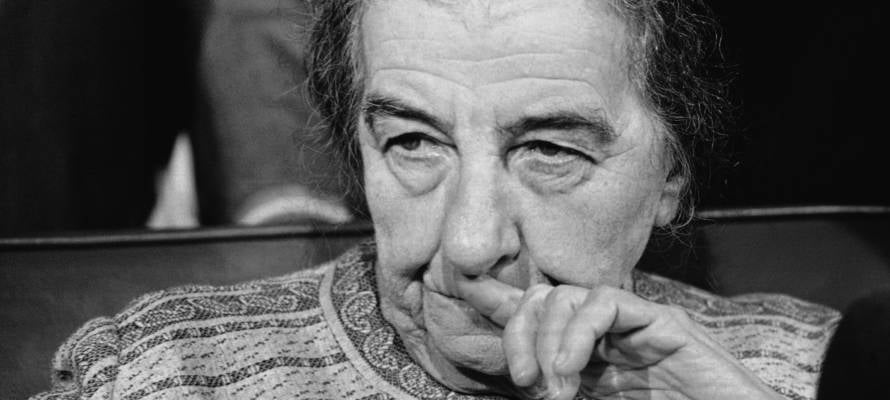
Written four decades ago – two years after the 1973 Yom Kippur War – the late Prime Minister Golda Meir said, “There is no Palestinian people. There are Palestinian refugees.”

Republished this week by David Bedein of the Jerusalem-based Israel Resource News Agency.

Late Israeli Prime Minister Golda Meir (AP/Charles Bennett, File)

To be misquoted is an occupational hazard of political leadership; for this reason I should like to clarify my position in regard to the Palestinian issue. I have been charged with being rigidly insensitive to the question of the Palestinian Arabs. In evidence of this I am supposed to have said, “There are no Palestinians.” My actual words were: “There is no Palestinian people. There are Palestinian refugees.” The distinction is not semantic. My statement was based on a lifetime of debates with Arab nationalists who vehemently excluded a separatist Palestinian Arab nationalism from their formulations.

When in 1921 I came to Palestine – until the end of World War I a barren, sparsely inhabited Turkish province – we, the Jewish pioneers, were the avowed Palestinians. So we were named in the world. Arab nationalists, on the other hand, stridently rejected the designation. Arab spokesmen continued to insist that the land we had cherished for centuries was, like Lebanon, merely a fragment of Syria. On the grounds that it dismembered an ideal unitary Arab state, they fought before the Anglo-American Committee of Inquiry and at the United Nations.

When the Arab historian Philip K. Hitti informed the Anglo-American Committee of Inquiry that “there is no such thing as Palestine in history,” it was left to David Ben-Gurion to stress the central role of Palestine in Jewish, if not Arab, history.

PLO Official: ‘Palestine is Nothing But Southern Syria’

As late as May 1956, Ahmed Shukairy, subsequently head of the Palestine Liberation Organization, declared to the United Nations Security Council, “It is common knowledge that Palestine is nothing but southern Syria.” In view of this, I believe I may be forgiven if I took Arab spokesmen at their word.

Until the 1960s, attention was focused on the Arab refugees for whose plight the Arab states would allow no solution though many constructive and far-reaching proposals were made by Israel and the world community.

I repeatedly expressed my sympathy for the needless sufferings of refugees whose abnormal situation was created and exploited by the Arab states as a tactic in their campaign against Israel. However, refugee status could not indefinitely be maintained for the original 550,000 Arabs who in 1948 joined the exodus from the battle areas during the Arab attack on the new state of Israel.

When the refugee card began to wear thin, the Palestinian terrorist appeared on the scene flourishing not the arguable claims of displaced refugees but of a ghoulish nationalism that could only be sated on the corpse of Israel.

‘We Dispossessed No Arabs’

I repeat again. We dispossessed no Arabs. Our toil in the deserts and marshes of Palestine created more habitable living space for both Arab and Jew. Until 1948 the Arabs of Palestine multiplied and flourished as the direct result of Zionist settlement. Whatever subsequent ills befell the Arabs were the inevitable result of the Arab design to drive us into the sea. Had Israel not repelled her would-be destroyers there would have been no Jewish refugees alive in the Middle East to concern the world.

Now, two years after the surprise attack of the Yom Kippur War, I am well aware of the potency of Arab petrobillions and I have no illusions about the moral fiber of the United Nations, most of whose members hailed gun-toting Yasir Arafat and shamefully passed the anti-Semitic resolution that described Zionism, the national liberation movement of the Jewish people, as racist.

But though Israel is small and beset, I am not prepared to accede to the easy formula that in the Arab-Israeli conflict we witness two equal contending rights that demand further “flexibility” from Israel. Justice was not violated when in the huge territories liberated by the Allies from the Sultan, 1 percent was set aside for the Jewish homeland on its ancestral site, while in a parallel settlement 99 percent of the area was allotted for the establishment of independent Arab states.

We successively accepted the truncation of Transjordan, three-fourths of the area of historic Palestine, and finally the painful compromise of the 1947 partition resolution in the hope for peace. Yet though Israel arose in only one-fifth of the territory originally assigned for the Jewish homeland, the Arabs invaded the young state.

I ask again, as I have often asked, why did the Arabs not set up a Palestine state in their portion instead of cannibalizing the country by Jordan’s seizure of the West Bank and Egypt’s capture of the Gaza Strip? And, since the question of the 1967 borders looms heavily in the present discussions, why did the Arabs converge upon us in June 1967, when the West Bank, the Golan Heights, the Sinai, the Gaza Strip and old Jerusalem were in their hands?

These are not idle questions. They go to the heart of the matter – the Arab denial of Israel’s right to exist. This right is not subject to debate. That is why Israel cannot by its presence sanction the participation of the Palestine Liberation Organization at the Security Council, a participation in direct violation of Resolutions 242 and 338.

‘No Common Language’ with Terrorists

We have no common language with exultant murderers of the innocent and with a terrorist movement ideologically committed to the liquidation of Jewish national independence.

At no point has the PLO renounced its program for the “elimination of the Zionist entity.” With startling effrontery P.L.O. spokesmen admit that their proposed state on the West Bank would be merely a convenient “point of departure,” a tactical “first stage” and finally, a combatant “arsenal” strategically situated for the easier penetration of Israel.

I am often asked a hypothetical question: How would we react if the PLO agreed to abandon its weapon, terror, and its goal, the destruction of Israel? The answer is simple. Any movement that forswore both its means and its end would by that fact become a different organization with a different leadership. There is no room for such speculation in the case of the PLO.

This does not mean that at this stage I disregard whatever national aspirations Palestinian Arabs have developed in recent years. However, these can be satisfied within the boundaries of historic Palestine.

The majority of the refugees never left Palestine; they are settled on the West Bank and in Jordan, the majority of whose population is Palestinian. Whatever nomenclature is used, both the people involved and the territory on which they live are Palestinian.

A Jordanian-Palestinian Arab State?

But in a genuine peace settlement a viable Palestine-Jordan could flourish side by side with Israel within the original area of Mandatory Palestine.

On July 21, 1974, the Israeli Government passed the following resolution: “The peace will be founded on the existence of two independent states only – Israel, with united Jerusalem as its capital, and a Jordanian-Palestinian Arab state, east of Israel, within borders to be determined in negotiations between Israel and Jordan.”

All allied problems can be equitably solved. For this to happen the adversaries of Israel will have to stop devising overt schemes for her immediate or piecemeal extinction.

There are 21 Arab states, rich in oil, land and sovereignty. There is only one small state in which Jewish national independence has been dearly achieved. Surely it is not extravagant to demand that in the current power play the right of a small democracy to freedom and life not be betrayed.

Do You Love Israel? Show Your Support!

Donate to vital charities that protect Israelis and help educate and inspire millions around the world to support Israel too!

Now more than ever, Israel needs your help to fight the battle of public opinion. Israel’s enemies are using social media to incite brutal terror against innocent civilians. Please help us fight back!


twoje uwagi, linki, wlasne artykuly, lub wiadomosci przeslij do: webmaster@reunion68.com