Archive | June 2024

Palestinianism Began with Nazism And Today Is Based on Antisemitism, Sexism, Homophobia and Denial of Human Rights. So Why Is the Left So in Love with It?

Palestinianism Began with Nazism And Today Is Based on Antisemitism, Sexism, Homophobia and Denial of Human Rights. So Why Is the Left So in Love with It?

Alan M. Dershowitz


  • It was [Hitler’s friend, the Grand Mufti of Jerusalem, Haj Amin al-] Husseini who turned the Arab-Jewish dispute from a resolvable conflict over land to an irresolvable conflict over religion.
  • Were a Hamas-run state to replace Israel “from the river to the sea”, it would be a theocratic regime closer to that of Iran than to the autocracies of Jordan or Egypt. Jews and Christians would not be allowed to live as equal citizens in such a state. Indeed, in areas currently controlled by Hamas, Christians and other non-Muslim minorities have been ethnically cleansed.
  • Hamas is a wholly owned subsidiary of the Iranian mullahs….
  • The real focus of these demonstrations is not on the alleged victims, but rather on the alleged perpetrators. The perpetrators are actually more anti-Israel than pro-Palestinian… It has always been more about identifying with the alleged perpetrators — Stalin, Hitler, Mao, Castro, Che Guevara — than with the alleged victims.
  • It is Hamas, not Israel, that is responsible for much, if not all, of the victimization of Palestinian civilians.
  • The disproportionate focus on the Palestinians and Israel can be explained only by bigoted hatred of the nation state of the Jewish people and its alliance with the US, and the wish to see them brought down.
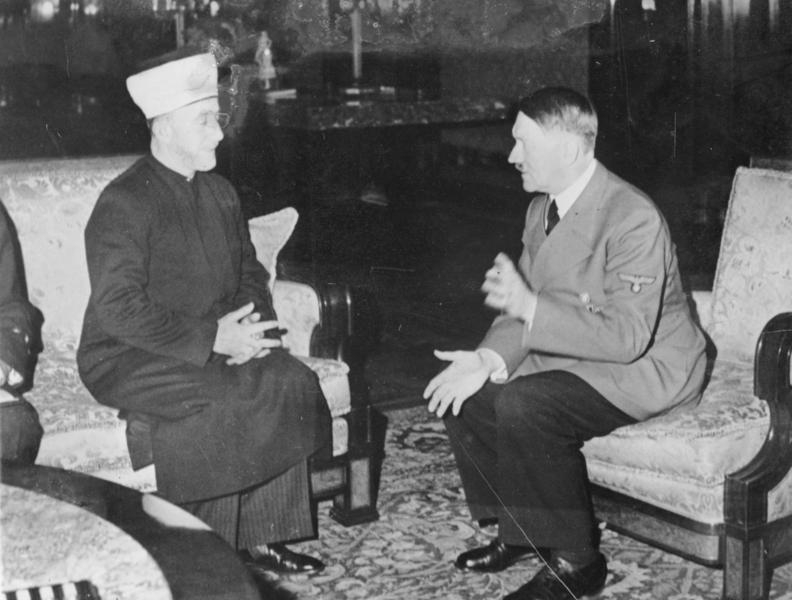
The founder of the Palestinian movement in the run-up to the Second World War was a proud Nazi and friend of Adolf Hitler. It was the Grand Mufti of Jerusalem, Haj Amin al-Husseini, who turned the Arab-Jewish dispute from a resolvable conflict over land to an irresolvable conflict over religion. Pictured: Hitler meets with Husseini on November 28, 1941. (Image source: German Federal Archive)

The founder of the Palestinian movement in the run-up to the Second World War was a proud Nazi and friend of Adolf Hitler. Haj Amin al-Husseini was the Grand Mufti of Jerusalem, the religious leader of the Muslims in what is now Israel but was then called Palestine, and, after the collapse of the Ottoman Empire, governed under a British Mandate. It was Husseini who turned the Arab-Jewish dispute from a resolvable conflict over land to an irresolvable conflict over religion.

Husseini decided it was against Islamic sharia law to allow Jewish sovereignty over even an inch of what had previously been Ottoman territory, which he decreed was forever religious Muslim land, part of an endowment, or “waqf,” to be held in trust for Allah. He opposed the creation of any Jewish state, regardless of how small, even if it was part of a two-state solution that offered a far larger percentage of the land to a state for the Palestinians.

Husseini spent the war years in Berlin as Hitler’s guest, plotting to extend Hitler’s genocide against Jews from Europe to the Middle East. He participated in the genocide of Jews and others in the Balkans. For this, he was designated a Nazi war criminal at the end of the war, and had to escape to Egypt to avoid being tried and hanged.

Following his death, he was succeeded by his mentee Yasser Arafat, who relied on terrorism against civilians as his primary methodology for destroying the nation-state of the Jewish people. Arafat turned down offers of a two-state solution because he could never accept the existence of a state for the Jewish people.

Following Arafat’s death in 2004, there was an election for the Palestinian Legislative Council, between Fatah and Hamas. Hamas won the 2006 elections, and polls to this day show far greater support for that Islamist group than for the somewhat more secular Fatah.

The Hamas charter is antisemitic to its core, blaming the Jews for most of the world’s evils, from the French and Russian revolutions to both of the two world wars: “There is no war going on anywhere, without having their finger in it.” (Article 22).

Hamas, as well as Palestinian clerics in the West Bank, declare homosexuality a sin punishable by death and oppose any sort of equality for women.

Were a Hamas-run state to replace Israel “from the river to the sea”, it would be a theocratic regime closer to that of Iran than to the autocracies of Jordan or Egypt. Jews and Christians would not be allowed to live as equal citizens in such a state. Indeed, in areas currently controlled by Hamas, Christians and other non-Muslim minorities have been ethnically cleansed.

Hamas is a wholly owned subsidiary of the Iranian Mullahs, who, since the Ayatollah Ruhollah Khomeini’s 1979 Revolution, regard Israel as the “Little Satan” the US as the “Great Satan”.

Considering the sordid history and current status of Palestinianism, it is quite remarkable that, among all the causes in the world, the left has chosen that cause as its primary focus. Left-wing students do not demonstrate in favor of the Kurds, the Uyghurs, Iranian dissidents or Syrian victims of genocide. There are more demonstrations on behalf of Palestinians than for Ukrainian victims of Russian aggression.

How can this counterintuitive reality be explained? It is rather simple. The real focus of these demonstrations is not on the alleged victims, but rather on the alleged perpetrators. The perpetrators are actually more anti-Israel than pro-Palestinian. Turkey, Syria, Iraq and Iran are the perpetrators denying statehood to the Kurds. China is the perpetrator of violence against the Uyghurs. The Syrian and Iranian regimes are responsible for the violence against their citizens. Russia invaded Ukraine.

The left does not hate these oppressors. They do hate Israel and its primary ally, the United States, because they are free market, Western states. Consequently, they support the enemies of these enemies, who in this case are the Palestinians. In previous wars, the left supported the Viet Cong, Pol Pot, North Korea and Cuba. It has always been more about identifying with the alleged perpetrators — Stalin, Hitler, Mao, Castro, Che Guevara — than with the alleged victims.

Of course, there are Gazan civilians who are deserving of left wing (and other) support. Justifiable criticism of Israel is also legitimate. But fabricated disproportionate criticism of Israel at the same time as disproportionate support for Palestinians, to the exclusion or minimization of others, is not fair – or accurate. It is Hamas, not Israel, that is responsible for much, if not all, of the victimization of Palestinian civilians. Israel can and should be criticized for civilian casualties that were preventable – in the “fog of war” many are not — or that are their fault. But none of this explains or justifies the singular focus of the left on the Palestinians and Israel. Nor does the false claim that Israel is a “colonial” or “settler” state explain the passionate hatred directed against Israel by the left. There are real colonial, settler states such as New Zealand, which has been quite critical of Israel and supportive of the Palestinians. No one demonstrates against New Zealand, Turkish-occupied Cyprus, or Pakistan-occupied Kashmir.

The disproportionate focus on the Palestinians and Israel can be explained only by bigoted hatred of the nation state of the Jewish people and its alliance with the US, and the wish to see them brought down.


Alan M. Dershowitz is the Felix Frankfurter Professor of Law, Emeritus at Harvard Law School, and the author most recently of War Against the Jews: How to End Hamas Barbarism. He is the Jack Roth Charitable Foundation Fellow at Gatestone Institute, and is also the host of “The Dershow” podcast.


Zawartość publikowanych artykułów i materiałów nie reprezentuje poglądów ani opinii Reunion’68,
ani też webmastera Blogu Reunion’68, chyba ze jest to wyraźnie zaznaczone.
Twoje uwagi, linki, własne artykuły lub wiadomości prześlij na adres:
webmaster@reunion68.com


Noa Argamani Was Held Captive in Al Jazeera Contributor’s Home

Noa Argamani Was Held Captive in Al Jazeera Contributor’s Home

i24 News and Algemeiner Staff


The Al Jazeera Media Network logo is seen on its headquarters building in Doha, Qatar, June 8, 2017. Photo: REUTERS/Naseem Zeitoon

Noa Argamani, the Israeli hostage freed with three others in an audacious rescue operation by the Israel Border Police’s elite Yamam unit, was held captive in the family home of Gazan “civilians,” a report said on Sunday.

Rami Abdul, the chairman of the Euro-Med Human Rights Monitor, said that the organization’s initial evidence showed the Israeli special forces used a ladder to enter the home of Dr. Ahmed Al-Jamal and his family.

Several of the family members were killed during the operation including 36-year-old Al Jazeera contributor Abdullah Al-Jamal. According to the Quds news agency, Al-Jamal was also identified as a staff writer for the U.S. outlet The Palestine Chronicle. Al-Jamal’s wife was also killed during the rescue mission.


Meanwhile, Imran Khan, a senior correspondent on Al Jazeera‘s English channel published an Instagram post distancing the network from Al-Jamal, saying he was a freelancer in the past. Khan wrote, “The individual in question who was killed in the raid along with his family was, at one point, a freelance journalist. He has never worked for Al Jazeera Arabic or English.”

The operation, during which the three other hostages were also rescued from a separate location, has drawn condemnation for the high alleged death toll on the Palestinian side. However, these criticisms fail to address the responsibility of holding captives in populated areas deep inside Gaza’s residential areas.

Euro-Med Human Rights Monitor also failed to address why so-called “civilians” were in custody of Argamani, an Israeli hostage who was kidnapped along with her boyfriend during the Nova music festival on October 7. Hamas allegedly paid civilian families to hold Israeli hostages.

The organization also called for an investigation into claims that the Israeli forces used the U.S. humanitarian aid pier to enter. This claim has been denied by both the U.S. and Israel.

In response to this allegation, Palestinians have said they would boycott aid that was transferred via the pier, which only returned to operation this weekend after bad weather put it out of order in late May.


Zawartość publikowanych artykułów i materiałów nie reprezentuje poglądów ani opinii Reunion’68,
ani też webmastera Blogu Reunion’68, chyba ze jest to wyraźnie zaznaczone.
Twoje uwagi, linki, własne artykuły lub wiadomości prześlij na adres:
webmaster@reunion68.com


Nie jesteśmy niewinni w sprawie Holocaustu. To wymaga przemyślenia antysemityzmu

Fragment okładki książki „Więcej niż stereotyp. »Żydokomuna« jako wzór kultury polskiej”. Instytut Slawistyki Polskiej Akademii Nauk


Nie jesteśmy niewinni w sprawie Holocaustu. To wymaga przemyślenia antysemityzmu

Tomasz Żukowski – Profesor w Instytucie Badań Literackich PAN


Traktowanie komunizmu jako żydowskiej winy skutecznie blokuje namysł nad antysemityzmem, a tym samym sprawia, że próby korekty antysemickich działań i przekonań zamieniają się we własną karykaturę.

Emancypacja ma swoje pułapki. Przede wszystkim tę, że jesteśmy produktami świata, który chcielibyśmy zmienić. Dlatego tak ważny okazuje się namysł nad własnymi sposobami myślenia i działania, słowem: autorefleksja. W takim kontekście Anna Zawadzka w książce Więcej niż stereotyp. „Żydokomuna” jako wzór kultury polskiej stawia pytanie o antysemityzm w Polsce.

A jesteśmy w impasie – praktycznym i teoretycznym. W sprawie Gazy, polityki historycznej i żołnierzy wyklętych, a w końcu strategii zwalczania nienawistnych zachowań i wypowiedzi. Gdzie obrona praw człowieka zamienia się w antysemityzm? Gdzie kończy się walka polityczna i antykomunizm zaczyna działać jak antysemicka klisza? Czym właściwie jest antysemityzm? Przydałoby się w tym galimatiasie choć odrobinę porządku.

Książka Zawadzkiej jest propozycją, której nie wolno przegapić. Autorka patrzy na antysemityzm z innej strony, niż do tego przywykliśmy. Nie jako na zbiór stereotypów, ale wzór kultury. Pyta w związku z tym, jakie treści, uchodzące, wydawałoby się, za neutralne, zbudowane są na antysemickich założeniach. To właśnie owe ukryte normy, postawy, tożsamości i kategorie postrzegania wytwarzają i reprodukują antysemityzm w coraz to nowych wariantach. Bez rozpoznania owej sieci jesteśmy wobec nich bezradni.

Pytanie, kto jest, a kto nie jest antysemitą, schodzi w tym ujęciu na drugi lub trzeci plan. Świadome intencje nie są tu najważniejsze. Problem okazuje się strukturalny: indywidualnie i zbiorowo jesteśmy uczestnikami sfery symbolicznej i zajmujemy w niej różne pozycje. Jedni postrzegani są jako neutralni, to znaczy mają przywilej życia na własny rachunek. Antysemityzm polega na tym, że ludzie napiętnowani podlegają obostrzonemu nadzorowi i chcąc nie chcąc, muszą się tłumaczyć z fantazji, które większość snuje na ich temat.

Odnoszenie antysemityzmu do relacji między Żydami, a nie żydowskim zewnętrzem, a więc widzenie antysemickich zachowań jako skutku kontaktu, okazuje się w związku z tym podwójnym błędem. Po pierwsze dlatego, że przekonania na temat Żydów są całkowicie zmyślone i nie zależą od rzeczywistości. Nienawiść nie wynika z takich lub innych działań realnych Żydów. Antysemita widzi raczej w żydowskości przyczynę zła, bo jest antysemitą. Wyciąga z obserwacji to, co sam w nią włożył.

Po drugie, hipoteza relacji międzygrupowych zasłania fakt, że antysemityzm jest przede wszystkim sposobem, w który antysemickie zbiorowości załatwiają własne sprawy. Pielęgnowana i modernizowana przez wieki fantazja pozwala tym, którzy ją snują, uporać się z niejednym problemem. Spełnia pewne funkcje, które trzeba rozpoznać.

Antysemityzm jest rodzajem energii społecznej, zasobu gotowego do wykorzystania w każdej chwili. Dlatego powinniśmy z uwagą przypatrywać się własnym reakcjom i działaniom. Pozwala stwarzać poczucie jedności i przynależności do wspólnoty. Działa jak rytuał inicjacyjny, w którym przystępuję się do powszechnie wyznawanych wartości i sposobów rozumienia świata. Nienawiść do Żydów i przekonanie o ich winie oraz własnej niewinności staje się spoiwem społecznym.

Co ważniejsze, przedstawia się jako forma antykapitalizmu. Już w wersji nacjonalistycznej tworzy niejako wbrew niemu egalitarną wspólnotę zjednoczoną wokół mitu posiadania tego, co narodowe. Dziedziczenie symboli i dóbr dokonuje się bez pośrednictwa pieniądza i wbrew kapitalistycznym regułom wymiany. Antysemita czuje się właścicielem Polski na przekór tym, którzy nie mają do niej prawa i chcieliby mu ją ukraść, i w ten sposób sprzymierza się z innymi.

Za jednym zamachem radzi sobie z bezradnością wobec kapitalistycznych reguł rządzących światem, w którym żyje. Pracę, uznawaną za etyczną wartość, przypisuje samemu sobie i oddziela od rynku, z którym utożsamia Żydów. Potępia ich, łącząc z tym, co nieproduktywne i „pasożytnicze”. Frustracja znajduje ujście w agresji, która wydaje się usprawiedliwionym protestem, ale problemy pozostają nierozpoznane i nierozwiązane. Antysemici mają poczucie, że są indywidualnie i zbiorowo ofiarą inwazji czegoś, co przychodzi z zewnątrz, i w związku z tym nie potrafią rozpoznać własnego miejsca w sieci relacji składających się na rzeczywistość.

Uruchamia się przy tym mechanizm samospełniającej się przepowiedni. Napiętnowani, których wypycha się z miejsc zarezerwowanych dla większości, nie mają innego wyjścia, jak szukać sposobów przetrwania tam, gdzie to możliwe. Tyle że większość będzie w tym widzieć potwierdzenie swoich fantazji. Zakaz uprawiania ziemi spowoduje, że Żydzi zajmujący się handlem będą postrzegani jako „pasożyty”, a izolacja będąca następstwem przemocy okaże się żydowską solidarnością przeciw reszcie świata.

Presja antysemickiego otoczenia wytwarza sytuację, którą Zawadzka określa mianem sublokatorstwa. Napiętnowani muszą układać się z większością wedle reguł narzuconych przez antysemityzm. Są wywoływani do odpowiedzi i pociągani do odpowiedzialności w związku z dotyczącymi ich fantazjami. Mają dostarczać dowodów, że są niewinni, choć przekonania o ich winie nie daje się zmienić i pozostaje ono wyłącznie produktem antysemityzmu. Mają się manifestacyjnie starać o przyjęcie do grupy dominującej, choć nigdy nie zostaną w nią włączeni na równych prawach.

Klasycznym przykładem jest oskarżenie o nielojalność, które pojawia się w Polsce zawsze, kiedy mowa o antysemickiej przemocy. Najpierw samospełniająca się przepowiednia: agresja jest faktem i trudno spodziewać się po ofiarach, że będą siedzieć cicho. Ale antysemityzm – jak już mówiliśmy – wytwarza w agresorach poczucie niewinności, dlatego mogą potraktować głos ofiar jako nielojalność i atak. Ci, którzy chcą się jakoś ułożyć z antysemickim otoczeniem, muszą udawać, że przemocy nie ma, że nigdy się z nią nie spotkali, lub wręcz popierać i usprawiedliwiać antysemickie zachowania. Mimo wszystko będą wciąż narażeni na podejrzenia i wzywani do przedstawiania coraz to nowych dowodów na swoją lojalność i przynależność.

Ważną rolę odgrywa w tym procederze antykomunizm i związane z nim wyobrażenie „żydokomuny”. Zawadzka analizuje to zjawisko na przykładzie makkartyzmu w Stanach Zjednoczonych w latach 40. i 50., ale także Polski po transformacji. Okazuje się, że antykomunizm zakreśla ramy zarówno samodefiniowaniu się wspólnot żydowskich, jak i badaniom nad antysemityzmem. W uproszczeniu, oskarżenie o komunizm pojawia się w przypadku prób krytyki większościowej dominacji, a więc wtedy, kiedy żądanie równości idzie zbyt daleko. Żydzi zostają dopuszczeni do wspólnoty pod warunkiem potępienia komunizmu, którego definicja jednocześnie się rozrasta. Podejrzane stają się wszelkie zastrzeżenia wobec status quo.

W praktyce – zarówno amerykańskiej, jak i polskiej – zmusza to do popierania antysemickich zachowań i zaprzeczania przemocy na dowód, że potępia się komunizm i należy do większościowej społeczności.

W 1950 roku aresztowano pod zarzutem szpiegostwa na rzecz ZSRR Ethel i Juliusa Rosenbergów. Stracono ich trzy lata później. Historycy są zgodni, że ich proces nie był bezstronny, a antysemityzm odegrał w nim ogromną rolę. Jego ofiarami byli nie tylko Rosenbergowie. Antykomunizm i wyobrażenie „żydokomuny” wywierały presję na wszystkich Żydów. Jeśli chcieli być zaakceptowani przez amerykańską większość i czuć się względnie bezpiecznie we własnych domach, musieli się przyłączyć do antysemickiej przemocy i, co więcej, mieli przy tym mówić, że w Ameryce nie ma antysemityzmu i mamy do czynienia jedynie z walką przeciw komunizmowi. To, co nazywamy uniwersalistycznym projektem społeczeństwa równych obywateli, zostało w ten sposób ograniczone, podobnie jak rozumienie asymilacji, która mogła polegać na dostosowaniu do antysemickich reguł współżycia, ale nie na ich krytyce.

W obrębie kategorii „żydokomuny” ważną rolę odgrywają symetryzacje, przede wszystkim zrównanie komunizmu i nazizmu. Sugerują one równowagę win i krzywd i tym samym zasłaniają zasadniczą dla antysemityzmu dysproporcję między większością a zdominowanymi. Mamy z nią do czynienia na wszystkich bodaj poziomach: przemoc antysemicka jest faktem, natomiast wyobrażenie o winach Żydów fikcją; w znaturalizowanej wizji świata Żydzi okazują się winni, podczas gdy większość uznawana jest za ofiarę; społeczny nadzór dotyczy tylko jednej grupy, której członkowie traktowani są jako przedstawiciele wyobrażonych wszystkich Żydów; wreszcie – w związku z tym – podporządkowani pozostają nieporównanie mniej sprawczy niż większość.

Traktowanie komunizmu jako żydowskiej winy skutecznie blokuje namysł nad antysemityzmem, a tym samym sprawia, że próby korekty antysemickich działań i przekonań zamieniają się we własną karykaturę. Na przykład w tak zwany dialog polsko-żydowski, który ma polegać na uznaniu wzajemnych krzywd. Propozycja tego rodzaju albo zmusza Żydów do zachowań sublokatorskich, to znaczy rozmowy, która potwierdza antysemickie fantazje na ich temat (mają tłumaczyć się z komunizmu), albo musi zostać odrzucona. Antysemicka kultura zinterpretuje taki gest jako niechęć: „Tak reagują na wyciągniętą rękę!”.

Dążenie do symetrii i utożsamianie izraelskiej prawicy z Żydami jest obecne także w reakcjach na działania izraelskiego rządu dzisiaj. Niezależnie od tego, jakie stanowisko zajmujemy w sprawie konfliktu w Gazie, należy zastanowić się nad sensami i funkcjami takich sformułowań jak „Holocaust Palestyńczyków”. Nie dlatego, że ich cierpienie i śmierć są mniej ważne. Raczej dlatego, że powstanie państwa Izrael i związany z tym konflikt – a więc także ofiary po obu stronach – są bezpośrednim następstwem Holocaustu Żydów i europejskiego antysemityzmu.

Żydów przybywających do Palestyny nie da się porównać z europejskimi, białymi kolonizatorami innych części świata, ponieważ byli ofiarami rasizmu i uciekali przed śmiercią oraz pogromami. To europejskie społeczeństwa – w tym polskie – nie dały im wyboru. Zmusiły do wyjazdu i desperackiego poszukiwania jakiegoś bezpiecznego miejsca na ziemi. Nie jesteśmy w tej sprawie niewinni. Wynika z tego przynajmniej obowiązek jak najstaranniejszego przemyślenia antysemityzmu.


Książkę Anny Zawadzkiej Więcej niż stereotyp. „Żydokomuna” jako wzór kultury polskiej można znaleźć w wolnym dostępie.


Tomasz Żukowski – historyk literatury, profesor w Instytucie Badań Literackich PAN. Autor książek Wielki retusz. Jak zapomnieliśmy, że Polacy zabijali Żydów (2018) i Pod presją. Co mówią o Zagładzie ci, którym odbieramy głos (2021).


Zawartość publikowanych artykułów i materiałów nie reprezentuje poglądów ani opinii Reunion’68,
ani też webmastera Blogu Reunion’68, chyba ze jest to wyraźnie zaznaczone.
Twoje uwagi, linki, własne artykuły lub wiadomości prześlij na adres:
webmaster@reunion68.com


‘At the level of Entebbe’

‘At the level of Entebbe’

YAAKOV LAPPIN


The military’s growing control of Gaza created conditions for the daring daylight hostage rescue in Nuseirat • Terrorists fired waves of RPGs at the extraction force from civilian areas.

.
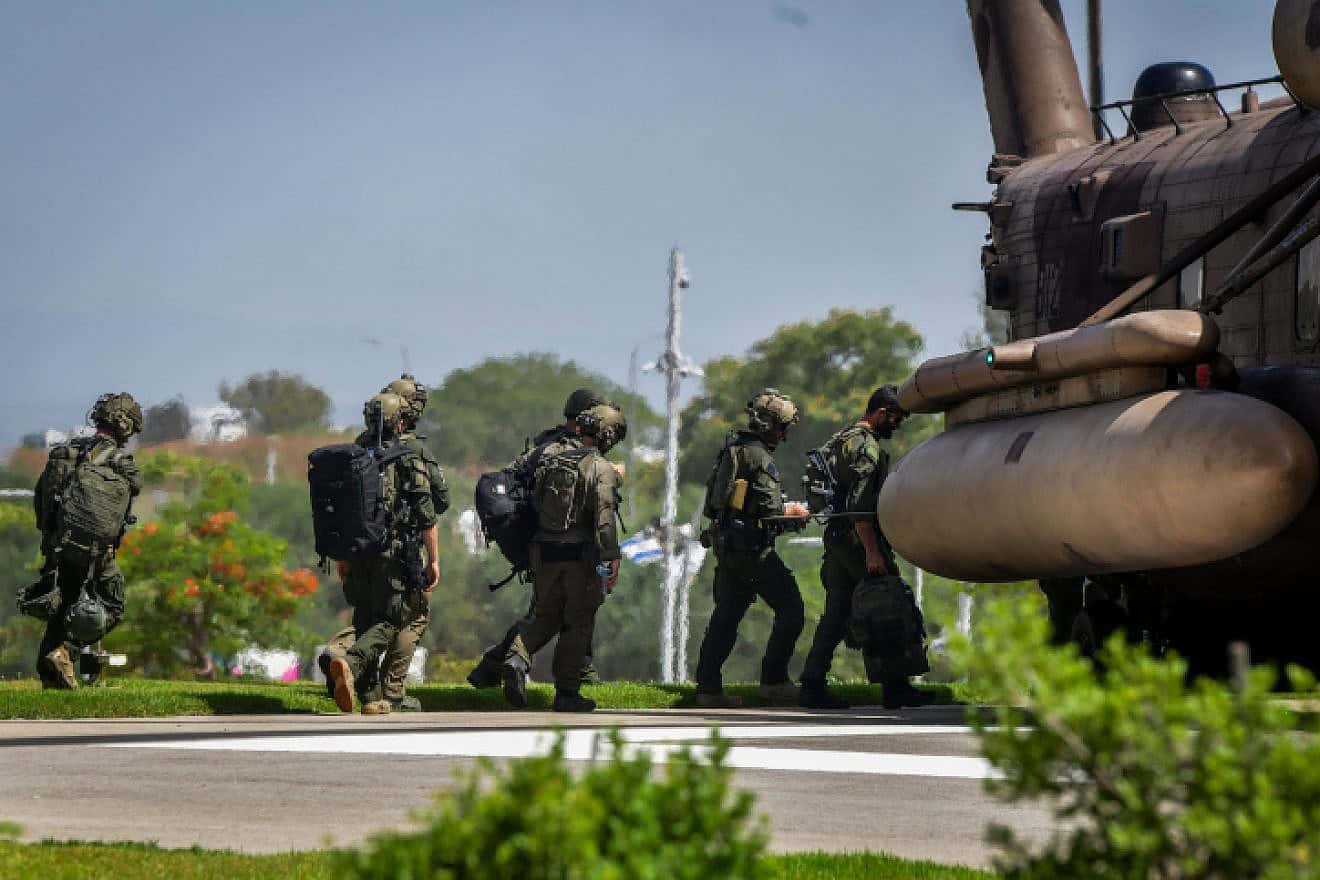
Israeli special forces who took part in the Nuseirat hostage rescue, at the Sheba Medical Center in Ramat Gan, June 8, 2024. Photo by Avshalom Sassoni.

Saturday’s hostage rescue operation in central Gaza could not have gone ahead without the Israel Defense Force’s ongoing wider ground maneuver in the Strip, which is improving Israeli intelligence and operational control of the area. 

As IDF Spokesperson Rear Adm. Daniel Hagari said on Saturday, “if we didn’t operate in Gaza we could have not conducted this sort of operation.”

The operation was green-lit by Israeli Defense Minister Yoav Gallant, with the approval and oversight of IDF Chief of General Staff Lt. Gen. Herzi Halevi, the head of the IDF’s Intelligence Directorate Maj. Gen. Aharon Haliva and Maj. Gen. (Res.) Nitsan Alon, who heads the special headquarters tasked with gathering intelligence on kidnapped Israelis and MIAs. 

The commanders gathered in the Israel Security Agency’s joint operations headquarters, receiving real-time intelligence on multiple screens to help coordinate the operation, which had to be as precise and well-timed as brain surgery.

The mission, conducted in the heart of the Nuseirat neighborhood, involved units from the Israel Defense Forces, with hundreds of troops providing the outer ring of security, the ISA and the Israel Police’s elite National Counter-Terrorism Unit (Yamam).

The operation’s sole Israeli casualty was Chief Inspector Arnon Zamora, 36, a Yamam squad commander. He is survived by his wife and two children.

Noa Argamani (26) was held in one apartment, locked in a room, while Almog Meir Jan (21), Andrey Kozlov (27) and Shlomi Ziv (40) were held in second apartment, in a building 200 meters away, according to Hagari. All four had been kidnapped from the Nova music festival near Kibbutz Re’im on Oct. 7, and were constantly watched by armed Hamas guards. 

“Families with guards who had weapons inside the buildings, inside the flats, together, holding the hostages,” said Hagari. 

Hamas periodically moved the hostages from one location to another, some of which were above ground and some of which were below. The fact that four hostages were being held above ground relatively close together created a unique opportunity. 

At 11:00 a.m., the special forces assault teams got the “go” from Halevi and set out, approaching the two buildings in Nuseirat—a heavily populated civilian area.

At 11:25 a.m., the forces entered both buildings at the same time, engaged the terrorists, and extracted the hostages, with air support.

Had the operation targeted only one of the buildings, the IDF assessed that the Hamas guards in the second building would have killed their hostages, believing a raid was imminent, Hagari explained. “That is the reason why we made this decision,” he said. 

The operation had been canceled three times before finally being given the green light, said Hagari.

“We gather the intelligence in multiple ways in order to make sure that we are ready for [an] operation,” he added. As information comes in, commanders need to decide whether or not to wait for more, he explained.

“There are a lot of details, like in a puzzle,” he said. “We may never have all of the links, but we have to make sure that we have enough links to ensure there is leverage.”

The IDF built models of the apartments for special forces to rehearse the rescue, according to Hagari. “The scale of the rehearsals was as large as the [1976] Entebbe operation—[in terms of] the models we used, as well as the way in which we trained, and we had to make sure that everything was done simultaneously,” he said. 

Extensive preparations notwithstanding, tensions in the ISA command room were extremely high as the operation got underway, Hagari recalled. 

“In Noa Argamani’s building our forces surprised them completely; it was still hard. In the other building, we had crossfires with the guards during which the commander of the squad from the [Yamam] Unit was injured,” he said.

Zamora was evacuated to hospital in critical condition, where he later died of his wounds.

“A very brave warrior,” said Hagari.

At this point in the operation, the word was out and terrorists armed with RPGs were “running in the streets” of the heavily populated residential neighborhood, converging on the rescue force, he continued.

“The cynical way in which Hamas is using [the] civilian population [of Gaza] in order to fire at our forces, embedding themselves within civilians, is tragic,” he stated.

“There was so much fire drawn to our forces, which meant we needed to fire from the air as well as the streets,” he said. “It was done very very professionally and precisely,” he emphasized, adding that the IDF had a pre-planned target bank of terrorist forces in the area.

The successful rescue highlights the high-level integration of Israel’s various security and military organizations, with the IDF, ISA, Yamam and IAF demonstrating their combined capabilities in intelligence gathering, operational planning and execution.

Hagari noted that 120 hostages are still held by Hamas in Gaza, and reaffirmed Israel’s commitment to securing their release.

“We will do everything possible to return all the hostages home. This morning’s operation was not only a success but also an opportunity to fulfill the goals of this war,” he said.


Yaakov Lappin is an Israel-based military affairs correspondent and analyst. He is the in-house analyst at the Miryam Institute; a research associate at the Alma Research and Education Center; and a research associate at the Begin-Sadat Center for Strategic Studies at Bar-Ilan University. He is a frequent guest commentator on international television news networks, including Sky News and i24 News. Lappin is the author of Virtual Caliphate: Exposing the Islamist State on the Internet. Follow him at: www.patreon.com/yaakovlappin.


Zawartość publikowanych artykułów i materiałów nie reprezentuje poglądów ani opinii Reunion’68,
ani też webmastera Blogu Reunion’68, chyba ze jest to wyraźnie zaznaczone.
Twoje uwagi, linki, własne artykuły lub wiadomości prześlij na adres:
webmaster@reunion68.com


Fans Walk Out of Hozier Concert in New York After Irish Singer Accuses Israel of ‘Genocide,’ Calls for ‘Free Palestine’

Fans Walk Out of Hozier Concert in New York After Irish Singer Accuses Israel of ‘Genocide,’ Calls for ‘Free Palestine’

SHIRYN GHERMEZIAN


Andrew John Hozier-Byrne, better known as Hozier, is performing on the first day of the EstereoPicnic festival in Bogota, Colombia. Photo: Daniel Garzon Herazo via Reuters Connect

Some audience members at Hozier’s concert on Tuesday night in New York reportedly staged a walkout after the Irish singer commented on the Israel-Hamas war by accusing the Jewish state of committing “genocide.”

The “Take Me to Church” singer, whose real name is Andrew John Hozier-Byrne, made the remarks during a performance at Forest Hills Stadium, one of four consecutive sold-out shows at the venue, as part of a tour for his new album “Unreal Earth.” He performed at the stadium on Tuesday and Wednesday and will perform again on Friday and Saturday, becoming the first artist ever to play four consecutive sold-out shows at Forest Hills Stadium.

During the introduction to his song “Nina Cried Power” during his Tuesday night concert, the Grammy winner told the crowd: “We wouldn’t want to see anybody subjected to the kind of violence, indiscriminate bombing, that we are seeing on our TV screens. The kind of assault that Rafah’s facing and the genocidal violence that Rafah’s facing. And in the same way that people are showing up at the moment, saying, we would want to be represented to our democratic representation — we want to be represented in that compassion, and in that human witness and in that law.”

Israel began its military operation in Rafah early last month and has been targeting Hamas terrorists and compounds in the southern Gaza city. Israeli Prime Minister Benjamin Netanyahu said Israel has been taking measures to minimize the risk of civilian casualties, which include evacuating one million Palestinians from Rafah and establishing a temporary refuge outside the Rafah corridor for Gazan civilians.

“And we wouldn’t want to see us, our tax dollars, enabling that kind of violence — enabling that kind of war,” added Hozier, according to videos from his speech that were shared on social media. “We wouldn’t want to see that for anybody, it doesn’t matter where you come from. Whether you are a Palestinian or you are an Israeli citizen. We want anybody to live in peace, security, and safety. And that would also mean seeing Palestine free from occupation, free to pursue meaningful self-determination and statehood.”

Hozier also applauded the anti-Israel protests taking place at colleges and universities around the US.

The Mirror reported that although the majority of the crowd at Tuesday night’s concert cheered on Hozier’s comments, other attendees who were upset by his remarks walked out before the show ended. Videos from social media show that Hozier made similar remarks during his concert on Wednesday night.

The “Too Sweet” singer has made pro-Palestinian and anti-Israel comments at his previous shows as well, again accusing Israel of “genocidal violence” and talking about the alleged “onslaught that Palestinians are facing in Rafah.”

Hozier’s native Ireland has been one of the harshest critics of Israel since the war began last October.

Last month, Spain, Norway, and Ireland officially recognized a Palestinian state. Irish Prime Minister Simon Harris has repeatedly condemned Israel’s military actions amid its war against Hamas terrorists.


Zawartość publikowanych artykułów i materiałów nie reprezentuje poglądów ani opinii Reunion’68,
ani też webmastera Blogu Reunion’68, chyba ze jest to wyraźnie zaznaczone.
Twoje uwagi, linki, własne artykuły lub wiadomości prześlij na adres:
webmaster@reunion68.com