Archive | June 2024

Former peace activist kidnapped by Hamas: ‘I don’t believe in peace’

Former peace activist kidnapped by Hamas: ‘I don’t believe in peace’

UPDATE DESK


Ada Sagi once learned Arabic to make friends with nearby Palestinians and taught others the language as a way to promote peace with Gaza.

.
Destruction caused by Hamas terrorists in Kibbutz Nir Oz, near the Israeli-Gaza border, in southern Israel, October 19, 2023. Photo by Erik Marmor/Flash90.

A longtime peace activist who was kidnapped from southern Israel by Hamas on Oct. 7 and held hostage for 53 days told the BBC on Wednesday that she had lost her belief in coexistence with the Palestinians.

“I don’t believe in peace, I don’t, sorry,” Ada Sagi said in her first interview with the British press since being freed in November. “I understand Hamas don’t want it.”

Sagi, a 75-year-old member of Kibbutz Nir Oz on the border with Gaza, learned Arabic to make friends with nearby Palestinians and taught others the language as a way to promote reconciliation with Gaza.

On Oct. 7, Sagi was kidnapped from the kibbutz during the Hamas-led invasion and was held in a family home in Gaza until she was released as part of the hostage-for-ceasefire deal with Hamas on Nov. 28.

Sagi told the BBC on Wednesday that, in the wake of the worldwide response to Hamas’s massacre, she now believes the world hates Jews.

In interviews with Israeli media earlier this month, the former captive revealed that Hamas is paying Palestinian civilians in the Gaza Strip up to 70 shekels ($19) a day to watch over Israeli hostages taken on Oct. 7.

Asked on June 2 by Israel’s Channel 12 News what would motivate a Gaza family with children to imprison Jews, Sagi said: “Money.

“I asked the owner of the apartment twice; he and the children looked after us. I saw that the apartment owner was receiving Israeli cash,” she said. “He was pleased the day that [hostage] Elad Katzir came to us, after 33 days, because I understood he received [payment] per capita.”

Sagi recalled an exchange with her captor. “He said: ‘I want a better future for my children and wife. I want to buy visas and not stay here; I want to go to Europe.’ He said: ‘I am uninvolved.’ I said: ‘How do you mean uninvolved if you took my freedom and I’m sitting here in your apartment?’”

According to Sagi, Palestinians who also work receive 20 shekels ($5) a day to guard the hostages, while unemployed students get a payment of 70 shekels ($19) from the terrorist organization for doing the same.

Sagi told Channel 12 that the youth she encountered during her 52 days in Gaza were “thrilled to go to their parents and bring them the money.”

In March, Nir Oz resident Irit Lahav, who used to belong to a group of volunteers who would drive Palestinians in need of medical treatment from Gaza to Israeli hospitals, told local media that she had come to understand that Hamas terrorists represent the Palestinian people.

“I used to think Palestinians were good people, like you and me. That Hamas were thugs who got in the way of the population’s desire for a good life,” said Lahav. “After Oct. 7, I realized I was wrong.”

Kibbutz Nir Oz was among the hardest hit during Hamas’s Oct. 7 assault. One in every four residents was either killed or kidnapped.


Zawartość publikowanych artykułów i materiałów nie reprezentuje poglądów ani opinii Reunion’68,
ani też webmastera Blogu Reunion’68, chyba ze jest to wyraźnie zaznaczone.
Twoje uwagi, linki, własne artykuły lub wiadomości prześlij na adres:
webmaster@reunion68.com


Macron denounces ‘scourge of antisemitism’ after Jewish girl raped

Macron denounces ‘scourge of antisemitism’ after Jewish girl raped

UPDATE DESK


Three teenagers were indicted after the attack near Paris.

.
French President Emmanuel Macron in Jerusalem, Jan. 22, 2020. Photo by Hadas Parush/Flash90.

After three boys were indicted for the rape of a 12-year-old Jewish girl in a Paris suburb, French President Emmanuel Macron again spoke out against hatred of Jews.

At a Cabinet meeting on Wednesday, Macron “spoke solemnly and seriously about the scourge of antisemitism” and called for a “dialogue” on racism and hatred of Jews in schools to prevent “hateful speech with serious consequences” from “infiltrating” classrooms, AFP cited a source as saying.

The boys, two aged 13 and one 12, were arrested on Monday and indicted on Tuesday.

The 13-year-olds were charged with gang rape, antisemitic insults and violence and issuing death threats. They remain in custody.

The 12-year-old was charged with antisemitic insults and violence and issuing death threats, but not with rape. He was allowed to return home after being charged.

On Saturday afternoon, the girl, who had spent the afternoon with friends, was crossing Henri Regnault Park in Courbevoie, when she came across two boys, one of whom she vaguely knew. (Part of the La Défense business district spreads over the southern part of Courbevoie.)

They blocked her way and forced her to follow them to an abandoned daycare center. A third boy joined them and started insulting the girl as a “dirty Jew,” the teenagers told police.

One of the attackers held a lighter next to her face and threatened to burn her. They forced her to perform vaginal, anal and oral sex on them, and threatened to kill her if she told anyone.

Afterwards, the girl made her way home and told her parents what had happened. A friend who was with her when the boys took her was able to give a detailed description of the suspects, who police confirmed were at the crime scene through images from security cameras.

The attack drew condemnation from across France’s political spectrum amid a heated campaign ahead of snap parliamentary elections later this month.

Jean-Luc Mélenchon, leader of the far-left France Unbowed party, denounced “antisemitic racism” in an X post.

Far-right leader Jordan Bardella called to “combat” the “antisemitism that has swept down on France since October 7.”

Another right-wing leader, Marine Le Pen, accused the “extreme left” of stigmatizing Jews over the past eight months “through the instrumentalization of the Israeli-Palestinian conflict.” 


France’s Chief Rabbi Haïm Corsia wrote on X that he was “horrified” by the attack.

“Justice must firmly sanction the perpetrators of this despicable act. No one can be excused from this unprecedented antisemitic surge. No one can ignore that the slayers of hatred also have their share of responsibility.”


France is home to the largest Muslim population Europe and has seen a surge in antisemitic acts since the Oct. 7 Hamas attack. Antisemitic acts have tripled in the first months of 2024 compared to the same period last year, France24 reported, citing official numbers.

Out of 1,676 antisemitic acts recorded last year, 12.7% occurred in schools.

While Macron has condemned antisemitism, he has often taken a critical stance towards Israel’s war effort in Gaza. In March, Macron said that the forcible transfer of Gazans from Rafah ahead of a prospective Israeli military operation in the city would constitute a “war crime.”

In November, Macron claimed during a BBC interview that Israel was killing women and children in Gaza.

“De facto—today civilians are being bombed. These babies, these women, these old people are being bombed and killed. So there is no reason for it and no legitimacy. So we do plead with Israel to stop,” the French leader said.

The remarks drew condemnation from Prime Minister Benjamin Netanyahu, who said that Macron “made a serious mistake, factually and morally” and that “the responsibility for any harm to civilians lies with Hamas-ISIS and not with Israel.”


Zawartość publikowanych artykułów i materiałów nie reprezentuje poglądów ani opinii Reunion’68,
ani też webmastera Blogu Reunion’68, chyba ze jest to wyraźnie zaznaczone.
Twoje uwagi, linki, własne artykuły lub wiadomości prześlij na adres:
webmaster@reunion68.com


Tematy żydowskie Martin Buber – Mądrość

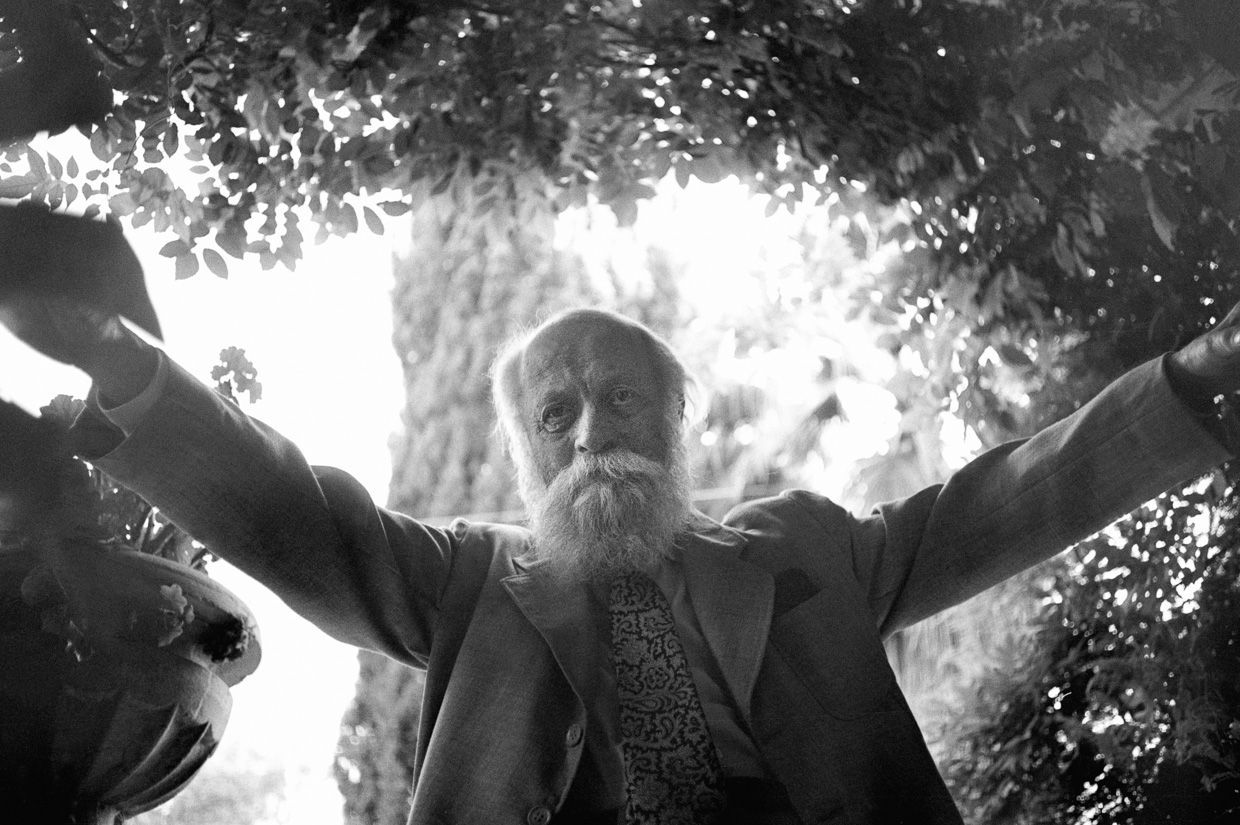
Martin Buber z długą, siwą brodą i rozpostartymi ramionami pozuje w ogrodzie, patrząc w obiektyw.Martin Buber, fot. David Rubinger / Corbis Historical / Getty Images


Tematy żydowskie Martin Buber – Mądrość

Piotr Nowak


Martin Buber urodził się dziewiętnastym stuleciu, ściślej: w 1878 roku w Wiedniu, a więc dawno temu. Natomiast jego aktywność filozoficzna – i to jest akurat bardzo znamienne – najsilniej rezonowała w wieku dwudziestym, tak jakby poprzednie stulecie wracało w nim czkawką. Ale tak nie jest.

Buber to myśliciel współczesny, przede wszystkim dwudziestowieczny. Władał wieloma językami. Gdzieś przeczytałem, że przełożył na polski pierwszą księgę “Tako rzecze Zaratustra” Nietzschego, ale to nic pewnego. Pisał głównie po niemiecku. Zyskał rozgłos przede wszystkim za sprawą prac o chasydyzmie i kulturze Żydów środkowoeuropejskich oraz książek, które ukształtowały filozofię dialogu.

Obok twórczości stricte filozoficznej czy pism o tematyce biblijnej, zajmowała Bubera we wczesnej fazie jego działalności pisarskiej – być może pod wpływem rozmów z Teodorem Hertzlem – tak zwana “kwestia żydowska”, a więc pytanie: “Kim jest Żyd, gdy myśli o sobie, że jest Żydem?” Z tego powodu już w wieku dwudziestu sześciu lat porzucił (dziś wiemy, że na chwilę) dotychczasowe zainteresowania filozoficzne na rzecz badań nad chasydyzmem. “Nagle obudziło się we mnie żydostwo jako religijność, jako “pobożność”, jako chasydyzm” – notuje w dzienniku. 

Thumbnail

Mniej więcej w tym czasie, a więc na przełomie wieków, odkrywa pisma Nachmana z Bracławia, którego uważa za ostatniego żydowskiego mistyka. Odkrywa, mówiąc ściślej, myśli rabina zebrane i spisane przez jego najbliższych uczniów, gdyż sam Nachman, jak jego wielki pradziad Baal Szem Tow, jak inni wielcy prorocy, niczego nie zapisywał. Usiłując nadać pismom Nachmana z Bracławia literacką postać, Buber doznaje pierwszych niepowodzeń. Opowieści, które redagował z myślą o najmłodszych, mające zastąpić w żydowskich domach “Baśnie Tysiąca i Jednej Nocy”, okazują się w oczach ich autora niewiele warte, rozczarowujące. Także ojciec doradza mu nieco więcej trzeźwości. “Byłbym szczęśliwy – pisze w liście do syna – gdybyś uwolnił się od tego chasydyzmu i Zoharu – to tylko wyjaławia umysł i szkodzi. Niedobrze, że swoje zdolności marnotrawisz na takim bezowocnym zajęciu, wkładając w to wszystko tyle trudu i pracy”. Wkrótce “Opowieści rabina Nachmana”, również jego książka o Baalszem Towie, rozchodzą się w kilkudziesięciotysięcznych nakładach. Swój pierwszy szkic autobiograficzny “Moja droga do chasydyzmu”(1918), Martin Buber dedykuje ojcu.

Praca nad religijnością chasydzką naprowadza Bubera na mistycyzm. W rozdziale o filozofii Schelera z “Problemu człowieka wspomina o swoim uwrażliwieniu na ten dziwny, głuchy żywioł, który szumiał mu w głowie od najmłodszych lat.

Od roku 1900 pozostawałem zrazu pod wpływem niemieckiej mistyki od Mistrza Eckharta do Anioła Ślązaka, dla których pierwotną przyczyną bycia jest bezimienne, nieosobowe bóstwo, które “rodzi się” dopiero w duszy ludzkiej; potem znalazłem się pod wpływem później Kabały, zgodnie z którą człowiek może posiąść władzę zjednoczenia panującego nad światem Boga z zamieszkującą jego świat Szechiną. W ten sposób zrodziła się we mnie myśl o urzeczywistnieniu Boga przez człowieka; człowiek wydał mi się istotą, której istnieniu spoczywający w swej prawdzie absolut zawdzięcza możliwość urzeczywistnienia.

Swoiste podsumowanie badań Bubera nad mistycyzmem stanowi antologia tekstów mistycznych “Ekstatyczne wyznania”(1909). Obok fragmentów dzieł niekontrowersyjnych pisarzy mistycznych, jak Boehme czy Kuzańczyk, praca ta zawierała ekscerpty z pism mistyków chińskich, hinduskich, uniesienia religijne zakonnic szwedzkich, niemieckich, hiszpańskich, jak też co bardziej reprezentatywne w odczuciu autora antologii opowieści chasydów. Jednak sam Buber nie zdecydował się na włączenie “Ekstatische Konfessionen” do “Dzieł zebranych”.

Czym dla młodego Bubera było doświadczenie religijne, dowiadujemy się ex post, z perspektywy dojrzałego filozofa dialogu. “W młodości “doświadczenie religijne” było dla mnie czymś wyjątkowym” – czytamy w “Zwiesprache”.

Bywały chwile wyjęte z normalnego biegu rzeczy. Twarda skorupa codzienności tu i ówdzie ulegała przebiciu. Nagle zawodziła wiarygodna stałość zjawisk, niespodziewane uderzenie rozsadzało rządzące nimi prawa. “Doświadczenie religijne” było doświadczeniem inności, która nie mieściła się w zwartym kontekście życia. Mogło zapoczątkować je coś zwyczajnego, na przykład przyglądanie się jakiemuś znanemu mi dobrze przedmiotowi, który jednak po chwili stawał się niespodziewanie tajemniczym, budzącym grozę, a wreszcie dającym wgląd w ciemność samej tajemnicy z jej przeszywającymi błyskawicami. Ale mógł też, całkiem znienacka, rozpaść się czas: najpierw rozsypywała się solidna konstrukcja świata, później jeszcze mocniejsza pewność siebie i “człowiek” – ów pozbawiony istoty “człowiek”, którym już tylko się było, którego już się nie znało – zostawał wydany na pastwę pełni. “Religijne” coś uwydatniało. Po tamtej stronie była zwyczajna egzystencja i jej sprawy, tu natomiast, poza czasem i bez następstwa, panowało uniesienie, oświecenie, ekstaza.

ThumbnailMartin Buber, “Opowieści chasydów”, fot. materiały wydawcy

W 1908 roku, w okresie nasilającej się gorączki mistycznej Buber otrzymuje list z Pragi. Jego nadawcą jest kilkoro młodych Żydów, którzy chcą wiedzieć, kim są i jak mają żyć. Ich zaproszenie zostaje wsparte autorytetem osób, które od tej pory będą towarzyszyć Buberowi przez jego życie. To Hugo Bergman, filozof ze szkoły Brentano, przyszły rektor Uniwersytetu Hebrajskiego, Robert Weltsch, dziennikarz, syjonista, orędownik porozumienia z Arabami, wreszcie Hans Kohn, historyk i pierwszy biograf Bubera. Choć Buber ma w tamtym czasie trzydzieści jeden lat, młode pokolenie Żydów widzi w nim natchnionego mędrca. Jest wielbiony i poważany. Są to okoliczności powstania “Trzech mów o judaizmie”. Praga wydaje się miejscem wprost stworzonym do tego rodzaju proklamacji. Jest takim “przejściem”, “progiem” (prah), w którym splata się kultura niemiecka ze słowiańszczyzną, Europa Zachodnia ze Wschodem, także Wschodem żydowskim; gdzie w tyglu budujących się od nowa narodowych tożsamości, nie wiadomo, kto swój, kto obcy, gdzie kończy się moja swojskość i zaczyna to, co obce, ciemne, wrogie.

Swoje “mowy o judaizmie”wygłasza Buber siedmiokrotnie (w latach 1909-1918), za każdym razem nieco zmieniając ich treść i precyzując swój punkt widzenia. W 1923 roku publikuje je w osobnym tomie jako “Drei Reden über das Judentum”.

W kolejnych, następujących po sobie wystąpieniach – “Żydzi i judaizm”, “Judaizm i ludzkość”, “Odnowa judaizmu” – których publiczność stanowili młodzi, wpół zasymilowani prascy, potem wiedeńscy i berlińscy Żydzi, pyta: “Dlaczego, na jakiej podstawie nazywamy siebie Żydami”? I odpowiada (stylem gorącym, emfatycznym): “Proces duchowy judaizmu dokonuje się pod postacią walki duchowej, wiecznie odnawianej wewnętrznej walki o czyste wypełnienie tendencji narodu. Tę walkę można wyjaśnić tym, że podobnie jak w życiu poszczególnych ludzi decydujące cnoty nie są niczym innym jak przekształconymi, ukierunkowanymi, podniesionymi do rangi ideału namiętnościami, podobnie w życiu narodu rozstrzygające idee nie są niczym innym jak popędem narodu podniesionym do rangi czegoś duchowego i twórczego (…) Idea i tendencja jedności jest ugruntowana w charakterze narodowym na tym, że Żyd zawsze silniej postrzega kontekst zjawiska niż samo pojedyncze zjawisko. Las jawi mu się jako prawdziwszy niż drzewa, morze prawdziwsze niż fale, a wspólnota prawdziwsza niż ludzie”. W charakterystyce narodu żydowskiego, o której czytamy w “Trzech mowach o judaizmie” przeważa, właściwy dla czasu ich powstawania element twórczy, mistyczno-mesjański, stopniowo zanikający pod wpływem rodzącej się właśnie filozofii dialogu, najpełniej wyrażonej przez Bubera w “Ja i Ty” (1923).

Szmirą nazywała go część inteligencji, zachwycali się nim Franz Kafka i Robert Musil. Żydowski teatr, dziś powidok po bezpowrotnie utraconym świecie, był niegdyś znaczącą częścią polskiego krajobrazu kulturalnego.
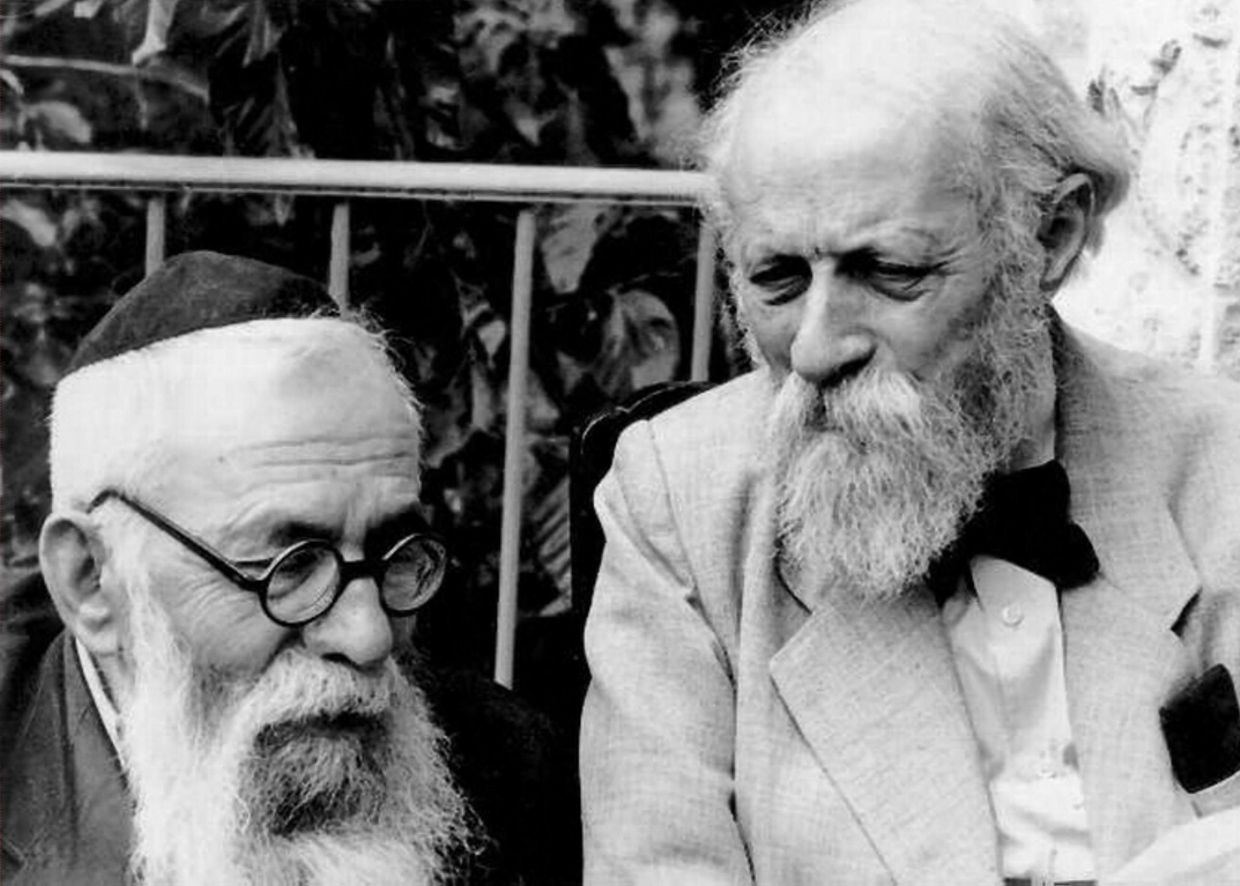
Rabin Binyamin, w jarmułce i okularach, z długą siwą brodą i Martin Buber w garniturze w czasie rozmowy w plenerze.Martin Buber i Rabin Binyamin w Palestynie, fot. Wikimedia Commons

Wszakże jego najważniejsza książka – zamiast iść po linii recepcji twórczości Bubera, zdradzam się w tym miejscu z własnymi preferencjami – to wydane w 1950 roku “Ścieżki w Utopii” (“Pfade in Utopia”), w których dał on upust swoim politycznym idiosynkrazjom. Jest to praca wymierzona w teoretyczne podstawy komunizmu. W rozdziałach o Proudhonie, Kropotkinie, przede wszystkim zaś w tych poświęconych filozofii Marksa, czy działalności Lenina, wskazał on na zbrodniczy charakter dyktatury komunistycznej. Buber wydaje się najbardziej przekonujący w namiętnej polemice z Leninem, którego uważa za proroka złej sprawy, świętego Pawła à rebours. W zakończeniu tego felietonu przytoczę co bardziej trafne ustępy z tej książki, jak zawsze w takich sytuacjach – ku przestrodze.

Doktryna “obumierania” państwa w następstwie rewolucji społecznej została rozbudowana przez Engelsa na podstawie zazwyczaj powściągliwych uwag Marksa. Użyteczne będzie zestawienie jego głównych wypowiedzi na ten temat w porządku chronologicznym. W 1874 roku tłumaczył on, że “w następstwie przyszłej rewolucji społecznej zniknie państwo polityczne” , ponieważ funkcje publiczne zostaną przemienione z politycznych w proste funkcje administracyjne. W 1877 roku doprecyzował on, iż proletariat, czyniąc ze środków produkcji własność państwową, zniesie państwo jako państwo, a właśnie to przejęcie środków produkcji będzie “zarazem jego ostatnim samodzielnym aktem jako państwa”, po którym ono “zamiera samo przez się” , czy też “obumiera”. W 1882 roku pojawia się eschatologiczna wykładnia owego “zarazem”: dokona się “skok ludzkości z królestwa konieczności w królestwo wolności” – nie sposób ująć tego wymowniej.

Nie chodzi o to, by byli wyłącznie zarządcy bez zarządzanych – byłoby to bardziej utopijne od jakiejkolwiek utopii – lecz o to, by zarządzanie pozostało zarządzaniem, a nie stawało się władzą, czy też, mówiąc ściśle, aby nie przyjmowało ono więcej pierwiastka władzy, niż jest to absolutnie niezbędne w danych okolicznościach (o czym nie mogą oczywiście decydować sami władcy).

W tym sensie obecne Rady [robotniczo-chłopskie] były dla Lenina “krokiem ku socjalizmowi”, tak jak Komuna Paryska była dla Marksa, wszelako jedynie krokiem politycznym, czy też rewolucyjno-politycznym. Były one instytucją, w której mogło skrystalizować się myślenie rewolucyjne, mianowicie “rewolucyjna dyktatura, tzn. władza, która opiera się bezpośrednio na fakcie rewolucyjnego jej zagarnięcia, na bezpośredniej oddolnej inicjatywie mas ludowych, a nie na ustawie wydanej przez scentralizowaną władzę państwową”, krótko mówiąc – na “bezpośrednim przywłaszczeniu”.


Piotr Nowak – Filo­zof, pro­fe­sor zwy­czajny, wykłada filo­zo­fię na Uni­wer­sy­te­cie w Bia­łym­stoku i Uni­wer­sy­te­cie War­szaw­skim, autor wielu ksią­żek, z któ­rych naj­bar­dziej lubi „Umie­ram, więc jestem” (z przedmową pro­fe­sora Juliu­sza Domań­skiego). Swój sto­su­nek do zba­wie­nia naj­peł­niej wyra­ził w przy­go­to­wa­nym i prze­tłu­ma­czo­nym przez sie­bie wybo­rze pism Wasi­lija Roza­nowa „Przez śmierć”. Tłu­macz, redak­tor, wydawca. Wyróż­niony „Skrzy­dłami Dedala” (2019) za „Prze­moc i słowa. W kręgu filo­zo­fii poli­tycz­nej Han­nah Arendt”. Zastępca redak­tora naczel­nego w kwar­tal­niku filo­zo­ficz­nym Kro­nos. Meta­fi­zyka – Reli­gia – Kul­tura. W TVP Kul­tura pro­wa­dzi autor­skie pro­gramy „Kro­nos” i „Powi­doki”. Przez więk­szość życia ćwi­czył judo w AZS-ie na Karo­wej.


Zawartość publikowanych artykułów i materiałów nie reprezentuje poglądów ani opinii Reunion’68,
ani też webmastera Blogu Reunion’68, chyba ze jest to wyraźnie zaznaczone.
Twoje uwagi, linki, własne artykuły lub wiadomości prześlij na adres:
webmaster@reunion68.com


In Rafah, ‘there is almost no home without a tunnel,’ says Nahal Brigade Commander

In Rafah, ‘there is almost no home without a tunnel,’ says Nahal Brigade Commander

TOVAH LAZAROFF


The IDF brought a small number of reporters to Gaza to speak with Nahal Brigade Commander Colonel Yair Zuckerman about the extent to which Hamas has integrated itself into civilian areas.

.
DF troops operate in Rafah, in the Gaza Strip. June 17, 2024.
(photo credit: IDF SPOKESPERSON’S UNIT)

A white cat walking across a partially destroyed building in Rafah’s Shabura refugee camp was the only civilian remnant of the Gaza neighborhood by the Egyptian border, which until the start of May had been crowded with Palestinians.

A bullet-riddled Sonol sign still hung on top of the rubble of what had once been a gas station.

Half destroyed concrete buildings stood, in some cases reduced to framed shells, intermixed with piles of rubble

Large swaths of sand, covered what had once been paved roads, giving Shabura a dustbowl appearance.

The IDF brought a small number of reporters in a Humvee into this desert landscape on Tuesday, to speak with Nahal Brigade Commander Colonel Yair Zuckerman about the extent to which Hamas has integrated itself into the civilian area.

Entrance of the 200 meter-long tunnel shaft in an agricultural area in the Gaza Strip, March 15, 2024. (credit: IDF SPOKESPERSON’S UNIT)

Just one week earlier, four IDF soldiers were killed when a bobby-trapped building exploded in this neighborhood. Now, however, an empty silence hung heavy under the bright afternoon sun, broken only by the soldiers on the road and the nearby tanks and tractors.

Zuckerman met with reporters on what he said was the 41st day of the battle for Rafah, in one of the more intact buildings in the neighborhood, whose occupants had fled.

Wearing a khaki uniform and flak jacket, he sat with them in what had once been a large second-floor apartment.

The windows were covered by blankets. The only civilian remnant in the room was a small sofa, with wooden trim and light brown fabric. 

Soldiers had written on the white walls directional signals in Hebrew: North, south, east, and west.

The electricity was run by a generator, which hummed during the entire conversation and was broken several times with distant sounds of explosions.

The table in front of Zuckerman was filled with computers. Using the wall as a screen he mapped out how, soldiers had been able to enter Rafah, staying one step ahead of Hamas strategically.

Never-ending tunnels in Rafah, posing challenges to the IDF

“Rafah is chalk-filled with tunnels,” he said, adding that, “During the last days alone, I found 17 tunnels.”

“There is almost no home without a tunnel,” he said, as he explained that the tunnels connected the homes in the neighborhood in one vast labyrinth. Holes were also broken through the walls to connect them, he said.

To illustrate his point, he showed a photograph with an open closet door and behind it, a hole in the concrete wall.

Homes are boobytrapped with wired explosives that can be detonated at a distance, Zuckerman said, as he referenced the incident last week in which four soldiers were killed when the bomb was set off in a home believed to be free of such devices.

This is a different kind of battlefield, as he described the methodical inch-by-inch fighting that has taken place in Rafah, where soldiers are battling above and below ground.

“It’s slow and painstaking,” he said, but the achievements “are significant.”

Soldiers have found caches of weapons, rocket-propelled grenades, and long-range rockets, Zuckerman explained, as he argued that it was important that the IDF be given time to complete its mission of demilitarizing the area.

The soldiers here “understand that this existential problem rests on their soldiers,” Zuckerman said, as he described a situation in which a myriad of small almost indiscernible successes, would ultimately lead to complete victory.

He did not want to quantify how long it would take to complete the mission, just that it was important to finish the job.

“We don’t want to leave until we have solved the problem,” he said.


Zawartość publikowanych artykułów i materiałów nie reprezentuje poglądów ani opinii Reunion’68,
ani też webmastera Blogu Reunion’68, chyba ze jest to wyraźnie zaznaczone.
Twoje uwagi, linki, własne artykuły lub wiadomości prześlij na adres:
webmaster@reunion68.com


Jewish-Owned Bagel Shop in Miami Vandalized With Antisemitic Graffiti, Gets Cleaned Up by Mayor, Federal Judge

Jewish-Owned Bagel Shop in Miami Vandalized With Antisemitic Graffiti, Gets Cleaned Up by Mayor, Federal Judge

Shiryn Ghermezian


Graffiti outside Holy Bagels & Pizzeria in downtown Miami. Photo: Screenshot

Miami Mayor Francis Suarez and US District Court Judge Roy Altman were among those who helped clean off antisemitic graffiti from a Jewish-owned kosher restaurant in downtown Miami that was vandalized on Sunday.

“Free Palestine” and “Stop Genocide” were spray painted in red on the front door and windows of Holy Bagels & Pizzeria. A security camera from inside the store captured a hooded person early Sunday morning spraying the windows and doors. The vandal also tore down from outside the store an Israeli-American flag that said “Stand With Israel” and spray painted “Free Palestine” on that as well.

“I’m here because we will not allow antisemites to silence our community,” Altman said, when asked why he came to help scrub off the graffiti from the bagel shop. “We are one community. We love the West, we support Israel. We Jews will never be silenced like we were in 1941. We will never go down [like in] 1941 again. Am Israel Chai [Long live Israel]. God bless America.”

“Hate speech, vandalism, and hostility will never be tolerated,” said Suarez. He added that the city of Miami “will always support these small businesses as they face antisemitism.”

Security company owner Auggie Mejia offered to provide free patrols to Josh Nodel, the owner of Holy Bagels & Pizzeria, and Miami-Dade Mayor Daniela Kava also visited the restaurant after the vandalism to express solidarity with the eatery and the Jewish community. The Miami Police Department has launched an antisemitic hate crime investigation into Sunday’s vandalism and released a photo of the suspect who they believe is responsible for the incident. Miami Police Chief Manuel Morales said police detectives are “working around the clock” to identify and locate those responsible for the “senseless” vandalism.

“As a society, we must unequivocally reject and not tolerate hate crimes in any form,” Morales added. “Discrimination, violence, and prejudice have no place in our communities, and it is essential that we stand united against such acts to create a safer and more inclusive community.”

Holy Bagels & Pizzeria said in an Instagram post that it will not let the vandalism over the weekend deter its support for Israel.

“We will not let it get us down. This is what they do. They hurt and destroy and want us to cower in fear,” read the Instagram post. “But we are strong and united and only love will destroy their hate.  We will not back down, we stand forever united with Israel.”

Nodel’s other bagel shop in Miami Beach was defaced three times in the past eight months, including the ripping down of Israeli flags.


Zawartość publikowanych artykułów i materiałów nie reprezentuje poglądów ani opinii Reunion’68,
ani też webmastera Blogu Reunion’68, chyba ze jest to wyraźnie zaznaczone.
Twoje uwagi, linki, własne artykuły lub wiadomości prześlij na adres:
webmaster@reunion68.com