Archive | December 2024

Papież i arafatka. Jak Franciszek dolewa oliwy do ognia

Papież Franciszek i szopka wykonana przez artystów z Betlejem. (Fot. REUTERS/Remo Casilli)


Papież i arafatka. Jak Franciszek dolewa oliwy do ognia

Maciej Miłkowski


Wostatnim czasie dogmat o nieomylności papieża sprawdza się jak nigdy wcześniej. Właściwie stuprocentowo. Tyle tylko, że jest to nieomylność ? rebours.


Maciej Miłkowski (1980) – prozaik, eseista, psycholog. Autor m.in. “Systemu Sulta”, “Wista” i wydanej właśnie “Anatomii opowiadania”.


Papież Franciszek myli się właściwie w każdej sprawie, o jakiej zechce się wypowiedzieć. Jeszcze trochę i będzie można zacząć traktować go jako prawdziwą busolę moralną: jeśli człowiek w jakiejś złożonej kwestii nie będzie mieć wyrobionej opinii, to trzeba będzie poczekać, aż papież wypowie swoją, a wówczas już śmiało będzie można przyjąć opinię przeciwną.

Słuszną niesławę w ostatnich miesiącach zyskały na przykład wypowiedzi papieża na temat wojny w Ukrainie. Każdy myślący i elementarnie uczciwy człowiek z pewnością dostrzega, że ten akurat konflikt zbrojny, jak mało który w dziejach ludzkości, ma jednoznacznie rozdzielone role moralne. Tylko jedna strona jest tu agresorem, nie szukającym nawet specjalnych pretekstów – bo te, po które Putin sięga, można uznać za preparowane wyłącznie na „eksport wewnętrzny”, wyciągane jedynie na potrzeby samego społeczeństwa rosyjskiego.

Druga strona zaś uparcie pilnuje, by jej działania defensywne nie stały się nazbyt ofensywne, ciągle stawia sobie pytania o dopuszczalne granice koniecznej obrony. Tylko jedna strona dopuszcza się od początku wojny niezliczonych aktów bestialstwa, podczas gdy druga stara się traktować jeńców wojennych z najwyższymi standardami humanitaryzmu.

Papież Franciszek na wojnie z logiką. Z Ukrainy do Izraela

To jednoznacznie ustawienie ról nie przeszkadza jednak papieżowi Franciszkowi szukać bałamutnej „równowagi” i sięgać po uogólnienia, które tak naprawdę jedynie zaciemniają jednoznaczną moralną odpowiedzialność strony rosyjskiej za wywołanie i kontynuowanie wojny.

Papież nie tylko unika jednoznacznych stwierdzeń (takich jak na przykład nazwanie Rosji agresorem), ale z wielu jego wypowiedzi można wywnioskować, że jego sympatie są wręcz po stronie Rosji, czy może osobiście – Putina. Papież krytykował zachodnie dostawy broni na Ukrainę, wychwalał wykształcenie Putina, mówił, że on sam jest do jego dyspozycji, przypominał ukraińskim katolikom, że są „dziećmi wielkiej Rosji”, zalecał rządowi ukraińskiemu odważne wystawienie białej flagi.

Regularnie jednak rozmywa swój pro-putinizm powtarzanymi zaklęciami o „obu stronach”. Chętnie mówi o winach obu stron, wzywa obie strony do pojednania, czy wspomina o cierpieniach i ofiarach po obu stronach.

Ciekawe, że wobec drugiego konfliktu zbrojnego, który przykuwa uwagę całego świata, papież już tak chętnie nie mówi o obu stronach.

A przecież konflikt izraelsko-palestyński, patrząc w perspektywie dłuższej niż ostatni rok z kawałkiem, jest wzorcowym przykładem konfliktu, w którym obie strony mają szerokie pole do dokonania ustępstw czy zrewidowania swoich działań.

.
Papież Franciszek wygłasza orędzie bożonarodzeniowe do pracowników Watykanu w Auli Pawła VI w Watykanie, 21 grudnia 2024 Fot. REUTERS/Ciro De Luca

Nie przeszkadza to jednak papieżowi Franciszkowi przyjmować na osobistej audiencji lidera Autonomii Palestyńskiej Mahmuda Abbasa, a wszystko to parę dni po tym, jak świat obiegła fotografia, na której Franciszek wpatruje się refleksyjnie w małego Jezuska spoczywającego na arafatce. Trudno o wyraźniejszy symbol niż arafatka. Trudno o wyrazistsze dekoracje niż szopka bożonarodzeniowa. Myślę, że papież, będąc szefem instytucji, która ma na koncie pośrednią lub bezpośrednią inspirację niezliczonych pogromów Żydów, powinien ostrożniej sięgać po arafatkę. Myślę, że biorąc pod uwagę długoletnią chrześcijańską tradycję zaprzeczania żydowskości Jezusa, powinien jednak mieć opory wobec otulania arafatką małego Jezuska.

Rozwiązanie wieloletniego konfliktu izraelsko-palestyńskiego możliwe jest tylko poprzez środki radykalne – nie w sensie radykalnej siły, ale w sensie radykalnej zmiany postaw i sposobów myślenia. Kilkanaście lat temu na spotkaniu autorskim w Krakowie wielki izraelski pisarz, Amos Oz, powiedział, że ma proste rozwiązanie tego wieloletniego konfliktu. Proste w sensie prostoty ideowej, a nie proste w sensie łatwego ewentualnego wprowadzania w życia. Proste w sensie kopernikańskim. „Wolne państwo Izrael ze stolicą w Jerozolimie”, powiedział wtedy Oz. „Oraz wolne państwo Palestyna ze stolicą w Jerozolimie”.

Franciszek o wojnie w Ukrainie i na Bliskim Wschodzie. “Dolewa oliwy do ognia”

Tyle tylko, że do wprowadzenia takiego rozwiązania potrzebne są umysły sekularne – wolne od religijnego uprzedzenia. Dla umysłu sekularnego żaden kamień i żaden mur nie są święte: wszystko podlega negocjacji, wszędzie da się zbudować płaszczyznę współistnienia i porozumienia. Umysł niedogmatyczny zawsze będzie wyżej cenił życie człowieka – nawet nielubianego – niż święty kamień.

Któregoś dnia takie umysły zdominują dyskurs po obu stronach, a wtedy porozumienie okaże się całkiem proste. Na razie jednak nie ma to widoków.

Papież Franciszek swoimi działaniami z pewnością nas do pokojowego rozwiązania nie przybliża.

Papież Franciszek – ze swoim poczuciem wyższości moralnej – reprezentuje zresztą dokładnie ten sam typ umysłowości, który po obu stronach bliskowschodniego konfliktu blokuje możliwość wypracowania trwałego pokoju. Umysł zamknięty, dogmatyczny, przekonany o swojej racji. Taki umysł nie potrafi nazwać jednoznacznego zła złem.

Potrafi za to zdobyć się na jednoznaczność wobec sytuacji o wiele bardziej złożonej, swoimi bezmyślnymi gestami jedynie dolewając oliwy do ognia.


Zawartość publikowanych artykułów i materiałów nie reprezentuje poglądów ani opinii Reunion’68,
ani też webmastera Blogu Reunion’68, chyba ze jest to wyraźnie zaznaczone.
Twoje uwagi, linki, własne artykuły lub wiadomości prześlij na adres:
webmaster@reunion68.com


Obama Plays a Dead Man’s Hand in Lebanon, and Wins

Obama Plays a Dead Man’s Hand in Lebanon, and Wins


Tony Badran


Rising up from his political grave, the ex-president cements a U.S. partnership with Iran in Lebanon while Israel meekly gives up its gains.

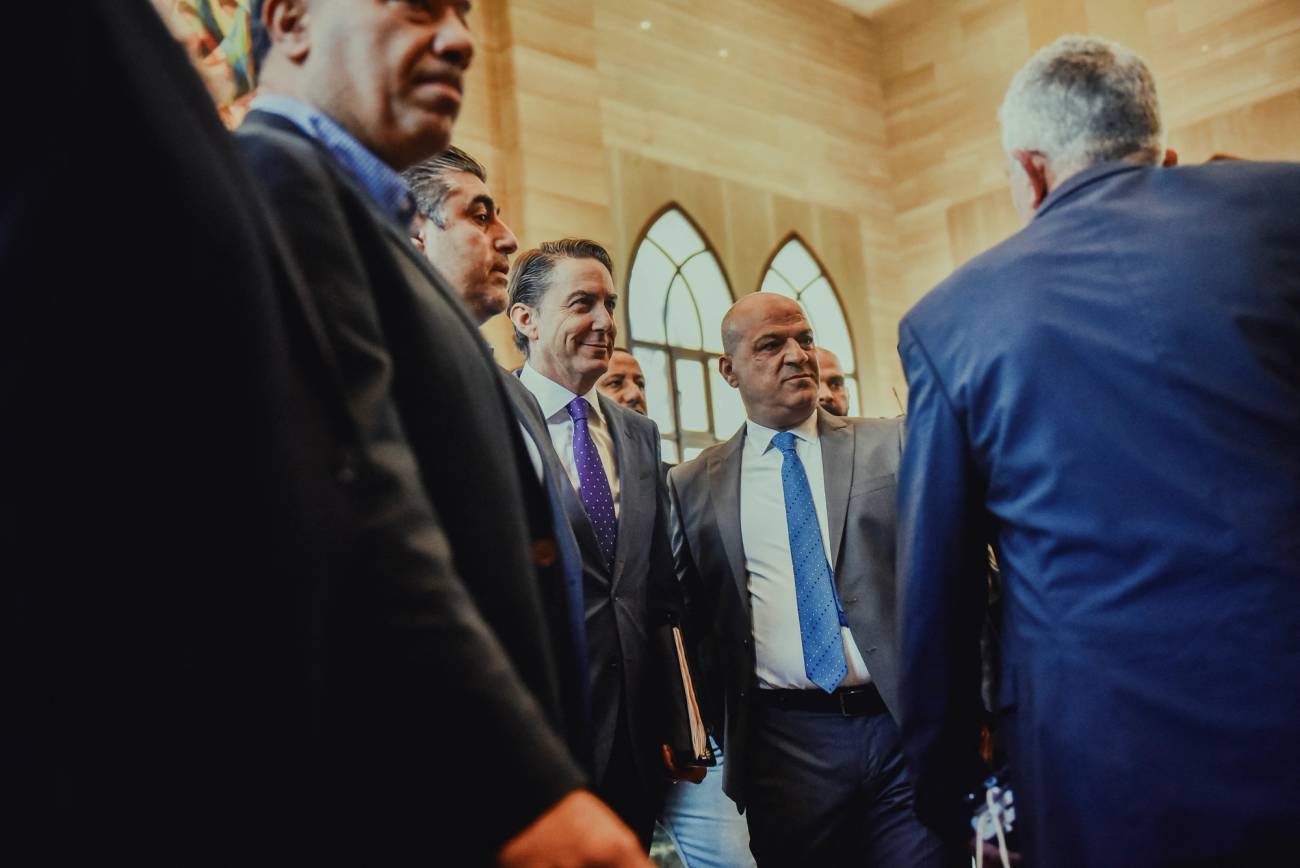
U.S. special envoy Amos Hochstein arrives to meet Lebanon’s parliament speaker in Beirut on Nov. 19, 2024 / Fadel Itani/Middle East Images/AFP via Getty Images

Barely three weeks ago, Barack Obama’s legacy was in tatters. His party was roundly defeated in the election, after he personally engineered the defenestration of his doddering former vice president from the Oval Office. Instead of greeting the sight of Obama emerging from the shadows with relief, Americans reacted with horror. His handpicked candidate was trounced, while the Party he directed lost both houses of Congress. The Iran deal, which he once saw as his ticket to Mount Rushmore, would be consigned to the dustbin of history by self-proclaimed master dealmaker Donald Trump.

And yet, two months before the end of his lengthy shadow presidency, and faced with the final undoing of his signature legacy project in the Middle East, Obama went all in—and won big. By forcing Israel to accept a deal with Hezbollah that will formalize America’s role as the terror group’s protector, Obama will have locked in a key piece of his decade-old policy of leveraging American power to secure both Iran’s continuing regional influence and its direct control over Israel’s borders.

After nearly two months of operating in Lebanon, the Israeli cabinet agreed on Tuesday to the cease-fire deal brokered by President Joe Biden’s special envoy, Amos Hochstein. The details of the deal are, for the most part, as irrelevant as they are meaningless. In essence, they represent a return to the Oct. 6, 2023, status quo ante. Namely, that the Lebanese Armed Forces (LAF) and the U.N. Interim Force in Lebanon (UNIFIL) will again deploy in south Lebanon, and again pretend to “implement UNSCR 1701”—the meaningless 2006 U.N. resolution which supposedly prevents Hezbollah’s rearmament and the reconstruction of its infrastructure south of the Litani River. To prop up this threadbare charade, the U.S. will now up its annual taxpayer subsidization of Hezbollah’s base—reportedly by at least another $400 million—to account for the enlargement of the LAF with new, U.S.-subsidized recruits. With these additions, U.S. taxpayer funding for Hezbollahland will now sit at around a $1 billion a year.

Netanyahu made his deposit of a ‘cease-fire’ in Obama’s account, locking in the disastrous precedent of having the U.S. adjudicate between Israel and Hezbollah, and buttressing its role as patron and protector of the Hezbollah territory.

The relevant parts of the agreement have to do with the formalization of the U.S. role in Lebanon—a process that began with Hochstein’s maritime deal in 2022—as an arbiter between Israel and Hezbollah, increasing America’s direct management of the Lebanese special province and of Israel’s defense policy. The vehicle for this role that the deal introduces is the creation of a so-called monitoring committee headed by the U.S., which will be represented presumably by a CENTCOM officer.

In other words, the U.S. is now responsible for handling Israel’s complaints about the myriad violations of 1701 that will doubtlessly be forthcoming as Hezbollah’s forces and supporters stream back into their villages on Israel’s northern border. And since the U.S. underwrites the LAF, in which it has been heavily invested for two decades, the Americans will be inclined to cover for the LAF’s collusion with Hezbollah—in the process becoming directly complicit for the aid that the LAF will give to its symbiotic terrorist partner. The lawyerly language that Team Obama planted in the side letter they gave Israel, as well as the text of the agreement itself, make it plain that the U.S. will now restrict Israeli actions, certainly in the parts of the country north of the Litani. As a senior administration official told its Israeli stenographer Barak Ravid, “There are restrictions on the military activity that Israel can carry out. It is impossible to sign a ceasefire agreement if Israel can shoot afterwards whatever it wants in Lebanon and whenever it wants.”

Instead, as Hochstein told Al Jazeera, “The United States will send diplomats and military personnel to the U.S. Embassy in Beirut, whose mission will be to work with the Lebanese Armed Forces and Lebanese authorities.” And if Israel has a complaint, it will need to notify the U.S., and share intelligence with it in the context of the monitoring committee, so that the CENTCOM officer can then relay those concerns to the LAF, which has long operated in partnership with Hezbollah’s forces, and whose political sponsors in Beirut are dominated by the Iranian-run militia.

In other words, the agreement affirms that Israel is a province that lacks full sovereignty, especially when it comes to its defense policy in territory where Washington has decided to partner with Iran and establish a joint protectorate dedicated to Israel’s destruction.

But none of this explains how and why Netanyahu decided to play what appeared to be a strong hand in order to achieve such a dubious-seeming result. For an entire year, the Israeli prime minister managed to outmaneuver a hostile administration determined to destroy him and to end Israel’s operation in Gaza (it had openly intervened to block an early strike on Hezbollah back in October of last year). Netanyahu patiently built his stack, and then started taking huge pots when he called the administration’s bluff, pushed into Rafah and broke Hamas’ back. In a stunning series of operations, the IDF then killed all of Hamas’ leaders, including Yahya Sinwar.

Contrary to the advice of his General Staff, Netanyahu then turned north and within weeks, he had decapitated Hezbollah’s entire command. The entire world watched in awe as each crushing blow followed the last. Exploding beepers! Nasrallah killed inside his bunker. What would come next?

Even as the kangaroo court at the ICC pronounced him to be a genocidal war criminal, Netanyahu’s winning streak only got longer. Barack Obama and the Democrats received a surprise shellacking, ensuring Donald Trump’s triumphant return to the White House. The Iranians lost a key part of their nuclear complex, and were so shaken—with their trusty shield in Lebanon now dashed to pieces—that they didn’t have the means or the nerve to respond. Netanyahu was holding a full house with aces; a surefire winner. And then he folded.

Of these, the family of arguments that go something like, “well, Israel was running out of meaningful targets, making the returns increasingly smaller,” and “now it can turn its attention fully to Iran,” are the most patently offensive to reason. Israel could have simply run the clock down. And while it actually did not need a “deal” in Lebanon—there being no sovereign entity to make a “deal” with aside from Hezbollah, which was clearly losing its military engagements with the IDF—if it were determined to indulge in one then it should’ve waited for the new administration, so that whatever arrangement ensued would not reinforce a hostile framework, but rather help tear it down.

On the face of it, this is a clear-cut case of snatching defeat from the jaws of victory. But then came a flurry of other Israeli statements on background suggesting that Israel was coerced. An Israeli official told the Times of Israel that “Israel had no choice but to accept a cease-fire, out of fear that U.S. President Joe Biden’s administration could punish Israel with a United Nations Security Council resolution in its final weeks.” Reports from Israel were that, in his address to the cabinet, Netanyahu drove home precisely this justification for accepting the deal. By accepting a less-than-ideal agreement, Netanyahu reportedly said, Israel was avoiding a greater risk: a Biden administration-sponsored Security Council resolution that could lead to international sanctions against Israel.

It remains unclear what the resolution in question might have been. A resolution calling for a cease-fire, by itself, is irrelevant and could safely be ignored. For it to mean something, such a resolution would have had to have real-world, long-term material repercussions that would be tricky to reverse.

Sen. Ted Cruz, in a critical statement on the cease-fire agreement, mentioned the Biden administration “threatening to facilitate a further, broader, binding international arms embargo through the United Nations.” There is speculation that this resolution was being prepared by the French, doubtless in direct coordination with the administration, which would have, in a replay of Obama’s December 2016 gambit with UNSCR 2334, allowed the passage of the resolution through abstention, after quarterbacking the entire play. The French may have already given a preview of this scheme when they called for an arms embargo on Israel in October.

Would Team Obama do this on their way out? Of course they would. They played pretty much the same hand on their way out the door the last time. Was such a resolution really in the works to be passed in the next 60 days? Maybe. Would Joe Biden, who prides himself on being a defender of Israel, really have stripped Israel naked on his way out the door, in order to make the guy who pushed him out the window happy? Possibly. But it hardly seems like a slam dunk.

Perhaps more will become clearer in the coming days. In any case, whether Team Obama bluffed Bibi with a pair of eights, or whether they showed their stronger hand at this point is moot. Obama won in Lebanon.

Some will argue that the deal inherently is nonsensical and based on paradoxical gibberish or fake things like the LAF and UNIFIL, and is therefore meaningless and bound to collapse, while Israel will be free to do what it wants—with U.S. backing—the moment Trump takes office. Again, maybe. But what this ostensible real-world logic misses is that while the deal may be a way of tap dancing until the danger passes, it also has lasting, real-world consequences. Never mind that it will bring tens of thousands of Hezbollah fighters and their families along with convenient human shields back to Israel’s border, where they can rebuild their tunnel networks and weapons depots with hundreds of millions of dollars in international funding. And that the Israelis will be pressured against breaking the cease-fire in order to stop them and instead will be encouraged to file a complaint.

Even more significantly, it locks in Obama’s conceptualization of the U.S. position in Lebanon, aspects of which—such as increased U.S. investment in the LAF, and the added prominence of the billion-dollar U.S. Embassy which will host even more American personnel whose job is to constrain Israel—have support within the Republican Party, and therefore are likely to be consolidated under the Trump administration.

It is hard to imagine that at some point—following a cross-border raid by Hezbollah, or an Israeli retaliatory attack that kills LAF personnel or so-called Western advisers—President Donald Trump won’t review the facts he is given, and ask which idiot thought it was a good idea for the United States to be spending $1 billion a year to protect an Iranian terror army. No doubt, someone in his administration will answer “the Israelis.” It would be better for Israel and America alike if that answer was actually wrong.


Tony Badran is Tablet’s news editor and Levant analyst.


Zawartość publikowanych artykułów i materiałów nie reprezentuje poglądów ani opinii Reunion’68,
ani też webmastera Blogu Reunion’68, chyba ze jest to wyraźnie zaznaczone.
Twoje uwagi, linki, własne artykuły lub wiadomości prześlij na adres:
webmaster@reunion68.com


Jewish Civil Rights Group Representing Amsterdam Pogrom Victims Slams Dutch Court for ‘Light Sentences’

Jewish Civil Rights Group Representing Amsterdam Pogrom Victims Slams Dutch Court for ‘Light Sentences’

Shiryn Ghermezian


Israeli Maccabi Tel Aviv supporters are guarded by police after violence targeting Israeli football fans broke out in Amsterdam overnight, in Amsterdam, Netherlands, November 8, 2024. Photo: REUTERS/Ami Shooman/Israel Hayom

The international Jewish civil rights organization legally representing more than 50 victims of the attack on Israeli soccer fans that took place in Amsterdam last month has joined many voices in lambasting a Dutch court for what they described as a mild punishment for the attackers.

“These sentences are an insult to the victims and a stain on the Dutch legal system,” The Lawfare Project’s founder and executive director Brooke Goldstein said in a statement on Wednesday. “Allowing individuals who coordinated and celebrated acts of violence to walk away with minimal consequences diminishes the rule of law and undermines trust in the judicial process. If this is the response to such blatant antisemitism, what hope is there for deterring future offenders or safeguarding the Jewish community.”

On Tuesday, a district court in Amsterdam sentenced five men for their participation in the violent attacks in the Dutch city against fans of the Israeli soccer team Maccabi Tel Aviv. The premeditated and coordinated violence took place on the night of Nov. 7 and into the early hours of Nov 8, before and after Maccabi Tel Aviv competed against the Dutch soccer team Ajax in a UEFA Europa League match. The five suspects were sentenced to up to 100 hours of community service and up to six months in prison.

The attackers were found guilty of public violence, which included kicking an individual lying on the ground, and inciting the violence by calling on members of a WhatsApp group chat to gather and attack Maccabi Tel Aviv fans. One man sentenced on Tuesday who had a “leading role” in the violence, according to prosecutors, was given the longest sentence — six months in prison.

“As someone who witnessed these trials firsthand, I am deeply disheartened by the leniency of these sentences,” added Ziporah Reich, director of litigation at The Lawfare Project. “The violent, coordinated attacks against Jews in Amsterdam are among the worst antisemitic incidents in Europe. These light sentences fail to reflect the gravity of these crimes and do little to deliver justice to the victims who are left traumatized and unheard. Even more troubling, they set a dangerous precedent, signaling to future offenders that such horrific acts of violence will not be met with serious consequences.”

The Lawfare Project said on Wednesday that it is representing over 50 victims of the Amsterdam attacks. It has also secured for their clients a local counsel — Peter Plasman, who is a partner at the Amsterdam-based law firm Kötter L’Homme Plasman — to represent them  in the Netherlands. The Lawfare Project aims to protect the civil and human rights of Jewish people around the world through legal action.

Others who have criticized the Dutch court for its sentencing of the five men on Tuesday included Arsen Ostrovsky, a leading human rights attorney and CEO of The International Legal Forum; Tal-Or Cohen, the founder and CEO of CyberWell; and The Center for Information and Documentation on Israel.


Zawartość publikowanych artykułów i materiałów nie reprezentuje poglądów ani opinii Reunion’68,
ani też webmastera Blogu Reunion’68, chyba ze jest to wyraźnie zaznaczone.
Twoje uwagi, linki, własne artykuły lub wiadomości prześlij na adres:
webmaster@reunion68.com


Inside Mossad’s decade-long deception: The pager mission that crippled Hezbollah

Inside Mossad’s decade-long deception: The pager mission that crippled Hezbollah

Erez Linn


“They’ll have to keep on trying to guess what the next thing is,” an agent told the CBS flagship program “60 Minutes.”

A man holds an Icom walkie talkie device after he removed the battery during the funeral of persons killed when hundreds of paging devices exploded in a deadly wave across Lebanon the previous day, in Beirut’s southern suburbs on Sept. 18, 2024. Photo by Anwar Amro/AFP via Getty Images.

In an extraordinary “60 Minutes” broadcast on Sunday, former Mossad agents pulled back the curtain on one of Israel’s most sophisticated covert operations, targeting Lebanon’s Iranian-backed Hezbollah terrorist organization.

According to the CBS News report, the intelligence agency spent a decade infiltrating Hezbollah’s supply chain with weaponized communication devices that ultimately helped turn the tide of war in Lebanon. In a devastating moment for the organization’s leadership, Hezbollah Secretary-General Hassan Nasrallah was reportedly forced to witness the deaths of his own security detail inside his bunker as their compromised communication devices detonated.

.

Speaking through masks and using pseudonyms, two retired senior agents described to CBS correspondent Lesley Stahl how they transformed walkie-talkies and pagers into precision weapons.

“A walkie-talkie was a weapon just like a bullet or a missile or a mortar,” explained the agent identified as Michael, describing the operation’s first phase. When Stahl pressed for details about the device’s construction, Michael revealed that “inside the battery, there is an explosive device,” which was “made in Israel” at a Mossad facility.

.
Lebanese Hezbollah members carry the coffin of their comrade Hussein Amhaz during his funeral in Baalbek, in Lebanon’s Bekaa valley, on Sept. 19, 2024. Hundreds of pagers and walkie-talkies used by Hezbollah exploded across Lebanon in unprecedented attacks that spanned two days, killing 32 people and wounding more than 3,000 others. Photo by AFP via Getty Images.

The ingenuity of the operation lay not just in the technical execution but in the elaborate deception campaign that accompanied it. Through a network of shell companies and fake business entities, Mossad managed to sell more than 16,000 explosive-laden devices to Hezbollah over several years, “60 Minutes” reported..

By 2022, emboldened by the success of the walkie-talkie operation, Mossad expanded its strategy to include pagers. However, the transition wasn’t smooth. “I remember the day that I came to our director, put it on the table. And he was furious,” recalled the second agent, identified as Gabriel. “He was telling us, ‘There is no chance that anyone will buy such a big device. It’s not comfortable in their pocket. It’s heavy.’”

Despite initial skepticism, Gabriel spent two weeks convincing Mossad leadership that the pager’s apparent drawbacks could be turned into selling points. The agency launched a sophisticated marketing campaign, creating fake YouTube advertisements that promoted the devices as premium products.

“We make advertising movies and brochures, and we put it on internet. And it became the best product in the pager area in the world,” Gabriel told Stahl. The marketing was so effective that Mossad had to field purchase requests from legitimate customers, which they deflected by quoting exorbitant prices.

The operation’s success hinged on maintaining an impenetrable facade of legitimacy. Mossad established a partnership with Gold Apollo, a Taiwanese pager manufacturer, through front companies. “When they are buying from us, they have zero clue that they are buying from the Mossad,” Gabriel explained. “We make like ‘Truman Show,’ everything is controlled by us behind the scenes. In their experience, everything is normal. Everything was 100% kosher, including businessmen, marketing, engineers, showroom, everything.” 

NEW TAIPEI CITY, TAIWAN – SEPTEMBER 18: A person tries to exit the office of Gold Apollo on September 18, 2024 in New Taipei City, Taiwan. Pager bombings across the Middle East have sparked new widespread worries about spiralling violence in the region, with Hezbollah pinning the blame on Israel. Reports in American media said that the pagers had been tampered with after they were ordered by Hezbollah from the Taiwanese firm Gold Apollo, a maker of pagers and other similar equipment. (Photo by Annabelle Chih/Getty Images)

The technical sophistication of the operation extended to the devices’ design. Each pager underwent extensive testing to ensure precise effects. “We test everything, triple, double, multiple times in order to make sure there is minimum damage,” said Gabriel. The agency even conducted research on average response times to pager alerts—approximately seven seconds—and engineered specific ringtones to maximize user engagement.

When Stahl inquired about the detonation mechanism, Gabriel revealed that users received messages claiming to contain encrypted information that required pressing two buttons to access. However, as Gabriel explained, “It’s the same effect. It’s gonna explode anyway.” The final detonation signals were triggered from Israel.

On Sept. 17, at precisely 3:30 p.m., thousands of pagers began beeping across Lebanon. The following day, the decade-old walkie-talkies were activated, some detonating at funerals for victims of the pager attacks. The precision of the devices was evident in videos reviewed by “60 Minutes,” showing explosions that wounded pager carriers while leaving nearby individuals unharmed.

“A day after the pagers exploded, people were afraid to turn on the air conditioners in Lebanon because they were afraid that they would explode,” Michael told Stahl, describing the psychological impact of the operation. “So there was real fear.”

A Lebanese soldier gestures at the scene of a reported pager device explosion in Saida in southern Lebanon on Sept. 18, 2024. A second wave of device explosions killed three people in Hezbollah strongholds of Lebanon on Sept. 18, raising fears of an all-out war between Israel and the Iran-backed militants. Photo by Mahmoud Zayyat/AFP via Getty Images.

The aftermath of the attacks demonstrated their strategic effectiveness. According to Gabriel, the operation wasn’t primarily about inflicting casualties. “If he’s just dead, so he’s dead,” he explained. “But if he [is] wounded, you have to take him to the hospital, take care of him. You need to invest money and effort. And those people without hands and eyes are living proof, walking in Lebanon, of ‘don’t mess with us.’”

The combined attacks resulted in approximately 30 fatalities, including two children, and wounded around 3,000 people. In the aftermath, Hezbollah leader Hassan Nasrallah delivered what former agents described as an uncharacteristically subdued speech, before being killed in an Israeli airstrike on his bunker on Sept. 27. A ceasefire between Israel and Hezbollah took effect at the end of November.


Originally published by Israel Hayom.


Zawartość publikowanych artykułów i materiałów nie reprezentuje poglądów ani opinii Reunion’68,
ani też webmastera Blogu Reunion’68, chyba ze jest to wyraźnie zaznaczone.
Twoje uwagi, linki, własne artykuły lub wiadomości prześlij na adres:
webmaster@reunion68.com


Netanyahu Says Israel Will Continue to Act Against the Houthis

Netanyahu Says Israel Will Continue to Act Against the Houthis

Reuters and Algemeiner Staff


Israeli Prime Minister Benjamin Netanyahu attends a cabinet meeting at the Bible Lands Museum in Jerusalem on June 5, 2024. Photo: Gil Cohen-Magen/Pool via REUTERS

Prime Minister Benjamin Netanyahu said on Sunday Israel would continue acting against the Iran-backed Houthis in Yemen, whom he accused of threatening world shipping and the international order, and called on Israelis to be steadfast.

“Just as we acted forcefully against the terrorist arms of Iran’s axis of evil, so we will act against the Houthis,” he said in a video statement a day after a missile fired from Yemen fell in the Tel Aviv area, causing a number of mild injuries.

On Thursday, Israeli jets launched a series of strikes against energy and port infrastructure in Yemen in a move officials said was a response to hundreds of missile and drone attacks launched by the Houthis since the start of the Gaza war 14 months ago.

On Saturday, the US military said it conducted precision airstrikes against a missile storage facility and a command-and-control facility operated by Houthis in Yemen’s capital, Sanaa.

Netanyahu, strengthened at home by the Israeli military’s campaign against Iran-backed Hezbollah forces in southern Lebanon and by its destruction of most of the Syrian army’s strategic weapons, said Israel would act with the United States.

“Therefore, we will act with strength, determination and sophistication. I tell you that even if it takes time, the result will be the same,” he said.

The Houthis have launched repeated attacks on international shipping in waters near Yemen since November 2023, in support of the Palestinians over Israel’s war with Hamas.


Zawartość publikowanych artykułów i materiałów nie reprezentuje poglądów ani opinii Reunion’68,
ani też webmastera Blogu Reunion’68, chyba ze jest to wyraźnie zaznaczone.
Twoje uwagi, linki, własne artykuły lub wiadomości prześlij na adres:
webmaster@reunion68.com