Archive | March 2025

Israel, Hamas Signal Readiness for Next Ceasefire Talks as Mediators Push for Progress

Israel, Hamas Signal Readiness for Next Ceasefire Talks as Mediators Push for Progress

Reuters and Algemeiner Staff


Beit Hanoun, Gaza Strip, March 5, 2025. REUTERS/Mahmoud Al-Basos

Israel and Hamas signaled on Saturday they were preparing for the next phase of ceasefire negotiations, as mediators pushed ahead with talks to extend the fragile 42-day truce that began in January.

Hamas said there were “positive indicators” for the start of the ceasefire’s second-phase talks but did not elaborate.

Israel also said it was preparing for talks. “Israel has accepted the invitation of the mediators backed by the US, and will send a delegation to Doha on Monday in an effort to advance the negotiations,” Prime Minister Benjamin Netanyahu’s office said.

A delegation from Hamas is engaging in ceasefire talks in Cairo with Egyptian mediators who have been helping facilitate the talks along with officials from Qatar. They aim to proceed to the next stage of the deal, which could open the way to ending the war.

“We affirm our readiness to engage in the second-phase negotiations in a way that meets the demands of our people, and we call for intensified efforts to aid the Gaza Strip and lift the blockade on our suffering people,” Hamas spokesman Abdel-Latif Al-Qanoua said in a statement.

In a later statement reporting its delegation’s meeting with the head of Egypt’s general intelligence agency, Hassan Mahmoud Rashad, Hamas affirmed the group’s approval of forming a committee of what it described as “national and independent” characters to run Gaza until elections.

Egyptian President Abdel Fattah al-Sisi earlier said Cairo had worked in cooperation with Palestinians on creating an administrative committee of independent, professional Palestinian technocrats entrusted with the governance of Gaza after the end of the Israel-Gaza war.

His remarks came during the Arab summit which adopted Egypt’s alternative reconstruction plan for Gaza, as opposed to U.S. President Donald Trump’s “Middle East Riviera” vision.

Even as diplomacy continued, an Israeli airstrike killed two Palestinians in Rafah in southern Gaza on Saturday, medical sources said.

The Israeli military said its aircraft struck a drone that crossed from Israel into southern Gaza and “several suspects” who tried to collect it in what appeared to be a botched smuggling attempt.

The strike came after an Israeli drone strike killed two people in Gaza on Friday. The Israeli military said it attacked a group of suspected terrorists operating near its troops in northern Gaza and planting an explosive device in the ground.

The Gaza ceasefire deal that took effect in January calls for the remaining 59 hostages in Hamas captivity to be freed in a second phase, during which final plans would be negotiated for an end to the war.

The first phase of the ceasefire ended last week. Israel has since imposed a total blockade on all goods entering the enclave, demanding that Hamas free the remaining hostages without beginning the negotiations to end the Gaza war.

Fighting has been halted since January 19 and Hamas has released 33 Israeli hostages and five Thais for some 2,000 Palestinian prisoners and detainees. Israeli authorities believe fewer than half of the remaining 59 hostages are still alive.


Zawartość publikowanych artykułów i materiałów nie reprezentuje poglądów ani opinii Reunion’68,
ani też webmastera Blogu Reunion’68, chyba ze jest to wyraźnie zaznaczone.
Twoje uwagi, linki, własne artykuły lub wiadomości prześlij na adres:
webmaster@reunion68.com


Papież Franciszek ignoruje dżihadystyczną masakrę w kościele


Papież Franciszek ignoruje dżihadystyczną masakrę w kościele

Daniel Greenfield
Tłumaczenie: Małgorzata Koraszewska


Papież broni nielegalnych migrantów i terrorystów, ale nie chce bronić mordowanych chrześcijan.

14 lutego 2025 r. muzułmańscy terroryści porwali 70 chrześcijan w Demokratycznej Republice Konga, zabrali ich do kościoła, związali i ścięli im głowy. Muzułmańscy mordercy, którzy zrobili to, by pokazać wyższość islamu nad chrześcijaństwem, zostawili w świątyni ich zwłoki.

Papież Franciszek nie wspomniał ani słowem o tej krwawej masakrze chrześcijan w kościele. Natomiast podczas spotkania z premierem Republiki Słowackiej mówił o „poważnym kryzysie humanitarnym w Strefie Gazy”.

Fałszywy, nieistniejący głód wśród muzułmanów w Strefie Gazy miał w jakiś sposób pierwszeństwo przed masowym mordowaniem chrześcijan.

Dwa dni później nadal nie było ani słowa o masowym mordzie na chrześcijanach, ale w przesłaniu do Jubilee of Artists and the World of Culture papież Franciszek wezwał ich do modlitwy o „pokój w udręczonej Ukrainie, w Palestynie, Izraelu i na całym Bliskim Wschodzie, w Mjanmie, Sudanie i Kiwu”. Wspomnienie Kiwu, regionu w Demokratycznej Republice Konga, gdzie doszło do masakry, było informacją, że wie o tych mordach, ale nie chce o nich mówić.

Kilka tygodni później papież Franciszek wydał oświadczenie ze szpitala, w którym wezwał: „Módlmy się za męczenników z Ukrainy, Palestyny, Izraela, Libanu, Mjanmy, Sudanu i Kiwu”.

Oprócz Ukrainy i Kiwu na papieskiej liście znalazły się także kraje niechrześcijańskie, a co jeszcze bardziej wymowne, znalazły się na niej muzułmańskie ugrupowania terrorystyczne z Izraela, „Palestyny”, Libanu i Sudanu, a także komunistyczne „Ludowe Siły Obrony” w Mjanmie.

Ci chrześcijanie, którzy faktycznie zostali zamordowani za wiarę w kościele, byli na końcu i nadal nie zostali bezpośrednio wymienieni przez papieża Franciszka. Papież podobno codziennie dzwoni do Gazy, ale nie ma żadnych zapisów o takich codziennych telefonach do nękanych chrześcijan z Demokratycznej Republiki Konga.

„To ciche ludobójstwo, o którym się nie mówi. Przypomina to to, co wydarzyło się w Rwandzie w 1994 r. – powiedział anonimowy ksiądz. – To trwa od 30 lat, ale społeczność międzynarodowa milczy”. Ta cisza jest szczególnie znamienna dla Watykanu.

Papież Franciszek oskarżył Izrael o ludobójstwo, ale stwierdził: „Chcę jasno powiedzieć, że nie podoba mi się, gdy mówi się o ‘ludobójstwie chrześcijan’, na przykład na Bliskim Wschodzie”.

Nie wspominając już o Afryce.

W 2023 r. papież Franciszek odwiedził Demokratyczną Republikę Konga i obwinił za przemoc „kapitalizm” i „kolonializm ekonomiczny”. Używając pompatycznej prozy, takiej jak „trucizna chciwości pomazała jej diamenty krwią”, ostrzegł „bogate kraje”: „Ręce precz od Demokratycznej Republiki Konga! Ręce precz od Afryki!”

Franciszek zamiast głosić nauki chrześcijańskie, głosił dogmaty marksistowskie.

Problemem Demokratycznej Republiki Konga nie jest „kolonializm” i „kapitalizm”, lecz regionalne walki plemienne i religijne, a pieniądze z zewnątrz wykorzystywane do zabijania chrześcijan pochodzą z islamskich operacji prania brudnych pieniędzy „Hawala” w Iraku, Jordanii i w całym świecie muzułmańskim.

Kilka miesięcy po papieskiej wizycie islamiści stojący za ostatnią masakrą zabili maczetami 35 chrześcijańskich mieszkańców wioski. W następnym roku papież Franciszek wydał kolejne oświadczenie wzywające do pokoju i ochrony cywilów, nie wspominając o islamskich dżihadystach, którzy zabijają chrześcijan.

Kiedy papież Franciszek decyduje się na rzucanie oskarżeń, nie przebiera w słowach. Kilka dni przed masakrą w kościele w Demokratycznej Republice Konga wysłał list do amerykańskich biskupów, w którym ostro skrytykował administrację Trumpa, porównał nielegalnych imigrantów do „Ludu Izraela” i do „Jezusa, Maryi i Józefa” oraz wezwał amerykańskich katolików do obrony nielegalnych imigrantów.

Jeśli chodzi o obronę muzułmanów, papież Franciszek ma odwagę lwa. Papież fałszywie oskarżył Izrael o ludobójstwo za walkę z Hamasem w Gazie. Kiedy Izrael pokonał przywódcę Hezbollahu Hassana Nasrallaha, papież ubolewał, że „obrona zawsze musi być proporcjonalna do ataku” i że Izrael zachował się „niemoralnie” zabijając islamskiego przywódcę terrorystów.

Papież Franciszek wielokrotnie stawał w obronie muzułmańskich rebeliantów Rohingya, ale nie zwrócił uwagi na swoich współwyznawców chrześcijańskich, którzy podobnie cierpią z rąk dżihadystów w całej Afryce.

Dlaczego papież Franciszek nie może nawet wspomnieć o 70 chrześcijanach – mężczyznach, kobietach i dzieciach – zamordowanych w kościele?

Kościół był protestancki, ale z pewnością współwyznawcy chrześcijańscy, w tym zamordowane dzieci, powinni być ważniejsi od ulubionych przez papieża spraw muzułmańskich, poczynając od Nasrallaha po muzułmanów z Rohingya.

Kiedy muzułmańscy terroryści dokonują masakr w kościołach lub synagogach, lub atakują w święta chrześcijańskie lub żydowskie, robią to, aby potwierdzić przesłanie „Allahu Akbar”, że islam i jego krwawe bóstwo „Allah” są wyższe od religii i boga, którego wyznawców masakrują. Milczenie w obliczu tych islamistycznych zbrodni daje muzułmanom jedynie powód do radości.

Dlaczego papież Franciszek milczy? Z tego samego powodu, co większość naszego establishmentu.

Kiedy papież Franciszek odwiedził Demokratyczną Republikę Konga, opisał jej problemy w marksistowskich kategoriach „kolonializmu” i „kapitalizmu”. Pomimo maskowania retoryki teologią katolicką, cierpi na porażenie lewicowym światopoglądem, który uniemożliwia mu radzenie sobie ze światowymi wydarzeniami inaczej niż poprzez marksistowską analizę relacji władzy, w której strona silniejsza zawsze się myli, a strona słabsza ma zawsze rację. Świat chrześcijański jest na zawsze winny (wraz ze światem żydowskim), podczas gdy świat muzułmański składa się z niewinnych ofiar.

Ta wypaczona teologia wyzwolenia sprawia, że nawet chrześcijańskie dzieci zamordowane w afrykańskim kościele stają się ciemiężycielami, ponieważ są przedłużeniem kolonializmu świata zachodniego.

Sprowadzenie chrześcijańskiej moralności do świeckiego paradygmatu ciemiężcy/ciemiężonego skłania papieża Franciszka i innych lewicowych duchownych do wezwań do zniszczenia Europy i Ameryki na rzecz islamu. Postać „ciemiężonego” staje się święta, podczas gdy zwykły Amerykanin staje się grzesznym ciemiężcą. Dopiero gdy Zachód zostanie całkowicie zniszczony, wielki ciężar winy będzie ostatecznie usunięty.

To samobójcze credo jest zakorzenione w całej zachodniej kulturze, nie tylko w jej rozrywce i na uniwersytetach, ale także w liberalnych nurtach jej religii. Niezliczone kościoły i synagogi promują masowe samobójstwo, popierają masową migrację, modlą się za Gazę, zamiast o przetrwanie własnych parafian i krajów, które są następne na liście.


Od redakcji „Listów z naszego sadu”

Tymczasem z Syrii napływają przerażające informacje o masowych mordach chrześcijan i alawitów. Czy potwierdzą się informacje Coast Youth Forum, że w ostatnich dniach w Latakii i Tartusie zabito około 1800 osób? Syrian Network for Human Rights (SNHR) poinformowała w piątek, że od czwartku zginęło ponad 225 osób. W „Greek City Times” opublikowano wstrząsające nagrania egzekucji kobiet, dzieci i starców.

W mediach społecznościowych krąży wiele filmów pokazujących pogromy. Na jednym z filmów widać dżihadystów bezczeszczących chrześcijańskie obrazy w Tartusie. Na filmie terrorysta mówi: „Naszym bogiem jest Allah, a wy nie macie boga” i oskarża chrześcijan o bałwochwalstwo.

Papież ze szpitala dzwoni do Gazy. Pewnie ma ważne powody takich, a nie innych priorytetów.


Zawartość publikowanych artykułów i materiałów nie reprezentuje poglądów ani opinii Reunion’68,
ani też webmastera Blogu Reunion’68, chyba ze jest to wyraźnie zaznaczone.
Twoje uwagi, linki, własne artykuły lub wiadomości prześlij na adres:
webmaster@reunion68.com


Time running out: What we know about how Israel could strike Iran

Time running out: What we know about how Israel could strike Iran


Ariel Kahana


A “hit and run” scenario involving a small number of aircraft, like those executed by the Israeli Air Force in Iraq in 1981 or Syria in 2007, is irrelevant.
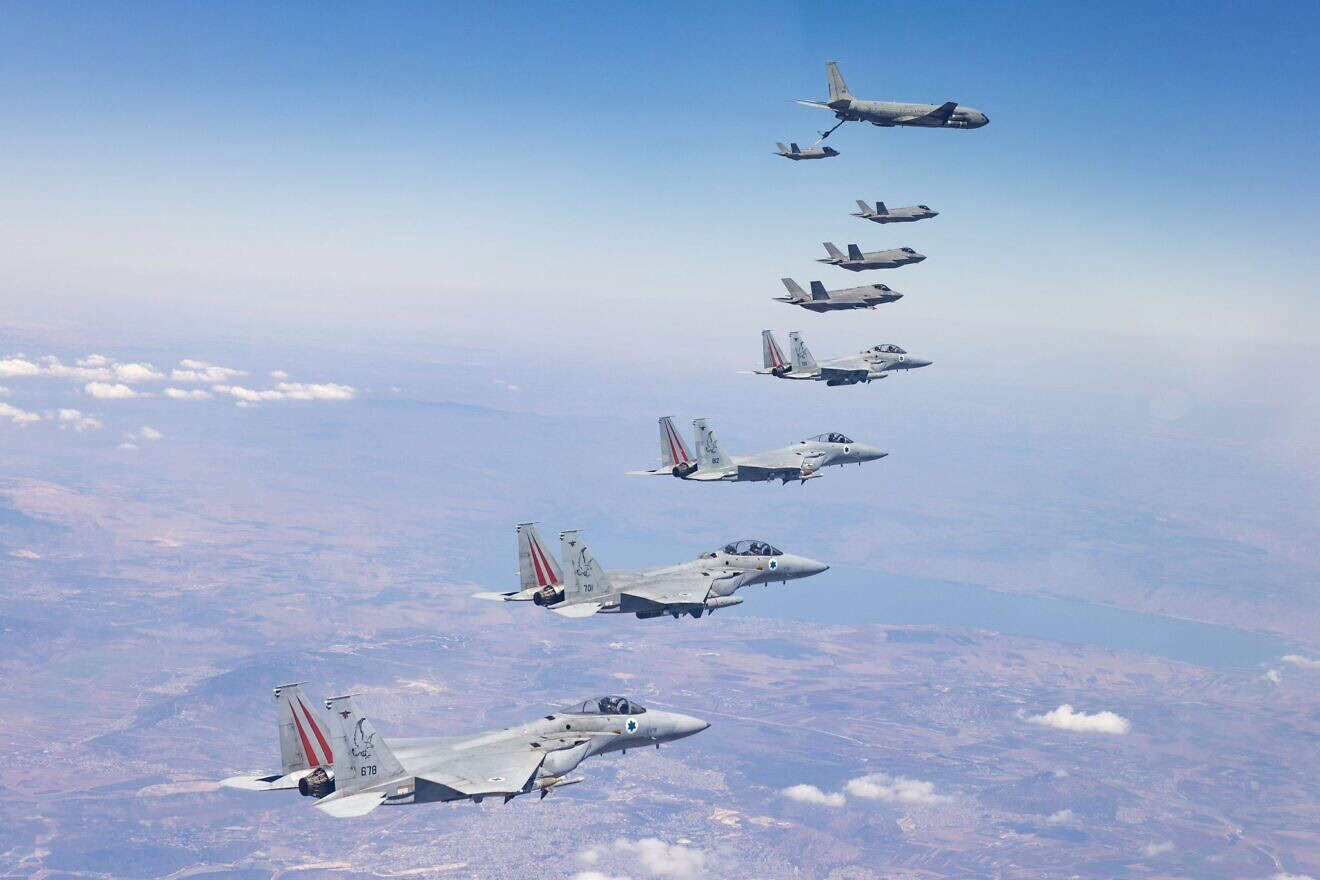
The Israeli Air Force practicing aerial refueling of fighter jets in Israeli airspace. The exercise simulated long-range flight deep behind enemy lines, Aug. 18, 2024. Credit: IDF.

“History won’t end after a strike on Iran,” says a foreign diplomat. His brief statement effectively summarizes numerous discussions and complex dilemmas faced by many people in multiple countries right now.

On one hand, action against Iran isn’t a question of if, simply because no other option remains. On the other hand, we’re not talking about one bombing run and we’re done, as the military challenge is substantial with implications and effects far beyond a localized confrontation between Israel and Iran.

Let’s start with the conclusion: Very little time remains to address Iran’s nuclear program. The Islamic Republic is placing its underground nuclear infrastructure so deep that even the American bunker-busting bomb will eventually be unable to penetrate it. “It will be so deep that conventional weapons won’t be able to do the job,” in the diplomat’s words.

Meanwhile, the latest report from the International Atomic Energy Agency determined that, “if Iran decides to produce weapons-grade uranium [90% enrichment] instead of [the current] 60%, it could do so quickly … [and create] enough stockpile to produce four to five nuclear weapons within about one month,” as summarized by the Institute for Science and International Security based on the IAEA findings.

As is widely known, Iran’s nuclear infrastructure is scattered throughout the vast country. This means “hit and run” scenarios involving a small number of aircraft, like those executed by the Israeli Air Force in Iraq in 1981 or Syria in 2007, are irrelevant. Against multiple sites, some of which are underground, many more aircraft would be needed, possibly in multiple waves of attacks.

How many? Zohar Palti, who has filled numerous key security positions, claimed in Nadav Perry’s podcast that the United States is capable of neutralizing Iran’s nuclear program in eight hours, but an American source I spoke with believes this estimate is too optimistic. According to the source, the question is how much damage one wants to inflict on the Iranian project.

Second, there are likely softening and preparation operations needed before the eight hours of striking the system itself.

Therefore, according to this source, the Americans would need two days to eliminate Iran’s nuclear program. Either way, even if eight hours is sufficient for the Americans, the Israeli Air Force, lacking the bombs they possess, would need much more time.

Furthermore, a strike on Iran wouldn’t begin and end with Israeli Air Force sorties, but would require such extensive regional preparations that they couldn’t be concealed. This means Israel could send and return aircraft alone and by surprise, but both Israeli and American officials doubt the feasibility of such an attack.

First, because if Israel wanted to achieve surprise, the American detection and warning system would quickly discover Israeli activity. Indeed, if we don’t update CENTCOM in advance, there could even be friction between our aircraft and their American counterparts.

Second, even if the Americans don’t participate in the actual strike, it would be very advantageous for Israel to receive real-time defensive assistance from President Donald Trump.

Reports in American media claimed that during Israel’s operation in Iran last fall, American forces stood ready to rescue our pilots if, God forbid, any were shot down over Iranian skies. Additionally, Iran could respond in real time by firing missiles at Israel, at American bases in the region, or at U.S. allies. And of course, Iran might respond later, and indeed has threatened to do so if the worst happens from its perspective—the destruction of its nuclear project.

A Chinese ship

Although Israel significantly damaged Iran’s missile array, the ayatollahs still have quite a few left. They aren’t resting on their laurels either, and according to international media reports, a Chinese ship carrying fuel used for cruise missiles recently docked in Iran. Additionally, the Houthis in Yemen are fully engaged, as are militias in Iraq and Hezbollah in Lebanon. Yes, the organization has suffered a severe blow, but it still retains numerous capabilities.

Or take Azerbaijan, an Israeli ally and bitter enemy of the ayatollahs. Baku, which has already suffered terrorist attacks from Iran, is in its crosshairs if Israel acts. It’s worth remembering that even between Iran and Pakistan, rounds of exchanges of fire and bombings occurred, indirectly related to the rivalry with Israel.

In other words, action in Iran could ignite areas much more extensive than a missile war between Jerusalem and Tehran. To minimize the damage from such a development, a regional defensive deployment is needed, more extensive than the one in which the international coalition prepared to thwart previous Iranian attacks on Israel. On those two occasions, only Israel was bombed. The coalition’s defense greatly minimized Iran’s effectiveness.

This time, even if Israel strikes alone, Iran promises to retaliate throughout the region. Therefore, a regional defensive setup is required, led by the U.S. of course. Its preparation takes weeks, and that can’t be hidden either. So in any case and scenario, advance coordination with the Americans seems necessary.

Israel would like to see American partnership in the attack, not just in defense. But the question is how interested is President Trump. Due to fears of a regional war, former presidents Barack Obama and Joe Biden didn’t want Israel to bomb Iran. Trump is less risk-averse than those two, but he’s also not eager for battle.

At the opening of his meeting with Prime Minister Benjamin Netanyahu at the White House a month ago, I asked the president, “Now that Iran is at its weakest, isn’t it time to take military action against its nuclear program?”

Trump disputed the premise of the question. “You say Iran is weak, but it’s very strong. Biden strengthened it by transferring billions to them. We’ll impose sanctions on it,” the president replied.

Indeed, at this stage, Trump is again trying “maximum pressure” through economic sanctions on Iran and its officials. Military action isn’t in his cards right now, apparently. At the same time, he’s asking Russia to mediate between him and Iran to reach a new nuclear deal. So currently, his focus is diplomatic, not military.

The issue is that there’s no chance sanctions or a renewed agreement will cause the ayatollahs to stop their nuclear program. If they rejected Biden’s concessions, they certainly won’t bridge the gap with Trump’s tougher demands. As for sanctions, history teaches that only rarely have they caused countries to retreat from what they saw as serving their national security. Iran has been under economic and other sanctions for 40 years. This hasn’t really affected it. There’s no reason to think that now, when its on the threshold of a bomb, something will change.

It’s possible that before turning to the military option—or authorizing Israel to do so—Trump wants to exhaust diplomatic tools. Stopping wars around the world was one of his campaign promises. In other words, he’ll give sanctions and negotiations a few months. When these fail, he’ll make decisions.

The moment of truth this fall

This is the assessment of Dan Shapiro, who held a senior position in the Pentagon during the Biden administration and was previously U.S. ambassador to Israel. According to Shapiro, the preparations themselves (for military action) will signal to Iran that we’re serious. There must be a credible military threat on the table. The moment of truth (whether to act or not) will come this fall. Shapiro made those comments at an Institute for National Security Studies (INSS) conference in Tel Aviv.

He added that Iran is in its weakest position as a result of the severe damage to its air defense system last fall by Israel. In his assessment, the U.S. has significantly better capabilities than Israel, but Israel can cause significant damage to Iran’s nuclear infrastructure. In any case, it will need U.S. assistance, as happened in Israel’s attack on Iran in October.

Among professionals, opinions are divided on whether Iranian skies are completely exposed, or the Islamic Republic retains significant defensive capabilities. Here, too, we must assume Iran isn’t wasting time and is using every day to install new radars and anti-aircraft missile batteries.

What, then, will be the practical outcome of all these discussions? Very senior officials in Israel repeatedly say at every opportunity that they “aren’t taking their eyes off the ball,” meaning they’re aware of the opportunities, risks and urgency.

Sen. Lindsey Graham (R-S.C.) said Tuesday, in response to reports that Russia would mediate a nuclear deal between Iran and the U.S., that “there is zero chance there will be a nuclear agreement. The Nazi ayatollahs want to destroy Israel. President Trump needs to give Israel the tools to destroy Iran’s nuclear program.”

The previous day, Netanyahu declared in the Knesset that “there are things better left unspoken, better done quietly.”

He is, of course, right, provided that this time they finally get done.


Originally published by Israel Hayom.

Ariel Kahana is a seasoned Israeli journalist and diplomatic correspondent, frequently sought after as a TV commentator and speaker. He began his media career as an editor and presenter for Arutz 7 radio and has since held key roles across print, broadcast, and digital platforms. Over the years, his work has provided him with a front-row seat to many of Israel’s most pivotal events.


Zawartość publikowanych artykułów i materiałów nie reprezentuje poglądów ani opinii Reunion’68,
ani też webmastera Blogu Reunion’68, chyba ze jest to wyraźnie zaznaczone.
Twoje uwagi, linki, własne artykuły lub wiadomości prześlij na adres:
webmaster@reunion68.com


Mass Protests Continue Outside BBC Headquarters as Corporation Faces Intense Scrutiny for Gaza Documentary

Mass Protests Continue Outside BBC Headquarters as Corporation Faces Intense Scrutiny for Gaza Documentary

Shiryn Ghermezian


Protesters outside the BBC headquarters in London on March 6, 2025. Photo: Nathan Lilienfeld/Campaign Against Antisemitism

Demonstrators gathered outside the London headquarters of the BBC on Thursday for a second week in a row to protest the corporation after it admitted to making “serious flaws” in its documentary about Palestinians living in the Gaza Strip.

The protest outside Broadcasting House was organized by Campaign Against Antisemitism (CAA) and took place following the BBC’s acknowledgment that licensing fee payments for “Gaza: How to Survive a Warzone” were given to the family of a senior Hamas official. Protesters held placards that said, “BBC I Refuse to Fund Terrorists,” and also signs that featured a masked face of a Hamas terrorist with a green ban across his forehead that said “BBC” in the center.

A spokesperson for CAA said the BBC “has allowed license fee money to go to the family of a Hamas terrorist in the production of what was essentially a Hamas propaganda film.” The spokesperson also cited recent polling published by CAA, revealing that a majority of Brits support the call for an independent investigation into the BBC’s actions.

“The BBC is trying to pretend that it is business as usual while hoping to get away with an internal report, but the British public is having none of it and does not want the BBC to mark its own homework,” the spokesperson added. “That is why we want the license fee to be suspended pending an independent investigation into this scandal and the wider issue of the BBC’s glaring bias. It is unconscionable to force people to pay a license fee that pays for biased reporting and has now even been handed to the family of a terrorist.”

British broadcaster and comedian Josh Howie – who is a presenter on GB News and “Headliners,” the GB News late night show – spoke at last week’s protest outside BBC headquarters and announced that he will no longer pay the BBC license fee. He gave a speech at the protest this week as well, and others who spoke on stage included Jewish actress Dame Maureen Lipman; Natalie Sanandaji, who survived the Nova music festival massacre on Oct. 7, 2023; and Mark Birbeck, founder of Our Fight UK, which is a group of mostly non-Jews who combat antisemitic sentiments in Britain.

Mere days after it debuted in late February, the BBC pulled “Gaza: How to Survive a Warzone” from its iPlayer streaming platform after it was revealed that the film’s narrator, Palestinian teenager Abdullah Al-Yazouri, is the son of Dr. Ayman Al-Yazouri, the deputy minister of agriculture in the Hamas-controlled Gaza Strip. It was also discovered that the family is related to Hamas founder Ibrahim Al-Yazouri.

The BBC explained that it was not aware of Abdullah’s ties to Hamas prior to filming the documentary. The corporation apologized and insisted that it asked Hoyo Films, the London-based independent production company that produced the documentary for the BBC, “a number of times” about “any potential connections [Abdullah] and his family might have with Hamas.”

“Since transmission, they [Hoyt Films] have acknowledged that they knew that the boy’s father was a deputy agriculture minister in the Hamas government; they have also acknowledged that they never told the BBC this fact,” the BBC said. “It was then the BBC’s own failing that we did not uncover that fact and the documentary was aired.”

Hoyo Films told BBC it paid Abdullah’s family “a limited sum of money” for him narrating the film and deposited the money into his sister’s bank account. The Telegraph revealed this week that the family of the senior Hamas official was paid close to £790 ($856), which is equivalent to about a month’s salary in Gaza. An organization of pro-Israel lawyers in the UK has demanded that counter-terrorism police investigate the BBC and two producers from Hoyo Films for possible terrorism offenses, such as funding terrorism in violation of the UK’s Terrorism Act 2000.

On Tuesday, BBC Director-General Tim Davie and BBC Chair Dr Samir Shah spoke at a Culture, Media, and Sport Committee hearing in the UK Parliament about the scandal involving the documentary. “We will get to the bottom of this and take appropriate actions,” Shah said. “There’s a dagger to the heart of the BBC’s claim to be impartial and to be trustworthy. We need to restore trust in the BBC.” He also said that the “mechanics of the filmmaking itself” need to be investigated and that the BBC’s investigation into the matter will confirm whether or not money paid for the documentary was ultimately given to Hamas.

James Frith, Labour MP for Bury North, told Davie: “It’s fair to assume that if the family of a senior Hamas leader is paid, that that money goes into the orbit of Hamas.” He simply replied, “I’ve told you what I know.” Even amid the scrutiny, Davie told committee members that the BBC is “the most trusted brand in the world.”

In an interview with the Middle East Eye published this week, Abdullah said he and his family have been targeted with online harassment because of the scandal involving the documentary, his mental health is suffering as a result of the controversy, and he fears for his safety. He said he also holds the BBC “responsible” for anything that happens to him. He claimed that the only money he or his family received was for personal expenses related to his involvement in the film.

“In the contract that was signed between the production company … and my mother, there wasn’t any payment for me or my family,” he told the Middle East Eye. “However, I had $1,000 transferred to my sister’s account, which were for personal spendings, nothing else.”

The Telegraph discovered last week that Safia al-Yazouri, who is believed to be Abdullah’s sister, celebrated the deadly Hamas-led terrorist attacks across southern Israel on Oct. 7, 2023. On the day of the massacre, she reportedly wrote on Facebook, “Amen O Lord,” and included an emoji of two hands clasped in gratitude and another emoji of a heart in the color green, which is seemingly a nod to the Hamas terrorist organization’s main color.

Safia has also voiced support for other attacks against Israel, according to The Telegraph. In May 2023, she reposted a message on social media that applauded a rocket attack on Tel Aviv that closed Israel’s main airport and added a heart emoji. She has also posted a picture depicting a map of the Gaza Strip next to a bullet.


Zawartość publikowanych artykułów i materiałów nie reprezentuje poglądów ani opinii Reunion’68,
ani też webmastera Blogu Reunion’68, chyba ze jest to wyraźnie zaznaczone.
Twoje uwagi, linki, własne artykuły lub wiadomości prześlij na adres:
webmaster@reunion68.com


Talibanizacja Bangladeszu


Talibanizacja Bangladeszu

Uzay Bulut
Tłumaczenie: Małgorzata Koraszewska


Tymczasowy rząd Bangladeszu, wspierany przez najbardziej radykalne ugrupowania islamskie w kraju, zmaga się z wieloma problemami, co doprowadziło do poważnych naruszeń praw człowieka i ograniczenia swobód obywateli.

Była premier Sheikh Hasina uciekła do Indii 5 sierpnia 2024 r. po tym, jak powszechne powstanie (przejęte przez islamistów) zakończyło jej 15-letnie rządy. Na czele rządu tymczasowego stoi laureat Nagrody Nobla Muhammad Yunus, który powrócił ze Stanów Zjednoczonych, aby objąć stanowisko tymczasowego premiera Bangladeszu.

Od tego czasu ataki islamskie na mniejszości religijne gwałtownie wzrosły. Mecze piłki nożnej kobiet zostały odwołane z powodu nacisków islamistów. Aktorzy i autorzy mają trudności w wykonywaniu swojego zawodu. Dziennikarzom grożą ataki, śledztwa, jak również zapowiedziane nowe prawa kontroli Internetu.

Według Komitetu Ochrony Dziennikarzy (CPJ), sześć miesięcy po zmianie reżimu w kraju, dziennikarze z Bangladeszu nadal są zastraszani i atakowani. Stają również w obliczu nowych obaw, że planowane ustawodawstwo może podważyć wolność prasy.

„Tymczasowy rząd Bangladeszu spotkał się z krytyką ze strony dziennikarzy i rzeczników mediów za wprowadzenie w styczniu projektów dwóch rozporządzeń :  Cyber Protection Ordinance 2025 (CPO) i Personal Data Protection Ordinance 2025. Według Global Network Initiative projekt CPO daje rządowi „nieproporcjonalne uprawnienia” dostępu do danych użytkowników i nakładania ograniczeń na treści online. Dziennikarze obawiają się również, że proponowane prawo dotyczące danych da rządowi „niekontrolowany” dostęp do danych osobowych, z  minimalną możliwością  dochodzenia roszczeń na drodze sądowej”.

Tymczasem wzrosła liczba poważnych ataków na dziennikarzy, o czym świadczą pobicia dokonywane przez funkcjonariuszy policji i aktywistów politycznych, a także szturmy na redakcje – donosi Reporterzy bez Granic (RSF).

W Shariatpur, mieście w południowo-zachodnim Bangladeszu, dziennikarze spotykają się z brutalnymi represjami za swoją pracę. 3 lutego Szohag Khan, korespondent „Dainik Samakal”, został zaatakowany młotkiem i nożem za relacjonowanie zaniedbań medycznych przez brata właściciela kliniki i jego wspólników. Dzień wcześniej dziennikarz otrzymał groźby śmierci.

9 lutego sześciu dziennikarzy zostało zaatakowanych — tym razem przez policję. Kawser Ahmed Ripon z „The Report Live”, Asif Uz Zaman i Muhammad Mahadi z „Kaler Kantho”, Azhar Rakib z „Bangladesh Pratidin”, Mohammad Redwan z „Jaago News” i Szimul Khan z „Breaking News” zostali pobici pałkami, uderzeni pięściami i kopani przez policję podczas relacjonowania protestu studenckiego w Dhace. Poszkodowani dziennikarze stwierdzili, że policja celowo ich zaatakowała, mimo że mieli widoczne  legitymacje prasowe, i złożyli skargę.

Seria licznych poważnych ataków na dziennikarzy w ciągu ostatnich kilku dni wskazuje na niepokojący wzrost przemocy wobec mediów. Podczas gdy przejęcie władzy przez rząd tymczasowy w sierpniu 2024 r. wzbudziło nadzieje na poprawę, dziennikarze nadal są zagrożeni. Są atakowani podczas relacjonowania, poddawani fizycznym represjom za swoje artykuły, a ich redakcje są szturmowane przez protestujących” – powiedziała Célia Mercier, szefowa RSF South Asia Desk.

Tymczasem BBC poinformowała, że islamiści zmusili organizatorów do odwołania meczu w turnieju piłki nożnej kobiet w północnym Bangladeszu. Na krótko przed rozpoczęciem gry na początku tego miesiąca grupa Islami Andolan Bangladesz ogłosiła protest przeciwko meczowi w regionie Rangpur, twierdząc, że jest to nieislamskie. Lokalna policja interweniowała, a członkinie drużyny kobiet zostały poproszone o powrót do domów dla własnego bezpieczeństwa.

Islamiści twierdzą, że przerwany przez nich mecz był sprzeczny z ich wartościami religijnymi i mówią, że są zdecydowani nie dopuścić do organizacji żadnych przyszłych meczów piłkarskich.

„Jeśli kobiety chcą grać w piłkę nożną, powinny zakrywać całe ciało i mogą grać tylko przed żeńskimi kibicami. Mężczyźni nie mogą ich oglądać” – powiedział Maulana Aszraf Ali, lider Islami Andolan Bangladesh w rejonie Taraganj w Rangpur. Twierdził również, że grupa „zdecydowanie” chce surowego prawa szariatu w Bangladeszu.

„Byłam sfrustrowana i przestraszona. Nigdy wcześniej nie byłyśmy w takiej sytuacji. To wielkie rozczarowanie, że wróciliśmy bez gry” – powiedziała Asha Roy (17 lat), piłkarka.

Mecz piłki nożnej kobiet był trzecim meczem odwołanym w północnym Bangladeszu w ciągu niecałych dwóch tygodni z powodu sprzeciwu islamistów. W rejonie Dinajpur islamiści protestowali przeciwko grze, a później starli się z miejscowymi, którzy ją popierali, w wyniku czego cztery osoby zostały ranne.

„Jeśli rząd nie podejmie działań, islamiści poczują się ośmieleni. Będzie więcej autocenzury dla kobiet i dziewcząt, będą bardziej zastraszone, uczestnicząc w wydarzeniach publicznych” – powiedziała Szireen Huq, wybitna działaczka na rzecz praw kobiet.

Nie tylko mecze piłki nożnej kobiet stały się celem ataków. 10 lutego dziesiątki islamistów zdewastowało stoisko z książkami na słynnych targach książki Ekushey w Dhace. Protestujący byli wściekli z powodu wystawy książek wygnanej feministki Taslimy Nasrin. W przeszłości Nasrin otrzymywała groźby śmierci od grup islamistycznych za rzekomo „bluźniercze” teksty.

Islamiści również zaatakowali pisarza Szatabdi Vobo na targach książki, oskarżając go o sprzedaż książek Nasrin. Po interwencji policji Vobo został wyprowadzony z targów, gdzie również zmuszono go do publicznego przeproszenia.

Tymczasem jedna z najbardziej znanych aktorek w kraju, Pori Moni, powiedziała, że zakazano jej uroczystego otwarcia nowego domu towarowego w północnym mieście Tangail po tym, jak sprzeciwiły się temu grupy islamistyczne.

„Teraz naprawdę czuję się bezradna, a także niepewna. Częścią mojej pracy jest branie udziału w inauguracji showroomu lub podobnych wydarzeniach. Nikt mnie nie powstrzymywał przez te wszystkie lata” – powiedziała Moni.

Podobne wydarzenia, w których miały uczestniczyć dwie inne aktorki, Apu Biswas i Mehazabien Chowdhury, również zostały odwołane z powodu gróźb ze strony islamistów.

Tymczasem na początku tego miesiąca tysiące protestujących  zdewastowało i podpaliło domy i budynki  związane z Hasiną i czołowymi liderami jej partii Liga Awami. Siły bezpieczeństwa nie interweniowały, aby powstrzymać zamieszki.

W tej sytuacji mniejszości religijne, takie jak chrześcijanie, hinduiści i buddyści, pozostają bezbronne. Doniesienia o przemocy tłumu, przymusowych nawróceniach i wandalizmie miejsc kultu są powszechne, często podsycane przez islamistyczną propagandę.

Według organizacji praw człowieka Open Doors, Bangladesz nie wypełnia swoich zobowiązań międzynarodowych, ponieważ regularnie narusza i nie chroni praw mniejszości religijnych. Na przykład, konwertyci na chrześcijaństwo są wykluczani i spotykają się ze sprzeciwem ze strony swoich rodzin, a także grożą im rozwody i utrata opieki nad dziećmi. Dzieci chrześcijańskie są nękane z powodu wiary rodziców. Chrześcijanie napotykają ograniczenia w zatrudnieniu w sektorze publicznym i doświadczają dyskryminacji w sektorze prywatnym. Chrześcijanie są nękani i zagrożeni przemocą, jeśli rozmawiają o swojej wierze lub angażują się w prozelityzm.

Rada Jedności Hindusów, Buddystów i Chrześcijan Bangladeszu (BHBCUC) poinformowała, że od 4 do 20 sierpnia w całym kraju doszło do 2010 incydentów brutalnych ataków na mniejszości w ciągu 16 dni protestów, których celem było obalenie rządu. Łącznie 915 domów zostało zaatakowanych, splądrowanych lub podpalonych, a 953 lokale handlowe spotkał podobny los. Ponadto cztery kobiety padły ofiarą napaści seksualnej, w tym jednego przypadku gwałtu zbiorowego.

Rada poinformowała również o 174 atakach na mniejszości religijne w kraju w ciągu czterech miesięcy i 11 dni (między 21 sierpnia a 31 grudnia 2024 r.)


W raporcie
 BHBCUC podano, że 64 z tych incydentów obejmowały zabójstwa i represje wobec kobiet, gwałty, gwałty zbiorowe, a także ataki na miejsca kultu, wandalizm, grabieże i podpalenia.

Łącznie 15 incydentów dotyczyło aresztowań i nękania pod zarzutem „urażenia uczuć religijnych”, a 38 dotyczyło ataków na domy i firmy, wandalizmu, grabieży i podpaleń. Raport dotyczył 25 incydentów przymusowego przejęcia domów, ziemi i firm mniejszości religijnych.

Także muzułmańskie sekty mniejszościowe, takie jak muzułmanie sufi, informują, że doznają coraz częstszych ataków na swoje miejsca kultu ze strony muzułmanów sunnickich. „W ciągu ostatnich sześciu miesięcy zaatakowano około sto naszych świątyń [mazars] i ośrodków” – powiedział Anisur Rahman Jafri, sekretarz generalny Sufism Universal Foundation.

„Nie widzieliśmy tak nagłego ataku ekstremistów na nas od czasu uzyskania przez kraj niepodległości w 1971 r.” – dodał, ostrzegając, że jeśli ta sytuacja będzie trwała, krajowi grozi „talibanizacja”.

Podobnie jak Afganistan i Syria, Bangladesz przechodzi obecnie proces pełnej islamizacji. Następuje likwidacja praw i bezpieczeństwa mniejszości religijnych, kobiet, artystów, autorów, dziennikarzy i osób świeckich. Ta transformacja będzie również napędzać wzrost terroryzmu islamskiego, który prawdopodobnie będzie szerzony do reszty świata. Administracja Trumpa nie powinna powtarzać błędów administracji Bidena, ignorując (lub nawet finansując) reżimy islamskie za granicą, które prześladują mniejszości i tworzą terrorystów zagrażających międzynarodowej stabilności.


Uzay Bulut – wychowana w muzułmańskiej rodzinie turecka dziennikarka, która odmówiła powrotu do Turcji, pracuje jako badaczka w Philos Project.


Zawartość publikowanych artykułów i materiałów nie reprezentuje poglądów ani opinii Reunion’68,
ani też webmastera Blogu Reunion’68, chyba ze jest to wyraźnie zaznaczone.
Twoje uwagi, linki, własne artykuły lub wiadomości prześlij na adres:
webmaster@reunion68.com