Archive | 2026/07/04

Izrael nie jest kolonią. Jest powrotem diaspory

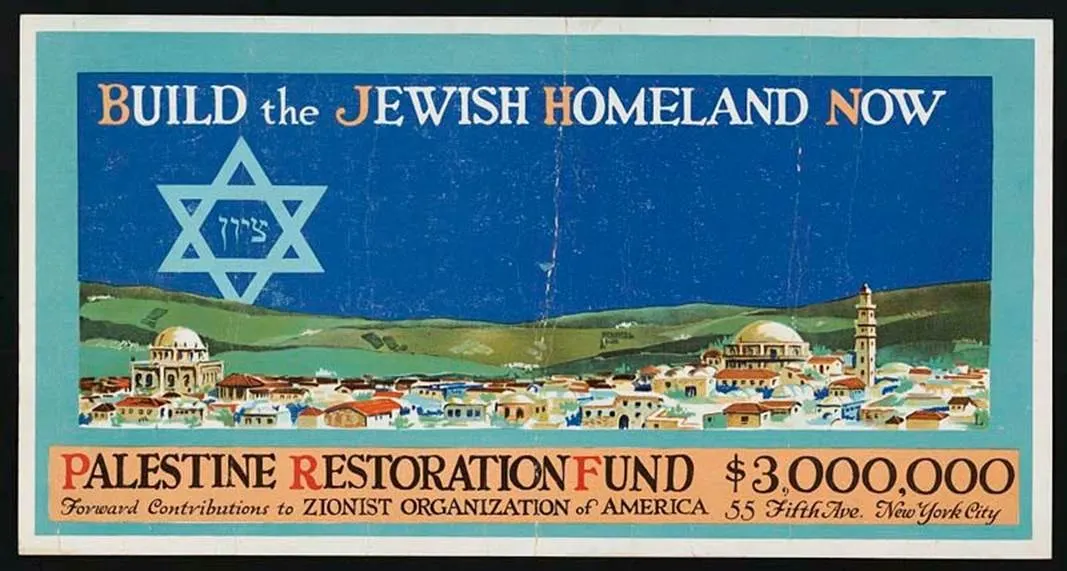
To plakat amerykańskiego artysty z 1919 roku, stworzony w celu promocji „Palestine Restoration Fund” dla Syjonistycznej Organizacji Ameryki.


Izrael nie jest kolonią. Jest powrotem diaspory

Uri Kurlianchik


To plakat amerykańskiego artysty z 1919 roku, stworzony w celu promocji „Palestine Restoration Fund” dla Syjonistycznej Organizacji Ameryki.

Kolonia to grupa ludzi, którzy osiedlają się na odległym terytorium, aby utrzymywać więzi z krajem macierzystym, zazwyczaj w celu przesyłania do niego zasobów. Kartagina była fenicką kolonią założoną przez kupców z Tyru. Trzynaście Kolonii w Ameryce było koloniami angielskimi założonymi przez osadników z Wielkiej Brytanii. Francuska Algieria była francuską kolonią założoną przez Francję. Kolonia zawsze ma metropolię, która nią kieruje i do której wysyła zasoby. Przykłady: Wielka Brytania w Indiach, Francja w Algierii, Hiszpania w Meksyku, Turcja na Cyprze, ZSRR w Kazachstanie, Chiny w Tybecie.

Na marginesie: przyznaj, że zaskoczyło cię uwzględnienie mocarstw nieeuropejskich. Zabawne, jak we współczesnej akademii zawsze uchodzi im to na sucho. Ciekawe dlaczego…?

Jeśli więc Izrael jest kolonią, to czyją? Którego państwa jest kolonią? Gdzie znajduje się jego metropolia?

Nie istnieje jedno państwo, z którego pochodziłaby większość Żydów imigrujących do Palestyny. Większość przybyła jako imigranci i uchodźcy, bez jakiegokolwiek wsparcia ze strony krajów, które opuszczali, często uciekając przed przemocą i prześladowaniami.

Ich celem nigdy nie było wzbogacanie odległej metropolii. Chodziło o samostanowienie na terytorium mającym dla Żydów głębokie znaczenie historyczne i religijne. Niepodległość Izraela przypadła na okres dekolonizacji, a nie kolonizacji.

Oczywiście Izrael nie odpowiada współczesnej definicji kolonii. Jednak pierwsi syjoniści czasami używali tego terminu. Dlaczego?

Ponieważ znaczenie słów zmienia się z biegiem czasu.

Ludzie, którzy przybywali z odległych krajów, aby zakładać nowe osady na bagnach i pustyniach, byli kolonistami w tym samym sensie, w jakim kolonistami byliby ludzie osiedlający się na Marsie, ale nie byli kolonizatorami.

Używali słowa „kolonia”, aby opisać coś będącego właściwie przeciwieństwem tego, co dziś określa się tym mianem, czyli formy okupacji. Nawet najbardziej zagorzały krytyk syjonizmu nie może przecież oskarżać ich o okupowanie czegokolwiek w 1880 roku…

Czym więc jest Izrael? Powiedziałbym, że najlepszym określeniem byłby „powrót diaspory”. Choć dziś rzadko się je słyszy, nie jest ono czymś wyjątkowym.

Najbliższymi przykładami, jakie przychodzą mi do głowy, są Liberia i (w mniejszym stopniu) Pakistan.

Powstanie Izraela było reakcją na antysemityzm, tak jak powstanie Liberii było reakcją na rasizm, a Pakistanu – na uprzedzenia religijne. Izrael jest podobny do Liberii o tyle, że prześladowana grupa przeniosła się na odległe terytorium, z którym łączyły ją historyczne więzi, aby stworzyć państwo, w którym będzie wolna od prześladowań. Pakistan z kolei, podobnie jak Izrael, powstał w wyniku migracji wywołanej podziałem obszaru zamieszkanego przez ludność mieszaną.

Wspólnym mianownikiem wszystkich trzech projektów narodowych jest to, że prześladowania i brak własnego państwa skłaniają ludzi do domagania się własnego terytorium. Celem nie jest wzbogacenie odległej ojczyzny-metropolii, lecz stworzenie miejsca, w którym ludzie będą mogli żyć z godnością.

Pozostaje nam więc współczesny wynalazek w postaci „kolonializmu osadniczego”, który nie ma nic wspólnego z pierwotną definicją kolonializmu, lecz zamiast tego łączy dwa słowa, o których lewica uczy nas, że są straszne, tworząc coś bardzo, bardzo strasznego.

Zasadniczo kolonializm osadniczy oznacza, że silniejsze państwo rozszerza swoją obecność na terytorium słabszego państwa, wypierając jego pierwotnych mieszkańców. Na pierwszy rzut oka wydaje się to bardziej trafnym określeniem, lecz podobnie jak nazywanie Izraela kolonią, rozpada się przy nawet najbardziej pobieżnej analizie.

Żydzi są nieprzerwanie i udokumentowanie obecni na Ziemi Izraela od tysięcy lat. Współczesna ludność arabska wywodzi się z różnych fal migracji i podbojów na przestrzeni wieków. Z pewnością ma w sobie pewien udział ludności rdzennej, ale ma również wiele obcego pochodzenia.

Jeśli „rdzenny” oznacza „pierwotni mieszkańcy”, odpowiedź jest głęboko niejednoznaczna na ziemi, która przez tysiąclecia była dziesiątki razy podbijana i ponownie zasiedlana. W gruncie rzeczy wszyscy mieszkańcy tego regionu są dziś mieszaniną różnych pochodzeń.

Obecnie Izrael jest suwerennym państwem ludzi, którzy się tam osiedlili. Żydzi, którzy osiedlili się w Palestynie, stali się narodem samorządnym, a nie placówką zagranicznego imperium.

Konflikt między Żydami a Arabami w Izraelu rozpoczął się jako wojna domowa i w pewnym sensie nadal nią jest, choć przekształcił się w coś wyjątkowego z powodu wyjątkowego uporu Izraela, by nie wypędzić wrogiej ludności, jak uczynił niemal każdy inny kraj w poprzednim stuleciu.

Tak właśnie powstawała większość narodów w historii: poprzez migrację, wyparcie wcześniejszych mieszkańców i ustanowienie własnej suwerenności. Rosja, Turcja, Wielka Brytania, Francja, Hiszpania – wszystkie ukształtowały się w ten sposób, a mimo to żadnego z tych państw nie określa się mianem kolonii.

Jeżeli Izrael jest kolonią osadniczą, to wszystkie państwa nią są, co czyni ten termin pozbawionym znaczenia.

Jest jeszcze kwestia intencji.

Kolonializm osadniczy zakłada celową, wspieraną przez państwo eliminację ludności rodzimej w interesie państwa kolonizującego. Imigracja syjonistyczna nie była sponsorowana przez żadne państwo.

Żydzi prywatnie kupowali ziemię i od podstaw budowali własne instytucje. Ich zamiarem było przetrwanie i samostanowienie, a nie eliminacja Arabów żyjących wokół nich. Większość wczesnych syjonistów wyraźnie opowiadała się za współistnieniem, choć bardzo niewielu Arabów podzielało tę wizję.

Wysiedlenia były konsekwencją wojny stoczonej między dwoma narodami – zderzenia dwóch sprzecznych dążeń narodowych. Nie było w tym nic wyjątkowego w epoce, w której miliony ludzi zostały przesiedlone w ramach ogromnych wymian ludności w Europie i Azji, z których żadna nie była przez środowiska akademickie określana mianem kolonializmu osadniczego.

Widzieliśmy to w Algierii, Indonezji, Czechosłowacji, Jugosławii, Turcji, Grecji, na Cyprze, w Bułgarii, Bhutanie i niezliczonych innych miejscach. O większości tych wydarzeń dziś się nie pamięta, ponieważ całe populacje zostały wypędzone i problem został rozwiązany.

Wreszcie kolonializm osadniczy napędzany jest przez siłę: dominująca grupa rozszerza swoją władzę kosztem słabszej.

Żydzi przybywający do Palestyny, zwłaszcza po Zagładzie, należeli do najbardziej prześladowanych i bezbronnych ludzi na świecie, a nie do przedstawicieli ekspandującego imperium, które projektowało swoją potęgę na zewnątrz.

Ich zwycięstwo nad pięcioma najeżdżającymi armiami państw arabskich było niczym innym jak cudem. Ich decyzja, by nie zrobić tego, co w XX wieku zrobiło tak wiele innych państw, i nie dokonać transferu wrogiej ludności, była niczym innym jak szaleństwem.

Mimo to Izrael nie jest kolonią. Jest powrotem diaspory.


Link do oryginału:

Uri Kurlianchik – Israel Is Not a Colony, It’s a Diaspora Return
A colony is a group of people who settle in a distant territory to establish ties with their mother country, usually with the purpose of sending resources back. Carthage was a Phoenician colony established by merchants from Tyre. The Thirteen Colonies of America were English colonies established by settlers from Britain. French Algeria was a French colo…
Read more

Zawartość publikowanych artykułów i materiałów nie reprezentuje poglądów ani opinii Reunion’68,
ani też webmastera Blogu Reunion’68, chyba ze jest to wyraźnie zaznaczone.
Twoje uwagi, linki, własne artykuły lub wiadomości prześlij na adres:
webmaster@reunion68.com



On its 250th birthday, Jews mustn’t abandon the fight for America


On its 250th birthday, Jews mustn’t abandon the fight for America

Jonathan S. Tobin


If the United States is lost to the woke left or the woke right, the consequences for Jews and the world are unimaginable. Now isn’t the time to write it off.

The Patrouille de France conducts a flyover above the Statue of Liberty in New York Harbor in commemoration of the 250th anniversary of American independence, June 9, 2026. Photo by Angela Weiss/AFP via Getty Images.

For those old enough to remember the general hoopla and feel-good atmosphere of the American bicentennial, the general lack of enthusiasm surrounding the 250th anniversary of the Declaration of Independence is shocking … and discouraging. Unlike 50 years ago, when the entire nation seemed to fairly burst with patriotic fervor, this year’s commemoration has a downbeat flavor to it.

Even worse, some Jews are—for the first time in the history of the country—beginning to think that America is no longer a safe place. Some are even openly speaking of it as no different from any other stop in the last two millennia of Jewish Diaspora waystations.

The reasons why are not far-fetched. But rather than giving up on the United States at a time when Jewish life is starting to feel precarious, Jews should be doing the opposite. They should not only be joining wholeheartedly in the America 250 celebrations. They should be doubling down on their determination to fight for it.

Partisanship and woke ideology

Some of the lack of enthusiasm for America 250 is due to the hyperpartisanship of these times, with many Democrats and liberals being reluctant to celebrate the country led by a man they despise: President Donald Trump.

But a lot also has to do with the pervasive influence of left-wing ideologies like critical race theory, intersectionality and settler-colonialism, that helped generate a spate of antisemitism that has rocked this country following the Hamas-led Palestinian Arab terrorist attacks in Israel on Oct. 7, 2023. These toxic ideas now dominate American education, journalism, culture and the arts. A half-century ago, they were largely unknown and confined to portions of the academy where progressives were just beginning to make their way in their long march through American institutions. But today, the belief that the United States is an irredeemably racist nation that has been more a force for evil than good has become widespread.

This neo-Marxist worldview is patently false. And yet, it has played an outsized role in convincing a great many people, especially the college-educated who now make up the vast majority of those who vote for Democrats and identify as liberal, that old-fashioned patriotism of the sort that was commonplace in 1976 is not merely out of fashion. It’s downright wrong.

And it is due to the growing influence of such thinking that many are starting to feel like the golden age of American Jewry is over.

Antisemitism isn’t merely rising to unprecedented levels; it is being mainstreamed by corporate media outlets like The New York Times. More than that, for the first time in American history, it has become an organizing principle of politics. Hatred for Israel and the normalization of blood libels against the Jewish state are now the litmus test by which left-wing activists view candidates, including those who are otherwise down-the-line liberals on every other issue, such as Rep. Dan Goldman (D-N.Y.), who just lost a primary that will mean the end of his career as a member of the U.S. House of Representatives.

Sadly, the same phenomenon is beginning to make itself felt on the American right as well. Though the overwhelming majority of Republicans and conservatives are pro-Israel and philo-semitic, the influence of Jew-hating podcasters—namely, former Fox News host Tucker Carlson, the even crazier commentator Candace Owens and the Holocaust-denying neo-Nazi Nick Fuentes, along with enablers like media celebrity Megyn Kelly—is also on the rise. Worse than that, Vice President JD Vance has been sending signals that not only is he neutral about the debate on the right about antisemitism, but that he is ready to jettison the U.S.-Israel alliance.

The fruits of American liberty

With the academy and so many other sectors of American life becoming hostile environments for Jews who won’t bend the knee to woke hatred for Israel and the Jewish people, it’s understandable that many no longer think of it as the “Goldene Medina” in the way their immigrant forebears did.

That’s sad, but it’s also counterproductive. Instead of throwing in the towel on what admittedly sometimes seems like a sinking ship, Jews should understand that they have no choice but to stand and fight for their place in society.

One reason for doing so is that, contrary to the assumptions of many Jewish liberals, America has always been a uniquely welcoming place for Jews. From its earliest days, the American republic not only didn’t erect barriers to Jewish equality and participation that were a given in Europe, as well as in the Arab and Muslim worlds. With few exceptions, Jews have always been treated as equal partners in the American experiment in constitutional government, rather than, as is the case elsewhere, a tolerated minority.

The principles of Judaism were baked into the Western Enlightenment thinking that was intrinsic to the mindset of the framers. And that made itself felt in a variety of ways. President George Washington’s famous letter to the Hebrew Congregation of Newport, R.I., in which he wrote that “happily the Government of the United States, which gives to bigotry no sanction, to persecution no assistance” was not merely a personal sentiment. Though Jews were a tiny minority in America, they had taken an active part in the American Revolution. And in a republic without an established religion and in which many of the various Christian sects had a living memory of persecution in Europe, religious freedom was enshrined as the nation’s “first freedom” in the Bill of Rights.

It was a nation that was not merely dedicated to liberty as no other had been. It was also a place where economic freedom and the rule of law were guaranteed, thus giving Jews and other immigrant minority groups a chance to better themselves. If American Jewry is the freest and most prosperous Jewish Diaspora in history, it is a function of the governing system first conceived in 1776 and then firmly established in the framing of the U.S. Constitution in 1787. It is those founding documents that are the guarantee of Jewish liberty as well as that of everyone else.

That this exceptionalism and tradition of liberty is under assault is not in doubt. A two-front war is being waged against the Judeo-Christian heritage that is the foundation of American liberty from both the left and the right. And given the strength of liberty’s woke opponents, pessimism about its survival, which is inextricably linked to Jewish safety, may be forgiven at times.

But the semiquincentennial is no time to concede that fight.

No choice but to stand and fight

We must do so not merely out of a desire to defend our lives here. We must do so because a strong America that has not abandoned the best of Western civilization and values is essential to the worldwide struggle against the forces of tyranny, both Marxist and Islamist, which threaten Israel and Jews everywhere.

If Jewish life is unsafe in America, it will be unsafe everywhere. And that will impact Israel as well. That’s why it is essential that, rather than giving up or giving in to hysterical talk about the end of American liberty and even the end of American Jewry, we must recommit to the fight to roll back the woke tide on the left and its antisemitic echo on the right—and to defeat it.

This may be a generational struggle in much the same way that leftist efforts to impose these false beliefs on the United States were one. But it is a battle that is necessary to fight—not just to save American Jewry, but to save the canon of Western civilization on which our freedoms rest.

The contempt for traditional patriotism and belief in the truth that the American republic—flawed though it might be—is a force for good in the world has already been made clear by left-wing elites. But as discouraging as this discourse may be, it is a reminder that the stigmatizing and targeting of Jews is part and parcel of the same struggle that other Americans are engaging in. America is and always has been exceptional. But it will only remain that way so long as a broad cross-section of its citizens—Jews and non-Jews, liberals and conservatives, Democrats as well as Republicans—are willing to stand up against the woke forces seeking to traduce its founding values.

The appropriate answer to attacks on Jews is not flight or a call to shelter in place. Jews must speak up and not abandon the streets or the public square to the antisemites and woke mobs. The rejoinder to anti-Jewish violence and intimidation is for Jews to act in the most quintessential American way possible: to arm themselves and make it clear that they will not be intimidated or silenced.

Those who hate the founding principles of the United States, in addition to its Jewish residents, may seem to be on the ascent, as election results in various Democratic Party primaries have shown. But they are wrong about the end of American greatness or the need to transform it into some pale reflection of Marxist or Islamist concepts. And as dire as the situation may seem at the moment, these enemies of liberty may be sealing their own fate with their attempt to foist antisemitic extremists on a country that is inherently moderate and where Jew-hatred of this type has always been confined to outliers rather than the mainstream.

Faith in the good sense and decency of the American people may seem like a forlorn hope when you witness the ability of figures like New York City Mayor Zohran Mamdani to affect the future of American democracy. But those who bet against America have always been shortsighted suckers. Right now is no time to doubt that this will continue to be the case.

On this 250th Independence Day, rather than writing off America, we should be embracing it all the more enthusiastically and pledging to defend it against those who wish to tear it down. The alternative is not merely unthinkable; it’s an abandonment of Western civilization, and all that decent people hold dear.

Happy birthday, America! Even on your worst day, we still believe in you, and we know you’re worth fighting for.


Jonathan S. Tobin is editor-in-chief of the Jewish News Syndicate, a senior contributor for The Federalist, a columnist for Newsweek and a contributor to many other publications. He covers the American political scene, foreign policy, the U.S.-Israel relationship, Middle East diplomacy, the Jewish world and the arts. He hosts the JNS “Think Twice” podcast, both the weekly video program and the “Jonathan Tobin Daily” program, which are available on all major audio platforms and YouTube. Previously, he was executive editor, then senior online editor and chief political blogger, for Commentary magazine. Before that, he was editor-in-chief of The Jewish Exponent in Philadelphia and editor of the Connecticut Jewish Ledger. He has won more than 60 awards for commentary, art criticism and other writing. He appears regularly on television, commenting on politics and foreign policy. Born in New York City, he studied history at Columbia University.


Zawartość publikowanych artykułów i materiałów nie reprezentuje poglądów ani opinii Reunion’68,
ani też webmastera Blogu Reunion’68, chyba ze jest to wyraźnie zaznaczone.
Twoje uwagi, linki, własne artykuły lub wiadomości prześlij na adres:
webmaster@reunion68.com


Trump Says He Has Been ‘Best President’ For Israel, Questions Why Jews Vote Democrat


Trump Says He Has Been ‘Best President’ For Israel, Questions Why Jews Vote Democrat

Corey Walker


US President Donald Trump attends a working lunch with the leaders of G7 and the Middle East during the G7 summit, in Evian-les-Bains, France, June 16, 2026. Photo: REUTERS/Christian Hartmann/Pool

President Donald Trump on Friday renewed a line of political attack that has repeatedly drawn condemnation from Jewish organizations and civil rights advocates, questioning why many Jewish Americans continue to support Democratic candidates despite what he describes as his strong record backing Israel.

Speaking in an interview with CNBC, Trump criticized former President Barack Obama’s 2015 nuclear agreement with Iran before turning to American Jewish voters.

“How a Jewish person can vote for a Democrat is beyond me,” Trump said. “Because I’ve been the best president in the history of Israel and they acknowledge — and by the way, in Israel I think I was at 99 percent or something.”

The remarks immediately revived criticism that Trump was invoking a longstanding antisemitic trope suggesting that Jewish Americans have a political obligation to prioritize Israel when making electoral decisions. Critics say such rhetoric echoes the “dual loyalty” stereotype — the idea that Jews are more loyal to Israel than to their own country or should vote primarily based on Israel’s interests — a notion that historians and antisemitism experts have identified as a recurring form of anti-Jewish prejudice.

Trump has made similar comments throughout his political career, at times accusing Jewish Democrats of showing “great disloyalty” or failing to appreciate his administration’s policies toward Israel. Those remarks have previously been condemned by groups across the American Jewish spectrum, including organizations that strongly support Israel but reject suggestions that Jewish Americans constitute a monolithic voting bloc or owe political allegiance to any foreign country.

The president has consistently defended his comments by pointing to what many analysts regard as one of the most pro-Israel foreign policy records of any modern US administration. During his first term, Trump recognized Jerusalem as Israel’s capital, moved the US Embassy there, recognized Israeli sovereignty over the Golan Heights, withdrew from the Iran nuclear agreement, and helped broker the Abraham Accords, which normalized relations between Israel and several Arab states.

Those policies earned widespread praise from Israeli leaders, particularly Prime Minister Benjamin Netanyahu, and from many Republican lawmakers and pro-Israel advocacy groups, who argued they strengthened Israel’s security and reshaped the regional balance of power.

However, Trump has recently come under fire over moves from his administration that many perceive as undercutting Israel’s interests. While brokering a deal to end the Iran War, the administration sidelined Israel in discussions and negotiated terms that sought to constrain the Jewish state’s ability to fight Hezbollah. The deal also did not guarantee the removal of Iran’s enriched uranium, an oversight that many critics say leaves a central threat to Israel’s security unresolved.

Israeli officials criticized the deal and insisted that they would continue their defensive military campaign against the Lebanese terrorist group. In late June, Israel and Lebanon signed a peace deal, mediated by the US, aimed at winding down the conflict by withdrawing the Israel Defense Forces (IDF) from parts of southern Lebanon.

But Trump’s political messaging has often complicated that record. While supporters view his comments as emphasizing his administration’s support for Israel, critics argue that repeatedly framing Jewish Americans’ voting behavior around Israel perpetuates harmful assumptions about Jewish identity and political loyalty.

American Jews have historically voted overwhelmingly for Democratic presidential candidates, with surveys consistently showing that domestic issues — including healthcare, abortion, the economy, democracy and church-state separation — rank alongside or above Israel in determining their political preferences.

Trump’s remarks come as Israel remains a deeply polarizing issue in American politics. Republicans have largely rallied behind the Israeli government following the Oct. 7, 2023, Hamas attack and the subsequent war in Gaza, while Democrats have become increasingly divided over US policy, with progressives calling for greater pressure on Israel over the humanitarian consequences of the conflict.

Against that backdrop, Trump has repeatedly sought to contrast his record with that of Democratic administrations, arguing that no president has done more to support Israel. At the same time, his continued appeals to Jewish voters through the lens of Israel have ensured that debates over antisemitism, political identity and the boundaries of acceptable campaign rhetoric remain part of the broader national conversation.


Zawartość publikowanych artykułów i materiałów nie reprezentuje poglądów ani opinii Reunion’68,
ani też webmastera Blogu Reunion’68, chyba ze jest to wyraźnie zaznaczone.
Twoje uwagi, linki, własne artykuły lub wiadomości prześlij na adres:
webmaster@reunion68.com