Archive | 2026/08/12

Kim jest Judith Butler?

„They” jako bardzo queerowa artystka performansu



Kim jest Judith Butler?

Phyllis Chesler


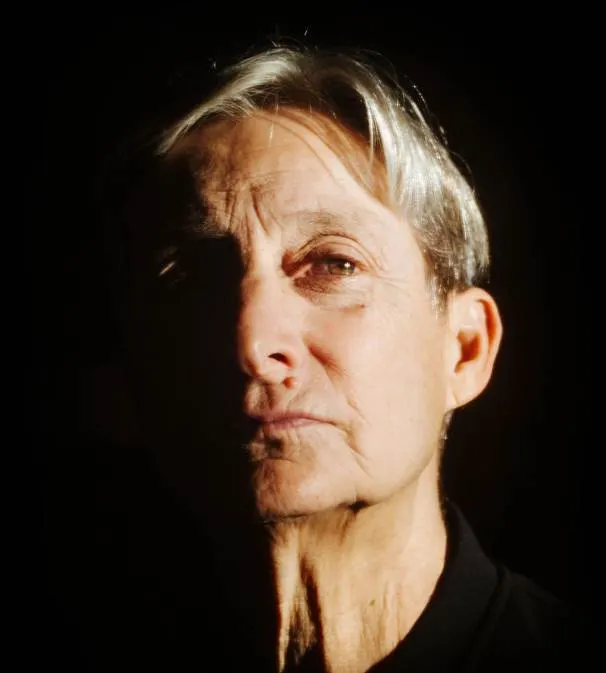
Kim jest Judith Butler? Czy naprawdę trzeba o to pytać?

Butler to akademicka gwiazda ostatnich trzech dekad, nasz rodzimy Lacan, artystka performansu par excellence.

Butler znana jest z rozwijania tezy, że płeć biologiczna i płeć kulturowa nie istnieją jako obiektywne kategorie, że wszystko jest konstruktem społecznym oraz że płeć jest odgrywana, a nie uwarunkowana biologicznie. W pewnym sensie dla Butler nic nie jest naprawdę realne; liczy się jedynie to, co ktoś odczuwa lub deklaruje. Rzeczywistość jest czymś, czym można się „bawić”, przynajmniej na poziomie języka. W konsekwencji, w jej ujęciu jedynie gramatyka ma znaczenie, a Butler domaga się, by zwracać się do niej zaimkiem „they”, a nie „he” czy „she”, ponieważ obie te kategorie są – jej zdaniem – pojęciami, a nawet zniewagami, które w gruncie rzeczy nie istnieją. Jej pisarstwo jest postmodernistyczne, niejasne, chwilami wręcz niezrozumiałe, zawsze afektowane i dominujące. Wybrana przez nią tożsamość sama w sobie stanowi queerowy performans. Dawniej określono by ją jako butch dyke albo lesbijkę, która nie nosi makijażu, ma bardzo krótko obcięte włosy i mogłaby uchodzić za mężczyznę. (Nie ma w tym oczywiście nic nagannego, choć może to zaskakiwać).

Butler zdobyła międzynarodową sławę w 1990 roku po opublikowaniu książki Gender Trouble: Feminism and the Subversion of Identity. Choć uzyskała doktorat z filozofii, znana jest również ze swojego antysyjonizmu oraz przekonania, że Żydzi powinni funkcjonować jako bezpaństwowa i narażona na niebezpieczeństwa społeczność, ponieważ – jej zdaniem – jest to bardziej moralny sposób bycia Żydem. Właśnie sprawdziłam hasło Butler w Wikipedii i z niepokojem zauważyłam, że redaktorzy przyjęli jej żądanie, aby opisywać ją za pomocą zaimka „they”. W tym krótkim szkicu nie będę już stosować się do tych instrukcji.

Co zadziwiające, podobnie jak każdy islamski dżihadysta, Butler opowiada się za rozwiązaniem jednopaństwowym – i to mimo długiej historii systematycznego nakładania specjalnych podatków na Żydów, ich zubożania, mordowania i wypędzania przez arabskich muzułmanów; mimo że Bliski Wschód zdominowany przez Arabów i muzułmanów od dawna został praktycznie oczyszczony z ludności żydowskiej (Judenrein); mimo że arabscy przywódcy wielokrotnie odrzucali możliwość utworzenia państwa palestyńskiego.

Dla Butler takie fakty nie istnieją; woli abstrakcyjne rozwiązanie od bardzo niebezpiecznej rzeczywistości. W jej przekonaniu syjonizm jest praktyką rasistowską, europejską i kolonialną. Popierała różne formy ruchu BDS (Bojkot, Wycofanie Inwestycji i Sankcje), krytykowała Izrael za to, co nazywa „murem apartheidu” (a nie barierą bezpieczeństwa), oraz niezwykle ostro potępiała Izrael za prowadzone przez niego wojny obronne.

To twarda Żydówka, ciesząca się ogromnym uznaniem zarówno w Berlinie, jak i w Berkeley.

W swojej książce z 2012 roku Parting Ways: Jewishness and the Critique of Zionism zauważa, że wielu ważnych żydowskich myślicieli XIX wieku również sprzeciwiało się syjonizmowi i nie było to wówczas postrzegane jako antysemityzm. Jak pisze Corinne E. Blackmer w znakomitej książce z 2020 roku Queering Anti-Zionism: Academic Freedom, LGBT Intellectuals, and Israel/Palestine Campus Activism:

„Z faktu, że Żydzi doświadczali znacznej przemocy sponsorowanej przez państwa, prześladowań i dyskryminacji w galucie [diasporze], czego kulminacją był nie tylko Holokaust, ale również przymusowe wypędzenie niemal miliona Żydów Mizrachi [Żydów z krajów arabskich] z ich odwiecznych domów na Bliskim Wschodzie… można wyciągnąć dwa możliwe wnioski. Jedynym realistycznym sposobem zapewnienia Żydom przetrwania jest posiadanie własnego państwa.”

Jednak według Butler rzekoma, nieudowodniona i wyolbrzymiona krzywda wyrządzona arabskim muzułmańskim Palestyńczykom wymaga dziś rozwiązania jednopaństwowego – państwa, w którym Żydzi mieliby, zgodnie z jej wizją, dokonać „przebudowy własnej tożsamości”, stając się częściowo hybrydowymi muzułmańskimi i chrześcijańskimi Arabami oraz odrzucając syjonizm. Blackmer opisuje tę propozycję następująco:

„Tak jak Herzl mylił się, dochodząc do wniosku, że utworzenie państwa żydowskiego położy kres antysemityzmowi, tak Butler myli się, twierdząc, że likwidacja syjonizmu zakończy nienawiść do Żydów… Butler pragnie, aby Wielka Palestyna stała się bytem zamieszkiwanym przez Żydów i Palestyńczyków, którzy zdekonstruowali swoje odrębne, jednonarodowe tożsamości, a następnie odbudowali je jako tożsamości dwunarodowe.”

Złośliwa prowokacja Butler ociera się o szaleństwo. I właśnie dlatego stała się tak popularna i tak szeroko podziwiana. Butler dosłownie „bawi się” ludzkim życiem, pozostając jednak w bezpiecznej odległości od konsekwencji.

Przynajmniej nie identyfikuje się jako Palestynka. Butler wspięła się na szczyty akademickiej sławy, podążając śladami Derridy i Lacana oraz ogłaszając się osobą „queer”. Za ten drobny przejaw powściągliwości pozostaję wdzięczna.


Link do oryginału:

Phyllis’s Newsletter
Who is Judith Butler?
Who is Judith Butler? Does one really need to ask…

Zawartość publikowanych artykułów i materiałów nie reprezentuje poglądów ani opinii Reunion’68,
ani też webmastera Blogu Reunion’68, chyba ze jest to wyraźnie zaznaczone.
Twoje uwagi, linki, własne artykuły lub wiadomości prześlij na adres:
webmaster@reunion68.com


SCOOP: Jewish Federations of North America dismisses comms adviser after JNS reports he said to avoid using term ‘Zionism’


SCOOP: Jewish Federations of North America dismisses comms adviser after JNS reports he said to avoid using term ‘Zionism’

Andrew Bernard


The Federation told JNS exclusively that it is ending its engagement with a consultant who headed one of its communications projects after JNS reported that he advised attendees at a Federations conference to avoid using the word “Zionism.”

Israeli Prime Minister Benjamin Netanyahu addresses the Jewish Federations of North America 2025 General Assembly, Nov. 17, 2025. Credit: Courtesy.

The Jewish Federations of North America ended its relationship on Wednesday with a communications consultant, who told attendees at one of its conferences to avoid using the word “Zionism” to message effectively about Israel.

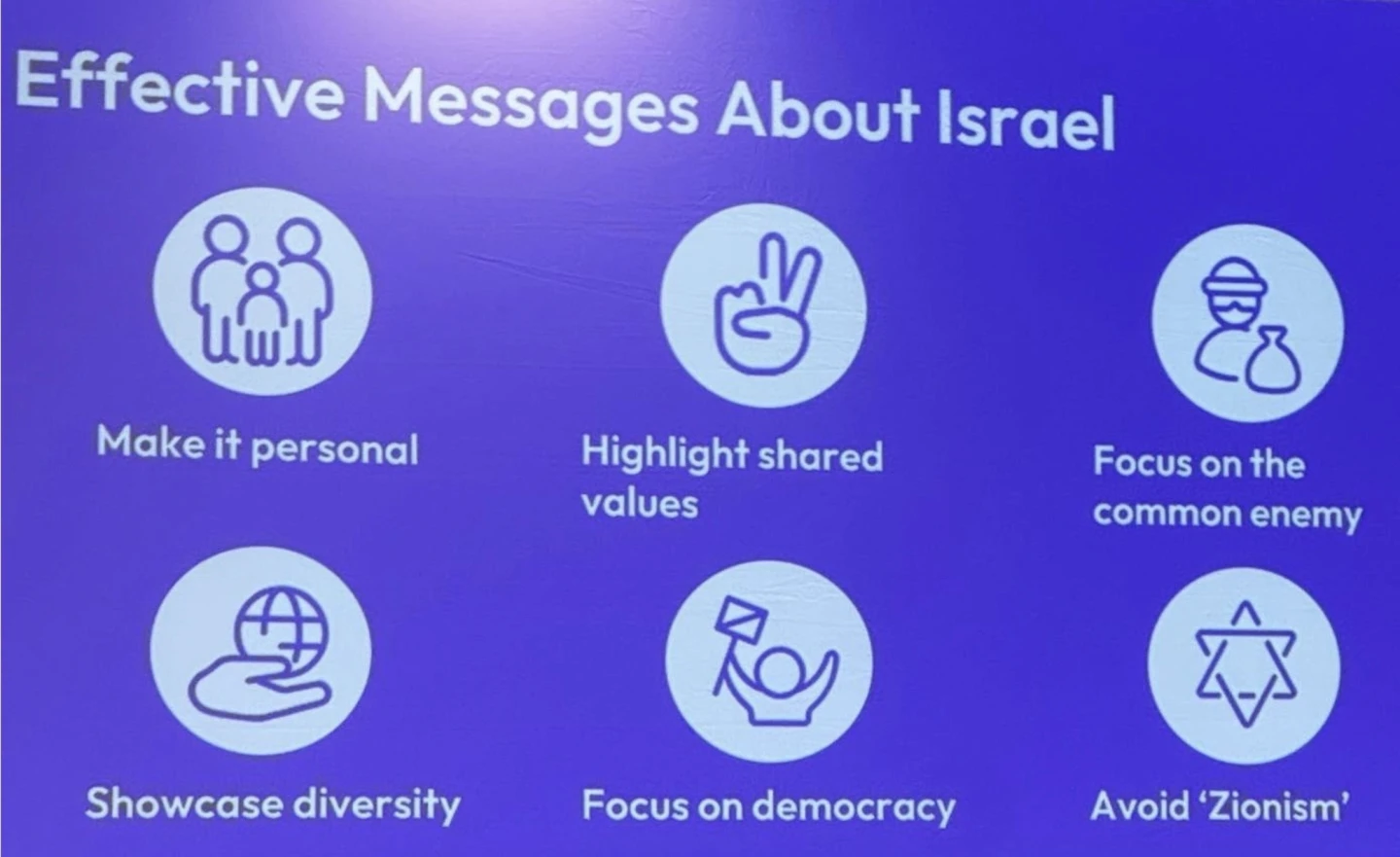
After JNS reported exclusively on how Matthew Berger, executive director of the Federation’s “Project Halo,” made the recommendation at an invite-only Federation event on Tuesday, the Federation told JNS that it was ending its work with him and his communications company.

“The presentation at our National Young Leadership Cabinet Retreat was not prepared by Jewish Federations of North America, but by a Project Halo consultant, and does not represent our approach to Zionism,” Niv Elis, the Federation’s associate vice president for external communications, told JNS.

“Project Halo was created to equip the Jewish community with research-based messaging and communications tools to combat antisemitism and strengthen support for Israel,” Elis said.

“At this time, we will be ending our engagement with that consultant and thank them for their work helping launch Project Halo,” the group said. “Jewish Federations of North America remain fully committed to Project Halo and to providing our communities with the strongest possible resources to advocate proudly and effectively for Israel and the Jewish people.”

Berger was executive director of the project and is also the president and CEO of Mashber Strategies, a communications firm that counts some of the largest American Jewish groups as current and former clients.
.
A presenter at a conference of the Jewish Federations of North America urged attendees to “avoid ‘Zionism’” in a slide on making “effective messages about Israel” on Aug. 4, 2026.

An attendee at the conference told JNS that “my jaw kind of hit the floor for a second” when Berger told the audience at the Federation’s youth retreat that it should “avoid ‘Zionism’” in a slide presentation about how to communicate about Israel.

The slide instead recommended that attendees should “showcase diversity” and “focus on the common enemy.”

Berger told JNS that the situation was a “misunderstanding of the presentation and my beliefs.”

“As a Zionist, I’m frustrated with how the word is being misused and often abused today by those attacking Israel,” Berger said.

“My goal is to guide people to use language that will open doors to conversations,” he told JNS. “By talking to people about Jewish self-determination and Israel as the Jewish homeland, rather than using the often-misconstrued term ‘Zionism,’ we are more likely to engage allies in the fight against antisemitism.”

A February briefing document from Project Halo that the Federation shared with JNS noted that the word “Zionism” is frequently misinterpreted and that a poll from the Federation found that a diminishing number of American Jews self-identify with the term.

The document encouraged supporters of Israel to define the term “Zionism” in response to those findings, not avoid using it.

“Jewish Federations are proudly and unapologetically Zionist,” Elis told JNS. “Since Oct. 7, we have raised more than $900 million to support Israel and its people, and we stand firmly behind both our commitment to Israel and the research we have produced to help our community better understand today’s communications challenges.” 


Zawartość publikowanych artykułów i materiałów nie reprezentuje poglądów ani opinii Reunion’68,
ani też webmastera Blogu Reunion’68, chyba ze jest to wyraźnie zaznaczone.
Twoje uwagi, linki, własne artykuły lub wiadomości prześlij na adres:
webmaster@reunion68.com


We Must Build the New Generation of Jewish Activists


We Must Build the New Generation of Jewish Activists

Daniel Rosen


Supporters of Israel gather in solidarity with Israel and protest against antisemitism, amid the ongoing conflict between Israel and the Palestinian terror group Hamas, during a rally on the National Mall in Washington, DC, Nov. 14, 2023. Photo: REUTERS/Leah Millis

The most important task facing the Jewish community today is not simply responding to the crisis of the moment. It is building the generation that will be prepared to confront the crises of the future through our educational system.

Our mission is to cultivate a generation of fearless activists. An effective curriculum must treat civic involvement, grassroots advocacy, and direct action as a core component of learning.

Every year, the Jewish community must graduate thousands of young people who are prepared to lead, organize their communities, tell their stories, engage in political campaigns, and stand up against Jew hatred wherever they encounter it.

In this context, students must understand not only the history of the Jewish people, but also the factual record, civic tools, and moral clarity necessary to defend Israel and the US=Israel alliance in an increasingly hostile environment. The message to the young people ought to be: “Learn, lead, do. It’s up to you”

If the community remains committed to this effort, within five years they can have tens of thousands of trained young leaders serving as advocates across campuses, workplaces, synagogues, community organizations, and public life. By the time they reach their 20s and 30s, they will be shaping public opinion and influencing public policy. They will play an important role in helping secure a vibrant future for both the Jewish people and American democracy.Why is this so urgent?

A recent CNN discussion provided a revealing glimpse into the challenge before us. During a panel discussing the political rise of Abdul El-Sayed in Michigan, Democratic strategist and school shooting survivor David Hogg argued that many young voters are alienated from the Democratic establishment and referenced alleged Israeli atrocities in Gaza three times in the span of two minutes. While these claims remain fiercely contested, the most telling aspect of the exchange was not the assertions themselves, but the complete lack of real-time pushback or fact-checking from the rest of the panel.

Immediately afterward, filmmaker Michael Moore repeated accusations of genocide and the killing of civilians, including children. Again, these claims were aired without challenge or contextual correction.

Over the past decade, public opinion research has shown a significant generational gap in attitudes toward Israel. Pew Research Center surveys, for example, have consistently found that younger Americans — particularly those under 30 — are substantially more critical of Israel than older cohorts, with sympathy for Palestinians often exceeding sympathy for Israelis in this age group. They view Israel exclusively through the lens of the oppressed and the oppressor paradigm.  For many young people, this is no longer simply a political opinion; it has become a deeply held moral conviction.

Within the pro-Israel community, this reality is difficult to accept. Yet dismissing it as a passing trend would be a mistake. Beliefs formed in high schools, universities, social media, and popular culture are shaping the next generation of voters, journalists, educators, activists, and elected officials.

The political trajectories of figures such as Abdul El-Sayed, Zohran Mamdani, Alexandria Ocasio-Cortez, and so many others illustrate a broader generational shift that is likely to influence American politics for years to come. Regardless of individual election outcomes, the underlying ideological movement is not disappearing. Even if its momentum fluctuates, the data on youth attitudes suggests it will continue to shape public discourse over the next two or three decades.

In the face of these challenges, we face a fork in the road which offers three paths forward. We can do nothing, we can remain trapped in a perpetual state of damage control, chasing every new controversy as it arises — or we can build the strategic capability to lead those conversations ourselves.

That is encouraging news.

While every generation eventually passes, there is always another generation coming behind it. People’s minds are not fixed forever. To build this movement, we must activate the strong institutions already woven into the fabric of Jewish life. Jewish day schools, Jewish camps, teen organizations — including BBYO, Young Judaea, and USY — and programs like Birthright Israel provide the direct pipeline from which we can systematically raise up confident, skilled advocates.

The path forward involves creating a permanent pipeline dedicated to educating and empowering thousands of rising Jewish leaders every single year.


Daniel M. Rosen is the President and Co-founder of IMPACT, a 501c3 dedicated to organizing, empowering, and mobilizing individuals to combat Jew hatred on social media and beyond. Follow us at @joinimpactnow


Zawartość publikowanych artykułów i materiałów nie reprezentuje poglądów ani opinii Reunion’68,
ani też webmastera Blogu Reunion’68, chyba ze jest to wyraźnie zaznaczone.
Twoje uwagi, linki, własne artykuły lub wiadomości prześlij na adres:
webmaster@reunion68.com