
Archive | 2026/08/03

Wojna Islamskiej Republiki Iranu z chrześcijanami


Wojna Islamskiej Republiki Iranu z chrześcijanami

Uzay Bulut


Zwykłe praktyki religijne chrześcijan są w Islamskiej Republice Iranu uznawane za przestępstwa i podlegają karze. Chrześcijanie są aresztowani i więzieni pod zarzutami związanymi z działalnością religijną, taką jak chrzest, Komunia Święta, wspólna modlitwa czy studium Biblii, również wtedy, gdy odbywają się one za granicą. W ubiegłym miesiącu siły bezpieczeństwa reżimu przystąpiły do przejęcia Ewangelickiego Kościoła św. Piotra w Teheranie, wybudowanego w 1876 roku (na zdjęciu). Nakazano mieszkańcom kompleksu kościelnego opuścić swoje domy, a wiernym polecono znaleźć inny kościół. (Źródło zdjęcia: Herbert Karim Masihi/Wikimedia Commons)

Nowy raport roczny za 2026 rok, zatytułowany „Scapegoats: Rights Violations Against Christians in Iran” („Kozły ofiarne: Naruszenia praw chrześcijan w Iranie”), opublikowany przez organizację Article18 we współpracy z Open Doors, Christian Solidarity Worldwide i Middle East Concern, rzuca alarmujące światło na prześladowania chrześcijan w Iranie.

Zgodnie z raportem co najmniej 21 chrześcijan zostało w 2025 roku skazanych na kary pozbawienia wolności za domniemany udział w rozpowszechnianiu Biblii w Iranie. Oprócz więzienia wymierzano im również inne kary, takie jak grzywny, zesłanie oraz pozbawienie praw obywtelskich.

W czerwcu 2025 roku dwoje konwertytów na chrześcijaństwo zostało skazanych na podstawie artykułu 500 kodeksu karnego za „działalność propagandową na rzecz dewiacyjnych chrześcijańskich przekonań »syjonistycznych«, sprzecznych z systemem Islamskiej Republiki Iranu”. Każde z nich skazano na 10 lat więzienia. Oskarżono ich również o „rozprowadzanie przemycanych towarów” (Biblii) na podstawie artykułów 22 i 24, za co otrzymali dodatkowo dwa lata pozbawienia wolności oraz grzywny. Proces odbył się zaocznie, a jedynym materiałem dowodowym były Biblie i inne publikacje chrześcijańskie znalezione w ich domach.

Jak stwierdza raport, pogarda wobec Biblii widoczna jest także w określaniu jej mianem „zakazanej książki” w innym akcie oskarżenia przeciwko dwóm Irańczykom pochodzenia ormiańskiego oraz trzem konwertytom na chrześcijaństwo. W czerwcu 2025 roku postawiono im zarzuty „propagandy” i „zmowy”, a w listopadzie skazano ich łącznie na ponad 50 lat więzienia. W innych wyrokach sądowych wydanych w 2025 roku Biblia była określana jako księga „zniekształcona”, „dewiacyjna”, „zepsuta” lub „wprowadzająca w błąd”.

Raport wskazuje również na inne niepokojące tendencje, w tym rosnące zaangażowanie Korpusu Strażników Rewolucji Islamskiej (IRGC) w aresztowanie chrześcijan, zwłaszcza osób zajmujących się rozpowszechnianiem Biblii; poważne przypadki złego traktowania zatrzymanych chrześcijan; konsekwentne stosowanie artykułu 500 kodeksu karnego (dotyczącego „propagandy sprzecznej ze świętą religią islamu”) do skazywania chrześcijan; a także monitorowanie ich działalności za granicą, między innymi uczestnictwa w seminariach teologicznych.

Korpus Strażników Rewolucji Islamskiej odgrywa obecnie coraz większą rolę w gromadzeniu informacji o irańskich chrześcijanach oraz ich prześladowaniu. Ponieważ oficjalnym zadaniem IRGC jest obrona Islamskiej Rewolucji, rosnąca liczba aresztowań chrześcijan sugeruje, że reżim postrzega ich jako zagrożenie.

Kościoły domowe zostały uznane za grupy wrogie państwu. Udział funkcjonariuszy IRGC w nalotach charakteryzuje się zazwyczaj większą brutalnością. Przykładowo wieczorem 6 lutego 2026 roku co najmniej 20 funkcjonariuszy IRGC w cywilnych ubraniach wtargnęło na zgromadzenie około 80 chrześcijan w Gatab, w prowincji Mazandaran. Skonfiskowali Biblie i instrumenty muzyczne oraz aresztowali konwertytkę na chrześcijaństwo, Somayeh Rajabi.

Funkcjonariusze IRGC wybierali osoby noszące krzyżyki, zrywali je z ich szyi i przeprowadzali rewizje osobiste. Po zranieniu kilku osób uniemożliwili personelowi medycznemu udzielenie im pomocy. Dzień po zatrzymaniu Rajabi pozwolono na krótką rozmowę telefoniczną z rodziną, podczas której poinformowała, że przebywa w więzieniu w Sari. Następnie została przeniesiona do więzienia Mati Kola w Babol. 8 marca zwolniono ją za kaucją przekraczającą 40 000 dolarów po postawieniu zarzutów „zgromadzenia i zmowy” oraz „propagandy przeciwko reżimowi”. 15 kwietnia Rajabi i sześć innych osób zostało wezwanych do prokuratury w Babol w celu złożenia końcowych wyjaśnień – ostatniego etapu przed wniesieniem aktu oskarżenia. Do chwili opublikowania raportu nie pojawiły się żadne dalsze informacje na temat sprawy.

W 2021 roku irański parlament znowelizował artykuły 499 i 500 kodeksu karnego, zaostrzając kary i rozszerzając zakres przepisów wobec osób, którym można postawić zarzut przynależności do grup „mających na celu zakłócenie bezpieczeństwa kraju” lub prowadzenia „propagandy przeciwko Islamskiej Republice Iranu”.

Organizacje zajmujące się ochroną praw człowieka, takie jak Article18, ostrzegały, że przepisy te zostaną wykorzystane do „zduszenia… wolności” oraz nasilenia kryminalizacji mniejszości. Komitet Praw Człowieka Organizacji Narodów Zjednoczonych wezwał następnie Islamską Republikę Iranu do „uchylenia lub zmiany” tych przepisów.

Mimo to Islamska Republika Iranu nadal wykorzystuje swoje przepisy do jeszcze intensywniejszego zwalczania chrześcijan. Według raportu w 2025 roku aresztowano 254 irańskich chrześcijan – niemal dwukrotnie więcej niż w 2024 roku – i skazano ich łącznie na ponad 280 lat pozbawienia wolności.

W zdecydowanej większości przypadków (blisko 90%) zarzuty wobec chrześcijan stawiano na podstawie znowelizowanego artykułu 500 kodeksu karnego, który penalizuje „propagandę sprzeczną ze świętą religią islamu”.

Skazywanie i więzienie chrześcijan trwa nadal. 3 lipca organizacja Article18 poinformowała, że sąd apelacyjny utrzymał w mocy wyroki pięciu irańskich chrześcijan, skazanych łącznie na ponad 70 lat więzienia za zwykłe praktyki religijne, takie jak modlitwa, udzielanie chrztu, przyjmowanie Komunii Świętej i obchodzenie Bożego Narodzenia.

Oprócz kar więzienia państwo skonfiskowało należący do nich majątek osobisty, w tym Biblie i inną literaturę chrześcijańską, rzekomo na potrzeby „badań” prowadzonych przez Ministerstwo Wywiadu. Podobnie postąpiono w innej sprawie w ubiegłym roku, gdy dwóch chrześcijan skazano na 12 lat więzienia za „przemyt” Biblii do Iranu.

W ubiegłym miesiącu siły bezpieczeństwa reżimu przystąpiły do przejęcia Ewangelickiego Kościoła św. Piotra w Teheranie. Nakazano mieszkańcom kompleksu kościelnego opuścić swoje domy, a wiernym polecono znaleźć inny kościół. Przejęcie kościoła św. Piotra, wybudowanego w 1876 roku i znanego również jako Kościół Qavam, oraz eksmisja jego mieszkańców, należących do uznawanych przez państwo ormiańskiej i asyryjskiej wspólnot chrześcijańskich, nastąpiły po tym, jak państwowa instytucja przystąpiła do wykonania orzeczenia sądu wydanego niemal 30 lat temu.

Wyrok, wydany przez Sąd Rewolucyjny w 1998 roku, nakazywał przekazanie całego kompleksu kościelnego – obejmującego około 10 akrów, na których znajdują się dwie szkoły i dziesiątki domów – organizacji Execution of Imam Khomeini’s Order (EIKO). EIKO odpowiada również za konfiskaty asyryjskich kościołów prezbiteriańskich w Tebrizie i Meszhedzie, kościoła należącego do Kościoła Zborów Bożych w Gorgan oraz ośrodka rekolekcyjnego w Karadżu.

Według raportu organizacji Open Doors poświęconego sytuacji w Iranie:

„Najbardziej narażeni są konwertyci na chrześcijaństwo. Kościoły domowe są regularnie poddawane nalotom, po których następują aresztowania, przesłuchania, wywieranie presji, aby wydawać innych chrześcijan, oraz długotrwałe kary więzienia. Najczęściej stawiane są im zarzuty naruszenia »bezpieczeństwa narodowego«. Warunki w więzieniach są dramatyczne, a kwoty kaucji bywają wygórowane do tego stopnia, że rujnują finansowo całe rodziny. Chrześcijanie, którzy zostają zwolnieni, zazwyczaj muszą zaakceptować surowe warunki, takie jak zesłanie do innej części Iranu lub narzucona autocenzura… Każdego roku tysiące konwertytów uciekają z Iranu, aby uniknąć prześladowań.”

Od 47 lat naród irański pozostaje pod rządami reżimu, który brutalnie tłumi wszelkie odmienne głosy, poglądy i przekonania.

Od 47 lat Islamska Republika systematycznie represjonuje własnych obywateli, w tym muzułmańską większość, stosując bezwzględną przemoc państwową, dyskryminację oraz prześladowania polityczne wymierzone w każdego, kto sprzeciwia się radykalnym religijnym i politycznym nakazom władz.

Obywatele krytykujący reżim lub protestujący przeciwko trudnej sytuacji gospodarczej narażeni są na rozbudowaną inwigilację, arbitralne zatrzymania i użycie śmiercionośnej siły. Kobiety i dziewczęta, które odmawiają podporządkowania się obowiązkowi noszenia hidżabu, spotykają się z brutalnymi represjami, więzieniem oraz fizycznym i seksualnym znęcaniem się ze strony tzw. policji moralności.

Oprócz prześladowania własnej muzułmańskiej ludności Islamska Republika Iranu uznaje również za przestępstwo przechodzenie na chrześcijaństwo, działalność kościelną oraz drukowanie i posiadanie Biblii. Drukowanie i rozpowszechnianie Biblii na terytorium Iranu jest przestępstwem od czasu zamknięcia Towarzystwa Biblijnego przez islamski reżim w 1990 roku.

Na całym świecie Towarzystwo Biblijne odgrywa kluczową rolę w tłumaczeniu, wydawaniu i rozpowszechnianiu Biblii. Jego obecność w Iranie sięga 1811 roku, kiedy Henry Martyn przybył do tego kraju i dokonał rewizji swojego perskiego przekładu Nowego Testamentu.

Sytuacja ta uległa zmianie w lutym 1990 roku, gdy władze reżimu przeprowadziły nalot na siedzibę Towarzystwa Biblijnego Iranu w Teheranie i nakazały jego zamknięcie. Organizacja ta przez dziesięciolecia była głównym wydawcą i dystrybutorem Biblii oraz literatury chrześcijańskiej w języku perskim. Jej likwidacja położyła kres legalnemu drukowi i publikacji chrześcijańskich tekstów w języku perskim – używanym przez zdecydowaną większość Irańczyków – i stanowiła istotne zaostrzenie działań państwa zmierzających do ograniczenia publicznego dostępu do nauczania religii chrześcijańskiej.

Od czasu przymusowego zamknięcia i konfiskaty siedziby Towarzystwa Biblijnego w Teheranie w 1990 roku chrześcijanie mają poważne trudności z dostępem do drukowanych egzemplarzy Biblii, a irańskie władze uznały import i rozpowszechnianie Biblii za działalność przestępczą.

Rok po zamknięciu Towarzystwa Biblijnego przedstawiciel Iranu przy Organizacji Narodów Zjednoczonych poinformował specjalnego sprawozdawcę ONZ, że Towarzystwo zostało „tymczasowo zamknięte” do czasu zakończenia dochodzenia w sprawie „naruszeń praw i przepisów Islamskiej Republiki Iranu”, nie wskazując jednak, o jakie przepisy chodzi. Dodał, że „gdy sytuacja oskarżonych zostanie wyjaśniona, Towarzystwo będzie mogło wznowić działalność”.

Jednak 36 lat później Towarzystwo Biblijne w Iranie nadal pozostaje zamknięte, a Biblia i inne książki chrześcijańskie są często traktowane jako nielegalna kontrabanda oraz dowód popełnienia przestępstwa.

Zwykłe praktyki religijne chrześcijan również są kryminalizowane i karane przez islamski reżim. Chrześcijanie są aresztowani i więzieni pod zarzutami związanymi z działalnością religijną, taką jak chrzest, Komunia Święta, wspólna modlitwa czy studium Biblii, również wtedy, gdy odbywają się one za granicą.

28 grudnia 2025 roku w Iranie wybuchły masowe protesty, które przerodziły się w trwające wiele tygodni ogólnokrajowe demonstracje domagające się zakończenia rządów Islamskiej Republiki.

„Reakcja władz na te protesty była przerażająca. Według doniesień zginęło wiele tysięcy osób, w tym kilku chrześcijan, a skutki represji dotknęły każdego Irańczyka – niezależnie od jego wyznania” – stwierdza najnowszy raport przygotowany przez Article18, Open Doors, Christian Solidarity Worldwide i Middle East Concern.

Ten sam reżim, który terroryzuje własnych obywateli, domaga się również prawa do rozwijania i budowy broni jądrowej oraz pocisków balistycznych, a także planuje dalsze wykorzystywanie wirówek do wzbogacania uranu w swoim podziemnym ośrodku w Pickaxe Mountain. Islamska Republika zapowiedziała również pobieranie „opłat” za komercyjną żeglugę przez Cieśninę Ormuz oraz utrzymanie kontroli nad swoim głównym pełnomocnikiem terrorystycznym – Hezbollahem, który obecnie sprawuje dominującą rolę w Libanie, niegdyś nazywanym – przed wojną domową z lat 1975–1990 – „Szwajcarią Bliskiego Wschodu”.

Islamska Republika Iranu nie ma zamiaru zrezygnować z eksportowania terroryzmu na cały Bliski Wschód. Finansuje, zbroi i szkoli sieć swoich terrorystycznych pełnomocników, obejmującą – obok Hezbollahu w Libanie – także Hutich w Jemenie oraz różne islamskie bojówki w Syrii i Iraku.

Memorandum o porozumieniu podpisane w Islamabadzie przez administrację Donalda Trumpa z Iranem jest najprawdopodobniej postrzegane przez reżim Korpusu Strażników Rewolucji Islamskiej jako pozbawiony znaczenia dokument niewiernych. Nie powstrzyma ono ich nienawiści wobec chrześcijan, Żydów, własnych obywateli ani Zachodu.


Uzay Bulut – turecka dziennikarka, Distinguished Senior Fellow w Gatestone Institute.

Link do oryginału: https://www.gatestoneinstitute.org/22678/iran-war-on-christians?utm_source=substack&utm_medium=email

Gatestone Institute, 7 lipca 2026


Zawartość publikowanych artykułów i materiałów nie reprezentuje poglądów ani opinii Reunion’68,
ani też webmastera Blogu Reunion’68, chyba ze jest to wyraźnie zaznaczone.
Twoje uwagi, linki, własne artykuły lub wiadomości prześlij na adres:
webmaster@reunion68.com


The lies behind Mamdani’s Netanyahu stunt are the real threat


Jonathan S. Tobin


New York’s mayor isn’t going to arrest Israel’s prime minister. But the widespread belief in the “genocide” blood libel illustrates how toxic ideologies, AI and social media are defeating facts.
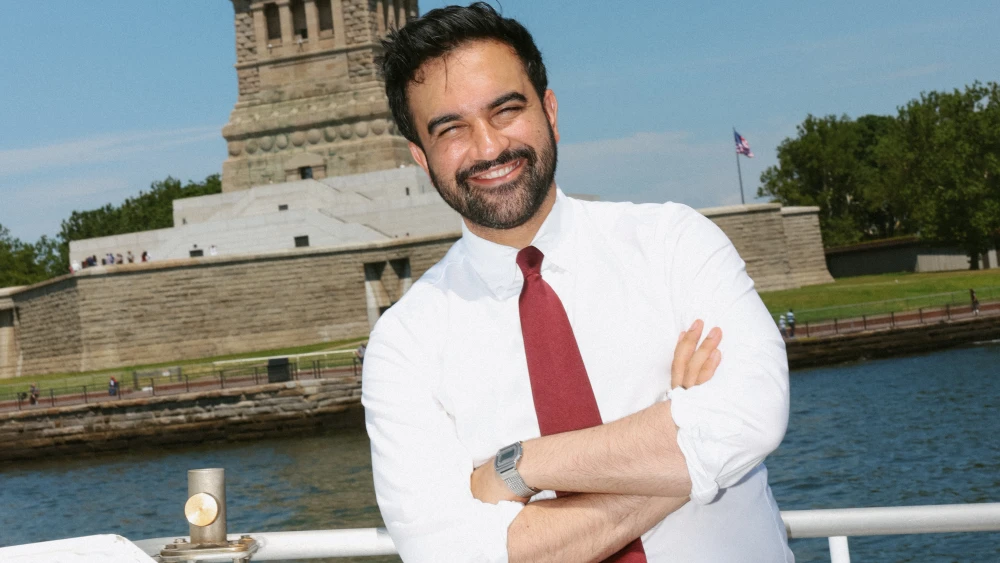
Zohran Mamdani, mayor of New York City, on July 4, 2026. Credit: Office of the New York City Mayor.

It didn’t take a statement from President Donald Trump to ensure that New York City Mayor Zohran Mamdani isn’t going to arrest Israeli Prime Minister Benjamin Netanyahu when he arrives in Manhattan for the annual U.N. General Assembly meetings in September.

Like all world leaders, Netanyahu is protected by the terms of the treaty by which the United States secured the placement of the world body in New York City in the years after the Second World War. Moreover, the United States is not a party to the International Criminal Court in The Hague, whose corrupt former chief prosecutor, Karim Khan, indicted the Israeli leader on false charges of having “intentionally and knowingly deprived” Gaza’s population of food, water, fuel and medicine in 2024. Khan resigned under fire because of a different issue entirely: accusations of sexual misconduct.

An empty threat

The Trump administration has rightly sought to dismantle the court, whose activities are a travesty of justice and motivated solely by political prejudice against the West, and especially Israel. The ICC’s influence may have made it impossible for Netanyahu to travel to most places in the world. However, it has no jurisdiction in the United States, and federal authorities would prevent Mamdani from interfering with the prime minister’s ability to visit New York or anywhere else in the country.

Mamdani is smart enough to know this. Why then, did he tell The New York Times that he had asked city lawyers to see if he had the authority to honor his campaign pledge to arrest the prime minister, whom he has smeared as a “war criminal”?

The answer isn’t any mystery. To those who support the Democratic Socialist mayor, Israel is the epitome of international evil. They truly believe that the actions the Jewish state took to defend itself against the Palestinian Arab terrorists who launched a war on Oct. 7, 2023, with the largest mass slaughter since the Holocaust were not merely wrong or excessive. They believe that Israel committed genocide against Palestinians in Gaza. And no amount of reporting, historical knowledge or the actual meaning of the word will convince them otherwise.

The ‘genocide’ myth

Wars are raging around the globe that have caused far greater civilian casualties than the one fought against Hamas terrorists in the Gaza Strip, who were responsible for the orgy of murder, rape, burnings, torture, kidnapping and wanton destruction that happened on Oct. 7.

But that doesn’t matter. Nor do the reasoned arguments of military experts who have repeatedly stated that Israel’s war against Hamas was conducted in a manner that was more moral and produced fewer casualties than against any foe in an urban environment—let alone one that deliberately, as Hamas did, hid behind non-combatants and sought to endanger as many of their compatriots as possible. Moreover, even the United Nations and The New York Times have finally admitted that it was Hamas that was blocking the distribution of food and other supplies to civilians in Gaza even though both spent most of the war denying it.

If you believe the existence of one Jewish state on the planet is not only illegitimate but that the key to solving all of the world’s problems is bound up in its destruction, then you are ready to believe any charge against it, no matter how false or outrageous. The toxic ideologies that enable such bizarre notions are also responsible for the surge in worldwide antisemitism, not least in New York City, where Mamdani has been forced to acknowledge that Jews are being targeted for hate crimes on his watch out of all proportion to their percentage of the population. And that is a far greater problem than a mayor who thinks that pleasing his base obligates him to make empty threats about arresting Israel’s head of government.

The embrace of critical race theory, intersectionality and settler-colonialism by the American education system and so much of popular culture has materially altered public discourse not merely about race, but about antisemitism and Israel. The belief that Israel and Jews are “white” oppressors, and that Palestinians are oppressed “people of color” who are their perennial victims, is contrary to the facts about both peoples. Jews are the most oppressed people of the last two millennia, and the majority of Israelis are people of color by the definitions of the American left since they trace their origins to North Africa and the Middle East.

The perpetuation of the conflict is the function of the fact that any outcome other than Israel’s destruction and the genocide of the Jews living there is an injustice the Palestinians cannot abide.

Once you buy into those myths, it’s easy to believe the blood libels about Jews committing genocide, whose downfall could liberate all of humankind. And if you swallow that, it’s easy to understand why a Democratic Party under the sway of Mamdani’s fellow left-wingers has accepted the hostility to Israel that has, alongside opposition to enforcing immigration laws, become the organizing principle of American politics.

Social-media algorithms versus facts

The real problem behind Mamdani’s latest publicity stunt isn’t merely a function of unjustified anger at Israelis and Jews. As an essay by historian Niall Ferguson and AI researcher John-Clark Levin in The Free Press argues, the same factors are responsible for the growth of Holocaust denial and what they call “The Death of History.”

Ferguson and Levin believe what we are witnessing in our public discourse, both on the left and the far-right, is a “comeback” of the same sort of genocidal hatred for Jews that led to the Shoah in the mid-20th century. Ferguson has spent a lifetime writing histories and producing documentaries warning that accepting these vile ideas leads to tragedy. But he has come to believe that his work—and that of other historians—is increasingly looking like it was all in vain because it is being overridden by social-media algorithms designed to spread hate. While in the past, thought leaders like conservative writer William F. Buckley were able to banish believers in these ideas from the political mainstream, now such efforts are failing.

Instead of denying the Holocaust, political commentators and podcasters on the far-right like Tucker Carlson, Candace Owens and Nick Fuentes “mock and celebrate it.” That amuses right-wing youth, who get their knowledge of the world from social-media feeds. Those on the left then “cleverly blend it with anti-Zionism and anti-capitalism.”

Ferguson and Levin point out that “as it is young voters who are most susceptible to these trends, the implications for the future of American politics are chilling.” It explains a lot about Mamdani’s appeal. It also shows how he can flip the narrative about the conflict between Israel and its genocidal foes. That is what is behind the accusations against Netanyahu and the widespread belief that it is Israel that is committing “genocide.”

AI images that feed rage

The lies that Mamdani—and those who echo his smears in outlets like the Times—tell about Israel are easily refuted by those who array the facts about the conflict against them in the same manner serious historians can answer Holocaust deniers. Still, the problem is that this only works against arguments that at least pretend to be reasoned.

But the algorithms that spread the new big antisemitic lies aren’t pretending to be rational. They are a function of manipulated images and rage about alleged crimes that are difficult to refute online. As Ferguson and Levin note, “The algorithms reflect our own vices back to us—and magnify them. As long as we indulge our wrathful impulses, we’ll see more rage bait that stokes them. As long as we give in to our short attention spans, our news feeds will carpet-bomb our brains with dopamine. As long as we guzzle flattering lies, the truth will be muscled off our screens by propaganda.”

That’s a sobering thought that puts the failures of pro-Israel voices to effectively counter the “genocide” blood libels in perspective.

With respect to Holocaust denial, historians now feel as if they are helpless to combat the fallout of so many lies.

“In the face of an avalanche of AI-powered anti-history, the real historians are powerless. We thought we could prevail in a fair fight about what really happened in the past. We naively believed that, if we went to the right archives, and read the right documents, and summarized them with the right footnotes, and published our scholarly books and peer-reviewed articles, then the Holocaust deniers would be driven from the field. What fools we were,” Ferguson and Levin conclude.

Can virtue defeat hate?

The same problem applies to the debate about Israel. Similar rage-based distortions about the actions of the Jewish state and those of its genocidal foes—combined with a biased media whose journalists have been indoctrinated in leftist ideologies about “white” oppressors—have materially altered public opinion. If a plurality of Americans now tell pollsters that they believe Israel has committed “genocide,” it’s not because of anything Netanyahu has said or done. It’s because we live in a time when fast-paced technology has the power to persuade people to accept patently false assertions with much greater ease than the manner in which the Nazis employed print, film and radio nearly a century ago.

Answering this isn’t going to be enabled with attempts to ban hate speech. It will, among other things, require the clever use of social media and technology. But as Ferguson and Levin assert, there is more to it than that. “We must recover a shared sense of moral responsibility not to contribute to the conditions that let a Fuentes thrive,” they say. “It’s a lesson that dates back to Cleon in ancient Athens. Ultimately, as Plato and Aristotle discovered, the only bulwark against demagogues is a people virtuous enough to resist their lure.”

A leering young mayor peddling blood libels against Jews like Mamdani doesn’t seem to fear such a turnaround. Indeed, in an age where virtue seems conspicuously absent in our politics and culture, optimism about the future can be difficult to maintain.

Still, giving up isn’t an option. And the rise of current advocates for antisemitism, the hatred of Jews and Israel, like the mayor, isn’t unprecedented in history. They have been defeated before by decent people who are ready to heed fact-based journalism in the same way they have sometimes heeded the lessons of real, rather than AI-distorted, history.

What is required is not just better use of AI and social media by the forces of truth but an appeal to higher virtues by a new generation of journalists, artists and faith leaders that will undermine the appeal of social media-driven hate. It’s a tall task, but there is no alternative available but to begin that fight.


Jonathan S. Tobin is editor-in-chief of the Jewish News Syndicate, a senior contributor for The Federalist, a columnist for Newsweek and a contributor to many other publications. He covers the American political scene, foreign policy, the U.S.-Israel relationship, Middle East diplomacy, the Jewish world and the arts. He hosts the JNS “Think Twice” podcast, both the weekly video program and the “Jonathan Tobin Daily” program, which are available on all major audio platforms and YouTube. Previously, he was executive editor, then senior online editor and chief political blogger, for Commentary magazine. Before that, he was editor-in-chief of The Jewish Exponent in Philadelphia and editor of the Connecticut Jewish Ledger. He has won more than 60 awards for commentary, art criticism and other writing. He appears regularly on television, commenting on politics and foreign policy. Born in New York City, he studied history at Columbia University.


Zawartość publikowanych artykułów i materiałów nie reprezentuje poglądów ani opinii Reunion’68,
ani też webmastera Blogu Reunion’68, chyba ze jest to wyraźnie zaznaczone.
Twoje uwagi, linki, własne artykuły lub wiadomości prześlij na adres:
webmaster@reunion68.com


Boy George Pulls Out of ‘Jesus Christ Superstar’ London Production After Backlash From Pro-Israel Song


Boy George Pulls Out of ‘Jesus Christ Superstar’ London Production After Backlash From Pro-Israel Song

Shiryn Ghermezian


Boy George live at the 80s Live Party 2026 at the Volksparkstadion in Hamburg, July 18, 2026. Photo: IMAGO/Future Image via Reuters Connect

Boy George has pulled out of the “Jesus Christ Superstar” production at the London Palladium after facing backlash for his new pro-Israel song “We Will Dance Again,” the singer’s manager announced on Thursday on social media.

Paul Kemsley said a statement that “after careful consideration,” he decided the Culture Club singer, 65, would no longer appear in the in the Andrew Lloyd Webber musical. “The decision has been made with the utmost respect for the producers, the creative team and the entire company,” he wrote. “We are grateful for the professionalism and understanding they have shown throughout and sincerely wish everyone involved every success with the production.”

“George has never been afraid to stand by his personal convictions, and I have always respected him for that. Equally, I believe it is my responsibility to make decisions that are in the best interests of my artist while also showing respect to others,” Kemsley added. “In this instance, I felt it was right to step aside, allowing the production to remain the focus, while ensuring everyone involved can move forward with mutual respect and goodwill.”

Kemsley also apologized to fans who purchased tickets for “Jesus Christ Superstar” and hoped to see Boy George in the production. The singer was set to star as King Herod from Aug. 3-15 as part of the show’s rotating cast, taking over from Richard Armitage. The latter will now continue to perform in the show. Boy George was meant to share the role of Herod with Armitage, Jesse Tyler Ferguson, Simon Russell Beale, Layton Williams and Julian Clary.

Earlier this week, Boy George released a pro-Israel song on social media with a Hebrew title that translates to “We Will Dance Again.” On the track, he sings: “You say genocide, I say war / When you’re attacked, that’s what the army’s for / Does it get ugly? You bet it does / When I know you wanna kill every last one of us.” In the chorus he sings: “We will dance again / And there will be no war / But if you’re ever confused / I stand with the Jews / I don’t feel brave, I just need to behave like a human.”

Boy George has received backlash from many for expressing strong support for Israel in the song. He responded to the criticism in multiple social media posts. “It doesn’t matter what I think or you think,” he wrote on X. “When will you realise you’re doing NOTHING! It’s a fucking joke. I am even falling out with Jewish friends. The madness knows no bounds.”

“So many people are calling me and saying I should pipe down and let it blow over and while they mean well I’m afraid it’s not an option,” he added in a separate post on X on Friday. He said he was most shocked about the criticism he has received from members of the LGBTQ+ community.

“But I am smart enough to realize that what you are cannot disguise who you are,” he explained. “When I say ‘they want to kill every last one of us’ I am also talking about us queers not just the Jewish community. When will you wake up? Regardless of which side you take, I am disgusted by anyone who posts hatred against anyone but refuses to show their face. If you have something powerful to say then you should have the guts to show the world who you are but most, if not all of you, are unwilling to show your faces and the only reason is self interest.”


Zawartość publikowanych artykułów i materiałów nie reprezentuje poglądów ani opinii Reunion’68,
ani też webmastera Blogu Reunion’68, chyba ze jest to wyraźnie zaznaczone.
Twoje uwagi, linki, własne artykuły lub wiadomości prześlij na adres:
webmaster@reunion68.com