

Archive | 2026/08/16

Europa traci swoje szkoły


Europa traci swoje szkoły

Pierre Rehov


Nowe pokolenie staje się coraz głupsze i to wina systemu


Europa przez dziesięciolecia spierała się o imigrację językiem granic: ilu ludzi przybyło, ilu należało przyjąć, ilu powinno zostać deportowanych, ilu ostatecznie uzyskało obywatelstwo. Znacznie mniej uwagi poświęcano pytaniu o większych konsekwencjach. Skoro miliony przybyszów i ich dzieci zamieszkały już w Europie, to od której kultury oczekiwano dostosowania się? Coraz częściej część odpowiedzi można znaleźć w szkołach.

We Francji Ministerstwo Edukacji odnotowało tylko w grudniu 2025 roku 389 naruszeń zasady świeckości. Dziewięćdziesiąt z nich dotyczyło kwestionowania nauczanych treści. Inne obejmowały podejrzenia prozelityzmu, odrzucanie wartości republikańskich, żądania o charakterze religijnym oraz odmowy udziału w zajęciach szkolnych. Nie są to dane przygotowane przez partię nacjonalistyczną ani antyimigracyjną grupę nacisku. Pochodzą od samego państwa francuskiego.

Liczby zmieniają się z miesiąca na miesiąc, ale problem nie znika. W maju 2024 roku zgłoszono 345 naruszeń zasady świeckości. Miesiąc wcześniej było ich 710. W marcu odnotowano 525 przypadków, z czego 14 procent dotyczyło kwestionowania nauczania, a 20 procent – odmowy udziału w zajęciach szkolnych. Francuski rząd utworzył wyspecjalizowane zespoły zajmujące się obroną tego, co określa mianem „wartości Republiki”. Sam fakt istnienia takich zespołów mówi więcej o kondycji francuskich szkół niż większość politycznych przemówień na temat integracji.

Francja wie również, dokąd może prowadzić zastraszanie. 16 października 2020 roku nauczyciel historii Samuel Paty został zamordowany po tym, jak podczas lekcji o wolności słowa pokazał karykatury Mahometa. Trzy lata później nauczyciel języka francuskiego Dominique Bernard został zamordowany w swojej szkole w Arras przez islamistycznego terrorystę. Ministerstwo Edukacji upamiętnia dziś obu mężczyzn wspólnie, podczas gdy atmosfera religijnego zastraszania otaczająca takie ataki pozostaje niezwykle trudna do omawiania bez wywoływania oskarżeń o stygmatyzację.

L'abandon" : un film sur l'histoire de Samuel Paty, incarné par Antoine  Reinartz, bientôt en salles

Po zamordowaniu Paty’ego szkoły w całej Francji uczciły go minutą ciszy. Ministerstwo Edukacji odnotowało następnie 793 incydenty związane z tym hołdem, w tym odmowy udziału, zakłócenia, groźby, kwestionowanie samej ceremonii oraz przypadki gloryfikowania terroryzmu. Policja lub żandarmeria otrzymały 286 zgłoszeń; prokuraturze przekazano 136 spraw. Nauczyciel został ścięty za nauczanie o wolności słowa, a jednak nawet ogólnokrajowy hołd dla niego stał się okazją do setek konfrontacji we francuskich szkołach.

Wielka Brytania doświadczyła własnej wersji tego problemu. W Birmingham w 2019 roku wybuchły protesty przed szkołami podstawowymi w związku z lekcjami uwzględniającymi rodziny LGBT i temat równości. Brytyjski rząd przyznał później, że kilka szkół mierzyło się z zakłóceniami. Wielu protestujących rodziców było pobożnymi muzułmanami, którzy twierdzili, że materiały te są sprzeczne z ich przekonaniami religijnymi. W Anderton Park Primary School konflikt stał się na tyle poważny, że sądy musiały interweniować i ograniczyć demonstracje wokół szkoły.

Rodzice mają pełne prawo kwestionować to, czego uczą się ich dzieci. Problem zaczyna się wtedy, gdy presja religijna staje się na tyle zorganizowana lub zastraszająca, że nauczyciele, dyrektorzy i rządy zaczynają kalkulować już nie tylko, co powinno znaleźć się w programie nauczania, lecz także czego można uczyć bez wywoływania konfrontacji.

Thinking Europe's “Muslim Question”: On Trojan Horses and the  Problematization of Muslims

Wielka Brytania otrzymała wcześniejsze ostrzeżenie właśnie w Birmingham. Afera „Trojan Horse” z 2014 roku ujawniła próby narzucenia twardej, religijnej linii w kilku szkołach państwowych. Rządowe dochodzenia wykazały poważne nieprawidłowości w zarządzaniu. Ofsted stwierdził, że w niektórych szkołach członkowie organów zarządzających próbowali promować wąską, opartą na wierze ideologię w placówkach, które nie były szkołami religijnymi. Skontrolowano 21 szkół; sześć oceniono jako niewłaściwe i objęto specjalnym nadzorem. Skandal potraktowano jako wyjątkowy epizod. Jednak ponad dekadę później problemy, które ujawnił w kwestii władzy, religii i integracji, bynajmniej nie zniknęły.

Nie chodzi o to, czy muzułmańskie dzieci są kompatybilne z europejskim systemem edukacji. Miliony z nich oczywiście są. Nie każdy spór dotyczący religii jest też przejawem islamizmu. Niebezpieczeństwo pojawia się wtedy, gdy instytucje zaczynają obniżać swoje wymagania, ponieważ egzekwowanie ich stało się niewygodne. Integracja nigdy nie miała oznaczać, że imigranci porzucą religię, tradycje rodzinne czy prywatne przekonania. Wymagała jednak od wszystkich zaakceptowania, że instytucje publiczne działają według wspólnych zasad.

Francja nazywała te zasady republikańskimi. Wielka Brytania wolała mówić o wartościach brytyjskich. Inne kraje europejskie wypracowały własne sformułowania. Terminologia miała mniejsze znaczenie niż sama zasada: przybysze mogli stać się w pełni Europejczykami bez wyrzekania się swojego pochodzenia, podczas gdy Europa zachowywała polityczne i kulturowe reguły rządzące jej instytucjami. Taki układ zależy od tego, czy społeczeństwo przyjmujące pozostaje wystarczająco pewne siebie, by tych zasad egzekwować.

Przez dziesięciolecia europejskie rządy zakładały, że integracja nastąpi niemal automatycznie. Dzieci będą chodzić do europejskich szkół, uczyć się europejskich języków, mieszać z europejskimi rówieśnikami i stopniowo przyswajać otaczającą je kulturę polityczną. Klasa szkolna miała być wielką maszyną integracyjną. Założenie to pomijało możliwość, że same szkoły mogą zacząć się zmieniać pod presją społeczności, które miały integrować.

Insight: Muslim schools caught up in France's fight against Islamism |  Reuters

Kiedy wystarczająco wielu uczniów odrzuca treść lekcji, nauczyciele to zauważają. Kiedy wystarczająco wielu rodziców składa skargi, dyrektorzy to zauważają. Kiedy kontrowersja przenosi się do mediów społecznościowych, konsekwencje mogą stać się osobiste. W końcu pokusa, by unikać niepotrzebnych kłopotów, staje się trudna do odparcia. Nikt nie musi wydawać oficjalnego polecenia nakazującego nauczycielom unikanie drażliwych tematów. Autocenzura jest znacznie skuteczniejsza, gdy polecenie jest rozumiane, zamiast być zapisane.

Rozbudowany francuski system rejestrowania naruszeń zasady świeckości mimowolnie pokazuje, jak poważnie rząd traktuje dziś ten problem. Nauczyciele mogą zgłaszać incydenty za pośrednictwem swoich przełożonych albo bezpośrednio poprzez specjalnie do tego przeznaczony system. Akademickie zespoły ds. „Wartości Republiki” interweniują, gdy szkoły nie są w stanie samodzielnie poradzić sobie z daną sytuacją. Po zamordowaniu Paty’ego francuskie prawo zostało zaostrzone, aby karać za skoordynowane groźby mające przeszkodzić nauczycielom w wykonywaniu ich zawodu. Tego rodzaju środki raczej nie byłyby konieczne, gdyby podważanie autorytetu nauczycieli było jedynie wymysłem alarmistycznych polityków.

Antysemityzm nadał problemowi dodatkowy wymiar. Agencja Praw Podstawowych Unii Europejskiej ostrzegała w 2024 roku, że antysemityzm nasila się i zakorzenia w europejskich społeczeństwach, w tym w środowisku szkolnym i na uniwersytetach. Od 7 października 2023 roku żydowskie rodziny w kilku krajach europejskich mierzą się z atmosferą, o której wiele rządów przez dziesięciolecia zapewniało, że należy już do przeszłości. Szkoły bynajmniej nie są odizolowane od otaczających je politycznych i religijnych namiętności.

Antisemitism Has No Place in Our Schools - CIJA - The Centre for Israel and  Jewish Affairs

Same statystyki imigracyjne nie są w stanie zmierzyć tego, co się dzieje. Państwo może kontrolować swoje granice, a jednocześnie tracić pewność siebie w egzekwowaniu własnej kultury. Może deportować nielegalnych migrantów, a zarazem wahać się przed sprzeciwieniem się obywatelom, których rodziny mieszkają tam od pokoleń. Może uchwalać prawa broniące świeckości, podczas gdy nauczyciele po cichu uczą się, które konfrontacje warto podejmować. Może celebrować wolność słowa w parlamencie, podczas gdy pedagodzy stają się coraz ostrożniejsi w pokazywaniu, co ta wolność oznacza w praktyce.

Nic z tego nie wymaga koordynacji. Jeden nauczyciel unika materiału, który może wywołać problemy. Inny skraca dyskusję. Dyrektor idzie na kompromis z rozgniewanymi rodzicami. Administrator uznaje, że kontrowersyjna lekcja nie jest warta walki. Polityk apeluje o spokój. Każda z tych decyzji z osobna może wydawać się całkowicie rozsądna, szczególnie osobie, która musi później mierzyć się z jej konsekwencjami. Powtarzane w tysiącach klas takie ustępstwa mogą stopniowo zmienić charakter całego systemu edukacji.

Ludźmi najbardziej zdradzonymi przez ten odwrót mogą okazać się dobrze zintegrowani imigranci i ich dzieci. Muzułmańska dziewczyna, która chce mieć taką samą wolność jak jej francuskie koleżanki, potrzebuje szkoły, która bezwarunkowo będzie bronić jej równości. Chłopiec, którego rodzice przyjechali z Pakistanu, ale który uważa się za Brytyjczyka, zasługuje na kraj wystarczająco pewny siebie, by powiedzieć mu, co oznacza brytyjskie obywatelstwo. Dziecko wychowane w głęboko religijnym domu powinno zetknąć się ze szkołą, w której wiedza nie zależy od teologicznej aprobaty. Osłabianie tych zasad w imię wrażliwości nie wyświadcza im żadnej przysługi.

Konsekwencje polityczne są już widoczne. Europejczycy, którzy uważają, że ich rządy utraciły kontrolę nad imigracją, zwracają się ku partiom niegdyś uznawanym za znajdujące się poza granicami akceptowalnej polityki. Jeśli dojdą również do wniosku, że rządy tracą władzę wewnątrz szkół, bunt wyborczy będzie narastał. Politycy establishmentu mogą potępiać populizm, ekstremizm i polaryzację, ale takie etykiety niewiele robią, by przekonać wyborców, którzy sądzą, że na ich oczach instytucje wycofują się w obliczu problemów, których urzędnicy nie chcą nawet nazwać.

Tolerancja nie wymaga od cywilizacji, by wstydziła się własnego istnienia. Europejskie prawa nie stają się opcjonalne tylko dlatego, że ktoś uważa je za obraźliwe. Nauczanie historii nie wymaga religijnego przyzwolenia. Nauczyciele nie powinni być zmuszeni do kalkulowania osobistego ryzyka związanego z wyjaśnianiem wolności słowa. Dziewczęta nie mają mniej praw tylko dlatego, że równość stoi w sprzeczności z czyimiś przekonaniami religijnymi. Holokaust nie staje się niebezpiecznym tematem tylko dlatego, że rozmowa o Żydach wywołuje napięcia. Biologii, historii i literatury nie można negocjować na nowo według wrażliwości tej rodziny, która jest najbardziej skłonna do składania skarg.

Przez lata europejscy przywódcy wierzyli, że szkoły zintegrują imigrantów i ich dzieci z Europą. Znacznie mniej uwagi poświęcili temu, co może się wydarzyć, gdy instytucje, którym powierzono to zadanie, same stracą pewność co do cywilizacji, z którą miały ich integrować.


Link do oryginału:

Pierre Rehov
Europe Is Losing Its Schools
Europe has spent decades arguing about immigration in the language of borders: how many people entered, how many should be admitted, how many should be deported, how many eventually became citizens. Far less attention was paid to a more consequential question. Once millions of newcomers and their children were living in Europe, which culture would be expected to adapt? Increasingly, part of the answer can be found in schools…

Zawartość publikowanych artykułów i materiałów nie reprezentuje poglądów ani opinii Reunion’68,
ani też webmastera Blogu Reunion’68, chyba ze jest to wyraźnie zaznaczone.
Twoje uwagi, linki, własne artykuły lub wiadomości prześlij na adres:
webmaster@reunion68.com


Bronx man faces 14 charges, including assault and six hate crimes, for attack on congregant, guard at Central Synagogue Shabbat service


Bronx man faces 14 charges, including assault and six hate crimes, for attack on congregant, guard at Central Synagogue Shabbat service

JNS Staff


“Our rabbis reignited the candles, helped us breathe and found the words to respond to the moment in real time,” the Reform synagogue stated. “Our congregation refused to let hate extinguish our Shabbat light.”

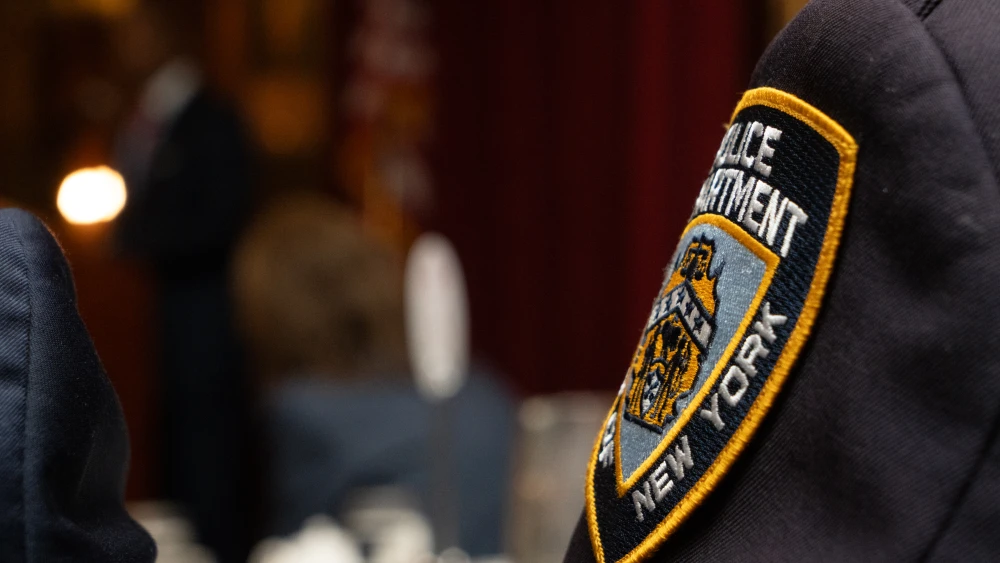
A New York City Police Department officer, Nov. 17, 2023. Credit: Caroline Rubinstein-Willis/Mayoral Photography Office.

Officers arrested Larry Montes, 46, of the Bronx, on Friday night and charged him with 14 charges, including six hate crimes, after he allegedly hit a 63-year-old woman and spat upon and heat-butted a 65-year-old security guard at Central Synagogue in Manhattan on Friday night, the New York City Police Department told JNS.

The incident took place shortly after 6 p.m. during Shabbat services, and officers were told that the suspect “began acting irate and disrupted a service,” the NYPD said.

“As security was escorting the male out, he struck a 63-year-old female, causing a small laceration and pain to her lip and right forearm,” the department told JNS. “Additionally, the male spit on and head butted a 65-year-old security guard.”

The department’s hate crime task force is investigating the incident, and the man was charged with four counts of hate crime assault, two counts of assault, criminal mischief as a hate crime, criminal mischief, disrupting a religious service, criminal trespass as a hate crime, two counts of aggravated harassment and two counts of harassment, the NYPD told JNS.

Central Synagogue, a Reform congregation, stated that it was grateful to the many who “have reached out in support after the disturbing events during services.”

“Tonight at Shabbat services, a disturbed man stormed our bimah,” or dais, and “knocked over our Shabbat candles, screamed obscenities and assaulted a congregant,” the synagogue said. “In the face of this antisemitic hate, our security director heroically restrained and escorted the man out.”

The synagogue added that the cantor and musicians “did not let this stop the music.”

“Our rabbis reignited the candles, helped us breathe and found the words to respond to the moment in real time,” it said. “Our congregation refused to let hate extinguish our Shabbat light.”

‘Place of worship should never be a crime scene’

Jessica Tisch, commissioner of the NYPD, stated that an NYPD sergeant, who was working “a paid detail at the synagogue,” took the suspect into custody.

“I have spoken with the rabbi of the synagogue, and I’m relieved that no one was seriously injured,” she stated on Friday night. “Those who were hurt were evaluated at the scene and are doing well. There are no known additional threats at this time, and additional NYPD resources have been deployed to the synagogue.”

“I understand the sanctity of this space and its meaning for congregants,” added Tisch, who is Jewish. “Central Synagogue is where I grew up. In joy and in sorrow, it has always been a place of comfort and peace. What happened there tonight is deeply painful. A place of worship should never be a crime scene.”

Two minutes later, Zohran Mamdani, mayor of New York City, stated that he was “horrified.”

“I can only imagine the pain and fear an attack like this, during Shabbat services, causes for the congregation and for Jewish New Yorkers across our city,” the mayor said. “Every New Yorker must be able to observe their religion without fear of violence. This despicable act has no place in our city, and our administration will do everything in our power to keep Jewish New Yorkers safe.”

Jewish leaders have said that Mamdani’s anti-Israel statements, including accusing the Jewish state of “genocide” and calling for the Israeli prime minister to be arrested, are fueling antisemitic hate. Anti-Jewish hate crimes surged 182% in Mamdani’s first month in office, compared to that span the prior year, and in the months since, anti-Jewish incidents have made up a disproportionate number of the city’s recorded hate crimes.

“We have to make clear than when the boot of antisemitic violence is on your neck, it’s been laced by Zohran Mamdani,” stated Vickie Paladino, a member of the New York City Council, who was riffing on a statement of Mamdani’s that NYPD boots are tied in Israel.

“No one has done more to fan the flames of antisemitism in New York than you,” stated Hillel Neuer, executive director of UN Watch. “The Jewish community warned in July that your anti-Israel hate video put Jewish New Yorkers at risk and made them feel targeted. ‘Shame on you,’ said the UJA. You need to be quiet, resign and begone.”

Julie Menin, speaker of the City Council, stated that she was “deeply disturbed” by the attack.

“Incidents like this are painful and traumatizing for so many, and only deepen the fear many are already feeling,” she stated. “Every New Yorker has the right to worship in peace and safety.”

On Saturday morning, Menin issued a more personal statement.

“From 73 swastikas defacing a Brooklyn playground to a Jewish man stabbed after leaving Tisha B’Av services last month, horrifying acts of antisemitism are soaring in our city,” she wrote. “From Hebrew school to my father’s memorial service, Central Synagogue is where my family and thousands of others worship. It is our sanctuary and a place of solace.”

“Armed guards stand outside on the High Holidays, as we have to explain to our children why they are there. Now, a congregant was assaulted during Shabbat services in an incident that has resulted in hate crime charges,” she stated. “When my mother and grandmother came to New York City after surviving the Holocaust, they were welcomed with open arms. What is happening now in our city is unrecognizable and horrifying.”

She added that “we will not allow hate to divide us or fear to silence us” and “will continue fighting for a city where every New Yorker can live safely and proudly, no matter their faith.”

Mark Treyger, CEO of the Jewish Community Relations Council of New York, stated that the attack “is not merely disturbing, but it is an assault on the fundamental right of every New Yorker to worship in peace and without fear.”

“Disrupting Shabbat services, assaulting congregants and security personnel, and desecrating the sanctity of a synagogue is reprehensible, particularly at a moment when antisemitism and threats against Jewish New Yorkers have reached alarming levels,” he stated.

On Saturday morning, he also issued a second statement, in which he said that his “deeply grateful” to Tisch and the NYPD.

“Security is necessary, particularly with the High Holidays and U.N. General Assembly approaching, but more armed guards cannot become our sole answer to more hate,” he wrote. “There is something fundamentally wrong with a society in which people need to pass heavily armed security simply to enter a synagogue and pray. That is not normal. We must never accept it as normal.”

“Jewish institutions already devote extraordinary resources to security, and New York remains a major recipient of federal nonprofit security funding precisely because the threat is so serious, but the measure of our success cannot be how many guards we can place outside a house of worship,” he wrote. “It must be whether people can enter one without fear.”

“This is a five-alarm emergency,” he added. “Security can protect a door. Leadership must address why that door needs so much protection in the first place.”

New York Gov. Kathy Hochul called the attack “appalling,” and Letitia James, the New York attorney general, said that it was “appalling and unacceptable.” Senate Minority Leader Chuck Schumer (D-N.Y.) said that “antisemitism is real and it’s increasing by the day.”

Rep. Ritchie Torres (D-N.Y.) stated that “just as troubling as the violence itself is the political climate that emboldens it.”

“American politics has become so obsessively antagonistic toward ‘Zionists’ that even a synagogue is seen as fair game for disruption and desecration. No Jewish space is considered sacred enough to be left untouched,” stated Torres, who is one of the most vocal supporters of Israel in Congress. “Antisemitism has risen to historic highs in America’s most Jewish city, with more hate crimes against Jews than against all other communities combined.”

“Instead of cooling tensions, both the far left and the far right keep pouring gasoline on the fires of hate, fear and blame,” he said.


Zawartość publikowanych artykułów i materiałów nie reprezentuje poglądów ani opinii Reunion’68,
ani też webmastera Blogu Reunion’68, chyba ze jest to wyraźnie zaznaczone.
Twoje uwagi, linki, własne artykuły lub wiadomości prześlij na adres:
webmaster@reunion68.com

New ‘Muslim NATO’ ‘Aimed at Israel,’ Official Warns, but Experts Say Pact Is Largely Declarative


New ‘Muslim NATO’ ‘Aimed at Israel,’ Official Warns, but Experts Say Pact Is Largely Declarative

Debbie Weiss


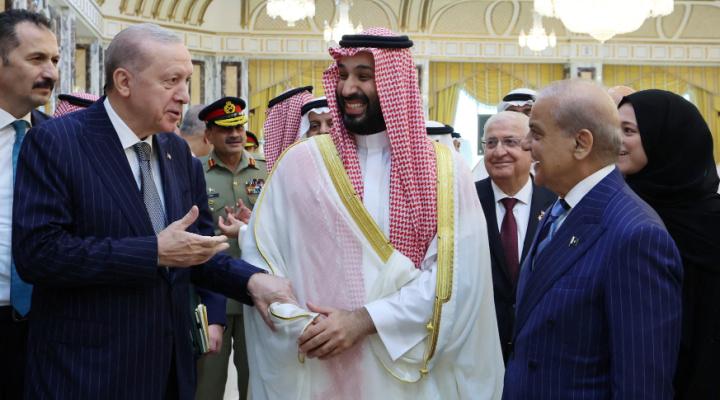
Turkish President Tayyip Erdogan, Saudi Crown Prince Mohammed bin Salman, and Pakistan’s Prime Minister Shehbaz Sharif chat after signing a joint defense agreement in Mecca, Saudi Arabia, Aug. 7, 2026. Photo: Murat Cetinmuhurdar/Turkish Presidential Press Office/Handout via REUTERS

The new Saudi-Turkish-Pakistani defense pact, dubbed a “Muslim NATO,” has triggered warnings in Jerusalem, with a senior official saying the alliance is “aimed at Israel,” while Israeli experts told The Algemeiner that, while troubling, the pact is largely declarative in nature and unlikely to amount to a meaningful military alliance. 

“The agreement worries us. This is an alliance aimed against Israel,” a senior Israeli official told the Ynet news site. 

Yisrael Beytenu leader and former defense minister Avigdor Liberman also warned of what he called “the new Sunni alliance of Pakistan, Turkey, and Saudi Arabia,” casting the pact as another sign of Israel’s deteriorating regional position and blaming the Benjamin Netanyahu-led government for allowing that to happen.

Signed in Mecca last week, the agreement says an armed attack on any one of the three countries will be considered an attack on all, while setting out plans for closer political and military coordination, joint exercises, and expanded defense cooperation. The three governments have stressed that the pact is defensive and not directed at any particular country, although it is widely seen as being driven in large part by concerns over Iran and its regional proxies.

Prof. Eitan Shamir, director of the Begin-Sadat Center for Strategic Studies at Bar-Ilan University, said the pact was “not a good development from our perspective,” but stressed that it did not pose an immediate threat to Israel. 

“At this stage, I see it as more declarative than substantive,” Shamir told The Algemeiner, comparing it to previous defense agreements among Arab states that carried sweeping commitments on paper but had little practical effect.

Saudi Arabia faced hundreds of Iranian missiles and drones following the outbreak of the US-Israel war with Iran on Feb. 28, including attacks targeting Riyadh and a major air base hosting US forces, while the Iran-backed Houthis in Yemen have since resumed missile and drone attacks on the kingdom and its oil infrastructure. 

Yet Shamir said he remained skeptical that the pact would translate into an automatic military response to such attacks. “I still don’t see Turkish soldiers charging at the Houthis or the Iranians because some missile landed in Saudi Arabia,” he said. 

Shamir said that while Iran was an obvious factor behind the pact, despite the signatories’ assurances otherwise, the more significant message was directed at Washington.

“It is also a message to the US. If Washington leaves a vacuum, or cannot protect Saudi Arabia, other [security] arrangements will emerge,” he said.

The warning is notable because US President Donald Trump had spent much of the past year deepening Washington’s ties with Riyadh. In November, he and Crown Prince Mohammed bin Salman signed a Strategic Defense Agreement that the White House said affirmed the US as Saudi Arabia’s “primary strategic partner,” alongside plans for F-35 sales and hundreds of American tanks. But the Iran conflict has since exposed the limits of that protection, while Trump’s separate effort to tie a civilian nuclear deal to Saudi normalization with Israel has stalled over Riyadh’s refusal to join the Abraham Accords without a clear “pathway” toward Palestinian statehood.

Asher Fredman, executive director of the Misgav Institute for National Security, similarly said the pact was likely to have “little substantial military impact,” pointing out that Saudi Arabia and Pakistan already signed a mutual defense agreement in September 2025 that failed to deter subsequent attacks by Iran and its proxies. He added that the three countries’ interests remain far from fully aligned. Saudi Arabia, he said, “will not go along with [Turkish President Recep Tayyip] Erdogan’s goal to reestablish Ottoman influence in the Middle East,” while Riyadh’s trade with India is eight times its trade with Pakistan, which for decades has been India’s chief rival.

Fredman agreed with Shamir’s assessment that the pact was also a “signal to the US that these countries did not intend to rely entirely on or align” with it. But he said that beyond potentially leading to more military sales and joint exercises, the Mecca agreement was unlikely to supersede their existing defense relationships with Washington. 

“Ultimately the US is a far more important military and defense partner to each of these countries,” he told The Algemeiner.

Fredman said the pact could still benefit Israel if it prompted the three countries to take a tougher stance against Tehran.

“If it does lead these countries to take a stronger and bolder stance in the face of Iranian aggression and attacks, that would be a positive development,” he said, though he considered that “unlikely given their recent record.”


Zawartość publikowanych artykułów i materiałów nie reprezentuje poglądów ani opinii Reunion’68,
ani też webmastera Blogu Reunion’68, chyba ze jest to wyraźnie zaznaczone.
Twoje uwagi, linki, własne artykuły lub wiadomości prześlij na adres:
webmaster@reunion68.com