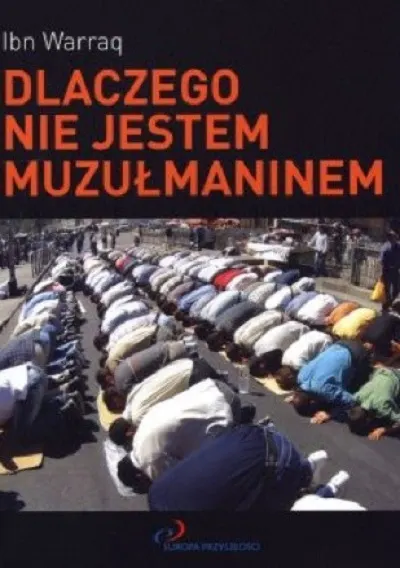
Okładka polskiego wydania jednej z absolutnie najlepszych książek o islamie.
Teologia islamska naucza, że apostaci od islamu powinni zostać skazani na śmierć. Jako były muzułmanin, który żyje ze świadomością realiów formalnej lub nieformalnej kary śmierci przewidzianej w islamie za apostazję, uważam, że mam prawo zarówno analizować, jak i krytykować doktrynę islamską, a także głęboko wadliwe podejście świata do zjawiska, które zaczęto określać mianem „islamofobii”.
Analizując termin „islamofobia”, ustalmy najpierw, że fobia jest uznawana za irracjonalny lęk przed czymś. Czy jednak nie jest całkowicie racjonalne, na przykład, by muzułmanki obawiały się zawartego w Koranie nakazu, zgodnie z którym nieposłuszne kobiety mają być bite przez swoich mężów?
Koran 4:34: „Mężczyźni mają władzę nad kobietami, ponieważ Allah uczynił jednych wyższymi od drugich oraz ponieważ wydają swój majątek na ich utrzymanie. Dobre kobiety są posłuszne. Strzegą tego, co niewidoczne, ponieważ Allah je strzeże. Te zaś, których nieposłuszeństwa się obawiacie, napominajcie, pozostawiajcie same w łożach i bijcie je. Jeśli jednak będą wam posłuszne, nie szukajcie przeciwko nim sposobu. Zaprawdę, Allah jest zawsze najwyższy, wzniosły, wielki.”
Hadis, Sahih al-Buchari (72:725): Pewna kobieta przyszła do Mahometa i błagała go, by powstrzymał jej męża od bicia jej. Jej skóra była tak mocno posiniaczona, że opisano ją jako „bardziej zieloną” niż zielony welon, który miała na sobie. Mahomet nie zganił jej męża, lecz zamiast tego nakazał jej wrócić do niego i podporządkować się jego żądaniom seksualnym.
I czy sześcioletnie dziewczynki nie mają powodów, by obawiać się wydawania ich za mąż za dorosłych muzułmanów i konsumowania tych „małżeństw”, gdy dziecko osiągnie wiek dziewięciu lat – zgodnie z przykładem Mahometa, człowieka, którego, według Koranu, muzułmanie mają naśladować?
Hadis, Sahih Muslim (8:3309): „Aisza (niech Allah będzie z niej zadowolony) przekazała: Wysłannik Allaha (pokój z nim) poślubił mnie, gdy miałam sześć lat, a do jego domu zostałam przyjęta w wieku dziewięciu lat.”
Koran 33:21: „Zaprawdę, w wysłanniku Allaha macie doskonały wzór dla tego, kto pokłada nadzieję w Allahu i Dniu Ostatnim oraz często wspomina Allaha.”
Po drugie, należy podkreślić, że krytykowanie tekstów islamskich, które inspirują muzułmanów i nakazują im popełnianie określonych przestępstw, w żadnym razie nie jest równoznaczne z krzywdzeniem czy nękaniem niewinnych muzułmanów. Cywilizowany, świecki świat już dysponuje prawami chroniącymi obywateli przed krzywdą i nękaniem, niezależnie od tego, czy dana osoba jest religijna, czy niereligijna. Dla wielu stało się jasne, że termin „islamofobia” jest wykorzystywany jako broń przez tych, którzy chcą chronić islam przed analizą i krytyką.
Powinno być oczywiste, że krytykowanie licznych problematycznych tekstów i nauk występujących w religii islamskiej nie jest aktem nienawiści ani bigoterii. O ile rozsądne jest założenie, że niewinni muzułmanie nigdy nie powinni być nękani ani krzywdzeni, o tyle pełne nienawiści i często nawołujące do zabójstwa teksty, których wyznawcy islamu się trzymają, muszą nadal podlegać analizie i dyskusji, jeśli świat ma uniknąć szkód, które nieuchronnie wynikają z tych nauk.
Co więcej, doktryny żadnej ideologii – czy to politycznej, czy religijnej – nie powinny być chronione przed analizą ani wyłączane z publicznej debaty. Na przykład, gdy akty terroryzmu i moralnego zła popełniają religijni fanatycy, nauki danej religii powinny być poddawane większej, a nie mniejszej kontroli. Zasadę tę z całą pewnością należałoby zastosować wobec ogromnej skali terroryzmu i niepokojów społecznych wywoływanych przez muzułmanów, którzy sami twierdzą, że postępują zgodnie z nakazami islamu.
Krytyczna analiza teologii islamskiej szybko prowadzi nas do odkrycia doktryny dżihadu, wezwania Mahometa do zabijania homoseksualistów, barbarzyńskich doktryn dotyczących dopuszczalności niewolnictwa seksualnego (Koran 33:50), a także innych problematycznych doktryn islamskich. Te niepokojące aspekty teologii islamskiej omawiam szerzej w serii artykułów dostępnych TUTAJ.
Tragiczne jest to, że wspomniane powyżej nikczemne praktyki są przez muzułmanów uznawane za nieomylne nauki islamu, a zatem oczekuje się, że będą wprowadzane w życie. Te brutalne realia budzą poważne obawy o wolne i demokratyczne społeczeństwa świata. W miarę wzrostu liczebności populacji muzułmańskich w społeczeństwach nieislamskich oraz domagania się przez pobożnych muzułmanów zezwolenia na określone problematyczne praktyki islamskie, nieuchronnie pojawią się spory prawne, ponieważ wiele islamskich tradycji stoi w sprzeczności z prawem cywilizowanych społeczeństw świeckich. Konflikt jest nieunikniony.
To prowadzi nas do sedna problemu z fatalnie wadliwym terminem „islamofobia”. Jeśli liczne niemoralne i nielegalne praktyki obecne w naukach islamskich nie mają być tolerowane w społeczeństwach cywilizowanych, to jak mamy im zapobiegać, skoro sam podstawowy proces ich publicznego analizowania i szczegółowego opisywania jest postrzegany jako przejaw bigoterii i rasizmu oraz uznawany za nielegalne przestępstwo z nienawiści? Nie ma to absolutnie żadnego racjonalnego sensu.
Być może „muzułmanofobia” byłaby lepszym terminem niż „islamofobia”. W ten sposób można byłoby krytykować doktrynę islamską, a nękanie niewinnych muzułmanów byłoby nielegalne (jak zresztą już jest). Tak samo jak nielegalne jest nękanie niewinnych Żydów, chrześcijan, hinduistów itd., podczas gdy nauki teologiczne wszystkich religii pozostają otwarte na analizę i krytykę.
Wyzwaniem stojącym przed ludzkością w przyszłości jest to, że wielu muzułmanów zdecyduje się pozostać w łonie islamu. Niestety, miliony za milionami wyznawców kultu śmierci mahometanizmu chcą narzucić liczne przejawy zła zawarte w prawie szariatu. Prawa składającego się w całości z fikcyjnego Koranu oraz często głęboko zdeprawowanych wypowiedzi i czynów Mahometa zawartych w Sunnie.
Wybitny były muzułmanin i autor książki Why I am Not A Muslim (Dlaczego nie jestem muzułmaninem), Ibn Warraq, analizuje TUTAJ również głęboki fałsz oraz niepokojące konsekwencje prawne legitymizowania wysoce wątpliwego terminu „islamofobia”.
Zawartość publikowanych artykułów i materiałów nie reprezentuje poglądów ani opinii Reunion’68,
ani też webmastera Blogu Reunion’68, chyba ze jest to wyraźnie zaznaczone.
Twoje uwagi, linki, własne artykuły lub wiadomości prześlij na adres: webmaster@reunion68.com
The hard-left faction is organizing and winning elections, even if many in the party don’t agree with them or share their antisemitism. They will take it over in 2028 if not stopped now.
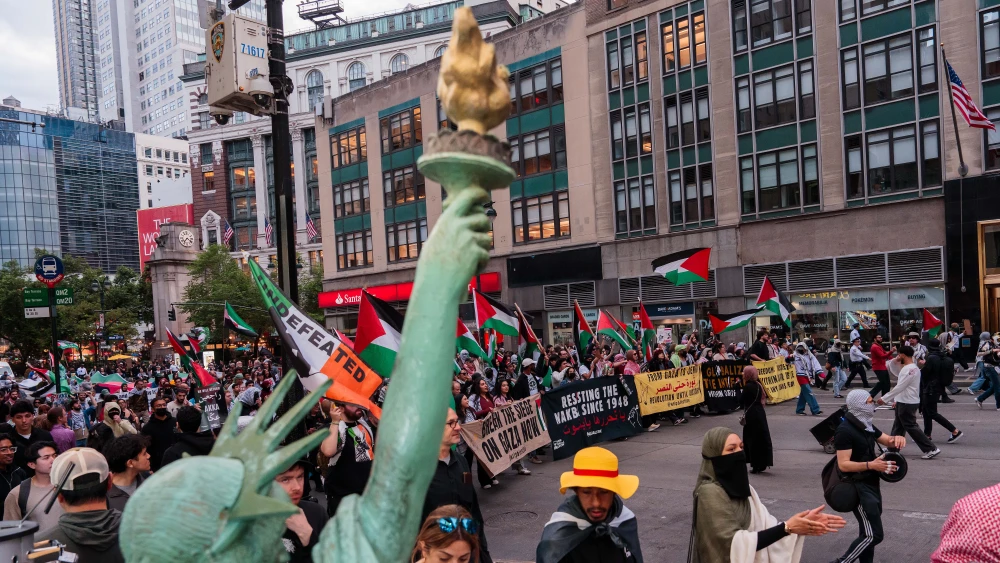
Pro-Palestinian activists join a “Nakba Day” march amid the ongoing Israel-Gaza conflict, in New York City on May 15, 2026. Photo by Adam Gray/Getty Images.
For 20 years now, I’ve been hearing the same story from Jewish Democrats. They keep insisting that most of those who identify as members of their party are not extremists, and that they don’t hate Israel and Jews. And they bitterly resent claims to the contrary coming from Jewish Republicans or political conservatives.
Back when George W. Bush was president, such complaints could sound reasonable, even if they were rooted firmly in a denial of facts—namely, that the gap between the parties on Israel was growing into an abyss dooming efforts to maintain a bipartisan consensus. They grew even less persuasive once Barack Obama became president, and appeasement of Iran and pressure on Israel to make suicidal concessions to the Palestinians became Democratic Party doctrine.
A lurch to the left
But the pretense that there isn’t a widening chasm between the two major parties not only about Israel, but also about the surge of antisemitism that followed the Hamas-led Palestinian Arab terror attacks on Israel on Oct. 7, 2023, is no longer even remotely credible. The Democrats’ lurch to the left in recent years was made obvious by the rise of the Democratic Socialists of America (DSA), turning what was once a likely possibility into a fact.
Pro-Israel Democrats still exist, and some hold high office in Washington and in many states. Nevertheless, polls of voter opinions, congressional votes and the outcome of most primary elections held in the last year make it clear that they have become a minority in their party.
Hostility to the Jewish state has become the organizing principle of American politics on the left. What makes it even more worrisome is that the faction pushing this agenda is one that is intent on doing more than just destroying Israel.
The DSA wants to remake America in the image of their Marxist and intersectional ideological fantasies, throwing the U.S. Constitution and economic freedom into the garbage bin of history, along with Israel and the Jews. What’s more, they believe that they are on the brink of taking over the Democratic Party and, while nothing in politics is certain, they could be right about that.
What was once just an unpersuasive argument in defense of the partisan attachments of Jewish liberals is rapidly becoming more a matter of denial of a stark political reality than anything else. The victories won in party primaries, and even in some general elections, by candidates affiliated with or allied to the DSA are creating political facts that could determine the outcome of elections and accomplish radical policy shifts. In the next Congress, so-called progressives allied with the far left will dominate the Democratic caucuses in the House and Senate, whether or not they win majorities in the fall midterms.
And with the start of the preliminaries of the 2028 presidential election cycle about to begin early next year, the notion that someone who will succeed Sen. Bernie Sanders (I-Vt.) as the standard-bearer of the left in the primaries winning the party’s nomination is by no means a long-shot bet. Those who think that a figure such as Rep. Alexandria Ocasio-Cortez (D-N.Y.) can’t be nominated by a Democratic Party that appears in thrall to the intersectional left and her DSA pals aren’t paying attention to the shifts that have occurred since she and her progressive “Squad” entered Congress in January 2019.
Polling station. Credit: mounsey/Pixabay.
What will they do about it?
The question is: What are the pro-Israel Democrats, who blithely assured us that this was a figment of the conservative imagination, going to do about it?
While I know that many rank-and-file Jewish Democrats and other mainstream liberals are panicked by the ascendance of people like New York City Mayor Zohran Mamdani and Michigan U.S. Senate candidate Dr. Abdul El-Sayed—and the way DSA-backed candidates are winning primary elections—their leaders aren’t acting like it’s a problem. Leading Jewish Democrats like Senate Minority Leader Chuck Schumer and many other party leaders have not only made their peace with Mamdani but are backing candidates like El-Sayed and other radicals in general elections.
For them, their animus toward President Donald Trump and the GOP is the only priority, and nothing—not even the DSA’s Soviet-style anti-Zionism that is a tissue-thin cover for traditional Jew-hatred—is more important.
Those moderates and pro-Israel Democrats who continue to pooh-pooh the DSA’s success may not be wrong about the disconnect between the group’s radical ideology and how most voters think about the world. But their increasingly shaky confidence that the hard-left’s plans for a nationwide putsch are a passing phenomenon is no longer merely complacent. It’s a dangerous case of wishful thinking that is inducing otherwise decent Democrats to lapse into a state of moral paralysis when it comes to fighting the hate-mongers hijacking their party. If they don’t wake up soon, in the next election cycle, they’ll be confronted with a state of affairs in which those Jews not willing to disavow a central element of their faith and peoplehood will find themselves linked to a party dedicated to the isolation and murder of half the world’s Jewish population.
All of which means that rather than parrying the criticisms of conservatives with an insistence that most Democrats are reasonable people who are not antisemitic, coupled with justified ripostes about Jew-hatred on the right, won’t be enough to save the Democratic Party, let alone its Jewish adherents. Nor will continuing to blame their dilemma on Trump—a false claim they’ve been sticking to for a decade—suffice to deal with the culture change on the left that has tolerated and normalized Jew-hatred in a way that simply has no precedent in American political history.
Oct. 7 was the turning point
The political left’s reaction to Oct. 7, when they embraced the side of thousands of bloodthirsty killers who committed the worst mass slaughter of Jews since the Holocaust, wasn’t merely appalling. It has proven to be the ideological engine that enabled an effort by the DSA and its allies to hijack the Democratic Party.
That obliges liberals, who still make up the majority of American Jews, to come face to face with what can only be described as an existential crisis. And their response to it can’t be half-hearted or motivated more by old political loyalties and a deep-seated antagonism for Trump and the GOP.
If the DSA isn’t stopped in its tracks and sent back to the fever swamps of the far left, where it belongs, the problem won’t just be that Jewish Democrats will be politically homeless. The consequences of allowing a faction that is inherently antisemitic, as well as opposed to the basic principles of American liberty that guarantee the safety of American citizens, will go far beyond the grim prospects for some Jewish politicians or the problems this will cause for the U.S.-Israel alliance.
We have already seen what happens when antisemitism becomes normalized in academia, culture, Hollywood, the arts and the media. While DSA members say they hate Israel, but not Jews themselves, it resembles an old trope of Soviet-era propaganda. Anti-Zionism is just the way the modern left expresses its antisemitism. Blood libels about Israel and its Jewish supporters being guilty of the “genocide” of Palestinian Arabs in the Gaza Strip are a way to delegitimize and demonize the victims of an actual historical “genocide” in mid-20th-century Europe at the hands of the German Nazis. It also lends tacit support to the Palestinians’ hopes to slaughter more Jews, for which the unspeakable atrocities of Oct. 7 were just a trailer for what they intend to do to the rest of Israel.
Toxic doctrines
This is the inevitable result of the acceptance of toxic left-wing ideas like critical race theory, intersectionality and settler-colonialism that now dominate liberal intellectual society, which forms the base of the Democratic Party. That these doctrines falsely label Israel and the Jews as “white” oppressors was either ignored or dismissed by many Jewish liberals eager to remain in sync with traditional left-wing allies. They argued that concerns about the woke catechism of diversity, equity and inclusion (DEI) were just right-wing culture-war talking points.
Yet they have not only been abandoned by these erstwhile friends since Oct. 7, but are now having to adhere to demands to bow their knees to woke orthodoxy and hatred for Israel lest they, too, be labeled as “racists” or Trump supporters. That was the fate of Rep. Dan Goldman (D-N.Y.), despite his impeccable anti-Trump record. That many liberal Jews were willing to oppose Trump’s efforts to rid academia of antisemitism affiliated with these doctrines speaks volumes about the desperation felt by those faced with the choice of supporting the left, even when it means accepting the targeting of their own children.
In 2015, liberal Jews were forced to choose between their partisan loyalties and concern for the survival of Israel when Obama shoved his nuclear deal with Iran down the throats of their party. In 2020, they felt obliged to line up behind a Black Lives Matter movement that was not only determined to exacerbate racial divisions, but tainted by Jew-hatred even after a summer of “mostly peaceful” riots.
Since Oct. 7, the DSA and its allies have used the spread of blood libels about Israel not only to undermine support for the Jewish state, but to win elections and become the face of the Democratic Party, especially for young people. In this way, they illustrate the teachings of scholar Ruth Wisse, showcasing that rather than an ordinary prejudice, antisemitism is always a vehicle for attaining political power.
Jewish Democrats have a choice
If the advocates of these ideas gain control of one of America’s two major parties, it presents Democrats with a choice that is depressingly familiar for the American Jews who still vote for it. Though we live in a hyper-partisan and largely secular era where politics plays the role that religion used to play in most people’s lives, the 2026 primaries and the prospect of more of the same in 2028 present Jewish liberals with some unpalatable alternatives.
They can act as if DSA support for Hamas and far-left radicalism—amply testified to by its co-chair, Megan Romer, in interviews with both the liberal New Yorker and the conservative Fox News—doesn’t matter. That might have been possible in the past, when its members weren’t in possession of high offices and routing liberal opponents in party contests. But that is no longer the case.
They can also rationalize an alliance with the DSA as a path to power. That’s the choice of Schumer and a host of other Democratic luminaries who endorsed El-Sayed and others like him. Some will, as Sen. Jon Ossoff (D-Ga.) has already done, compromise with the leftists by becoming increasingly strident in their “criticism” of Israel and voting to cut off arms sales to the Jewish state, while still posing as a moderate who doesn’t share DSA ideology.
They can also claim that the attacks on the DSA coming from Trump and other Republicans as a revival of communism is hyperbolic rhetoric disconnected from reality. In doing so, they would be turning a blind eye to the way Romer, Mamdani and El-Sayed are not only mimicking Soviet lies about the Jews, but wish to impose Marxist policies that are inimical to Jewish rights and those of other Americans.
And they can point to the popularity of Jewish Democrats like Pennsylvania Gov. Josh Shapiro or the rare defeats suffered by DSA candidates, such as the flop of their Wisconsin gubernatorial candidate, as proof that their party hasn’t abandoned the Jews or the political mainstream.
But while the triumph of the DSA is far from complete, claiming that the exceptions to the current rule on the left is what matters is a path to ensuring that the problem will only grow. They need to rally behind Democratic outliers like Sen. John Fetterman (D-Pa.), who, despite his liberal politics and voting record, is an avowed opponent of the DSA and an outspoken supporter of Israel. The fact that Fetterman is now far more popular among Pennsylvania Republicans than Democrats says all you need to know about the shift in the country’s political alignment.
Don’t vote for antisemites
The only rational alternative is for liberal Jewish Democrats to make it clear that their hostility for Trump and the GOP notwithstanding, they will not vote for DSA-affiliated and other Israel-bashing candidates nominated by their party. What’s more, they need to support opponents to the movement, provided that they are both pro-Israel and determined to root out antisemitism in their own ranks. Needless to say, Republicans should do the same, though fortunately, the groyper faction of Jew-haters on that end of the political spectrum seems to be losing their primaries.
If they refuse to do that, they will not only be revealing that partisan loyalty is their most important value. They will also be effectively dooming themselves to political irrelevance. And they will be enabling a faction dedicated to stripping Jews of protections and trashing constitutional liberty to get closer to the levers of power than at any point in U.S. history.
It’s long past time for Jewish Democrats to stop ignoring or downplaying the peril facing their party and the country coming from a movement that has transcended a political fad and become a genuine threat. Nothing is permanent in politics. Still, the DSA won’t be defeated by passively waiting for it to go away while its supporters are rapidly gaining political power while being cheered on by the mainstream media.
A policy of seeing no enemies on the political left is a formula for disaster. If they want to remain Democrats, liberal Jews must fight for their party’s soul by seeking to purge its antisemitic elements, regardless of their current popularity. Anything less must be considered acquiescence to a hijacking that could, if it goes unchecked, lead to a historic tragedy for the entire country.
Jonathan S. Tobin is editor-in-chief of the Jewish News Syndicate, a senior contributor for The Federalist, a columnist for Newsweek and a contributor to many other publications. He covers the American political scene, foreign policy, the U.S.-Israel relationship, Middle East diplomacy, the Jewish world and the arts. He hosts the JNS “Think Twice” podcast, both the weekly video program and the “Jonathan Tobin Daily” program, which are available on all major audio platforms and YouTube. Previously, he was executive editor, then senior online editor and chief political blogger, for Commentary magazine. Before that, he was editor-in-chief of The Jewish Exponent in Philadelphia and editor of the Connecticut Jewish Ledger. He has won more than 60 awards for commentary, art criticism and other writing. He appears regularly on television, commenting on politics and foreign policy. Born in New York City, he studied history at Columbia University.
Zawartość publikowanych artykułów i materiałów nie reprezentuje poglądów ani opinii Reunion’68,
ani też webmastera Blogu Reunion’68, chyba ze jest to wyraźnie zaznaczone.
Twoje uwagi, linki, własne artykuły lub wiadomości prześlij na adres: webmaster@reunion68.com
A pro-Palestinian demonstrator playing drums in front of an Israel flag drenched in fake blood amid an anti-Israel protest, Montreal, Canada, May 16, 2026. Photo: Giordanno Brumas / SOPA Images via Reuters Connect
The Muslim Brotherhood has built an extensive network of organizations, financial structures, and influence operations across Canada while maintaining a carefully managed public image, a new report warns, raising concerns over the transnational Islamist organization’s growing reach into politics, civil society, and academia.
The Institute for the Study of Global Antisemitism and Policy (ISGAP), a US-based research organization focused on antisemitism, extremism, and ideological movements, released a new report on Monday examining Muslim Brotherhood-aligned networks and their growing influence across Canadian politics, civil society, and higher education.
Founded in Egypt in 1928 by schoolteacher Hassan al-Banna, the Muslim Brotherhood seeks to implement Islamic law around the world by any means necessary, embracing both violent terrorism and lawful political activity.
The most prominent and, arguably, influential Brotherhood-created group today is Hamas, the Palestinian terrorist group that perpetrated the Oct. 7, 2023, invasion of southern Israel, the deadliest massacre of Jews since the Holocaust.
The report argues that Muslim Brotherhood-aligned activity in Canada reflects a coordinated transnational strategy aimed at embedding its ideology within institutions, shaping public narratives, mobilizing political support, and building legal and reputational safeguards against scrutiny.
For example, ISGAP’s research shows that organizations including the Canadian Muslim Vote and the Canadian Muslim Public Affairs Council have targeted dozens of competitive federal constituencies, with a coordinated “Vote Palestine” campaign during the 2025 election securing endorsements from 344 candidates across four political parties.
“Canada’s challenge is not simply the presence of individual extremist voices or isolated institutional weakness. The report maps how interconnected ideological networks acquire legitimacy, institutional access, public funding, political influence, and protection from scrutiny,” Dr Charles Asher Small, ISGAP’s Executive Director, said in a statement.
“Canadian democracy is built on openness, robust notions of citizenship, pluralism, civil liberties, and public trust,” Small continued. “These principles must not be exploited to shield foreign influence, ideological entryism, antisemitism, or efforts to weaken democratic accountability. Canada requires a coordinated response based on transparency, institutional due diligence, and national security awareness and enforcement.”
According to ISGAP’s newly released report, oversight of foreign organizations and networks across the country remains fragmented and inconsistent, with regulatory scrutiny often limited to isolated interventions rather than sustained monitoring and frequently followed by coordinated efforts that weaken its practical impact.
In more specific cases, the report points to the Muslim Association of Canada (MAC) and the Islamic Society of North America (ISNA) Canada, where regulatory findings involving financial irregularities and alleged links to extremist networks resulted in compliance agreements or financial penalties rather than the loss of charitable status.
The report further identifies Qatar as a major source of funding, institutional backing, and influence, citing Qatari-linked involvement in research spanning energy infrastructure, secure communications, smart-grid technology, carbon systems, and other areas with potential dual-use applications.
ISGAP’s study also examines Canadian universities as potential points of convergence for foreign funding, academic legitimacy, student mobilization, faculty activism, and institutional decision-making, highlighting Qatari-linked research and academic relationships at institutions including the University of Toronto, Toronto Metropolitan University, and the University of Waterloo.
Based on the report’s estimates, more than $2.8 million in Qatari state-linked research funding has been provided to the University of Waterloo alone, with total associated investment exceeding $7.7 million when scholarships and sponsored students are included.
With experts pointing to an apparent double standard, the report notes that Canadian universities have maintained these relationships despite concerns over foreign influence, even as some have moved to terminate or reconsider academic partnerships with Israeli institutions following sustained activist pressure linked to the war in Gaza and broader efforts to boycott and isolate the Jewish state internationally.
Within this broader environment, ISGAP argues that a major weakness is the absence of a comprehensive Canadian system requiring universities to disclose foreign funding, unlike the United States, leaving the financial terms of partnerships, intellectual property arrangements, research-access provisions, and agreements involving institutional or student data frequently outside public scrutiny.
Amid growing concerns over Muslim Brotherhood-linked networks and foreign influence in Canada, ISGAP is calling for tighter oversight of foreign-linked organizations, charities, and nonprofits, along with greater support for independent research into foreign influence, antisemitism, and extremism. The report also urges a closer regulatory review of the Canadian Islamic College, including its funding, governance, curriculum, and external relationships.
Zawartość publikowanych artykułów i materiałów nie reprezentuje poglądów ani opinii Reunion’68,
ani też webmastera Blogu Reunion’68, chyba ze jest to wyraźnie zaznaczone.
Twoje uwagi, linki, własne artykuły lub wiadomości prześlij na adres: webmaster@reunion68.com
 Były muzułmanin analizuje wysoce wątpliwy termin „islamofobia” [Niepokojące konsekwencje prawne.]