

Archive | 2026/08/21

John Fetterman daje Jonowi Stewartowi lekcję o Izraelu


John Fetterman daje Jonowi Stewartowi lekcję o Izraelu

Bob Goldberg


Senator z Pensylwanii wyjaśnia, że antysyjonizm nigdy nie kończy się na Izraelu – i dlaczego obrona państwa żydowskiego nie oznacza nielojalności wobec Ameryki.


Jon Stewart próbował pouczyć senatora z Pensylwanii Johna Fettermana o różnicy między Żydami a Izraelem. Fetterman odpowiedział Stewartowi, że obrona Izraela oznacza obronę Żydów na całym świecie.

Wtedy Stewart przeszedł do argumentacji w stylu „jako Żyd”, mówiąc senatorowi: „Społeczność żydowska i Izrael to nie jest to samo, bracie. To nie jest to samo”.

Fetterman odparł w istocie, że Izrael jest politycznym wyrazem żydowskiej wspólnoty narodowej – ojczyzną, schronieniem i środkiem samoobrony stworzonym po stuleciach, w których Żydzi przekonali się, jaką cenę płaci się za uzależnienie własnego przetrwania od innych.

Dlatego też – argumentował – Partia Demokratyczna przekracza polityczną czerwoną linię, gdy staje się antyizraelska, atakuje Izrael i usprawiedliwia Hamas. Stewart nie krył niedowierzania: jak Fetterman może zgadzać się z progresistami w większości kwestii polityki wewnętrznej, a jednocześnie odrzucać ich stanowisko w sprawie Izraela?

Wówczas Stewart ponownie sięgnął po argument „jako Żyd”, stwierdzając: „Izrael to nie jest nasz kraj”.

„Jako Żyd” kontra wartości żydowskie. (Fot. WESA90)

Z geograficznego punktu widzenia Stewart miał całkowitą rację. Fetterman reprezentuje Pensylwanię, a nie Petach Tikwę. Tyle że Fetterman nigdy nie twierdził niczego przeciwnego. Powiedział jedynie, że porzucenie Izraela jest dla niego nieprzekraczalną czerwoną linią – nie zaś, że Izrael jest jego krajem.

Mimo to sformułowanie Stewarta niosło wyraźną insynuację: że poparcie Fettermana dla państwa żydowskiego czyni jego lojalność wobec Stanów Zjednoczonych podejrzaną.

Odpowiedź Stewarta: „to nie jest nasz kraj” była tym bardziej nieuczciwa, że Fetterman wcześniej wyjaśnił już, dlaczego Izrael ma znaczenie dla Ameryki.

Fetterman zalicza Izrael do grona państw takich jak Ukraina i Tajwan – demokracji przeciwstawiających się antydemokratycznej agresji. Wielokrotnie mówił, że wspieranie tych sojuszników pokazuje, „po czyjej stronie stoimy i jakie wartości reprezentujemy”. Argumentował również, że wspieranie sojuszników broniących się przed agresją nigdy nie powinno budzić kontrowersji.

Stewart potraktował jednak poparcie dla Izraela jako dowód niewłaściwie ulokowanej lojalności. Ukrainy można bronić w imię demokracji. Tajwanu można bronić w imię odstraszania. Ale gdy ktoś broni Izraela, nagle przypomina mu się, że „to nie jest nasz kraj”.

Czy Stewart powiedziałby to samo senatorowi, który uznaje przetrwanie Ukrainy za moralny imperatyw? Czy przerwałby pełną zaangażowania obronę Kijowa, by oznajmić, że Ukraina „to nie jest nasz kraj”? Czy poparcie dla Tajwanu również wywołałoby pytania o to, które państwo reprezentuje amerykański senator?

Oczywiście, że nie. Popierasz Ukrainę – bronisz demokracji. Popierasz Palestyńczyków – bronisz praw człowieka. Popierasz Izrael – i nagle twój patriotyzm wymaga zbadania.

Stewart ujawnił także, gdzie sam lokuje swoją lojalność. Nie przy jakiejś surowej doktrynie „America First”. Jest ona związana z progresywną ortodoksją, która akceptuje zaangażowanie we wszystkie modne sprawy międzynarodowe – z wyjątkiem przetrwania narodu żydowskiego.

Ta ortodoksja pozwala Żydom istnieć jako jednostkom – najlepiej zaniepokojonym i pełnym poczucia winy. Pozwala im pamiętać o prześladowaniach, pod warunkiem że nie wyciągają z nich żadnych politycznych wniosków. Mogą modlić się zwróceni ku Jerozolimie, o ile nie wysuwają wobec niej żadnych roszczeń. Mogą opłakiwać żydowską bezsilność, o ile nigdy nie zdobędą żydowskiej siły.

Antysyjonistyczny napastnik nie zatrzymuje się przed synagogą, aby sprawdzić, którzy wierni popierają Benjamina Netanjahu. Wandale nie badają stanowiska żydowskiego centrum społecznościowego wobec osiedli, zanim wybiją w nim szyby. Prześladowca nękający żydowskiego studenta nie rozróżnia starannie między syjonistą, liberalnym syjonistą, niesyjonistą a antysyjonistą.

Dlatego właśnie antysyjonizm nie pozostaje sterylnym sporem o granice. Gdy Izrael zostaje uznany za wyjątkowo zły – kolonialny, rasistowski, dopuszczający się ludobójstwa – Żydzi stają się domniemanymi przedstawicielami tego państwa. Synagogi, szkoły żydowskie, żydowskie przedsiębiorstwa i pojedynczy Żydzi stają się celami ataków.

Czy można krytykować Izrael bez popadania w antysemityzm? Oczywiście. Izrael jest demokracją, a nie świętością. Jego premierzy, działania wojskowe, osiedla i polityka mogą być przedmiotem ostrej debaty.

Jak zauważył Charles Krauthammer (o czym wielokrotnie pisałem), ocenianie Izraela według standardów, których nie stosuje się wobec żadnego innego państwa, oraz systematyczne potępianie państwa żydowskiego za działania tolerowane gdzie indziej nie jest stawianiem Izraelowi wyższych wymagań – jest dyskryminacją. „A dyskryminacja wobec Żydów również ma swoją nazwę” – podsumował. „Tą nazwą jest antysemityzm”. Kiedy Stewart, występując „jako Żyd”, odnosi do Izraela podejrzenia, których nie kieruje wobec żadnego porównywalnego sojusznika, jest antysemitą.

Ponieważ Fetterman odmawia porzucenia Izraela, sam doświadcza dziś tego dyskryminacyjnego standardu.

Podobnie jak Izrael, Fetterman musi najpierw udowodnić swoją legitymację, zanim jego argumenty zostaną w ogóle wysłuchane. Izrael musi dowodzić swojego prawa do istnienia, zanim będzie mógł się bronić. Fetterman musi udowodnić swoją lojalność wobec Ameryki, zanim będzie mógł bronić Izraela.

Stewart zasugerował, że popieranie Izraela jako państwa żydowskiego prowadzącego wojnę z islamistycznym kultem śmierci jest niemal zdradą. Można się spodziewać, że każdy antysyjonistyczny kandydat ubiegający się o urząd będzie przy każdej okazji wykorzystywał ten argument do odpierania krytyki. Fetterman dostrzega to, czego historia nauczyła Żydów: kiedy kampania przeciwko żydowskiej suwerenności odnosi sukces, bardzo rzadko kończy się na suwerennym państwie żydowskim.

Izrael może nie być krajem Fettermana. Rozumie on jednak, że Ameryka i Izrael zostały zbudowane na tej samej nadrzędnej zasadzie: że wolny naród ma prawo sam sobą rządzić i sam się bronić. Rozumie również mroczniejszą prawdę, o której Stewart woli zapomnieć – że bez Izraela Żydzi znów stają się wszędzie niemile widzianymi gośćmi i nigdzie nie mogą czuć się bezpiecznie.


Zawartość publikowanych artykułów i materiałów nie reprezentuje poglądów ani opinii Reunion’68,
ani też webmastera Blogu Reunion’68, chyba ze jest to wyraźnie zaznaczone.
Twoje uwagi, linki, własne artykuły lub wiadomości prześlij na adres:
webmaster@reunion68.com


Palestinians’ Preferred Leaders: A Convicted Fatah Terrorist or Hamas


Palestinians’ Preferred Leaders: A Convicted Fatah Terrorist or Hamas

Bassam Tawil


  • The survey, conducted by the Palestinian Center for Policy and Survey Research (PSR) in the West Bank and Gaza Strip between August 5 and 8, 2026, reveals that… the fundamental political attitudes that have plagued Palestinian society for decades remain largely intact. Hamas remains a major political force; convicted terrorists and Hamas leaders remain popular candidates for the Palestinian Authority (PA) presidency; overwhelming majorities oppose the unconditional disarmament of Hamas; and Iran, Hezbollah, and the Houthis in Yemen continue to enjoy remarkably high approval ratings.
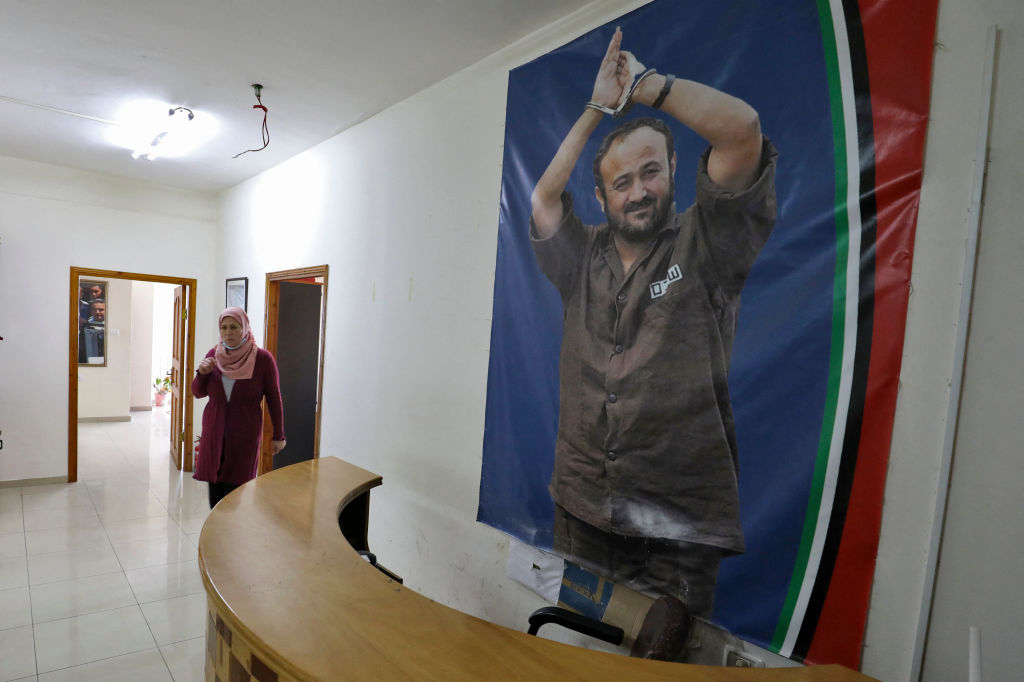
  • Asked who is most suitable to succeed PA President Mahmoud Abbas, 39% chose imprisoned Fatah leader Marwan Barghouti… An Israeli court convicted him in 2004 of five counts of murder stemming from three terrorist attacks.
  • Barghouti was sentenced to five consecutive life terms plus 40 years.
  • Yet this is the man whom a majority of likely Palestinian voters would like to see as their next president.
  • The second-place candidate is the head of Hamas.
  • The PA parliamentary elections are scheduled for November 28, 2026, with presidential elections expected in early 2027. The PSR poll offers a warning of what those elections could produce.
  • Hamas could still win another Palestinian Authority election (as it did in 2006).
  • An overwhelming 72% say Hamas should not disarm before Israel completely withdraws from the Gaza Strip.
  • US envoy Jared Kushner recently met Hamas leader Khalil al-Hayya and other Hamas officials in Cairo as part of US efforts to advance President Donald J. Trump’s Gaza peace plan.
  • Whatever the administration’s intentions, such meetings provide Hamas with something it has sought for years: international legitimacy.
  • When representatives of the world’s leading superpower sit directly with Hamas leaders, Hamas can present the encounter to Palestinians, Arabs, and Muslims as evidence that its strategy has succeeded.
  • The message is that terrorism pays. If you carry out attacks, take hostages, retain your weapons and survive long enough – eventually the Americans will negotiate with you.
  • These figures are difficult to reconcile with claims that Palestinian society is undergoing a transformation toward moderation.
  • What exactly are these elections expected to accomplish?
  • Elections are not automatically synonymous with democracy, moderation, or peace.
  • The PA held a parliamentary election in 2006. Hamas participated and won. A year later, Hamas violently seized control of the Gaza Strip.
  • Now the Palestinians may be heading toward another election in which Hamas could again emerge as the largest faction….
  • Why, then, should the international community rush toward elections that could legitimize extremists and terrorists rather than marginalize them?
  • Before elections, Palestinians need real political reform. The Palestinian Authority needs accountable institutions, independent courts, freedom of expression, an end to corruption, and, most importantly, a political culture that does not glorify terrorists or treat armed groups as legitimate alternatives to government.

Pictured: A poster of Barghouti in prisoner’s uniform, in a campaign office in Ramallah on March 3, 2021. (Photo by Abbas Momani/AFP via Getty Images)

Nearly three years after Hamas’s October 7, 2023 massacre in Israel and following the devastating war in the Gaza Strip, one might have expected a fundamental change in Palestinian public opinion.

Palestinians might have turned away from Hamas, terrorism, and the Iran-backed “Axis of Resistance.” Palestinians also might have demanded new leaders committed to democracy, reform, an end to corruption, and peaceful coexistence.

The latest Palestinian public opinion poll, however, presents a disturbing picture.

The survey, conducted by the Palestinian Center for Policy and Survey Research (PSR) in the West Bank and Gaza Strip between August 5 and 8, 2026, reveals that although support for Hamas has declined, the fundamental political attitudes that have plagued Palestinian society for decades remain largely intact. Hamas remains a major political force; convicted terrorists and Hamas leaders remain popular candidates for the Palestinian Authority (PA) presidency; overwhelming majorities oppose the unconditional disarmament of Hamas; and Iran, Hezbollah, and the Houthis in Yemen continue to enjoy remarkably high approval ratings.

Perhaps the most alarming finding concerns the identity of the Palestinians’ future leaders.

Asked who is most suitable to succeed PA President Mahmoud Abbas, 39% chose imprisoned Fatah leader Marwan Barghouti. Hamas leader Khalil al-Hayya came second with 16%, followed by former Fatah official Mohammed Dahlan with 15%.

In a hypothetical presidential election involving Abbas, Barghouti, and al-Hayya, Barghouti would receive an astonishing 54% of the votes among likely voters. Al-Hayya would receive 26%, while Abbas would receive only 14%.

Who is Marwan Barghouti?

He is not some imprisoned Palestinian political dissident. An Israeli court convicted him in 2004 of five counts of murder stemming from three terrorist attacks.

He was also convicted of attempted murder and membership in a terrorist organization. Barghouti was sentenced to five consecutive life terms plus 40 years.

Yet this is the man whom a majority of likely Palestinian voters would like to see as their next president.

The second-place candidate is the head of Hamas. That alone should cause alarm in Washington, Brussels and other Western capitals that continue to talk about Palestinian elections as though voting, by itself, will magically produce moderation and democracy.

The PA parliamentary elections are scheduled for November 28, 2026, with presidential elections expected in early 2027. The PSR poll offers a warning of what those elections could produce. If legislative elections were held today, Fatah would receive 32% of the votes and Hamas’s “Change and Reform” list would receive 29%. In the Gaza Strip, Hamas would actually come first, with 34% compared to 30% for Fatah.

In other words, Hamas could still win another Palestinian Authority election (as it did in 2006).

This is the same Hamas that carried out the October 7 massacre. Yet after everything that has happened since then, the terrorist group remains within striking distance of Fatah in an election.

True, Hamas has lost some support. Overall identification with Hamas has dropped from 35% ten months ago to 24%. Satisfaction with Hamas’s performance during the Gaza war has fallen from 60% to 42%.

These changes should not be ignored. Moreover, they should not be confused with a Palestinian repudiation of Hamas or its ideology.

When Palestinians are asked which faction is most deserving of representing and leading them, Hamas still beats Abbas’s Fatah: 28% to 21%. An encouraging 44% say neither faction deserves to lead, but Hamas nevertheless remains a major political player and retains the support of nearly one-quarter of the population.

Even more revealing is what Palestinians say about Hamas’s weapons.

An overwhelming 72% say Hamas should not disarm before Israel completely withdraws from the Gaza Strip. Only 20% support disarmament before a full Israeli withdrawal. Opposition to disarming Hamas reaches 79% in the West Bank and 62% in Gaza.

This is crucial. The problem, therefore, is not whether Palestinians approve or disapprove of Hamas’s performance. The issue is whether they believe Hamas should be allowed to retain its weapons and continue functioning as an armed organization.

The answer from nearly three-quarters of the respondents is clear: Yes, at least until Hamas’s condition of a full Israeli withdrawal is met.

This should be of particular concern to the Trump Administration and anyone expecting Hamas to disarm as part of the latest Gaza arrangements. Hamas is not operating in a political vacuum. It knows that a large majority of Palestinians oppose requiring it to surrender its weapons before an Israeli withdrawal.

The poll also shows why direct American engagement with Hamas is dangerous.

US envoy Jared Kushner recently met Hamas leader Khalil al-Hayya and other Hamas officials in Cairo as part of US efforts to advance President Donald J. Trump’s Gaza peace plan.

Whatever the administration’s intentions, such meetings provide Hamas with something it has sought for years: international legitimacy.

When representatives of the world’s leading superpower sit directly with Hamas leaders, Hamas can present the encounter to Palestinians, Arabs, and Muslims as evidence that its strategy has succeeded.

A US-designated terrorist organization that perpetrated the October 7 massacre is no longer merely being pressured to surrender; its leaders are sitting across the table from senior American representatives.

The message is that terrorism pays. If you carry out attacks, take hostages, retain your weapons and survive long enough – eventually the Americans will negotiate with you.

This perception is particularly dangerous just months before Palestinian elections. Instead of politically isolating Hamas, direct high-level engagement helps portray the terrorist group as an indispensable regional actor.

The PSR poll contains another warning: Palestinian admiration for Iran and its terrorist proxies remains extraordinarily high.

Satisfaction with the Houthis in Yemen stands at 61%. Hezbollah and Iran each receive 50%. Moreover, when Palestinians were asked where they stood during the recent US-Iran war, 45% said they sided with Iran, compared to only 12% who opposed Iran.

These figures are difficult to reconcile with claims that Palestinian society is undergoing a transformation toward moderation.

The Houthis have attacked Israel, Saudi Arabia and international shipping. Hezbollah has long functioned as Iran’s heavily armed proxy in Lebanon. Iran has funded and armed terrorist groups throughout the Middle East, including Hamas and Palestinian Islamic Jihad.

Yet these are among the regional actors receiving the highest Palestinian satisfaction ratings.

There are, admittedly, some encouraging findings in the poll. Support for armed struggle as the most effective strategy has fallen from 41% to 27%, while support for negotiations has increased from 36% to 44%. These are significant changes.

Yet even here, caution is required. Half of Palestinians still reject the proposition that armed resistance has failed to protect Palestinians or end the conflict despite the destruction suffered in Gaza and parts of the West Bank. Moreover, 36% still support a return to confrontations and an armed intifada (uprising) against Israel.

The Palestinian Authority, meanwhile, faces its own crisis of legitimacy.

Seventy-nine percent of Palestinians want Abbas to resign. Eighty-three percent believe there is corruption in PA institutions. Sixty-five percent say the PA has become a burden on the Palestinian people rather than an achievement. Only 20% are satisfied with Abbas’s performance.

This raises a question Western governments should answer before celebrating the announcement of new Palestinian elections: What exactly are these elections expected to accomplish?

Elections are not automatically synonymous with democracy, moderation, or peace.

The PA held a parliamentary election in 2006. Hamas participated and won. A year later, Hamas violently seized control of the Gaza Strip.

Now the Palestinians may be heading toward another election in which Hamas could again emerge as the largest faction – or close enough to remain a dominant political player. Meanwhile, the leading candidate for PA president is serving five life sentences in an Israeli prison, and his principal Islamist rival is the leader of Hamas.

Why, then, should the international community rush toward elections that could legitimize extremists and terrorists rather than marginalize them?

Before elections, Palestinians need real political reform. The Palestinian Authority needs accountable institutions, independent courts, freedom of expression, an end to corruption, and, most importantly, a political culture that does not glorify terrorists or treat armed groups as legitimate alternatives to government.


Bassam Tawil is a Muslim Arab based in the Middle East. His work is made possible through the generous donation of a couple who wish to remain anonymous. Gatestone is most grateful.


Zawartość publikowanych artykułów i materiałów nie reprezentuje poglądów ani opinii Reunion’68,
ani też webmastera Blogu Reunion’68, chyba ze jest to wyraźnie zaznaczone.
Twoje uwagi, linki, własne artykuły lub wiadomości prześlij na adres:
webmaster@reunion68.com


Hamas Uses Gaza Hospital for Torture, Interrogation of Palestinians, IDF Says


Hamas Uses Gaza Hospital for Torture, Interrogation of Palestinians, IDF Says

Algemeiner Staff


Members of Hamas cracking down on Gazans. Photo: Screenshot from X account of Ahmed Fouad Alkhatib

Hamas has been using Nasser Hospital in the southern Gaza city of Khan Younis to torture and interrogate Palestinians, according to Israeli authorities.

The Israel Defense Forces (IDF) and the Shin Bet security agency released a joint statement on Thursday saying they can now reveal intelligence showing that Hamas “conducts security interrogations and torture” at the hospital.

According to the statement, Hamas “sees an erosion in its support among the residents of the Gaza Strip and fears that it will lose its grip on the population,” causing the Palestinian terrorist group to ramp up its efforts to intimidate Gazans and crush any dissent. 
.

.
Hamas, which fully ruled Gaza before its Oct. 7, 2023, invasion of and massacre across Israel that launched the ensuing war, now controls roughly 40 percent of the enclave, in accordance with an October 2025 ceasefire that left the Israeli military in control of more than half the territory. Most of the Palestinian enclave’s population lives in the part under Hamas’s rule.

“According to the information we have, in the Yassin building, on the second floor of the hospital’s outpatient clinics, investigations are being conducted by Hamas’s internal security and military intelligence. Moreover, Hamas exploits the hospital as a center of government, regardless of its medical function, for interrogations, torture, and the collection of funds,” the Israeli statement said.

“Nasser Hospital continues to serve as Hamas’s main military infrastructure in the southern Gaza Strip,” the IDF and Shin Bet added. “Hospital patients and staff witness the regular presence of Hamas operatives, some of them masked, in various areas of the hospital compound.”

The statement came months after the international humanitarian group Doctors Without Borders publicly acknowledged in January that armed individuals — many of them masked — were present inside the large compound of Nasser Hospital, citing intimidation of patients, arbitrary arrests, and suspected weapons movement as reasons for halting some of its work there.

The admission appeared to corroborate claims long asserted by Israeli authorities about the use of medical facilities by Hamas and Palestinian Islamic Jihad (PIJ), an allied terrorist group, during the conflict in Gaza.

For many months, the Israeli government and military have claimed that Hamas and other armed groups used hospitals — including Nasser — as shelter and operational bases, allegations that Palestinian authorities and many humanitarian organizations have rejected. In February 2024, IDF Spokesman Daniel Hagari said the military had “credible intelligence” that Hamas held Israeli hostages at Nasser Hospital at one point and that there may have been bodies of hostages currently hidden there.

The Algemeiner has previously documented claims acknowledged by the Palestinian Authority that Hamas summoned Gazans to the Nasser compound for interrogations and that militants threatened hospital staff.

Terrorists from both Hamas and PIJ have confessed that they took over hospitals across the enclave, using the medical facilities to hide military activities, launch attacks, and hold hostages kidnapped during their Oct. 7 attack.

The latest Israeli statement comes as the US seeks to move forward to the next phase of last year’s ceasefire, an effort that would require Hamas to disarm and relinquish control of Gaza.

However, Hamas has repeatedly refused to give up its weapons and taken advantage of the pause in fighting by tightening its control over civilian life while simultaneously rebuilding its military capabilities behind the scenes.

As part of this effort, the Palestinian terrorist group has been gradually reestablishing its civilian governance structures across the war-torn enclave, through checkpoints, strict regulation of goods, and control over key public institutions, including hospitals.

Hamas has also been reactivating internal security mechanisms to enforce day-to-day order, while conducting extensive intelligence operations aimed at identifying alleged “collaborators with Israel” and suppressing any opposition.

In June, armed Hamas operatives arrested Gazans in the streets and rounded up others at hospitals as the Islamist group moved to suppress planned protests calling for an end to its rule.

“The IDF warns the residents of the Gaza Strip – Hamas is afraid of losing control of the Gaza Strip, and therefore uses hospitals, schools and other civilian facilities for its own needs and harms them in areas intended to serve them,” the military and Shin Bet said in Thursday’s statement.

Last week, the Palestinian Center for Policy and Survey Research, an independent Palestinian polling and research institute, released a survey showing a significant decline in support for Hamas in both Gaza and the West Bank.


Zawartość publikowanych artykułów i materiałów nie reprezentuje poglądów ani opinii Reunion’68,
ani też webmastera Blogu Reunion’68, chyba ze jest to wyraźnie zaznaczone.
Twoje uwagi, linki, własne artykuły lub wiadomości prześlij na adres:
webmaster@reunion68.com