
Archive | 2026/08/18

25 lat temu moja córka zginęła w zamachu na restaurację Sbarro. Jej zabójczyni jest na wolności


25 lat temu moja córka zginęła w zamachu na restaurację Sbarro. Jej zabójczyni jest na wolności

Arnold Roth


Znalazłem się w groteskowej sytuacji: to ja jestem politycznie niewygodny, podczas gdy terrorystka, która przyznała się do winy, pozostaje pod ochroną sojusznika USA. Jej wolność jest kpiną ze sprawie


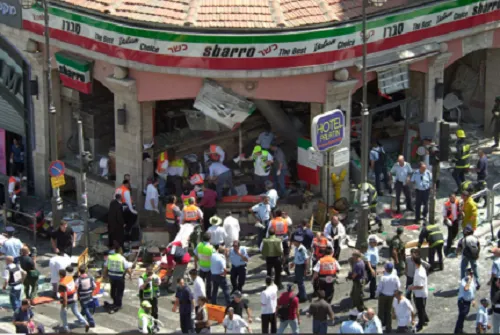
Policjanci i medycy na miejscu samobójczego zamachu bombowego wewnątrz restauracji Sbarro w Jerozolimie, 9 sierpnia 2001 r. Zginęło 15 osób, a 130 zostało rannych. Szesnasta ofiara zmarła w 2023 r. (AP/Peter Dejong)

Utrata naszej córki Malki była jak horror rozgrywający się na naszych oczach.

9 sierpnia 2001 roku był w Jerozolimie wakacyjnym dniem. Wyszedłem wcześnie rano do firmy zajmującej się technologiami farmaceutycznymi, którą zarządzałem, podczas gdy domownicy jeszcze spali. Około godziny 14 zadzwoniła do mojego biura Frimet – moja żona. Zamiast jak zwykle powiedzieć mi, co się dzieje, krzyczała: „Doszło do zamachu terrorystycznego – pigua. Nie mogę skontaktować się z dziećmi”. Połączenie zostało przerwane.

Potem nastąpiło dwanaście godzin gorączkowego telefonowania, sprawdzania szpitali, modlitw i narastającego przerażenia. Malki, piętnastoletnia, nasza najstarsza córka i środkowe dziecko, wyszła ze swoją najbliższą przyjaciółką Michal, żeby spędzić razem beztroski dzień nastolatki. Frimet, którą zmogła migrena, nie widziała, jak Malki wychodziła z domu.

O drugiej w nocy zadzwonili nasi dwaj najstarsi synowie z państwowego zakładu medycyny sądowej w Jaffie. Zabrał ich tam miejski pracownik socjalny. Telefon, którego żaden rodzic nigdy nie chciałby odebrać. Oznaczał koniec pierwszego rozdziału naszego życia.

Malki była z natury łagodna i kochająca. Uwielbiała swoją niewidomą, niemówiącą młodszą siostrę Hayę i pomagała przy każdym nagłym problemie medycznym oraz podczas każdego pobytu w szpitalu. Empatia przychodziła jej naturalnie; jej uśmiech rozświetlał każde pomieszczenie. To czyste, piękne życie zostało odebrane w jednej chwili.

Wspomnienia nigdy nie blakną: pogrzeb, siedzenie sziwy na podłodze naszego nagle zatłoczonego domu, niekończący się strumień przyjaciół i nieznajomych przychodzących, by nas pocieszyć.

Dwadzieścia pięć lat później ból powraca ostrzejszy niż kiedykolwiek – spotęgowany teraz świadomością, że kobieta, która zorganizowała tę masakrę, chodzi wolna, wyzywająca, nieokazująca skruchy i otaczana uwielbieniem. Nazywa się Ahlam Tamimi. Zamach bombowy na pizzerię Sbarro nazywa „moją operacją”, mówi, że zrobiłaby ponownie dokładnie to samo, i otwarcie mieszka w Jordanii pod ochroną jordańskich władz. Od 2018 roku Departament Stanu USA oferuje za nią nagrodę w wysokości 5 milionów dolarów. Jest jedyną kobietą na liście najbardziej poszukiwanych terrorystów FBI.

Urodzona, wychowana i wykształcona w Jordanii Tamimi w 2000 roku, w wieku 20 lat, przedostała się na Zachodni Brzeg, aby studiować dziennikarstwo na uniwersytecie w okolicach Ramallah. Nocami pracowała jako prezenterka wiadomości w arabskiej telewizji. Jeszcze w pierwszym roku przeniosła się z Fatahu do Hamasu, stając się pierwszą kobietą przyjętą przez tę organizację do przeprowadzania operacji terrorystycznych. Podłożyła bombę w supermarkecie w Jerozolimie, ale ta nie wybuchła. Tydzień później odniosła sukces.

Tamimi zaprowadziła człowieka, którego nazywam jej żywą bombą – religijnego fanatyka niosącego futerał na gitarę wypełniony materiałami wybuchowymi i gwoździami – do wejścia zatłoczonej pizzerii Sbarro w centrum Jerozolimy. W tamtych niewinnych czasach nie było tam ochroniarzy.

W nagraniu, które dziś szeroko krąży w internecie, opowiada, jak odeszła przed masakrą, a jadąc autobusem z powrotem do Ramallah, słuchała radiowych doniesień o rosnącej liczbie ofiar. Wspomina swoje rozczarowanie, gdy usłyszała o „zaledwie trzech zabitych” – i narastającą euforię, kiedy liczba ofiar rosła. Pozostali pasażerowie bili brawo. Ostateczny bilans: 15 zabitych, w tym ośmioro dzieci, i dziesiątki rannych. Szesnasta ofiara, młoda matka, która pozostawała nieprzytomna, zmarła wskutek odniesionych obrażeń w 2023 roku.

Po powrocie do Ramallah Tamimi tego samego wieczoru przekazywała wiadomości w lokalnej stacji, relacjonując masakrę tak, jakby dokonał jej ktoś inny. Aresztowana kilka tygodni później przez Siły Obronne Izraela przyznała się do wszystkich zarzutów, została skazana na 16 kar dożywotniego pozbawienia wolności i przez całe postępowanie uśmiechała się do sędziów.

W 2011 roku, zaledwie osiem lat po skazaniu, wyszła na wolność w ramach skrajnie nierównej wymiany, dzięki której uwolniono izraelskiego żołnierza Gilada Szalita, przetrzymywanego przez Hamas jako zakładnik przez pięć lat. Jej powrót do Jordanii przywitano ekstatycznymi wiecami, tournée po mediach, wywiadami i wizytami VIP-ów.

W marcu 2012 roku Tamimi uruchomiła program telewizyjny „Breezes of the Free” („Powiewy wolnych”), produkowany przez Bractwo Muzułmańskie, poświęcony solidarności z terrorystami i nadawany z Ammanu. Fakt, że było to możliwe w ściśle kontrolowanym środowisku medialnym Jordanii, jasno wskazuje, że program miał oficjalną aprobatę. Był emitowany co tydzień przez pięć lat.

Jordania, gdzie badania opinii publicznej wykazują jeden z najwyższych na świecie poziomów nastrojów antysemickich, pokazała, że nie można oczekiwać od niej pociągnięcia Tamimi do odpowiedzialności.

Ale Malki była obywatelką amerykańską — jedną z trojga obywateli USA zamordowanych w Sbarro. Na początku 2012 roku, po tym jak Tamimi rozpoczęła swój program telewizyjny, pojechałem do Waszyngtonu, aby domagać się sprawiedliwości. Wysocy rangą przedstawiciele Departamentu Sprawiedliwości i FBI okazali zainteresowanie sprawą. Nalegałem, aby zastosowali mało znane amerykańskie prawo umożliwiające ściganie osób, które mordują Amerykanów w zamachach terrorystycznych poza granicami kraju.

Dopiero po latach dowiedziałem się, że administracja Obamy potajemnie postawiła Tamimi w stan oskarżenia w 2013 roku. Zarzuty te ostatecznie ujawniono publicznie w 2017 roku, za prezydentury Donalda Trumpa; w lutym tego samego roku Stany Zjednoczone formalnie wystąpiły o jej ekstradycję na podstawie amerykańsko-jordańskiego traktatu ekstradycyjnego z 1995 roku. W ciągu kilku dni od ujawnienia zarzutów w Waszyngtonie jordański sąd apelacyjny, powołując się na sztucznie wykreowany zarzut natury technicznej, który poza granicami królestwa nie znalazł żadnego poparcia, uznał traktat za nieważny, a tym samym niewykonalny. (Choć czyni to w niepokojąco cichy sposób, rząd Stanów Zjednoczonych od tamtej pory wielokrotnie oświadczał, że traktat nadal obowiązuje). Jordania po dziś dzień odmawia ekstradycji Tamimi.

Stany Zjednoczone przekazują Jordanii hojną coroczną pomoc – obecnie około 1,45 miliarda dolarów, a kwota ta rośnie. Dysponują wystarczającymi środkami nacisku, by zażądać od Jordanii przestrzegania traktatu. Nigdy jednak nie wywarto żadnej znaczącej presji. Stany Zjednoczone nigdy nawet publicznie nie wezwały Jordanii do zaprzestania łamania porozumienia i wydania Tamimi. Bierność Waszyngtonu, utrzymująca się za kolejnych administracji, jest równie zdumiewająca, co przemilczana przez media.

Jako rodzice zamordowanego dziecka znaleźliśmy się w groteskowej sytuacji: jesteśmy traktowani jako politycznie bardziej niewygodni niż przyznająca się do winy organizatorka masakry, która korzysta z jawnej ochrony sojusznika Stanów Zjednoczonych. To poczucie zdrady jest głębokie i dławiące.

Fakt, że Tamimi tak jawnie cieszy się wolnością, jest kpiną z jej ofiar, ich rodzin, fundamentalnej zasady, że za terroryzm trzeba zapłacić cenę, oraz z samej sprawiedliwości. To niepojęte. Zwykłe rodziny, takie jak moja, nie powinny być pozostawiane same sobie i zmuszane do prowadzenia wieloletnich kampanii tylko po to, by doszło do rozliczenia sprawców.

Pojawiły się jednak przebłyski nadziei. W ostatnich tygodniach wysoki rangą członek gabinetu administracji Trumpa przekazał nam w oficjalnej wiadomości, że „ataki na Amerykanów nie pozostaną bez odpowiedzi i nie spoczniemy, dopóki Tamimi nie zostanie postawiona przed wymiarem sprawiedliwości”. Politykom łatwo przychodzą słowa, ale te padły ze szczebla wyższego niż wszystko, co słyszeliśmy przez wszystkie te lata walki o sprawiedliwość.

A w środę Conference of Presidents of Major American Jewish Organizations oficjalnie i publicznie ponowiła apel, aby Departament Stanu wywarł presję w sprawie ekstradycji Tamimi, wzywając sekretarza stanu Marco Rubio, by „poruszył tę kwestię bezpośrednio z królem Abdullahem II”.

Pokonanie terroryzmu stanowi fundament każdej wiarygodnej wizji pokoju w naszym regionie. W związku z 25. rocznicą chcę, aby Amerykanie wywierali presję na swoich wybranych przedstawicieli i liderów społeczności – zwłaszcza tych działających na wszystkich szczeblach zróżnicowanej amerykańskiej społeczności żydowskiej – by wykorzystali dostępne narzędzia, dyplomatyczne, finansowe i prawne, tak aby Ahlam Tamimi została sprowadzona z Jordanii do Waszyngtonu i wreszcie stanęła tam przed sądem za niewyobrażalną zbrodnię zamordowania Amerykanów.

Kiedy to nastąpi, będzie mógł rozpocząć się drugi rozdział naszego życia.


O autorze

Arnold Roth, prawnik i menedżer w branży technologicznej, jest honorowym przewodniczącym Malki Foundation, fundacji, którą wraz z żoną Frimet założył w 2001 roku. Jej działalność upamiętnia ich córkę Malki, zamordowaną w zamachu terrorystycznym na pizzerię Sbarro w centrum Jerozolimy.

Link do oryginału: https://blogs.timesofisrael.com/25-years-ago-my-daughter-was-killed-in-the-sbarro-bombing-her-killer-is-free/

Times of Israel, 9 sierpnia 2026


Zawartość publikowanych artykułów i materiałów nie reprezentuje poglądów ani opinii Reunion’68,
ani też webmastera Blogu Reunion’68, chyba ze jest to wyraźnie zaznaczone.
Twoje uwagi, linki, własne artykuły lub wiadomości prześlij na adres:
webmaster@reunion68.com

All Posts

The Dictatorship of Virtue


The Dictatorship of Virtue

Pierre Rehov


  • Certain opinions are no longer treated as debatable; they are treated as evidence of bigotry or harm. Institutions that once managed disagreement now police belief, and dissent is answered not with argument but with consequences a person can feel: a lost job, a withdrawn invitation, a name circulated as a warning to others.
  • Nowhere has the shift been more thorough than in higher education. University offices created to enforce civil rights law grew into administrative empires devoted to reshaping thought and policing dissent. Many universities began requiring faculty candidates to submit “diversity statements” that worked as political litmus tests, obliging applicants to affirm theories about systemic oppression and then pledge to advance them.
  • Employees were pressured to affirm contested propositions, among them that all white people benefit from and are complicit in racism, or that colorblindness is itself a form of bias, rather than simply to treat colleagues fairly. Several brands then paid a commercial price when customers concluded they had been recast as targets to be re-educated.
  • Some school districts “socially transitioned” children without telling their parents, then labeled the objecting parents extremists. When states legislated to protect minors and preserve single-sex spaces such as restrooms and changing rooms, the answer from activist organizations was frequently accusations of bigotry rather than arguing with evidence.
  • When institutions decide that disagreement itself constitutes harm, fact-finding becomes secondary to control of the narrative.
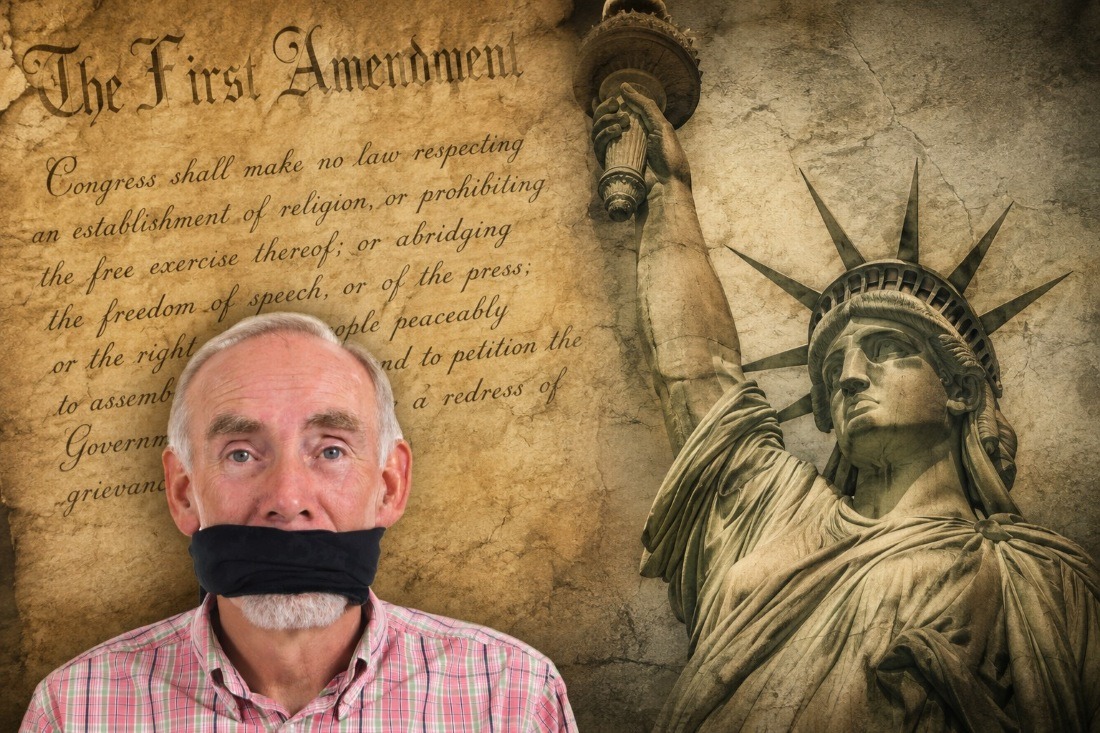
  • The American constitutional order rests on the opposite assumption. The Founding Founders did not believe any faction held a monopoly on truth and morality or a right to compel agreement. They protected speech because they knew the powerful would always be tempted to silence inconvenient views in the name of progress or safety, and always claimed to be for the listener’s own good. The First Amendment exists to shield the opinions that the elites and the powerful dislike, not the ones they already share. It reflects a sober estimate of human nature and the appetites of institutional power.
  • Enforced virtue has never produced better people. It produces people who have learned to keep their real thoughts to themselves until the moment they no longer have to.

Certain opinions are no longer treated as debatable; they are treated as evidence of bigotry or harm. Institutions that once managed disagreement now police belief, and dissent is answered not with argument but with consequences a person can feel: a lost job, a withdrawn invitation, a name circulated as a warning to others.

The urge to treat political disagreement as moral failure did not originate in American universities or human resources departments. It is an impulse older than the Spanish Inquisition, and it always arrives wearing the robes of a higher cause.

During the French Revolution, Maximilien Robespierre argued that the new republic required citizens whose private convictions aligned with revolutionary virtue. Those who fell short were not considered fellow citizens holding different opinions. They were enemies of the people, to be corrected or removed. He built the machinery to enforce that view, and for a year the Reign of Terror sent thousands to the guillotine on suspicion of insufficient zeal. Then the premise turned on him. On July 27, 1794, the same Convention Robespierre had threatened the day before shouted him down and decreed his arrest; the next evening, he and 21 of his closest associates met the same guillotine, without trial, before a cheering crowd.

The experiment proved a durable lesson: once a faction claims the exclusive right to define truth and the power to enforce it, the result is not a better society but fear, purges, and eventual backlash against the enforcers themselves.

The same impulse now operates inside the United States under gentler branding. Diversity, equity, inclusion, anti-racism, and transgender affirmation have replaced the older revolutionary vocabulary, but the structure is identical. Certain opinions are no longer treated as debatable; they are treated as evidence of bigotry or harm. Institutions that once managed disagreement now police belief, and dissent is answered not with argument but with consequences a person can feel: a lost job, a withdrawn invitation, a name circulated as a warning to others.

Consider what happened to Dr. Jay Bhattacharya, a Stanford professor of medicine who argued that prolonged COVID-19 lockdowns would harm children and that protection should focus on the elderly. Internal records later released as “the Twitter files” showed that the social media platform had quietly placed him on a “Trends Blacklist” that throttled the reach of his posts. He had used no abusive language. His offense was holding a scientific position that Twitter, under pressure from the US federal government, had decided fell outside permissible debate.

Nowhere has the shift been more thorough than in higher education. University offices created to enforce civil rights law grew into administrative empires devoted to reshaping thought and policing dissent. Many universities began requiring faculty candidates to submit “diversity statements” that worked as political litmus tests, obliging applicants to affirm theories about systemic oppression and then pledge to advance them. Eventually, some states, such as Florida and Texas, moved to ban these requirements at public institutions precisely because they operated as loyalty oaths. When Texas’s law took effect, the University of Texas at Austin dismissed roughly 60 staff and shuttered the offices that had administered them.

The 2023 congressional hearings on antisemitism at American universities exposed the double standard in real time. Asked directly whether “calling for the genocide of Jews” violated their codes of conduct, the presidents of Harvard, MIT, and the University of Pennsylvania each answered that “the answer depended on the context.” The equivocation was not accidental. It revealed institutions that had spent years expanding the definition of “harm” to shield favored groups while struggling to name an actual call for mass murder. Within days, Liz Magill resigned from Penn, and the storm over Harvard’s Claudine Gay had begun.

Corporate America, in 2020, absorbed the same demands. Following the death of George Floyd, major companies pledged billions to “racial equity” programs and training that often recast ordinary workplace friction as evidence of systemic racism. Employees were pressured to affirm contested propositions, among them that all white people benefit from and are complicit in racism, or that colorblindness is itself a form of bias, rather than simply to treat colleagues fairly. Several brands then paid a commercial price when customers concluded they had been recast as targets to be re-educated. Anheuser-Busch learned this most expensively: after Bud Light created a commemorative beer can for transgender influencer Dylan Mulvaney, a boycott took hold, the brand lost its decades-long crown as America’s best-selling beer, and the parent company’s North American revenue fell by roughly $1.4 billion over the year. The big-box retailer Target absorbed a similar blow over LGBT pride merchandise marketed to children.

The same pattern reached the institutions that supply information. During the COVID-19 pandemic, legitimate questions about lockdowns, school closures, and vaccine policy were frequently reframed as moral rather than empirical disputes. The Great Barrington Declaration, signed by epidemiologists from Harvard, Oxford, and Stanford and eventually by tens of thousands more medical professionals, was denounced and quietly suppressed. Later data on learning loss, heaviest among poor and minority children, and on the mental health toll of prolonged closures suggested that those inconvenient opinions had not been wrong, merely unwelcome.

Enforcement has been equally aggressive on transgenderism. American medical organizations continued to push an “affirmation-only” model for minors even as Europe moved the other way. Britain’s Cass Review found “remarkably weak” evidence that puberty blockers relieve gender dysphoria and led the UK National Health Service to halt their routine use, with Sweden and Finland restricting such treatment to research settings. Gender transition in the US, meanwhile, exploded, driven largely by adolescent girls with no childhood history of gender dysphoria, and detransitioners began suing the medical practitioners and institutions that had rushed them.

Some school districts “socially transitioned” children without telling their parents, then labeled the objecting parents extremists. When states legislated to protect minors and preserve single-sex spaces such as restrooms and changing rooms, the answer from activist organizations was frequently accusations of bigotry rather than arguing with evidence.

When institutions decide that disagreement itself constitutes harm, fact-finding becomes secondary to control of the narrative.

This approach carries predictable costs. When institutions punish dissent and reward conformity, they bleed competence and public trust. Over the past decade, public opinion polls by Gallup have recorded falling confidence across most major institutions, from the media to large corporations to the US Congress, with higher education suffering the steepest decline of all, from a 57% majority in 2015 to a record low of 36%. Parents have organized at school boards. States have cut funding for diversity bureaucracies. These reactions are routinely filed under “polarization” or “backlash.” They can equally be described as citizens noticing that certain institutions decided ordinary Americans required re-education, and are beginning to say no.

The American constitutional order rests on the opposite assumption. The Founding Founders did not believe any faction held a monopoly on truth and morality or a right to compel agreement. They protected speech because they knew the powerful would always be tempted to silence inconvenient views in the name of progress or safety, and always claimed to be for the listener’s own good. The First Amendment exists to shield the opinions that the elites and the powerful dislike, not the ones they already share. It reflects a sober estimate of human nature and the appetites of institutional power.

A dictatorship of virtue eventually consumes its own promises. It guarantees fairness and cohesion but delivers resentment, cynicism and decay. America is watching the process unfold across its campuses, corporations, newsrooms and government agencies. The question is not whether citizens will keep noticing the contradictions and their costs; they already have. It is whether the institutions that embraced this model will adapt before they spend the last of their legitimacy. History is not encouraging. Enforced virtue has never produced better people. It produces people who have learned to keep their real thoughts to themselves until the moment they no longer have to.


Pierre Rehov, who holds a law degree from Paris-Assas, is a French reporter, novelist and documentary filmmaker. He is the author of six novels, including “Beyond Red Lines”, “The Third Testament” and “Red Eden”, translated from French. His latest essay on the aftermath of the October 7 massacre ” 7 octobre – La riposte ” became a bestseller in France. As a filmmaker, he has produced and directed 17 documentaries, many photographed at high risk in Middle Eastern war zones, and focusing on terrorism, media bias, and the persecution of Christians. His latest documentary, “Pogrom(s)” highlights the context of ancient Jew hatred within Muslim civilization as the main force behind the October 7 massacre.


Zawartość publikowanych artykułów i materiałów nie reprezentuje poglądów ani opinii Reunion’68,
ani też webmastera Blogu Reunion’68, chyba ze jest to wyraźnie zaznaczone.
Twoje uwagi, linki, własne artykuły lub wiadomości prześlij na adres:
webmaster@reunion68.com


Mounting Antisemitic Attacks, Institutional Failures Leave Canadian Jews Asking: Stay or Go?


Mounting Antisemitic Attacks, Institutional Failures Leave Canadian Jews Asking: Stay or Go?

Atara Beck


The remains of a kosher restaurant in Montreal’s Côte-des-Neiges neighborhood are seen after a weekend fire caused extensive damage in an incident police are investigating as possible arson amid a wave of antisemitic attacks targeting the city’s Jewish community. Photo: Screenshot

Rabbi Daniel Korobkin, spiritual leader of Beth Avraham Yoseph of Toronto Congregation, Canada’s largest Orthodox synagogue, moved from Los Angeles to the Greater Toronto Area in 2011.

Comparing Canada then and now, “I think it’s two completely different countries,” he told The Algemeiner. “This isn’t just my opinion. I speak to Canadians who have lived here their entire lives.”

Korobkin and his wife moved from the United States to Canada “because we saw it as a goldene medina, just like the United States,” he explained.

However, after then-Prime Minister Stephen Harper was unseated by Justin Trudeau in 2015, the prominent rabbi described a slow decline in the Canadian economy, followed by infringements on individual freedom during the COVID pandemic. But that “does not necessarily spell disaster for the Jewish community because the Jewish community had not been singled out,” he noted — until everything changed.

“Then we got to Oct. 7, 2023,” Korobkin said, referring to the Palestinian terrorist group Hamas’s invasion of and massacre across southern Israel.

Korobkin’s story is one of several relayed by Jewish leaders, activists, and experts who spoke to The Algemeiner about what has become an alarmingly hostile environment for Canadian Jews, many of whom are now actively discussing whether to emigrate from a country they once considered a haven.

Just last month, the national statistical office of Canada revealed that Canadian Jews were the targets of more than 70 percent of religion-motivated hate crimes and 16.7 percent of all hate crimes, regardless of category, reported to police in 2025, despite making up less than 1 percent of the country’s population.

According to observers on the ground, one source of this surging antisemitism is a growing Muslim population comprised largely of immigrants from regions where animus toward Israel is rampant.

“There are at least five or six times as many Muslims as Jews in Canada today, and the Muslims have organized themselves,” Korobkin said. “They have really got their act together … and part of the Islamist philosophy or creed is to bring sharia law to wherever they live.”

Korobkin stressed that this is “not representative of the entire Muslim community.” However, he noted, “in many of the radicalized Muslim voices that we see today, just like we see it in the UK and France and Australia, the creed is to dominate and silence all dissenting voices.”

According to Korobkin, the Jewish establishment in Canada is not handling the problem the way it needs to.

“I think there’s a certain amount of kowtowing to Canadian political leaders. It’s a strategy that I don’t think will work,” he lamented. “When the UJA [United Jewish Appeal] tells you that they scored a great victory in getting more security funding, all that means is that they managed to convince the government to give us more money to build higher walls and barbed-wire fences around our institutions. That’s not a good way to fight antisemitism, but that’s all they’ve got right now.”

In contrast, the grassroots movements are “pushing back hard,” Korobkin explained. “They’re saying, ‘We’re going to be in your face. We’re not going to take this lying down. We’re not going to retreat into our ghettos and our higher-walled fences.’ And that, I think, is the difference between the CIJAs [Center for Israel and Jewish Affairs] and UJAs on the one side and the grassroots groups like Tafsik and Unapologetically Jewish and even B’nai Brith.”

Korobkin argued that some Canadian politicians are more concerned with electoral considerations than confronting extremism. “And that, I fear, is a recipe for a very dark future for the Jewish community in Canada.”

“That doesn’t mean that all is lost and there’s no possibility for course correction,” Korobkin added. “But I will say this: There has never been a worse time to be Jewish in Canada than today, perhaps with the exception of during World War II.”

The prime minister’s response to antisemitism

Prof. Irwin Cotler, international chair of the Raoul Wallenberg Center for Human Rights and a former justice minister, served as Canada’s first special envoy on preserving Holocaust remembrance and combatting antisemitism from November 2020 to October 2023.

Cotler said antisemitism had historically been viewed through a “triangular paradigm” of threats from the far right, far left, and radical Islam.

“However, my principal finding at the conclusion of my first year as special envoy in 2021 was that while this conventional paradigm remained, what we were now witnessing was the mainstreaming, normalization, and legitimation of antisemitism in the political culture, the popular culture, the entertainment culture, the sports culture, and, in particular, the campus culture, the whole amidst indifference and inaction, let alone the absence of outrage,” he explained.

In February, Prime Minister Mark Carney eliminated both the office of the Special Envoy on Preserving Holocaust Remembrance and Combatting Antisemitism and the office of the Special Representative on Combatting Islamophobia, replacing them with a broader Advisory Council on Rights, Equality, and Inclusion.

On June 1, in an address to the Jewish community at Holy Blossom Temple in Toronto, Canada’s largest synagogue, Carney acknowledged the rise in antisemitism and announced the official launch of the Advisory Council, chaired by Minister of Canadian Identity and Culture Marc Miller, saying its first priority would be tackling the antisemitism crisis.

The Advisory Council includes lawyer Avnish Nanda and former Transport Minister Omar Alghabra.

Nanda has represented anti-Israel students who were evicted from an encampment at the University of Alberta.

Alghabra is the former president of the Canadian Arab Federation, which, after his tenure, lost federal funding over its support of Hamas and Hezbollah. In 2022, he defended his attendance at a Canada-Palestine Parliamentary Friendship Group reception hosted by Nazih Khatatba, editor of an Arabic-language newspaper accused of spreading antisemitism. In 2005, Alghabra criticized then-Toronto police Chief Bill Blair for participating in a Walk with Israel event and traveling to Israel.

Carney’s speech “acknowledged the scourge of antisemitism and that the covenant with the Jewish community had been breached, but there was no reference to Israel, no reference to anti-Zionism as a cover for antisemitism, and there was no mention of the ongoing delegitimization, dehumanization, and demonization of Israel, which is what has, in effect, put a target on the back of every Canadian Jew,” Cotler said.

“Regarding the Advisory Council, as I said when it was announced, such a council, while necessary to combat all forms of hate, tends to marginalize or erase the singularity of anti-Jewish hatred, its globality, and its descent into standing threats of intimidation, harassment, violence and even terrorism.”

However, Cotler added, “the inclusion of Omar Alghabra and Avnish Nanda on the committee is not the problem — it is the establishment of yet another advisory council, with a broad-based agenda and without the requisite expertise to understand and combat antisemitism, when what is needed is moral, political, and juridical leadership at the highest levels, as an expression of what Prime Minister Carney has himself called a ‘whole of government’ policy.”
.

Canada’s Prime Minister Mark Carney speaks at a Hanukkah menorah lighting in Ottawa, Ontario, Canada, Dec. 14, 2025. Photo: REUTERS/Patrick Doyle
.

read more….


Zawartość publikowanych artykułów i materiałów nie reprezentuje poglądów ani opinii Reunion’68,
ani też webmastera Blogu Reunion’68, chyba ze jest to wyraźnie zaznaczone.
Twoje uwagi, linki, własne artykuły lub wiadomości prześlij na adres:
webmaster@reunion68.com