Archive | 2026/08/09

Ukraina wydała zgody na ekshumacje szczątków polskich ofiar w Hucie Pieniackiej i Ugłach na Wołyniu

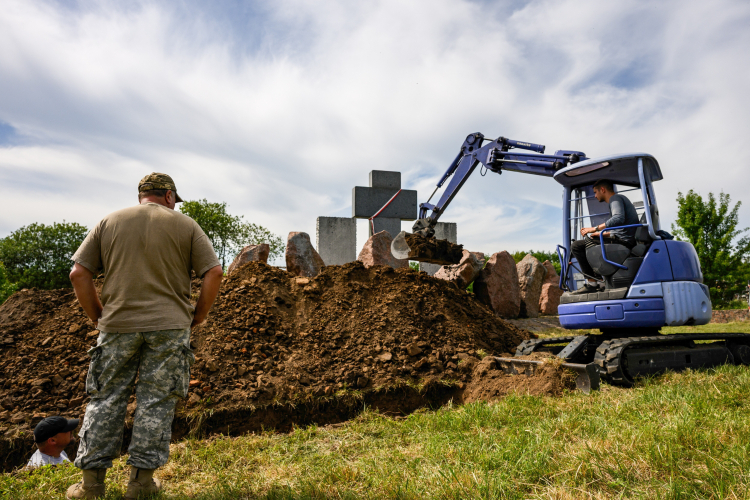
Huta Pieniacka, Ukraina,09.06.2026. Prace poszukiwawcze w Hucie Pieniackiej. Fot. PAP/Vladyslav Musiienko


Ukraina wydała zgody na ekshumacje szczątków polskich ofiar w Hucie Pieniackiej i Ugłach na Wołyniu

Jarosław Junko (PAP)


Ukraiński Instytut Pamięci Narodowej (UINP) poinformował w sobotę, że wydane zostały zgody na ekshumacje szczątków polskich ofiar w Hucie Pieniackiej w obwodzie lwowskim oraz na poszukiwania i ekshumacje w Ugłach na Wołyniu.

Decyzje w tej sprawie podjęto na posiedzeniu ukraińskiej Państwowej Międzyresortowej Komisji ds. Upamiętnienia Uczestników Operacji Antyterrorystycznej, Ofiar Wojny i Represji Politycznych, które odbyło się w piątek, 7 sierpnia.

„W ramach realizacji ustaleń osiągniętych przez Ukraińsko-Polską Grupę Roboczą ds. Pamięci Narodowej komisja wyraziła zgodę na przeprowadzenie badań ekshumacyjnych na terenie dawnej wsi Huta Pieniacka (…)” – ogłosił UINP w sobotę na Facebooku.

„Ponadto, w ramach działań na rzecz zachowania miejsc pamięci narodu polskiego w Ukrainie, uzgodniono przeprowadzenie badań ekshumacyjnych pochówków osób, które zginęły lub zaginęły bez wieści podczas II wojny światowej na terenie wsi Ugły w hromadzie (gminie – PAP) miejskiej Sarny, w rejonie sarneńskim obwodu rówieńskiego” – przekazano w komunikacie.

W odrębnej decyzji komisja zgodziła się na pobranie próbek materiału genetycznego (DNA) ze szczątków pochowanych w latach 1992–2015 na cmentarzu dawnej wsi Ostrówki (…)” – oświadczył UINP.

W piątek polski Instytut Pamięci Narodowej podał, że w wyniku prac ekshumacyjnych na terenie dawnych wsi Ostrówki i Wola Ostrowiecka na Wołyniu, które prowadzono od 13 lipca do 7 sierpnia, odnaleziono szczątki 55 osób, w tym 26 dzieci, oraz ponad 300 przedmiotów osobistych. 30 sierpnia szczątki zostaną pochowane w kwaterze ofiar UPA na cmentarzu w Ostrówkach.

W czerwcu zakończono prace poszukiwawcze w Hucie Pieniackiej w obwodzie lwowskim. Szczątki ludzkie zlokalizowano tam w 25 lokalizacjach na obszarze ponad 200 metrów kwadratowych.

W marcu prowadzone były prace poszukiwawcze w Ugłach. Nie przyniosły one rezultatów, choć w ich trakcie odnaleziono pozostałości kaplicy cmentarnej. Masowego grobu w Ugłach nie odnaleziono.

– Przebadaliśmy wszystkie wskazane miejsca. Przeszukaliśmy gruntownie cały ten teren. Znaleźliśmy pozostałości kaplicy cmentarnej. Nie odnaleźliśmy grobu masowego, ale odnaleźliśmy szczątki i pojedynczy szkielet, który możemy wiązać z tym zdarzeniem – informował wówczas PAP szef polskiej części badań, prof. Andrzej Ossowski z Pomorskiego Uniwersytetu Medycznego w Szczecinie.

Polskę i Ukrainę od wielu lat różni pamięć o roli Organizacji Ukraińskich Nacjonalistów i Ukraińskiej Powstańczej Armii, które w latach 1943-1945 dopuściły się ludobójczej czystki etnicznej na blisko 100 tys. polskich mężczyzn, kobiet i dzieci.

Polska uznaje zbrodnie popełnione na ludności polskiej za ludobójstwo, natomiast wielu ukraińskich historyków i polityków interpretuje je jako element szerszego konfliktu polsko-ukraińskiego, za który odpowiedzialność ponosiły obie strony. Jednocześnie w ukraińskiej pamięci historycznej OUN i UPA są często postrzegane jako symbole walki o niepodległość oraz powojennego oporu przeciwko Związkowi Sowieckiemu.

Od wiosny 2017 r. trwał spór wokół zakazu poszukiwań i ekshumacji szczątków polskich ofiar wojen i konfliktów na terytorium Ukrainy wprowadzonego przez ukraiński IPN. Zakaz został wydany po zdemontowaniu pomnika UPA w Hruszowicach w województwie podkarpackim w kwietniu 2017 r.

Decyzja o zniesieniu moratorium na poszukiwania i ekshumacje szczątków polskich ofiar zbrodni wołyńskiej została ogłoszona pod koniec listopada 2024 r. podczas wspólnej konferencji prasowej szefów dyplomacji Polski i Ukrainy, Radosława Sikorskiego i Andrija Sybihy.

Wiosną ub.r. strona polska przeprowadziła ekshumacje w dawnej wsi Puźniki w obecnym obwodzie tarnopolskim. W wyniku prac odnaleziono szczątki co najmniej 42 osób, które zostały pochowane w Puźnikach 6 września. Pod koniec czerwca zakończyły się kolejne prace poszukiwawcze w Puźnikach; nie odnaleziono drugiej zbiorowej mogiły ofiar. Wstępny termin rozpoczęcia kolejnego etapu prac poszukiwawczych planowany jest na 17 sierpnia.

Z Kijowa Jarosław Junko (PAP)


Zawartość publikowanych artykułów i materiałów nie reprezentuje poglądów ani opinii Reunion’68,
ani też webmastera Blogu Reunion’68, chyba ze jest to wyraźnie zaznaczone.
Twoje uwagi, linki, własne artykuły lub wiadomości prześlij na adres:
webmaster@reunion68.com

President Trump: Beware the Motivations of Regional ‘Friends’


President Trump: Beware the Motivations of Regional ‘Friends’

Majid Rafizadeh


  • The Islamic Republic of Iran and its proxies have… been targeting their neighbors’ civilian infrastructure. Perhaps to these countries, a “deal,” even a bad one, sounds as if it might free them of Iranian threats without any cost. Their security calculations have to be quite different from ours: Why not just sit back and let America and Israel do all the heavy lifting?
  • The problem, of course, as the US has seen again and again, like Charlie Brown’s football, is that any deal signed with Iran’s Islamic Revolutionary Guard Corps (IRGC) would only postpone its threats to the oil and gas infrastructure of neighboring countries.
  • A second, more strategic concern is whether Turkey, Qatar and Pakistan are interested in simply charming Trump into letting them wait him out. After he is safely out of office, they can then resume their Muslim Brotherhood-inspired expansion of Islam from better locations, such as right on Israel’s border with the Gaza Strip.
  • Trump has made clear that he seeks genuine peace in the Middle East and broader participation in frameworks that normalize relations with Israel. Promises to join those frameworks are welcome — if they are real. The shower of “poison pill” conditions put forth, however, signals that they are not. They appear to function mainly as devices to postpone a decisive resolution of the Iranian threat. Regional media and political cultures in some of these countries still carry strong anti-American and anti-Israel currents.
  • The United States correctly requires that policy rest on American interests alone, not on the preferences of mediators whose threat perception and long-term goals might well diverge from Washington’s.
  • The Iranian regime’s core ideology – like that of the Muslim Brotherhood, followed by others in the region — includes the destruction of both America and Israel. No version of this ideology is compatible with American security.
  • America’s clear national interest is the total surrender of the Iranian regime’s capacity to threaten anyone… Any country that resists this outcome is, by definition, prioritizing other agendas. These might include jockeying for regional influence, Islamist or anti-Israel orientations, or a desire to preserve some weakened form of the Iranian regime until political circumstances in Washington change. America should no more want the IRGC continuing to rule Iran than it would have wanted the Nazi Party to continue ruling Germany.

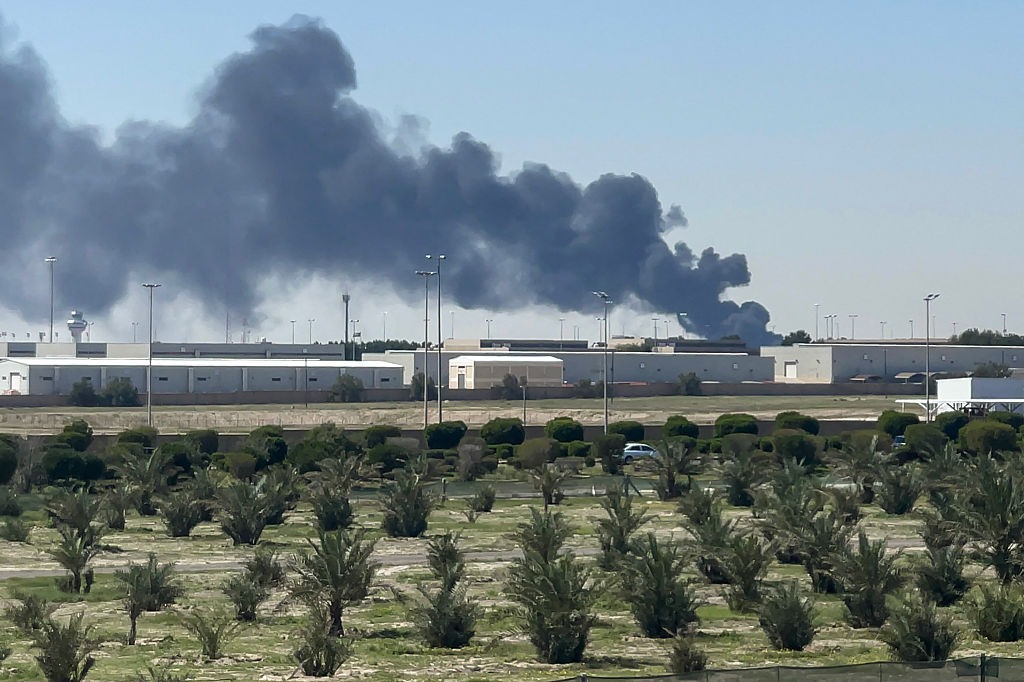
The Islamic Republic of Iran and its proxies have been targeting their neighbors’ civilian infrastructure. Perhaps to these countries, a “deal,” even a bad one, sounds as if it might free them of Iranian threats without any cost. Their security calculations have to be quite different from ours: Why not just sit back and let America and Israel do all the heavy lifting? Pictured: A fire burns in Kuwait International Airport as a result of an Iranian drone strike, on April 1, 2026. (Photo by AFP via Getty Images)

US President Donald J. Trump, in Operation Epic Fury, provided the only — and truly bold — confrontation with the Iranian regime by any American president. No prior leader dared to act with such resolve, or really at all. Many, in fact, actually helped finance Iran’s nuclear and ballistic missile programs

For decades, successive US administrations settled for temporary freezes that enabled Iran to build its war machine. Trump, instead, ordered decisive military action that significantly damaged Iran’s military capabilities: navy, ballistic missile infrastructure, air defenses, and nuclear program. This achievement is beyond dispute and should be the starting point of any serious discussion.

Yet, countries that present themselves as friends of the United States — or even as friends of Trump — such as Turkey, Qatar, and Pakistan, have repeatedly stepped in at exactly the moments when Iran’s regime found itself under maximum pressure and have made themselves supposed mediators.

Most recently, after Trump warned that Iran would face what he described as the largest military strike since World War II, officials from regional capitals once again urged him to pause and pursue talks and deals instead. It is a pattern: just as Iran’s military capabilities are being crushed, external voices intervene to abort the process.

The Iranian regime, which chants “Death to America” and “Death to Israel,” has killed hundreds of Americans and Jews. It does not chant “Death to Qatar,” “Death to Turkey,” or “Death to Pakistan,” or systematically target their citizens the way it targets Americans and Jews. The Islamic Republic of Iran and its proxies have, however, been targeting their neighbors’ civilian infrastructure. Perhaps to these countries, a “deal,” even a bad one, sounds as if it might free them of Iranian threats without any cost. Their security calculations have to be quite different from ours: Why not just sit back and let America and Israel do all the heavy lifting?

The problem, of course, as the US has seen again and again, like Charlie Brown’s football, is that any deal signed with Iran’s Islamic Revolutionary Guard Corps (IRGC) would only postpone its threats to the oil and gas infrastructure of neighboring countries.

A second, more strategic concern is whether Turkey, Qatar and Pakistan are interested in simply charming Trump into letting them wait him out. After he is safely out of office, they can then resume their Muslim Brotherhood-inspired expansion of Islam from better locations, such as right on Israel’s border with the Gaza Strip.

Quite a few governments in the region have long histories of support for Islamist networks. Lavish promises of money, public statements of friendship and private promises of eventual participation in broader peace frameworks, such as the Abraham Accords, could serve as temporary assurances while the clock runs down.

Oddly, Iran has attacked or threatened Gulf states. Yet these same states smile, continue friendly and diplomatic contacts, host Iranian officials, and facilitate negotiations. Why would countries under direct attack maintain casual dialogue and invite the aggressor’s leaders? The rational response would be to cut ties, demand accountability, or join efforts to neutralize the threat. It might be important at least to ask whether quiet understandings exist behind closed doors — assurances of future consideration if the current American pressure can be diluted or delayed.

On the face of it, countries that decline to take a clear stand against a regime that relentlessly projects its power abroad and executes its own people on an industrial scale are not acting as pure partners of American interests, or even their own.

Trump has made clear that he seeks genuine peace in the Middle East and broader participation in frameworks that normalize relations with Israel. Promises to join those frameworks are welcome — if they are real. The shower of “poison pill” conditions put forth, however, signals that they are not. They appear to function mainly as devices to postpone a decisive resolution of the Iranian threat. Regional media and political cultures in some of these countries still carry strong anti-American and anti-Israel currents.

The region’s states have practiced sophisticated diplomacy, layered alliances, and strategic ambiguity for centuries. Surface smiles and public pledges have often coexisted with different calculations conducted out of view. The United States correctly requires that policy rest on American interests alone, not on the preferences of mediators whose threat perception and long-term goals might well diverge from Washington’s.

The Iranian regime’s core ideology – like that of the Muslim Brotherhood, followed by others in the region — includes the destruction of both America and Israel. No version of this ideology is compatible with American security.

America’s clear national interest is the total surrender of the Iranian regime’s capacity to threaten anyone: its neighbors, Israel, the United States, and its own people. Any country that resists this outcome is, by definition, prioritizing other agendas. These might include jockeying for regional influence, Islamist or anti-Israel orientations, or a desire to preserve some weakened form of the Iranian regime until political circumstances in Washington change. America should no more want the IRGC continuing to rule Iran than it would have wanted the Nazi Party to continue ruling Germany.

America must above all refuse to be drawn into the endless rope-a-dope games of the region. The first and overriding mission remains the one Trump first initiated: Unconditional surrender, as with Japan and Germany in World War II. Only then can one begin to talk about rebuilding, not before. America First means just that.

Americans want a winner, not some fake deal that will be broken again before breakfast.


Dr. Majid Rafizadeh is a political scientist, Harvard-educated analyst, and board member of Harvard International Review. He has authored several books on the US foreign policy. He can be reached at dr.rafizadeh@post.harvard.edu


Zawartość publikowanych artykułów i materiałów nie reprezentuje poglądów ani opinii Reunion’68,
ani też webmastera Blogu Reunion’68, chyba ze jest to wyraźnie zaznaczone.
Twoje uwagi, linki, własne artykuły lub wiadomości prześlij na adres:
webmaster@reunion68.com


Israel’s Youth Basketball Team Continues Winning Streak at FIBA Under-18 EuroBasket 2026


Israel’s Youth Basketball Team Continues Winning Streak at FIBA Under-18 EuroBasket 2026

Shiryn Ghermezian


An NBA League basketball hoop and basketball. Photo: Gobierno CDMX via Wikimedia Commons

Israel’s national youth basketball team continues to be rack up big wins at the FIBA Under-18 EuroBasket 2026 in Italy with its latest victory on Monday against Austria, after defeating heavyweights France and Greece over the weekend.

The Israeli team beat Austria 84-80 at the A. Marchetti Sports Hall in Rovereto in the group phase of competition. Israel’s David Musis scored 21 points, nine rebounds, and two blocks. Meanwhile, Aviv Aronov added 19 points, six rebounds, and two assists. Aronov scored five of Israel’s final six points in the last 1:19. Israel spent most of the game in the lead and the team’s biggest lead was 11 points, reached three times in the final quarter.

On Sunday, Israel defeated France 91-77 at the BTS Arena in Trento. Aronov secured 31 points, 6 rebounds, and 3 assists in just 29:06, while Musis added 25 points and 8 rebounds. Israel started the game trailing behind France 39-38 but eventually seized control of the game in the third quarter and final period. On Saturday, the first day of the FIBA Under-18 EuroBasket, Israel pulled off an overtime comeback win against Greece 93-84 at the A. Marchetti Sports Hall.

The quarterfinals of the FIBA Under-18 EuroBasket are on Wednesday.


Zawartość publikowanych artykułów i materiałów nie reprezentuje poglądów ani opinii Reunion’68,
ani też webmastera Blogu Reunion’68, chyba ze jest to wyraźnie zaznaczone.
Twoje uwagi, linki, własne artykuły lub wiadomości prześlij na adres:
webmaster@reunion68.com