
Archive | 2026/08/17

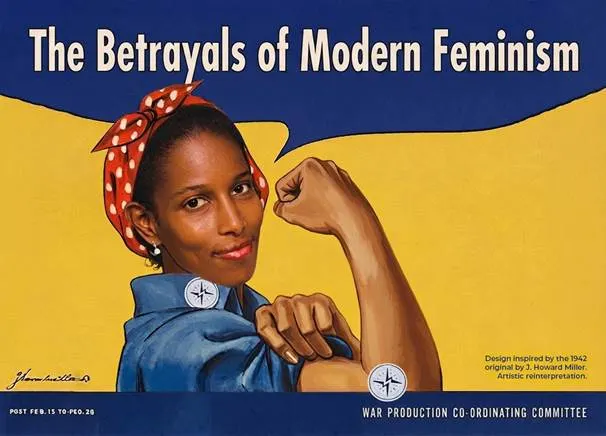
Zdrady współczesnego feminizmu


Zdrady współczesnego feminizmu

Ayaan Hirsi Ali


Współczesny feminizm porzucił kobiety, których podobno broni, poświęcając ich prawa i wolności na rzecz wymogów progresywnej ideologii.


Na papierze powinnam być feministką. Całe swoje dorosłe życie poświęciłam walce o prawa kobiet, zwłaszcza kobiet i dziewcząt w świecie muzułmańskim. Ta działalność kosztowała życie mojego przyjaciela Theo van Gogha i to właśnie z jej powodu do dziś żyję w obliczu zagrożenia. Moja kariera była możliwa tylko dlatego, że udało mi się wydostać ze świata muzułmańskiego i zbudować życie w społeczeństwie, które gwarantuje kobietom takie same prawa i wolności jak mężczyznom. To, że mogę dziś żyć tak, jak żyję, w niemałym stopniu zawdzięczam osiągnięciom zachodniego feminizmu – właściwie powinnam należeć do jego najgłośniejszych orędowniczek.

Ale nie należę. Choć jestem wdzięczna za historyczne osiągnięcia feminizmu, we współczesnym feminizmie głównego nurtu znajduję niewiele, z czym mogłabym sympatyzować lub się utożsamiać. Gdyby bycie „feministką” oznaczało po prostu wiarę w moralną i prawną równość kobiet i mężczyzn, z przyjemnością mogłabym się pod tym podpisać. Ale ta rozsądna i powszechnie atrakcyjna idea nie opisuje już dzisiejszego ruchu feministycznego.

Bitwy, które w przeszłości mobilizowały feministki, zostały w znacznej mierze wygrane. W każdym państwie Zachodu kobiety są ustawowo równe mężczyznom: kobieta może głosować, posiadać majątek, korzystać z kredytu, wykonywać dowolny wybrany przez siebie zawód, osiągać najwyższe szczeble edukacji i sprawować najwyższe urzędy publiczne, a także swobodnie zawierać małżeństwo i się rozwodzić. Na uniwersytetach całego Zachodu kobiety przewyższają liczebnie mężczyzn, a kultura popularna jest przesycona feministycznym językiem i hasłami. Według wszelkich miar feminizm był jednym z najbardziej skutecznych politycznie ruchów w nowożytnej historii.

Być może właśnie wskutek tego sukcesu współczesny feminizm przeżywa kryzys tożsamości. Ludzie określający się mianem feministek i feministów często pozostają ze sobą w konflikcie. Nie zamierzam tutaj rozstrzygać tych wewnętrznych sporów, poza wyrażeniem wdzięczności za ciężką pracę utalentowanych myślicielek próbujących odzyskać etykietę „feministki” dla rozsądnych i wartościowych celów – feministek krytycznych wobec ideologii gender, feministek „reakcyjnych” i innych. Mój zarzut dotyczy feminizmu głównego nurtu, przez który rozumiem współczesny liberalny feminizm. Od dziesięcioleci feminizm głównego nurtu wiąże się ze sprawami, które bezpośrednio podważają prawa i wolności rzeczywistych kobiet. Lista tych zdrad jest długa – i w nadchodzących miesiącach będę miała na ich temat więcej do powiedzenia – ale dwie są szczególnie rażące.

Pierwszą zdradą jest przyjęcie przez feminizm ideologii trans. Feministki głównego nurtu nie potrafią dziś nawet uzgodnić, czym jest kobieta, a wpływowe feministki z pełnym przekonaniem twierdzą, że dorosły mężczyzna z chromosomami XY i męskimi genitaliami może być kobietą. Co niewiarygodne, nie jest to stanowisko marginalne w środowiskach feministycznych. National Women’s Law Center jest jedną z najbardziej wpływowych organizacji zajmujących się prawami kobiet w Ameryce, a obecnie głosi, że „transkobiety i transdziewczęta… SĄ kobietami i dziewczętami”. Jej oficjalne stanowisko głosi, że każda osoba, która chce nazywać się feministką, musi uznawać transkobiety za kobiety, i twierdzi, że polityka wykluczająca mężczyzn z kobiecego sportu i kobiecych szatni „naraża kobiety na niebezpieczeństwo”. Nie jest to żaden wyjątek. Już w 2013 roku grupa prominentnych feministek – między innymi Jill Filipovic, Jessica Valenti i Laurie Penny – podpisały szeroko rozpowszechniane „Oświadczenie na rzecz feminizmu inkluzywnego wobec osób trans”. Oświadczenie broniło obecności transkobiet we „wszystkich przestrzeniach dla kobiet” – w tym, co wyraźnie zaznaczono, w schroniskach dla kobiet i kobiecych toaletach. Od ponad dziesięciolecia feministki głównego nurtu utrzymują, wbrew wszelkiemu rozsądkowi, że nie istnieje żaden konflikt między prawami kobiet a preferencjami mężczyzn identyfikujących się jako osoby trans.

Ale oczywiście taki konflikt istnieje, a kobietami, które płacą za tę fikcję, to nie sygnatariuszki takich oświadczeń – są nimi kobiety szczególnie narażone na krzywdę, przebywające w schroniskach, szatniach i więzieniach. Mężczyźni najbardziej zdeterminowani, by dostać się do przestrzeni przeznaczonych dla kobiet – mężczyźni o drapieżnych zamiarach – są dokładnie tymi, przed którymi takie miejsca mają kobiety chronić, a podporządkowanie się zasadzie samookreślenia płci uniemożliwia ich odsianie. Wielka Brytania przekonała się o tym w 2017 roku, kiedy skazany pedofil, oczekujący na proces w sprawie gwałtu, ogłosił, że jest kobietą, został skierowany do więzienia dla kobiet i w ciągu kilku dni dopuścił się napaści seksualnych na kilka kobiet znajdujących się w więzieniu. Przepisy pozwalające mężczyznom wchodzić do przestrzeni przeznaczonych wyłącznie dla kobiet przerzucają ryzyko stwarzane przez najbardziej niebezpiecznych mężczyzn na najbardziej bezbronne kobiety. Ruch „feministyczny”, który to popiera, nie może być zaskoczony, gdy kobiety go porzucają.

Drugą zdradą jest przyjęcie przez progresywny feminizm multikulturalizmu. Współcześni progresywiści uważają za grzech ocenianie obcych kultur według zachodnich standardów lub wymaganie od imigrantów przybywających do państw Zachodu, by się do tych standardów dostosowali. Standardy te obejmują oczywiście zasadę równości kobiet i mężczyzn. Dlatego kiedy imigranci z kultur rzeczywiście mizoginistycznych traktują kobiety i dziewczęta jako istoty gorsze od mężczyzn – kiedy nie pozwalają córkom chodzić do szkoły albo wydają je za mąż wbrew ich woli, kiedy napastują i wykorzystują seksualnie kobiety w biały dzień – feministki głównego nurtu reagują z opóźnieniem, o ile w ogóle zabierają głos.

Skandal związany z gangami gwałcicieli w Wielkiej Brytanii jest owocem tego progresywnego tchórzostwa. Przez dwie dekady gangi złożone głównie z pakistańskich muzułmanów uwodziły w celu wykorzystania, odurzały narkotykami, gwałciły i sprzedawały tysiące brytyjskich dziewcząt z klasy robotniczej w całym Zjednoczonym Królestwie. Władze często odwracały wzrok z obawy przed oskarżeniami o rasizm. Można by oczekiwać, że liberalne feministki staną na czele protestów, gdy nadużycia wyszły na jaw, tymczasem wiele z nich ustawiło się w kolejce, by strofować tych, którzy ujawnili te przestępstwa. Pisząc na łamach Guardiana, specjalizująca się w handlu ludźmi badaczka ostrzegała, że „ta narracja o ochronie (białych) dziewcząt przed mężczyznami pakistańskiego pochodzenia jest niebezpieczna”, a skupienie się rządu na gangach zajmujących się groomingiem uznała za ksenofobiczne. Nie było to stanowisko odosobnione — w istocie gangi gwałcicieli mogły działać tak długo właśnie z powodu progresywnej uległości wobec mniejszości rasowych i kulturowych.

Ta uległość podsyciła wyraźną obojętność wobec losu kobiet w świecie muzułmańskim. Przy wszystkich pretensjach progresywnego feminizmu do uniwersalizmu skupia się on na luksusowych krzywdach – reprezentacji, „luce płacowej”, „mikroagresjach” – które jawią się jako problemy jedynie uprzywilejowanym kobietom w zamożnych, rozwiniętych państwach. W Iranie młode kobiety były aresztowane i bite na śmierć za publiczne pokazywanie włosów. To właśnie te kobiety potrzebują obrońców; ich sprawa jest godna wielkiego ruchu. Ale zachodnie feministki tylko od czasu do czasu czują się skłonne, by je dostrzec, ponieważ potraktowanie ich cierpienia poważnie wymaga gotowości do osądzenia kultury, która to cierpienie powoduje, czego progresywiści odmawiają. Zamiast tego widzimy dziś amerykańskie polityczki zakładające hidżab przed muzułmańską publicznością w geście kulturowej uległości, podczas gdy kobiety w takich krajach jak Iran są karane za odmowę jego noszenia.

Te zdrady łączy nieskrywane pragnienie liberalnych feministek, by zachować znaczenie. Ponieważ najważniejsze batalie prawne przeszłości zostały już wygrane, współczesne feministki włączyły się w szerszy projekt progresywny, w którym zakłada się, że każda „marginalizowana” grupa ma z pozostałymi całkowicie zgodne interesy. Kiedy zgodność tych interesów zostaje zakwestionowana – kiedy przedstawia się nam oczywiste i druzgocące dowody na to, że agenda trans oraz multikulturalizm zagrażają bezpieczeństwu i wolności kobiet i dziewcząt – liberalne feministki w znacznej mierze porzucają kobiety, w których obronie, jak twierdzą, występują.

Ruch feministyczny godny tej nazwy uznałby różnice płciowe i kulturowe oraz odłączył się od progresywnej „wszechsprawy”. W tym kierunku prowadzona jest wartościowa praca intelektualna. Jednak jako ruch polityczny współczesny feminizm przeobraził się w zagubionego i toksycznego potwora karmiącego się poczuciem krzywdy, obsesyjnie skupionego na wizerunku i błahych pretensjach, a jednocześnie odwracającego się plecami do kobiet na Zachodzie i na całym świecie, które doświadczają prawdziwego seksistowskiego ucisku. Zawsze będę bronić praw kobiet – i dlatego nie mogę nazywać siebie feministką.


Link do oryginału:

Restoring the West by Ayaan Hirsi Ali
The Betrayals of Modern Feminism
On paper, I should be a feminist. I have spent my entire adult life fighting for the rights of women, particularly women and girls in the Muslim world. This work cost my friend Theo van Gogh his life and is why I still live under threat today. My career has been possible only because I made it out of the Muslim world and built a life in a society that guarantees women the same rights and freedoms as men. I’m able to live as I do today in no small part thanks to the achievements of Western feminism—by rights, I should be one of its loudest champions…

Zawartość publikowanych artykułów i materiałów nie reprezentuje poglądów ani opinii Reunion’68,
ani też webmastera Blogu Reunion’68, chyba ze jest to wyraźnie zaznaczone.
Twoje uwagi, linki, własne artykuły lub wiadomości prześlij na adres:
webmaster@reunion68.com



What’s the right way to beat the left?


What’s the right way to beat the left?

Ruthie Blum


Israelis ought to heed Abe Greenwald’s warning that “naming and shaming the big, glaring, awful thing that defines one’s opponent doesn’t have the persuasive power we’d like to think.”

A polling station in Jerusalem during the second round of Israeli elections, Sept. 17, 2019. Photo by Yonatan Sindel/Flash90.

In his Aug. 6 newsletterCommentary magazine executive editor Abe Greenwald described that morning’s daily podcast, which featured National Review senior writer Noah Rothman discussing the victory of Dr. Abdul El-Sayed in the Michigan Democratic Party primary for the Senate.

The panel—hosted by Commentary editor-in-chief John Podhoretz and including senior editor Seth Mandel—talked about how Republican Sen. Mike Rogers would be able to defeat El-Sayed in the Nov. 3 midterm elections.

“The basic question was whether it would be more effective to go after El-Sayed for his socialism or his adjacency to jihadism,” Greenwald wrote. “I suspect it would be profitable for Rogers to hit him on both counts, but there’s a potential risk in focusing the race too narrowly on El-Sayed’s radicalism altogether.”

Greenwald explained, “It’s become clear in high-profile elections over the past few years that naming and shaming the big, glaring, awful thing that defines one’s opponent doesn’t have the persuasive power we’d like to think—no matter how accurate the characterization. We’ve seen this approach flop on both sides of the aisle and in primary races.”

Which brings us to Israel’s campaign for the upcoming Knesset elections on Oct. 27.

Greenwald’s depiction ought to serve as a serious warning to every right-wing politician and pundit on the other side of the pond. This is because the energy invested in discrediting the left and the rest of the potential candidates whose main goal is to unseat Likud leader Prime Minister Benjamin (“Bibi”) Netanyahu has been central to his camp’s campaign.

The impulse to go after the “anybody but Bibi” representatives is unavoidable. Take Gadi Eisenkot, for instance.

Currently Netanyahu’s most serious contender, the former Israel Defense Forces chief of staff has been posing as a conservative when his past record in the military and overall political outlook indicate otherwise. That he tragically lost a son during the war in Gaza lends sympathy, if not credence, to the pretense. It therefore makes perfect sense for Netanyahu and his supporters to emphasize this point.

Then there’s Yair Golan, chairman of HaDemokratim (“The Democrats”). He makes no bones about his far-left positions and never has, including when he served as deputy chief of the IDF. So, unlike the case of Eisenkot, it’s not necessary to expose him. It is, however, crucial to remind voters that he will be part of the next government in the event of a Likud defeat. Likely with a prominent role.

And, of course—neither last nor least—let’s not forget Mansour Abbas, chairman of Ra’am, who presents a double threat. An Islamist Israeli citizen who’s a member both of the Knesset and a branch of the Muslim Brotherhood—a group outlawed almost everywhere except in the Jewish state—Abbas plays the “moderate” card.

Assisting him in the endeavor is Yoav Segalovitz, who established and served as the first commander of Lahav 433, the Israel Police’s national unit for combating corruption and organized crime. The law-enforcement honcho-turned-MK recently resigned from opposition leader Yair Lapid’s Yesh Atid Party to engage in negotiations to join Ra’am.

According to some Hebrew media reports, Segalovitz’s move has caused a number of former security officials to consider following suit. Talk about giving Abbas a kosher certificate—one that’s even better than the one he received from former Prime Minister Naftali Bennett, whom he abetted to become premier despite a measly number of mandates.

Speaking of Bennett, he’s another figure the right began attacking by refreshing the public’s memory of the stunt he pulled in order to assume power. But attention to him as a force to be reckoned with is waning, along with his dropping poll numbers.

The above isn’t merely “inside baseball,” Israeli-style. It’s a snapshot of a situation with which the United States is contending.

Combating radicalization, which has creeped into the zeitgeist despite efforts to keep it at bay, is not simply the demand of the day; it’s an existential imperative for liberal Western democracy and civilization. And though the tendency to sound the alarm on individuals running for office is completely understandable, it doesn’t always achieve the desired results. On the contrary.

Greenwald offered a useful reminder of why. “The 2016 presidential election left no doubt about the exact nature of Donald Trump’s flaming outlandishness, and he stunned the world by becoming the GOP nominee and then president,” he wrote. “Starting years before the 2024 election, Democrats made a full-time job of repeating that Trump was a threat to democracy, a sexual predator, a grifter and a convicted felon, and then he was elected president by a greater margin than in 2016.”

The lesson here isn’t that it’s useless to impugn an opponent. It’s that doing so excessively can backfire badly.

Indeed, the irrational, obsessive maligning of Netanyahu by Israeli leftists and their fellow “anybody but Bibi” travelers didn’t succeed at their mission. Instead, they were pummeled at the ballot box in November 2022, ushering in the most right-wing coalition in the country’s history.

The right should take this into account today. It would also do well to consider another problem that Greenwald elucidated: “When a candidate makes his opponent’s unfitness the central message of his campaign, he also makes the race all about his opponent.”

Exactly.

If the right spends the next two and a half months explaining why Eisenkot, Golan and Abbas are the bogeymen, it will be turning them into the protagonists of the election. You don’t have to be an expert in advertising to grasp that this is a way to build, rather than dilute, their brand.

Greenwald’s prescription is worth noting. “Perhaps the best way to go after a radical opponent,” he suggested, “is to get a jump on offering a compelling vision of your own that competes with the dark one he’s peddling.”

That should be the Israeli right’s strategy. Not letting the left off the hook, but preventing it from becoming the centerpiece—and from disguising itself as the center.


Ruthie Blum, a former adviser at the office of Israeli Prime Minister Benjamin Netanyahu, is an award-winning columnist and a senior contributing editor at JNS. Co-host with Ambassador Mark Regev of the JNS-TV podcast “Israel Undiplomatic,” she writes on Israeli politics and U.S.-Israel relations. Originally from New York City, she moved to Israel in 1977. She is a regular guest on national and international media outlets, including Fox, Sky News, i24News, Scripps, ILTV, WION and Newsmax.


Zawartość publikowanych artykułów i materiałów nie reprezentuje poglądów ani opinii Reunion’68,
ani też webmastera Blogu Reunion’68, chyba ze jest to wyraźnie zaznaczone.
Twoje uwagi, linki, własne artykuły lub wiadomości prześlij na adres:
webmaster@reunion68.com


US pressure ramps up as Kushner, Mladenov to meet with Netanyahu to advance Trump’s Gaza plan


US pressure ramps up as Kushner, Mladenov to meet with Netanyahu to advance Trump’s Gaza plan

IDAN KWELLER


According to a senior official, the talks expected in Jerusalem will focus on ways to accelerate the implementation of Trump’s 20-point plan, with the end goal being a demilitarized Hamas.

US President Donald Trump listens, as his son-in-law Jared Kushner speaks, during the inaugural Board of Peace meeting at the US Institute of Peace in Washington, DC, US, February 19, 2026.
(photo credit: KEVIN LAMARQUE/REUTERS)

Jared Kushner, Nikolay Mladenov, and Tony Blair are expected to meet with Prime Minister Benjamin Netanyahu and other senior Israeli officials on Monday, continuing to apply pressure on Israel to move forward with the next stage of the US plan for Gaza and advance US President Donald Trump’s 20-point plan, including the 15-point document on disarming Hamas.

Ahead of the meeting in Jerusalem, a senior Board of Peace official told The Jerusalem Post on Sunday that Kushner, Mladenov and Blair had held meetings in El Alamein, Egypt, with senior Egyptian officials and the other mediators, with the aim of turning the next steps in the roadmap into concrete measures for implementation.

The three also met with the National Committee for the Administration of Gaza and reviewed plans with its members ahead of the transfer of governing authority in the Gaza Strip to the technocratic body.

According to the senior official, the talks expected in Jerusalem will focus on ways to accelerate the implementation of Trump’s 20-point plan, with “the United States and Israel agreeing on the end state: a demilitarized Hamas.”

The official added that the goal is to reach a demilitarized Gaza in which Hamas has fully relinquished governing authority to the Palestinian technocratic government, thereby allowing the reconstruction of the Gaza Strip to proceed.

Palestinians walk past the rubble of residential buildings destroyed during the war, at Jabalia refugee camp in the northern Gaza Strip, August 5, 2026. (credit: Mahmoud Issa/Reuters)

Additionally, the official stated that the steps are intended to preserve the ceasefire, begin transferring all governing authority to the National Committee for the Administration of Gaza, and ensure that Hamas has no role whatsoever in managing the future of the Gaza Strip. At the same time, the process is intended to begin the comprehensive disarmament of Hamas and the decommissioning of its military infrastructure, enable the deployment of the International Stabilization Force, and accordingly allow Israeli withdrawals.

BoP attempting to speed up entry of humanitarian aid into Gaza, begin rebuilding

The Board of Peace is also seeking to accelerate the entry of humanitarian aid and the reconstruction and rebuilding process in the Gaza Strip, while ensuring that aid is neither stolen nor diverted under threat. The official stressed that, from the Board of Peace’s perspective, there is no longer any room for ambiguity regarding what is required of Hamas.

“Hamas must relinquish governing authority and all weapons and military infrastructure. Gaza can never again serve as a source of terrorism against Israel,” he said.


Zawartość publikowanych artykułów i materiałów nie reprezentuje poglądów ani opinii Reunion’68,
ani też webmastera Blogu Reunion’68, chyba ze jest to wyraźnie zaznaczone.
Twoje uwagi, linki, własne artykuły lub wiadomości prześlij na adres:
webmaster@reunion68.com