 Turning Israel’s desert into a teaching experience
Viva Sarah Press
African and Asian farmers come to Israel’s Arava desert to learn how to transform farming in their own communities back home.
 Israelis farming the Western Negev. Photo by www.shutterstock.com
Israeli farmers are renowned for making the desert bloom. They’re also proving that this desolate area is fertile ground for a new crop of agriculturalists and agronomists.
Midway between the Dead Sea and Eilat, in the heart of the Arava desert, the Arava International Center for Agricultural Training (AICAT) is growing entrepreneurs.
AICAT, located in Sapir, has hosted over 10,000 undergraduates from across Asia and Africa at its 10-month agriculture work-study program over the past 20-plus years.
Students from Nepal, Vietnam, Myanmar, Cambodia, Laos, Ethiopia, South Sudan, East Timor, Thailand and Indonesia come in August of every year.
“They come at plantation time and grow with the plants,” Hanni Arnon, AICAT director, tells ISRAEL21c. “Here – where there are very harsh conditions, geographic isolation, extreme weather, arid soil and a shortage of water — they learn the importance of human capacity. If you want it, you can make a change. We teach that a difficulty is a challenge and you need to find a solution.”
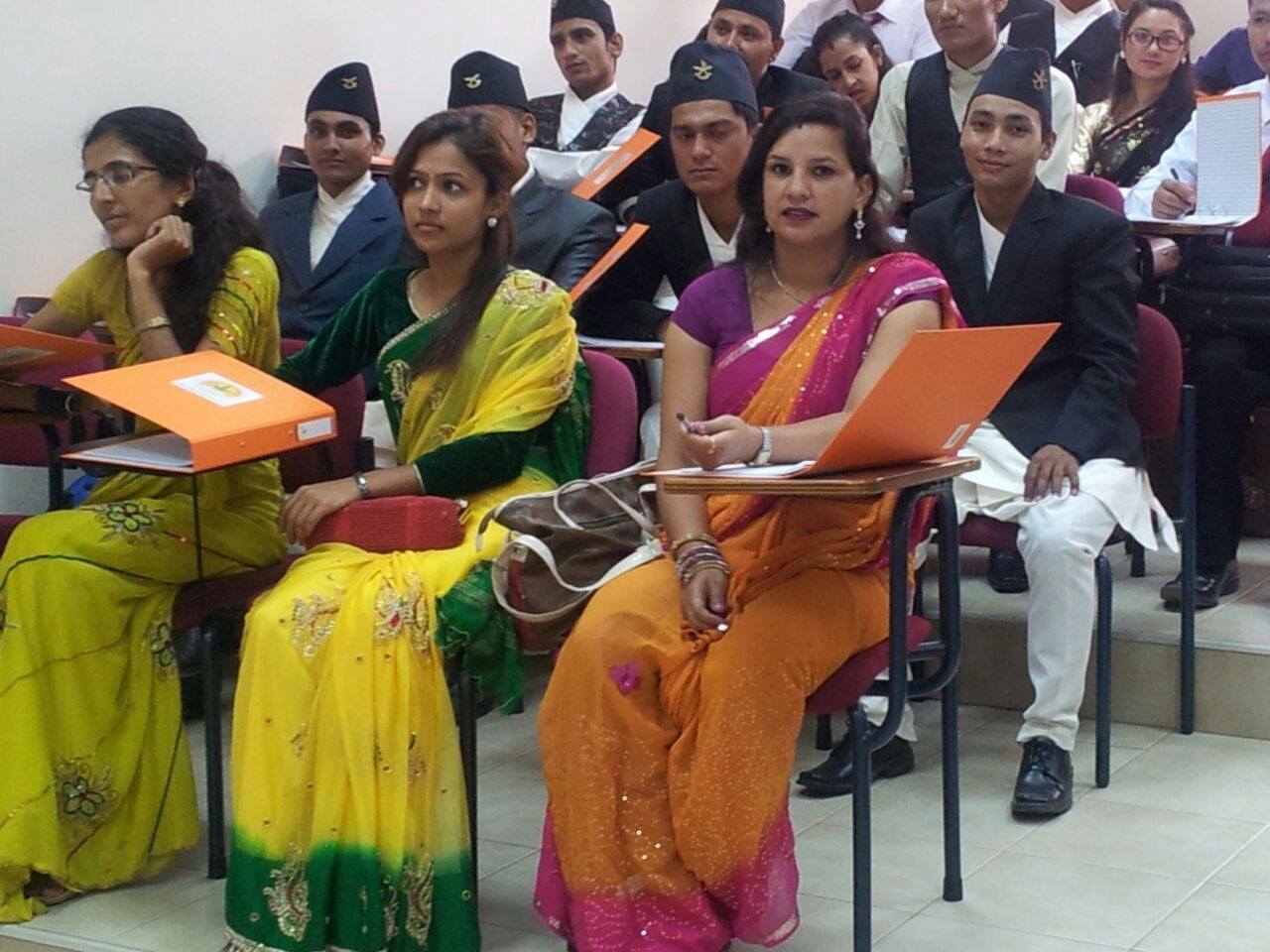 Students come from many countries to learn Israeli agricultural techniques at AICAT. Photo courtesy
Students learn through hands-on experience about Israel’s modern approaches to all aspects of agriculture.
Arnon says many of the visitors’ farming families still rely on luck and prayers. “Students learn here that to farm properly and be prosperous, you need to plan. It’s not about planting randomly and hoping it grows. You need plans, research, drip irrigation, pest control and water management,” she says.
“A plant is a plant. It doesn’t matter if you grow a tomato here or somewhere in Asia or Africa. It still needs good soil, water, sun and pest control. We’re teaching that you need to plan, use the right methods, and research.”
Food security for the world
In 1994, Israeli farming communities began hiring Thai farmhands. The newcomers were amazed to see a desert in bloom and started asking how the magic happens.
“Nearly 25 percent of the world’s population lives in poverty and we have the knowhow to help. We realized there was an opportunity to create a school and share our knowledge of high-tech farming practices,” says Arnon.
Established with the mission of bringing in students from underdeveloped regions, AICAT operates within the Central Arava Regional Council and has partnerships with the KKL-JNF, Partnership2Gether, MASHAV and CINADCO-The Center for International Agricultural Development Cooperation within the Ministry of Agriculture and Rural Development.
“We never imagined that we’d go on to become an international school with over 1,000 students per year,” says Arnon. The majority of students (70%) are male.
“Because of JNF and AICAT, we’re getting the knowledge and experience we need to rebuild our country,” said Binod Ghimire, an AICAT student from Nepal.

Students come from many countries to learn Israeli agricultural techniques at AICAT. Photo courtesy
Read more: Turning Israel’s desert…
twoje uwagi, linki, wlasne artykuly, lub wiadomosci przeslij do: webmaster@reunion68.com