 6 Jewish Historians Tell Us What To Expect in 2017 — and Beyond
Philip Eil
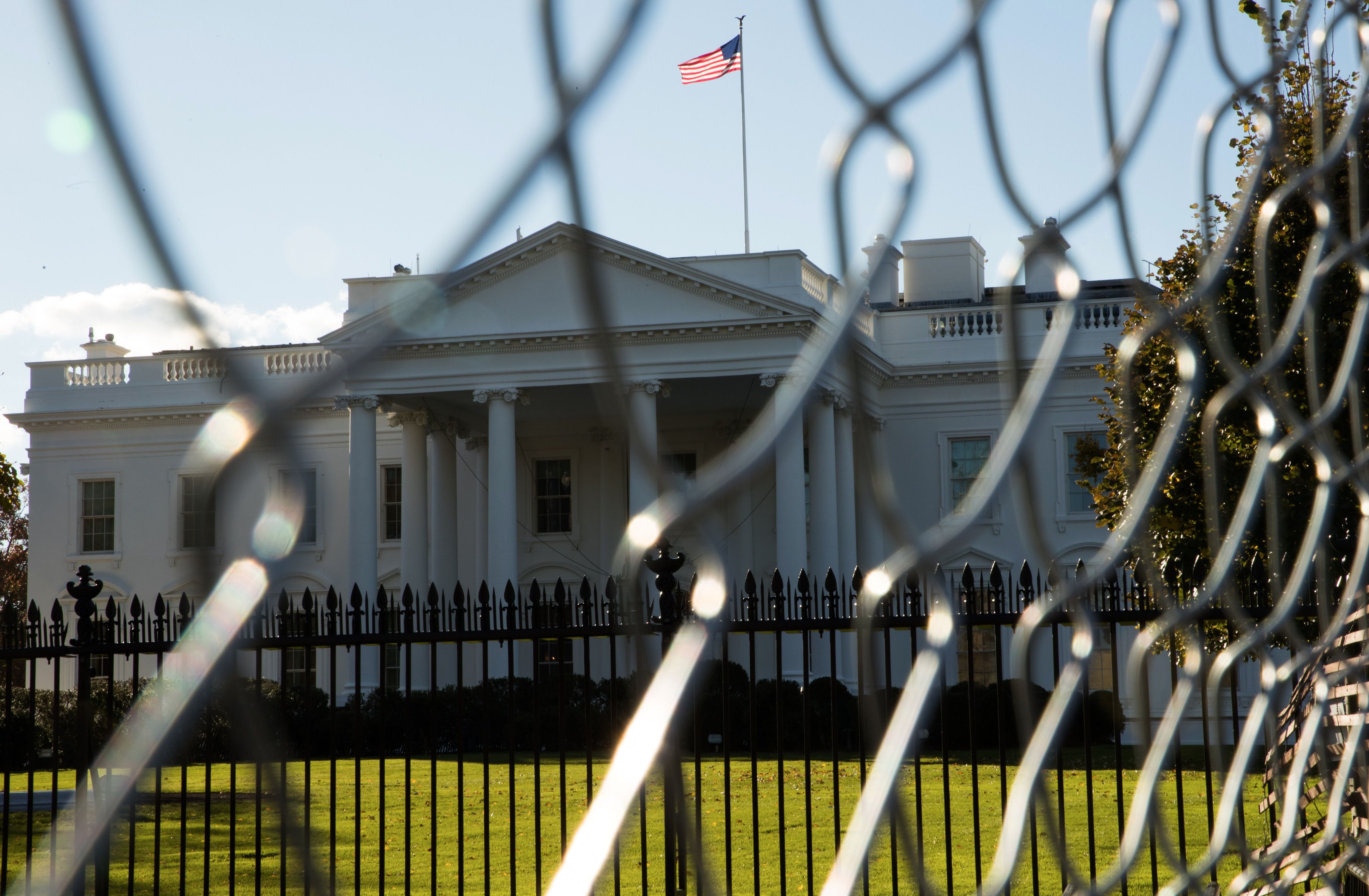 The White House
As a group, historians have not stayed silent during the rise of Donald Trump. In 2016, a group calling itself Historians Against Trump launched a website and released a statement (excerpt: “The lessons of history compel us to speak out against Trump”) that, by early November, had been co-signed by over 950 people. Meanwhile, documentarian Ken Burns and author David McCullough launched the Facebook page “Historians on Trump” — now with over 65,000 “likes” — for the dissemination of videotaped statements from notable professors and writers like Lyndon Johnson biographer Robert Caro and the Pulitzer Prize winner Stacy Schiff.
In mid-December 2016, 1,200 historians co-signed a statement that described the country’s present moment as “doubly dangerous.” It isn’t just that Trump’s election brings the United States to the “cusp of what may be a massive rollback of civil rights and liberties,” the authors wrote, “but our culture is also mired in confusion about facts vs. misinformation and a rebellion against knowledge and critical thinking.” And then there are the scholars of Jewish history.
Shortly after Election Day, David Biale, a professor at University of California, Davis, drafted a statement discussing Trump’s rise through the lens of American Jewish history. He then worked with colleagues from around the country to prepare the mini-essay for publication. The resulting statement, published in the Los Angeles-area newspaper Jewish Journal in mid-November, has been shared over 20,000 times on Facebook and co-signed by hundreds of historians. “As an immigrant people, Jews have experienced the pain of discrimination and exclusion,” one section reads. “Our reading of the past impels us to resist any attempts to place a vulnerable group in the crosshairs of nativist racism…. We stand ready to wage a struggle to defend the constitutional rights and liberties of all Americans.”
Biale was one of six professors the Forward contacted to offer thoughts on how to address and understand the Trump presidency. Some scholars spoke with us via phone; others emailed their thoughts. In all cases, the aim was simple: to try to answer the question “What will this moment mean for American Jews?”
When in Israel, Drink Local
David Myers
Professor of Jewish History at UCLA
Author of “Jewish History: A Very Short Introduction”
I feel as if I’m in the beginning of Philip Roth’s counterfactual novel “The Plot Against America,” in which Charles Lindbergh defeats FDR for the presidency in 1940 under the banner “America First” and decides to send East Coast Jews to the Midwest for re-education, which is really a form of forced assimilation.
The premise of Roth’s novel is that the institutions of American democracy are fragile, far more fragile than we think. And I’m afraid I’m feeling much the same with the election of Trump, who has already done massive damage to the institutions of American democracy — for example, by questioning whether he would accept the results of the election before (and, counterintuitively, even after) the vote took place.
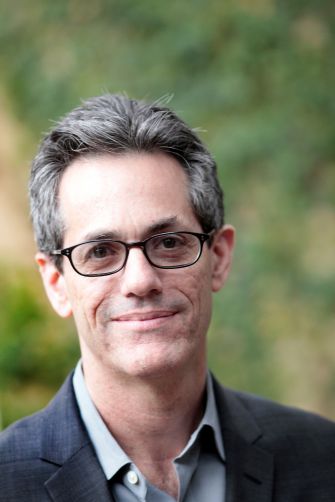 David Myers
Courtesy of David Myers
From the perspective of American Jewish history, his election evokes for me some of its darkest chapters — [like] the 1930s and 1940s, when race-baiting and xenophobia were at a high point, when loyal Japanese Americans were interned in camps, and when virulent anti-Semites like Father Charles Coughlin railed against Jews to millions of radio listeners. I hope against hope that my fear is exaggerated, that Trump’s flirtations with the “alt-right” will cease and his opportunistic bigotry will be quelled. Alas, his appointments to date offer no solace in this direction.
In light of all of this, the first thing I’d recommend to fellow Jews is vigilance. Let us not miss warning signs about the erosion of democratic principles and practices. Let us pay heed to history and remain vigilant about the present. And let us form alliances with others who may be vulnerable, such as Muslim Americans. Indeed, if and when a registry of Muslim Americans is mandated, let millions of American Jews, as [the Anti-Defamation League CEO and national director] Jonathan Greenblatt bravely suggested, be the first to sign up.
In a strange and ironic way, Trump’s election has made me more of an American patriot than I can remember. He makes clear to me that America, on its best days, stands for the nobility of democracy and equality. We Jews, with our memory of oppression, have a moral obligation to stand on the front lines of defense of that noble legacy.
Jonathan Sarna
Professor of American Jewish History at Brandeis University
Author of “American Judaism: A History”
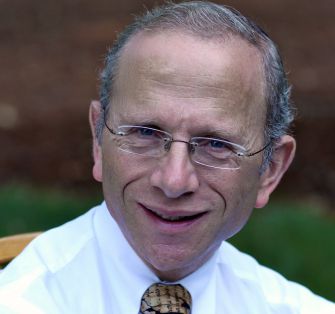
Jonathan Sarna
Courtesy of Jonathan Sarna
Part of me worries that Americans generally, and American Jews in particular, don’t know their history very well. But everybody has been taught the Holocaust; if there’s one thing we’ve taught in the last generation, it’s the Holocaust. So naturally that’s the reference point, and when something happens, we say: “Aha! This is the Holocaust!” I don’t think that is really likely to be the case here. I think, first of all, that there’s a huge ideological difference between Mr. Trump and Adolf Hitler. And, even more important, the danger to the Jewish community in Germany was heavily economic. Stores were boycotted. They were destroyed. There was violence and so forth. We have not seen anything remotely like that here. I suggested that the appropriate comparison was 1920, when, after a long period of progressivism — Woodrow Wilson, liberalism and so forth — the country really turned under Warren G. Harding. There were many similarities in the sense of a fear that America, as we knew it, was changing. And, indeed, the immigration restriction legislation in 1924 [the Immigration Act] is a conscious attempt — astonishing! — to turn the clock back to 1890, to try and shape an immigration policy which would change the character of the country back to what it was. Of course, it failed, and the Catholics and the Jews who were stigmatized in that period later became, I think, widely accepted insiders in American life, although [there is] no question that, especially in terms of Jews, anti-Semitism did not disappear.
I think, as in 1920, so today in 2016, there will be a sense of turning back the clock on various progressive moves that were made over the last more than eight years. And I think there will also be an effort to slow down the changing America. Today it’s not Jews and Catholics; it’s Hispanics and Muslims. I suspect that that effort will be as unsuccessful as the effort in 1920.
read more: 6 Jewish Historians Tell Us …
twoje uwagi, linki, wlasne artykuly, lub wiadomosci przeslij do: webmaster@reunion68.com