Archives

W żółtych płomieniach liści, słowa Agnieszka Osieckia – Skaldowie

„W żółtych płomieniach liści”

1970 – nagroda dziennikarzy za piosenkę “W żółtych płomieniach liści” (A. Zieliński – A. Osiecka) na VIII KFPP w Opolu.


“W żółtych płomieniach liści”
słowa: Agnieszka Osieckia
muzyka: Andrzej Zieliński,
wykonanie: Łucja Prus wraz z zespołem Skaldowie

W żółtych płomieniach liści brzoza dopala się ślicznie
Grudzień ucieka za grudniem, styczeń mi stuka za styczniem
Wśród ptaków wielkie poruszenie, ci odlatują, ci zostają
Na łące stoją jak na scenie, czy też przeżyją, czy dotrwają

I ja żegnałam nieraz kogo i powracałam już nie taka
Choć na mej ręce lśniła srogo obrączka srebrna jak u ptaka
I ja żegnałam nieraz kogo, za chmurą, za górą, za drogą
I ja żegnałam nieraz kogo, i ja żegnałam nieraz

Gęsi już wszystkie po wyroku, nie doczekają się kolędy
Ucięte głowy ze łzą w oku zwiędną jak kwiaty, które zwiędły
Dziś jeszcze gęsi kroczą dumnie w ostatnim sennym kontredansie
Jak tłuste księżne, które dumnie witały przewrót, kiedy stał się

I ja witałam nieraz kogo, chociaż paliły wstydem skronie
I powierzałam Panu Bogu to, co w pamięci jeszcze płonie
I ja witałam nieraz kogo, za chmurą, za górą, za drogą
I ja witałam nieraz kogo i ja witałam nieraz

Ognisko palą na polanie, w nim liszka przez pomyłkę gore
A razem z liszką, drogi Panie, me serce biedne, ciężko chore
Lecz nie rozczulaj się nad sercem, na cóż mi kwiaty, pomarańcze
Ja jeszcze z wiosną się rozkręcę, ja jeszcze z wiosną się roztańczę

I ja żegnałam nieraz kogo i powracałam już nie taka
Choć na mej ręce lśniła srogo obrączka srebrna jak u ptaka
I ja żegnałam nieraz kogo, za chmurą, za górą, za drogą
I ja żegnałam nieraz kogo, i ja żegnałam nieraz


twoje uwagi, linki, wlasne artykuly, lub wiadomosci przeslij do: webmaster@reunion68.com



Iceland’s New Antisemitic Threshold – A Psychiatric Illness?

Iceland’s New Antisemitic Threshold – A Psychiatric Illness?

avatar Shimon Samuels


An image from Snorri Asmundsson’s YouTube clip played
to the background of ‘Hatikva.’ Photo: Screenshot

Iceland is more than its tourist posters of geysers, volcanoes, the singer Bjork and the Northern Lights. It has now stretched antisemitism to new outer limits, rendering it almost a psychiatric disorder.

An Icelandic “artist,” Snorri Asmundsson, has posted a YouTube clip to the background of Israel’s natural anthem, HaTikva (The Hope), featuring a woman in a burqa pulled out of the frame by a man wearing a star of David armband, transvestites lampooning Israel’s Eurovision contest singer, Dana International, and two Down’s Syndrome young men dressed as orthodox Jewish Hassidim.

Asmundsson, apparently challenges accusations that his clip is antisemitic, by weirdly arguing that such claims would be construed as collectively offending LBGT transsexuals and the handicapped.

When I was invited to address the dozen, mainly Lutheran, members of the Icelandic – Israel Friendship group in Reykjavik in 1986, there were very few Jews residing in Iceland. Today they number less than one hundred and several fear to be publicly identified.

Already, at that time, the group was concerned at the growing number of Arab students at the University developing into an anti-Israeli lobby.

They spoke of the 1934 establishment of the Iceland Nazi Party and the 1930’s deportation of Jewish fugitives from Nazi Germany. The high-point came after the Anglo-American occupation in 1941, aimed to block an Axis invasion that would have controlled the Atlantic sea-routes. 1941-1945 saw over 2,000 Jewish soldiers billeted in Iceland.

In 1998, the Wiesenthal Centre’s Efraim Zuroff forced public attention to Icelandic hospitality granted Estonian Nazi collaborator, Ewald Mixon, better known to Icelanders as Edward Hinriksson,a football goalee with two sons playing in the national team. His death and government procrastination relieved the authorities of bringing him to justice.

The 2003 marriage of Israeli-born, British diamond heiress Dorrit Moussaieff, to Iceland’s – no friend of Israel – President Olafur Ragnar Grimsson, was hoped to improve the relationship. The First Lady, however, stayed away from Jewish contacts and has now, reportedly, resumed her residency in London.

Following the 2008 bank crashes,perhaps in the context of seeking Arab financial relief, Moussouef was accused as being “part of a Jewish conspiracy”. Perhaps seeking Muslim bloc support for a non-permanent seat on the UN Security Council, the government became ever more anti-Israel An opinion poll marked 70 percent of the 320,000 Icelanders as pro-Palestinian and only 30 percent as pro-Israel.

The Gaza operations saw solidarity rallies, as elsewhere in Europe, brandishing antisemitic slogans and imagery. A bicycle-shop in Reykjavik posted a warning: “Jews Unwelcome.”

Now Iceland, so proud of its Althing, Europe’s first Parliament and its ostensible concern for the oppressed – is the first country to host a new and sickening threshold in antisemitism: the conflation of “Jew,” “Zionist,” “Trans-sexual” and “Down’s Syndrome” – thereby belittling the cause and the rights of each.

Is this new emanation a political stratagem or a mental illness? If the latter, there may still be hope for a psychiatric cure.


twoje uwagi, linki, wlasne artykuly, lub wiadomosci przeslij do: webmaster@reunion68.com


POLAND BEFORE AND AFTER WWII GDNASK WARSAW KRAKOW 1946 TRAVELOGUE 75734

POLAND BEFORE AND AFTER WWII GDNASK WARSAW KRAKOW 1946 TRAVELOGUE 75734

PeriscopeFilm PeriscopeFilm


Made in the immediate post-WWII era by famed filmmaker Julien Bryan, POLAND THE COUNTRY AND ITS PEOPLE shows the nation of Poland as it emerged from the war, with the nation digging itself out of the ruins of conflict and trying to re-establish itself. The film can in some ways be seen as an appeal to the American people and the West for assistance in assuring that the nation would be permitted to be free, after six long years of terrible struggle. Unfortunately the hopeful sentiments echoed in the narration would soon by crushed by the Communist party and Soviets.

The film is notable for showing many scenes of agriculture and commerce from before and after WWII, including shots of the Polish peasantry and their handicrafts, religious ceremonies, dancing, and more. Poland at this time was a life of many different cultures, including mountain people and groups with rich tradition, some of whom were eradicated during the German occupation. At the 8 minute mark, a group of Ukranians who lived in Poland — one of many minorities in the nation — are shown. The Jews, who were decimated by the persecutions of the German forces, are discussed at the 8:40 mark and following. As the narrator solemnly remarks at the 9:40 mark, few of the Jewish people seen in the film remained alive at the end of the war.

Gydnia, Gdansk, Warsaw, Krakow, Danzig and other cities are seen in the film.

Julien Hequembourg Bryan (1899-1974) was an American photographer, filmmaker, and documentarian. He is best known for documenting the daily life in Poland, Soviet Union, and Nazi Germany between 1935 and 1939. After fleeing Poland in 1939, he returned to Poland in 1946. As part of an official UNRRA delegation he revisited Gdańsk and Warsaw. His footage of recently destroyed Gdańsk, seen in this film, is probably the first post-war film shot in that city. Bryan was honored with „Zasłużony dla Kultury Polskiej” (“Merit for Polish culture”) during his last visit in Poland (1974) for showing the truth about the Invasion of Poland.


twoje uwagi, linki, wlasne artykuly, lub wiadomosci przeslij do: webmaster@reunion68.com


Śmierć Ameryce

Śmierć Ameryce

Memri
Malgorzata Koraszewska


18 lipca 2015, Stany Zjednoczone cztery dni wcześniej zawarły z Iranem umowę podobno gwarantująca światu pokój i bezpieczeństwo. W Teheranie przemawiał Najwyższy Prawoznawca Ali Chamenei. W tym samym czasie Barack Obama zapewniał, że cały świat chwali i popiera zawarte porozumienie.
(Więcej filmów i tekstów na podobne tematy znajdziesz na stronie http://www.listyznaszegosadu.pl/)


twoje uwagi, linki, wlasne artykuly, lub wiadomosci przeslij do: webmaster@reunion68.com


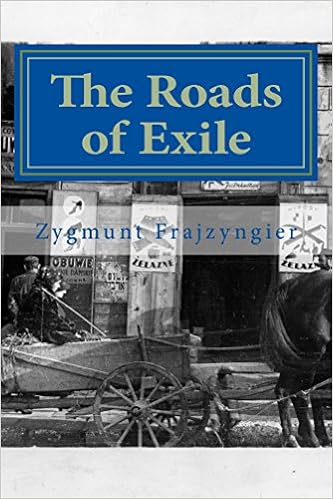
The Roads of Exile

The Roads of Exile

by Zygmunt Frajzyngier


The book provides a picture of two young people, my parents, who struggled to survive and to protect their child, first at the beginning of the war in Poland, then in the Soviet Ukraine. The book describes my father’s imprisonment in a Soviet labor camp, my mother’s life with me in Central Asia, and in exile in Siberia. The book also provides a picture of life in Poland after the war, where my parents returned to find out that all of their siblings and other relatives had perished in the holocaust.

Dr. Frajzyngier Dr. Zygmunt Frajzyngier


twoje uwagi, linki, wlasne artykuly, lub wiadomosci przeslij do: webmaster@reunion68.com