Archives

Stop Letting Israel’s Enemies Write the Dictionary


Stop Letting Israel’s Enemies Write the Dictionary

David E. Firester


The Western Wall and Temple Mount in Jerusalem. Photo: Wikimedia Commons.

When people chant “From the river to the sea,” they pair it with familiar phrases: “Palestinian” land, “occupied Palestinian territories,” “indigenous Palestinians,” and “settler-colonial Jews.”

Most people argue about the slogans and maps. Far fewer ask a prior question: Who wrote the dictionary that makes those slogans sound plausible?

For decades, Israel’s enemies have understood something many Jews and Israel-supporters have missed: if you control the language, you control the story. Define the key terms and you can turn an ancient indigenous people into supposed foreign invaders and recast repeated wars of annihilation against Israel as “anti-colonial resistance.”

To say that “Palestinian” is a political brand is not to deny that there are real Arabic-speaking people who today live under that name. The question is how this identity was framed and to what end.

During the latter half of the 20th century, “Palestinian” was carefully positioned as the indigenous victim of Zionist “intruders,” even though the Jewish people’s presence in the Land of Israel predates Islam, Arab nationalism, and the modern state system by millennia.

For centuries, under various empires, Jews and Arabs lived in the broader region that Europeans later (and briefly) called “Palestine.”

There was no sovereign “Palestinian” state and no distinct “Palestinian” nationality in the modern sense. Those constructs were shaped in the mid-20th century as part of a strategy to turn repeated Arab attempts to destroy the Jewish State into a moral story of dispossession.

“Palestinian” was not simply discovered; it was branded, a label that let Arab leaders and their allies invert reality: the side that tried, again and again, to wipe out the Jews of Israel would now be cast as the timeless victim of “foreign” Jews who supposedly have no home there at all.

How “occupied Palestinian territories” rewrites history

The phrase “occupied Palestinian territories” flows off the tongue so easily that people rarely ask what it means.

Before 1967, Judea and Samaria were annexed by Jordan, and the Gaza Strip was under Egyptian control. Neither Arab state created a sovereign “Palestinian” entity there.

Before that, the area was “owned” by the British Mandate, and before that, the Ottoman Empire. There has never been an independent “Palestinian” state whose recognized sovereign territory Israel is supposedly occupying.

Yet by repeating “occupied Palestinian territories,” these activists import a package deal: that there once was a “Palestinian” state; that the land in question is inherently and exclusively “Palestinian,” despite its deep Jewish history; and that Israel’s presence there is automatically illegal, regardless of how it came about or what the real legal debates are.

The phrase “occupied Palestinian territories” is not neutral; it is a weapon. It erases Jewish indigeneity to places whose Hebrew names — Judea and Samaria — tell their own story. It suggests that Jews crossing an invisible line on the western bank of the Jordan River are “settlers,” while Arabs are always “natives,” no matter when their families arrived. On campus and in much of the media, this vocabulary is treated as settled fact. But that’s not truth — it’s narrative.

From the seminar room to the street

Weaponized language does not stay confined to UN resolutions or academic journals. It shapes how ordinary people think and feel. When a student hears, year after year, that Israel is a “settler-colonial” project oppressing “indigenous Palestinians,” he or she is being given a moral script: Jews are the guilty party; Arab violence is an understandable reaction to “occupation”; and terrorism against Jews is justified “resistance.”

So what can be done? We cannot force hostile actors to abandon terms that serve their agenda. But we can stop doing their work for them.

First, we must recognize that words like “Palestinian,” “occupation,” and “settler-colonialism” are not neutral. They come packaged with stories about history, power, and morality. If those stories are false or one-sided, we have a responsibility to say so.

Second, we should speak accurately about the land itself. Instead of reflexively saying “West Bank,” we can talk about Judea and Samaria, or at least about disputed territories captured in a defensive war, rather than “occupied Palestinian territories.” Rather than treating “Palestinian” as a synonym for indigeneity, we can speak of Arab residents of Judea and Samaria and Arab Israelis, alongside Jewish communities with deep roots there. Third, we should unapologetically affirm Jewish indigeneity. Jews are not recent “European imports” into the Middle East. Our ancestral language, scriptures, and rituals are woven into the geography of Israel itself. The burden of proof should not rest on Jews to justify their presence in Jerusalem, Hebron, or Shiloh.

Finally, communal leaders, journalists, and educators must become more intentional about the language they use. It is not pedantic to insist on accurate terminology. It is strategic.

If we care about truth — and about the safety and legitimacy of the Jewish people — we cannot afford to keep speaking in our adversaries’ vocabulary. In every generation, Jews have had to push back against efforts to write us out of our own story. Today, that effort happens with hashtags, slogans, and selective “human rights” language, as much as with bullets and rockets.

We do not have to accept a dictionary written by those who want to annihilate us. We can tell the truth plainly: Jews are indigenous to the Land of Israel, and we will not surrender that reality to anyone’s branding campaign — no matter how sophisticated their propaganda might be.


David E. Firester, Ph.D., is the Founder and CEO of TRAC Intelligence, LLC, and the author of Failure to Adapt: How Strategic Blindness Undermines Intelligence, Warfare, and Perception (2025).


Zawartość publikowanych artykułów i materiałów nie reprezentuje poglądów ani opinii Reunion’68,
ani też webmastera Blogu Reunion’68, chyba ze jest to wyraźnie zaznaczone.
Twoje uwagi, linki, własne artykuły lub wiadomości prześlij na adres:
webmaster@reunion68.com
Ukraina: Złudna wizja pokoju

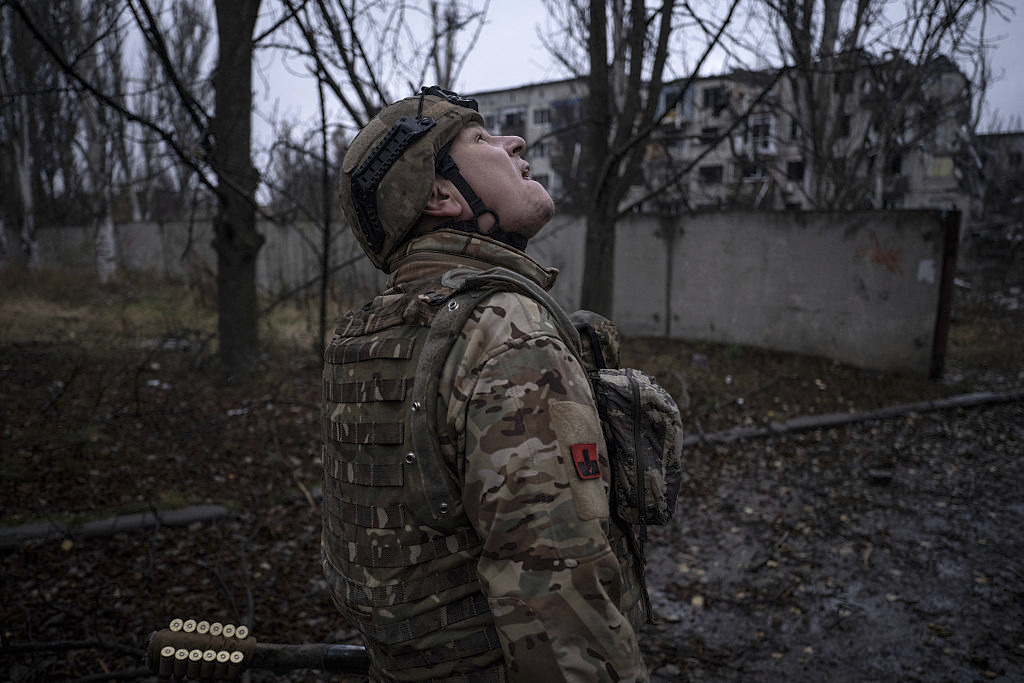
Na zdjęciu: Ukraiński żołnierz sprawdza niebo w poszukiwaniu rosyjskich dronów nad linią frontu w Kostyantyniwce w obwodzie donieckim, 12 listopada 2025 r. (Zdjęcie: Iryna Rybakova/93. Samodzielna Brygada Zmechanizowana/AFP via Getty Images)


Ukraina: Złudna wizja pokoju

Amir Taheri
Tłumaczenie: Andrzej Koraszewski


Jak długo może potrwać wojna na Ukrainie?

To pytanie było przedmiotem dyskusji i debat podczas niedawnego spotkania w Paryżu, w którym uczestniczyli historycy i eksperci ds. strategii z różnych środowisk. Prawdziwa odpowiedź, której nie udzielono na tym spotkaniu, była w istocie kolejnym pytaniem: jak długi jest kawałek sznurka?

Obecna faza rozpoczęła się w lutym 2022 roku, kiedy to doszło do tego, co wyglądało na próbę aneksji całej Ukrainy przez Rosję. Było to jednak tylko następstwo wcześniejszej inwazji i okupacji Krymu w 2014 roku. Tamten epizod był z kolei kontynuacją operacji polityczno-wojskowej sprzed dwóch lat, której celem było zainstalowanie prorosyjskiego prezydenta na Ukrainie oraz wysłanie rosyjskich wojsk do Sewastopola, by zmusić Kijów do podpisania długoterminowej umowy dzierżawy bazy lotniczo-morskiej dla Rosji.

A to wszystko to jedynie najnowsza historia.

Ukraina przechodzi przez swoje próby i cierpienia zgodnie z wzorcem znanym z długiej historii europejskiej, naznaczonej konfliktami zbrojnymi, takimi jak wojna stuletnia czy wojna trzydziestoletnia. Na kontynencie rozdartym przez podziały religijne, sekciarskie, rasowe i dynastyczne wojna była regułą, a pokój wyjątkiem. Dopiero w XX wieku Europa zaczęła marzyć o wojnach stosunkowo krótkich.

Obecnie wszystko wskazuje na to, że wojna na Ukrainie może potrwać jeszcze wiele lat. Została już wpisana w ogólny schemat globalnej polityki – w tym sensie, że wszyscy bezpośrednio lub pośrednio zaangażowani zdołali zminimalizować straty dla własnych interesów, jednocześnie maksymalizując zyski, jakie mogą z niej czerpać. Mimo poważnych strat ludzkich i materialnych, główni uczestnicy konfliktu – Rosja i Ukraina – wydają się być dalecy od przekroczenia progu bólu, który zmusiłby którąkolwiek ze stron do wywieszenia białej flagi.

Rosja nie może wygrać tej wojny, ponieważ prezydent Władimir Putin nie jest mentalnie gotowy, by przejść na wyższy poziom zaangażowania i wysłać na front całą armię.

Trzymając się głównie wojny powietrznej, z masowym użyciem dronów, rosyjscy generałowie nie są w stanie zapewnić klasycznych trzech “C” wojny: – podbić, oczyścić, kontrolować. Nawet na 25 procentach terytorium Ukrainy, które Rosja już zajęła, żadnego z tych trzech celów nie osiągnięto w pełni.

Podobny los spotkał rosyjską “specjalną operację wojskową” w Syrii.

Tam również lata bombardowań zamieniły wiele syryjskich miast w gruzy, zabijając dziesiątki tysięcy cywilów, nie przynosząc jednak Putinowi nawet cienia zwycięstwa.

Jednocześnie Rosja nie może sobie pozwolić na przegranie tej wojny. Taka porażka mogłaby oznaczać koniec Putina i putinizmu.

Nie ma też większych szans, by Ukrainie niespodziewanie pomógł jakiś “zbawca”, który pozwoliłby Rosji wyjść z konfliktu z minimalną utratą twarzy, tak jak zrobił to Ahmad al-Sharaa w Syrii.

Pomimo wielokrotnie powtarzanych zapewnień prezydenta Wołodymyra Zełenskiego, Ukraina również nie znajduje się w pozycji, by pokonać Rosję albo odbić utracone terytoria.

Wszystko to razem sprawia, że można mówić o “prędkości przelotowej” tej dziwnej wojny, która – jak się wydaje – odpowiada wszystkim zainteresowanym. Stany Zjednoczone potwierdzają swoją pozycję jako jedynej “niezastąpionej potęgi”, zdolnej do zmiany zasad gry, kiedy i gdzie tylko zechce.

Chiny korzystają z rosyjskiej ropy i gazu po zaniżonych cenach, jednocześnie rozszerzając swoje wpływy w Azji Centralnej, korzystając z nieobecności historycznego rosyjskiego rywala.

Europejczycy również wykorzystują wojnę jako pretekst do rozpoczęcia masowej rozbudowy potencjału militarnego, podczas gdy Rosja dalej krwawi – zarówno dosłownie, jak i w przenośni. Jednym z sygnałów, że Unia Europejska może zakładać długotrwałość wojny, był list intencyjny podpisany w tym tygodniu przez Francję w sprawie dostarczenia Ukrainie 100 myśliwców Rafale. Ponieważ produkcja tych samolotów oraz szkolenie ukraińskich pilotów zajmie co najmniej trzy lata, jasne jest, że Paryż zakłada kontynuację wojny przynajmniej do 2029 roku.

Mimo ponurego obrazu, jaki się wyłania, rozmowy o pokoju – lub przynajmniej zakończeniu wojny – wcale nie zniknęły z agendy.

Według niektórych zazwyczaj wiarygodnych źródeł, USA – po odrzuceniu pomysłu spotkania prezydenta Donalda J. Trumpa z Putinem w Budapeszcie – pracują nad ramowym planem rozmów mających na celu wstrzymanie wojny. Co dokładnie kryje się za tym sformułowaniem, nie jest jasne.

Jeśli jednak uznać istnienie “metody Trumpa”, widocznej w kilku ostatnich przypadkach wygaszania konfliktów zbrojnych, to Stany Zjednoczone mogą dążyć do rozwiązania pośredniego między zawieszeniem broni – z definicji krótkotrwałym i ograniczonym czasowo – a pełnym, trwałym pokojem, który może okazać się trudny do osiągnięcia.

Takie “rozwiązanie” mogłoby zostać zaprezentowane jako rozejm – termin mający wystarczający ciężar historyczny i dyplomatyczny, by pozwolić stronom zachować twarz, zamrozić sytuację na froncie i dać czas na negocjacje w sprawie trwałego rozwiązania, bez presji konkretnego terminu.

Są przesłanki, by sądzić, że prezydent Turcji Recep Tayyip Erdoğan może odegrać rolę wstępnego mediatora w tym procesie. Najnowsze rozmowy Zełenskiego z Erdoğanem zdają się to potwierdzać, podobnie jak sygnały z Moskwy, gdzie Putin nie wprost, ale z wyraźną intencją, przyjął turecką inicjatywę – choćby tylko po to, by nie wyglądało, że ulega Trumpowi.

Wszystko to jednak może okazać się kolejną złudną wizją pokoju. Niemniej, USA mają co najmniej dwie istotne karty, które mogą zagrać, by doprowadzić do zmiany sytuacji.

Pierwszą jest dostarczenie Ukrainie pocisków manewrujących Tomahawk – informacja ta pojawiała się i znikała w serwisach informacyjnych niczym uśmiech kota z Cheshire.

Decyzja o wprowadzeniu pocisków Tomahawk mogłaby mieć podobny wpływ na przebieg wojny, co przekazanie rakiet Stinger mudżahedinom w Afganistanie w latach 80. Dzięki zasięgowi sięgającemu 2500 kilometrów, rakiety Tomahawk mogłyby zagrozić niemal całej “użytecznej” części Rosji, w tym Moskwie i Petersburgowi. (Z Kijowa do Moskwy jest zaledwie 762 kilometry.)

Drugą kartą, którą Trump mógłby zagrać, jest zignorowanie pięcioletniego przedłużenia układu o ograniczeniu zbrojeń strategicznych (SALT), przedłużonego przez prezydenta Joe Bidena – układu, który zakończył wyścig zbrojeń między USA a ZSRR, ratując ZSRR a potem Rosję przed dyplomatyczną kompromitacją i gospodarczą zapaścią.

W obecnym, niestabilnym stanie rosyjskiej gospodarki, nowy, intensywny wyścig zbrojeń mógłby być dla Putina ekstremalnie kosztowny, jeśli nie wręcz samobójczy.

Amerykańska propozycja rozejmu, czyli swego rodzaju “rybiego ogona” zamykającego obecny etap walk, mogłaby również skusić Putina z innego powodu: jego starego marzenia o rozdzieleniu Stanów Zjednoczonych i Unii Europejskiej – nawet w kwestii tak kluczowej jak bezpieczeństwo europejskie.

Ułuda? Być może. Ale taka, której nie należy całkowicie odrzucać.


Zawartość publikowanych artykułów i materiałów nie reprezentuje poglądów ani opinii Reunion’68,
ani też webmastera Blogu Reunion’68, chyba ze jest to wyraźnie zaznaczone.
Twoje uwagi, linki, własne artykuły lub wiadomości prześlij na adres:
webmaster@reunion68.com


Hamas Expands European Reach, Posing ‘High Likelihood’ of Terror Attack in Next Six Months, Intel Report Warns


Hamas Expands European Reach, Posing ‘High Likelihood’ of Terror Attack in Next Six Months, Intel Report Warns

Ailin Vilches Arguello


Palestinian Hamas terrorists stand guard at a site as Hamas says it continues to search for the bodies of deceased hostages, in Beit Lahiya in the northern Gaza Strip, Dec. 3, 2025. Photo: REUTERS/Stringer

Hamas operatives have pushed far beyond Gaza, embedding themselves across Europe — and now posing a growing threat inside the United Kingdom, where covert arms caches and active attack plots have put intelligence services on high alert, according to a new report. 

Even though Hamas has traditionally focused its operations in Israel, Gaza, and the West Bank, the Palestinian terrorist group has been steadily cultivating foreign attack capabilities — a trend highlighted in a new report obtained by The Daily Mirror, which warns of a looming threat of Hamas-led attacks in Europe.

Intelligence assessments indicate that the terrorist group, backed for years by Iran, Qatar, and Turkey, has been gradually expanding its presence in Europe through a network of charities, NGOs, and criminal gangs, with Israeli diplomatic missions, Israel-linked businesses, and Jewish religious sites among its top targets.

The report also notes that the group has not only stockpiled weapons such as AK-47s and ammunition but is increasingly turning to drone warfare, bolstered by backing from Lebanon and Iran and supported by Eastern European crime networks that help it acquire advanced weaponry.

“The Oct. 7, 2023, assault fundamentally altered Israel’s threat perceptions, but also reshaped Hamas’s calculations,” the report says, referring to the Hamas-led invasion of and massacre across southern Israel. 

“Following catastrophic damage to its infrastructure in Gaza and significant leadership attrition, the group’s remaining command nodes particularly those in Lebanon began activating contingency plans long under development,” it continues. 

“The organization’s leadership now appears more willing to accept the strategic risks of external operations. If Hamas sustains further attrition, external operations may grow in relative importance within the group’s strategy,” the intelligence report adds. 

According to the United Kingdom’s domestic counter-intelligence and security agency, MI5, and the Joint Terrorism Analysis Center, the current threat level of a terror attack in the UK is assessed to be “substantial.”

Over the next six months, the report warns, there is a “high likelihood of continued attempts at external operations, particularly in Europe, as Hamas seeks to demonstrate resilience.”

This assessment comes amid multiple intelligence findings showing that Hamas has expanded its terrorist operations beyond the Middle East, leveraging a long-established network of weapons caches, criminal alliances, and covert infrastructure quietly built across Europe over the years.

In October, West Point’s Combating Terrorism Center released a study detailing how Hamas leaders in Lebanon have directed operatives to establish “foreign operator” cells across Europe, collaborating with organized crime networks to acquire weapons and target Jewish communities abroad.

For example, a failed Hamas plot involved an alleged operative in Germany traveling to Lebanon to “receive orders from the Qassam Brigades [Hamas’s military wing] to set up an arms depot for Hamas in Bulgaria,” part of a broader, multi-year effort to cache weapons across Europe. 

German authorities foiled the plan, detaining four Hamas members in late 2023 on suspicion of planning attacks.

Earlier this year, the four suspects went on trial in Berlin in what prosecutors described as Germany’s first-ever case against members of the Palestinian terrorist group.

During the investigation, German authorities also found evidence on a defendant’s USB device showing that the Hamas operatives were planning attacks on specific sites in Germany, including the Israeli embassy in Berlin.

Similar weapons depots were established in Denmark, Poland, and other European countries, with Hamas members repeatedly trying to retrieve them to support their operations and plan potential attacks.


Zawartość publikowanych artykułów i materiałów nie reprezentuje poglądów ani opinii Reunion’68,
ani też webmastera Blogu Reunion’68, chyba ze jest to wyraźnie zaznaczone.
Twoje uwagi, linki, własne artykuły lub wiadomości prześlij na adres:
webmaster@reunion68.com


‘Paucity’ of Columbia courses that aren’t anti-Israel, Ivy’s task force says


‘Paucity’ of Columbia courses that aren’t anti-Israel, Ivy’s task force says

JNS Staff


The school’s Task Force on Antisemitism published its final report, which, among other things, said the American Association of University Professors appears to discriminate against Israel.

Columbia University subway station. Credit: Charlotte May/Pexels.

Columbia University’s Task Force on Antisemitism released its final report on Tuesday, drawing praise from Claire Shipman, acting president of the Ivy League school, for what she said was a “series of rigorous and thoughtful analyses and recommendations that cover a very difficult and painful period in the history of this university.”

“While we know there is more work to do, we’re very grateful to be in a new and much better place today,” she stated. “For that, we owe a debt of gratitude to many, with the co-chairs and members of our Task Force on Antisemitism at the very top of that list.”

Although Shipman’s statement didn’t mention the words “Israel” or “Israeli,” illegitimate criticism of the Jewish state and of Israelis was a central part of the 70-page report, which stated that “many Jewish and Israeli students reported that if they want to study the Middle East at Columbia, there currently are not enough options that don’t treat Zionism and Israel as fundamentally illegitimate.”

“The paucity of such course offerings should be corrected,” the task force stated. “At the same time, as a best practice, we urge instructors to apply the same sensitivity to discussions of Israel that they would to topics that are of high personal sensitivity to students who have other strong primary identities.”

The panel added that the school “lacks full-time tenure line faculty expertise in Middle East history, politics, political economy and policy that is not explicitly anti-Zionist.” It advised the school to “address this imbalance through the establishment of new chairs at a senior level in Middle East history, politics, political economy and policy.”

The report, which devoted significant space to describing academic freedom and detailing its history, decried a recent decision by the American Association of University Professors, one of the most important and powerful academic groups.

The task force stated that boycotts of professors, students, researchers and scholars from other countries “are not consistent with academic freedom,” which “entails openness to scholars and students from other countries.”

“This issue is especially concerning to the antisemitism task force, because the only significant academic boycott movement of the 21st century has been aimed at the only Jewish state, proposing to restrict the research, teaching and studying opportunities available to a cohort whose members are overwhelmingly Jewish,” it said.

The task force noted that there has been a “consistent demand” at the school to boycott Columbia’s partnership with Tel Aviv University, which the panel said “would be a clear violation of the spirit of academic freedom.”

“Until last year, the AAUP consistently and categorically opposed academic boycotts. In August 2024, the AAUP changed its position, declaring ‘academic boycotts are not in themselves violations of academic freedom; rather, they can be considered legitimate tactical responses to conditions that are fundamentally incompatible with the mission of higher education,’” the report stated. “Although it wasn’t mentioned by name, Israel and its universities were clearly the object of this new policy.”

“We don’t see how this is not a limitation on the academic freedom of Israelis and anyone interested in interacting with them,” the report stated. “It entails permitting political views to enter what was conceived of as a separate, politically protected realm—something the AAUP has long steadfastly opposed in other circumstances.”

Free speech

The panel said that one of its main points was that Columbia ought to “protect freedom of expression to the maximum extent possible while also complying with antidiscrimination laws.”

There ought to be neither censorship nor discrimination at the school, according to the task force. “In balancing these goals, we would err in the direction of protecting free expression, even when it makes members of our community uncomfortable,” it said. “Importantly, however the university decides to strike this balance, it must do so consistently for all protected classes.”

That means that Columbia must be consistent, and “protections afforded to black, Latino, Asian, Arab, female, LGBTQ+ and disabled members of our community must apply equally to other protected classes, including Jewish and Israeli students,” it said.

The task force added that disrupting classes is a “serious violation” of Columbia rules. It said the most egregious violation of academic freedom was when anti-Israel protesters disrupted a class about the Jewish state taught by an Israeli.

Columbia students also shouldn’t have to face “fraught discussions of issues relating to their membership in a protected class” when those issues aren’t related to the course, “such as discussions of abortion in calculus or of correlations between race and incarceration in astronomy,” the panel said.

It stated that free speech means that any government or group can be criticized. It named the “policies of the Israeli government,” the “policies of Hamas” and “the United Nations” as three examples.

“Unfortunately, we heard from many Jewish and Israeli students that their instructors offered critical comments about Israel in classes with subjects far removed from Israel and the Middle East,” the report stated. 

The task force recommended that the university condemn offensive speech rather than limiting it, and it said that when it comes to faculty use of social media or “other outside activities” that it is “wary of empowering administrators to decide what is in and out of bounds.”

‘No orthodoxies’

Per the report, the more than 200 Israeli students at Columbia “is thought to be a greater number than any other Ivy League university.”

“Anyone who is teaching a class at Columbia should be aware that comments about Israel can be highly impactful to students, including Jewish students who are not Israeli,” it stated.

It added that “there should be no orthodoxies at Columbia—not just about Israel—but about race, gender, criminal justice, affirmative action, climate policy, international law, income inequality and any other subjects where the expression of some views may offend members of our community.”

The report stated that there have been “ill-informed statements” in classes that have accompanied “harsh condemnation of Israel.”

“One student told us the instructor in such a class told students that Theodor Herzl, the founder of modern Zionism, was an antisemite, and Jews of Eastern European origin are not really Jewish,” the report stated. “These are, at best, tendentious statements that are highly contested in the academic literature but were not presented to students that way. The readings in the class generally did not reflect the full range of academic writing on Zionism, only material that was harshly anti-Zionist.”

The task force advised colleagues to remember that Zionism “is a strongly held principle for the great majority of Jews worldwide, including but not limited to those who live in Israel.”

“Anti-Zionism is hardly a forbidden sentiment at Columbia, and that’s as it should be. But it’s an illusion to believe that anti-Zionism expressed as a moral absolute will not make many or even most Jewish and Israeli students here feel unwelcome,” it said. “They deserve the same degree of sensitivity as anyone else at Columbia.”

“We are angry and heartbroken that members of the Columbia community (including some members of the faculty) would condone (or even celebrate) terrorist atrocities, deploy antisemitic tropes and peddle bigoted stereotypes,” the task force said. 

“These statements have been appalling and we condemn them. We have no desire to defend the indefensible,” it said. “But as noted above, we are concerned about relying on administrators to be the arbiters of what tenured and tenure-track faculty members can and cannot say.”

The report also said that students must not be pressured to participate in protests, teachers shouldn’t use stereotypes, “reasonable” religious accommodations are necessary and students ought to be free to disagree with professors.

It also advised Columbia to proceed “as quickly as possible” with its announced plan to open a global center in Tel Aviv.


Zawartość publikowanych artykułów i materiałów nie reprezentuje poglądów ani opinii Reunion’68,
ani też webmastera Blogu Reunion’68, chyba ze jest to wyraźnie zaznaczone.
Twoje uwagi, linki, własne artykuły lub wiadomości prześlij na adres:
webmaster@reunion68.com

Debata Oxford Union: Hillel Neuer oskarża irańskiego przeciwnika o współudział w zbrodniach


Debata Oxford Union: Hillel Neuer oskarża irańskiego przeciwnika o współudział w zbrodniach

UN Watch


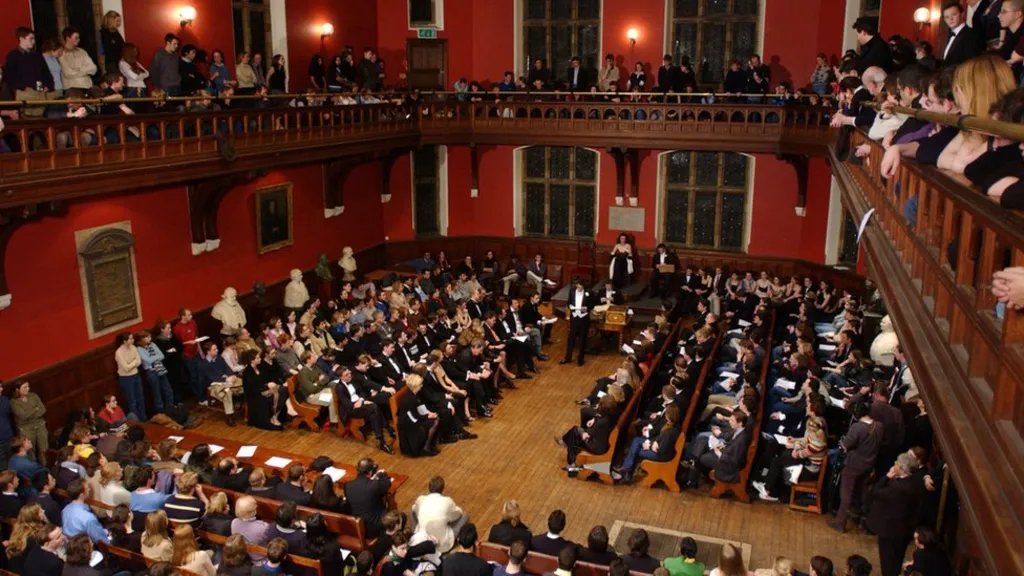
Podczas niedawnej debaty Oxford Union, dyrektor wykonawczy UN Watch Hillel Neuer zmierzył się z Ataollahem Mohajeranim, byłym wiceprezydentem Iranu, a także z Mohammadem Sztajjehem, byłym premierem Autonomii Palestyńskiej. Absurdalna teza debaty brzmiała: „Izrael jest większym zagrożeniem dla stabilności regionalnej niż Islamska Republika Iranu.”

W opozycji do tej tezy Neuerowi towarzyszył były ambasador Wielkiej Brytanii Dominick Chilcott.

Poniżej przedstawiamy najważniejsze fragmenty wypowiedzi. Pełny tekst wystąpienia Hillela Neuera można przeczytać tutaj. Nagranie z debaty nie zostało jeszcze opublikowane przez Oxford Union.

HILLEL NEUER:


Panie Przewodniczący, przyznam, że wahałem się, zanim zgodziłem się wziąć udział w tej debacie. Sam udział w niej grozi nadaniem powagi tezie tak oderwanej od faktów, że ociera się o satyrę: że to Izrael, spośród wszystkich państw, stanowi większe zagrożenie dla stabilności regionalnej niż Islamska Republika Iranu.


Ale żyjemy dziś w czasach, w których ludzie są w stanie uwierzyć niemal we wszystko. Niemal co czwarta osoba w tym kraju w wieku 18–34 lat wierzy, że zamachy z 7 lipca były „prawdopodobnie mistyfikacją.”


A tu, w Oxford Union, zaledwie trzy tygodnie temu 501 członków uznało za słuszne zagłosować za poparciem nowo wybranego przewodniczącego, który publicznie świętował zabójstwo Charliego Kirka.


Dlatego uznałem, że moim obowiązkiem jest przyjść i przedstawić kilka zasadniczych faktów, które dowodzą, że dzisiejsza teza nie tylko jest błędna — ona odwraca rzeczywistość.


Stabilność regionalna mierzy się tym, kto wywołuje wojny, a nie tym, kto je powstrzymuje. Izrael nie zbroi terrorystycznych bojówek w pięciu krajach arabskich — Iran tak. Cały Bliski Wschód o tym wie, dlatego państwa arabskie po cichu polegają na Izraelu dla własnego przetrwania…”

Sojusz umiarkowanych państw arabskich z Izraelem

Fakt: Umiarkowane sunnickie państwa arabskie od dekad tworzą strategiczny sojusz z Izraelem. Egipt podpisał traktat pokojowy z Izraelem w 1979 roku. Jordania uczyniła to w 1994 roku. W 2020 roku, w ramach historycznych Porozumień Abrahamowych, Zjednoczone Emiraty Arabskie, Bahrajn, Maroko i Sudan podpisały porozumienia pokojowe i normalizacyjne z Izraelem. Porozumienia te uznają, że Arabowie i Żydzi są potomkami wspólnego przodka — Abrahama, rdzennymi mieszkańcami regionu — i wyrażają wizję budowy kultury pokoju, bezpieczeństwa i dobrobytu.


Fakt:
 Arabia Saudyjska, opiekunka dwóch świętych meczetów, również rozwinęła znaczące zbliżenie z Izraelem. W rzeczywistości, według przechwyconych protokołów spotkań kierownictwa Hamasu, właśnie ten postęp był jednym z kluczowych powodów, dla których zdecydowano się na inwazję na Izrael i rozpoczęcie wojny oraz masakry 7 października 2023 roku. Hamas napisał: „Nie ma wątpliwości, że porozumienie normalizacyjne między Arabią Saudyjską a syjonistami postępuje znacząco.” Dlatego zdecydowali się na „działanie nadzwyczajne”, by je storpedować.


Fakt:
 Ten sojusz regionalny między Izraelem a umiarkowanymi państwami arabskimi przetrwał nawet trwającą od dwóch lat wojnę. W zeszłym roku Egipt i Jordania sprowadziły rekordowe ilości gazu ziemnego z Izraela. Izrael dostarcza także wysuszonej Jordanii 100 milionów metrów sześciennych wody rocznie. W jaki sposób Izrael miałby być „zagrożeniem dla stabilności regionalnej”? Wręcz przeciwnie.

Jednym z najmocniejszych dowodów istnienia tego sojuszu była sytuacja z 13 kwietnia 2024 roku, gdy irański reżim islamski przeprowadził bezprecedensowy atak na Izrael — przy użyciu 170 dronów, ponad 30 pocisków manewrujących i ponad 120 rakiet balistycznych.

Wśród tych, którzy pomogli zestrzelić nadlatujące pociski, były siły powietrzne USA, Wielkiej Brytanii, Francji i Jordanii, a także kraje Zatoki Perskiej, takie jak Arabia Saudyjska i Zjednoczone Emiraty Arabskie, które dostarczyły danych wywiadowczych i informacji radarowych.

I nie był to jednorazowy przypadek. Gdy Iran znów zaatakował Izrael w czerwcu 2025 roku, Jordania zestrzeliwała irańskie pociski i drony przelatujące nad jej terytorium, a Arabia Saudyjska — według doniesień — umożliwiła Izraelowi wykorzystanie swojej przestrzeni powietrznej.

To, że państwa sunnickie wsparły Izrael przechwytywaniem rakiet, informacjami radarowymi i wywiadowczymi, jest realnym głosem w sprawie dzisiejszej tezy. Wiedzą, że Izrael to partner w przetrwaniu — a reżim Islamski w Iranie to egzystencjalne zagrożenie.

Nie przechwytuje się rakiet lecących w stronę „zagrożenia dla stabilności regionalnej”. Przechwytuje się te, które lecą od niego.

Islamska Republika Iranu

Przejdźmy zatem do prawdziwego źródła destabilizacji: reżimu islamskiego w Iranie. Rewolucyjny dżihad to jego raison d’être — sens istnienia.

Porównajmy postawy. Izrael, już w momencie swojego powstania 14 maja 1948 roku, w Deklaracji Niepodległości wyciągnął rękę do sąsiadów z prostym przesłaniem: „Wyciągamy rękę do wszystkich państw i ludów sąsiednich z ofertą pokoju.”

W przypadku reżimu islamskiego w Iranie było dokładnie odwrotnie. W pierwszą rocznicę powstania reżimu, 11 lutego 1980 roku, ajatollah Chomeini ogłosił: „Będziemy eksportować naszą rewolucję na cały świat. Dopóki okrzyk ‘Nie ma boga prócz Allaha’ nie rozbrzmi na całym świecie, walka będzie trwać.”

I to właśnie robią — w regionie i poza nim. Iran, poprzez Korpus Strażników Rewolucji Islamskiej, eksportuje terroryzm i wojnę. Reżim i jego pełnomocnicy zniszczyli Liban, Syrię, Jemen, Gazę…

Mój przeciwnik z Iranu musi wyrzec się swoich zbrodni


Panie Przewodniczący
, nie mogę nie wspomnieć, że prawnik zajmujący się prawami człowieka z tego uniwersytetu, z Oksfordu, złożył zawiadomienie i dokumentację prawną na policję przeciwko mojemu dzisiejszemu oponentowi, panu Ataollahowi Mohajeraniemu, za jego rolę w zamachach na dysydentów.

Jak opisał „The Guardian”, 30 stycznia 2023 roku założyciel Oxfordzkiego Programu Prawa w Interesie Publicznym, Kaveh Moussavi, oskarżył pana Mohajeraniego, który był wysokim urzędnikiem irańskiego reżimu w latach 1989–1997, o współudział w okresie, gdy reżim irański zlecił i przeprowadził setki prób zamachów na dysydentów w Europie.

Ponadto skarga wskazuje na książkę pana Mohajeraniego z 1989 roku, zatytułowaną „Krytyka spisku Wersetów szatana”, w której autor popiera i uzasadnia fatwę wydaną przez ajatollaha Chomeiniego w 1989 roku przeciwko słynnemu pisarzowi Salmanowi Rushdiemu — który został dźgnięty nożem 15 razy w 2022 roku, właśnie motywowany tą fatwą. W książce pan Mohajerani pisze, że Rushdie to „bezwzględny apostata, a kara za apostazję to egzekucja.”


A więc, panie Mohajerani, dziś twierdzi pan, że opowiada się za stabilnością regionalną, ale niegdyś głosił pan, że autor, obywatel tego kraju, powinien zostać zabity za napisanie książki. Proszę więc powiedzieć tej Izbie: czy nadal wierzy pan, że pisarze zasługują na śmierć, czy wreszcie wyrzeknie się pan i potępi swoje poparcie dla tamtej fatwy?

Reżim w Teheranie to maszyna nienawiści


Panie Przewodniczący, największym zagrożeniem dla stabilności regionalnej jest reżim, który morduje własnych obywateli, ściga krytyków w Europie i Ameryce, zbroi bojówki terrorystyczne i eksportuje terror na cztery kontynenty.

Islamski reżim Iranu zabił setki tysięcy ludzi w Syrii, doprowadził do ruiny Jemen przez Hutich, zbankrutował Liban przez Hezbollah, przejął Irak przez milicje, a Gazę zamienił w punkt startowy dla największej masakry Żydów od czasu Holokaustu.

W kraju — strzela do kobiet na ulicach, oślepia nastolatków, torturuje dysydentów i wykonuje egzekucje na protestujących. Za granicą — wysyła terrorystów i zabójców, by mordowali niewinnych ludzi w Nowym Jorku, Londynie i Buenos Aires.

To nie jest rząd, który dąży do stabilizacji. To rewolucyjna maszyna nienawiści, terroru i chaosu. Izrael, przeciwnie, to zapora przeciwko imperialnemu projektowi Iranu, która chroni region przed jego pochłonięciem.

Twierdzenie, że to Izrael jest większym zagrożeniem dla stabilności, nie jest jedynie błędem — to odwrócenie rzeczywistości.


Link do oryginału: https://civicrm.unwatch.org/civicrm/mailing/view?reset=1&;id=3855&cid=65562&cs=d35ffbb0ac0218bb46821acba44c050b_1764211932_504

UN Watch, 27 listopada 2025


Zawartość publikowanych artykułów i materiałów nie reprezentuje poglądów ani opinii Reunion’68,
ani też webmastera Blogu Reunion’68, chyba ze jest to wyraźnie zaznaczone.
Twoje uwagi, linki, własne artykuły lub wiadomości prześlij na adres:
webmaster@reunion68.com