Archive | June 2017

J.R.R. Tolkien’s Jewish Great-Grandson Has A Play On Terezin

J.R.R. Tolkien’s Jewish Great-Grandson Has A Play On Terezin

SANDEE BRAWARSKY


J.R.R. Tolkien’s great-grandson Nicholas Tolkien.

Separated by three generations, one lived through war to create a magical world of fantasy, and one was blessed to know peace but writes about an unimaginably tragic chapter of history.

Playwright and director Nicholas Tolkien, who makes his Off-Broadway debut this month with “Terezin,” is the great-grandson of J.R.R. Tolkien, the author of “The Lord of the Rings” epic and its predecessor, “The Hobbit.”

Nicholas, who keeps kosher and observes Shabbat, and his sister are the only Jewish descendants of J.R.R. Tolkien, as he tells The Jewish Week in an interview. He grew up in London, where his American-born mother and grandparents ran a vintage clothing business. Their shop, Steinberg & Tolkien, was a fashion landmark on King’s Road in Chelsea. Growing up, Nicholas spent a lot of time with his grandparents, Anne and Mark Steinberg, who lived above their store — that probably accounts for his mostly American accent.

J.R.R. Tolkien. Wikimedia Commons

Both of his parents are published authors — Simon Tolkien writes historical fiction and Tracy Tolkien writes about vintage fashion; his Steinberg grandmother is also a novelist and his grandfather worked in Hollywood. On the Tolkien side, he says, there are a lot of writers and folks interested in mythology. On both sides, he says, there is “massive creativity.”

“For a long period of time, I felt a great responsibility to be a novelist,” Tolkien, 27, says. “Now, theater provides a different avenue — it’s so much more interesting than sitting in a room. This play is very much like a novel, with 15 characters and 45 scenes.”

It was from Mark Steinberg that he first heard the stories of survivors of the Shoah. In Tolkien’s schooling at Westminster, the Holocaust was not part of the curriculum.

Written from a child’s perspective, “Terezin” is about the strength of children in the face of loss. With elements of theater as well as dance, this is the story of three girls sent to the Terezin concentration camp; one plays the violin beautifully. They survive through their friendship and get caught up in the making of a propaganda film by the Nazis.

The Steinberg & Tolkien store in NYC. Via pinterest.com

“I’m very interested in trying to give the audience a life experience of what people went through. To give a face and a story to the people we only know through statistics.”

Terezin, also known by the German name Theresienstadt, is 38 miles northwest of Prague. Many artists, musicians, composers and intellectuals were imprisoned there, and despite the horrific conditions, the inmates led performances, concerts and a children’s opera.

Tolkien was inspired to write “Terezin” by thinking about the experience of children during war, and by the book, “I Never Saw Another Butterfly: Children’s Drawings and Poems from the Terezin Concentration Camp.” He spent more than five years researching and reading accounts of people who had been there. The play is based in part on “The Terezin Diary of Gonda Redlich,” and Redlich, who was deported to Terezin in 1941 and in 1944 sent to Auschwitz, where he was killed, is a character in the play. His diary was found by Czech construction workers in 1967.

“It’s the responsibility of the living to tell the stories of the dead.” – Tolkien

Tolkien visited Terezin, and says that the site is completely preserved. “You hear the sounds of birds, of cars passing. It’s a place full of ghosts.

“I’m very interested in trying to give the audience a life experience of what people went through,” he says, “to give a face and a story to the people we only know through statistics.”

“It’s the responsibility of the living to tell the stories of the dead,” he adds.

recommended by:
Leon Rozenbaum

Among his generation, he says, “There’s a sense of Holocaust amnesia. People don’t want to think about it. Yet, there is genocide and the gassing of children still happening in the Syrian civil war.”

“One of my fondest memories is my dad reading all of ‘Lord of the Rings’ to me. My great-grandfather had read it to my dad. It felt like family stories being passed down.”
Tolkien, who now lives in Santa Barbara, Calif., had a bar mitzvah but no formal Jewish education to speak of. Largely self-taught, he embraces Judaism.

Growing up, kids in school used to call him Hobbit, and he liked it. He began writing poetry, then went on to screenwriting and says that theater is what he most wants to do.

“One of my fondest memories,” he recalls, “is my dad reading all of ‘Lord of the Rings’ to me. My great-grandfather had read it to my dad. It felt like family stories being passed down.”

The ensemble cast of “Terezin” is led by Macedonian actress Natasa Petrovic and Canadian actress Sasha K. Gordon, who recently played in the film “Natasha.” The third friend is played by Morgan Ashley Reichberg, a seventh grader from the Upper West Side, who is making her Off-Broadway debut.

Previews begin June 13, with performances through July 2, at the Peter Jay Sharp Theater, 416 W. 42nd St.


twoje uwagi, linki, wlasne artykuly, lub wiadomosci przeslij do: webmaster@reunion68.com



Dr Piotr Osęka z PAN: Władza ludowa wobec Żydów

Dr Piotr Osęka z PAN: Władza ludowa wobec Żydów

Polska Agencja Prasowa


Rozmiar antysemickiej czystki w latach 1967 – 68 jest jeszcze nie zbadany – mówi w rozmowie z PAP dr Piotr Osęka z Instytutu Studiów Politycznych PAN. Jego zdaniem, czystka ta zdobyła sympatię części polskiego społeczeństwa dla PZPR, która zaczęła być postrzegana jako polska, narodowa, działająca w interesie Polaków.


twoje uwagi, linki, wlasne artykuly, lub wiadomosci przeslij do: webmaster@reunion68.com


Palestyńczycy: Mamy prawo zatruwać umysły naszych dzieci

Palestyńczycy: Mamy prawo zatruwać umysły naszych dzieci

Bassam Tawil


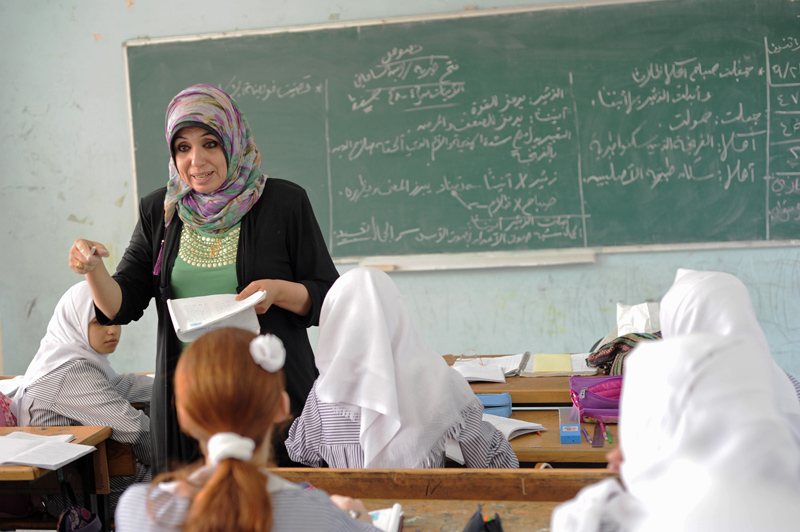
Szkoła dla dziewczynek prowadzona przez UNRWA. (Zdjęcie: UNRWA)

W pełnym ironii zakręcie historii Agenda Narodów Zjednoczonych dla Pomocy Uchodźcom Palestyńskim (UNRWA) jest teraz przedmiotem zastraszania i gróźb ze strony wielu Palestyńczyków.

Według doniesień, UNRWA planuje wprowadzenie pewnych zmian do programów szkolnych w szkołach na Zachodnim Brzegu i w Strefie Gazy, i Palestyńczycy są z tego bardzo niezadowoleni. Twierdzą, że UNRWA “poddała się” naciskom izraelskim, by wprowadzić zmiany.
Informacja o proponowanych zmianach opiera się na przeciekach do Palestyńczyków i nie została oficjalnie potwierdzona przez UNRWA. Palestyńczycy twierdzą, że dowiedzieli się o planach wprowadzenia zmian podczas spotkania z wysokimi rangą funkcjonariuszami UNRWA.
Według Palestyńczyków zmiany mają na celu “wymazanie” ich “tożsamości narodowej” i “historii” i wypaczenie “walki” przeciwko Izraelowi.

Palestyńczycy twierdzą, że nowe podręczniki zastąpiły mapę “historycznej Palestyny” (włączającej Izrael) obrazkami dyni i ptaka. Podręczniki palestyńskie często zamieszczają mapy “historycznej Palestyny” bez Izraela. Miasta w Izraelu, takie jak Hajfa, Jaffa, Tyberiada i Ramle opisane są jako “miasta palestyńskie”. Autonomia Palestyńska (AP) także mówi o tych miastach jako “palestyńskich miastach wewnątrz kraju po 1948 r.”.

Palestyńczycy oskarżają, że w podręczniku do czwartej klasy UNRWA zastąpiła mapę Palestyny zdjęciem tradycyjnego stroju kobiety palestyńskiej.

Nowe podręczniki nie wspominają miast w Izraelu; wspominają tylko miasta na Zachodnim Brzegu i w Strefie Gazy, takie jak Nablus, Jenin, Gaza, Jerycho i Ramallah.

Jak można się było spodziewać, zmiana palestyńskich określeń Jerozolimy jako “stolicy państwa Palestyna” na Jerozolimę jako “miasto święte religii Abrahamowych” nie spodobała się Palestyńczykom. Ponadto są rozgniewani, ponieważ podręczniki UNRWA nie wspominają Doliny Jordanu wzdłuż granicy Izraela z Jordanią.

W kontrowersyjnych podręcznikach usunięto także zdjęcia żołnierzy izraelskich patrolujących w pobliżu szkół i wzmianki o więźniach palestyńskich w Izraelu, skazanych za terroryzm. Ponadto w nowych podręcznikach nie ma poprzednich wzmianek o “Dniu Więźnia Palestyńskiego” – dorocznego wydarzenia oznaczającego solidarność Palestyńczyków z więźniami.

Palestyńczycy protestują także przeciwko usunięciu słów takich jak “okupacja” i “posterunki kontrolne” z nowych podręczników.

Jeśli te zaproponowane zmiany są prawdziwe, należałoby przyjąć je jako pozytywny rozwój w kierunku zakończenia podżegania antyizraelskiego w szkołach palestyńskich, włącznie ze szkołami należącymi do UNRWA. Jednak wobec szeroko zakrojonych palestyńskich protestów i gróźb jest wątpliwe, czy UNWRA będzie w stanie przeprowadzić proponowane zmiany.

Niedawne badanie podręczników używanych w prowadzonych przez UNRWA szkołach pokazuje, że teksty te konsekwentnie delegitymizują i demonizują Izrael. Szkoły nie uczą dzieci palestyńskie uznawania Izraela. Badanie prowadził dr Arnon Gross, który przetłumaczył podręczniki, i dr Roni Shaked, z Harry Truman Research Institute na uniwersytecie Hebrajskim w Jerozolimie.

W obecnie używanych książkach syjonizm jest definiowany jako ruch kolonialny, który został stworzony przez Żydów europejskich w celu zebrania Żydów z całego świata i sprowadzenia ich do Palestyny. Nie ma ani słowa o historycznych i religijnych związkach Żydów z Ziemią Izraela ani z Jerozolimą. Zamiast tego podręczniki UNRWA uczą dzieci, że żydowskie miejsca święte, takie jak Ściana Zachodnia, Grób Racheli i Makpela (Grota Patriarchów) są muzułmańskimi miejscami świętymi.

Nic dziwnego, że choć są wściekłymi rywalami, Hamas i Autonomia Palestyńska połączyli siły, by udaremnić planowane przez UNRWA zmiany w podręcznikach. To jest kwestia, co do której te dwa skorumpowane reżimy zgadzają się: podżeganie dzieci przeciwko Izraelowi i zaprzeczanie jego istnieniu.

Ahmed Bahr, wysoki rangą funkcjonariusz Hamasu w Strefie Gazy, ostrzegł, że jakakolwiek zmiana w programie nauczania “zaszkodzi historii i narodowym prawom ludu palestyńskiego, jak również oporowi” przeciwko Izraelowi. Przez “opór” funkcjonariusz palestyński rozumie terroryzm wobec Izraela, włącznie z zamachami samobójczymi i ostrzałem rakietowym Izraela.

Według tego funkcjonariusza Hamasu UNRWA i społeczność międzynarodowa muszą zrozumieć, że “opcja oporu jest jedyną i najkrótszą drogą do odzyskania Palestyny i wyzwolenia naszej ziemi”.

Innymi słowy, Bahr chce nadal uczyć dzieci palestyńskie, by dokonywały zamachów terrorystycznych w celu zniszczenia Izraela i zastąpienia go imperium islamskim. Istotnie, tego właśnie Hamas uczy od dawna we własnych szkołach w Strefie Gazy. I Hamas pokazuje, że UNRWA ma robić to samo w swoich szkołach. Dzieci, które uczą się w szkołach agendy ONZ, nadal dowiadują się, że Izrael jest tylko wymysłem.

W ciągu ostatnich kilku dni Palestyńczycy w Strefie Gazy zorganizowali serię protestów przeciwko UNRWA. Ostrzegli tę agendę przed wprowadzaniem zamian, które są zaprojektowane, by “wypaczyć umysły dzieci palestyńskich” i które “nie zgadzają się z kulturą społeczeństwa palestyńskiego”.

Hamas nie pozwolił UNRWA uczyć w szkołach o Holocauście. Z punktu widzenia Hamasu UNRWA stara się “zatruć umysły naszych dzieci przez podejmowanie kroków, które tylko służą” Izraelowi. “UNRWA próbuje usprawiedliwić zbrodnie Izraela wobec Palestyńczyków przez nauczanie o tak zwanym Holocauście w kontekście praw człowieka w szkołach prowadzonych przez UNRWA” – oznajmił Hamas. Ta postawa w żadnym razie nie zaskakuje: negacja Holocaustu zawsze była integralną częścią narracji palestyńskiej i arabskiej.

Łatwo zrozumieć, dlaczego Hamas i inne ekstremistyczne grupy palestyńskie są przeciwne zmianom w podręcznikach, które delegitymizują i demonizują Izrael. Trudniej jednak zrozumieć, dlaczego Autonomia Palestyńska, której prezydent Mahmoud Abbas mówi, że sprzeciwia się podżeganiu antyizraelskiemu, także wystąpiła przeciwko planowanym przez UNRWA zmianom.

Oświadczenie wydanie przez palestyńskie ministerstwo edukacji w Ramallah ostrzegło, że podejmie “kroki karne” wobec każdego, kto próbuje zmienić program szkolny. “Każda próba zmiany palestyńskiego programu szkolnego będzie uważana za atak na Palestynę i wymazanie i rozwodnienie naszej tożsamości narodowej” – ostrzegło ministerstwo.

Język użyty przez AP jest uderzająco podobny do tego, jakiego użył Hamas, by grozić organizacji, która od dziesięcioleci pomaga Palestyńczykom przetrwać. Palestyńczycy znowu kąsają rękę, która ich karmi. Zapytajcie Kuwejtu i innych państw Zatoki, które dawały Palestyńczykom miliardy dolarów, zanim Palestyńczycy poparli inwazję Saddama Husajna na Kuwejt.

Podczas spotkania z prezydentem USA, Donaldem Trumpem w Waszyngtonie w połowie kwietnia Abbas, jak się oczekuje, ponowi zobowiązanie walki z podżeganiem antyizraelskim, jak mówią wysocy rangą funkcjonariusze AP z Ramallah. Można się zastanawiać, jak Abbas planuje wyjaśnienie gróźb AP wobec UNRWA w sprawie podręczników szkolnych.

AP, podobnie jak Hamas, planuje kontynuowanie indoktrynacji swoich dzieci przy pomocy zatruwających umysły podręczników, które przedstawiają Żydów jako nikczemnych okupantów i złodziei ziemi, którzy zbudowali “rasistowskie mury” i bez powodu burzą domy. Chcą także nadal nauczać dzieci, że konflikt z Izraelem nie dotyczy rozwiązania w postaci dwóch państw, ale “wyzwolenia Palestyny od rzeki do morza”, co oznacza unicestwienie Izraela. Celem jest, by uczniowie wierzyli, że Izrael jest jednym wielkim “osiedlem”, dla którego nie ma miejsca na Bliskim Wschodzie.

Ponadto, wraz z Hamasem, Abbas i jego AP planują dalsze wpajanie dzieciom palestyńskim idei, że powinny uważać terrorystów zabijających Żydów za swoje wzory osobowe. Byłoby dobrze, gdyby w rozmowach między Trumpem a Abbasem te fakty były uwzględnione.

Badacz i publicysta palestyński mieszkający na Bliskim Wschodzie.


twoje uwagi, linki, wlasne artykuly, lub wiadomosci przeslij do: webmaster@reunion68.com


Want a Path to Peace? Pound the Table at Abbas

Want a Path to Peace? Pound the Table at Abbas

Jonathan S. Tobin / JNS.org


President Donald Trump (left) and Palestinian Authority President Mahmoud Abbas (center) in Bethlehem, May 23. Photo: Shealah Craighead / White House.

JNS.org – The most important incident during President Donald Trump’s visit to the Middle East took place out of view of the international press. At the time, it went unreported and unremarked upon. The president not only didn’t mention it publicly, he also failed to tweet about it. But Trump’s outburst of anger at Palestinian Authority (PA) President Mahmoud Abbas during their meeting in Bethlehem may have set a tone that will either create real progress toward peace or, more likely, instill a degree of realism about Israel’s antagonists that has been lacking in the new administration.

According to reports first broadcast on Israeli television and subsequently confirmed by Abbas in a meeting with PLO leaders, Trump blew up at Abbas during their meeting. Abbas had assured the president during their earlier meeting in the White House that the PA didn’t conduct incitement against Israelis and Jews. Trump had believed Abbas’s assurances, but subsequently learned Palestinian official media and schools routinely conduct incitement that helps buttress a culture of hatred that is incompatible with peace. Trump also now knows the PA pays salaries to Palestinian terrorists and their families, a total that amounts to more than $1.1 billion in just the last four years.

Instead of another love-fest with his new friend Mahmoud, the meeting in Bethlehem turned into a tense session including Trump playing Abbas a video of examples of the PA leader’s vicious attacks, as well as one statement in which Abbas confessed to incitement. According to various accounts, Trump pounded the table and yelled at Abbas while accused him of lying when he spoke of Palestinians raising their children in a “culture of peace,” when the two stood alongside each other at their White House press conference in early May.

The fact that Trump, a man with no filter or compunction about venting his spleen in public, chose not to share his anger at Abbas with the world was significant. Indeed, in his speech at the Israel Museum, which came after the stormy exchange with the Palestinian leader, Trump assured the world again that Abbas was dedicated to peace.

Moreover, in the following days, Trump’s Jewish supporters were eating crow over his decision to sign a waiver ensuring the US Embassy in Israel wouldn’t be moved from Tel Aviv to Jerusalem. Though the decision was no surprise, it still had to sting for those on the right who were convinced Trump’s disregard for every other rule of presidential behavior would impel him to be the first not to break a promise on Jerusalem.

These incidents paint a portrait of a president who seriously believes a peace deal is possible and wishes to do nothing that might interfere with a new round of talks. Given the reality of Palestinian intransigence — they’ve already either turned down or ignored a number of Israeli peace offers, included statehood, independence, and control over almost all of the West Bank and a share of Jerusalem — and the incitement that belatedly came to Trump’s attention, the odds of success are slim to none. If Trump really believes the missing ingredient for peace has been a master real estate dealmaker, he’s wrong. But his willingness to pound the table at Abbas is nevertheless significant.

The common thread throughout the history of peace negotiations that began with the Oslo process has been a refusal on the part of the West to hold the Palestinians accountable. Yasser Arafat made little secret of the fact that he saw the power he gained at Oslo as a stepping stone to future conflict rather than a way to end it. Though his successor Abbas wears a suit rather than military fatigues, he has played the same double game in which he sometimes talks peace while also buttressing a culture of hatred and war that ensures the continuation of the conflict.

Neither Trump nor the Saudis can bribe Abbas to act differently when the dynamic of Palestinian politics and worries about his Hamas foes tell him he must stall peace in order to survive. But a US president who is willing to hold him accountable for his conduct is an innovation that can only advance the cause of peace. For too long, Abbas has gotten away with brazen lies and condoning violence while being applauded by US presidents. If peace is ever to come, it will only happen when the Palestinians realize they must change. Such a moment can’t come soon enough.


Jonathan S. Tobin is opinion editor of JNS.org and a contributing writer for National Review. Follow him on Twitter at: @jonathans_tobin.


twoje uwagi, linki, wlasne artykuly, lub wiadomosci przeslij do: webmaster@reunion68.com


Pokój nie jest celem

Pokój nie jest celem

    Malgorzata Koraszewska


Kazanie amerykańskiego imama w Wirginii o wiarołomnych Żydach, mordercach proroków, z którymi niczego nie warto podpisywać.
(Więcej filmów o podobnej tematyce znajdziesz na stronie http://www.listyznaszegosadu.pl/)


twoje uwagi, linki, wlasne artykuly, lub wiadomosci przeslij do: webmaster@reunion68.com