Archive | November 2017

Iranian Control of Kurdish Mountain Poses Serious Threat to Israel

Iranian Control of Strategic Kurdish Mountain Poses Serious Threat to Israel, Top Security Official Says

Ben Cohen


Iranian-backed Hashd al-Shaabi fighters in Kurdistan’s Sinjar region. Photo: File.

Iranian control of a strategically significant Kurdish area near the border between Iraq and Syria represents a grave security threat to Israel, a senior Kurdish security official told The Algemeiner on Wednesday.

The official, who spoke on condition of anonymity, said that Iran had coveted the mountainous Sinjar region — which spans from northwestern Iraq into eastern Syria — for “at least ten years.” In 2014, Sinjar was conquered by ISIS terrorists who went on to commit genocide and other war crimes against the region’s ancient Yazidi minority. After ISIS was driven out of the area by Kurdish peshmerga this year, Iranian-backed paramilitaries, among them the Hashd al-Shaabi, the Badr Organization and the Khorasani Brigades, began attacking the Kurds for control of the newly-liberated lands.

The same paramilitaries played a central role in the Iranian-coordinated assault on Kurdistan last month, following a 93 percent vote in favor of independence in the September 25 Kurdish referendum.

The official added that he had received reports claiming the Khorasani Brigades, an Iraqi Shia group affiliated with Iran’s Islamic Revolutionary Guard Corps (IRGC), were building a “military base” on Mount Sinjar – at 4,800 ft, the region’s highest point. Kurdish media outlets have also reported on a continued stream of Iraqi army officers and Hashd al-Shaabi fighters onto the mountain and in the town of Sinjar beneath it. Hashd al Shaabi’s commander Abu Mahdi al-Muhandis – designated for terrorism by the US State Department – has been sighted in the area on several occasions.

The area contains several Yazidi holy sites, including the Sharfadin shrine on Mount Sinjar itself. “This is an important place for all of us as Kurds,” the Kurdish official said. “The area is known for its Yazidi population, and there are Muslims and Christians there too. But it is also a place that presents a threat to Israel, and to other countries in the region.”

The nature of that threat, according to the official, was demonstrated during the First Gulf War in 1991, when there was a consistent high-level Iraqi military presence on Mount Sinjar, even though the area was never targeted by Western coalition aircraft during the conflict. Some have claimed that the Iraqis launched their Scud missile attacks on Israel and Saudi Arabia during that conflict from Mount Sinjar — although Tel Aviv, which lies about 500 miles to the west, would have been out of range of even the most advanced Scuds at the time.

Numerous eyewitness reports confirm that significant Iraqi military activity was taking place on Mount Sinjar going back to the late 1970s, when Saddam Hussein’s regime began testing missiles at a facility there. In an article published in May, the Israeli journalist Seth Frantzman quoted two Kurdish witnesses who recalled that in 1991 there had been “red fire” while “Iraq was bombarding Israel from the mountain.” Frantzman also quoted a sergeant from Britain’s elite SAS regiment, who said that he too had seen “a great big ball of light…a fireball” on Mount Sinjar, as well as Scott Ritter, a former UN weapons inspector who reported that the Iraqi army had cordoned off the entire Sinjar region during the 1991 war, and that one Iraqi had told him, “Sinjar is the key.”

Almost thirty years on, vast improvements in ballistic missile technology mean that Israeli is well within firing distance from Mount Sinjar. A new ballistic missile unveiled by the Tehran regime in September, the BM-25 Khorramshahr, has a range of 2,000 miles — creating a potential nightmare scenario for the Israelis as they attempt to deal with the arsenal of 150,000 missiles controlled by Hezbollah, Iran’s Lebanese proxy, at the same time.

“If you control the mountain, you can control the area,” the Kurdish official said. “Iran can launch an attack on Tel Aviv, and it now has a clear corridor through which to supply its other proxies, like Hezbollah.”

The official added there was growing concern over ethnic cleansing now being carried out by Shia paramilitaries in the territories taken from the Iraqi Kurdish Peshmerga last month.

A burned-out Kurdish store in the town of Tuz Khurmatu alongside an untouched property marked as belonging to a member of the Shia Turkoman community. Photo: The Algemeiner.

New photos from Tuz Khurmatu, an ethnically diverse town seized by the Hashd al-Shaabi on October 16, suggest that houses and stores have been marked according to the background of their owner. One image showed a burned-out Kurdish grocery store alongside an untouched home marked as belonging to a family from the Shia Turkoman minority. More than 35,000 refugees have fled the fighting in the town.


twoje uwagi, linki, wlasne artykuly, lub wiadomosci przeslij do: webmaster@reunion68.com



Jacek Kuroń – The story of Zośka the Jewish girl (part 4)

Jacek Kuroń – The story of Zośka the Jewish girl (part 4)

Web of Stories – Life Stories of Remarkable People


Polish activist Jacek Kuroń (1934-2004) helped to transform the political landscape of Poland. He was expelled from the communist party, arrested and incarcerated. He was also instrumental in setting up Workers’ Defence Committee (KOR) and became a Minister of Labour and Social Policy. [Listeners: Jacek Petrycki and Marcel Łoziński]


twoje uwagi, linki, wlasne artykuly, lub wiadomosci przeslij do: webmaster@reunion68.com


“Prosiła, żeby jej zasłonić oczka. Kula przeszła przez główkę”

“Prosiła, żeby jej zasłonić oczka. Kula przeszła przez główkę”

Mariusz Nowik


Co najmniej 42 tysiące zabitych w trzy dni. Zaplanowana w najdrobniejszych szczegółach, dokładnie przygotowana, największa jednorazowa masakra w historii niemieckich obozów koncentracyjnych i ostatni akt zagłady Żydów we wschodniej Polsce. Tylko kilku osobom udało się ją przeżyć i uciec z masowych grobów. Tylko nieliczni odpowiedzieli za tę zbrodnię. Wkrótce przed sądem może stanąć jeden z ostatnich oskarżonych.

Hans. Tak mógł mieć na imię ten Niemiec. Umówmy się, że tak miał na imię. 22 lata, zielony mundur, zielona furażerka, w dłoniach karabin mauser. 3 listopada 1943 roku było dość chłodno, więc Hans zapiął gruby zielony płaszcz po samą szyję. Przemykający obok niego ludzie nie mieli na sobie ubrań. Wychudzeni, bladzi, słabi, potykali się, niektórzy upadali, ale wtedy Hans krzyczał na nich, potrząsając karabinem, a oni ostatkiem sił podnosili się, dźwigali na grubszych od ud kolanach, wyciągani z błota cienkimi ramionami takich jak oni istot, bardziej przypominających cienie niż ludzi. Hans nie przestawał krzyczeć, więc biegli dalej na swoich chudych nogach, za ciemne baraki, szybko, w stronę, skąd rozlegała się głośna muzyka. Marszowa. Niemiecka. Bardziej pasująca do wojskowej defilady niż do tego dziwnego wyścigu nagich ciał. Zagłuszająca dobiegający z oddali terkot i pojedyncze suche trzaski. Hans dobrze znał te dźwięki i wiedział, co oznaczają. Przebiegające obok niego cienie z szeroko otwartymi oczami również to wiedziały. Zdawały się jednak nie słyszeć, nie rozumieć, co oznaczają.

74 lata później jest o wiele cieplej niż wtedy. W połowie października 2017 roku Frankfurt tonie w promieniach słońca. Ciepło. Za ciepło, jak na tę porę roku. Jesień zdaje się zapominać, że za chwilę przyjdzie zimny i wilgotny listopad. Hans wraca myślami do tego chłodnego poranka z 1943 roku. Nie dobrowolnie. Wraca na polecenie mężczyzny, który może czuć się nieco zakłopotany, że musi przesłuchiwać 96–letniego staruszka, ale z maską służbisty na twarzy wywiązuje się ze swego prokuratorskiego obowiązku. Zdanie po zdaniu stawia Hansowi zarzuty. – Pomocnictwo w morderstwie – odczytuje akt oskarżenia i patrzy w oczy byłego SS–mana z obozu koncentracyjnego na Majdanku. Być może ostatniego, który może jeszcze odpowiedzieć za akcję “Dożynki” – Aktion “Erntefest”, jak zapisano w aktach śledztwa. Za śmierć ponad 42 tysięcy mężczyzn, kobiet i dzieci.

“Problem Żydów w dystrykcie lubelskim”

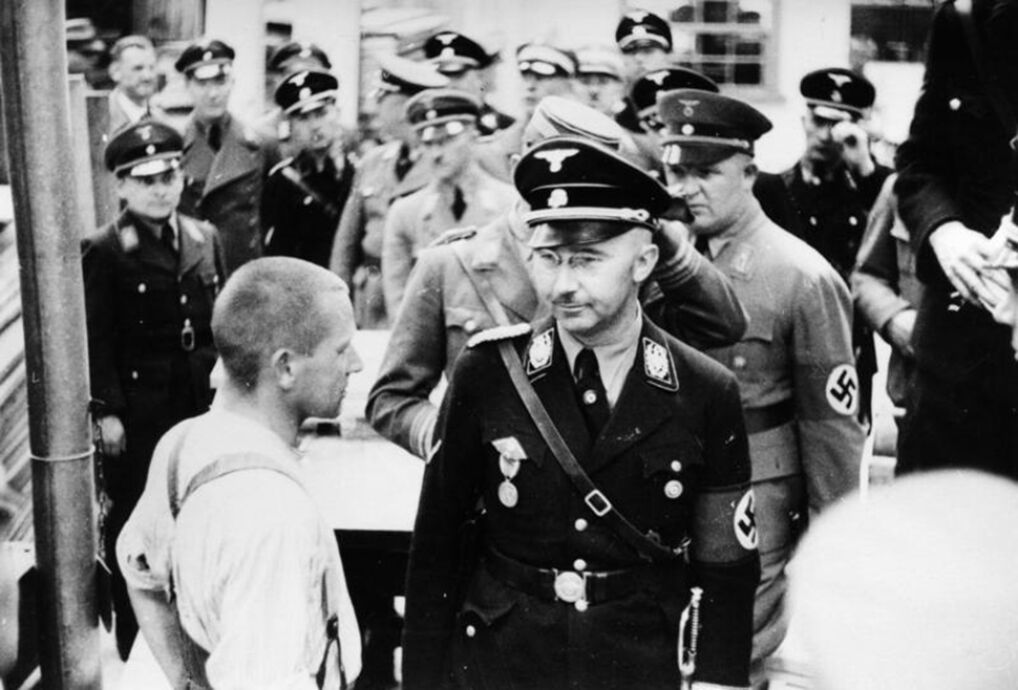
Kryptonim ten w makabryczny sposób oddawał istotę celu całej akcji. “Erntefest” była zwieńczeniem rozpoczętej ponad rok wcześniej Aktion “Reinhardt”, operacji stanowiącej ostatni etap zagłady Żydów, uszczegółowionej w styczniu 1942 roku na naradzie nazistowskich władz w Wannsee i formalnie wówczas rozpoczętej. Jesienią 1943 roku w okupowanej Polsce zostały już nieliczne skupiska ludności żydowskiej. W trakcie operacji “Reinhardt” życie straciło około 2 miliony Żydów – zagazowanych, rozstrzelanych, zagłodzonych na śmierć. Rozkaz do rozpoczęcia “Dożynek” wydał Heinrich Himmler, szef policji, SS i Głównego Urzędu Bezpieczeństwa Rzeszy (RSHA), najprawdopodobniej pod koniec sierpnia 1943 roku. Wtedy właśnie Jakob Sporrenberg, szef policji i SS w Lublinie, otrzymał pismo od Himmlera z krótkim zaleceniem: “Problem Żydów w dystrykcie lubelskim urósł do groźnych rozmiarów. Ten stan rzeczy musi być wyjaśniony raz na zawsze”.

Reichsführer i szef SS Heinrich Himmler w obozie koncentracyjnym w Dachau / Źródło: Friedrich Franz Bauer/Bundesarchiv, Bild 152-11-12 (CC-BY-SA 3.0)/Wikipedia (http://www.tvn24.pl)

“Groźne rozmiary” – to stwierdzenie, zdaniem broniących się po wojnie przed sądami SS–manów, oznaczało pozbycie się groźby wybuchu buntów w obozach. Jako przykład podawali rozruchy, do jakich doszło w Treblince i Sobiborze, gdzie więźniowie zaatakowali strażników, zabijając część z nich. Niektórym więźniom udało się przy tej okazji zbiec. Jednym z uciekinierów z Treblinki był zmarły w 2016 roku Samuel Willenberg, artysta, późniejszy żołnierz powstania warszawskiego.


Przyczyna wymordowania Żydów – poza tym, że tak nakazywała zbrodnicza ideologia nazizmu – wydaje się bardziej prozaiczna. Kierowana przez Himmlera SS nie chciała oddać kontroli nad żydowskimi robotnikami niemieckim koncernom zbrojeniowym i administracji, które usilnie zabiegały o przejęcie “taniej żydowskiej siły roboczej”. Himmler, nie zgadzając się na pozbawienie SS zysków z wynajmowania więźniów do pracy, najpewniej wykorzystał pretekst, jaki dały mu bunty więźniów Sobiboru i Treblinki, i zdecydował, że pozbędzie się wszystkich robotników zamiast pozbawiać się wpływów od niemieckich firm.

SS gorliwie przystąpiła do wykonania rozkazu.

“Zdaje mi się, że się nie zobaczymy już”

3 listopada 1943 roku więźniowie nie wyszli do pracy poza obóz. Od samego świtu słychać było warkot silników i pokrzykiwania żołnierzy. Przez bramę na teren Majdanka wjeżdżały ciężarówki, z których wyskakiwali SS–mani, na chwilę ustawiając się w szeregu, a po chwili znikając między barakami. Więźniowie z niepokojem obserwowali te przygotowania. “Dokoła drutów do 5 kroków żandarm w hełmie – w środku pola na zewnątrz stanowisko ckm” – zanotował w wysłanym z obozu grypsie więzień Jerzy Henryk Szcześniewski, nauczyciel i członek Armii Krajowej. Tego dnia wcześniej niż zwykle wysłano go do pracy w kuchni załogi SS. Wraz z innymi więźniami obserwował ukradkiem, jak Niemcy zaczęli wyganiać na plac więźniów, biciem formując ich w kolumny i przepędzając uliczkami między budynkami. Dość szybko zorientował się, że wybierali Żydów. “Blokowy Mietek Szydłowski podchodzi do mnie – podaje mi rękę i mówi: ‘zdaje mi się, że się nie zobaczymy już – więc… do widzenia’. Uspokajam go – że to może dla nas nowa gehenna i… odchodzi – łączy się z główną kolumną Żydów skręcając z bramy na lewo na 5 pole’ – zanotował Szcześniewski w sporządzonych na gorąco skrótowych zapiskach.

Obóz koncentracyjny podzielony był na tak zwane pola. Kierownikiem pola IV był Heinz Villain, znany ze swego okrucieństwa SS–man, uczestnik egzekucji więźniów przetrzymywanych w Zamku Lubelskim i późniejszy dowódca straży w Konzentrationslager Warschau, gdzie w lipcu 1944 roku osobiście wymordował wszystkich chorych z obozowego szpitala. O świcie 3 listopada 1943 roku po porannym apelu na Majdanku Villain rozkazał oddzielić więźniów żydowskich od nieżydowskich i odprowadzić tych pierwszych na pole V. Tam musieli rozebrać się do naga, po czym biec w kierunku wykopanych kilka dni wcześniej przez więźniów długich i szerokich dołów, które – jak wcześniej tłumaczyli kapo – miały służyć jako rowy przeciwlotnicze na wypadek sowieckich bombardowań. Wpędzano ich tam grupami, po około 10 osób.

Przerażający, techniczny opis mechanizmu zbrodni, odtworzony na podstawie zeznań funkcjonariuszy obozowych, strażników SS i oficerów, zachował się w aktach głośnego procesu części załogi Majdanka przed sądem w Düsseldorfie, zakończonego w 1981 roku:

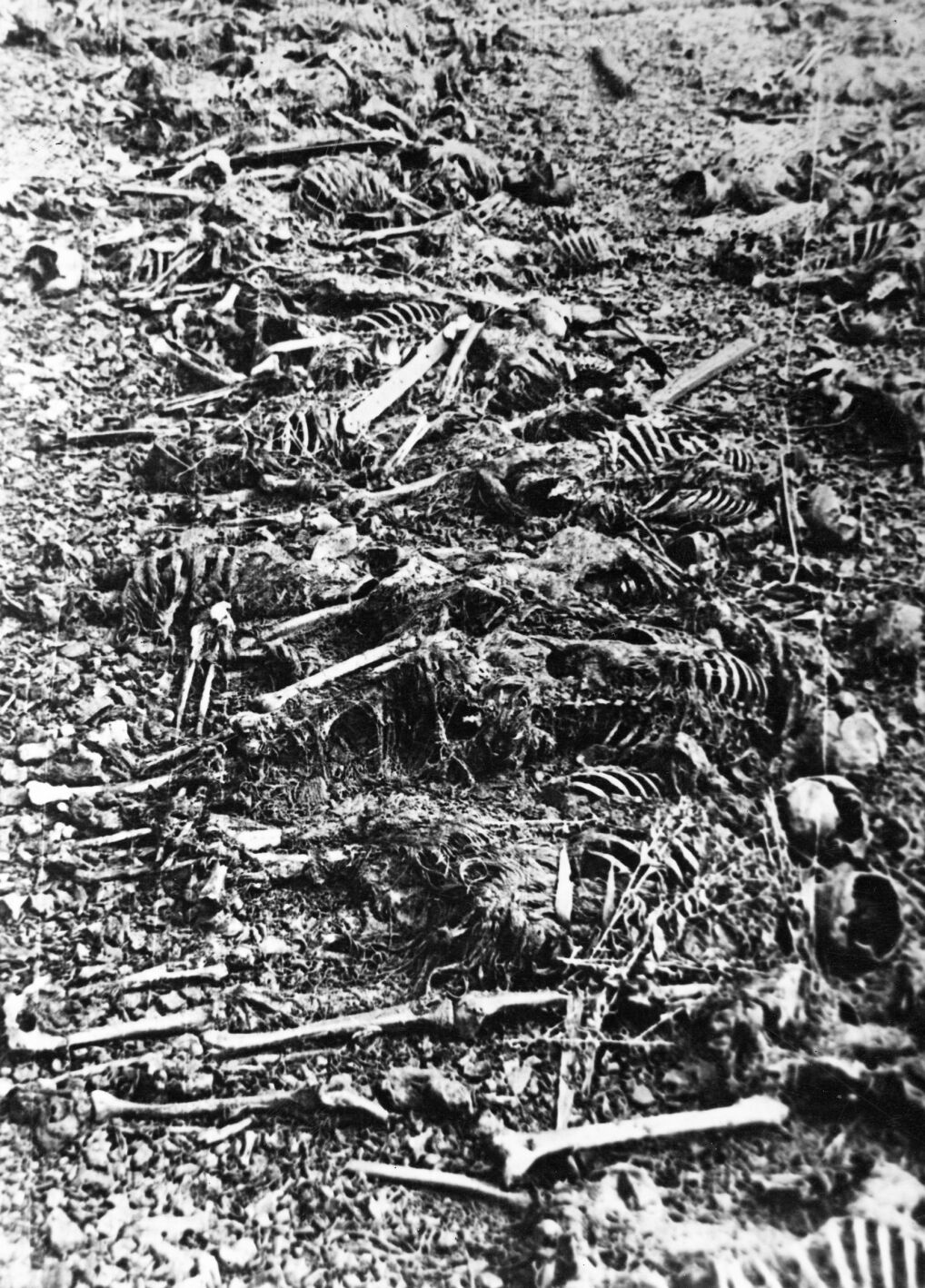
Tam [w dołach więźniowie] musieli się kłaść ‘dachówkowato’ zgodnie z kierunkiem rowów twarzą do dołu w taki sposób, aby pierwsza ofiara leżała na ziemi, a następna kładła głowę na plecach ofiary leżącej pod nią. Następnie stojący na brzegach rowów członkowie komanda egzekucyjnego, w skład którego wchodziło około 100 funkcjonariuszy zewnętrznych jednostek SS i policji, zabijali kolejno ofiary, strzelając im w kark lub tył głowy z pistoletów maszynowych nastawionych na pojedynczy ogień. Po wypełnieniu ciałami podstawy rowów dalsze ofiary musiały wchodzić na ciała [wcześniej rozstrzelanych], tworzyć następną warstwę, po czym rozstrzeliwano je w ten sam sposób. Rowy były zapełniane ciałami stopniowo aż do górnego brzegu. W celu zagłuszenia odgłosów strzałów od początku akcji z dwóch należących do wydziału NSDAP w Lublinie radiowozów nadawano na cały obóz bardzo głośną muzykę marszową i rozrywkową [za:]

“Erntefest. Zapomniany epizod zagłady”, Państwowe Muzeum na Majdanku

“Widziałem ostatnią grupę nagich ludzi przed rozstrzelaniem” – wspominał jeden z więźniów, Józef Wesołowski, którego relacja przechowywana jest w archiwach muzeum na Majdanku. “Obok stał radiowóz, słychać było przygłuszone serie strzałów z automatów i płynące dźwięki melodii z radiowozu. Barak, przez który nas prowadzono naprzeciwko krematorium, był silnie oświetlony i przepełniony odzieżą pomordowanych. Stały tam też skrzynie, do których w ostatnich chwilach przed śmiercią rozebrani wrzucali resztki wartościowych rzeczy (zegarki, monety, itp.). Staliśmy się świadkami strasznej zbrodni, esesmani byli podpici, przeżyć tych nie zapomnę nigdy”.

Szczątki ofiar znalezione w niemieckim obozie koncentracyjnym na Majdanku / Źródło: UIG / Getty Images (http://www.tvn24.pl)

czytaj dalej tu: “Prosiła, żeby jej zasłonić oczka. Kula przeszła przez główkę”


twoje uwagi, linki, wlasne artykuly, lub wiadomosci przeslij do: webmaster@reunion68.com


Leonard Cohen Was a Zionist – I Know Because He Told Me So

Leonard Cohen Was a Zionist
– I Know Because He Told Me So

Dovid Efune


Leonard Cohen in concert in 2008. Photo: Wikimedia Commons.

A year has now passed since the death of the great poet and singer Leonard Cohen. He’s been remembered no doubt for his music, but also — among Jews — for his deep sense of pride in his Jewish identity.

In Israel, he was lauded as a great friend of the Jewish state. Both the country’s president and prime minister issued statements of mourning upon his passing, remembering Cohen’s historic visit to Israel in 1973. “I will not forget how he came to Israel during the Yom Kippur War in order to sing to IDF soldiers, out of a deep feeling of partnership,” Netanyahu said.

It was during that trip to Israel that Cohen wrote the song “Lover Come Back To Me,” composed amid falling bombs in the Sinai desert. The ode ends with the words, “And may the spirit of this song, may it rise up pure and free. May it be a shield for you, a shield against the enemy.”

But doubts were also raised. An article published by the Forward asked, “Was Leonard Cohen a Zionist?” and answered, “The short answer is no.” The article asserted, “The characterization of Cohen as a straightforward Zionist is nonsense,” citing a poem from Cohen’s 1984 poetry compilation The Book of Mercy:

Israel, and you who call yourself Israel, the Church that calls itself Israel, and the revolt that calls itself Israel, and every nation chosen to be a nation — none of these lands is yours, all of you are thieves of holiness, all of you at war with Mercy.

With this discussion surrounding Cohen’s views on Israel, it struck me that his first yartzheit — today — may present an apt occasion to shed some light on the matter. Having discussed the issue with Cohen at great length — and not so long ago — I felt duty bound to contribute to the conversation.

It is with respect and humility that I do so, and with the full understanding that, as the Forward noted, “Leonard Cohen was far from dreaming in black and white.” I also acknowledge that, as with many of us, it is quite feasible that his views may have evolved throughout the course of his life.

I was first introduced to Cohen in mid-2015 by The Algemeiner’s chairman and publisher Simon Jacobson, who had connected with the singer decades earlier on more spiritual grounds.

Cohen was a regular reader of The Algemeiner and when I informed him of a planned trip to Los Angeles that summer, he invited me to come meet with him at his home.

He lived in a small, simple two-story house in the city’s Mid-Wilshire neighborhood and when I pulled up at his place late that June afternoon, he was sitting on a deckchair on the lawn out front and beckoned for me to sit down beside him.

And there we sat — for close to three hours — discussing the intricacies of Middle East politics, as we chewed on kosher cookies and his housekeeper served cup after cup of strong Turkish coffee.

I was struck firstly by the depth of his knowledge on the subject, especially his familiarity with lesser-known Syrian rebel groups and the complex web of alliances in the war-torn region. Throughout the discussion, he maintained a deep sense of sympathy and concern for the victims.

Our discussion soon turned to Israel. We spoke about his “Concert for Reconciliation, Tolerance and Peace” in 2009, at a Ramat Gan soccer stadium, which was attended by a crowd of 47,000. He had faced criticism from the boycott Israel crowd for the show and had attempted to schedule a parallel performance in Ramallah, but had been rebuffed by the Palestinians. In our conversation, he seemed frustrated that his overtures had been rejected.

He appeared equally vexed by the outcome of the peace effort he had hoped to initiate with his donation of the proceeds — some $2 million — to a project aimed at bringing Israeli and Palestinian children together. I haven’t delved into the details of how that project turned out, but got the sense that Cohen felt the money had gone to waste.

In an effort to better understand his current perspective of the issue, I asked if there was a particular Israeli politician who resonated with him, whose ideas he found appealing. “Moshe Feiglin,” he responded, referring to the former leader of the Manhigut Yehudit faction of the governing Likud party.

I was surprised by Cohen’s familiarity with Feiglin, no less that the nationalist leader’s views had found favor with the octogenarian star. “We need to separate from them (the Palestinians),” he told me. “But it must be humane.”

Feiglin has long held the view, as he explained in an AFP interview in 2008, that the Palestinians “will have to seek the right to self-determination in Arab states.” Feiglin added, “Israel will encourage the Arabs to emigrate to their countries and assist any Arab who wishes to do so.”

We didn’t discuss any of Feiglin’s other controversial views, some of which Cohen would most likely have rejected.

I stayed in touch with Cohen until a few months before his death. He was always warm, graceful, selfless, humble and very Jewish. In all our correspondence he signed off with his Hebrew name, Eliezer, and often included the traditional priestly blessing.

He was certainly a man of peace, and made great efforts to contribute to the healing of the region. But — not unlike the journey traveled by many Israelis — it seemed that the obstructionism he encountered left him more sympathetic with the Israeli view best expressed by the great Zionist leader Ze’ev Jabotinsky, in eloquent testimony before the British Peel Commission on Palestine in 1937:

It is quite understandable that the Arabs of Palestine also prefer to be the Arab state No. 4, or No. 6 — that I understand. But when the Arab claim is confronted with our Jewish demand to be saved, it is like the claims of appetite versus the claims of starvation.


Dovid Efune is the editor-in-chief and CEO of The Algemeiner.


twoje uwagi, linki, wlasne artykuly, lub wiadomosci przeslij do: webmaster@reunion68.com


Jacek Kuroń – The story of Zośka the Jewish girl (part 3)

Jacek Kuroń – The story of Zośka the Jewish girl (part 3)

Web of Stories – Life Stories of Remarkable People


Polish activist Jacek Kuroń (1934-2004) helped to transform the political landscape of Poland. He was expelled from the communist party, arrested and incarcerated. He was also instrumental in setting up Workers’ Defence Committee (KOR) and became a Minister of Labour and Social Policy. [Listeners: Jacek Petrycki and Marcel Łoziński]
/ you can see next part tomorrow /


twoje uwagi, linki, wlasne artykuly, lub wiadomosci przeslij do: webmaster@reunion68.com