Archive | January 2018

IDF opens criminal investigation into Palestinian double amputee’s death

IDF opens criminal investigation into Palestinian double amputee’s death

JUDAH ARI GROSS and AGENCIES


Move comes after Southern Command probe failed to determine how Ibrahim Abu Thurayeh died during a riot on the Gaza border last month
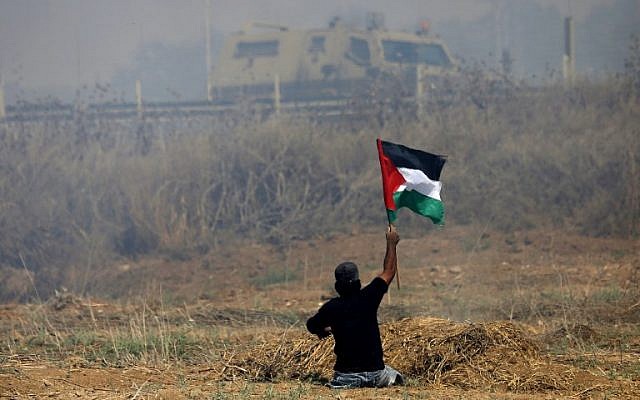
This photo taken on May 19, 2017, shows handicapped Palestinian demonstrator Ibrahim Abu Thurayeh waving a Palestinian flag during clashes with Israeli soldiers following a protest against the blockade on Gaza, near the border fence east of Gaza City. (MOHAMMED ABED / AFP)

The army on Thursday morning announced that the Military Police was launching a criminal investigation into the death of a disabled Palestinian man during a riot along the Gaza security fence on December 15, after an earlier IDF probe failed to determine how he had died.

Since Ibrahim Abu Thurayeh’s death, Palestinian officials have been insisting that the man, a wheelchair-bound double amputee, was killed by Israeli sniper fire during a protest against US President Donald Trump’s recognition of Jerusalem as Israel’s capital.

The death of Abu Thurayeh sparked angry denunciations by Palestinians and others, who said he could not have presented a serious threat during the protest. His image emerged as an international symbol of resistance to Trump’s December 6 Jerusalem declaration, which the Palestinians see as siding with Israel.

The Israel Defense Forces’ Southern Command launched an investigation into the allegation that Abu Thurayeh was killed by Israeli sniper fire, and found that no live round had been explicitly aimed at him, but failed to determine the exact cause of death.

“No live fire was aimed at Abu Thurayeh. It is impossible to determine whether Abu Thurayeh was injured as a result of riot dispersal means or what caused his death,” the army said at the end of the investigation on December 18.
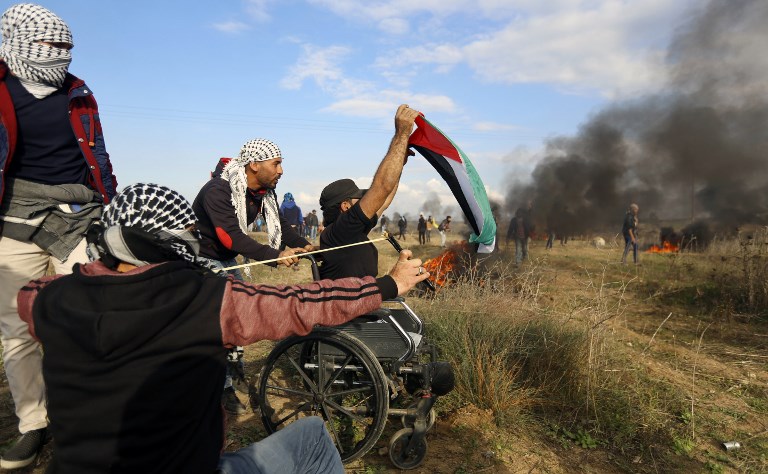
Wheelchair-bound Palestinian demonstrator Ibrahim Abu Thurayeh waving a Palestinian flag during a protest along the Gaza-Israel border on December 15, 2017, as clashes with Israeli security forces against Washington’s recognition of Jerusalem as Israel’s capital intensified. (MOHAMMED ABED / AFP)

The military said it was hindered in its investigation by the fact that Palestinian authorities did not share the details of Abu Thurayeh’s injuries from the demonstration.

“Despite numerous IDF requests for information, no precise details or conclusions regarding Abu Toriya’s (sic) injuries were received. If additional details will be received, they will be examined and studied,” an army spokesperson said at the time.

Despite failing to identify Abu Thurayeh’s cause of death, the army asserted that its investigation had uncovered “no moral or professional failures.”

On Thursday morning, the IDF said it was handing the case to the Military Police for renewed scrutiny after obtaining previously unavailable information about the incident from groups inside Gaza.

“In order to further examine the case, including information received from organizations operating in the Gaza Strip, it was decided that the circumstances of Abu Thuraye’s death will also be examined by a Military Police investigation,” the army said.

On December 28, the Associated Press reported it had received Palestinian medical records showing that Abu Thurayeh was killed by a bullet that struck him in the head.

The medical records, which include a hospital report and a death certificate, said that Abu Thurayeh, 29, was struck by a bullet above his left eye and died from bleeding in the brain. The same findings were detailed in a report by the Palestinian Red Crescent ambulance service reviewed by the AP.
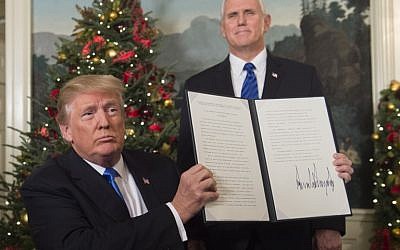
US President Donald Trump holds up a signed memorandum after he delivered a statement on Jerusalem from the Diplomatic Reception Room of the White House in Washington, DC on December 6, 2017 as US Vice President Mike Pence looks on. (Saul Loeb/AFP)

The reports did not specify who fired the bullet or what caliber it was.

The AP showed the report from Gaza’s Shifa hospital and the death certificate to the army. In a statement, the military noted the report had come from the media and said it “will be studied and examined during the following days.”

The military has maintained that the demonstration on December 15 “was extremely violent and included thousands of rioters,” who threw rocks and rolled burning tires at the security fence itself and the soldiers on the other side of it.

The army said that troops mostly used crowd dispersal weapons — tear gas and rubber bullets — against the protesters, but that in some cases live fire was used. Though such riot dispersal munitions are less lethal than standard rounds, there have been numerous cases of people being killed by rubber bullets and tear gas canisters, as well as from complications connected to inhaling tear gas.

“Few controlled shootings were carried out toward main instigators. Troops received approval prior to shooting each round by a senior commander in the field,” the army said at the time.

While the clash turned violent, with protesters hurling stones, firebombs and burning tires at the border fence, witnesses have said there was no gunfire from the Palestinian side.

The protest came amid a wave of violence that erupted in the Palestinian territories after Trump’s Jerusalem declaration, and in which 12 people died, almost all of them in Gaza. Hamas, the terror group that controls the coastal enclave, urged Palestinians to confront soldiers and settlers, and allowed thousands of Gazans to clash with Israeli troops at the border fence. Its leader, Ismail Haniyeh, praised the “blessed intifada,” urged the liberation of Jerusalem, and made plain the group was seeking to intensify the violence against Israel.
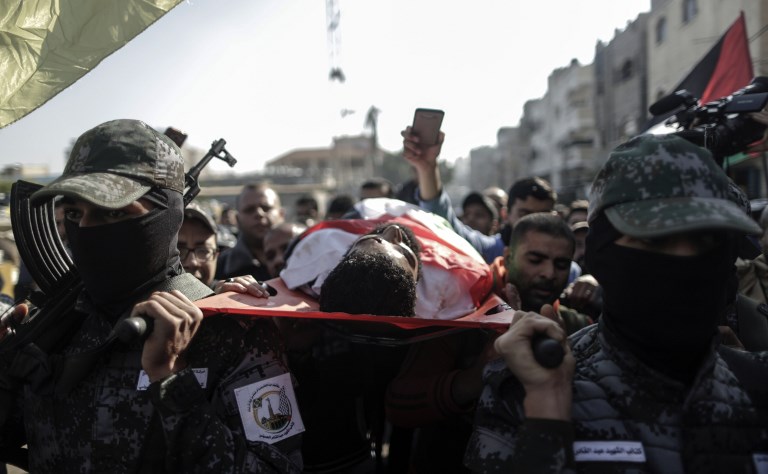
Palestinians carry the body of 29-year-old Ibrahim Abu Thurayeh during his funeral in Gaza City, on December 16, 2017, after he was killed during clashes between Israeli soldiers and Palestinian protesters along the Gaza security fence the day before. (Mahmud Hams/AFP)

Abu Thurayeh’s story drew international news coverage, and thousands attended his funeral in Gaza. Addressing the funeral, Hamas chief Ismail Haniyeh praised him as a hero and a martyr, and vowed never to relinquish Jerusalem. “And I don’t mean East Jerusalem, but unified Jerusalem,” Haniyeh said, in footage screened by Israel’s Channel 10. “Not East Jerusalem and not West Jerusalem. Muslim. Muslim.”

Last month, UN High Commissioner for Human Rights Zeid Ra’ad Al Hussein decried Abu Thurayeh’s death as “incomprehensible — a truly shocking and wanton act.” Despite the Israeli army’s own internal probe into the events at the time, Zeid urged “an independent and impartial investigation” to ensure perpetrators were held accountable.

Abu Thurayeh was a regular presence at protests at the border.

While relatives have claimed he lost his legs in an Israeli airstrike while trying to rescue people, AP records showed that he was wounded on April 11, 2008, in a clash between Israeli forces and Palestinian operatives in the Bureij refugee camp in central Gaza. AP television footage from that day shows Abu Thurayeh identifying himself as he is taken away on the back of a pickup truck.

Both gunmen and civilians were wounded and killed that day, and it is not clear whether Abu Thurayeh had participated in the violence. Since losing his legs, he often rolled around Gaza City, earning a living by washing cars. He also was a frequent participant in protests along the border.
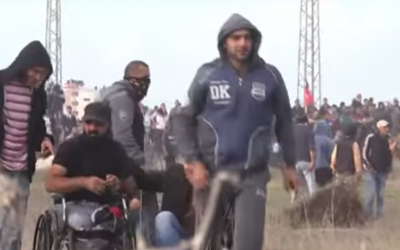
Ibrahim Abu Thurayeh at the Gaza border on December 15, 2017. (YouTube screenshot)

According to the IDF, some 3,500 Palestinians protested along the Gaza security fence on December 15 over Trump’s controversial decision to recognize Jerusalem as Israel’s capital and ultimately move the American embassy to the holy city.

Palestinians consider East Jerusalem, captured by Israel from Jordan — which had been occupying it since 1948 — in the 1967 Six Day War, as the capital of their future state. Trump said his declaration did not prejudge a final status agreement as part of a future peace deal, but Palestinians were infuriated by the decision.

The Guardian quoted eyewitnesses who said Abu Thurayeh’s wheelchair had been pushed up to the fence, whereupon he climbed out of it and tried to crawl forward toward it, before being hit.

In video footage recorded at the protest, Abu Thurayeh could be seen carrying the Palestinian flag and waving the victory sign at Israeli soldiers across the border.

“I want to go there,” he said, referring to the other side of the border, as a number of young men surrounding him waved Palestinian flags and others threw stones toward the troops.

“This land is our land,” he said, in another video posted on social media. “We will not give up. America has to withdraw its decision.”


twoje uwagi, linki, wlasne artykuly, lub wiadomosci przeslij do: webmaster@reunion68.com



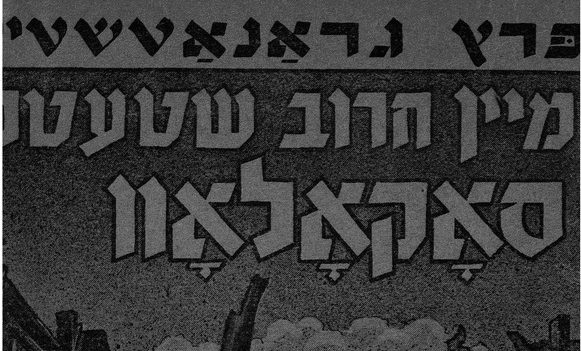
SOKOŁÓW – MOJE ZNISZCZONE MIASTECZKO

SOKOŁÓW – MOJE ZNISZCZONE MIASTECZKO

PEREC GRANATSZTEJN


Perec Granatsztejn Opisy i obrazy miasta, portrety jego wymordowanych żydowskich mieszkańców [Przypisy w nawiasach kwadratowych pochodzą od tłumaczki i redaktora tekstu] [str.5]

Do czytelników Czwarta książka z serii „Dos pojlisze jidntum” [Żydostwo polskie] poświęcona jest małemu żydowsko-polskiemu miasteczku, Sokołów Podlaski. Miasteczko to, do Zagłady oddychało żydowską ludowością, wrzało od społecznej i partyjnej działalności. Mieszkały tam przeróżne barwne postacie, toczyły się polityczne walki i kulturowe spory, oddające całe spektrum żydowskiej ulicy. Książka ta jest pomnikiem wystawionym żydowskiemu życiu, które zniszczone zostało przez wojenną zawieruchę. Pomnikiem wystawionym miasteczku, które naziści zmietli z powierzchni ziemi, tak samo, jak unicestwili setki i tysiące…


BIOGRAFIA


Perec Granatsztejn

Opisy i obrazy miasta, portrety jego wymordowanych żydowskich mieszkańców

[Przypisy w nawiasach kwadratowych pochodzą od tłumaczki i redaktora tekstu]

[str.5]

Do czytelników

Czwarta książka z serii „Dos pojlisze jidntum” [Żydostwo polskie] poświęcona jest małemu żydowsko-polskiemu miasteczku, Sokołów Podlaski. Miasteczko to, do Zagłady oddychało żydowską ludowością, wrzało od społecznej i partyjnej działalności. Mieszkały tam przeróżne barwne postacie, toczyły się polityczne walki i kulturowe spory, oddające całe spektrum żydowskiej ulicy.

Książka ta jest pomnikiem wystawionym żydowskiemu życiu, które zniszczone zostało przez wojenną zawieruchę. Pomnikiem wystawionym miasteczku, które naziści zmietli z powierzchni ziemi, tak samo, jak unicestwili setki i tysiące podobnych żydowskich miasteczek w całej Polsce.

Autor niniejszego tomu, Perec Granatsztejn, jest młodym pisarzem, angażującym się jeszcze w starej ojczyźnie w działalność polityczną. Z wielkim oddaniem i czułością uwiecznił najciekawsze postacie i wydarzenia ze swoich rodzinnych stron.

Perec Granatsztejn, który mieszka obecnie w Argentynie, i który musiał opuścić swój stary dom i swoich bliskich, którzy zginęli w Polsce śmiercią męczeńską, ożywia dla nas tę małomiasteczkową, ale jakże twórczą żydowską społeczność. Dzięki temu nie popadnie ona w zapomnienie.

W Sokołowie Podlaskim, miasteczku, w którym mieszkał Granatsztejn, tak samo jak

[str. 6]

w wielu podobnych mieścinach, żyły pokolenia Żydów, których imiona być może nic nam nie mówią, ale to oni tworzyli ten szczególny, lokalny miejski koloryt.

W środowisku tym były jednak także jednostki, które porzuciły małomiasteczkowe życie, wędrowały po świecie i zostawały często budowniczymi i twórcami nowej kultury żydowskiej. Udało im się prowadzić swoją działalność na dużo większą skalę niż mogłyby to robić pozostając w swoich rodzinnych miastach.

Z galerii postaci, które Granatsztejn tak wyraźnie i dokładnie opisuje w swojej książce, rozpościera się przed naszymi oczami wielostronny obraz żydowskiego życia w małej miejscowości. Sądzimy, że portret tego miasteczka, którego dziś już nie ma, w którym jednak nie tak dawno pulsowało barwne żydowskie życie, poznanie żyjących tam postaci i wydarzeń, jest ważnym przyczynkiem do opisania historii Żydów w Polsce.

Poza tym książka Pereca Granatsztejna, która przygotowana do druku została przez towarzysza I. Falatyckiego, jest pierwszą z serii książek [*Kolekcja Dos pojlisze jidntum to 175 książek publikowanych w latach 1946-1966 przez Komitet Polskich Żydów w Argentynie. Książka Granatsztejna była czwartą z serii, ale pierwszą w tejże, która dotyczyła konkretnego miasta] o unicestwionych żydowskich społecznościach, którą Komitet Centralny Polskich Żydów w Argentynie ma zamiar wydawać pod zbiorczym tytułem „Dos pojlisze jidntum” [Żydostwo polskie].

Redakcja
Buenos Aires, czerwiec 1946

[str. 7]

Książkę poświęcam pamięci moich rodziców Isroela i Kejli, mojej żony Motl Ber i mojej siostry Cipe, którzy zginęli w Polsce. 
Autor

**

Sokołów oddalony jest 100 kilometrów od Warszawy. Leży w pobliżu Siedlec i przeklętej Treblinki… W Sokołowie nie było starej gminy żydowskiej. Społeczność żydowska, tak tragicznie wymordowana, podobnie jak samo miasto, były stosunkowo młode. Trudno było znaleźć tam dom, pomnik czy synagogę z historią dłuższą niż 100 lat [*Najstarsza synagoga w Sokołowie została zbudowana w XIX wieku, jednak jej drewniana konstrukcja spłonęła w czasie pożaru miasta. Stąd prawdopodobnie wiedza autora o jedynie „nowych” budynkach w mieście. Żydzi w Sokołowie pojawili się w XVII lub XVIII wieku]. Także stare, dotknięte zębem czasu macewy na cmentarzu nie miały więcej niż dwieście lat.

Miasto należało kiedyś do polskiego szlachcica Hirszmana [*Rodzina Hirschmanów to ostatni właściciele miasta. Doprowadzili do budowy cukrowni na jego obrzeżach]. Jego potomkowie żyli z wynajmu nieruchomości, aż do ostatniej wojny. Całe centrum miasta z okolicznymi sklepami należało do nich.

W ciągu ostatnich 70 lat Sokołów powiększył się, co miało związek z uruchomieniem cukrowni. Także doprowadzenie linii kolejowej spowodowało znaczy rozwój miasta.

Niniejsza książka nie pretenduje do miana historii siedmiotysięcznej społeczności żydowskiej Sokołowa, którą wróg zgładził razem z całym polskim żydostwem. Moim zamiarem było uwiecznienie dla przyszłych pokoleń – pokazując jedynie odłamki i skrawki – żydowskiego biednego i radosnego, bolesnego i wzniosłego życia w małym miasteczku. Pokażę życie całych pokoleń sokołowskich Żydów, ze wszystkimi jego barwami i cieniami: szabasy, święta, smutki

[str. 8]

i radości, polityczne rozgrywki religijnych fanatyków i dobrze urodzonych młodzieńców, śpiewy robotników i służących. Także przejawy duchowych, twórczych sił, które głęboko drzemały w masach żydowskich i tak wspaniale rozkwitły w ciągu ostatnich pięćdziesięciu lat, to znaczy w okresie renesansu jidyszowej i hebrajskiej literatury oraz kultury. Narodziny politycznych idei i ruchów, pośród których czołowe miejsce zajmowali chasydzi, syjoniści i socjaliści.

Książka nawet w niewielkim stopniu nie jest w stanie opisać wszystkich duchowych wartości, które oddziaływały na sztetl. Można było jeszcze napisać o bibliotekach, kółkach teatralnych, jesziwach i wielu innych ważnych instytucjach, które Żydzi stworzyli w Sokołowie. Było tam także wiele specyficznych i osobliwych postaci i działaczy społecznych, a każdy jedyny w swoim rodzaju – „ktokolwiek opowiada historię naszych zmarłych braci, jest godzien pochwały ” [Parafraza zdania: וכל המרבה לספר ביציאת מצרים הרי זה משובח „Ktokolwiek opowiada historię o wyjściu z Egiptu jest godzien pochwały“ pochodzącego z Hagady pesachowej].

Sokołów zniszczono. Nie ma tam już ani jednego Żyda. Zniszczono cmentarz i zaorano ziemię. Tam, gdzie leżały szczątki pokoleń Żydów z Sokołowa, pasą się teraz krowy [*Stary cmentarz żydowski znajduje się przy ul. Bulwar 1, gdzie obecnie jest park im. PCK. Nowy cmentarz żydowski znajduje się przy ul. Bartoszowej. Jest nieogrodzony i nieoznakowany]. Po naszej przeszłości nie pozostał ani jeden znak.

Ta książka jest więc macewą wystawioną naszej świetlistej, tak bliskiej przeszłości…

Oby wszyscy moi krajanie od czasu do czasu „poszli” na groby swoich przodków… Przeczytali tę książkę i ze smutkiem powspominali…

P.G.

[str. 9]

Królowie biedoty

Nie przystępuj tutaj, zzuj obuwie twoje z nóg twoich,
gdyż miejsce, na którem stoisz, ziemią jest świętą.
(Exodus 3:5, tłum. Izaak Cylkow)

czytaj dalej tu: SOKOŁÓW – MOJE ZNISZCZONE MIASTECZKO


twoje uwagi, linki, wlasne artykuly, lub wiadomosci przeslij do: webmaster@reunion68.com


Archive of pre-state Jewish population offers glimpse of founding generation

Archive of pre-state Jewish population offers glimpse of founding generation

TOI STAFF


Collaboration between MyHeritage and Israel’s State Archives puts 67,000 British Mandatory citizenship requests online

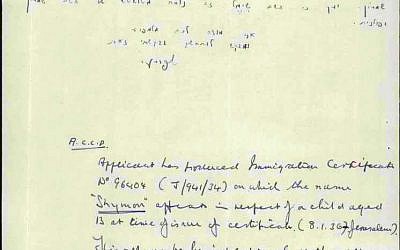
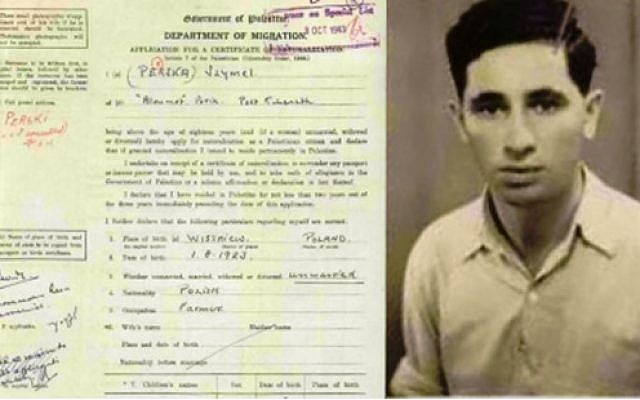
A scan of the citizenship request of 20-year-old Szymel Perski, later the Israeli statesman Shimon Peres, in the British Mandate of Palestine, stamped October 1943. (Israel State Archives)

A new archive made public and searchable online by the Israeli State Archives and MyHeritage.com brings to light the names of over 206,000 Jews who lived in the country before the founding of the State of Israel.

The archive spans 10 years, from 1937 to 1947, and is made up of about 67,000 requests for citizenship in British Mandatory Palestine. Some of the requests came from famous future Israelis like the late president Shimon Peres.

Each request includes the names of family members, dates and places of birth and a treasure trove of other information, including countless photographs. The requests, which could reach 20 pages apiece, also include the names of two sponsors for each aspiring citizen.

The file of 20-year-old Szymel Perski, later the statesman Shimon Peres, includes declarations in his handwriting that he worked in agriculture, and a request to change his first name to Shimon, with the explanation written in his own hand that “Szymel is a corrupted Polish version of the name Shimon.”

A request by future Israeli statesman Shimon Peres, then Szymel Perski, to have his first name changed to the Hebrew Shimon, “since ‘Szymel’ is a corrupted Polish version of the name ‘Shimon.’” Dated October 7, 1943. (Israel State Archives)

Similarly, among the sponsors for some aspiring citizens are famous future Israelis such as Golda Meir, who would go on to become prime minister, Shlomo Hillel, later a cabinet minister, the actress Hana Rubina and author Yehuda Burla.

The project is a collaboration of the State Archives and the ancestry startup MyHeritage, whose staff has worked for the past year to scan and index the 67,000 requests.

According to the State Archives, the cooperation with MyHeritage has enabled the aging archive, some of whose pages are already unreadable or beyond repair, to undergo digitization to ensure its survival and make it accessible to the public.

“This historic collection from [Israel’s] founding generation offers a peek at one of the most important chapters in the country’s history,” said statement from the archives and MyHeritage.

“Many of the requests for citizenship came from Jews who had managed to flee the Nazis at the very last minute, just before the fate of European Jewry was sealed, as well as survivors who arrived in the country after the Holocaust. Alongside them appear citizenship requests from Jews from Arab countries and around the world who arrived in the land of Israel to fulfill their Zionist dream, as well as Jews who were born in the land of Israel,” it said.

“After a comprehensive effort at digitization and development, we’re happy to add these profoundly significant historic records of the country’s annals to MyHeritage, and to make them accessible to our users,” MyHeritage CEO Gilad Japhet said of the project.

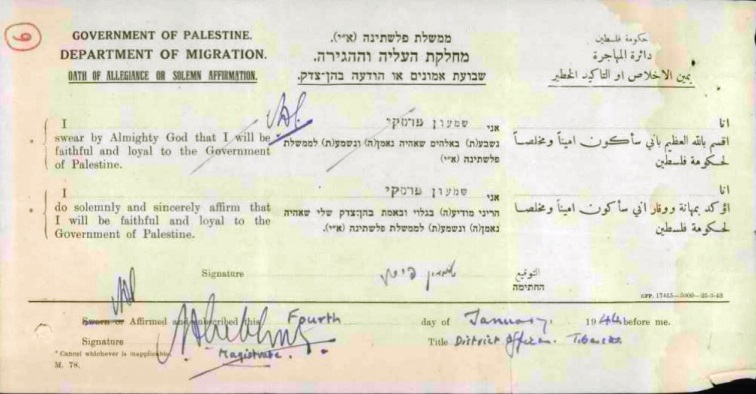
A record of the future Israeli statesman Shimon Peres’s aoth of allegiance to the government of British Mandatory Palestine upon receiving citizenship on January 4, 1944. (Israel State Archives)

The index is available at https://www.myheritage.co.il/israel. Viewing the scans and detailed records in the archive requires a membership in the site, which is a paid service after a 14-day free trial for new customers.

“Many of the residents of the country today, as well as Jews around the world with relatives in Israel, can find in the database documents and photographs of their beloved family members,” Japhet said.

MyHeritage allows users to research and track their family history in 42 languages, and includes over eight billion historical records.


twoje uwagi, linki, wlasne artykuly, lub wiadomosci przeslij do: webmaster@reunion68.com


Czego chcą Palestyńczycy? Widziane z Malezji

Czego chcą Palestyńczycy? Widziane z Malezji

Alwyn Lau
tłumaczenie: Małgorzata Koraszewska


Za co Afrafat dostał pokojową nagrodę Nobla? Za odmowę wyrażenia zgody na zawarcie pokoju.

Nieżyjący już dyplomata izraelski, Abba Eban, powiedział kiedyś o Zgromadzeniu Ogólnym Narodów Zjednoczonych: “Gdyby Algieria przedstawiła rezolucję oznajmiającą, że ziemia jest płaska i że spłaszczył ją Izrael, rezolucja zostałaby przyjęta głosami 164 do 13 z 26 wstrzymującymi się od głosu”.

Eban z bolesną jasnością widział wzór głosowania ONZ w sprawie każdej decyzji, która przedstawia Izrael w złym świetle.

Decyzja Narodów Zjednoczonych z zeszłego tygodnia o odrzuceniu decyzji prezydenta Donalda Trumpa w sprawie Jerozolimy była do przewidzenia (mimo gróźb Trumpa o obcięciu pomocy międzynarodowej krajom, które się sprzeciwią, patrz przypis 1).

Zachwyciła mnie ironia rezolucji, która deklarowała, że Jerozolima, Święte Miasto, “jest problemem końcowym, który ma być rozwiązany przez negocjacje zgodnie z rezolucjami ONZ”.

Nie potrzeba jednak uczonego historyka, by potwierdzić fakt, że Palestyńczycy stanowczo odmawiają prowadzenia negocjacji z Izraelem o rozwiązaniach w oparciu o zasadę ziemia za pokój.

Palestyńczykom oferowano liczne umowy (a także państwowość) od czasu rozpoczęcia konfliktu ponad osiemdziesiąt lat temu, ale odrzucili je wszystkie:

  1. 1937 Komisja Peela, rozwiązanie w postaci 2 państw – Palestyńczycy mówią NIE
  2. 1947 ONZ, Plan Podziału – Palestyńczycy mówią NIE, zaczynają wojnę
  3. 1967 Wojna 6-dniowa – Izrael zwyciężył, ale był gotowy wymienić ziemię za pokój; Palestyńczycy powiedzieli NIE
  4. 2000 Camp David — Izraelski premier Ehud Barak dał Jaserowi Arafatowi ofertę, która zaszokowała nawet Izraelczyków, ale Arafat odmaszerował bez żadnej kontr-oferty.
  5. 2008 — Prezydent Autonomii Palestyńskiej Mahmoud Abbas odrzuca kolejną ofertę izraelskiego premiera, Ehuda Olmerta

Wróćmy jednak do Jerozolimy.

Izraelskie zdobycie wschodniej części Jerozolimy zdarzyło się w 1967 r. w wojnie obronnej przeciwko kilku krajom arabskim zdecydowanym na wymazanie Izraela z mapy.

Według doniesień, Mosze Dayan, izraelski generał w znacznej mierze odpowiedzialny za zwycięstwo w wojnie 6-dniowej, czekał na telefon of króla Husseina z Jordanii (patrz przypis 2), żeby omówić wymianę ziemi za pokój – ale telefon nigdy nie zadzwonił.

19 czerwca 1967 (dziewięć dni po zakończeniu wojny) Izrael oferował Egiptowi i Syrii zarówno Półwysep Synajski, jak Wzgórza Golan w zamian za pokój – ale te dwa kraje arabskie odrzuciły tę propozycję.

Powtórzmy: kraje arabskie starały się zniszczyć Izrael, Izrael zwyciężył, Izrael zaoferował pokój, Arabowie powiedzieli NIE. Niech to do was dotrze.

Innym mało znanym faktem jest to, że bezpośrednio po izraelskim triumfie, Izrael zgodził się zastosować do rezolucji Rady Bezpieczeństwa ONZ 242, która była pierwszą rezolucją w historii, żądającą, by naród zwrócił terytoria zajęte w wojnie obronnej.

Kluczowe jest to, że rezolucja 242 nie żądała od Izraela oddania wszystkich terytoriów zajętych w czasie wojny, ponieważ przyznawała, że pewne z tych terytoriów są niezbędne dla zagwarantowania bezpieczeństwa granic Izraela.

Ponadto, rezolucja z 1967 r. deklarowała, że Izrael musi mieć “prawo do życia w pokoju, bezpieczeństwie i uznanych granicach, wolny od gróźb lub aktów przemocy”.

Ale jak Arabowie odpowiedzieli na Rezolucję 242?

Na konferencji w Chartumie we wrześniu 1967 r. kraje arabskie przyjęły trzy NIE: “Nie dla pokoju z Izraelem, nie dla negocjacji z Izraelem, nie dla uznania Izraela”.

Palestyńczycy zaś odpowiedzieli zrewidowaniem Karty Palestyńskiej – jej Artykuł 19 oznajmia, że założenie Izraela jest nielegalne.

Powtórzmy to raz jeszcze: Arabowie rozpoczęli wojnę unicestwienia Izraela, Izrael zwyciężył, Izrael zaoferował pokój i zaakceptował rezolucję ONZ 242, ale Arabowie odmówili pokoju i zamiast tego ogłosili, że Izrael jest nielegalny (w bezpośrednim pogwałceniu rezolucji 242).

Dlatego interesujące jest zapytanie ludzi, którzy co dwie minuty potępiają Izrael: Jaką propozycję powinien, twoim zdaniem, Izrael dać Palestyńczykom? Lub: czego Palestyńczycy naprawdę chcą?

Dla waszej informacji: w 2000 r. na szczycie w Camp David w Stanach Zjednoczonych izraelski premier Ehud Barak zaszokował wszystkich, oferując Palestyńczykom, praktycznie rzecz biorąc, niebiosa.

Oferta Baraka obejmowała państwo ze stolicą w Jerozolimie (przypis 3), kontrolę nad Wzgórzem Świątynnym, zwrot niemal 95 procent Zachodniego Brzegu i całej Strefy Gazy i 30 miliardów dolarów jako rekompensatę dla uchodźców z 1948 r. Ale Arafat odmaszerował bez przedstawienia swojej propozycji.

W moich rozmowach z ludźmi, którzy popierają Palestynę, otrzymuję zazwyczaj ogólnikowe odpowiedzi. Wydaje się, że jedynym konkretnym „żądaniem”, który zadowoliłby ich pojęcie sprawiedliwości, byłoby oddanie Palestyńczykom CAŁEJ ziemi Izraela.

Innymi słowy, jedynym rozwiązaniem byłoby dla Izraela, by przestał istnieć jako państwo na ziemi byłego Mandatu Palestyńskiego.

Ta odpowiedź jest podwójnie dziwaczna, nie tylko z pełnego braku realizmu, ale z powodu jej 100 procentowej zgodności z Kartami Hamasu i Palestyńczyków.

Wniosek: Palestyńczycy nie chcą pokoju z Izraelem. Chcą zniknięcia Izraela. Jeśli to rzeczywiście jest jedyny wynik, jaki Palestyńczycy zaakceptują, to czy można dziwić się ich obecnej sytuacji?


Przypisy:

1: Użycie słów odzwierciedla nasze głębokie uprzedzenia. Jeśli Trump grozi obcięciem pieniędzy pomocowych krajom, które głosują przeciwko niemu, nazywamy to „szantażem”; jeśli Hamas nieustannie odpala rakiety na izraelskich obywateli, bo Izrael nie poddaje się ich żądaniom, nazywamy to „oporem”.

2: Wielu ludzi prześlizguje się nad faktem, że Izrael NIE przejął terytorium od “Palestyńczyków” w 1967 r.; przejął terytorium od Egiptu (Strefa Gazy) i Jordanii (Zachodni Brzeg wraz z wschodnią Jerozolimą). Jak to się jednak stało, że to Jordania, a nie „Palestyna” miała Zachodni Brzeg w 1967 r.? Ponieważ część ziemi, która według Planu Podziału ONZ z 1947 r. miała być palestyńska, zagrabiła Jordania podczas wojny 1948 r., w której Egipt, Syria, Jordania, Irak i Liban (z pomocą z Arabii Saudyjskiej, Jemenu i Libii) próbowały ─ wszystkie razem – wymazać Izrael z mapy.

3: W świetle niedawnego oznajmienia Trumpa o Jerozolimie trudno przecenić znaczenie tego punktu w propozycji Baraka: Palestyńczycy mogli mieć wschodnią Jerozolimę jako swoją stolicę już w 2000 r., ale Arafat odmówił. Pomyślcie o tym.


Alwyn Lau

Publicysta malezyjski


twoje uwagi, linki, wlasne artykuly, lub wiadomosci przeslij do: webmaster@reunion68.com


Houston imam calls for Muslims to kill Jews

Houston imam calls for Muslims to kill Jews

JTA


Mosque / (illustration)Thinkstock

JTA – A Houston imam walked back a sermon in which he called for Muslims to kill Jews without specifically apologizing for his comments.

Imam Raed Saleh Al-Rousan of Houston’s Tajweed Institute earlier this month delivered what he called an “impassioned sermon,” according to a statement about the speech issued on Wednesday.

“I unequivocally affirm and uphold the dignity, sanctity and value of all human life, including – of course – people of the Jewish faith,” Al-Rousan said in the statement. “I must also state in no uncertain terms that I am absolutely and completely opposed to and disgusted by all forms of terrorism, all terrorists, and I oppose anyone who would commit, call for, or threaten violence against civilians. This is why as a person of faith and a religious leader, that I am mortified that an impassioned sermon I gave in light of President Trump’s Jerusalem declaration is being seen as a call for the very things I despise.”

Al-Rousan had delivered his inflammatory speech on Dec. 8, two days after President Donald Trump announced the United States’ recognition of Jerusalem as Israel’s capital.

“Judgment Day will not come until the Muslims fight the Jews. The Muslims will kill the Jews,” Al-Rousan said.

The imam also asserted in his speech that Jews “killed the Prophets and the Messengers of Allah.” He accused Britain of bringing Jews to Palestine, adding “So do not tell me that Palestine is the country of the Jewish people. No!”

A video of the imam’s speech was first translated and distributed last week by the Middle East Media Research Institute, or MEMRI.

Al-Rousan’s statement was posted on the website of the Tajweed Institute, which is based in Florida but is opening a branch in Houston.

Al-Rousan said he hoped to speak with Jewish leaders in order “to establish new and meaningful relationships with my neighbors in the Jewish community.”

The local Anti-Defamation League said in a statement that the statement issued by the imam indicates that “he doesn’t fully understand the ramifications of his sermon.”

“We would like to see Imam Al-Rousan unequivocally apologize to the Jewish community for his highly inflammatory sermon and through future actions, demonstrate he is committed to understanding why the sermon was an incitement to violence,” the ADL said.

A statement issued by leaders of Houston’s Muslim community said the imam’s sermon “was deeply problematic and does not represent the views or sentiments of the Houston Muslim community.”


twoje uwagi, linki, wlasne artykuly, lub wiadomosci przeslij do: webmaster@reunion68.com