Archive | May 2022

US Supreme Court Unanimously Sides With Jewish Family Who Owned Pissarro Painting Taken by Nazis

US Supreme Court Unanimously Sides With Jewish Family Who Owned Pissarro Painting Taken by Nazis

Shiryn Ghermezian


Detail of the painting “Rue Saint-Honoré in the Afternoon. Effect of Rain” by Camille Pissarro. Photo: public domain

In an unanimous ruling on Thursday, the US Supreme Court ruled in favor of the heirs of a German Jewish family who hope to reclaim artwork by Impressionist painter Camille Pissarro that was taken by the Nazis during World War II and is now on display at a museum in Spain. 

According to court documents, “Rue Saint-Honoré in the Afternoon. Effect of Rain” was originally sold by Pissarro’s agent in 1900 to Paul Cassirer, whose prominent German Jewish family owned an art gallery and publishing house in Germany. Lilly Cassirer inherited the painting, but surrendered the artwork in 1939 to the Nazis in return for an exit visa to flee Germany and travel to England, where her grandson, Claude Cassirer, had relocated.

The grandmother and grandson eventually moved to the United States and, despite their efforts, were unable to track down the painting that once hung on the wall of Lilly’s apartment in Berlin, as shown in a photograph submitted to the court. Claude — Lilly’s sole heir after she died —  discovered in 1999 that the painting of a Paris streetscape had been purchased by the Thyssen-Bornemisza Collection Foundation, which was created and controlled by the Kingdom of Spain, and put on display at the Thyssen-Bornemisza National Museum in Madrid.

Cassirer sued the Foundation for ownership and a return of the painting through court cases in Spain and California, where he lived, but to no avail. After his death in 2010, his children continued trying to obtain the painting, which is now worth tens of millions. The issue at the high court involved whether California or Spanish law applies to the case.

After hearing arguments on Cassirer vs. Thyssen-Bornemisza Collection Foundation in January, the Supreme Court’s 9-0 ruling on Thursday reverts the case back to a lower court in Los Angeles. The Supreme Court said the case should be decided on based on California law, which will help the Cassirer family’s case. The plaintiffs argued that even a purchaser who unknowingly obtained stolen property “cannot prevail against the rightful pre-theft owner.”

“The path of our decision has been as short as the hunt for Rue Saint-Honoré was long,” wrote Justice Elena Kagan in the decision. “Our ruling is as simple as the conflict over its rightful owner has been vexed. A foreign state or instrumentality … is liable just as a private party would be. That means the standard choice-of-law rule must apply. In a property-law dispute like this one, that standard rule is the forum state’s (here, California’s) — not any deriving from federal common law.”

The Supreme Court justices overturned a ruling last year by the 9th Circuit Court of Appeals, which agreed with a federal judge in Los Angeles that the painting was lawfully obtained under Spanish law and should remain with the Thyssen-Bornemisza Collection in Madrid.


Zawartość publikowanych artykułów i materiałów nie reprezentuje poglądów ani opinii Reunion’68,
ani też webmastera Blogu Reunion’68, chyba ze jest to wyraźnie zaznaczone.
Twoje uwagi, linki, własne artykuły lub wiadomości prześlij na adres:
webmaster@reunion68.com


Newly-discovered 1945 letter reveals how Tel Aviv survived a British siege

Newly-discovered 1945 letter reveals how Tel Aviv survived a British siege

SHAI BEN-ARI / NATIONAL LIBRARY OF ISRAEL
[ NOVEMBER 14, 2018 ]


An anonymous letter, recently discovered in the National Library archives, offers a glimpse into a time of crisis when the residents of Tel Aviv were prisoners in their own homes.

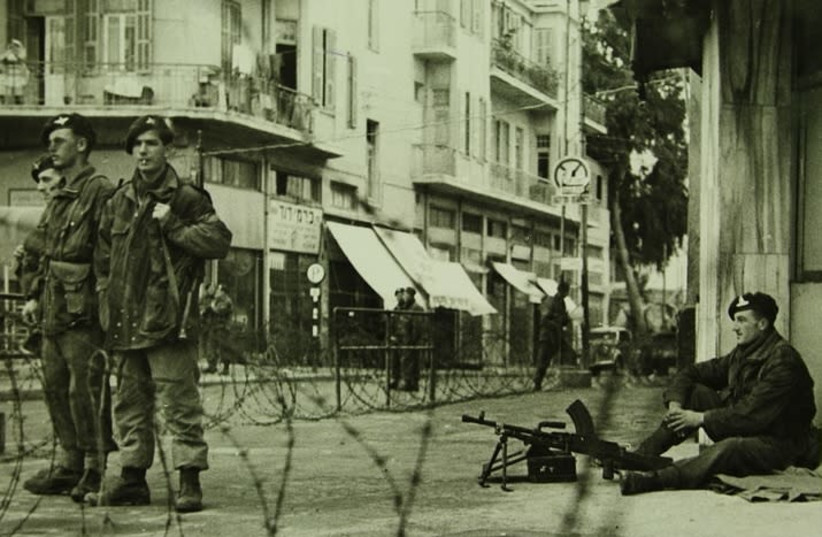
British soldiers enforcing a curfew in Tel Aviv during the 1940s (Haim Fein at the Emanuel Harussi Photograph Collection) / (photo credit: NATIONAL LIBRARY OF ISRAEL)

The streets of Tel Aviv are nearly empty but they are not quiet. The unnatural churn of steel on asphalt shatters the stillness of night, as tanks roll through residential neighborhoods. Every few blocks, British soldiers position themselves on street corners, armed with machine guns. A curfew has been set. Those who venture outdoors are, at best, arrested. The inhabitants of the first Hebrew city find themselves under the distrusting glare of their supposed protectors.

The reason for this state of affairs? – Riots, deadly ones. Two men lay dead, and dozens of others wounded, after the city had erupted in fury. On November 14th, fifty thousand people came to protest the British government’s decision to keep in place the strict limitations on Jewish immigration to Mandatory Palestine. The horrors of the Holocaust, the details of which were now becoming clear, were not enough to change that.

There had been high hopes. World War II was now over and ahead of the July 1945 elections in the UK, British Labour Party politicians promised to remove the restrictions on immigration to Palestine. But those promises seemed to evaporate into thin air once the party came to power. Foreign Secretary Ernest Bevin put an end to any lingering optimism on November 13th: He stated in Parliament that the restrictions would continue, adding that the vast majority of Holocaust survivors should instead contribute to “rebuilding the prosperity of Europe”. To add insult to injury, Bevin even declared that Britain had never committed itself to the establishment of a Jewish State, only to a National Home for the Jewish people. True perhaps, but it was not what the citizens of Tel Aviv wanted to hear.

Bevin’s statement was the breaking point, but British intentions were clear even before. The Jewish underground organizations, Haganah, Irgun and Lehi, formed the United Resistance Movement in October as a response. Its first act was a massive sabotage operation on the night of November 1st: Over a hundred mines and bombs were set off simultaneously, paralyzing the British railway system throughout Mandatory Palestine, in what became known as “The Night of the Trains.”

The decision by the Haganah, affiliated with the moderate Jewish establishment, to join the Irgun and Lehi in open rebellion against the British was a bold one, but even the moderates had now had enough.

“Bevin’s treason completes Hitler’s genocide of the Jewish people, which murdered millions of our brothers!” cried the announcer on Haganah radio ahead of the November 14th protest, as he called on Jews around the world to rise up and take action against British policy.

The huge rally was organized quickly, for the day after Bevin’s statement. Tensions were at a climax and public outcry now reached its peak. The speakers raged against the British, condemning the desertion of Europe’s suffering Jews and the appeasement of Arab leaders who were opposed to further immigration. The organizers called to refrain from provocations, but once the rally had ended, bands of young protesters began to channel their anger into violence.

The riots broke out on Levontin Street and spread quickly to surrounding areas including Allenby Street and Rothschild Boulevard. The youths clashed with soldiers, threw stones at military vehicles and set fire to government buildings. The British soldiers eventually responded with gunfire, killing two youths: Aryeh Basdomsky (21) and Yehoshua Friedman (18). Meyer Levin, a Jewish-American correspondent writing for the New York Post, described what he saw as the “battle of His Majesty’s forces versus the children – yes, literally children – of Israel.” By 10:00 p.m. the city-wide curfew had been announced, and by midnight the streets were empty. Those working the late shift at the newspaper bureaus spent the night in their offices, unable to go home.

This was the setting for the letter.

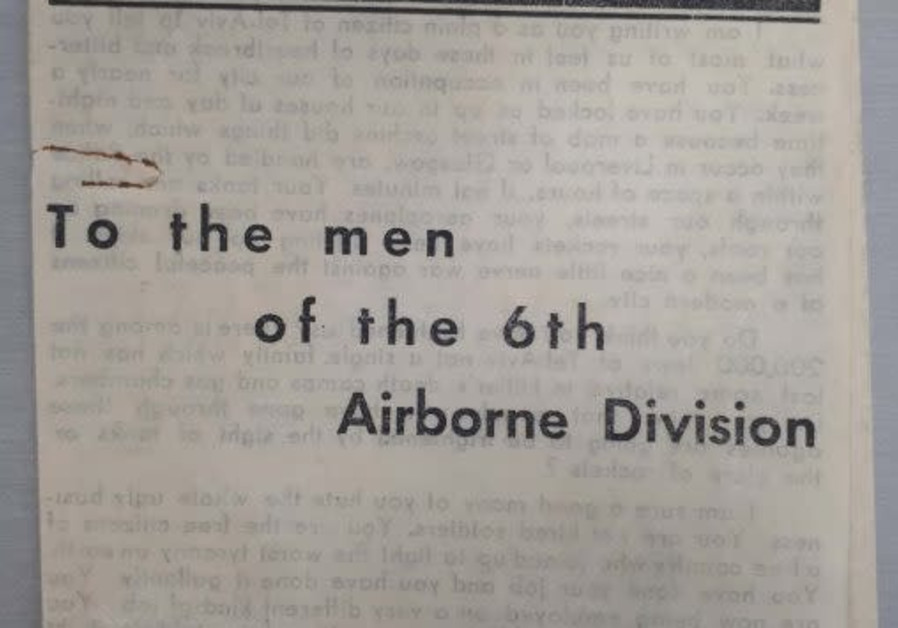
Recently discovered in the archives of the National Library is a mysterious pamphlet, written during the period described above. The identity of the writer is unknown; the letter is signed only “A Citizen of Tel-Aviv.”

The cover of the small pamphlet, discovered in the archives of the National Library, which contains the anonymous letter

It is unclear exactly how it arrived at the library and who donated it. Unusually, it is written in English, and addressed to the British 6th Airborne Division, then stationed in Tel Aviv. The text is a powerful one. It appears below, in full:

To the men of the 6th Airborne Division

I am writing you as a plain citizen of Tel-Aviv to tell you what most of us feel in these days of heartbreak and bitterness. You have been in occupation of our city for nearly a week. You have locked us up in our houses at day and nighttime because a mob of street urchins did things which, when they occur in Liverpool or Glasgow, are handled by the Police within a space of hours, if not minutes. Your tanks are rolling through our streets, your aeroplanes have been droning on our roofs, your rockets have been lighting up our skies. It has been a nice little nerve war against the peaceful citizens of a modern city.

Do you think you have frightened us? There is among the 200,000 Jews of Tel-Aviv not a single family which has not lost some relative in Hitler’s death camps and gas chambers. Do you think that people who have gone through these agonies are going to be frightened by the sight of tanks or the glare of rockets?

I am sure a good many of you hate the whole ugly business. You are not hired soldiers. You are the free citizens of a free country who joined up to fight the worst tyranny on earth. You have done your job and you have done it gallantly. You are now being employed on a very different kind of job. You have been sent to this country, so you have been told, “to fight the Jews”, in other words, to break the resistance of a desperate people against a most horrible betrayal.

It is nearly thirty years since a British Government, with the support of all of the Allied Nations, pledged itself to help the Jews to rebuild their national home in Palestine. To what developments that policy has given rise in this country you can see with your own eyes. It has produced nothing less than a new civilization. A new spirit has revived this ancient land, the evidence of which you see in this town of Tel-Aviv, in the Jewish agricultural settlements, in the new Jerusalem and Haifa, in the Hebrew University and in the innumerable colleges and public institutions, in the new standards of life among both Jews and Arabs. For the first time, after centuries of dispersion and degradation, Jews are again walking erect on the ancient soil of their race. They have only one aim and one desire: to bring over to this country the remnant of the persecuted and tortured Jewries of other lands give them a home among themselves.

The British Government have decided that this shall not be. The Jews, Mr. Bevin says, are to remain in Europe and help “rebuild its civilization”. Never mind that they want to flee as fast as they can from the countries which are covered with the graveyards of their nearest and dearest. Never mind that all Europe is full of their enemies and that six months after the fall of the Nazis Jews are still being killed and persecuted in the countries liberated from the Nazi yoke. Never before have the Jews been so bitterly in need of this National Home and never before have its doors been so effectively bolted in their faces.

No commission of inquiry, such as promised by Mr. Bevin, is needed to establish the fact that the Jewish survivors of the Nazi terror want to shake the dust of blood-stained Europe off their feet and find a refuge and home among their own people in this country. No Commission of Inquiry is needed to prove that Palestine can absorb these survivors better and more speedily than any other country on earth and turn them from wrecks into useful members of society. No man who knows anything about the facts has any doubts that Mr. Bevin’s commission represents nothing but an old bankrupt device to gain time for something to turn up.

We have no illusions of what is in store for us. We know that your aeroplanes and tanks can turn Tel-Aviv, within a few hours, again into the sandy desert which it was before we began to build it thirty years ago. We know that you can turn the whole of Jewish Palestine, our towns and settlements our schools and colleges, into dust. Might is on your side, but yours is no longer a good cause. You are fighting for the Arab Pashas who want to see Palestine reduced again to the condition of desolation and stagnation in which our pioneers found it fifty years ago. You are fighting for the oil magnates who, for the sake of their profits are ready to sacrifice to the Pashas and Effendis all that we have built up in this country with our sweat and tears. What do they care for progress and development? They want you to finish the job that Hitler and Himmler began – to crush the Jews. This prosperous young city which gave refuge to many thousands who would otherwise have died in the Nazi gas chambers – is it to be smashed up by your bombs and tanks? Our agricultural settlements about which so much has been spoken and written and where so many of your comrades found rest and recreation in the darkest hours of the war are they to be turned again into swamps and stony deserts as in the good old days of Arab misrule?

You are armed well enough to carry out that ugly job, though you are likely to meet with the desperate resistance of a people which has no longer anything to lose. But neither your tanks nor your aeroplanes will break our determination to rebuild this country which remains our National Home whatever Mr. Attlee and Mr. Bevin may say. You may smash up all we have built and in the wake of your tanks and batteries the Pasha and the Beduin will re-establish their blighted rule. But that won’t be the end, though it will certainly be the end of British rule and glory in this country. Others will come from the four corners of the earth and will rebuild what you have destroyed. No force on earth can prevent our returning to the land where history has cast our destiny.

Tel-Aviv, November 1945

A Citizen of Tel-Aviv

Three more people were killed in riots which broke out again on November 15th. The curfews continued for six nights in a row. Violent clashes carried on throughout the rest of the month across Palestine. By the end of November, fourteen members of the Jewish Yishuv had been killed. The United Resistance Movement lasted less than a year before being disbanded in August, 1946.


Ariel Viterbo, of the National Library’s ephemera collection, assisted in the preparation of this article.


Zawartość publikowanych artykułów i materiałów nie reprezentuje poglądów ani opinii Reunion’68,
ani też webmastera Blogu Reunion’68, chyba ze jest to wyraźnie zaznaczone.
Twoje uwagi, linki, własne artykuły lub wiadomości prześlij na adres:
webmaster@reunion68.com


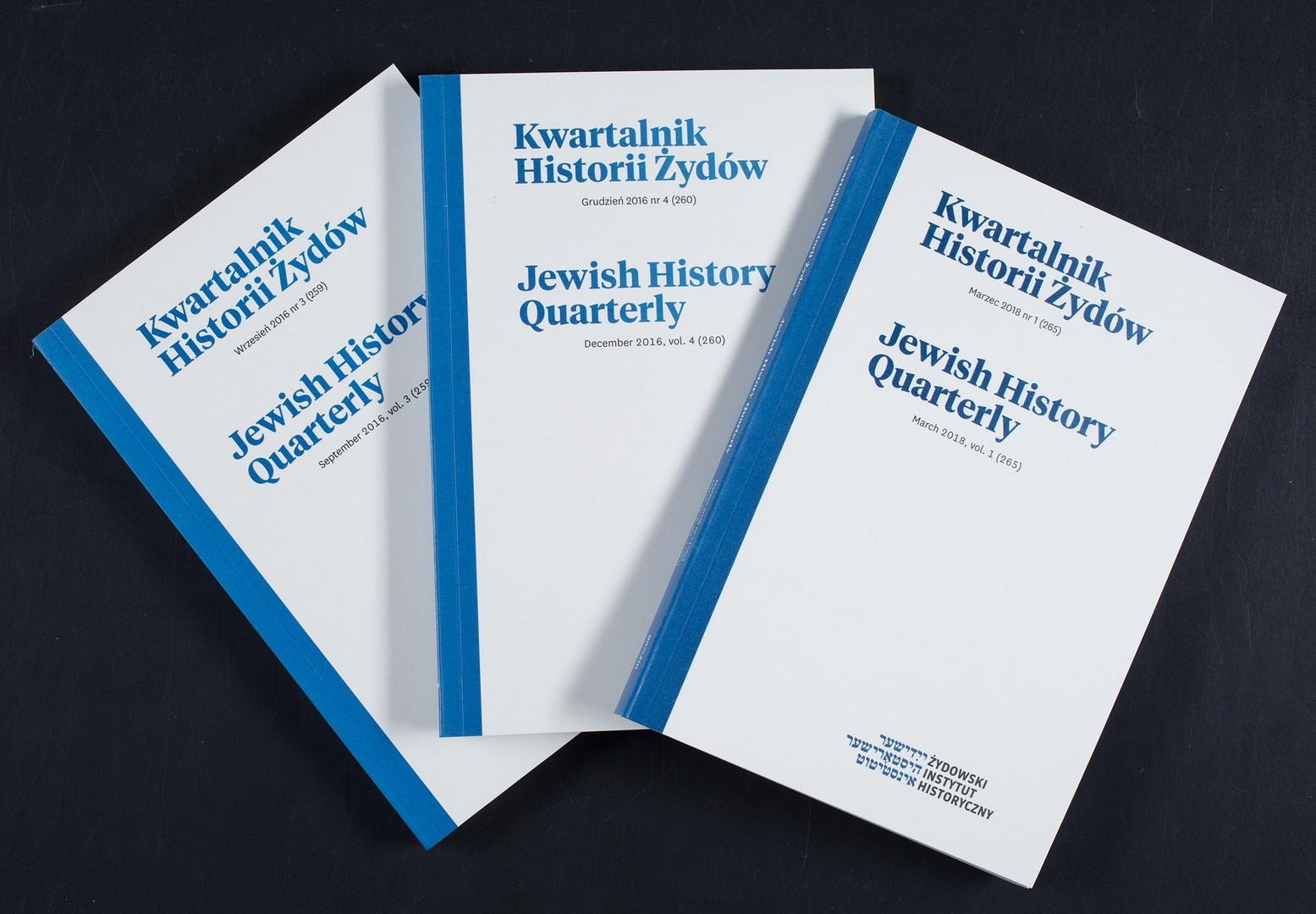
KWARTALNIK HISTORII ŻYDÓW

KWARTALNIK HISTORII ŻYDÓW

Żydowski Instytut Historyczny


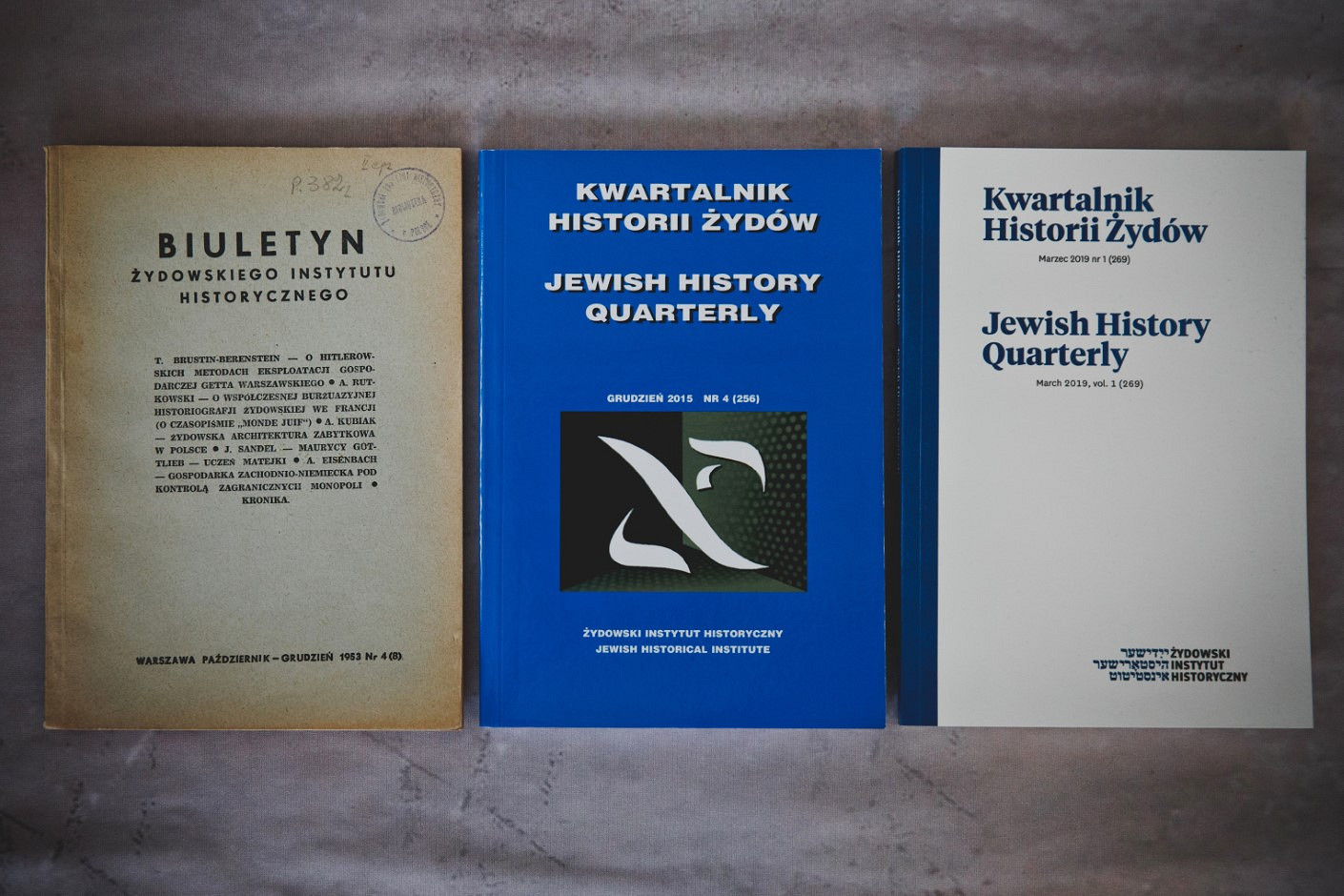
„Kwartalnik Historii Żydów” stanowi kontynuację „Biuletynu Żydowskiego Instytutu Historycznego”. Czasopismo noszące tytuł „Biuletyn Żydowskiego Instytutu Historycznego przy Centralnym Komitecie Żydów Polskich” ukazało się po raz pierwszy w listopadzie 1949 roku. Do 1950 r. „Biuletyn” był publikowany w języku polskim i jidysz, miał charakter biuletynu informacyjnego, przeważały w nim krótkie teksty o działalności Żydowskiego Instytutu Historycznego.

Kwartalnik Historii Żydów” ukazuje się w niewielkim nakładzie, ale cieszy się zainteresowaniem nie tylko w Polsce. Publikuje artykuły autorów polskich i zagranicznych, także w języku angielskim i niemieckim. Elektroniczna wersja „Kwartalnika” dostępna jest w CEEOL (Central and Eastern European Online Library). W 2011 r. „Kwartalnik” został wpisany na listę wyróżniających się czasopism naukowych (Master Journal List), sporządzaną rzez Thompson Institute for Scientific Information w Filadelfii (tzw. lista filadelfijska).

Od 1951 r. „Biuletyn” nie zmieniając tytułu zmienił format i charakter. Był to odtąd pełnowartościowy periodyk naukowy w języku polskim (półrocznik, od 1953 kwartalnik). Zakres tematyczny pisma obejmował dzieje Żydów od starożytności poprzez średniowiecze po lata najnowsze. W praktyce koncentrowano się na historii nowożytnej i najnowszej, a najszerzej były reprezentowane lata II wojny światowej.

Redaktorem naczelnym pisma był przez pierwsze 16 lat dyrektor Żydowskiego Instytutu Historycznego, Bernard Mark. Następnie pismem kierowali kolejno: Artur Eisenbach, Szymon Datner, Marian Fuks, Maurycy Horn (redaktor naczelny przez 17 lat, w latach 1973–1990), Jerzy Tomaszewski, Szymon Rudnicki, Daniel Grinberg, Alina Cała, wreszcie od 1999 r. redaktorem naczelnym „Biuletynu” jest prof. dr hab. Jan Doktór. Od 2001 r. czasopismo ukazuje się jako „Kwartalnik Historii Żydów”.

Przez znaczną część okresu Polski Ludowej tematyka żydowska była niechętnie dopuszczana na łamy czasopism, w niektórych latach była objęta niemal całkowitym zapisem cenzury. „Biuletyn ŻIH” był jedynym czasopismem, w którym przez wszystkie te lata mogły być publikowane artykuły i dokumenty na tematy żydowskie, w tym, co istotne, także materiały dotyczące zagłady Żydów podczas II wojny światowej.

Bibliografia zawartości „Biuletynu ŻIH” za lata 1949-2000 została opublikowana w numerze 3 (199) we wrześniu 2001 roku. Jej kontynuację stanowi bibliografia zawartości „Kwartalnika” za lata 2001–2010, która znajduje się w numerze 3 (239) z września 2011 roku.

„Kwartalnik Historii Żydów” publikuje artykuły dotyczące historii Żydów w Polsce i innych krajach, kultury i literatury żydowskiej. Przyjmujemy do publikacji wyłącznie teksty oryginalne, nie opublikowane wcześniej w innych miejscach. W załączniku znajdą Państwo wytyczne odnośnie nadsyłanych artykułów. Artykuły prosimy przesyłać na adres: mczajka@jhi.pl.


Rada redakcyjna:

Wolfgang Benz (University of Technology – Berlin)
Dan Diner (Hebrew University – Jerusalem / Leibniz Institute – Leipzig)
Jan Doktór (ŻIH)
David Gershon Hundert (McGill University – Montreal)
Monika Krawczyk (ŻIH)
Gertrud Pickhan (Free University – Berlin)
Antony Polonsky (Brandeis University – Waltham, Mass.)
Szymon Rudnicki (Uniwersytet Warszawski)

Kolegium redakcyjne:

Eleonora Bergman, Michał Czajka (sekretarz redakcji), Helena Datner, Jan Doktór (redaktor naczelny), Małgorzata Domagalska, Monika Krawczyk, Artur Markowski, Anna Michałowska-Mycielska, Alina Molisak, Joanna Nalewajko-Kulikov, Szymon Rudnicki

Zobacz archiwalne numery Kwartalnika Historii Żydów w Centralnej Bibliotece Judaistycznej

Zobacz wydanie rocznicowe Kwartalnika Historii Żydów. Wybór artykułów z lat 1950–2017


Zawartość publikowanych artykułów i materiałów nie reprezentuje poglądów ani opinii Reunion’68,
ani też webmastera Blogu Reunion’68, chyba ze jest to wyraźnie zaznaczone.
Twoje uwagi, linki, własne artykuły lub wiadomości prześlij na adres:
webmaster@reunion68.com


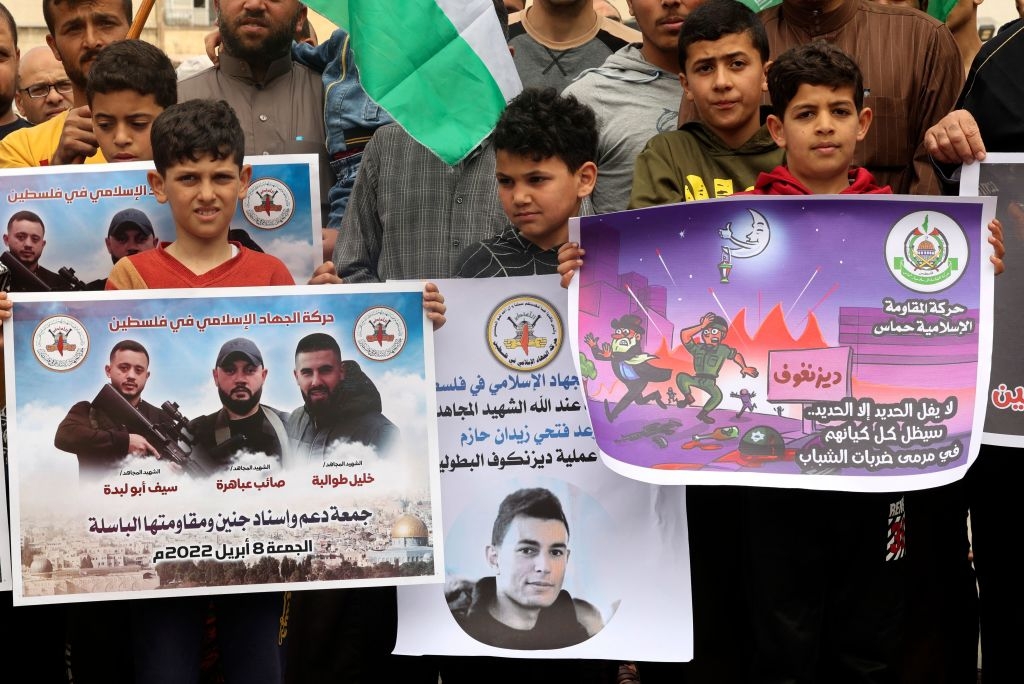
Dlaczego Palestyńczycy świętują mordowanie Żydów

Świętowanie, jakie odbywało się na Zachodnim Brzegu i w Strefie Gazy po niedawnych zamachach terrorystycznych w Izraelu, jest kolejnym sygnałem radykalizacji Palestyńczyków i ich odmowy uznania prawa Izraela do istnienia. Na zdjęciu: Gazańczycy okazują poparcie dla terrorysty, który zamordował troje ludzi w Tel Awiwie w tym tygodniu, jak również dla trzech terrorystów z islamskiego Dżihadu, którzy zginęli po tym, jak otwarli ogień na izraelskich żołnierzy. (Zdjęcie: Said Khatib/AFP via Getty Images)


Dlaczego Palestyńczycy świętują mordowanie Żydów

Khaled Abu Toameh
Tłumaczenie: Małgorzata Koraszewska


Świętowanie, jakie odbywało się na Zachodnim Brzegu [tj. w Judei i Samarii. MK] i w Strefie Gazy po niedawnych zamachach terrorystycznych w Izraelu, jest kolejnym sygnałem radykalizacji Palestyńczyków i ich odmowy uznania prawa Izraela do istnienia.

Wyrazy radości, kiedy Palestyńczycy wyszli na ulice, by rozdawać słodycze i skandować hasła poparcia dla terrorystów, przypominają świętowanie, jakie miało miejsce, kiedy iracki dyktator Saddam Husajn wystrzelił pociski na Izrael podczas pierwszej wojny w Zatoce w 1991 roku, lub kiedy Hamas, Fatah, Palestyński Islamski Dżihad i inne grupy terrorystyczne dokonywały samobójczych zamachów bombowych, mordując setki Izraelczyków podczas drugiej intifady, która wybuchła w 2000 roku.

Poza zademonstrowaniem braku szacunku dla ludzkiego życia i poparcia dla terrorystów to świętowanie raz jeszcze dowodzi, że Palestyńczyk, który morduje Żyda, jest bohaterem, podczas gdy ten, który dąży do pokoju z Izraelem, jest zdrajcą.

Według sondażu opinii publicznej opublikowanego 22 marca, poparcie Palestyńczyków dla “walki zbrojnej” przeciwko Izraelowi wzrosło z 42% trzy miesiące temu do 44%.

W leksykonie Palestyńczyków “walka zbrojna” jest eufemizmem dla rozmaitych rodzajów terroryzmu wobec Izraela, od rzucania kamieniami do strzelania z broni palnej, zamachów nożowniczych, taranowania samochodami, salw rakietowych i bombowych zamachów samobójczych.

Sondaż prowadzony przez Palestyński Ośrodek Badań Polityki i Sondaży, pokazał, że większość aż 70% sprzeciwia się procesowi pokojowemu z Izraelem.

Gdyby nowe wybory prezydenckie odbywały się dzisiaj w Autonomii Palestyńskiej (AP), Ismail Hanija, przywódca Hamasu, wspieranej przez Iran grupy terrorystycznej, która dąży do zniszczenia Izraela, pokonałby prezydenta AP Mahmouda Abbasa, pokazuje sondaż. Ponadto większość Palestyńczyków powiedziała, że będą głosować na Hamas w wyborach parlamentarnych.

73% Palestyńczyków chce, by 86-letni Abbas odszedł ze stanowiska. Poprzednie sondaże wskazywały, że niemal 80% społeczeństwa chce odejścia Abbasa.

Podczas gdy większość Palestyńczyków mówi, że chcą odejścia prezydenta ze sceny, administracja USA wydaje się należeć do tych nielicznych na arenie międzynarodowej, którzy nadal układają się z Abbasem i w nim pokładają nadzieję na tak zwane rozwiązanie w postaci dwóch państw i pokój z Izraelem.

Po ostatnim spotkaniu z Abbasem w Ramallah 27 marca sekretarz stanu USA Antony Blinken raz jeszcze powtórzył zobowiązanie administracji Bidena do “podstawowej zasady” rozwiązania w postaci dwóch państw:

“Palestyńczycy i Izraelczycy tak samo zasługują na życie z równą wolnością, możliwościami, bezpieczeństwem i godnością, i wierzymy, że najskuteczniejszy sposób zrealizowania tej podstawowej zasady jest przez dwa państwa”.

A oto niewygodna prawda dla Blinkena: sondaż przeprowadzony na jeden tydzień przed jego przybyciem do Ramallah, de facto stolicy Palestyńczyków, pokazał, że większość Palestyńczyków (58%) sprzeciwia się rozwiązaniu w postaci dwóch państw. Dlaczego? Nie wierzą w prawo Izraela do istnienia.

Ci Palestyńczycy chcą pokoju bez Izraela, nie pokoju z Izraelem. Jedyny pokój, jaki sobie wyobrażają, to ten, w którym Izrael przestaje istnieć.

Dlatego też – jak pokazuje ten i wcześniejsze sondaże – większość Palestyńczyków popiera Hamas, którego Karta otwarcie wzywa do likwidacji Izraela.

Dla nich jest religijnym obowiązkiem działanie na rzecz “wyzwolenia całej Palestyny, od rzeki Jordan do Morza Śródziemnego”. Artykuł 11 Karty Hamasu stanowi:

“Islamski Ruch Oporu [Hamas] wierzy, że ziemia Palestyny jest islamskim Wakf, poświęconym przyszłym pokoleniom muzułmanów aż do Dnia Sądu Ostatecznego. Ona, ani żadna jej część nie może być zaprzepaszczona; z niej ani żadnej jej części nie można zrezygnować”.

Artykuł 15 mówi:

“Dzień, w którym wrogowie uzurpują sobie muzułmańską ziemię, dżihad [święta wojna] staje się indywidualnym obowiązkiem każdego muzułmanina. W obliczu żydowskiej uzurpacji Palestyny, podniesienie sztandaru dżihadu jest obowiązkowe”.

Karta Hamasu przypomina także muzułmanom o słynnym powiedzeniu proroka Mahometa:

“Dzień Sądu Ostatecznego nie nadejdzie, aż muzułmanie będą walczyć z Żydami, a Żydzi będą chować się za kamienie i drzewa. Kamienie i drzewa zawołają: O muzułmaninie, o sługo Allaha, za mną jest Żyd, przyjdź i zabij go”.

Ponadto w sondażu stwierdzono, że olbrzymia większość Palestyńczyków (73%) wierzy, że Koran zawiera proroctwo dotyczące końca Izraela. Jednak większość (57%) nie wierzy koncepcji oznajmionej przez kilku muzułmańskich uczonych, że wersety Koranu przepowiadają dokładną datę końca Izraela: 2022 rok.

Tak więc olbrzymia większość Palestyńczyków jest przekonana, że Koran istotnie zawiera słowa o końcu Izraela, tylko nie są pewni, kiedy to się zdarzy. To przekonanie jest jasnym wyrazem pobożnych życzeń Palestyńczyków, szczególnie tych, którzy wiwatują, tańczą i rozdają słodycze, by świętować zamachy terrorystyczne w izraelskich miastach Beer Szewa, Bnei Brak i Tel Awiw w ostatnich kilku tygodniach.

Chwaląc obecną falę zamachów terrorystycznych w Izraelu, przywódca Hamasu Mahmoud Zahar powiedział 9 kwietnia: “Te powtarzające się heroiczne operacje dowodzą wyraźnego faktu – że nie ma przyszłości dla Żydów na naszej palestyńskiej ziemi”.

Jak pokazuje sondaż, to przywódców takich jak Zahar wolą Palestyńczycy jako swojego prezydenta. Palestyński przywódca, który mówi o zniszczeniu Izraela i mordowaniu Żydów, ma większe szanse na wybór, niż taki, który mówi, że jest przeciwny terroryzmowi i chce pracować na rzecz osiągnięcia rozwiązania w postaci dwóch państw.

Dla Palestyńczyków jest dużo ważniejsze, by ktoś był absolwentem izraelskiego więzienia niż absolwentem dowolnego uniwersytetu. Dlatego były premier Salam Fajjad, znany ekonomista wykształcony w USA, zdobył tylko dwa miejsca, kiedy jego lista stawała do wyborów parlamentarnych w 2006 roku. Brak popularności Fajjada głównie przypisuje się faktowi, że nigdy nie siedział w izraelskim więzieniu za mordowanie lub kaleczenie Żydów ani nie brał udziału w działalności terrorystycznej przeciwko Izraelowi.

Jednym z powodów tej rosnącej radykalizacji Palestyńczyków jest wściekłe podżeganie przez Abbasa i Autonomię Palestyńską przeciwko Izraelowi i Żydom.

W dniach i tygodniach przed początkiem tej fali terroryzmu palestyńscy przywódcy mówili swojej ludności, że Żydzi planują zbezcześcić i popełnić zbrodnie wobec meczetu Al-Aksa w Jerozolimie. To takie oszczerstwa podbechtują terrorystów i wzmacniają motywacje do mordowania Żydów. Jest to także ten rodzaj podżegania, który pcha więcej Palestyńczyków w szeroko otwarte ramiona Hamasu i innych ekstremistów.

Palestyńczykom, którzy świętują mordowanie Żydów, ich liderzy powiedzieli, że celem terroryzmu jest powstrzymanie Izraela przed “popełnieniem zbrodni” wobec meczetu Al-Aksa. Oczywiście jest to kompletnie fałszywe, ponieważ od początku ramadanu dziesiątki tysięcy muzułmańskich wiernych swobodnie i bezpiecznie przychodziło do tego meczetu na modły.

Jest to kolejny przykład tego, jak palestyńscy przywódcy radykalizują własną ludność do punktu, w którym zamordowanie młodych, żydowskich mężczyzn, spokojnie siedzących w barze w centrum Tel Awiwu jest powodem publicznego świętowania. Palestyńczycy zostali zradykalizowani i wyprano im mózgi do punktu, w którym słowa o pokoju z Izraelem lub rozwiązaniu w postaci dwóch państw postrzegają jako wezwanie do mordowania.

Administracja Bidena tymczasem nadal udaje, że Abbas i jego rząd są wiarygodnymi partnerami, i że Izraelczycy i Amerykanie mogą z nim negocjować.

Byłoby bardziej pożyteczne, gdyby Biden potępił świętowanie i publicznie naciskał na palestyńskie kierownictwo, by natychmiast zatrzymało olbrzymią kampanię podżegania przeciwko Izraelowi i gloryfikowania Palestyńczyków, którzy mordują Żydów.

Ignorowanie scen radości na palestyńskiej ulicy i dalsze udawanie, że Autonomia Palestyńska jest wiarygodnym partnerem pokoju, doprowadzi tylko do większej przemocy i rozlewu krwi. Pora, by administracja Bidena i inny zachodni darczyńcy zaczęli walić pięścią w stół i żądać zakończenia trującej kampanii delegitymizowania Izraela i demonizowania Żydów. Do czasu, kiedy to się zdarzy, nadal będziemy widzieć Palestyńczyków tańczących i rozdających słodycze, ponieważ żydowska krew płynie u ich stóp.


Zawartość publikowanych artykułów i materiałów nie reprezentuje poglądów ani opinii Reunion’68,
ani też webmastera Blogu Reunion’68, chyba ze jest to wyraźnie zaznaczone.
Twoje uwagi, linki, własne artykuły lub wiadomości prześlij na adres:
webmaster@reunion68.com


Remembrance Day: How Israel cares for the families of fallen soldiers


Remembrance Day: How Israel cares for the families of fallen soldiers

ANNA AHRONHEIM


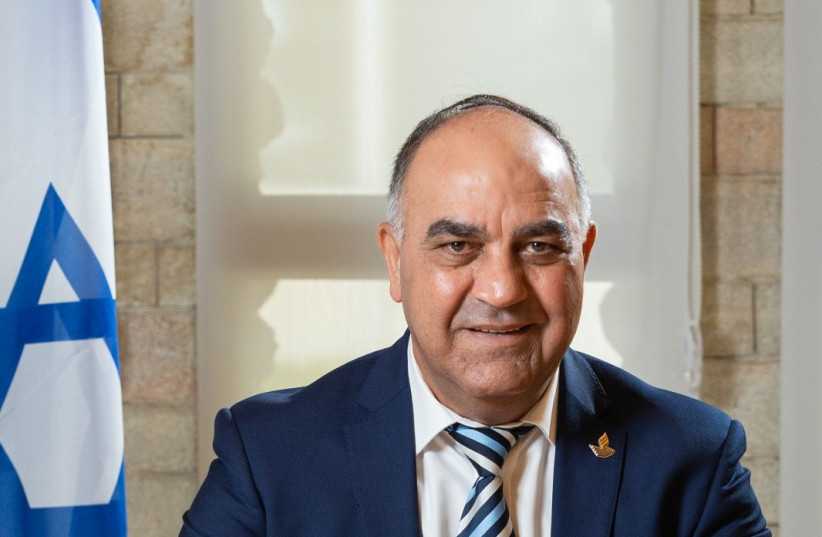
The Defense Ministry’s Department of Families and Commemorations cares for all bereaved families, in Israel and abroad.
.

Arye Mualem /  (photo credit: DEFENSE MINISTRY)

As Israel remembers its fallen who gave their lives protecting the country throughout its 74 years of independence, the Defense Ministry’s Department of Families and Commemorations is reaching out to all bereaved families, including those living abroad.

“Everyone is with the bereaved families right now,” Arye Mualem, head of the Department of Families and Commemoration, told The Jerusalem Post. “These are complicated and sensitive days.”

Remembrance Day for the Fallen of Israel’s Wars, in my eyes, is one of the most meaningful days in Israel,” he said. “The whole of Israel is connected, understands and salutes those who have fallen while at the same time are embracing the families, across the country. So many citizens are standing together on this one day for a specific goal to get to cemeteries to support the bereaved families.”

In total, 24,068 IDF soldiers, police officers, prison wardens, Shin Bet (Israel Security Agency) security service and Mossad agents have been killed since 1860 defending the pre-state Yishuv and Israel. That number also includes members of the pre-state militias and the Jewish Brigade, who served in the British army during World War II.

According to the National Insurance Institute, some 3,199 civilians were killed in hostilities since the establishment of the state.

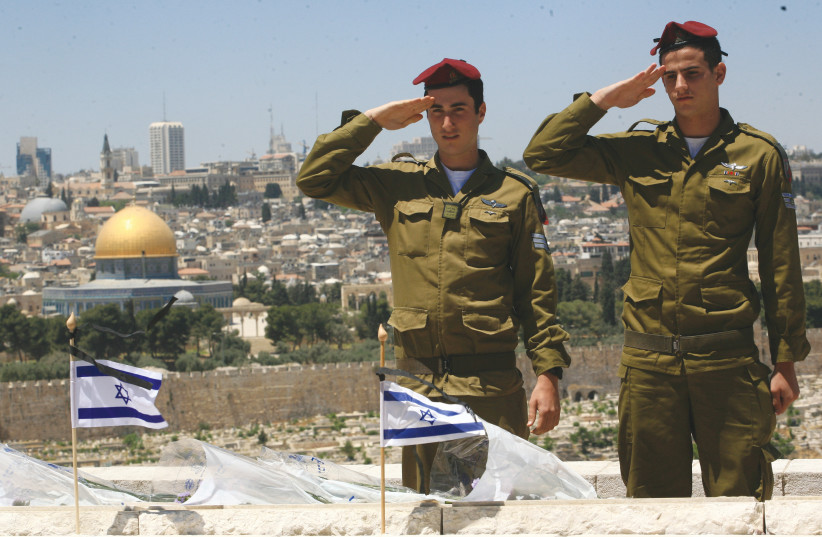
PARATROOPERS SALUTE after placing flags on the graves of fallen soldiers, during preparations for Remembrance Day ceremonies on the Mount of Olives. (credit: NATI SHOHAT/FLASH90)

Remembrance Day will begin at 8 p.m. on Tuesday, May 3 when a one-minute-long memorial siren will sound across the country. Immediately after the siren, memorial ceremonies will take place across the country with the main one to be held at the Western Wall in the Old City of Jerusalem in the presence of President Isaac Herzog and Chief of Staff Lt.-Gen. Aviv Kohavi.

On Wednesday, May 4, a two-minute-long siren will sound at 11:00 a.m. followed by official state memorial services at 52 military cemeteries across the country and at memorial sites.

The ministry’s Department of Families and Commemoration is responsible for all Remembrance Day events.

Mualem, who has spent the past 15 years as the head of the department, said that there is “no other moment” that encapsulates Israel than the two-minute-long siren and the lowering of the flag.

“The two moments of silence have a lot of power and give a lot of respect to the fallen,” he added.

Under Mualem, the department works to reach every bereaved family-in Israel and abroad- and customizes support as per the need of each family. In addition to the financial support provided to families and widows, the ministry provides social workers, psychologists and other means of mental support.

According to him, the social and emotional support given to families is so comprehensive that other countries look to Israel when building plans to support their own bereaved families.

“The country has understood that the loss experienced by bereaved families has affected them,” he said, adding that while “we can’t bring back their sons, we can be there for the family and embrace them along this long road of mourning.”

Along with the memorial events in Israel, and as an ongoing effort to strengthen the connection with bereaved families living abroad, the Department of Families and Commemoration and the World Zionist Organization produced a joint online hybrid memorial ceremony.

The ceremony includes a video of the memorial service in Mount Herzl’s Memorial Hall which will be available on the Defense Ministry’s YouTube channel. The ministry said that there will also be “customizable online content that each community can use individually, available on the Department of Families and Commemoration’s website.”

The ceremony will be shared with Jewish communities around the world and is available in Hebrew, English, Spanish, French, and Russian.

Mualem told the Post that “it’s important to have a direct connection” with families who live abroad. He said that a few hundred families come to Israel supported by the ministry every year to commemorate their son or daughter.

“We can’t forget these families,” he said, explaining the importance of the hybrid ceremony for the families who could not make it this year to Israel.

In addition, Mualem said that the ministry has initiated a project called “Communities Embracing Families” where Diaspora Jewish communities “adopt” bereaved families in their communities. As part of the project, which will be launched on May 19th in Miami, Florida by Defense Minister Benny Gantz, communities will provide families with the emotional support needed throughout the year.

“This way we continue to strengthen our ties with families abroad,” he said.

While Jewish communities across the world understand the importance of Remembrance Day and have a strong connection to Israel, there is a growing number of Diaspora Jewish youth who are moving away from their Jewish identity and Israel.

And that is just “one of the reasons that we are doing this project of ‘Communities Embracing Families,’’’ Mualem said. “We are inviting teenagers and youth in diaspora communities and talk with them about those who gave their lives for the country because we believe that the more we talk about them, the more we will remember them and not forget.

We believe that the ethos of the IDF, the country and of fallen and their stories will make the youth understand what it means to love the country and fight for it and protect it.”


Zawartość publikowanych artykułów i materiałów nie reprezentuje poglądów ani opinii Reunion’68,
ani też webmastera Blogu Reunion’68, chyba ze jest to wyraźnie zaznaczone.
Twoje uwagi, linki, własne artykuły lub wiadomości prześlij na adres:
webmaster@reunion68.com