Archive | 2026/11/12

„Wróg wolności prasy”: Reporterzy bez Granic umieszczają HonestReporting na czarnej liście

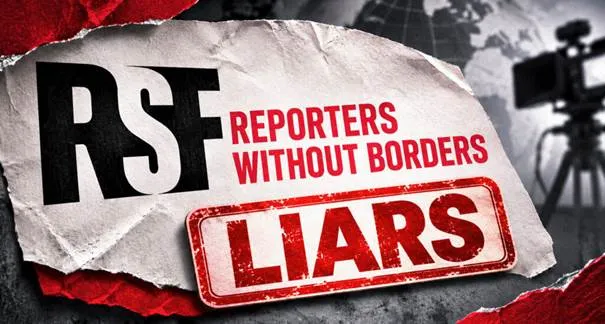
Reporterzy bez Granic zaliczają HonestReporting do „wrogów wolności prasy”, stawiając tę organizację w jednym szeregu z dyktatorami.


„Wróg wolności prasy”: Reporterzy bez Granic umieszczają HonestReporting na czarnej liście

Simon Plosker


Reporterzy bez Granic zaliczają HonestReporting do „wrogów wolności prasy”, stawiając tę organizację w jednym szeregu z dyktatorami.


Prezydent Rosji Władimir Putin, Komunistyczna Partia Chin, prezydent Turcji Recep Tayyip Erdoğan, saudyjski książę Mohammed bin Salman i… HonestReporting.

Nie jest to towarzystwo, w którym spodziewaliśmy się znaleźć, ale są to tylko niektóre nazwiska i nazwy organizacji umieszczonych na opublikowanej przez Reporterów bez Granic (RSF) liście wrogów wolności prasy na rok 2026.

Dlaczego zatem RSF uważają, że organizacja monitorująca media i domagająca się od nich odpowiedzialności zasługuje na miejsce na tej liście?

Według RSF Izrael prowadzi nieustającą kampanię oczerniania dziennikarzy relacjonujących konflikty w regionie, a „na czele machiny propagandowej napędzającej te kampanie oszczerstw stoi portal HonestReporting, którego członkowie – w tym osoby z kierownictwa – mają powiązania z izraelskimi politykami i przywódcami”.

Wśród zarzutów stawianych HonestReporting przez RSF znajdują się następujące oskarżenia:

    • „Przedstawiamy dziennikarzy jako uczestników spisku, wysuwając słabo udokumentowane oskarżenia i rozpowszechniając wprowadzające w błąd obrazy wygenerowane przez sztuczną inteligencję, które narażają dziennikarzy na niebezpieczeństwo”.
    • Prowadzimy „kampanie oszczerstw wymierzone w dziesiątki redakcji i dziennikarzy, którzy krytycznie relacjonowali politykę Izraela lub wyrażali poglądy nieprzychylne izraelskiemu rządowi”.
    • Zaprzeczamy „zbrodniom wojennym popełnianym przez izraelskie wojsko wobec dziennikarzy w Gazie” lub je usprawiedliwiamy.

A naszą „ulubioną bronią” mają być „bezpodstawne oskarżenia, że dziennikarze dopuszczają się nieetycznych praktyk, popierają terroryzm lub propagują antysemityzm”.

Imponujący akt oskarżenia. Tyle że żaden z tych zarzutów nie wytrzymuje krytycznej analizy.

Powód, dla którego RSF atakują HonestReporting, jest zupełnie oczywisty. To właśnie nasza organizacja ujawniła, że RSF po cichu usuwają terrorystów ze swojej listy dziennikarzy zabitych w Strefie Gazy, jednocześnie – z niewyjaśnionych powodów – nadal uznając innych terrorystów za dziennikarzy.

Wśród usuniętych znaleźli się:

    • Mohammad Jarghoun, reporter internetowego serwisu Smart News, o którym sam Hamas przyznał, że należał do jego Brygady Rafah.
    • Mohamed Nasr Abu Huwaidi, członek Palestyńskiego Islamskiego Dżihadu (PIJ).
    • Muhammad Mahmoud Abu Sharia, terrorysta z Brygad Al-Kuds, zbrojnego skrzydła PIJ, a zarazem redaktor prowadzący agencji informacyjnej Shams News. Jego nazwisko usunięto zarówno z bazy danych, jak i z aktualizowanego artykułu.
    • Assem Al-Barsh z radia Al-Rai, o którym Hamas poinformował, że był bojownikiem Batalionu Męczennika Imada Akela wchodzącego w skład Brygady Północnej.

Al-Barsh, Abu Huwaidi i Abu Sharia byli osobami, których śmierć stała się podstawą zawiadomień o popełnieniu przestępstw złożonych przez RSF do Międzynarodowego Trybunału Karnego (MTK). Organizacja oskarżała w nich Izrael o zbrodnie wojenne. Nie wiadomo, czy zawiadomienia te zostały wycofane lub zmienione.

Jeśli nie zostały wycofane, oznacza to, że RSF w praktyce domagają się odpowiedzialności karnej Izraela za likwidowanie terrorystów. Organizacja powinna się tego wstydzić.

Po blisko miesiącu od przekazania przez nas informacji, iż rzekomy dziennikarz Mohammed Abu Matar był w rzeczywistości terrorystą Hamasu, Reporters Without Borders po cichu usunęła jego nazwisko ze swojej bazy danych. Dlaczego nie zdecydowali sie na przejrzystość i wydanie otwartego oświadczenia?

HonestReporting

@HonestReporting

(Tłumaczenie z języka angielskiego)

Hamas w niedzielę potwierdził podejrzenia, że Mohammed Abu Matar był terrorystą, a nie dziennikarzem. IFJ, Reporters Without Borders i UNESCO utrzymywali go na swoich listach zabitych pracowników mediów z Gazy. Szefowa UNESCO Azoulay potępiła jego zabójstwo. Czy to potępienie zostanie wycofane?

Jeśli ktokolwiek przynosi ujmę zawodowi dziennikarza, to właśnie RSF.

Umieszczenie HonestReporting na liście „wrogów wolności prasy” jest zarówno dowodem naszego stale rosnącego wpływu, jak i próbą odwrócenia uwagi od własnych zaniedbań RSF poprzez atakowanie naszej organizacji i podważanie wiarygodności naszej pracy.

Nawet twierdzenie RSF, że HonestReporting „rozpowszechnia wprowadzające w błąd obrazy wygenerowane przez sztuczną inteligencję, które narażają dziennikarzy na niebezpieczeństwo”, jest po prostu śmieszne.

Wykorzystywanie ilustracji do wizualnego przedstawienia tematu lub treści artykułu jest standardową praktyką dziennikarską – od materiałów prasowych i reportaży w ilustrowanych magazynach, poczynając od rycin po fragmenty filmów dokumentalnych.

Organizacja, która rzekomo reprezentuje dziennikarzy, powinna znać tę praktykę.

Nasza graficzka, której sugestywne ilustracje towarzyszą niektórym naszym artykułom, z pewnością będzie zdziwiona, dowiadując się, że jej praca jest opisywana w taki sposób.

Równie zaskoczeni będą nasi „członkowie – w tym osoby z kierownictwa – mający powiązania z izraelskimi politykami i przywódcami”, kiedy dowiedzą się, że awansowano ich do grona ludzi obdarzonych tak wielką władzą i wpływami.

A jeśli chodzi o samą listę RSF, to jak to możliwe, że prawdziwi „wrogowie wolności prasy”, tacy jak Putin, Erdoğan, Komunistyczna Partia Chin i inni dyktatorzy oraz autokraci, którzy świadomie biorą na cel dziennikarzy, często stosując wobec nich przemoc, trafiają na tę samą listę co Donald Trump, Elon Musk, Meta i Alphabet, spółka macierzysta Google?

Absurdalne zrównywanie moralne, brak poczucia proporcji oraz niezdolność RSF do odróżniania terrorystów od dziennikarzy, a także uzasadnionej krytyki od bezpodstawnych ataków, pokazują, dlaczego lista „wrogów wolności prasy” na rok 2026 jest, mówiąc wprost, kiepskim żartem.

Link do oryginału: https://honestreporting.com/press-freedom-predator-reporters-without-borders-blacklists-honestreporting/?share=1

HonestReporting, 4 listopada 2026

Simon Plosker


Simon Plosker ma ponad dwudziestoletnie doświadczenie w pracy dla różnych organizacji pozarządowych w Wielkiej Brytanii i Izraelu. W październiku 2022 roku powrócił do HonestReporting jako dyrektor redakcyjny. Wcześniej, w latach 2005–2020, należał do zespołu kierowniczego tej organizacji.

Przed rozpoczęciem pierwszego okresu pracy w HonestReporting był związany w Izraelu z organizacjami NGO Monitor i BICOM, a przez krótki czas służył również w jednostce rzecznika prasowego Sił Obronnych Izraela (IDF).

Przez dwa lata pełnił funkcję redaktora naczelnego genewskiej organizacji pozarządowej UN Watch, po czym powrócił na pierwszą linię walki ze stronniczością mediów wobec Izraela.

Simon uzyskał tytuł licencjata nauk społecznych w dziedzinie stosunków międzynarodowych i nauk politycznych na Uniwersytecie w Birmingham oraz tytuł magistra historii stosunków międzynarodowych w London School of Economics.

W 2001 roku wyemigrował z Londynu do Izraela.


Zawartość publikowanych artykułów i materiałów nie reprezentuje poglądów ani opinii Reunion’68,
ani też webmastera Blogu Reunion’68, chyba ze jest to wyraźnie zaznaczone.
Twoje uwagi, linki, własne artykuły lub wiadomości prześlij na adres:
webmaster@reunion68.com

Can a transitional government start a war with Iran? – explainer


Can a transitional government start a war with Iran? – explainer

IDAN KWELLER


As Eisenkot works to form a government, Netanyahu retains the power to act against Iran. But Israeli law raises questions about launching a new war under a caretaker government.

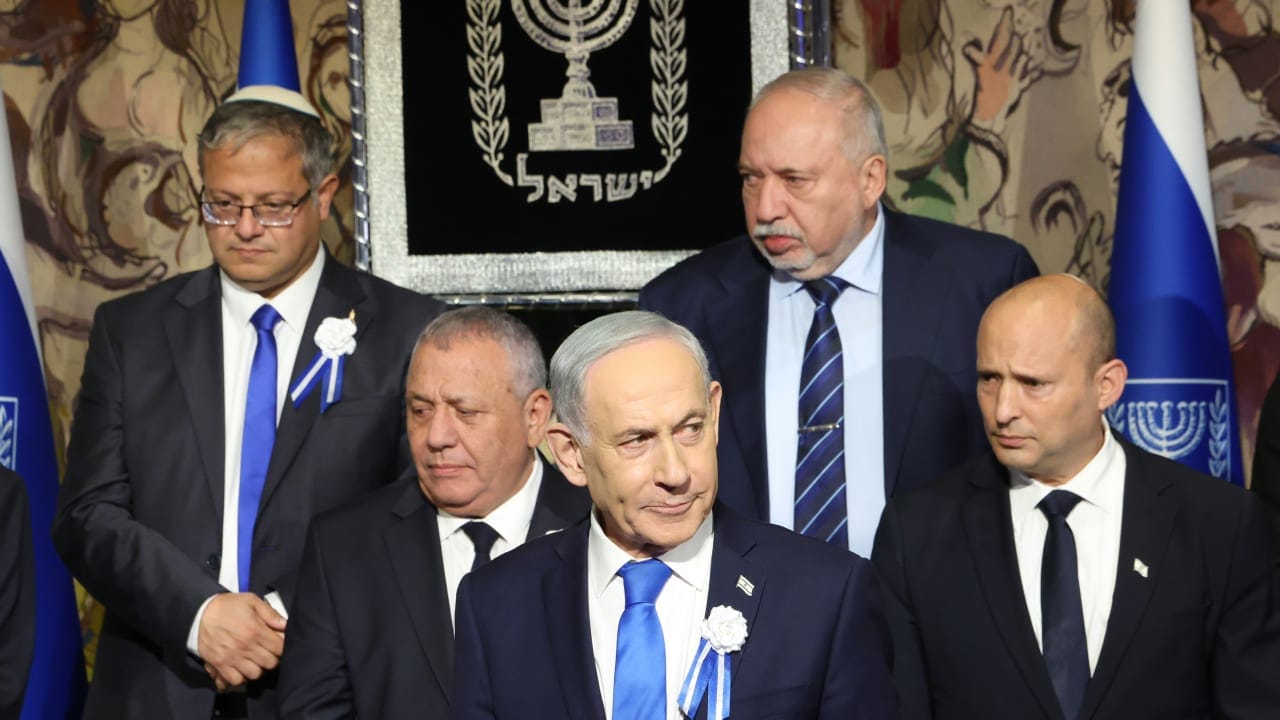
Yashar head Gadi Eisenkot seen behind Prime Minister Benjamin Netanyahu as party leaders pose for a group picture in the Knesset, in Jerusalem, November 10, 2026 / (photo credit: MARC ISRAEL SELLEM/THE JERUSALEM POST)

President Isaac Herzog has tasked Gadi Eisenkot with forming Israel’s next government, but Benjamin Netanyahu remains prime minister, retaining the powers of his office, overseeing the defense establishment, and directing Israeli policy toward Iran.

The unusual political situation following the elections raises questions not only about who will succeed in forming a government, but also about who has the authority to make what could be the most consequential decision of this period: renewing Israel’s military offensive against Iran, a move that could trigger another regional war.

Netanyahu’s position as head of a caretaker government might appear to limit his ability to make far-reaching decisions. However, an examination of Basic Law: The Government, along with Israel’s legal and military precedents, presents a more complex picture.

A caretaker government is not legally barred from going to war, and previous caretaker governments have overseen major military operations. The central questions are what circumstances justify such action, how the decision must be made, and whether an urgent security threat makes postponement impossible

The issue has become particularly significant amid an emerging divide between Jerusalem and Washington.

Israel Air Force fighter jets on their way to the waves of strikes in Iran (credit: IDF SPOKESPERSON UNIT)

US President Donald Trump, who previously supported extensive military action against Iran, has said in recent days that he sees no need to resume strikes at this stage. His administration is pursuing a possible agreement with Tehran, while Netanyahu maintains that overthrowing the ayatollahs’ regime is the only way to permanently eliminate the Iranian threat.

Trump seeks an agreement, Netanyahu calls for regime change

In an interview with CBS’s 60 Minutes broadcast earlier this week, Trump was asked whether he intended to escalate the war against Iran following the US midterm elections. He said he had no desire to do so and saw no reason to escalate further.

Later, during a meeting with Qatari Prime Minister and Foreign Minister Mohammed bin Abdulrahman Al Thani at the White House, Trump reiterated that additional military action did not appear necessary at this stage.

The president noted that Iran was engaged in talks with the United States and expressed hope that an agreement could be reached. He stressed, however, that the US military remained prepared to act if circumstances changed.

Secretary of State Marco Rubio has adopted a similar position, arguing that the economic pressure Washington is exerting on Iran through sanctions and a naval blockade has been so effective and damaging that further military strikes are currently unnecessary.

Rubio predicted that the effects of this pressure on the Iranian regime would become clearer in the coming weeks and months.

Nevertheless, he acknowledged that a breakthrough in negotiations was not imminent, partly because of Iranian demands that Washington considers unacceptable. The military option, therefore, remains on the table.

Meanwhile, Vice President JD Vance has emerged as a central figure in efforts to secure a diplomatic agreement.

Over the past two weeks, Vance has been personally involved in indirect contacts with Iran, speaking almost daily with the Qatari prime minister, Pakistan’s army chief, and other mediators.

The administration is also considering direct talks between US and Iranian officials at the working level, as well as a possible meeting between Vance and senior Iranian officials.

Netanyahu, by contrast, continues to advocate a much tougher approach.

In his address to the Knesset on Wednesday, he called for the formation of a national unity government in response to the renewed Iranian threat, arguing that the only way to eliminate it permanently is to overthrow the ayatollahs’ regime.

He also warned that the international community could come to accept a resumption of Iran’s nuclear program.

Netanyahu and US Defense Secretary Pete Hegseth are among those who favor renewed military operations against Iran, while Vance and US envoy Steve Witkoff prefer to explore the possibility of reaching an agreement.

The Financial Times reported that Arab leaders are concerned Netanyahu is pressuring Trump to resume the military campaign.

A source familiar with the discussions claimed that Netanyahu speaks frequently with the US president and has repeatedly urged him to launch another strike.

However, a source familiar with the situation in Israel offered a different assessment, saying that although Netanyahu favors renewed military action, there is currently little indication of a concerted effort to persuade Trump to pursue it.

These reports do not establish that Netanyahu has decided to launch another offensive, but they illustrate the disagreements over how the confrontation with Iran should be brought to an end.

Security cabinet has not met for more than a month

The possibility of renewed military action has also raised questions about the functioning of Israel’s security cabinet.

The cabinet is expected to convene this coming Sunday, November 15, for the first time in more than a month. Its last meeting took place on October 5, before the Knesset elections.

Meanwhile, the defense establishment has been instructed to increase its readiness for a possible strike on Iran, even though the security cabinet has not convened during this period.

This does not mean that a new decision to go to war has been made. It does, however, raise questions about which forums are conducting security discussions and how decisions are being made while the government serves in a caretaker capacity.

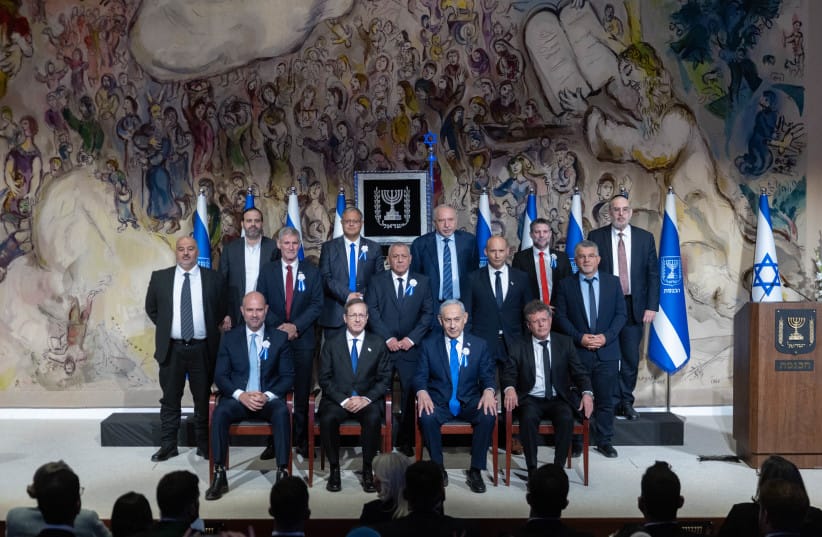
Faction leaders pose for a group photo following the swearing-in of the 26th Knesset at the Knesset in Jerusalem, November 10, 2026. (credit: CHAIM GOLDBERG/FLASH90)

Can a caretaker government launch a war under Israeli law?

The central legal provision governing this question is Section 40 of Basic Law: The Government.

The section stipulates that Israel may not initiate a war or undertake significant military action likely to lead to war with a probability approaching certainty without a government decision.

The law also allows the government to delegate this authority to the Ministerial Committee on National Security Affairs, commonly known as the security cabinet, when the prime minister determines that doing so is necessary for reasons of national security, foreign relations, or secrecy.

The provision also clarifies that these restrictions do not prevent other military actions required to defend the state and protect public security.

But how do these rules apply to a caretaker government?

Section 40 makes no distinction between a regular government and a caretaker government. Furthermore, Section 30 of the Basic Law stipulates that an outgoing government continues to perform its duties until a new government is formed.

This means Netanyahu and his ministers retain their executive powers despite the election results and Herzog’s decision to task Eisenkot with forming the next government.

Nevertheless, those powers are not unlimited.

Supreme Court rulings have established that an outgoing government must exercise restraint and act reasonably and proportionately, taking into account the change in its democratic legitimacy.

The more urgent the public need for action, the less restrictive the obligation to exercise restraint may become. In the face of an immediate security threat, a caretaker government retains considerable freedom to act.

However, a more difficult legal and public question arises when the government considers initiating a military operation that could be postponed without compromising operational objectives.

Another important distinction concerns the prime minister’s personal authority.

The prime minister cannot independently authorize every decision to launch a war. If a proposed military operation falls under Section 40(a), it requires either a government decision or a decision by the security cabinet acting under authority lawfully delegated to it.

Olmert, Netanyahu, and Lapid: Previous caretaker governments have launched military operations

Israeli history offers several significant precedents for military action under caretaker governments.

In December 2008, then-prime minister Ehud Olmert headed a caretaker government following his resignation and the failure to form an alternative coalition.

During that period, Israel launched Operation Cast Lead in the Gaza Strip, following sustained rocket fire against southern Israeli communities. The operation developed into a military campaign that lasted approximately three weeks.

A second precedent came in May 2021, following elections to the 24th Knesset, while negotiations to form a new government were still underway.

Netanyahu himself was serving as caretaker prime minister when Israel launched Operation Guardian of the Walls.

The fighting began after Hamas fired rockets toward Jerusalem and other parts of Israel. The government responded with extensive strikes in the Gaza Strip, and the campaign lasted 11 days.

This precedent is particularly relevant because it demonstrates that a caretaker government can oversee a major military campaign.

However, Operation Guardian of the Walls was launched in response to rocket attacks, rather than as a preemptive decision to begin a new war against another country.

Another example came in August 2022, when caretaker prime minister Yair Lapid and defense minister Benny Gantz led Operation Breaking Dawn against Palestinian Islamic Jihad in the Gaza Strip.

Unlike Guardian of the Walls, Breaking Dawn began with an Israeli-initiated strike, opening with the killing of a senior Palestinian Islamic Jihad commander following security warnings.

The security cabinet was not convened before the operation because Attorney-General Gali Baharav-Miara accepted the assessment of security officials that the operation was not expected to lead to war with a probability approaching certainty.

Together, these three cases demonstrate that caretaker governments are not prevented from using military force. They also underscore the importance of distinguishing between a response to an immediate threat, a limited military operation, and the initiation of a broader war.

A renewed war against Iran, particularly one intended to overthrow the regime in Tehran, could differ substantially from these precedents in both scope and consequences.

Eisenkot warns Netanyahu against decisions that can be postponed

The debate took on a direct political and legal dimension on Wednesday night when Eisenkot sent Netanyahu a letter demanding restraint in security decisions during the caretaker period.

Eisenkot reminded Netanyahu that Herzog had tasked him with forming the next government after receiving recommendations from 67 Knesset members, compared with 46 who recommended Netanyahu.

Although those recommendations do not guarantee that Eisenkot will succeed in forming a coalition, they reflect a significant shift in the political balance of power.

Eisenkot warned against deploying security forces in the absence of a direct and immediate threat that cannot be postponed, arguing that such action could damage Israeli democracy and undermine public confidence in state institutions.

He called on Netanyahu to refrain from dangerous moves that could be delayed until a new government is sworn in and warned against placing senior defense officials in a position where they could face a constitutional conflict.

Eisenkot separately approached Baharav-Miara, asking her to examine the caretaker government’s powers and ensure that he receives regular security briefings in light of his mandate to form the next government.

The Prime Minister’s Office strongly rejected Eisenkot’s claims.

In its response, the office said that all decisions made by the Netanyahu-led government were based exclusively on security considerations and had been fully coordinated with the defense establishment.

It accused Eisenkot of attempting to introduce political considerations into security discussions and renewed its call for him to join a national unity government.

The central question: An immediate threat or a war that can be avoided?

The situation also presents a diplomatic paradox.

While Netanyahu emphasizes the need to complete the military campaign against Iran and overthrow the regime, Trump has argued that renewed strikes are not currently necessary.

At the same time, the US president has not adopted an unequivocal position that the campaign must end at any cost.

Speaking at a Veterans Day ceremony at Arlington National Cemetery on Wednesday, Trump said the United States wanted a complete victory over Iran, rather than a 93% victory, and added that the confrontation would end soon.

The military option therefore remains available to both Israel and the United States.

For Netanyahu, the question surrounding any further major military operation against Iran is not simply whether Israel has the operational capability to carry it out, but whether sufficient security and legal grounds exist to justify such an operation while his government is serving in a caretaker capacity.

Netanyahu continues to exercise the powers of prime minister, while Eisenkot holds the mandate to form the next government.

Neither, however, knows what the next coalition will look like or when it will be sworn in.

Under these circumstances, the distinction between a military operation intended to prevent an immediate threat and a broader initiative to reshape the regional order could become the decisive issue.

Israeli law does not prohibit a caretaker government from going to war. But because it grants such a government extensive authority, it is all the more important that any decision to launch a war follows proper procedures, rests on a clear security justification, and considers its potential consequences for Israel and the wider region.


Zawartość publikowanych artykułów i materiałów nie reprezentuje poglądów ani opinii Reunion’68,
ani też webmastera Blogu Reunion’68, chyba ze jest to wyraźnie zaznaczone.
Twoje uwagi, linki, własne artykuły lub wiadomości prześlij na adres:
webmaster@reunion68.com

‘Unconscionable’: City, State Leaders Slam Philly Bike Ride Boycott Targeting Jewish Businesses


‘Unconscionable’: City, State Leaders Slam Philly Bike Ride Boycott Targeting Jewish Businesses

Shiryn Ghermezian


People spend time at K’Far cafe in Philadelphia, Pennsylvania, US, June 20, 2026. Photo: REUTERS/Hannah Beier

Several Philadelphia and Pennsylvania leaders have criticized local anti-Israel activists who are trying to push pro-Zionist, Jewish, and Israeli-owned restaurants out of town and have organized a bicycle protest against the establishments on Sunday, which is the eve of the anniversary of Kristallnacht, the infamous Nazi pogrom.

The anti-Zionist bike ride is being called “Boycott Ride” and will target half a dozen restaurants in Rittenhouse Square, in Philadelphia’s Center City. The businesses being targeted include the Jewish deli Schlesinger’s, Huda Burger, Mac Mart, Goldie’s, K’far Café, and Dizengoff. Several of them are owned by American-Israeli chef-restaurateur Michael Solomonov.

Pennsylvania Attorney General Dave Sunday said the planned protest is “deeply unsettling.”

“By explicitly targeting businesses because their owners are Jewish, the organizers are engaging in a form of discrimination that falls back on some of the oldest antisemitic tropes and tactics in history,” Sunday said in a released statement. “This is not simply a protest directed at the policies of Israel; rather it singles out our fellow Pennsylvanians based on their Jewish identity, targeting them for policies they have nothing to do with and no ability to affect because of their faith. That is unconscionable in our Commonwealth, which was founded on religious tolerance, and unacceptable in a city that prides itself on brotherly love.”

Philadelphia Mayor Cherelle Parker also castigated the planned protest.

“Everyone has the right to peacefully protest and express their political views. But singling out businesses because their owners are Jewish is unacceptable and has no place in our city,” Parker said in a statement. “No one should be targeted, threatened, or made to feel unwelcome because of their faith, identity, or background. Every person deserves to feel safe and respected in the city they call home.”

Parker has directed the police commissioner to work with local agencies ahead of Sunday’s protest, and the Philadelphia Police will maintain safety and order throughout the demonstration while also protecting nearby residents, businesses, and houses of worship.

“Anyone who engages in threats, intimidation, or unlawful conduct will be held accountable,” Parker said.

A flyer for the bike protest says “No business for Zionists! These Zionist establishments must go! Not in our city!”

The language is similar to the propaganda used by the Nazis to promote Kristallnacht, also known as the “Night of Broken Glass,” their state-sponsored, anti-Jewish riot and destruction of thousands of Jewish-owned businesses throughout Germany on Nov. 9-10, 1938. During the night of terror, Nazis burned down synagogues, vandalized Jewish-owned businesses, broke into Jewish people’s homes, murdered Jews, and deported 26,000 Jewish men to concentration camps, according to the United States Holocaust Memorial Museum. The onslaught left at least 91 Jews dead, and over 7,000 Jewish-owned stores were looted.

Sunday’s “Boycott Ride” is taking place on the eve of the 88th anniversary of Kristallnacht.

The main organizer for the bike protest is Philly Bike On Your Left, which describes itself as an “anti-fascist, anti-Zionist” social cycling group.

“Ride around Rittenhouse with us as we show these zionist [sic] business owners that we see them for the disgusting humans they are,” they wrote on Instagram. The groups Philly Solidarity Calendar, Boycott CookNSolo, and No Appetite for Apartheid of Philly DSA are listed as collaborators for Sunday’s protest. 

Philly Bike On Your Left also shared a statement on social media that claims “pogroms” are taking place in the West Bank and says: “As the political ideology of Zionism dies a long deserved death these businesses will die with it.”

The Anti-Defamation League Philadelphia, American Jewish Committee Philadelphia/Southern NJ, the Jewish Federation of Greater Philadelphia, and StandWithUs said in a joint statement they “strongly condemn” the rally. They urged all Philadelphians to support the targeted restaurants and counter the discriminatory boycott with “increased business and visible solidarity.”

“Let’s be clear: This is antisemitism. It is Jew-hatred, plain and simple,” the statement said.

“Marking businesses for removal from Philadelphia is an attempt to intimidate, marginalize, and exclude members of the Jewish community from the economic and civic life of our city … The public targeting of Jewish businesses should alarm every person of conscience,” it went on. “There is a profound difference between criticizing a government and targeting businesses because their owners are Jewish or perceived to be connected to Israel.”

Philadelphia Commission on Human Relations (PCHR) executive director Renee Chenault-Fattah said in a statement that the commission “reaffirms its 75-year commitment to fighting racism, antisemitism and, in recent years, Islamophobia. Acts of bigotry, violence, and hate cannot be tolerated, and we will never stand by and allow businesses, individuals, or jobs to be run out of our city, full stop.”

In a statement to Fox News Digital, a spokesperson for Pennsylvania Gov. Josh Shapiro condemned the planned bike ride protest and said Pennsylvania State Police are working with local partners “to ensure the safety and wellbeing of our neighbors in Philadelphia.”

“This bike ride, masquerading as a protest to advance the cause of justice, is nothing more than blatant antisemitism designed to intimidate and drive Jewish businesses out of our communities, and there is no place for that in our Commonwealth,” said spokesperson Rosie Lapowsky. 


Zawartość publikowanych artykułów i materiałów nie reprezentuje poglądów ani opinii Reunion’68,
ani też webmastera Blogu Reunion’68, chyba ze jest to wyraźnie zaznaczone.
Twoje uwagi, linki, własne artykuły lub wiadomości prześlij na adres:
webmaster@reunion68.com
