
Turkey’s nuclear path is a risk Israel cannot ignore


Turkey’s nuclear path is a risk Israel cannot ignore

Noa Lazimi


Ankara is using nuclear technology strictly for civilian purposes, but the infrastructure it is building could pave the way toward military applications.
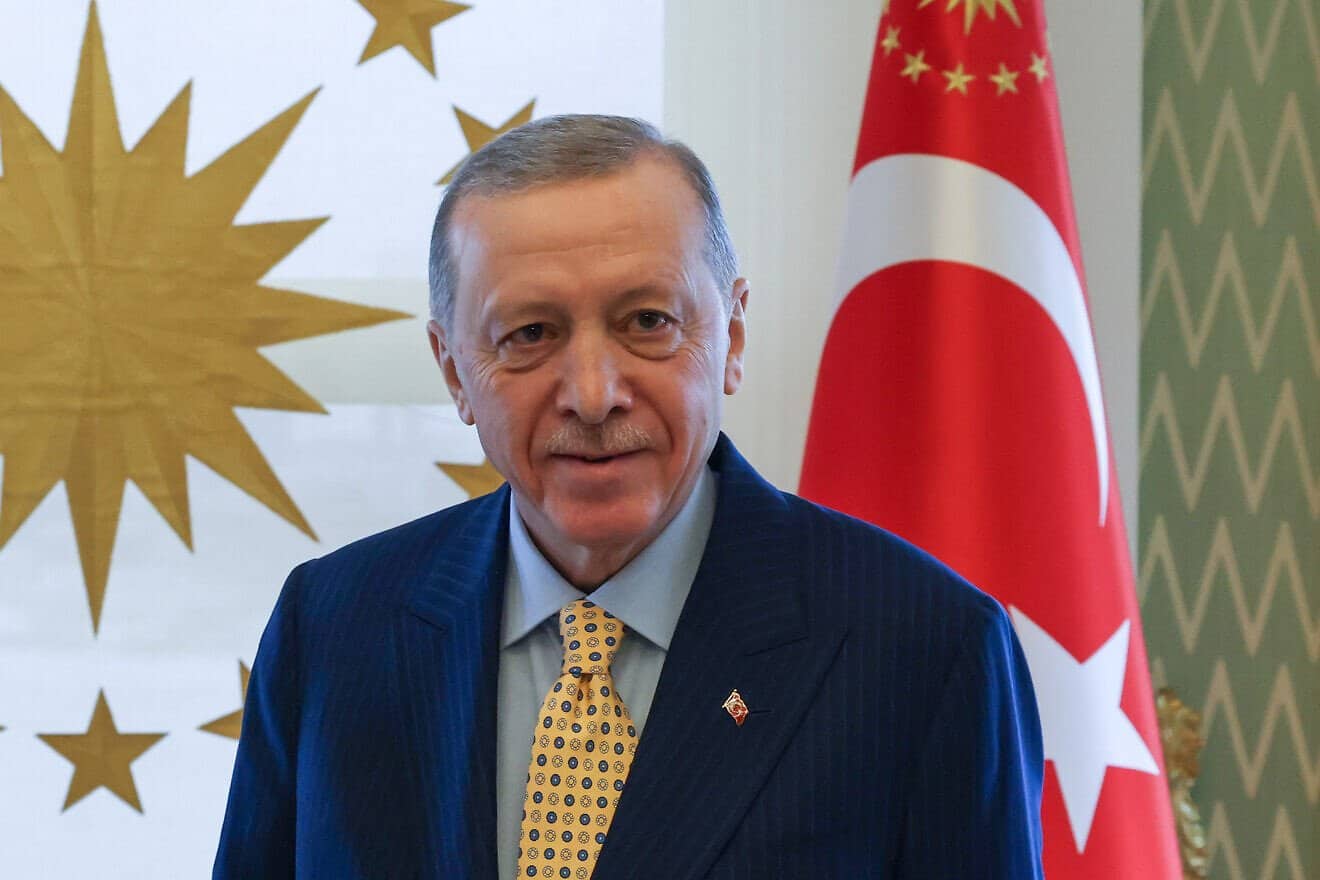
Turkey’s President Recep Tayyip Erdoğan attends a meeting at Vahdettin Palace in Istanbul on Jan. 26, 2024. Photo by Rory Arnold/No. 10 Downing Street via Wikimedia Commons.

Since joining NATO in 1952, Turkey has relied on the alliance’s nuclear umbrella and has hosted several dozen U.S. nuclear bombs at the Incirlik Airbase. At the same time, Turkey itself does not possess nuclear weapons, in line with its commitments under the Nuclear Non-Proliferation Treaty, which it signed in 1969.

In recent years, however, senior officials have periodically raised, in public, Turkey’s “right” to develop and obtain nuclear weapons. In a speech in September 2019, Turkish President Recep Tayyip Erdoğan argued it was unfair that his country was not allowed to develop nuclear weapons while other states possessed them or were working to acquire them.

In July 2025, Turkish Foreign Minister Hakan Fidan voiced dissatisfaction with the nuclear treaty, which he said suffers from “structural injustice” by preserving the strategic supremacy of the five permanent U.N. Security Council members, all of which hold nuclear weapons.

In his view, only one aspect of the treaty is implemented in practice—preventing the spread of nuclear weapons, while progress on nuclear disarmament and assistance to other countries developing nuclear energy for peaceful purposes is not being upheld.

These statements have been voiced against the backdrop of Turkey’s concerns over its neighbor and long-time rival Iran’s race toward nuclear weapons. They also come alongside Israel’s existing capabilities, according to reports. 

Ankara has not stood idly by. In 2018, it began building the Akkuyu nuclear power plant, financed and operated by the Russian state nuclear corporation Rosatom. Under the deal with Russia, estimated at $24 billion, the Akkuyu plant is expected to include four reactors and is planned to supply roughly 10% of Turkey’s annual electricity consumption.

It is important to note that this is a civilian nuclear program intended to generate electricity, not a military program that would require higher levels of uranium enrichment. Still, the practical implication is that an infrastructure base is being built that could, under certain conditions in the future, help pave a path toward a military track.

Warming ties with Pakistan

Turkey’s warming ties with Pakistan, the only nuclear-armed Islamic country, also appear intended to diversify Ankara’s support pillars in this arena. That rapprochement has been reflected, among other things, in the significant assistance Turkey provided Islamabad in its confrontation with India. Closer relations with Pakistan could help Turkey acquire knowledge and capabilities that, over time, would enable it to build nuclear power plants independently.

Nuclear ambitions are closely tied to Turkey’s self-perception as a regional power with aspirations to revive an Ottoman-style sphere of influence. Turkey is pouring enormous resources into its defense industries, and it is difficult to imagine it voluntarily giving up on the development of nuclear weapons that could one day add a significant layer to its power projection and deterrence.

Domestically, not everyone is enthusiastic about the nuclear energy projects being advanced by the government. Opposition lawmakers have raised serious concerns about the risks involved in operating nuclear power plants, including ecological damage and environmental challenges, as well as unease over deepening Turkish dependence on Russia.

Still, it should be assumed that as long as Erdoğan remains in power, and likely under his successors as well, Turkey will continue its efforts to develop nuclear capabilities.

Israel would be wise to include the scenario of Turkish progress toward nuclear capabilities in its strategic planning and regional risk assessment, even if it unfolds gradually over a long period. Even if such a process is not expected to materialize quickly, the very existence of an accumulated pathway of knowledge, infrastructure and international ties could alter the regional deterrence balance and shape Ankara’s behavior in regional flashpoints.


Noa Lazimi is a fellow at the Misgav Institute for National Security.
Originally published by Israel Hayom.


Zawartość publikowanych artykułów i materiałów nie reprezentuje poglądów ani opinii Reunion’68,
ani też webmastera Blogu Reunion’68, chyba ze jest to wyraźnie zaznaczone.
Twoje uwagi, linki, własne artykuły lub wiadomości prześlij na adres:
webmaster@reunion68.com


Faith in Judaism Demands Grappling With Sacred Words


Faith in Judaism Demands Grappling With Sacred Words

Pini Dunner


A Torah scroll. Photo: Wikimedia Commons.

The Reformation firebrand Martin Luther was not a gentle soul. He was brilliant, courageous, and historically transformative, but he was also volatile, cruel, and spectacularly foul-mouthed. When Luther disliked someone, he didn’t merely disagree with them – he eviscerated them.

His pamphlets dripped with bile, his language was obscene, and when it came to Jews, his writings were vicious, laying the groundwork for some of the darkest chapters of later European history. None of this, to be clear, negates the fact that Luther correctly identified real corruption and hypocrisy within the Catholic Church of his day.

Luther’s stock response to his critics within the Church was deceptively simple: prove me wrong from the text of the Bible. If it wasn’t written explicitly in Scripture, he dismissed it as human invention, manmade directives masquerading as divine command.

He had no time for tradition, accumulated wisdom, or interpretation; everything was suspect unless it could be nailed down to “chapter and verse,” as he liked to put it. Luther’s position appeared principled and even pious, but it placed enormous – and ultimately destructive – weight on the written word alone.

Of course, as is often the case with sweeping theological positions, consistency proved difficult. At one point, Luther came up against a short New Testament text that stubbornly refused to cooperate with his theology. The Epistle of James insists that faith without works is dead, a line that clashed directly with Luther’s doctrine of salvation by faith alone.

In a telling moment, Luther remarked, “We should throw the Epistle of James out of this school, for it doesn’t amount to much.” Instead of wrestling with the verse or considering how generations of Christians had understood it, he dismissed the book altogether. And that was that. If it didn’t fit, it didn’t count.

The episode is almost comic, but it exposes the fatal fault line in Luther’s entire approach. A theology that insists on absolute fidelity to the text grants enormous power to the reader. When interpretation is denied, selection takes its place.

From a Jewish perspective, there is something eerily familiar about this obsession with textual literalism. The Second Temple–era Sadducees rejected ancient traditions and rabbinic interpretation in favor of the bare biblical text.

Centuries later, the Karaites would do the same, insisting that anything not spelled out explicitly in the Torah was illegitimate. Their position was internally consistent – and completely unworkable. A faith that forbids interpretation does not preserve religious observance; it paralyzes it.

The Torah reveals its intention regarding the centrality of interpretation at the very moment of revelation in Parshat Yitro. When God speaks at Sinai, He does not present the Jewish people with a comprehensive legal code, nor does He offer an exhaustively detailed constitution. Instead, He presents ten short statements – majestic and memorable, but remarkably sparse.

Do not murder. Do not steal. Do not commit adultery. Honor your parents. These are not radical moral breakthroughs. Any functioning society would struggle to survive without them.

Even the commandments that sound more overtly theological – belief in God, rejection of idolatry, observing Shabbat – are delivered with little definition or elaboration. What does it mean to believe? What counts as idolatry? What does remembering Shabbat actually require? The text does not say.

That silence is no oversight. If the Torah had intended to function as a closed book, the Ten Commandments as they are presented would be inexplicably inadequate. They contain no legal thresholds, no procedural detail, and no guidance for variation or complexity.

“Do not steal” tells us nothing about business partnerships, contracts, fraud, or intellectual property. “Do not murder” offers no framework for intent, self-defense, negligence, or the rules of war. “Remember the Sabbath day” may be stirring rhetoric, but as law, it is unusable. What, precisely, are we supposed to remember? And what are the practical applications?

The answer, of course, is that the Torah itself never expected these questions to be answered by the text alone. The Ten Commandments were never meant to stand by themselves. They are headline principles – foundational truths that demand explanation, expansion, and application.

And the Torah provides that expansion not in footnotes or appendices, but through an interpretive process that unfolds across generations. The law was not frozen at the moment of revelation; it was activated by it.

This is where Judaism parts ways decisively with Luther’s instinctive literalism. At Sinai, God makes clear that the written word is sacred – but it is not sufficient. Meaning is not trapped inside the text; it emerges only through engagement with it. So how does the Torah move from lofty principle to lived law?

The answer Judaism gives is Torah Shebaal Peh, the Oral Law. This is not a later workaround or a rabbinic ploy to fill in gaps, but an interpretive framework indicated by the way the text itself was given. The written Torah is the text God gave us at Sinai; the Oral Law is the method He gave us to understand it.

That method is neither whimsical nor arbitrary. It is disciplined, structured, and demanding. The Talmudic sage Rabbi Yishmael articulated thirteen interpretive principles – rules for extracting meaning from text through literary association, contextual reading, and logical deduction.

Verses illuminate one another. Words echo elsewhere. Broad principles generate specific applications. Law emerges not because it is spelled out, but because it is derived.

And then there is another category altogether: traditions that do not emerge from textual analysis at all. The Torah commands us to bind tefillin – but never tells us their shape, their color, or even how many compartments they should contain. These, too, are traditions transmitted through the Oral Law.

The Torah prohibits “work” on the seventh day but offers no definition of what work means – until the Oral Law teaches that the categories of creative labor are learned from the acts required to build the Tabernacle.

This is why the demand to “prove everything from the text” is not piety but misunderstanding. The Torah does not operate like a legal statute book, and it never pretended to be one.

Seen this way, the Ten Commandments are not deficient because they lack detail. They are magnificent precisely because they force us beyond the page. They announce that God speaks – and then expect human beings to listen, interpret, and take responsibility for what those words will mean in the real world.

Martin Luther believed that unless an idea could be anchored explicitly in the biblical text, it was suspect and therefore expendable. In theory, that sounds like reverence. In practice, it collapses the moment the text refuses to cooperate. Judaism chose a different path.

The Ten Commandments stand at the center of our faith not because they tell us everything we need to know, but because they tell us so little. They are moral declarations without detail, principles without procedure – and for that very reason, they demand interpretation rather than submission.

Faith, in Judaism, is not proven by quoting sacred words, but by grappling honestly with what those words require of us.

Ultimately, this is what the revelation at Sinai teaches us about Judaism. God gives us a text — but also a task. He entrusts human beings with the responsibility to interpret, apply, and live His word in a world that is endlessly complex and morally demanding.

The Torah is certainly sacred, but it is not self-sufficient. It comes alive only when it is studied, debated, transmitted, and lived.


The author is a rabbi in Beverly Hills, California.


Zawartość publikowanych artykułów i materiałów nie reprezentuje poglądów ani opinii Reunion’68,
ani też webmastera Blogu Reunion’68, chyba ze jest to wyraźnie zaznaczone.
Twoje uwagi, linki, własne artykuły lub wiadomości prześlij na adres:
webmaster@reunion68.com


100 lat temu Gdyni nadano prawa miejskie

Gdynia w okresie miedzywojennym. Fot. Narodowe Archiwum Cyfrowe


100 lat temu Gdyni nadano prawa miejskie

dsok/ aszw/


100 lat temu – 10 lutego 1926 roku – decyzją Rady Ministrów nadano Gdyni prawa miejskie. Formalny akt zapoczątkował bezprecedensowy proces inwestycyjny, w wyniku którego na wybrzeżu powstało nowoczesne, modernistyczne miasto.

Choć pierwsza pisemna wzmianka o Gdyni – wówczas wsi Gdina – pochodzi z 1253 roku, znaczenie miejscowości zmieniło się diametralnie dopiero po 1918 roku.

Dla odrodzonej Polski budowa własnego, nowoczesnego zaplecza morskiego stała się priorytetem gospodarczym i militarnym. Kluczowy moment nastąpił w 1920 roku, kiedy inż. Tadeusz Wenda wskazał Gdynię jako optymalną lokalizację dla przyszłego portu.

Wenda argumentował, że Gdynia posiada unikalne warunki naturalne: jest osłonięta Półwyspem Helskim, a gwałtownie obniżające się dno morskie oraz niskie wybrzeże znacząco ułatwiają prace hydrotechniczne. Te argumenty przekonały decydentów – 23 września 1922 roku Sejm przyjął ustawę o budowie portu, co nadało inwestycji rangę państwową.

Projekt zyskał potężny impuls dzięki zaangażowaniu inż. Eugeniusza Kwiatkowskiego, pełniącego w okresie międzywojennym m.in. funkcje ministra przemysłu i handlu oraz wicepremiera.

Kwiatkowski podkreślał, że „Polska bez własnego wybrzeża morskiego i bez własnej floty nie będzie nigdy ani zjednoczona, ani niepodległa, ani samodzielna gospodarczo i politycznie, ani szanowana w wielkiej rodzinie państw i narodów, ani zdolna do zabezpieczenia warunków bytu, pracy postępu i dobrobytu swym obywatelom”.

Pierwsze efekty prac inżynieryjnych pojawiły się już wiosną 1923 roku, wraz z otwarciem tymczasowego portu wojennego i przystani rybackiej.

Trzy lata później, 10 lutego 1926 roku, zapadła kluczowa decyzja administracyjna o nadaniu Gdyni praw miejskich. Data ta, zbieżna z szóstą rocznicą symbolicznych zaślubin Polski z morzem, usankcjonowała status dynamicznie rosnącego ośrodka.

W latach 30. XX wieku miasto wkroczyło w okres najintensywniejszego rozwoju. Równolegle powstawały kluczowe instytucje, w tym Państwowa Szkoła Morska, oraz przemysł stoczniowy. Wyjątkowe tempo wzrostu potwierdziły dane demograficzne: w 1936 roku, zaledwie dekadę po uzyskaniu praw miejskich, liczba mieszkańców Gdyni przekroczyła 100 tysięcy osób, przyciągając specjalistów i robotników z całego kraju.

Współczesna Gdynia to blisko ćwierćmilionowa metropolia, będąca kluczowym ośrodkiem portowym, akademickim i kulturalnym. Miasto, kojarzone z unikatową architekturą modernistyczną oraz prestiżowymi festiwalami, wciąż buduje swoją tożsamość w oparciu o silny związek z gospodarką morską.

Doceniając historyczne i strategiczne znaczenie ośrodka, Senat Rzeczypospolitej Polskiej ogłosił rok 2026 Rokiem Miasta Gdyni. W podjętej uchwale senatorowie podkreślili szczególną rolę miasta w rozwoju gospodarczym kraju oraz późniejszych przemianach ustrojowych. (PAP)


Zawartość publikowanych artykułów i materiałów nie reprezentuje poglądów ani opinii Reunion’68,
ani też webmastera Blogu Reunion’68, chyba ze jest to wyraźnie zaznaczone.
Twoje uwagi, linki, własne artykuły lub wiadomości prześlij na adres:
webmaster@reunion68.com


Mamdani and the collapse of ‘liberal Zionism’


Mamdani and the collapse of ‘liberal Zionism’

Jonathan S. Tobin


Members of his administration can’t protect New York Jewry while working for a mayor who opposes Israel’s existence and defends antisemites.

New York City Mayor Zohran Mamdani hosts the first annual Interfaith Breakfast of his administration at the New York Public Library, Feb. 6, 2026. Credit: Michael Appleton/Mayoral Photography Office.

When former New York City Mayor Eric Adams created an Office to Combat Antisemitism last May, it was widely interpreted as a political gesture intended to boost his failing independent run for re-election in November. Adams had always been broadly supportive of Israel and the wider Jewish community. But his move was too little and too late—both to do much about the surge of antisemitism that followed the Hamas-led Palestinian Arab terror attacks on Israel on Oct. 7, 2023, and to save his mayoral campaign.

Adams dropped out of the race in September, six weeks before Zohran Mamdani was elected to succeed him. Mamdani, an avowed opponent of the existence of the State of Israel and a supporter of the pro-Hamas mobs who were the shock troops of the wave of Jew-hatred that swept across the country, hasn’t abolished Adams’s pet project. Similar to his predecessor, the motive for this is political. While Adams used it to signal his somewhat ineffectual support for the Jewish people, Mamdani seeks to employ it to provide cover for the fact that he is still doubling down on his anti-Zionism and efforts to link that noxious cause to other items on his agenda, such as opposing the Trump administration’s effort to crack down on illegal immigration.

To do this, he has appointed Phylisa Wisdom, a veteran left-wing activist, to lead it.

Serving an antisemite 

Wisdom’s main qualifications seem to consist of a worldview that is sympathetic to Mamdani’s political program—with one exception. According to The New York Times, she is a “liberal Zionist,” which the paper seems to define as someone who has “criticized Israel’s conduct in Gaza” while still believing in “Israel’s right to exist as a Jewish state.”

New York City Police Commissioner Jessica Tisch is the one holdover from the former administration who seems to be motivated by a real desire to hold the line against Jew-hatred in law enforcement, as well as to possibly further her personal future political ambitions. But Wisdom’s post isn’t nearly as important as the one that controls the police. Like the situation last year, it’s far from clear what, if anything, it can do about the epidemic of antisemitism in New York, highlighted by the fact that hate crimes against Jews rose a staggering 182% in Mamdani’s first month in office.

This is hardly surprising. Avowals notwithstanding, Mamdani’s ardent anti-Zionism is indistinguishable from antisemitism since he denies Jews rights that neither he nor anyone else would think of denying to any other people.

What Phylisa Wisdom stands for

Wisdom’s significance, therefore, comes not from how much she can contribute to the effort to reverse that trend, but how it symbolizes what has happened to the idea of “liberal Zionism” in the 21st century. If acting and speaking as she has done is what it means to be a liberal Zionist today, then a real disconnect exists. It’s not merely time to realize that the phrase has lost its original meaning; instead, we must understand that those who have appropriated that label are neither Zionist nor authentically liberal.

In theory, those who identify as political liberals have an important role to play in rallying support for Israel and Zionism within the Jewish community and the non-Jewish world. Adherence to liberalism—whether in the form of the classical school of political thought that prized individual liberty above all, or even just as a label that most members of the Democratic Party applied to themselves—can be entirely compatible with Zionism. Indeed, for most of the history of the modern Zionist movement, the natural affinity between liberal economic and political ideas and the effort to facilitate the self-determination of the Jewish people in their ancient homeland was patently obvious.

But as Wisdom has demonstrated in the course of her career, in practice being an avowed “liberal Zionist” means acting as an ally of those working to undermine and even destroy the Jewish state, whose existence she says she supports. At the same time, she is also aiding a cause that is fundamentally illiberal.

Let’s start by noting that claiming to be a supporter of Israel and an opponent of antisemitism while serving in a Mamdani administration represents a contradiction in terms. There may be some who say that it is important for the Jewish community to have a voice among the mayor’s advisers. But this is no ordinary mayor of New York. The 34-year-old chief executive of Gotham is someone whose entire brief political career has revolved around his obsessive opposition to Israel’s existence and Jewish rights.

Even if we assume that someone like Tisch is sincere in her desire to steer the city’s government in a way that will help protect Jews, it’s already apparent that she’s deceiving herself. Whatever checks she or someone in Wisdom’s office can try to put on the mayor’s ideological fixation about Israel and Jewish life will be outweighed by the way the mayor’s rhetoric and actions are legitimizing and mainstreaming Jew-hatred.

Though Mamdani may disingenuously pledge his desire to protect Jews, even his half-hearted statements about protecting synagogues from pro-Hamas mobs send the message that he is on the side of the attackers. Those who think they can influence him or somehow lessen the harm he will cause by serving him are deceiving themselves. To collaborate with Mamdani in any way is to commit to compromising one’s own morality far more than it could ever influence him.

Supporting blood libels

Still, it is just as important to look at Wisdom’s stands and ponder whether they are in any way compatible with a traditional definition of liberal Zionism.

A glance through Wisdom’s social-media posts, a litany of her political stands or those of the New York Jewish Agenda (NYJA) group that she has led since July 2023, reveals someone who is most interested in bashing Israel, in addition to providing aid and comfort to those who seek to take it down. Indeed, the main point of that group is to provide a platform for the “as a Jew” version of modern Jewish life. That is an all-too-common trend. It is a means to comment about Israel by using one’s Jewish identity to legitimize arguments seeking to treat virtually any effort to defend it as illegitimate or a crime.

The position of NYJA is indistinguishable from that of J Street, which started out claiming to be both “pro-Israel and pro-peace.” In practice, the group became a mouthpiece for those who were determined to impose suicidal concessions to the Palestinians that had been repeatedly rejected by the Israeli people. In the wake of Oct. 7, J Street and NYJA ultimately found themselves mainly acting to support the efforts of those who sought to prevent Israel from attacking Hamas and Iran, and thus to ensure the victory of the terrorists.

Worse than that, they were guilty of lending credibility to the blood libels about Israeli conduct that have been fueling antisemitism. In particular, Wisdom and NYJA repeatedly weighed in to support the false claims that Israel was deliberately causing starvation in Gaza, and in doing so, claimed that the Jewish state was morally equivalent to Hamas. That she did so while claiming to uphold Jewish values is no defense for this immoral and destructive stance.

In this context, her assertion that she supports Israel’s “right to exist” (something that only among all the nations in the world is considered controversial when applied to the Jewish state) is merely a way to justify opposing anything done to defend it from those who are waging a genocidal war to destroy it.

Equally helpful to understanding just how little her positions have to do with liberalism or Zionism is her consistent opposition to the Trump administration’s efforts to combat bigotry against students on college campuses. Wisdom opposed the federal government’s attempts to hold institutions like Columbia University on Manhattan’s Upper West Side accountable for their toleration and encouragement of Jew-hatred, which clearly violates the 1964 U.S. Civil Rights Act. Beyond that, she took up the cause to defend Mahmoud Khalil, a foreign student who was one of the chief organizers of the pro-Hamas demonstrations that targeted Jews at the Ivy League school for intimidation and violence, when the administration sought to deport him for violating the terms of his visa.

Like Mamdani, Khalil isn’t merely “pro-Palestinian.” He is an active supporter of the campaign to destroy Israel and has a long record of working for anti-Israel groups like the U.N. Palestinian refugee agency UNRWA. But to Wisdom, his antisemitic record and actions were not as important as the imperative to oppose Trump and back his anti-Israeli opponents.

While Wisdom and others on the left claim that this position is a defense of individuals against a repressive state authority, it puts them in the position of bolstering illiberal figures like Khalil, who support the most reactionary and repressive Islamist groups. In this manner, too many contemporary liberals have allowed themselves to be convinced to support racialist theories that undermine the defense of Western civilization and help bolster the war against Jews that Islamists seek to spread.

Illiberal Islamist imagery

Mamdani’s use of Islamist imagery in his efforts to oppose Trump’s willingness to enforce existing immigration laws ought to trouble genuine liberals. The mayor claimed that the Islamic principles and history he invoked were also a reason to support open borders policies in the contemporary United States. But they actually helped form the prelude for Muslim campaigns to persecute Jews during that religion’s conquest of the Arabian Peninsula and the Middle East.

A true liberal Zionist might disagree with President Donald Trump and Israeli Prime Minister Benjamin Netanyahu on many issues. Yet they would support Israel’s war on Hamas and oppose the importation of Islamist radicalism into the United States.

There are still many such liberal Zionists. Still, they have allowed leftists like Wisdom to hijack that term and marginalize supporters of Israel on the political left. This is a liberalism that not only won’t support Israel, but is determined to disarm those who seek to defend America against toxic Marxist ideas that single out Jews as “white” oppressors. The rise of Mamdani to political power is a function of the way these leftist ideologues have turned the Democratic Party into a haven for anti-Zionists and those who are enabling the surge of antisemitism.

That such a person has been put into a position where their job is to defend Jews against hatred isn’t merely ironic. It’s a logical conclusion to a process by which liberalism has been subverted by those who oppose its basic precepts that are the foundation of Jewish security. We should treat Wisdom’s elevation to this role as not so much inappropriate but as a parody of efforts to combat antisemitism.

More than that, it should be a wake-up call to those liberal supporters of Israel to begin to fight in earnest against the forces that have swept to control of the Democratic Party.

Conservatives are also fighting to fend off antisemites on the right, but there is no question that such figures remain a minority, and that, at present, it is only the Trump administration and its supporters who are actively fighting antisemitism in the United States. If Jewish liberals aren’t prepared to resist Mamdani and his Jewish collaborators, like Wisdom, then they should stop calling themselves liberal Zionists and concede that the idea has become obsolete.


Jonathan S. Tobin is editor-in-chief of the Jewish News Syndicate, a senior contributor for The Federalist, a columnist for Newsweek and a contributor to many other publications. He covers the American political scene, foreign policy, the U.S.-Israel relationship, Middle East diplomacy, the Jewish world and the arts. He hosts the JNS “Think Twice” podcast, both the weekly video program and the “Jonathan Tobin Daily” program, which are available on all major audio platforms and YouTube. Previously, he was executive editor, then senior online editor and chief political blogger, for Commentary magazine. Before that, he was editor-in-chief of The Jewish Exponent in Philadelphia and editor of the Connecticut Jewish Ledger. He has won more than 60 awards for commentary, art criticism and other writing. He appears regularly on television, commenting on politics and foreign policy. Born in New York City, he studied history at Columbia University.


Zawartość publikowanych artykułów i materiałów nie reprezentuje poglądów ani opinii Reunion’68,
ani też webmastera Blogu Reunion’68, chyba ze jest to wyraźnie zaznaczone.
Twoje uwagi, linki, własne artykuły lub wiadomości prześlij na adres:
webmaster@reunion68.com

Anti-Israel activist leads former congressman, shunned by AIPAC, in NJ special primary


Anti-Israel activist leads former congressman, shunned by AIPAC, in NJ special primary

Jonathan D. Salant


AIPAC’s super PAC spent $2.3 million against Tom Malinowski, but now a progressive Democrat, who has accused Israel of genocide, may win the congressional seat.

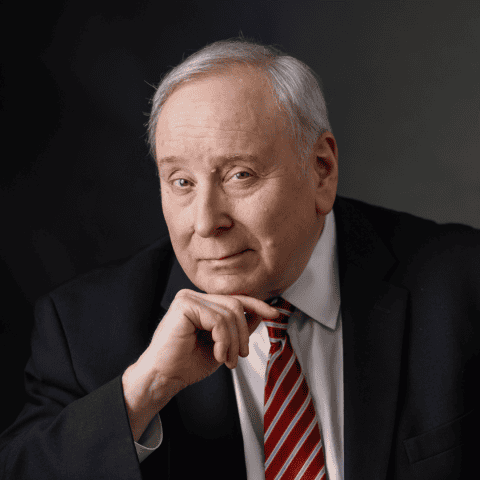
Then New Jersey congressman Tom Malinowski at a press conference on Sept. 1, 2022. Credit: N.J. Governor’s office.

Analilia Mejia, a progressive activist backed by some of Israel’s fiercest critics in Congress, holds a narrow lead for the Democratic nomination for a vacant U.S. House seat in New Jersey against former congressman Tom Malinowski. 

On Friday afternoon, Mejia had 18,058 votes (28.9%) and Malinowski 17,382 votes (27.8%) in the special primary in New Jersey’s 11th Congressional District.

Given the district’s strong blue hue, the winner of the Democratic primary will be a strong favorite to win the April 16 special election against Joe Hathaway, a Republican, to succeed Democrat Mikie Sherrill, who resigned her congressional seat when she was elected New Jersey governor last November. 

In the past, the American Israel Public Affairs Committee has supported Malinowski, a former U.S. assistant secretary of state and two-term congressman, who led throughout the night until Mejia moved ahead and remained there with 93% of the vote counted as of Friday afternoon. 

This time around, AIPAC’s United Democracy Project spent $2.3 million against the frontrunner, who has a history of defending the Jewish state, in negative ads, phone calls and mailings.

Mejia has accused Israel of committing genocide in Gaza, promised not to take an AIPAC-funded trip to Israel and received endorsements from Sen. Bernie Sanders (I-Vt.) and Reps. Alexandria Ocasio-Cortez (D-N.Y.) and Ayanna Pressley (D-Mass.)

J Street endorsed Malinowski this time, and Patrick Dorton, a spokesman for the AIPAC super PAC, told JNS last month that there were “several candidates in this race that are far more supportive of the U.S.-Israel relationship than Tom Malinowski.”

Malinowski told JNS last month that he refused to commit to supporting Israeli Prime Minister Benjamin Netanyahu 100%.

“I’m in the mainstream of both the Democratic Party and of the Jewish community in strongly supporting Israel and its right to defend itself while being critical of some of the policies of the Netanyahu government,” Malinowski said at the time. 

“If AIPAC’s definition of pro-Israel excludes someone like me, there will not be enough pro-Israel people left in America to support an alliance for Israel,” he told JNS last month.

The co-founder of the Progressive Change Campaign Committee, Adam Green, attributed Mejia’s success to her positions on issues.

“Analilia Mejia’s momentous showing proves that voters, when given a choice, want Democrats with an inspiring vision who will boldly challenge powerful interests on behalf of working families,” Green stated. 

“This is the second big congressional primary in two weeks where voters chose the more progressive candidate and made clear they want Democrats who will shake up a broken political and economic system—not just be anti-Trump,” he said.