
IDF kills Hamas terrorists in Gaza, including Oct. 7 perpetrator and another hiding in hospital


IDF kills Hamas terrorists in Gaza, including Oct. 7 perpetrator and another hiding in hospital

JNS Staff


“Prior to the strikes, steps were taken to mitigate harm to civilians, including the use of precise munitions and aerial surveillance,” the army said.

Palestinians inspect damage following an Israeli airstrike on a terrorist target in the Nuseirat camp in the central Gaza Strip, May 23, 2026. Photo by Ali Hassan/Flash90.

The Israel Defense Forces over the weekend targeted and killed a Hamas commander who infiltrated the northwest Negev as part of the terrorist group’s Oct. 7, 2023, cross-border massacre, the military said on Sunday.

Abd al-Fattah Abu al-Eish, a Hamas Nukhba Force commander, was killed in an airstrike in the Jabalia area of northern Gaza on Saturday, according to the IDF.

Raed Adel Mohammed Alyan, an operative in Hamas’s “military wing,” was eliminated in the same strike, it said.

“Recently, the terrorists advanced terror attacks against IDF troops and Israeli civilians and operated to rehabilitate the capabilities of the terrorist organization, in systematic violation of the ceasefire,” the statement said. “The strike was conducted in order to remove the threat posed.”

Precautions were taken to reduce harm to noncombatants, including the use of precision-guided munitions and aerial surveillance, the IDF added.

Also on Saturday, the IDF struck a Hamas commander in the Deir al-Balah area in the central Gaza Strip while he was hiding within the compound of Shuhada Al-Aqsa Hospital, the military said.

The terrorist recently advanced attacks on IDF troops and Israeli civilians and was targeted to remove the threat, the army said.

The Hamas operative was moreover involved in efforts to rehabilitate his organization’s capabilities, in systematic violation of the ceasefire, the military continued.

The IDF criticized Hamas’s “cynical use of humanitarian infrastructure and its systematic embedding within medical facilities to advance and carry out terrorist activity.”

It relayed that a warning was conveyed to medical authorities throughout Gaza on Aug. 27 regarding the cessation of the use of medical facilities for terrorist purposes. “It was made clear that the IDF will act against any threat should such activity continue,” the military noted.

Steps were taken to mitigate the risk to civilians during the strike, including the use of precise munitions and aerial surveillance, the IDF said.

On Friday, the IDF killed two Hamas terrorists in Gaza: Nukba Force company commander Hai Fakhri Mazloum and a sniper named Hassan Zidan Hassan Deiri, the military said.

Deiri and Mazloum were also involved in the trafficking and supply of weapons to Hamas terrorists, the IDF said.

Recently, the pair continued to advance attacks on IDF troops and Israeli civilians and operated to rehabilitate Hamas’s capabilities, in systematic violation of the ceasefire, according to the military.

“Prior to the strikes, steps were taken to mitigate harm to civilians, including the use of precise munitions and aerial surveillance,” the army said, adding, “The strikes were conducted in order to remove the threat they posed.”

IDF eliminates Nukhba Force terrorists

Last week, the IDF and Israeli Security Agency (Shin Bet) killed a Hamas Nukhba terrorist identified by the military as a bodyguard of the late Hamas leader Yahya Sinwar, in a strike in the Khan Yunis area, the military announced on Thursday.

Razek Sahil Suleiman Abu Shahma took part in the Oct. 7, 2023, infiltration of the IDF’s Re’im base, according to the statement.

In a separate strike in Khan Yunis on Sunday, the IDF killed Hazem Mousa, another Hamas Nukhba terrorist who the military said also infiltrated the base during the massacre. The IDF and Shin Bet said both men had been planning attacks on Israeli troops and civilians and working to rebuild Hamas’s “military” capabilities, in violation of the ceasefire.

On Monday, the IDF also targeted two Hamas terrorists in central Gaza who it said participated in the Oct. 7 massacre, confirming that Nukhba Force member Mohammad Abu Asaad was killed in Deir al-Balah. The military said they too had been planning attacks and rebuilding Hamas’s capabilities.

Mladenov blames Israel, Hamas for breakdown in peace process

Meanwhile on Wednesday, the Board of Peace’s public face blamed both Israel and Hamas for stalled peace efforts in Gaza, speaking in an appearance before the United Nations Security Council.

Nickolay Mladenov, the U.S.-backed board’s high representative for Gaza, told the council during a briefing on the Israeli-Palestinian file that “ceasefires that deliver nothing visible are not sustained by patience.

“They are only exhausted by it,” he said.

Mladenov said that Hamas and other Gazan terrorist groups agreed to give up their arms and yield power to a new Palestinian governing authority, but he decried Hamas for not living up to its commitments to disarm, based on a “roadmap” to peace to which Israel and Hamas agreed, at least in principle.

“Every weapon carried, every tunnel still worked on and every convoy still obstructed, sets the process back,” Mladenov said. “It will be Palestinian civilians, women and children, who will bear the consequences.”

Jerusalem did not emerge unscathed. He denounced Israel for continued military action in Gaza and for failing to use the deconfliction mechanism in place to address imminent threats.

“Will another strike on a munitions depot stop Hamas from rearming or tightening its grip on Gaza?” Mladenov asked rhetorically. “It will not.”


Zawartość publikowanych artykułów i materiałów nie reprezentuje poglądów ani opinii Reunion’68,
ani też webmastera Blogu Reunion’68, chyba ze jest to wyraźnie zaznaczone.
Twoje uwagi, linki, własne artykuły lub wiadomości prześlij na adres:
webmaster@reunion68.com


Award-Winning Australian Writer Claims Bondi Beach Terrorist Attack Was Not Antisemitic


Award-Winning Australian Writer Claims Bondi Beach Terrorist Attack Was Not Antisemitic

Shiryn Ghermezian


Australian author Richard Flanagan talks at the literature festival at the Louisiana Museum of Modern Art in Humlebaek, Denmark, Aug. 22, 2025. Photo: REUTERS/Tom Little

Award-winning Australian novelist Richard Flanagan claimed at a festival in Sydney recently that the deadly ISIS-inspired terrorist attack on a Hanukkah celebration at Sydney’s Bondi Beach last year was not antisemitic and that the “Israel lobby” could be fueling antisemitism in the country.

“Other than the murderous evil of the two gunmen, where was the antisemitism to be found at Bondi on that terrible day? Nowhere. Nowhere. Nowhere,” Flanagan said while presenting a new essay inspired by his book Heresies at the Festival of Dangerous Ideas. He then condemned “the immediate politicization of the massacre by the Israel lobby.” Saying the terrorist attack was a result of Australian antisemitism is a “destructive myth built around the Bondi massacre,” he alleged.

Flanagan, who is the first and only author to have ever won both the Booker and the Baillie Gifford coveted literary awards, read from a new essay that focused primarily on Israel, Zionism, and antisemitism. He claimed the Bondi terrorist attack against Jewish Australians showcased multiculturalism in the country because Australians from “every creed, color, and background” rushed to the scene to help, and that “far from being a culmination of a wave of national antisemitism, [the attack] was a refutation of antisemitism.”

“Freedom of speech and expression are now endangered in Australia by the politicization and weaponization of the Bondi massacre,” the author said. He also made allegations about the “renewed attempt by the Israel lobby to use that tragedy to silence discussion around Israel and Gaza, accusing Israel of “seeking to silence” Australians with the “slur” of antisemitism.

“This massacre [at Bondi Beach], it was argued, was a consequence of a government that had done nothing and ignored all warnings about antisemitism … To what extend has the Israel lobby itself contributed to antisemitism in Australia by consistently advocating for Israel’s war in Gaza in a highly aggressive fashion, always seeking to identify all Australian Jewish people with Israel’s actions and with the lobby’s own heavy-handed attempts to silence Australians,” he stated. “Could it be the lobby’s own acts fueling antisemitism?”

”But if you wish to create a machine to destroy social cohesion in this country, a machine to create hatred of Jews such as this country has never known, then endorse the ambitions of the special envoy for antisemitism,” Flanagan added. “Because although this will be the work of the Israel lobby on behalf of Israel, it will be Australian Jews who will be blamed and scapegoated for it.”

Flanagan further claimed that incidents categorized as antisemitic in Australia after the deadly Hamas-led terrorist attack in southern Israel on Oct. 7, 2023, were in fact “legitimate acts of protest by Australians about the horror of the emerging genocide in Gaza,” including the pro-Palestinian march across the Sydney Harbour Bridge in 2025, where some attendees waved flags in support of the designed terrorist organizations Al Qaeda and ISIS.

Despite Flanagan’s comments, Australia has seen a historic surge in antisemitic incidents in the wake of the Oct. 7 attack, according to the Executive Council of Australian Jewry. Meanwhile, Australian intelligence has warned the threat of antisemitism across the country has escalated from harassment and intimidation to physical attacks.

Flanagan’s speech was overflowing with anti-Israel and anti-Zionist rhetoric and conspiracy theories. He accused Israel and the “Israel lobby” of “threatening to pervert” democracy in Australia and control the country, and claimed Israel is “seeking to silence us here in Australia” when it comes to discussions about the Jewish state. “From public broadcasting, to libraries, schools, university, to sports, to medicine, grotesque demands to control every aspect of Australian public life,” he stated.

The author further claimed that Australia as a whole cannot stand up against the “Israel lobby” because Prime Minister Anthony Albanese’s government has the “spine of a licorice stick.”

He additionally criticized the International Holocaust Remembrance Alliance (IHRA) working definition of antisemitism — claiming that it “conflates criticism of Israel and criticism of Zionism with antisemitism” — and repeatedly compared Zionism with Nazism. He said at one point that Zionism “arose out of the same ethno-nationalist ferment of the late 19th and early 20th century Europe that also gave the world Nazism, fascism, extreme nationalism, and authoritarianism. Its model of society building was that of 19th century imperialism, conquest and violence to create ethnically pure countries.”


Zawartość publikowanych artykułów i materiałów nie reprezentuje poglądów ani opinii Reunion’68,
ani też webmastera Blogu Reunion’68, chyba ze jest to wyraźnie zaznaczone.
Twoje uwagi, linki, własne artykuły lub wiadomości prześlij na adres:
webmaster@reunion68.com

Niebezpieczna strategia irańskiego reżimu: przeczekać Trumpa i wrócić silniejszym

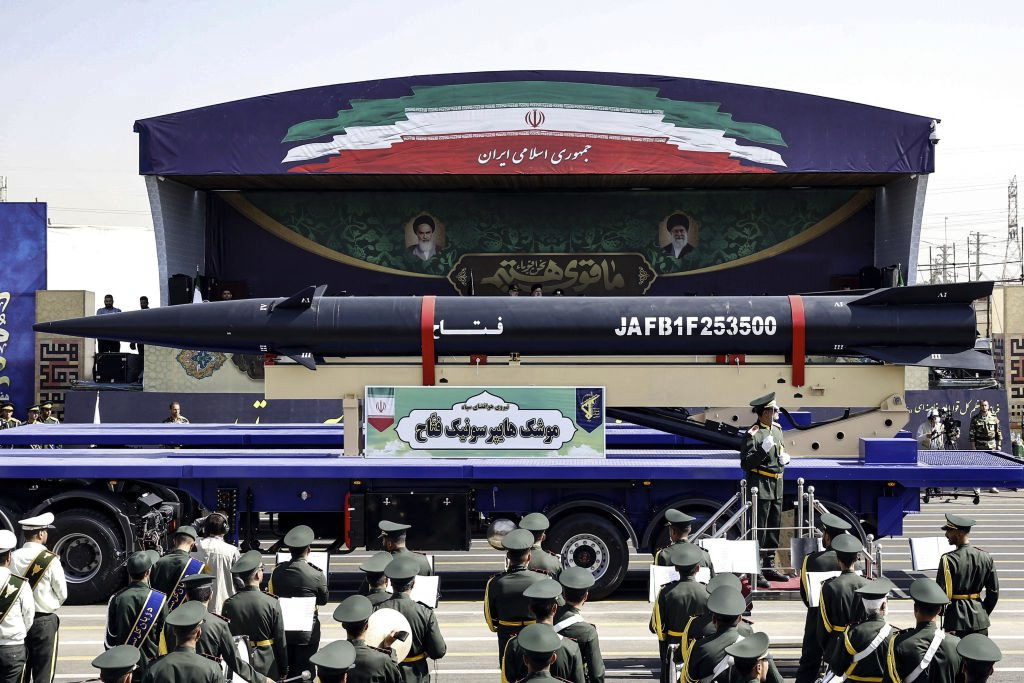
Na zdjęciu: Rakieta balistyczna Fattah prezentowana podczas dorocznej parady wojskowej w Teheranie, 22 września 2023 r. (Zdjęcie: AFP via Getty Images)


Niebezpieczna strategia irańskiego reżimu: przeczekać Trumpa i wrócić silniejszym

Majid Rafizadeh


Przez dziesięciolecia irański reżim skrywał swoje strategiczne zamiary za zasłoną niejednoznaczności, zaprzeczeń i starannie wyważonych oświadczeń. Jego obecna strategia stała się jednak wyjątkowo jawna. Niedawne wypowiedzi przypisywane Majidowi Shakeriemu, doradcy przewodniczącego irańskiego parlamentu Mohammada Baghera Ghalibafa, sugerują, że Teheran uważa, iż jego droga do zwycięstwa nie musi prowadzić przez militarne pokonanie Stanów Zjednoczonych, lecz przez odpowiednie zarządzanie konfrontacją aż do zakończenia kadencji prezydenta Donalda Trumpa w styczniu 2029 roku. Shakeri opisał tę strategię jako utrzymywanie stanu “ani wojna, ani pokój” oraz wykazywanie się “strategiczną cierpliwością” i “dogadywanie się z nim [prezydentem Trumpem], dopóki jego kadencja się nie skończy”. Jest to strategia, którą Waszyngton i jego sojusznicy powinni traktować poważnie.

Pierwotnym celem wojennym Stanów Zjednoczonych i Izraela była bezwarunkowa kapitulacja reżimu oraz jego strategiczna klęska – sparaliżowanie jego potencjału militarnego, wyeliminowanie kluczowych szczebli przywództwa oraz wymuszenie rzeczywistej kapitulacji w kwestiach programu nuklearnego, rakietowego i regionalnej agresji. Od tego czasu Teheran przeniósł ciężar konfliktu na Cieśninę Ormuz. Przez pozostałą część prezydentury Trumpa reżim zamierza prowadzić dobrze znaną grę: otwierać i zamykać szlak wodny, od czasu do czasu sugerować możliwość negocjacji, korzystać z pośredników, podchodzić do stołu rozmów, a następnie od niego odchodzić. Nim ktokolwiek się zorientuje, miną dwa lata.

To reżim, który przeciągał wojnę z Irakiem przez osiem makabrycznych lat; wie więc, jak przedłużać konflikt. Ponieważ przywódcy Iranu nie dbają o cierpienie własnego społeczeństwa – o czym najlepiej świadczą trwające egzekucje, tłumienie protestów i obojętność wobec ekonomicznego koszmaru – są w stanie wytrzymać sankcje, utratę dochodów z ropy i trudności, które doprowadziłyby do upadku większości rządów. Sprzedawanie ropy albo jej niesprzedawanie ma znaczenie drugorzędne. Jedynym priorytetem jest przetrwać Trumpa.

Kontrola nad cieśniną – przez którą w normalnych warunkach przepływa około jedna piąta ropy będącej przedmiotem światowego handlu – stała się dla Iranu “złotą bronią”, przyćmiewając nawet kwestię nuklearną jako najważniejszą kartę przetargową. Irańscy urzędnicy wielokrotnie oświadczali, że ten szlak wodny nie powróci do przedwojennego statusu otwartego międzynarodowego przejścia. Irański reżim najwyraźniej planuje kontrolować, kto może przepływać i na jakich warunkach, a gdy tylko Trump odejdzie z urzędu – nakładać opłaty lub pobierać należności za “usługi nawigacyjne”.

Negocjacje są rozpoczynane i zrywane; podpisuje się memoranda o porozumieniu, a następnie je narusza; ataki na żeglugę są wznawiane, gdy tylko trzeba odświeżyć siłę nacisku. Reżim przekształcił militarną konfrontację, której celem było jego własne przetrwanie, w długotrwałą rywalizację o globalne wąskie gardło energetyczne.

Potrzeba było niemal pięciu dekad, aby pojawił się prezydent Stanów Zjednoczonych gotowy podjąć zdecydowane działania militarne przeciwko Republice Islamskiej. Teheran kalkuluje – i prawdopodobnie słusznie – że kolejny przywódca o determinacji prezydenta Trumpa prawdopodobnie prędko się nie pojawi. Być może reżim liczy również na możliwość przejęcia kontroli nad Kongresem przez Demokratów po listopadowych wyborach, zakładając najwyraźniej, że taki Kongres nie będzie miał politycznej woli do utrzymywania długotrwałej presji.

Bogactwo, które Iran mógłby uzyskać dzięki szantażowaniu światowych rynków energii, ponownie wzmocniłoby jego wsparcie dla zastępczych milicji i organizacji terrorystycznych, a przede wszystkim – przy nieustającej pomocy Chin, Rosji i Korei Północnej – dla ostatecznej polisy ubezpieczeniowej reżimu: programu nuklearnego, który według doniesień jest obecnie ukryty pod górą Pickaxe.

Czy wolne państwa są gotowe zaakceptować ekspansjonistyczną, rewolucyjną teokrację, która całkowicie odrzuca zachodnie normy i narusza swobodę żeglugi, jako trwałego strażnika kluczowego morskiego wąskiego gardła transportowego? Prawdopodobnie tak.

Iran mógłby z czasem wyposażyć swoje ugrupowania zastępcze w zdolności nuklearne i rozszerzyć wieloletnią praktykę reżimu polegającą na przeprowadzaniu ukierunkowanych zamachów – od 1979 roku naznaczoną eliminowaniem dysydentów, przeciwników politycznych i cudzoziemców. Nie oszczędzano nawet członków rodzin i bliskich współpracowników. Triumfujący, bogatszy i ostatecznie dysponujący bronią nuklearną Iran rozpocząłby zakrojoną na pełną skalę kampanię odwetu przeciwko Amerykanom, Izraelczykom i przedstawicielom irańskiej opozycji.

Na tym właśnie polega niebezpieczeństwo pozostawienia zadania wykonanego tylko w połowie. Kampania Trumpa już wyrządziła reżimowi poważne szkody. Pozwolenie mu na pozostanie u władzy, dalszy rozwój broni nuklearnej i narzucanie kontroli nad Cieśniną Ormuz oraz Bab al-Mandab u wejścia do Morza Czerwonego oznaczałoby zmarnowanie tej przewagi.

Koniecznym celem jest bezwarunkowa kapitulacja, a nie jakieś pozorne porozumienie.

Osiągnięcie tego rezultatu będzie prawdopodobnie wymagało systematycznego usuwania kolejnych szczebli twardogłowego przywództwa, aż cała struktura się załamie. Nowi twardogłowi, umieszczani na stanowiskach w aparacie wojskowym i bezpieczeństwa, którzy pragną zemsty, muszą zostać zneutralizowani. Reżimowi nie można pozwolić się odbudować.

Globalny porządek swobody żeglugi, który stanowił fundament zachodnich demokracji i otwartego handlu, zostałby trwale zmieniony. Jedyną odpowiedzialną reakcją jest odebranie reżimowi takiej możliwości. Należy utrzymać presję gospodarczą, wznowić presję militarną, usuwać kolejne szczeble przywództwa, wspierać tych wewnątrz i poza Iranem, którzy są gotowi zakończyć rządy teokracji, oraz odrzucić każdy rezultat inny niż całkowita, bezwarunkowa kapitulacja. Przy każdym mniej zdecydowanym rozwiązaniu Trump zapisze się w historii jako ten, który otworzył drogę do znacznie bardziej niebezpiecznego świata.


Dr Majid Rafizadeh jest politologiem, analitykiem wykształconym na Harvardzie i członkiem rady “Harvard International Review”. Jest autorem kilku książek poświęconych polityce zagranicznej Stanów Zjednoczonych. Można się z nim skontaktować pod adresem dr.rafizadeh@post.harvard.edu.


Zawartość publikowanych artykułów i materiałów nie reprezentuje poglądów ani opinii Reunion’68,
ani też webmastera Blogu Reunion’68, chyba ze jest to wyraźnie zaznaczone.
Twoje uwagi, linki, własne artykuły lub wiadomości prześlij na adres:
webmaster@reunion68.com

Eurovision Bans Countries at War From Hosting Song Contest After Israel Finishes Second Place Twice


Eurovision Bans Countries at War From Hosting Song Contest After Israel Finishes Second Place Twice

Shiryn Ghermezian


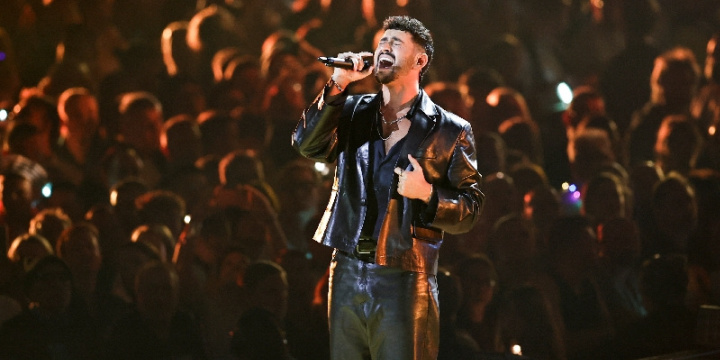
Noam Bettan, representing Israel, performs “Michelle” during the dress rehearsal 2 of the Grand Final of the 2026 Eurovision Song Contest, in Vienna, Austria, May 15, 2026. Photo: REUTERS/Lisa Leutner

Organizers of the Eurovision Song Contest (ESC) announced new rules on Wednesday that state if a country involved in an armed conflict wins the competition, it will not be allowed to host the contest the next year.

In the past, the country that wins the ESC is automatically the host of the competition the following year. The updated rules of the competition now state that the winning country “will automatically be ineligible to host the Contest if an armed conflict, a sensitive geopolitical situation, or any other situation materially affects the security, safety or stability of their state or immediate region.”

The rules also state that “where deemed necessary,” the European Broadcasting Union (EBU), which organizes the Eurovision, may commission “an independent security assessment of the winner’s region.” After the assessment, the EBU will consult with the competition’s governing body, the Reference Group, “to determine whether the winning Member is able to safely host the Contest.” If Eurovision organizers decide that the winning country is unable to host, the EBU will select an alternative host country. The alternate host “will not be required to stage the event on behalf of” another country.

“The Eurovision Song Contest is constantly evolving, and our annual review of the Rules is an important part of making sure the Contest remains fair, transparent and consistent for all those who participate, including the millions who engage with the event globally,” said Eurovision Song Contest Director Martin Green. “Guided, as always, by feedback from our Members, we have clarified and strengthened several areas for 2027. These changes are about giving everyone involved greater clarity, protecting artists and ensuring the Contest continues to provide a safe and welcoming environment, while preserving the spirit and integrity that make the Eurovision Song Contest so special.”

The rule change will directly affect not only Israel but also Ukraine, which has been in a war since Russia invaded the country in 2022. The Ukrainian rap group Kalush Orchestra won Eurovision that same year, which automatically qualified Ukraine to host the next year’s competition, but because of security risks in the country, the 2023 contest instead took place in the United Kingdom.

The new Eurovision rules were approved following feedback from participating broadcasters after the 2026 Eurovision in Vienna, Austria, in which Israel finished in second place. Israel’s continued participation in the competition has been highly criticized in recent years because of the country’s military actions in the Gaza Strip during the war with Hamas, which started after the terrorist group’s deadly attack across the Jewish state on Oct. 7, 2023. Five countries boycotted the 2026 Eurovision because of Israel’s involvement, and observers may view the updated competition rules as a response to scrutiny over Israel’s continued success in the competition. Israel finished in second place in the 2026 and 2025 Eurovisions, fifth place in 2024, and third in Eurovision 2023.

Eurovision organizers also announced on Tuesday that they have raised the minimum age for those participating in the Eurovision from 16 to 18, and clarified rules on the use of backing tracks and pre-recorded song elements.

The 2027 Eurovision Song Contest will take place in Burgas, Bulgaria, after the country’s entry, Dara, won the 2026 competition with song “Bangaranga.” Canada will also compete in the Eurovision next year, for the first time ever.


Zawartość publikowanych artykułów i materiałów nie reprezentuje poglądów ani opinii Reunion’68,
ani też webmastera Blogu Reunion’68, chyba ze jest to wyraźnie zaznaczone.
Twoje uwagi, linki, własne artykuły lub wiadomości prześlij na adres:
webmaster@reunion68.com


Suspect Arrested in Florida Antisemitic Attack Previously Accused of Slashing Giant FIFA Ball Display


Suspect Arrested in Florida Antisemitic Attack Previously Accused of Slashing Giant FIFA Ball Display

Shiryn Ghermezian


A street in Surfside, Florida. Photo: Wikimedia Commons.

A man from Miami Beach, Florida, who was arrested on Wednesday and accused of assaulting and threatening to kill a Jewish person during an antisemitic attack in Surfside had also been arrested earlier this summer for an unrelated violent incident, according to his arrest report cited by media outlets.

Jorden Stephen Perozo, 35, was taken into custody by the Surfside Police Department and is facing one count each of battery with prejudice and harassing or intimidating a person based on religious or ethnic heritage. He was arrested at his job at the Flanigan’s Bar and Grill on Harding Avenue and taken into custody without incident, according to police.

The antisemitic attack took place on Aug. 16 when a Jewish man and his wife, who were visiting Florida from New York, were walking along Harding Avenue. Perozo approached them on an electric scooter and cursed at them along with others in the Jewish community, according to the arrest report cited by NBC Miami. Perozo then punched the husband on the side of the head and told him, “Now you’re going to die. Walk away before I kill you.” He continued telling the victim that he hated him, called the couple “evil demons,” and made statements targeting Israel and “Palestine,” the affidavit stated. The victim’s wife recorded the incident on her cellphone.

Perozo appeared in court on Thursday. He was issued a $6,000 bond and ordered to stay away from the couple, according to NBC Miami.

Perozo was arrested in June on a criminal mischief charge after police accused him of slashing a giant inflatable FIFA ball that was on display in Miami Beach, as the city hosted 2026 FIFA World Cup matches.


Zawartość publikowanych artykułów i materiałów nie reprezentuje poglądów ani opinii Reunion’68,
ani też webmastera Blogu Reunion’68, chyba ze jest to wyraźnie zaznaczone.
Twoje uwagi, linki, własne artykuły lub wiadomości prześlij na adres:
webmaster@reunion68.com