Archive | November 2017

PA: Israel destroying tunnel is an ‘aggression’

PA: Israel destroying tunnel is an ‘aggression’

Dalit Halevi


PA government denounces Israel for destroying terrorist tunnel leading from Gaza into Israel.

Rami Hamdallah (Reuters)

The Palestinian Authority (PA) government, headed by Rami Hamdallah, on Tuesday met in Ramallah and denounced Israel’s destruction of a terrorist tunnel leading from Gaza into Israel, during which terrorists were killed, including a senior member of the Islamic Jihad.

“At the start of the weekly meeting in Ramallah, headed by Rami Hamdallah, we sent a message of mourning for the martyrs of the crime committed by the occupation forces yesterday in the Gaza Strip, which resulted in the deaths of nine civilians, with five civilians still missing, and the wounding of 14 civilians whose injuries were described as serious,” said a statement from the Ramallah-based government.

“The government strongly condemned this aggression by stressing that the international community, and first and foremost the U.S. administration, must take aggressive measures to force Israel to cease all attacks on our people and to act to provide international protection to the Palestinian people,” it added.

On Monday, the Fatah faction which is headed by PA chairman Mahmoud Abbas issued a statement condemning what it called “the Israeli crime directed against our people in Gaza, which resulted in the deaths of eight civilians and the wounding of 14 others.”

These statements of condemnation come from Fatah, which is often touted by the West as a “peace partner” for Israel. The group has in the past praised and even encouraged terrorist attacks against Israelis.

Fatah recently signed a reconciliation agreement with Hamas, an internationally recognized terrorist organization. The agreement stipulates that the PA is to resume full control of Hamas-controlled Gaza by December 1.

The Israeli Cabinet has made clear that it would not negotiate with the new Palestinian unity government until Hamas recognizes Israel, disarms, and severs its ties with Iran.

Hamas has already ignored this demand and sent a high-ranking delegation to Iran, where its deputy leader, sanctioned terrorist Salah Al-Aruri, declared that the group would never agree to sever its ties with Iran and give up the armed struggle against “the Zionist regime”


twoje uwagi, linki, wlasne artykuly, lub wiadomosci przeslij do: webmaster@reunion68.com


Poles Cry for ‘Pure Blood’ Again

Poles Cry for ‘Pure Blood’ Again

JAN T. GROSS


Nationalists marching in Warsaw, on Saturday. Credit Jaap Arriens/NurPhoto, via Getty Images

If you want a sense of where Poland could be heading, look no further than the events last Saturday in Warsaw.

Tens of thousands of people — many of them young men with crew cuts, but some parents with children, too — flocked to the Polish capital to celebrate Independence Day in a march organized in part by two neo-fascist organizations. They waved white and red Polish flags, they brandished burning torches, and they wore “white power” symbols. They carried banners declaring, “Death to enemies of the homeland,” and screamed, “Sieg Heil!” and “Ku Klux Klan!”

The official slogan of the march was “We want God” — words from an old hymn that President Trump quoted during his speech in Warsaw in July.

A dozen incredibly courageous women showed up to protest the march. After mixing with the marchers, they unraveled a long strip of cloth emblazoned with “Stop Fascism.” They were immediately attacked. Their banner was ripped apart. Marchers pushed some of the women to the ground and kicked others.

Were these women exaggerating in calling the march fascist? Or are we in fact witnessing a resurgence of fascism in Poland? To steal a phrase: I believe the women.Though the Polish president, Andrzej Duda, condemned the march, saying Poland has no place for “sick nationalism,” the interior minister, Mariusz Blaszczak, called it “a beautiful sight.” He added: “We are proud that so many Poles have decided to take part in a celebration connected to the Independence Day holiday.”

Given what transpired, this sounds shocking. But for those of us who follow Polish politics, the minister’s take didn’t come as a surprise.

Ever since the Law and Justice Party won both the presidential and parliamentary elections in 2015, Poland has been undergoing a disturbing political transformation. Law and Justice is an Orwellian name for a party that constantly violates the law, breaks constitutional provisions and is hellbent on subjecting the courts to its control. The party is dismantling the institutional framework of parliamentary democracy piece by piece in order to remove any restraints on the personal power of its leader, Jaroslaw Kaczynski. “Prezes,” the Boss, people call him.

Two years ago, the party bet that latching onto the refugee crisis in Europe would give it purchase on the votes necessary to win. Its calculation proved entirely correct.

One of the first institutions the party hijacked was public television. Law and Justice has turned it into Fox News on steroids, paid for by the taxpayers. It feeds viewers nonstop propaganda about the mounting threat to Poland’s sovereignty from the European Union, specifically in the form of Muslim refugees.

Those refugees present a threat to our way of life, the government and the press insist. They will assault our women, they say, and they are carrying infectious diseases to boot. A year ago, a quarter of Poles opposed accepting anyone fleeing the ravages of war in the Middle East; after months of relentless propaganda, 75 percent are now opposed. This year the country has let in only 1,474 asylum seekers, nearly all of them from Russia or Ukraine.

Yet the marchers in Warsaw seem to feel that their country is being overwhelmed. “We don’t want Muslims here,” they cried. “No to Islam.” And “refugees get out.”

Until very recently Poles had never given much thought to Islam beyond occasionally expressing a sense of historical pride that a Polish king, Jan Sobieski, defeated the Turks in a 17th-century battle near Vienna, thus saving Christian Europe from the infidels. This fits a recurrent theme in Polish national mythology: Poland as a rampart of Christianity, the Christ of Nations. Poland, according to this trope, has repeatedly, and heroically, suffered for the sake of others, especially the rest of Christian Europe.

While the Warsaw demonstrators paraded with burning torches, Mr. Kaczynski gave a speech in Krakow expressing a new twist on this familiar narrative: The Poles’ mission now is to save a “sick Europe” from itself. The neo-fascist marchers in Warsaw suggested, as if on cue, how it could be done: “Pure Blood,” read one banner. “White Europe,” another said.

But most Poles couldn’t tell a Muslim or a Buddhist from Jesus. Their animus, which carries Polish nationalism into such an aggressively xenophobic articulation, springs primarily from a deep pool of ethnic-cum-religious hatred, which is indigenous to Poland and has historically been aimed at Jews.

Anti-Semitism is a deeply entrenched and historically rooted element of this Polish nationalist worldview. It was the ideological cornerstone of the prewar National Democratic Party of Roman Dmowski, at whose statue the Independence Day march began this year. A youth organization that helped organize the march in Warsaw is a descendant of a fascist offshoot of the party, whose members took to the streets in the 1930s to beat Jews and to slash them with razor blades affixed to wooden canes. Those who marched on Saturday are the heirs to this vile legacy.

Poland’s leaders have let an evil genie out of the bottle. What we’ve witnessed on the streets of Warsaw represents a threat not only to liberal democracy in Poland but also to the stability and welfare of the European Union.

Half of the six million Jewish victims of the Holocaust were Poles. Two million more Poles were killed during the German occupation. How many deaths are required for leaders to learn that words and ideas can kill?


Jan T. Gross is an emeritus professor of history at Princeton and the author of “Neighbors: The Destruction of the Jewish Community in Jedwabne, Poland.”

A version of this op-ed appears in print on November 17, 2017, on Page A27 of the New York edition with the headline: Poles Cry for ‘Pure Blood’ Again.


twoje uwagi, linki, wlasne artykuly, lub wiadomosci przeslij do: webmaster@reunion68.com


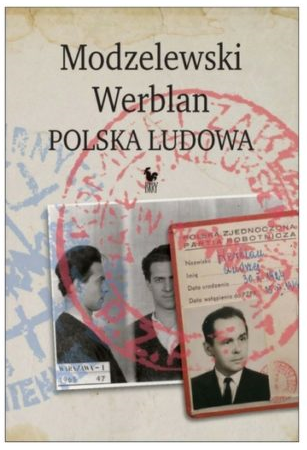
PRL na cztery ręce

PRL na cztery ręce

Michał Przeperski


To jedna z najbardziej wyczekiwanych historycznych książek roku 2017. Nieczęsto we wspólnej, intelektualnie pogłębionej dyskusji o najnowszych dziejach Polski uczestniczą postaci tak nieszablonowe i tak różne. Jaki jest efekt takiego spotkania?


Karol Modzelewski to legenda opozycji demokratycznej, człowiek który już od lat 60. wywoływał ból głowy u władców PRL-u. Tym­czasem dialog przychodzi mu prowadzić z szarą eminencją rządów komunistycznych, z czło­wiekiem, który w centrum władzy przetrwał wiele poli­tycznych zakrętów. Andrzej Werblan zasiadał bowiem w Komitecie Centralnym PZPR od roku 1948, aż do lata 1981 r., z czego ostatnie miesiące jako członek Biura Politycznego. Wieczny buntownik spotyka się zatem z wiecznym konformistą. Rozmawiają ze sobą nie tylko świadkowie historii, ale też zawodowi histo­rycy. Modzelewski – światowej sławy mediewista, Werblan – autor niedoścignionej, choć jedynie częściowej, biografii Władysława Gomułki. Dlatego też oprócz solidnej dawki wspomnień otrzymujemy zapis frapującego sporu o interpretację dziejów PRL-u. Pasjonującego, wielowątkowego i idącego pod prąd czarno-białym ujęciom.

Książka składa się z 29 rozmów, których tematem są kluczowe wydarzenia z dziejów PRL-u: od instalacji władzy komunistycznej w Polsce, przez kolejne kryzysy, po rok 1989 i upadek systemu. To Werblan od początku nadaje rozmowie ton. Jego wywody są chłodne i wręcz do bólu logiczne. Wychodzi z założenia, że po prze­granej II wojnie światowej pogodzenie się z jałtańskim status quo było dla Polaków absolutną koniecznością. Pokazuje to tak z perspektywy wielkiej polityki i jej aktorów (Stalin, Mikołajczyk, Gomułka), jak własnych doświadczeń: wywieziony na Syberię, mógł wrócić do Polski tylko razem z sowiecką armią. W takiej wizji wszelkie próby oporu, zwłaszcza zbrojnego, są uzna­wane – mówiąc oględnie – za politycznie nierozsądne. Jednak niektóre opinie Werblana wzbudzą sprzeciw. Czy po 1945 r. żołnierze podziemia niepodległościo­wego rzeczywiście mogli znaleźć dla siebie szansę na nowe życie np. na tzw. Ziemiach Odzyskanych? Choćby przykład gen. Fieldrofa „Nila”, który padł ofiarą mordu sądowego, dowodzi, że polityczny realizm nie był drogą dla każdego.

Historyczny fatalizm ciąży na całej interpretacji dziejów PRL-u prezentowanej przez Werblana. Jego wywody są precyzyjne, jeśli chodzi o kalkulacje polityczne, ale niemal zupełnie brak tu płaszczyzny zaangażowania ideowego. I to tak prokomunistycznego, jak i antysys­temowego. W tej logice List do Partii Kuronia i Modze­lewskiego, w poł. lat 60. rzucający polityczne wyzwanie rządzącej monopartii, jest działaniem straceńczym. Werblan nie jest go w stanie wytłumaczyć, sam pyta w pewnym momencie Modzelewskiego: „Co wyście wówczas myśleli?”. I uzyskuje odpowiedź: „Sądziliśmy, że system upadnie, nasze myślenie było zupełnie uto­pijne”. Wobec takich postaw wszelka Realpolitik jest bezradna.

Choć chłodne spojrzenie na PRL jest potrzebne, to prezentowane przez dawnego partyjnego aparat­czyka niebezpiecznie zbliża się do cynizmu. I wówczas Modzelewski przybywa z pomocą, delikatnie polemi­zuje, pokazuje inną perspektywę. Oto np. Werblan zna­komicie rekonstruuje atmosferę panującą w Komitecie Centralnym PZPR po śmierci Stalina i pogłębiającą się erozję centrum władzy. Buntowanie się aparatu partyj­nego przeciwko dotychczasowym władcom, dyskusje kuluarowe i na forach oficjalnych – to elementy wyjąt­kowo cenne dla każdego historyka. Ale w tej opowieści o drodze do Października brakuje masowych emocji. Te barwnie odmalowuje Modzelewski, który gabinetową historię polskiego Października uzupełnia o swoje inte­rakcje z robotnikami, o analizę języka polityki, którym się wówczas posługiwano. Dzięki temu fragmenty poświęcone okresowi 1954–1957 należą do najciekaw­szych w całej książce.

Cztery lata temu Modzelewski opublikował wspo­mnienia Zajeździmy kobyłę historii. W tej pasjonującej i mądrej książce pomieścił wiele anegdot i spostrzeżeń, które ponownie pojawiają się w rozmowie z Werblanem. Tymczasem ten ostatni jak do tej pory nie wydał żad­nych wspomnień, dlatego też jego wypowiedzi stanowią trudne do przecenienia źródło wiedzy o dziejach poli­tycznych PRL-u.

Werblan utrzymuje m.in., że po nieudanej pod­wyżce cen i użyciu siły wobec robotników Radomia, Ursusa i Płocka w czerwcu 1976 r. Edward Gierek pla­nował powtórzenie operacji cenowej. Przygrywkę miały stanowić reżyserowane masowe wiece poparcia w całym kraju. Niemal w ostatniej chwili Leonid Breż­niew „poradził” polskim towarzyszom, by zrezygnowali z tego kroku. To informacja niezwykle istotna, stano­wiąca asumpt do zupełnie nowego spojrzenia na rok 1976 i racjonalność ekonomiczno-społecznej polityki epoki gierkowskiej.

Wszelkie informacje, jakie odnajdujemy w książce, trzeba weryfikować, co nie jest zadaniem łatwym, bo po latach Werblan pozostaje częstokroć jedynym źródłem. Zdarza mu się popełniać mniejsze błędy faktograficzne (myli się np., wspominając, kiedy Stefan Żółkiewski został redaktorem naczelnym „Nowej Kultury”), ale są też chwile znacznie bardziej kłopotliwe. W pewnym miejscu wspomina np., że znana historyk Maria Tur­lejska została współpracowniczką NKWD jeszcze jako uczennica szkoły średniej w 1940 r. Tego rodzaju opinia nie opiera się na żadnych znanych dokumentach sowieckich, a zarzut jest, rzecz jasna, bardzo poważny. Werblan może się przecież mylić, tak jak myli się, nie dostrzegając faktu, że Turlejska miała wtedy za sobą ukończone studia na Uniwersytecie Warszawskim.

Ważnym elementem dialogu prowadzonego przez osoby z dwóch stron politycznej barykady jest autorefleksja. Modzelewski, opowiadając o doświad­czeniu PRL-u, otwarcie prezentuje swoją ideową ewo­lucję, drogę od wierzącego młodego marksisty do jed­nego z głównych wrogów systemu komunistycznego. Podobnie jak w Zajeździmy kobyłę historii, widzimy go jako żywego człowieka z jego rozterkami, wątpli­wościami i naiwnościami. Dzięki temu jego wypo­wiedzi nie tylko zyskują na wiarygodności, ale pozwa­lają uchwycić to, co wymyka się sztywnej politycznej racjonalności.

Postawa Werblana jest inna. Kładąc nacisk na poli­tyczne dzieje PRL-u, redukuje on siebie samego do roli niewielkiego trybika w machinie. Tym samym unika też określenia własnej roli w tych wydarzeniach. A przecież bez tak sprawnych urzędników jak on system nie mógłby funkcjonować. Co więcej, w jego życiorysie nie brakuje trudnych do zrozumienia niejednoznaczności: przy­kładem jego postawa w marcu 1968 czy dobrowolne odejście na polityczną emeryturę już w 1982 r. Nie idzie tu przecież o to, by Werblan kajał się czy przepraszał za swoje życiowe wybory, ale by pozwolił je lepiej zro­zumieć potomnym. Niestety, pozostaje jedynie konse­kwentne odwoływanie się do politycznego fatalizmu, co stanowi wielkie rozczarowanie. Owszem, celnie wska­zuje on, że polityczne systemy wprowadzane drogą rewolucyjnej przemocy mają krótki żywot. Ale czy rze­czywiście, obserwując upadek PRL-u, tak po prostu pogodził się z tym, że „jej czas minął”? W to bardzo trudno jest uwierzyć.

Realizm Werblana, moderowany przez refleksyj­ność Modzelewskiego, stanowi znakomity materiał do przemyśleń na temat PRL-u. To jednak na pewno rzecz dla zaawansowanych – bardzo subiektywna, momen­tami jednostronna. Stawia więcej pytań, niż daje odpo­wiedzi. Tym bardziej warto po nią sięgnąć.

_

Karol Modzelewski, Andrzej Werblan, Robert Walenciak


twoje uwagi, linki, wlasne artykuly, lub wiadomosci przeslij do: webmaster@reunion68.com


17 Israeli companies pioneering artificial intelligence

Israel21c17 Israeli companies pioneering artificial intelligence

Abigail Klein Leichman


Artificial intelligence illustration via Shutterstock.com

Artificial intelligence (AI) gives machines the ability to “think” and accomplish tasks. AI already is a big part of our lives in areas such as banking, shopping, security and healthcare. Soon it will help us get around in automated vehicles.

Artificial intelligence (AI) gives machines the ability to “think” and accomplish tasks. AI already is a big part of our lives in areas such as banking, shopping, security and healthcare. Soon it will help us get around in automated vehicles.

By 2025, the global enterprise AI market is predicted to be worth more than $30 billion. Israeli industry can expect a nice piece of that pie due to its world-class capabilities in AI and its subsets: big-data analysis, natural-language processing, computer vision, machine learning and deep learning.

Daniel Singer of Medium recently mapped more than 430 Israeli startups using AI technology as a core part of their offering — nearly triple the number since 2014. Israeli AI startups have raised close to $9 million so far this year.

“The AI space in Israel is certainly growing and even leading the way in some fields of learning technologies,” writes Singer.

Israel AI infographic copyrighted by Daniel Singer

Also significant are Israeli tools integral to AI functionality. For example, Mellanox Technologies’ super-fast data transmission and interconnect solutions make AI possible for customers including Baidu, Facebook, NVIDIA, PayPal, Flickr, Microsoft, Alibaba, Jaguar, Rolls Royce, NASA and Yahoo.

In October 2017, Intel Israel announced the establishment of an AI center on the company’s campuses in Ra’anana and Haifa, as part of a new global AI group.

Below are 17 interesting Israeli startups built on AI technology, in alphabetical order.

AIdoc

AIdoc uses artificial intelligence to help radiologists read images more precisely. Photo: courtesy

read more: 17 Israeli companies pioneering artificial intelligence


twoje uwagi, linki, wlasne artykuly, lub wiadomosci przeslij do: webmaster@reunion68.com


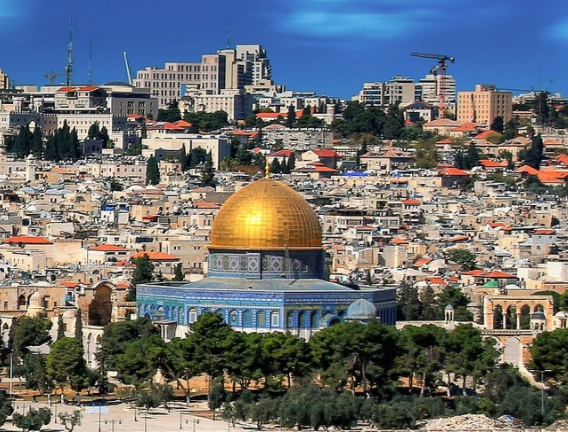
U.S. Congress Holds Hearing on Jerusalem Embassy Move

U.S. Congress Holds Hearing on Jerusalem Embassy Move

JTA


Photo: Wikimedia Commons

A hearing was held Wednesday before the national security subcommittee of the U.S. House of Representatives Oversight Committee.

A congressional panel heard testimony on whether the United States should move its Israeli Embassy to Jerusalem.

The hearing Wednesday by the national security subcommittee of the U.S. House of Representatives Oversight Committee was not attached to any bill. Since 1995, Congress has recognized Jerusalem as Israel’s capital and mandated the move there.

Presidents since then have exercised a national security waiver, which lasts six months. President Donald Trump exercised the waiver in June, although he had campaigned on moving the embassy from Tel Aviv.

The hearing appeared essentially performative and not aimed at advancing any legislation. It was geared to make the case that Trump should announce a move before Dec. 1, the next deadline to waive the 1995 law.

Most of the witnesses and lawmakers favored the move, including the subcommittee’s chairman, Rep. Ron DeSantis, R-Fla. Witnesses who backed the move included John Bolton, a former U.S. ambassador to the United Nations; Dore Gold, a former Israeli ambassador to the United Nations; Morton Klein, the president of the Zionist Organization of America; and Eugene Kontorovich, a professor of international law at Northwestern University.

Opponents to moving the embassy say it would impinge on Palestinian claims to a capital in the city’s eastern sector and could spark violent protests worldwide by Muslims.

Those concerns were expressed by Rep. Stephen Lynch, D-Mass., the ranking Democrat on the subcommittee, Rep. Peter Welch, D-Vt., and Michael Koplow, the policy director for the Israel Policy Forum, who was the fifth witness.

The comity was such that Rep. Mark Meadows, R-N.C., the chairman of the Republican Party’s hyperconservative Freedom Caucus, called Koplow the “skunk at the party” for explaining why an embassy move could potentially trigger turmoil.

Meadows asked Bolton whether he thought Trump’s failure to move the embassy would offend the U.S. Jewish community. Bolton laughed and said that he could not answer on behalf of the Jews, but said “as a Lutheran, I would be offended.” Meadows laughed and said that he, too, as an evangelical, would be offended.


twoje uwagi, linki, wlasne artykuly, lub wiadomosci przeslij do: webmaster@reunion68.com