Archive | August 2022

„Nie chciał opuścić dzieci nawet na minutę”. 80 lat temu Janusz Korczak poszedł na Umschlagplatz


„Nie chciał opuścić dzieci nawet na minutę”. 80 lat temu Janusz Korczak poszedł na Umschlagplatz

Przemysław Batorski


80 lat temu, 5 sierpnia 1942 roku, Janusz Korczak poszedł wraz z dziećmi z Domu Sierot przy Siennej 16 na Umschlagplatz. Razem z nim szła Stefania Wilczyńska – wieloletnia współpracowniczka. Mijały dwa tygodnie od rozpoczęcia przez Niemców wielkiej deportacji z getta warszawskiego.

.
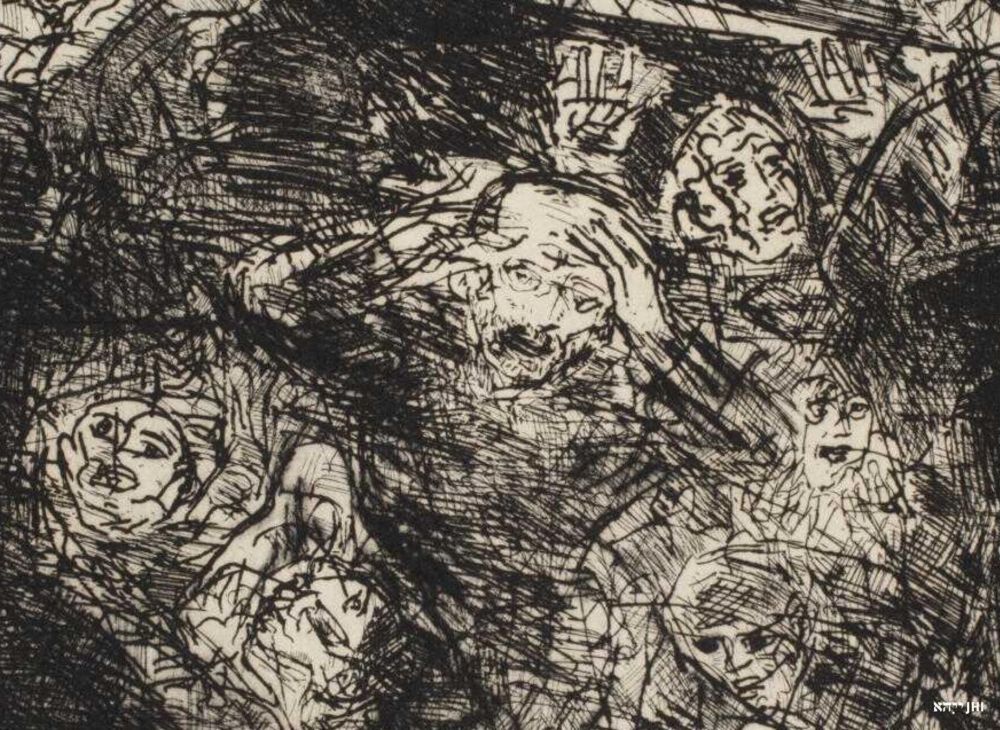
celnikier_korczak_fragment_zw_1.jpgIzaak Celnikier, „Umschlagplatz (Korczak)”, inny tytuł: „Śmierć Janusza Korczaka” (detal)

Nie wiemy, kiedy i gdzie dokładnie Korczak – pedagog, pisarz, społecznik, który pomógł w swoim życiu niezliczonym sierotom, potrzebującym dzieciom i dorosłym, oraz stał się inspiracją dla milionów innych ludzi – został zamordowany. Może na Umschlagplatz. Może zmarł z braku powietrza i wody w przepełnionym pociągu jadącym do Treblinki. Możliwe, że było to 6 sierpnia 1942 roku w obozie zagłady Treblinka, gdyż transporty wyjeżdżały z Warszawy zazwyczaj wieczorem i przyjeżdżały tam o poranku następnego dnia. Kilka lat temu sąd przyjął za datę śmierci Korczaka 7 sierpnia.

„Zaproponowałem Korczakowi, aby udał się ze mną do Gminy w celu skłonienia jej do podjęcia interwencji. Odmówił, nie chciał opuścić dzieci nawet na minutę”

– powiedział Nachum Remba, który wyprowadzał z Umschlagplatzu żydowskich intelektualistów. Korczak nie przyjął oferty przyjaciół, by wyjść z getta, nawet z samego Umschlagplatzu, miejsca cierpień i śmierci tysięcy Żydów. Pogłoski o tym, że sami Niemcy oferowali Korczakowi oszczędzenie życia, są zapewne mitem.

celnikier_korczak_zw_1.jpg [496.13 KB]

„Dziś widziałem Janusza Korczaka,
Jak szedł z dziećmi w ostatnim pochodzie,
A dzieci były czyściutko ubrane,
Jak na spacer niedzielny w ogrodzie.

(…)

Janusz Korczak szedł prosto na przedzie
Z gołą głową – z oczami bez lęku,
Za kieszeń trzymało go dziecko,
Dwoje małych sam trzymał na ręku.”

– pisał Władysław Szlengel.

Istnieją dziesiątki sprzecznych relacji ludzi, którzy widzieli ostatnią drogę Korczaka, Wilczyńskiej i ich podopiecznych na Umschlagplatz. Wszystkie zgadzają się, że był niezwykle upalny dzień. Niektórzy twierdzili, że dzieci z dumą niosły sztandary Domu Sierot. Ale inni zapamiętali to zupełnie inaczej.

Marek Rudnicki wspominał:

„Była straszliwa, zmęczona cisza. Korczak wlókł nogę za nogą, jakiś skurczony, mamlał coś od czasu do czasu do siebie. Gdy sobie tę scenę przypominam – rzadko mnie ona opuszcza – wydawało mi się, że słyszałem, że mamlał słowo «dlaczego» – byłem dość blisko, by usłyszeć. Ale to na pewno tylko wybryk mojej wyobraźni, w retrospekcji. (…) Tych paru dorosłych z Domu Sierot, w tym Stefa szła obok, jak ja lub za nim, dzieci początkowo czwórkami, potem jak popadło, w pomieszanych szeregach, gęsiego. Któreś z dzieci trzymało Korczaka za połę, może za rękę, szły jak w transie”.

Po wojnie Chaim Sztajer, jeden z ocalałych członków Sonderkommando w Treblince, uczestnik buntu z 2 sierpnia 1943 roku, twierdził, że brał udział w wyciąganiu ciała Korczaka i „200 do 300 dzieci” z komory gazowej. Podawał jednak, że miało to miejsce we wrześniu 1942 roku, a śmierć Korczaka i dzieci mogła nastąpić tylko na początku sierpnia.


Izaak Celnikier (1923-2011) był wychowankiem Domu Sierot Korczaka w latach 1934-1938, więźniem getta białostockiego, Auschwitz, Mauthausen, Sachsenhausen i Flossenbürga. Tak wyobrażał sobie wejście Korczaka na Umschlagplatz. Akwaforta z lat 80. należy do zbiorów ŻIH.

Celnikier „stworzył studium jedenastu twarzy wyłaniających się z ciemności, w środkowej części grafiki twarz Janusza Korczaka. Kobieta ukazana w pozycji horyzontalnej w lewej górnej części przedstawienia najwyraźniej nie żyje. Ciemniejszymi plamami zostały zaznaczone postacie oprawców”. 

korczak_post_ze_szlenglem_2019.jpg [922.37 KB]


Źródło informacji: Agnieszka Witkowska-Krych (ŻIH, UW), „Mniej strachu. Ostatnie chwile z Januszem Korczakiem”, Wydawnictwo Akademickie Dialog, Warszawa 2019.


Zawartość publikowanych artykułów i materiałów nie reprezentuje poglądów ani opinii Reunion’68,
ani też webmastera Blogu Reunion’68, chyba ze jest to wyraźnie zaznaczone.
Twoje uwagi, linki, własne artykuły lub wiadomości prześlij na adres:
webmaster@reunion68.com


After new Gaza strike, Israel says it has killed all Islamic Jihad leaders

After new Gaza strike, Israel says it has killed all Islamic Jihad leaders

ANNA AHRONHEIM, JERUSALEM POST STAFF


IDF states that children in Jabaliya refugee camp killed by failed Islamic Jihad rocket launch, not by IDF airstrikes.
.

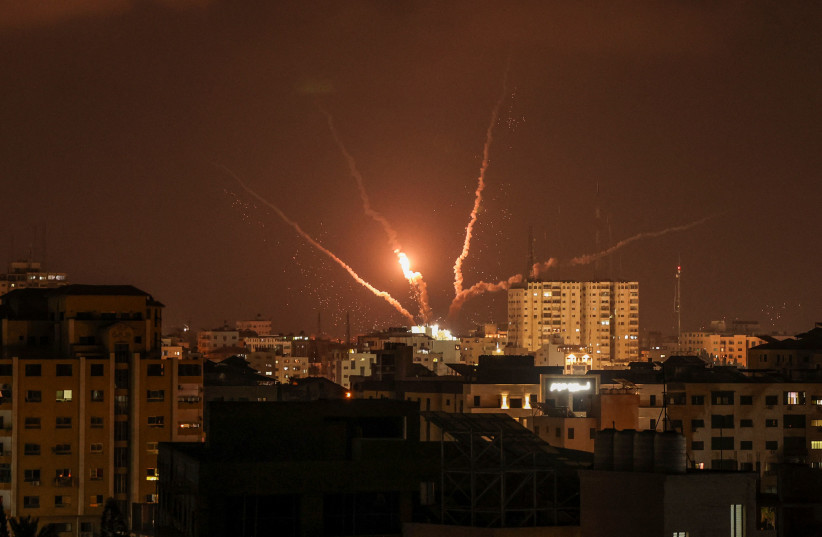
A salvo of rockets is fired from Gaza City toward Israel, on August 6, 2022. / (photo credit: MOHAMMED ABED/AFP/GETTY IMAGES)

The IDF confirmed on Saturday night that senior Islamic Jihad operative Khaled Mansour had been killed in an Israeli airstrike and that to the best of the military’s knowledge, all senior Islamic Jihad officials in Gaza had been eliminated since Operation Breaking Dawn began on Friday.

Palestinian Islamic Jihad also confirmed Mansour’s death from an IDF airstrike early Sunday morning.

Sirens blared in Tel Aviv on Saturday evening as the IDF continued the operation against Palestinian Islamic Jihad in the Gaza Strip as more than 350 rockets were launched toward Israel in the first full day of fighting between the two groups.

The IDF confirmed that it was striking multiple targets in Gaza on Saturday night and early Sunday morning, with blasts heard in Rafah, in southern Gaza.

Head of the Operations Directorate Maj.-Gen. Oded Basiuk confirmed late Saturday night that senior Islamic Jihad operative Khaled Mansour was the target of the strikes and had been eliminated. He added that “according to our intelligence…all of the senior security operatives of Gaza’s Islamic Jihad have been eliminated.”

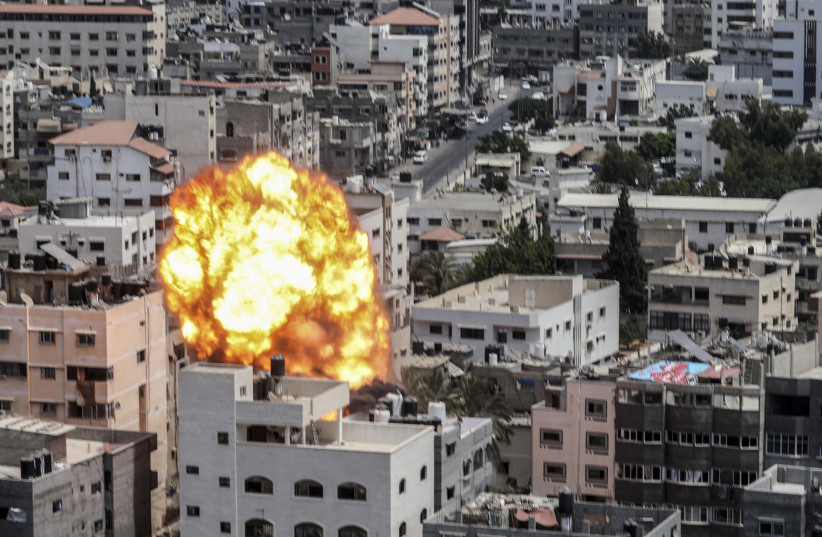
A fireball and smoke erupt following an Israeli air strike on a building in Gaza City, on August 6, 2022. (credit: ATTIA MUHAMMED/FLASH90)

Early Sunday morning, Hamas put out an announcement condemning his killing, adding that it will serve as fuel for the fight of the Palestinian people.


وكالة شهاب للأنبا
@ShehabAgency
حركة حمــ ـاس: “ننعى إلى شعبنا الفلسطيني عامة، وإلى إخواننا في حركة الجهــ ـاد الإسلامي خاصة، وإلى أمت العربية والإسلامية، قائد المنطقة الجنوبية في سـ ـرايا القــدس الشهــيد خالد سعيد منصور وإخوانه الأبطال، وكل شهـ ـداء شعبنا الأطهار”.

Image


The IDF continued to strike cells that had been planning to fire mortar shells as well as rocket launching sites after they fired toward Israeli communities near the border. Several Palestinian operatives belonging to Islamic Jihad were killed and injured in the strikes.According to reports in Gaza, several civilians were killed including a 5-year-old girl and a 25-year-old woman, and at least 125 more were injured.

Explosion in Jabaliya refugee camp

An explosion in Jabaliya on Saturday night killed at least nine people, including at least four children.

Despite initial reports stating that the deaths had been caused by an IDF strike, IDF Spokesperson Brig.-Gen. Ran Kochav said that the civilians, including the children, were killed because of a failed rocket launch that came shortly before a rocket barrage. “We did not launch strikes at that time,” he said.

International spokesperson for Prime Minister Yair Lapid Keren Hajioff released a statement on the incident, refuting claims that Israel had been responsible for the death.

“Islamic Jihad is killing Palestinian children in Gaza. One in four rockets fired from Gaza towards Israel – lands inside the Gaza Strip,” said Hajioff. “Iran’s proxies – including Islamic Jihad – have a long history of hiding behind civilians to target Israeli civilians. The world should be outraged at this terrorist group targeting innocent Israelis and killing innocent Gazans.”

“Israel will continue to stand up to this vicious terrorist organization – which threatens Israelis and Palestinians alike.”

“Islamic Jihad is killing Palestinian children in Gaza. One in four rockets fired from Gaza towards Israel – lands inside the Gaza Strip. Iran’s proxies – including Islamic Jihad – have a long history of hiding behind civilians to target Israeli civilians. The world should be outraged at this terrorist group targeting innocent Israelis and killing innocent Gazans.”Keren Hajioff, international spokesperson for Israeli Prime Minister Yair Lapid

An Israeli intelligence official said that “we also have solid information from many Palestinian citizens that verifies the fact that the harm to the children in Jabaliya” was caused by a failed rocket of the Islamic Jihad.”

With over 15% of all rockets fired by Islamic Jihad falling in the Strip, the military says that it could say with certainty that the Jabaliya explosion was not caused by an Israeli airstrike and that the Israeli military was not in the area at the time. At least 12 Islamic Jihad operatives have also been killed since the fighting began.

IDF strikes Gaza

The IDF said that Israeli Air Force jets, armed drones, helicopters, tanks, artillery and elite commando ground Maglan and Egoz units carried out over 40 strikes, hitting dozens of targets in Gaza, including military bases, weapon production sites and storehouses, rocket launching sites, buildings used by operatives, observation posts and more.

Combat helicopters and fighter jets also struck two naval ammunition depots located in the homes of Islamic Jihad operatives.

Kochav said that Israel is not holding any negotiations for a ceasefire and is expecting the fighting to last for at least a week.

“We are continuing; we aren’t finished yet. We will continue to act, professionally and send a message that we have strong intelligence and deterrence. This message will be passed not only to Islamic Jihad but all terror groups,” he said.

Visiting an Iron Dome battery on Saturday along with Air Defense Array Commander Brig.-Gen. Gilad Biran, Defense Minister Benny Gantz thanked the troops manning the system and guarding the home front “with eyes on the target at all times.”

“Islamic Jihad leaders lounge abroad in restaurants and hotels in Tehran, Syria and Lebanon. They are disconnected from the Palestinian people and they seriously harm the lives of the Gazan people. They too will have to pay the price. The IRGC [which supports Islamic Jihad], will not pay the salaries of Gaza residents,” Gantz said.

Saying that the operation aims to thwart terror attacks by the Islamic State and restore the quiet and stability to the area, Gantz said that the IDF “has thwarted and will continue to thwart terrorists planning to launch rockets and mortars into Israel.”

The minister said that the IDF hit dozens of targets belonging to the group and that the “offensive effort against the perpetrators of terror will continue and intensify-without borders and without limitations.”

On Friday evening, Gantz approved a draft order calling up to 25,000 soldiers in reserve duty for operational purposes. The IDF began calling them up in the Southern Command, Air Defense Array and Home Front Command, as well as other combat troops and officers.

 A picture taken on August 5, 2022, shows Palestinian rockets fired from Gaza City in retaliation to earlier Israeli airstrikes. (credit: MAHMUD HAMS/AFP via Getty Images)A picture taken on August 5, 2022, shows Palestinian rockets fired from Gaza City in retaliation to earlier Israeli airstrikes. (credit: MAHMUD HAMS/AFP via Getty Images)

He later spoke to US Secretary of Defense Lloyd Austin about the escalation. In a readout provided by Washington, Austin “underscored Israel’s right to self-defense and the enduring US commitment to Israel’s security,” and urged steps to de-escalate the situation.  He also expressed concern regarding reports of civilian deaths and called for “a timely and thorough investigation into any civilian casualties.”

Prime Minister Yair Lapid said that “the goal of this operation is the elimination of a concrete threat against the citizens of Israel and [especially] the civilians living adjacent to the Gaza Strip.”

Tayseer al-Jabari

The IDF launched the operation on Friday afternoon, taking out two of Islamic Jihad’s important leaders in simultaneous strikes: northern command head Tayseer al-Jabari and anti-tank guided-missile section head Abdullah Kadoum.

Also struck in the opening of the operation on Friday afternoon were two cells that had been given orders to carry out anti-tank missile attacks.

Jabari replaced Baha abu al-Ata, who was killed in an IAF strike in 2019. Jabari, who was also responsible for coordination between PIJ and Hamas, was killed at 4:16 p.m. in his Shuja’iyya apartment. According to the IDF, he commanded over the launching of hundreds of rockets during Operation Guardian of the Walls last year, including anti-tank-guided missile attacks.

The IDF said that it had received a specific warning that he was planning an attack against Israeli targets before the arrest of PIJ West Bank chief Bassem Saadi earlier in Jenin.

“The enemy has begun a war against our people and against us and we will defend ourselves and our people,” Islamic Jihad said in a statement.

The group’s leader Ziad Nahalka, who is based in Damascus, said that “the enemy should expect fighting. Our military wing will stand abreast of all other resistance factions in our struggle against Israeli aggression. This campaign is no holds barred and Tel Aviv will also taste the wrath of the rockets of the resistance.”

A senior IDF official said that the military is targeting Islamic Jihad and is trying to avoid civilian casualties and damage, but that it is ready for the situation to escalate, stressing that Israeli civilians must listen to all instructions from the Home Front Command.

“We couldn’t allow Islamic Jihad to carry out an attack; it backfired on them,” he said, adding that “there will be [rocket] barrages – there may also be casualties; all this is clear and this should also be told to the public.”

Following the targeted killings, which were carried out by jets and armed drones, the IDF warned that the group would likely respond with rocket fire toward the Israeli home front. The military placed Iron Dome batteries in Jerusalem, Beersheba and other areas in order to intercept any projectile fired by the group.

The IDF closed roads near the Strip on Tuesday. On Wednesday, it called up 100 reservists to bolster the Gaza Division to assist in securing the area and keep civilians out of areas that could be targeted by Islamic Jihad.

The terrorist group has in the past fired anti-tank guided missiles toward Israeli vehicles, both civilian and military.

Both Qatar and Egypt have been trying to mediate with Hamas and Islamic Jihad in order to de-escalate the situation. Hamas is also working to prevent attacks by the terror group, including by putting pressure on the group and locating cells that might be planning to fire anti-tank-guided missiles toward Israeli targets.


Zawartość publikowanych artykułów i materiałów nie reprezentuje poglądów ani opinii Reunion’68,
ani też webmastera Blogu Reunion’68, chyba ze jest to wyraźnie zaznaczone.
Twoje uwagi, linki, własne artykuły lub wiadomości prześlij na adres:
webmaster@reunion68.com

Two Iranian aerospace scientists reportedly killed while ‘on mission’

Two Iranian aerospace scientists reportedly killed while ‘on mission’


ILTV Israel News


Two members of Iran’s air force aerospace unit were killed in the span of a day according to reports from Iranian media, Monday morning.


Zawartość publikowanych artykułów i materiałów nie reprezentuje poglądów ani opinii Reunion’68,
ani też webmastera Blogu Reunion’68, chyba ze jest to wyraźnie zaznaczone.
Twoje uwagi, linki, własne artykuły lub wiadomości prześlij na adres:
webmaster@reunion68.com

Czy polityk ma moralne prawo, by oddać część terytorium swego kraju?

Wojna w Ukrainie. Prezydent Ukrainy Wołodymir Zełeński odznacza obrońców Charkows, 29 maja 2022 r. (Fot. AP)


Czy polityk ma moralne prawo, by oddać część terytorium swego kraju?

Maciej Janowski


Coraz częściej słyszymy głos: czy Ukraina nie powinna ustąpić jakiejś części terytorium w imię pokoju?

Przyznam, że problem granic dopuszczalnego kompromisu jest dla mnie jednym z najbardziej pasjonujących w historii. Czy Wielopolskiemu wolno było rezygnować z ziem zabużańskich w imię wzmocnienia autonomii Królestwa Polskiego? Czy Mikołajczyk mógł oddać ziemie za linią Curzona, aby zachować niepodległość okrojonej Polski? Co robić, kiedy w kościuszkowskim haśle „wolność, całość, niepodległość” dwa ostatnie postulaty są sprzeczne?

Akurat z Mikołajczykiem rzecz jest jasna. Mylił się: nie było pod koniec II wojny światowej szans ocalenia niepodległości za cenę ustępstw terytorialnych. Stalin chciał całej Polski, nie tylko ziem wschodnich. Sprawa Wielopolskiego jest trudniejsza, bo kwestia, na ile jego polityka miała realne szanse, nadal jest dyskusyjna.

Terytorium za niepodległość?

Ale skomplikujmy obraz. Wyobraźmy sobie, wbrew faktom, że jesienią 1944 r. rzeczywiście jest możliwe dzięki oddaniu Sowietom połowy terytorium kraju ocalenie niepodległości drugiej połowy; że alianci są w stanie (i mają wolę) wymusić na Stalinie zgodę na neutralizację Polski pod warunkiem cofnięcia granic poza linię Curzona. Czy wtedy Mikołajczyk miałby moralne prawo do takiego handlu – terytorium za niepodległość? Uważam, że tak, ale można tu się spierać.

Inna analogia: Adam Jerzy Czartoryski na emigracji po 1831 r. w rozmowach z zachodnimi politykami odwoływał się do kongresu wiedeńskiego. Polscy radykałowie niesprawiedliwie zarzucali mu, że godzi się z rozbiorami. Czartoryski chciał niepodległości tak samo jak oni, tyle że odrzucał zasadę „wszystko albo nic”, zdając sobie sprawę, że w niekorzystnej sytuacji należy dążyć choćby do częściowego sukcesu.

Jednak on również nawet owego częściowego sukcesu nie osiągnął. A czy w ogóle istnieje przykład pozytywny, kiedy zgoda na utratę prowincji po klęsce wojskowej wyszła przegranemu na dobre? Przychodzi mi do głowy Francja w 1871 r., po przegranej z Niemcami. Mogła jeszcze walczyć, ale politycy francuscy słusznie uznali, że warto pogodzić się (tymczasowo) z utratą Alzacji i Lotaryngii, zawrzeć pokój i poświęcić się odtworzeniu siły państwa.

Jednak ten przykład niczego nie dowodzi. Prusy, ówczesny wróg Francji, przy wszystkich swych nieprzyjemnych stronach (dobrze znanych Polakom z Poznańskiego) były państwem cywilizowanym i praworządnym, podobnie jak powstałe w 1871 r. nowe cesarstwo niemieckie.

Francuscy politycy nie ryzykowali, że w utraconych prowincjach dokona się orgia morderstw, gwałtów i destrukcji.

Zrzeczenie się Alzacji i Lotaryngii nie oznaczało zagrożenia dla ich mieszkańców. Dziś na Ukrainie ewentualne oddanie części terytorium stawiałoby każdego ukraińskiego polityka podejmującego tę decyzję przed przerażającą odpowiedzialnością moralną za los ludności wydanej na łup masowym mordercom.

Czy Ukraina nie powinna ustąpić w imię pokoju?

I tak wracamy do współczesności. Bardzo słusznie podkreśla się, że nie wolno naciskać na Ukraińców, aby poszli na ustępstwa terytorialne: byłoby to nowe Monachium. Jednak istnieje też zagrożenie odwrotne. Jeżeli namawianie do ustępstw jest moralnie nie do przyjęcia, to równie nieakceptowalne wydaje mi się namawianie do walki bezkompromisowej, kiedy siedzi się w bezpiecznej (na razie) Europie. Gdy czytam takie radykalne polskie wypowiedzi, przypomina mi się Papkin w „Zemście” zachęcający z bezpiecznej odległości służbę Cześnika do większej odwagi w walce o mur graniczny: „Nic się nie bój – ja za tobą”. Presja może być z dwóch stron: od kapitulantów i od jastrzębi, z obu równie niebezpieczna. Argument „ze zbrodniarzami się nie negocjuje” jest wyjątkowo demagogiczny – ależ oczywiście, że się negocjuje, wielokrotnie nie ma innego wyjścia.

Problem na razie jest czysto teoretyczny – Rosja nie daje żadnych sygnałów, że mogłaby pogodzić się z prawdziwą niepodległością Ukrainy w zamian za ustępstwa terytorialne. Dąży tylko do zniszczenia. Ale niewykluczone, że w pewnym momencie, po klęskach wojennych, zacznie negocjować. Wtedy pytanie o granice dopuszczalnego kompromisu stanie się problemem praktycznym. Nie wiem, jak go rozwiązać. Wiem tylko, że odpowiedzi nikomu nie da się narzucić z zewnątrz. Decyzję – taką czy inną – muszą podjąć politycy ukraińscy, podobnie jak w XIX w. decyzję, czy (i kiedy) warto dążyć do kompromisu z zaborcami, musieli podejmować sami Polacy.


Maciej Janowski, historyk, zajmuje się dziejami Polski i Europy w XIX w.


Zawartość publikowanych artykułów i materiałów nie reprezentuje poglądów ani opinii Reunion’68,
ani też webmastera Blogu Reunion’68, chyba ze jest to wyraźnie zaznaczone.
Twoje uwagi, linki, własne artykuły lub wiadomości prześlij na adres:
webmaster@reunion68.com


Beyond the Beyond Burger

Beyond the Beyond Burger


JOEL  HABER


TABLET MAGAZINE

With more people reducing their consumption of meat and other animal products, plant-based substitutes have proliferated in supermarkets around the world. Consumers—including those who keep kosher—can now pour a glass of oat, cashew, or even hemp milk to wash down an Impossible or Beyond Burger.

Israeli startups have carved out a leading place in developing these new alternative proteins. Startups from Israel placed No. 2 worldwide in terms of money invested last year, trailing only the United States. According to Good Food Institute Israel, a nonprofit that advances research and promotes government support for alternative proteins, they garnered greater investments than companies from the entire European Union combined. Beyond creating vegan versions of burgers, chicken, and milk, they use numerous techniques to also replace traditionally sourced fish, eggs, and dairy products.
Some of Israel’s earliest alt-protein companies manufacture next-generation meat substitutes beyond ground beef and burgers. Redefine Meat, based in Rehovot, creates plant-based beef analogs by using vegetarian ingredients and 3D-printing techniques to mimic “beef flank cuts” and sausages. Even more impressive, companies like Aleph Farms (which counts Leonardo DiCaprio among its advisory board members) and Future Meat Technologies, built around technology developed at Jerusalem’s Hebrew University, are advancing the field of cultured meat.
This nascent technology extracts animal cells and grows them, inside a nourishing liquid, into whole tissues. (These latter companies, and many more, are also based in Rehovot, a burgeoning food-tech hub.)

These two core techniques—vegetarian substitutes and cultivating cells—mitigate some of the more urgent and existential problems facing our conventional food system, particularly around environmental impact, consumer health, and animal welfare.

On the plant-based side of the industry, Plantish, also Rehovot-based, does for fish what Redefine has done for meat. Founded in 2021, the company has already developed its first product, and is close to launching commercially. With a proprietary ingredient blend drawn from legumes and algae, the company uses “additive manufacturing” (the term they prefer to 3D-printing, due to its more advanced process) to create a convincing salmon replacement. While other faux seafood manufacturers are making fish fingers or burgers, director of marketing Taire Brown says that Plantish delivers a “cooked, plant-based, whole-cut fillet.”

With a team of chefs as advisers, Plantish has worked to make its alt-salmon comparable to the real thing. “It is not a raw salmon,” said Brown. “The way you would eat cooked salmon—whether with barbecue sauce, teriyaki, grilled, smoked, poached, whatever it might be—that’s how you can prepare our salmon.” And while it is nutritionally similar to real salmon (including omega-3s derived from the algae), it is an even healthier alternative, containing no mercury or hormones.
Even more impressive is the vegan egg developed by Yo! Egg, named in part for co-founder Yosefa Ben Cohen. Many companies already produce replacement eggs for omelets or baking, but this Pardes Hanna-based company has created the world’s first sunny-side-up imitation. Delivered in two parts that are combined on the griddle—a liquid “egg white” and a preformed sphere for the yolk—the company’s creation accurately mimics the flavor and texture of a fried egg.
CEO Eran Groner explains the complexity of recreating the “whole egg experience,” which required two unique flavors, textures, and functionalities. “I’m pretty confident,” he said, “that we’ve been able to deliver on all of those fronts.”
The company has soft-launched in some Israeli restaurants, and will soon release a poached egg that will only need heating before serving. While the fried egg is as simple to make as a real one, the poached will be easier than the original, which few home cooks prepare.
Yo! Egg intends to reach international markets by the end of this year, with Plantish hoping its salmon hits restaurants in the U.S. next year. This puts them ahead of their cultured-protein colleagues. In part, this derives from an easier regulatory atmosphere for plant-based products because the ingredients are not novel; they are just being processed in unique ways. Cultured-protein companies, in contrast, must push for regulatory permissions around their ingredients and manufacturing processes while simultaneously developing their products.
Wanda Fish Technologies, a newer arrival to the Israel food-tech scene, is to Plantish what Aleph is to Redefine. The company, based in Nes Ziona—another Israeli food-tech hub—is developing a cultured, whole fish fillet. CEO Daphna Heffetz, with over 20 years of biotech experience, founded the company with an ambitious goal. “Some companies are doing hybrid,” she said, meaning combination fish- and plant-based products. Wanda Fish plans to use almost purely fish cells. They culture both fish muscle and fat cells, combining them into fillets. To achieve the proper thickness and structure, Wanda Fish will build a plant-based “scaffold” (the only part that is not fish-derived) that will be thin enough to not affect taste. Functionally, it will also deliver oxygen and nutrients to the developing cells. “Since we won’t be first to market,” Heffetz said, “we are looking at being one of the best.”
Competing on price is one of the key obstacles for alternative proteins. According to Miriam Kalman, business analyst at GFI Israel, “Commercialization and scale-up definitely provide new challenges, in terms of the creation of that infrastructure… as well as scalability.” However, she also sees Israel’s solid foundation of research and “well-established commercialization procedures for that research.”

This challenge may be less significant for companies like Plantish and Wanda Fish. As Heffetz pointed out, “One advantage we have in comparison to meat is that fish [has]… an already higher starting price.” But technological innovations can also help reduce production costs. For example, Future Meat recycles the cultured cell growth medium between production cycles. This helped the company raise $347 million last year, the largest investment in cultured meat history.

Similarly, the first publicly traded cultured milk company, Wilk Technologies claims its edge lies in its patented procedure to culture mammary epithelial cells that will produce real milk. Since about 90% of whole milk is water, the Rehovot-based company only produces the other components (fats, proteins, and sugars) for customers to use however they choose.

Wilk’s vice president of marketing and corporate affairs, Rachelle Neumann, explains some markets they can reach. While vegans don’t consume milk products, she has told many vegans, “You’re going to be able to enjoy a wonderful cheese, yogurt, or butter, with real milk fat, but there were no animals harmed in producing it. The animal is there, and we just produced this in a laboratory.” While each vegan consumer will undoubtedly have a different opinion of this product, Neumann says that for those she has spoken to, “It is like honey to their ears.”

More significantly, Wilk has also extracted human cells to produce breast milk. A high number of pre-term babies born every year can’t digest infant formula. By adding Wilk’s real human breast milk components to formulas, Neumann sees “a complete game changer with true life-saving potential.”

A different Rehovot-based start-up, Remilk, works within a third alternative protein segment. They use “precision fermenting” to produce milk proteins using modified yeast cells. As a single-celled organism that excels at performing focused tasks, yeast may easily be “reprogrammed” to convert sugar into protein rather than alcohol. Remilk does this by inserting part of a cow’s DNA in place of the yeast’s.

Remilk’s head of business development Jason Rosenberg explains that such a process “has been used for over 60 years in industry, initially for insulin production.” Despite investments from such companies as Israeli food giant Tnuva, the challenge for Remilk has been in reaching commercial levels (which they intend to achieve later this year). Insulin, Rosenberg indicates, is “a high-value low-volume product” while milk is the exact opposite. Remilk thus contracts with production facilities, rather than building their own.

Rosenberg cites the process’ long history in addressing consumer fears of genetically modified organisms. “Our process uses a genetically modified yeast, but the protein at the end of the day is not modified.” By removing the waste, their protein is “identical to what the cow produces, with no trace of the GMO.” He differentiates between a modified product, and the modified process that they use.

How likely is it that these products will end up on your plate within a few years? With their head start on next-gen techniques, at least some should succeed. Israel’s cultured protein companies seem the ones most likely to cross the Atlantic. Last year, they received 36% of worldwide investments in the sector. Kalman of GFI Israel believes this is because it “requires the most technological know-how. That is an edge that the Israeli ecosystem has.”
All these companies, however, are helping change the world’s food system. Without enough supply to feed a global population expected to reach 10 billion in around 25 years, that system has no choice but to change. All these companies are explicitly mission-driven, aiming to save the world while also turning a profit.

Israelis “understand that we are really part of something bigger,” said Wilk’s Neumann.“We need to leave a footprint in the world by doing good. It is in our DNA. How can we help the world and make it a better place?”


Joel Haber researches and lectures about Jewish and Israeli food history and culture, and writes about it on his blog and for various publications.


Zawartość publikowanych artykułów i materiałów nie reprezentuje poglądów ani opinii Reunion’68,
ani też webmastera Blogu Reunion’68, chyba ze jest to wyraźnie zaznaczone.
Twoje uwagi, linki, własne artykuły lub wiadomości prześlij na adres:
webmaster@reunion68.com