
Archive | October 2022

A Nazi Collaborator in the Family

A Nazi Collaborator in the Family

LISA KLUG


With her groundbreaking documentary ‘His Name Is My Name’—showing on Instagram—Dutch filmmaker Eline Jongsma uncovers the crimes her great-grandfather perpetrated against Jews.

.
Gerrit Jongsma, the filmmaker’s great-grandfather, is the subject of ‘His Name Is My Name’COURTESY JONGSMA O’NEILL

Dutch filmmaker Eline Jongsma was enjoying dinner with her father when he suddenly confessed a family secret: His paternal grandfather was a known Nazi collaborator during WWII.

“There wasn’t even ever hints of this being part of my family’s history so it wasn’t a moment of ‘Oh, I see, I figured it out.’ It was a total shock,” Jongsma told Tablet in a Zoom interview from the Netherlands. “I think the reason my father told me then was his father died very recently.”

A decade later, her story sometimes voices itself in metaphor, like falling scraps of aging archival documents resembling cascading fingernail clippings—imagery that embodies a poignant turning point in her groundbreaking documentary, His Name Is My Name. Rather than bury the culpability of her great-grandfather, Jongsma, 42, mines it in the film—in a sequence of three-minute videos living on Instagram, @hisnamemyname.

With Kel O’Neill, 43, her American-born creative partner and husband, Jongsma expertly explores long discarded fragments of her complex history, generational trauma, and hope. Since its July release, the project has been gaining recognition, with 30,000 views and climbing, and installations at Kamp Westerbork, the Dutch memorial at the site where more than 100,000 Jews, Roma, and Sinti people were deported to Nazi extermination camps in Central and Eastern Europe. As a child, Jongsma and her family gathered wild mushrooms there. In addition to beingfeatured in a mural with images and a QR code at Westerbork’s The Memory of Camp Westerbork exhibition, the documentary’s 10 self-contained installments appear on YouTube.

“There was [this] idea, maybe if artists can make something about this ‘perpetrator perspective’ as they call it, we can educate the youth a little more,” Jongsma said. “We were asked to submit an idea and at first, we were not quite sure what to do with this.”

Jongsma explains a complication of visual storytelling is that the filming itself lends itself to glorifying a subject, “which of course was very problematic,” she said. “So it took us a while to think about how to approach this.”

As the heavily researched episodes explain, Jongsma shares her surname with her great-grandfather: convicted war criminal Gekke Gerrit, or “Crazy Gerrit,” a notorious Nazi-aligned mayor of the small Dutch town of Krommenie, north of Amsterdam. Known for his penchant for violence, Gerrit Jongsma sent at least one Jewish family, Esther and Benjamin Drilsma, to be murdered at Auschwitz. He subsequently hunted down their hidden 6-year-old daughter Fien (Adolphine), whom he doomed to death in Sobibor. He may not even be the only perpetrator among Jongsma’s ancestors.
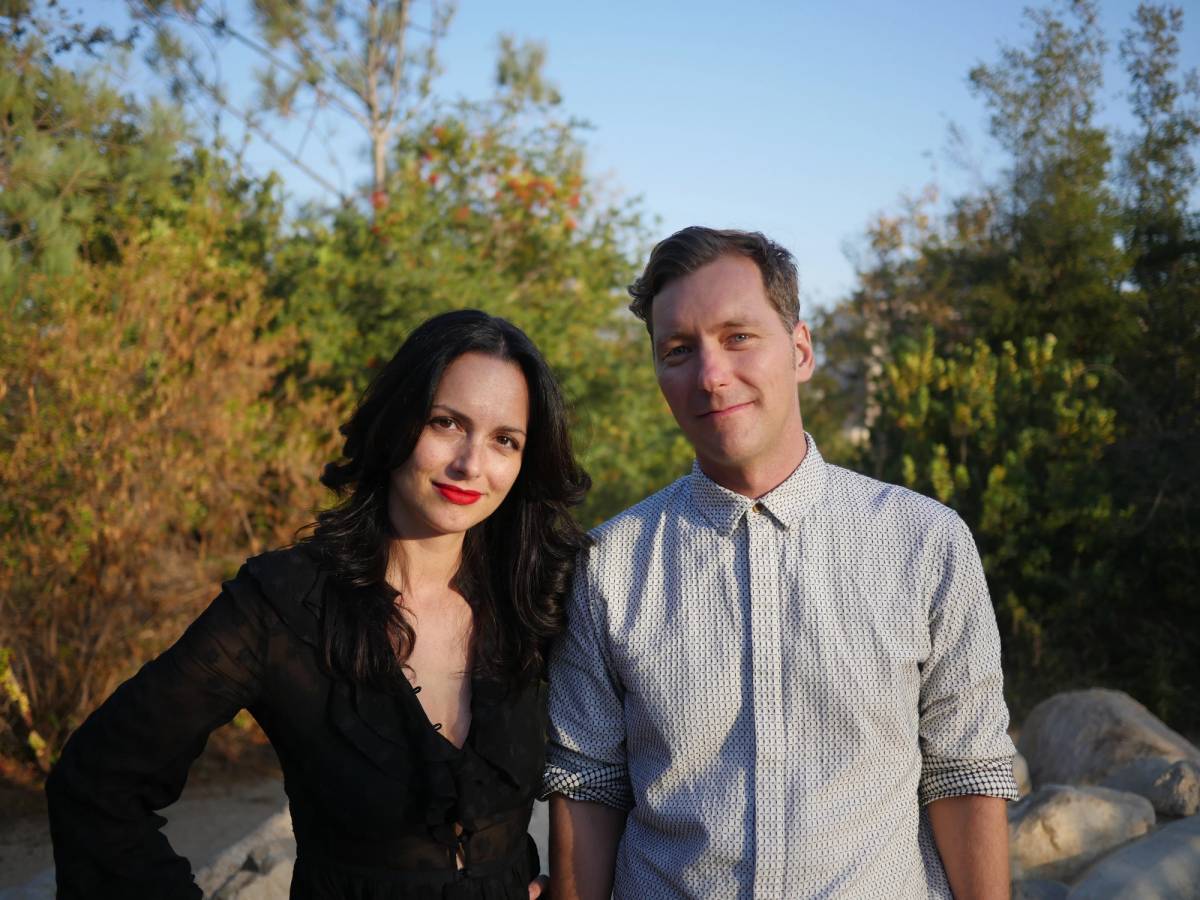
Eline Jongsma with her husband and creative partner, Kel O’NeillEline Jongsma with her husband and creative partner, Kel O’NeillCOURTESY JONGSMA O’NEILL

Despite such revelations, Jongsma and O’Neill avoid sap. Jongsma’s 33 minutes of Dutch-accented, English-language narration employ powerful, often poetic phrasing. The project is notable not only for its unusual platform-of-choice and social media shareability, but also its composition. As filmmakers, “Jongsma + O’Neill“ are known for balancing what they term “human-scaled storytelling.” In this case, parts detective thriller and personal visual essay meet technical enterprise. The resulting His Name Is My Name avoids the classic archival documents, black-and-white photographs, and wailing violins typifying Holocaust narratives. It relies, instead, on vividly colored short-form animation by acclaimed Slovenian animator Jure Brglez, augmented reality, and an original synth score.

“Because we are depicting actual events, we also had to be accurate visually,” said Brglez. “That meant researching the maps, towns, and the architecture, document design, which Dutch bank notes were used in the ’40s, patches on the uniforms, color of the wagons … and when you’re doing that you’re constantly surrounded by the horrible imagery of WWII. Some moments were quite heavy and haunting.” Brglez had his own Holocaust-related family lore; his grandparents mentioned their survival in hiding, but the full story nonetheless died with them.

His Name Is My Name is a product of collaboration between a group of talented teammates acting in the service of one goal: honor Eline’s story,” O’Neill said. “Early on, we realized that the more we collaborated, the more cohesive the project and its voice became. Scripts inspired music, music inspired animation, animation inspired design, and the design inspired us to rewrite the scripts. I find myself using soccer metaphors to talk about the process. We need to pass more, I’d say, or we need more touches on the ball. It’s exciting to work this way.”

This is not the first time Jongsma and O’Neill have produced a successful experiment. Their Emmy-nominated and Webby-honored interactive POV/PBS documentary series Empire dives into the lasting implications of Dutch colonialism across 10 countries. And their virtual reality film The Ark puts users face-to-face with the world’s last remaining northern white rhinos. J+O work also screens at leading festivals (Tribeca, SXSW, The New York Film Festival, HotDocs, IDFA, REDCAT, Rencontres d’Arles, and AFI Docs), landed the inaugural Tim Hetherington Visionary Award, and earned the support of The Sundance Institute, Eisenhower Fellowships, and The Economist Media Lab. My Name Is His Name is part of a joint endeavor exploring perpetrator histories with Germany’s Bergen-Belsen Memorial, Norway’s Falstadsenteret history museum of imprisonment, and the Dutch nonprofit documentary project developer Paradox.

“As a viewer you almost don’t notice that you are being told some facts about the Netherlands in the war,” said Jongsma, a mother of two, who reflects on her family’s revelation, research, and reflection with an unemotional yet intimate, confessional tone.

“I was struck by how she wanted to approach her very personal story in such a head-on manner, and in such an honest and vulnerable way,” said Ben Evolo, aka San Ré, the Amsterdam-based American musician, producer, and composer who created the doc’s soundtrack. “After I read the script, there were a few concepts that I wanted to emphasize—secrets, time, deception, tragedy, and family—to inform the sonic fabric, texture, and music the best way I could, through dissonance, tension and noise.”

San Ré considers Jongsma’s approach “a real breath of fresh air” and an enduring example of “correcting or reshaping a small piece of history.” In that way, Jongsma underscores what San Ré considers a “responsibility to tell a story that ensures a more granular and factual version of that history.”


Award-winning journalist Lisa Klug is the author of the bestselling pop culture titles Cool Jew, a National Jewish Book Award Finalist, and Hot Mamalah: The Ultimate Guides for Every Member of the Tribe. Her work has appeared in many outlets, including The Atlantic, Forbes, Forward, Huffington Post and The Los Angeles Times, as well as The New York Times, The Times of Israel, and Variety, where she is a stringer. Visit her Facebook page, or follow her on Twitter @lisaklug.


Zawartość publikowanych artykułów i materiałów nie reprezentuje poglądów ani opinii Reunion’68,
ani też webmastera Blogu Reunion’68, chyba ze jest to wyraźnie zaznaczone.
Twoje uwagi, linki, własne artykuły lub wiadomości prześlij na adres:
webmaster@reunion68.com



Iran’s supreme leader accuses US, Israel of being behind the nationwide protests

Iran’s supreme leader accuses US, Israel of being behind the nationwide protests

DW News


Iran’s ultraconservative Supreme Leader Ayatollah Ali Khamenei threw his full support behind the security forces on Monday, accusing the protesters of “rioting.” He also said that the US and Israel were behind the protests rather than “ordinary Iranians.” He claimed to be “heartbroken” over the death of 22-year-old Mahsa Amini — the incident that initially sparked the nationwide protests — while also condemning the “insecurity” in the streets. “This rioting was planned,” he told a cadre of police students in Tehran. “These riots and insecurities were designed by America and the Zionist regime, and their employees.”

Official warns of ‘destabilizing’ protests
Iran’s parliamentary speaker, Bagher Qalibaf, urged protesters not to allow the demonstrations to become “destabilizing” for the country and promised to “amend the structures” of the country’s morality police. Qalibaf is a former influential commander in Iran’s Revolutionary Guard. “The important point of the [past,] protests was that they were reform-seeking and not aimed at overthrowing” the system, Qalibaf said, referring to protests by teachers and retirees over pay. “I ask all who have any [reasons to] protest not to allow their protest to turn into destabilizing and toppling” of institutions. “Creating chaos in the streets will weaken social integrity, jeopardizing the economy while increasing pressure and sanctions by the enemy,” Qalibaf said, referring to sanctions imposed by Washington. The lawmaker promised that Tehran would “amend the structures and methods of the morality police” in response to the protests.


Zawartość publikowanych artykułów i materiałów nie reprezentuje poglądów ani opinii Reunion’68,
ani też webmastera Blogu Reunion’68, chyba ze jest to wyraźnie zaznaczone.
Twoje uwagi, linki, własne artykuły lub wiadomości prześlij na adres:
webmaster@reunion68.com


Każda świnia miała służyć Hitlerowi

Chłopcy z Młodzieży Niemieckiej głaszczą świnię z prosiętami w schronisku młodzieżowym w rejonie Vogtland, 1937 r. (Fot. Berliner Verlag/Archiv / AP Photo)


Każda świnia miała służyć Hitlerowi

Joanna Banaś


Naziści lubili podkreślać, że jako jedyni na świecie przyzwoicie traktują zwierzęta. Ale w Trzeciej Rzeszy były one tylko przedmiotami używanymi w walce o zwycięstwo nad światem.

.

Hitler gardził zorganizowanymi polowaniami, ale nie miał nic przeciwko kłusownictwu. Wegetarianin ze względów zdrowotnych, który rosół nazywał „trupią herbatą”, nie zabraniał swojemu otoczeniu jeść mięsa. Tyle że chętnie dręczył współbiesiadników drastycznymi relacjami z wizyt w rzeźniach w Ukrainie. Pozwalał się filmować podczas zabawy ze swoimi owczarkami niemieckimi, oczywiście czystej krwi, ale przed swoim samobójstwem bez mrugnięcia zgodził się na przetestowanie skuteczności cyjanowodoru na ukochanej Blondi. Czy można więc nazwać go miłośnikiem zwierząt, choć na takiego się kreował?

Niemiecki dziennikarz Jan Mohnhaupt w książce „Zwierzęta w Trzeciej Rzeszy” obnaża obłudę nazistowskiej propagandy. Oto jeden z przykładów: w 1938 r. obok KL Buchenwald wybudowano mały ogród zoologiczny, miejsce relaksu dla zestresowanych strażników i administracji obozu. Zwierzęta do ogrodu kupowano za pieniądze zarabiane przez więźniów pracujących przymusowo. Jeśli któreś padło, jego opiekun był surowo karany, a wszyscy więźniowie płacili „dobrowolną” składkę na zakup nowego zwierzęcia. Gdy pod koniec wojny zapanował głód, zwierzęta tego nie odczuły, bo karmiono je mięsem z puli dla więźniów. Niedźwiedzie okazały się wyjątkowo wdzięczne komendantowi obozu – gdy SS-Standartenführer Karl Koch dla zabawy kazał wrzucać do ich wybiegu jakiegoś więźnia, zręcznie rozszarpywały jego ciało na kawałki.

Zwierzęta w Trzeciej Rzeszy

Od wilka po stonkę – naziści traktowali instrumentalnie wszystkie zwierzęta.

Wilk, mimo nadawanego mu w Trzeciej Rzeszy znaczenia symbolicznego (nieprzypadkowo kwatery główne Hitlera nosiły nazwy z nim związane – Wilczy Szaniec, Wilczy Jar czy Wilkołak), pozostawał jednym z głównych celów myśliwych.

Celowo głodzone psy miały pomagać strażnikom w obozach koncentracyjnych. Nie tylko łapać ewentualnych uciekinierów, ale i być narzędziem terroru i tortur – na rozkaz rzucały się na więźniów.

Adolf Hitler ze swoim owczarkiem niemieckim Blondi, 1942 r.Adolf Hitler ze swoim owczarkiem niemieckim Blondi, 1942 r.  Bundesarchiv, B 145 Bild-F051673-0059 / CC-BY-SA, CC BY-SA 3.0 DE , via Wikimedia Commons

Świnie, jedząc najlepiej tylko odpadki (o ziemniaki w warunkach wojennych rywalizowały z ludźmi), miały nie tylko przybierać na wadze i dawać Niemcom ich ukochane mięso, ale i służyć jako dowód rasowej wyższości Aryjczyków jedzących wieprzowinę w przeciwieństwo do Żydów i muzułmanów.

Jedwabniki wykorzystywano jako narzędzie dydaktyczne do kształtowania umysłów młodych Niemców – dzieci w szkołach karmiły gąsienice liśćmi morwy, a kokony odnosiły do punktów skupu. Wszystko po to, by niemieckim lotnikom nie zabrakło jedwabiu na spadochrony. Przy okazji uczniowie w praktyce stosowali narodowosocjalistyczną doktrynę o czystości rasy, odpowiednio wcześnie eliminując osobniki chore i słabe. Z kolei na przykładzie stonki ziemniaczanej, która była usuwana z pól również rękami dzieci, uczniowie dowiadywali się, jak należy traktować Żydów, którzy też mieli być szkodnikami.

Koty budziły w nazistach mieszane uczucia. Niektórzy chwalili ich zamiłowanie do polowania na myszy i szczury, ale większość chciała je wytępić.

W 1942 r. zakazano Żydom posiadania zwierząt domowych, wśród których większość stanowiły koty. W praktyce przepis oznaczał, że musieli oni skazać je na śmierć: oddać na posterunek policji, albo – co było nielegalne – samodzielnie zorganizować jego eutanazję.

Jelenie specjalnie karmiono, by ich okazałe poroże wzbudziło zainteresowanie pierwszego myśliwego Trzeciej Rzeszy Hermanna Göringa.

Konie po wybuchu wojny ciągnęły na wschód całe wyposażenie armii (tylko na filmach propagandowych niemieckie oddziały były całkowicie zmotoryzowane), by później służyć za prowiant: od jesieni 1941 r. sowieccy jeńcy wojenni byli karmieni końską padliną, a pod Stalingradem Niemcy zabili 4 tys. koni rumuńskiej kawalerii. Zupę z nich rozdali swoim żołnierzom.

Wygody dla niemieckich świń

Choć zgrabnie napisana i zawierająca mnóstwo ciekawych didaskaliów, książka Mohnhaupta nie jest lekturą przyjemną. Nie mogła być, bo w stosunku nazistów do żywych istot nie było niczego dobrego.

Jeśli nawet przejmowali się losem niektórych zwierząt, robili to dla własnej korzyści – ekonomicznej, militarnej czy propagandowej. Jak przy wojennej instrukcji transportu świń: zwierzęta miały być przed dłuższą podróżą nakarmione i napojone, wagony wentylowane, a do każdego z nich należało wprowadzać tylko tyle świń, żeby każda mogła się wygodnie ułożyć. Uwzględniono nawet przestrogi czasopisma branżowego dla hodowców trzody chlewnej, by podczas upałów nie transportować przekarmionych zwierząt, ponieważ grozi im zawał.

Pięknie, tyle że do tych samych wagonów bezlitośnie upychano ludzi transportowanych do obozów koncentracyjnych.


Jan Mohnhaupt – „Zwierzęta w Trzeciej Rzeszy”

Tłum. Monika Kilis, Wydawnictwo Poznańskie

Jan Mohnhaupt, 'Zwierzęta w Trzeciej Rzeszy', przekł. Monika KilisJan Mohnhaupt, ‘Zwierzęta w Trzeciej Rzeszy’, przekł. Monika Kilis  Wydawnictwo Poznańskie


Zawartość publikowanych artykułów i materiałów nie reprezentuje poglądów ani opinii Reunion’68,
ani też webmastera Blogu Reunion’68, chyba ze jest to wyraźnie zaznaczone.
Twoje uwagi, linki, własne artykuły lub wiadomości prześlij na adres:
webmaster@reunion68.com


Russia’s Next Target for Intimidation Could Be Israel

Russia’s Next Target for Intimidation Could Be Israel

KSENIA SVETLOVA


As Moscow slides into global pariah status, it will want to upgrade ties with its closest allies on NATO’s southern flank: Syria and Iran
.

MIKHAIL SVETLOV/GETTY IMAGES

As Russia pounds Ukrainian cities and flaunts its nuclear weapons, there is little doubt that the implications of the war between Russia and the West will be felt globally—and the relations between states that prevailed only two weeks ago are unlikely to remain static. The International Criminal Court in The Hague may investigate possible war crimes committed by Russian leadership, while Western governments keep piling on unprecedented economic sanctions. As a result, Russia will be looking for alternative markets and spheres of influence, specifically in the Middle East and Africa, where it has become very involved during the last decade. While Moscow ratchets up military and economic pressure on Ukraine, using forbidden types of weapons and indiscriminate firepower against civilians, many in Israel fear that Moscow’s next move will happen in the Middle East—where Moscow is formally aligned with Israel’s worst enemies.

By Feb. 15, when the whole world was still trying to guess Vladimir Putin’s real intentions in Ukraine, his defense minister and confidant Sergey Shoigu had traveled to Syria, where he met with President Bashar Assad and inspected a Russian military exercise—the largest that Russia had held in the Eastern Mediterranean since the end of the Cold War. For this occasion, Russia transferred advanced weapons, including MiG-31s armed with hypersonic missiles, as well as strategic Tupolev Tu-22M bombers to its Khmeimim air base, positioning a potent new threat near Israel’s borders.

Just a few years ago, there was hardly any Russian presence in the Eastern Mediterranean. Since the beginning of the Russian intervention in Syria, facilitated by the Obama administration to counterbalance Turkey and aid Iran, Moscow has reinforced its naval presence there dramatically. Although the Russian forces in this area are still limited in comparison with their abilities in the Black Sea, experts from the George C. Marshall European Center for Security Studies believe that Russia already has enough forces to present a potential challenge to longstanding U.S. and NATO naval dominance in the area.

As war clouds gathered over Ukraine, Israel became worried. Israel and Russia maintain tactical cooperation over Syria and run a deconfliction center in order to prevent Russian and Israeli forces from clashing. Since the beginning of Russia’s military involvement in Syria, Israel has been walking on thin ice, trying to balance its own security needs with the necessity of making nice with the Russians who now controlled the Syrian skies. A change in the Russian posture in Syria, particularly as America works to seal its reentry into the Joint Comprehensive Plan of Action (JCPOA) with Iran, portends a far less favorable and more dangerous calculus than the one that Israel has grown used to since 2014.

For a time, the balancing act went well. While the Russians did not prevent Israel from hunting Iranian war targets in Syria (as was often reported in foreign media), Israel refrained from commenting on Russia’s aggressive demeanor—even when the United States publicly voiced opposition. In fact, this arrangement predates Russian involvement in Syria. In 2014—one year before Russia became Israel’s neighbor on its northern border—Israel refused to condemn Russia’s annexation of Crimea despite some pressure from the Obama administration to do so.

But 2022 isn’t 2014. Israeli Foreign Minister Yair Lapid first timidly condemned Russian behavior in a TV interview. He then announced that Israel will vote with the United States and EU countries against Russia in the U.N. General Assembly.

So what might be the repercussions for Israel of its public anti-Russian stance, however mild? There is no doubt that Russia is looking to flex its muscles in Syria, where it’s built an impressive military presence. As Russia slides into a pariah status in the international arena, it will want to upgrade ties with its closest allies in the region: Syria and Iran.

On the military front, signs of Russia’s new regional posture are already visible. During the last few weeks that preceded the war in Ukraine, Russia strongly rebuked Israeli activity in Syrian skies, while Israelis complained that Russia was jamming GPS signals in Israeli airspace. At the end of January, Russia and Syria started joint patrols along the Golan Heights and the Euphrates River. In Israel, this activity was interpreted as a sharp message to Jerusalem: Things in Syria might change soon, and fast. Since other countries like the United States and Turkey also operate in Syrian skies, the Russian message might be addressed to all concerned parties to let them know that Russia is determined to force them out of Syrian airspace and help Damascus reclaim its sovereignty there.

Yet other Russian messages were clearly directed at Israel. Since the beginning of Russia’s invasion of Ukraine, when Israel was still mulling its reaction, busy Russian diplomats found the time to rebuke Israel over construction of new cities in the Golan Heights—possibly in reaction to timid Israeli attempts to support Ukraine without condemning Russia too strongly. While Moscow has since signaled that cooperation with Israel will go on as usual, many in Israel fear that Russia, emboldened by its violent move on Ukraine and furious about global sanctions, will become more aggressive and assertive in protecting its interests in Syria, and pay less attention to possible Israeli responses.

Until recently, some in Israel believed that Russia might work together with Israel and the United States to push Iran out of Syria—under the assumption that Russia and the United States shared this interest in common with Israel. Nowadays, this kind of scenario (however dubious it was in the past) is simply out of the question. Moscow will need Tehran and Damascus more than ever, perhaps even more than they need Moscow. This development might mean more intercooperation between all three parties and a significantly more aggressive tone toward Israel. In turn, if Israel is not able to freely operate in Syrian skies against Iranian military targets, an emboldened Iran seems likely to try to further grow its military presence near Israel’s borders, raising the stakes in Syria, Lebanon, and Gaza.

Another possible target for Russia’s military is the Eastern Mediterranean. If until now the sea was mostly seen as EU and NATO playground, today’s Russian navy presence might pose a serious challenge to Europeans and Americans—and by extension Israel, whose economy depends in large part on open shipping from its ports. Turkey might soon see new developments in Syrian Idlib, where pro-Turkish militants still operate, and 3 million Syrians find their refuge, which may create wider instability in the region.

While Russian-Iranian rapprochement in Syria seems almost inevitable, the future of strategic relations between the two countries is still a puzzle.

Until recently, Russia saw Iran as a problematic neighbor, an occasional partner (for example, in Syria) and mostly as a country that was best held at arm’s length. When Iran demanded acceptance as a full member of the Eurasian Economic Treaty (a Russian-led block that also includes Belarus, Armenia, Kazakhstan, and Kyrgyzstan), Russia took its time to “consider.” And when Iranians offered extensive cooperation in trade and industry, Russia generally ignored these requests. During the visit of the new Iranian president to Russia in January this year, no important treaty or memorandum of understanding was signed, to the disappointment of the Iranians.

Now, Russia needs Iran and its markets more than ever before. For Moscow it might be the right time to expand the partnership, as the Iranians have been demanding. Yet if Iran signs the nuclear deal, brokered in large part by Russia, the roles of Russia and Iran may be reversed, with Iran—if sanctions are lifted—having a stronger and even determining hand in that relationship.

There is a loud anti-Russian camp in Iran that remembers well how Moscow ignored Iranian demands for a long time. Yet there is also no doubt that Tehran will be happy to receive the latest Russian weapons. It now seems likely that Iran will get the weapons systems it demanded a long time ago even if for some reason the nuclear deal is not finalized. Russia has nothing more to lose and it will have to seize every opportunity to continue to sell its weapons to anyone who demands them.

What’s on the Iranian shopping list? According to the U.S. Defense Intelligence Agency, Iran is interested in SU-30 fighters, Yak-130 trainers, T-90 tanks and—the cherry on top—S-400 surface-to-air missile defense systems that Russia previously refrained from selling. Even if Russia fulfills only part of the Iranian shopping list, it will be very bad news for Israel. Until recently, advanced Russian missile systems inside Syria were under full Russian control. That might change as well.

The greatest threat that Russia poses to Israel may be in the expansion of its regional influence, especially in the absence of an effective U.S.-led security structure. With the exception of Lebanon and Kuwait, which denounced Russia, and Syria, a full Russian client that denounced the West, the Arab states are currently sitting on the fence, unwilling to put their neck on the line for either the United States or the Russians. During the last few years some of these countries, particularly the Gulf states, didn’t hide their frustration with American Middle East policy, which aimed under both the Obama and Trump administrations at diminishing the American presence in the region—and which under Presidents Barack Obama and Joe Biden put a U.S. nuclear deal with Iran at the top of American regional priorities. In response, the UAE, Saudi Arabia, and Egypt all began purchasing Russian (and Chinese) weapons, and putting their relations with Moscow on display.

Russia has significantly expanded its web of relations in the Middle East, mostly due to the fear of some countries that they might be abandoned by the West. If the United States wants these countries to join an alliance against Moscow, it might have to rethink its regional policy—or else rethink its relations with Arab countries who might wish to continue with their current balancing act. Yet Egypt, Jordan, Morocco, and Tunisia heavily depend on wheat supplies from Russia and Ukraine. Rising prices on basic food staples and energy might disrupt stability in many countries in the region, creating more risks and insecurity. All of these developments might in turn have a negative influence on Israel and its attempt to build new alliances in the region—especially if Russia sees Israel as an American instrument, while the Americans see Iran as a partner.

There is little doubt that fateful events in Ukraine have turned over the chess board in the Middle East, as elsewhere. While risks for Israel are bound to increase, it will need—now more than ever—firm American support and a confident U.S. policy in the Middle East. A new American deal with Iran, which remains America’s regional priority even during the war in Ukraine, seems unlikely to provide those assurances.


Ksenia Svetlova is the director of the program on Israel-Middle East relations at the Mitvim Institute for Regional Foreign Policy and a former member of the Knesset.


Zawartość publikowanych artykułów i materiałów nie reprezentuje poglądów ani opinii Reunion’68,
ani też webmastera Blogu Reunion’68, chyba ze jest to wyraźnie zaznaczone.
Twoje uwagi, linki, własne artykuły lub wiadomości prześlij na adres:
webmaster@reunion68.com

Scientists peel back ancient layers of banana DNA to reveal ‘mystery ancestors’

Scientists peel back ancient layers of banana DNA to reveal ‘mystery ancestors’

JERUSALEM POST STAFF


The study identified a history of genetic engineering, specifically hybridization and a selection for heterozygotes, as mechanisms for the transition from wild to cultivated bananas.

.
Bananas, illustrative image. / (photo credit: CREATIVE COMMONS)

Bananas, thought to have been domesticated 7,000 years ago in New Guinea, may have a more complicated history than initially assumed, according a new study from the peer-reviewed Frontiers in Plant Science.

“Identifying the ancestors of cultivated bananas is important, as it will help us understand the processes and the paths that shaped the banana diversity observed today, a crucial step to breed bananas of the future.”

Author Dr. Mathieu Rouard, Bioversity International

Cultivated bananas are sterile and produce seedless fruits. They are descended from wild ancestors which produced seeds, but the connection between the original seed-filled fruits and today’s bananas found in grocery stores is not well understood. 

“Here we show that most of today’s diploid cultivated bananas that descend from the wild banana M. acuminata are hybrids between different subspecies. At least three extra wild ‘mystery ancestors’ must have contributed to this mixed genome thousands of years ago, but haven’t been identified yet,” explained Dr. Julie Sardos, a scientist at The Alliance of Bioversity International and CIAT in Montpellier, France, and the study’s first author. 

he study identified a history of genetic engineering, specifically hybridization and a selection for heterozygotes, as mechanisms for the transition from wild to cultivated bananas.  

Second corresponding author Dr. Mathieu Rouard, likewise at Bioversity International, said: “Identifying the ancestors of cultivated bananas is important, as it will help us understand the processes and the paths that shaped the banana diversity observed today, a crucial step to breed bananas of the future.”

The results of the study bring new light to the geographic spread of wild bananas and its impact on bananas today. 

“Breeders need to understand the genetic make-up of today’s domesticated diploid bananas for their crosses between cultivars, and this study is a major first step toward the characterization in great detail of many of these cultivars.”

The future of bananas

The study authors concluded by explaining that their work has direct implications on the evolution of banana crops going forward, as well as conservation, collection and breeding of this modern staple food. 

Sardos said: “Based on these results, we will work with partners to explore and genotype wild banana diversity in the three geographic regions that our study pinpointed, with the hope to identify these unidentified contributors to cultivated bananas. It will also be important to investigate the different advantages and traits that each of these contributors provided to cultivated bananas.”


Zawartość publikowanych artykułów i materiałów nie reprezentuje poglądów ani opinii Reunion’68,
ani też webmastera Blogu Reunion’68, chyba ze jest to wyraźnie zaznaczone.
Twoje uwagi, linki, własne artykuły lub wiadomości prześlij na adres:
webmaster@reunion68.com