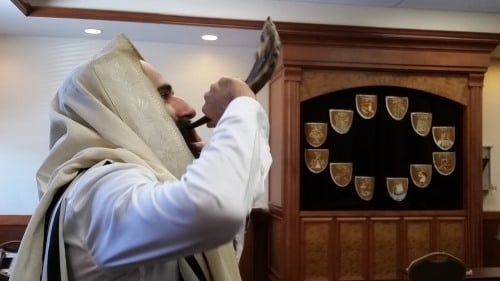
Archive | October 2022

Reasons to Forgive—or Not Forgive

Reasons to Forgive—or Not Forgive

MARJORIE INGALLANDSUSAN MCCARTHY


Brandt Jean hugs Amber Guyger in court, after delivering his impact statement to her, 2019ORIGINAL PHOTO: TOM FOX/THE DALLAS MORNING NEWS VIA AP, POOL

It’s telling that our culture loves stories of Holocaust survivors forgiving Nazis, of rape victims forgiving rapists, of Black families forgiving the white murderers of their children and siblings. What all these stories have in common: They’re all about people with less power forgiving people with more power.

Our addiction to these narratives is problematic because these narratives enforce the status quo. They make us feel better about a world rife with inequality and injustice. We’re not saying that no individual victim should ever forgive the person who harmed them. People have free will. If forgiveness is healing for them, it’s not on us to tell them they’re wrong. It is, however, on us to tell each other that celebrating these stories can be a feel-good choice that mutes our obligation to look hard at what needs to be fixed in the world we live in.

When Brandt Jean, the brother of Dallas police shooting victim Botham Jean, told his brother’s killer, former police officer Amber Guyger, that he forgave her, and gave her a big hug in the courtroom, the press celebrated. But when a relative of a murdered Black person reacts with anger instead of hugs and sweet biblical sentiments, the public response is often furious. For example, after the New York City police officer who killed Eric Garner with an illegal chokehold apologized, a reporter asked Garner’s widow, Esaw, whether she forgave him. She responded “Hell, no!” and a national news headline accused her of “Lash[ing] Out at Cop.” But that “Hell, no” was completely justified. Anger in the face of injustice is warranted.

Yolonda Y. Wilson, a philosophy professor at St. Louis University who researches government obligations to rectify historic and continuing injustice, wrote in 2019:

If anger can help us understand our place in the world and drive us to make the world that we occupy better, then good for anger. The most important feature of anger, properly directed, is the recognition that a wrong has occurred. To the extent that one’s anger motivates one to right wrongs, anger can be a tool of achieving justice. In this sense, anger is also tied to self-respect. Anger is a recognition that one is deserving of just treatment and that one is willing to demand just treatment, even if the demand is ultimately unsuccessful.

Eva Mozes Kor, a Holocaust survivor who in 2017 very publicly forgave a Nazi, has been celebrated as a hero. She was among the many pairs of Jewish twins upon whom Dr. Josef Mengele did terrible medical experiments. Fifty years after World War II, she connected with a Nazi doctor who’d worked at Auschwitz. At her urging, he wrote a letter of apology; she then wrote him a letter of forgiveness. A short BuzzFeed video about her has been viewed almost 200 million times. How noble! How marvelous!
The fuller story: Kor, who’d long spoken to schools and synagogues about the Holocaust, decided that for the 50th anniversary of the liberation of Auschwitz she wanted to reach out to a former Nazi doctor she’d seen in a documentary that she’d also appeared in. She said she wanted him to write that letter as proof to future generations that the Holocaust was no myth or exaggeration. The doctor did as she asked, writing, “I am so sorry that in some way I was part of it. Under the prevailing circumstances I did the best I could to save as many lives as possible. Joining the SS was a mistake. I was young. I was an opportunist. And once I joined, there was no way out.”
This is a terrible apology. It doesn’t take responsibility. It doesn’t offer specifics (“in some way I was part of it”). It offers excuses (“I did the best I could” and “I was young”). The doctor did have a choice. Other “young” (and even old) people joined the resistance, hid Jews in their basements and attics and barns, even elected to stand by passively without actively taking steps to join the Schutzstaffel, the top-tier political soldiers of the Nazi Party, as this doctor did.

Kor, however, was happy with the apology. And if she was happy, who are we to argue? Forgiveness is a choice.

A decade later, Kor also forgave Auschwitz’s accountant. She publicly held his hand and graciously allowed him to kiss her cheek. She wrote a book, The Power of Forgiveness, which came out in 2021 (she died in 2019, but a colleague at her private museum in Terre Haute finished it in her name). In the book, she describes her healing process: She wrote down all the bad words she wanted to say to Dr. Mengele, and once she ran out of words, she realized she’d also run out of anger; she was able to forgive. She decided to write a letter.

I, Eva Mozes Kor, a twin who as a child survived Josef Mengele’s experiments at Auschwitz fifty years ago, hereby give amnesty to all Nazis who participated directly or indirectly in the murder of my family and millions of others.

I extend this amnesty to all governments who protected Nazi criminals for fifty years, then covered up their acts, and covered up their cover up.

I, Eva Mozes Kor, in my name only, give this amnesty because it is time to go on; it is time to heal our souls; it is time to forgive, but never forget.

She asked the United States, German, and Israeli governments to stop investigating Nazis and to open all their files to survivors so they could perhaps read about what had been done to them and learn useful information for their medical records. (Her twin, who had also survived, had terrible health problems; it would have been helpful to know what substances had been injected into her body.) Kor read aloud on the ramp to the gas chambers at Auschwitz:

I am healed inside, therefore it gives me no joy to see any Nazi criminal in jail, nor do I want to see any harm come to Josef Mengele, the Mengele family or their business corporations. I urge all former Nazis to come forward and testify to the crimes they have committed without any fear of further prosecution. Here in Auschwitz, I hope in some small way to send the world a message of forgiveness, a message of peace, a message of hope, a message of understanding.

The press and public ate this up. But just as the footage of Brandt Jean hugging and forgiving his brother’s killer dismayed plenty of Black people, Kor’s actions horrified many other Holocaust survivors. As Holocaust scholar Deborah Lipstadt noted, “I watched them grimace as audiences gave her standing ovations and the media described her as someone ‘who found it in her heart’ to forgive, the implication being that survivors who did not follow her lead were unable to rise above their resentment. Survivors told me they felt they were being depicted as hardhearted, while Kor was being celebrated as the hero, someone bigger than they.”

In her book, Kor says she did her forgiving in her own name only … but calling for amnesty for Nazis can’t be considered acting merely for herself. “I know that most of the survivors denounced me, and they denounce me today also,” she says in the video. “But what is my forgiveness? I like it. It is an act of self-healing, self-liberation, self-empowerment. All victims feel hopeless, feel helpless, feel powerless. I want everyone to remember that we cannot change what happened … but we can change how we relate to it.”

This is absolutely true. In the book, Kor elaborates on how forgiveness made her “free to discover that I had power over my own today and tomorrow, again and again. It hurt no one, it doesn’t hurt me. And it is free. Everyone can accomplish it.” She then adds, “Also, there are no side effects. It works. But if you do not like feeling like a free person, it is possible to return to your pain and hatred anytime.”

Our addiction to these narratives is problematic because these narratives enforce the status quo. They make us feel better about a world rife with inequality and injustice.

This statement was beautiful until that last sentence … which is a tad reductive, judgmental, and dismissive. Make no mistake, choosing to forgive can absolutely be therapeutic. Kor’s strategy of writing a letter to someone who harmed you, calling them all kinds of names, and then never sending the letter could work beautifully for some people. But her insistence that it will work is simplistic. To a woman who was raped and found it impossible to forgive her rapist, Kor suggested, “Write the letter again. And again. There’s no limit. Maybe you need to write it 10 times, maybe 20. You might even need to write 100 letters.” Couldn’t this prove more hurtful than helpful for some survivors of trauma?

Kor’s suggestions that gardening and spending time with animals can help people heal is also positive, also likely to be helpful to lots of readers. But again, the notion that these activities can lead everyone to forgiveness is facile.

People want to admire Kor and to find her generosity of spirit beautiful, because we want to live in a just world. We love cute, tough-talking old ladies with hearts of gold who remind us of our Bubbes and Bibis and Nanas and Nonnas. They charm us. They make us feel safe. They’re familiar, like the cast of The Golden Girls. They convince us that the world has changed for the better since the Holocaust. (Feel free to substitute “since slavery.” Or “since that rapist realized the error of his ways and cried on camera.”) The danger lies in wanting Kor’s story of forgiveness to be every victim’s story, and blaming the victim who refuses to conform to her narrative.

Forgiveness is indeed a choice. But so is refusing to respect the choice of people who have valid reasons not to forgive.

Excerpted from SORRY, SORRY, SORRY: The Case for Good Apologies by Marjorie Ingall and Susan McCarthy. Copyright © 2022. Reprinted with the permission of Gallery Books, a Division of Simon & Schuster, Inc.


Marjorie Ingall is a former columnist for Tablet, the author of Mamaleh Knows Best, and a frequent contributor to the New York Times Book Review.


Susan McCarthy is the coauthor (with Jeffrey Moussaieff Masson) of the international bestseller When Elephants Weep and the author of Becoming a Tiger. Her work has been anthologized in The Best American Science Writing.


Zawartość publikowanych artykułów i materiałów nie reprezentuje poglądów ani opinii Reunion’68,
ani też webmastera Blogu Reunion’68, chyba ze jest to wyraźnie zaznaczone.
Twoje uwagi, linki, własne artykuły lub wiadomości prześlij na adres:
webmaster@reunion68.com

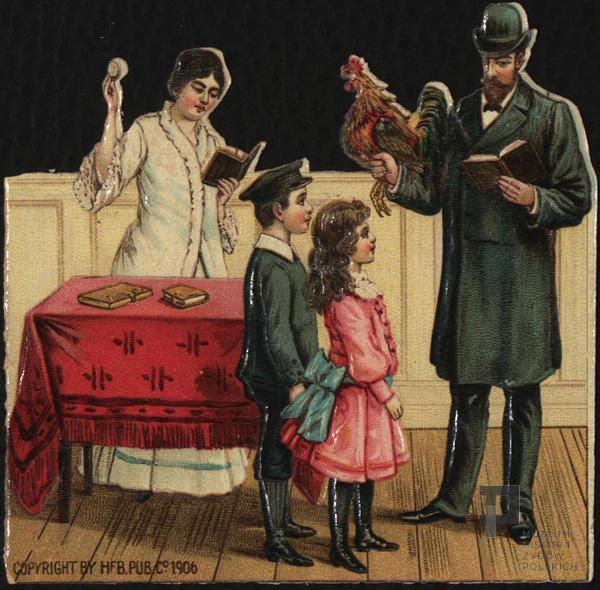

News From Israel- October 03, 2022

News From Israel- October 03, 2022


ILTV Israel News


A deadly spike in terror attacks over the last 24 hours…

More and more Russians fleeing Moscow’s mobilization order… Though some are having trouble getting to Israel as planned…

An incredible discovery along the Northern Israeli border.


Zawartość publikowanych artykułów i materiałów nie reprezentuje poglądów ani opinii Reunion’68,
ani też webmastera Blogu Reunion’68, chyba ze jest to wyraźnie zaznaczone.
Twoje uwagi, linki, własne artykuły lub wiadomości prześlij na adres:
webmaster@reunion68.com

Jom Kipur – Dzień Pojednania


Jom Kipur – Dzień Pojednania

POLIN


Jom Kipur (pl. Dzień Pojednania) to jedno z najważniejszych świąt żydowskich o charakterze pokutnym, obchodzone dziesiątego dnia miesiąca tiszrej (wrzesień/październik). 

W Jom Kipur, mimo że wypada w różne dni tygodnia, obowiązuje całkowity zakaz pracy i ścisły post. Zgodnie z tradycją, w tym dniu Mojżesz zszedł z góry Synaj z tablicami kamiennymi na znak wybaczenia Izraelitom grzechu bałwochwalstwa, który popełnili w związku ze złotym cielcem. Tego dnia w czasach Świątyni Jerozolimskiej arcykapłan dokonywał rytualnego oczyszczenia z grzechów całego ludu Izraela. Na wybranego kozła ofiarnego przenosił symbolicznie winy Izraelitów i strącał go z wysokiej skały. Jom Kipur był też jedynym dniem w roku, kiedy arcykapłan mógł wejść do Najświętszego Miejsca Świątyni. Po upadku Świątyni, święto przeniosło się do synagogi czyli małej Świątyni. W Dzień Pojednania w synagogach panuje poważny i podniosły nastrój, a większość przychodzących ubrana jest na biało.

Jom Kipur zamyka okres Dziesięciu Dni Pokuty, rozpoczynający się od Rosz ha-Szana, żydowskiego Nowego Roku. Tradycja nakazuje intensywne modlitwy, cedakę czyli przekazywanie datków potrzebującym i wyznawanie grzechów, co skutkuje zmianą myślenia i postępowania. Praktycznie cały dzień wypełnia liturgia synagogalna pełna różnych form wspólnego wyznawania grzechów. Jom Kipur jest jedynym dniem w roku kiedy odmawiane są modlitwy Kol Nidrej (pl. Wszystkie Przysięgi) na początek postu, oraz Neila (pl. Zamknięcie) na jego zakończenie. Wszystkie modlitwy wyrażają nadzieję zapieczętowania losu w Księdze Życia czyli pewność przyjęcia pokuty i odpuszczenia grzechów. Odczytuje się też fragment Tory o rytuale Jom Kipur w Świątyni oraz całą Księgę Jonasza, poruszającą temat skruchy i odpuszczenia grzechów. Końcowym aktem święta, ostatecznym wezwaniem do pokuty jest zadęcie w szofar czyli barani róg.


Zawartość publikowanych artykułów i materiałów nie reprezentuje poglądów ani opinii Reunion’68,
ani też webmastera Blogu Reunion’68, chyba ze jest to wyraźnie zaznaczone.
Twoje uwagi, linki, własne artykuły lub wiadomości prześlij na adres:
webmaster@reunion68.com


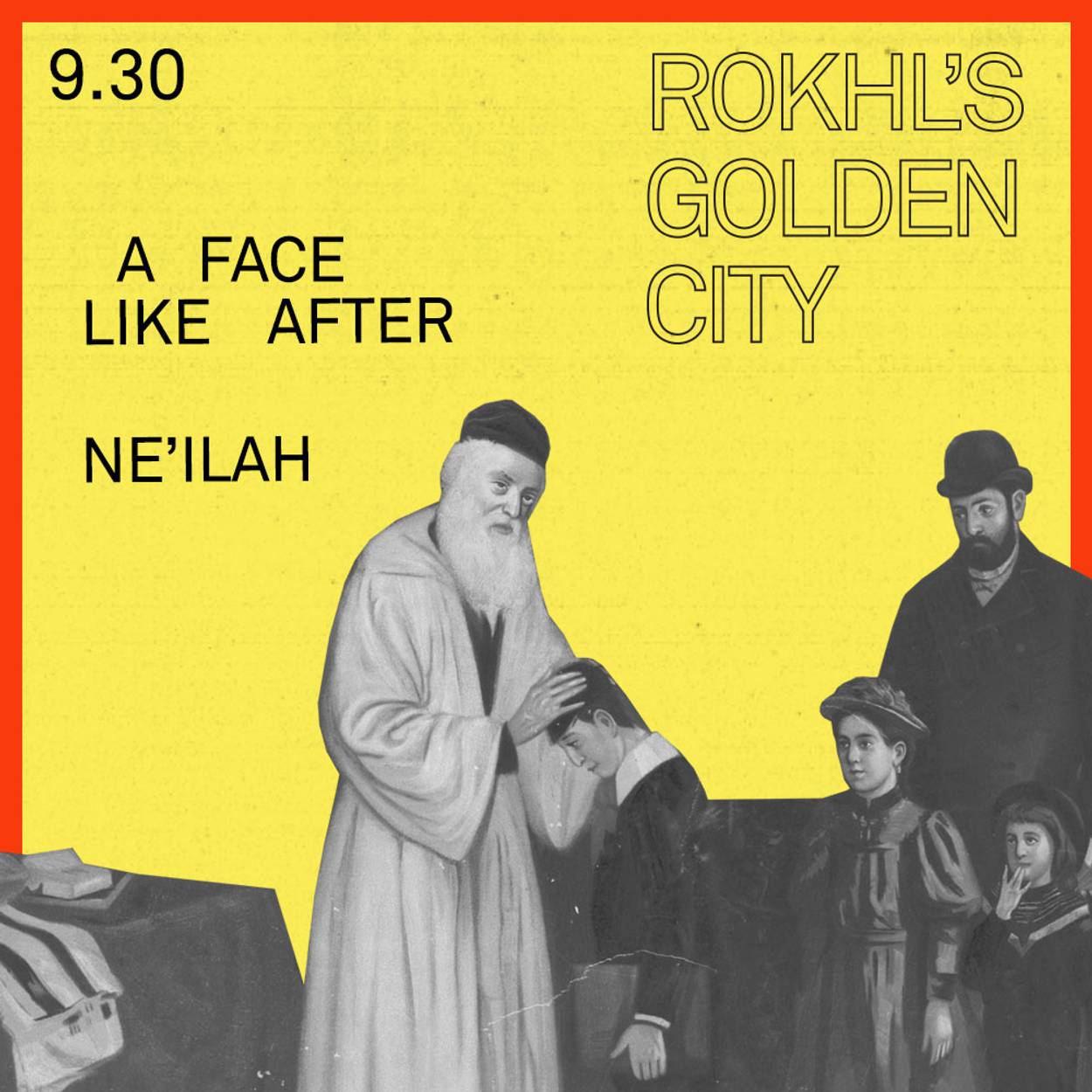
‘It’s Burning,’ Again

‘It’s Burning,’ Again

ROKHL KAFRISSEN


Rokhl’s Golden City: Why Yiddish black metal is the perfect music for Yom Kippur

.

ORIGINAL IMAGE: LIBRARY OF CONGRESS

I want to talk about Yom Kippur. But only because I’m dreading it. The best part of Yom Kippur is nile, or Ne’ilah, if you prefer. The gates of heaven are closing. The shoyfer is blowing. Maybe someone is even going into the shul kitchen to bring out a tray with little cups of apple juice. You feel elated. But let’s be real, you look like hell. I mean, I do. You probably look fresh as a daisy.

After 25-ish hours of fasting and repenting for all your sins, you probably don’t want to think about your own mortal weakness for a while, if not a whole year. The contrast between those feelings—pre-repentance and post-repentance—is the subject of Aaron Lebedeff’s superb comic Yiddish theater song, “Far nile, nokh nile” (Before Nile, After Nile).

.

far nile, nokh nile (before nile, after nile)
a bokher, a bsile (whether a boy or a girl)
darf a yeyder zayn a shtikl mentsh (every person must strive to be a mentsh)

So far, so good. Practical, if bland, moral advice. The song continues: In each of our lifetimes we must make a kheshbnKheshbn is a loshn-koydesh (Hebrew-Aramaic) word meaning accounting. It has a very specific meaning in relation to Rosh Hashanah and Yom Kippur. Traditionally, one makes an accounting of the soul, a kheshbn hanefesh, in preparation for judgment. And Hashem is doing his own accounting in order to seal us, hopefully, in the Book of Life. So, says Lebedeff, don’t be too snobbish. Down the road, fate may leave you, too, with a face looking like “after nile.”

And the girls. The girls! Today’s girls, he says, smear mascara on their eyes to look good for the boys. But in the morning, when they see themselves:

hobn zey a ponim vi nokh nile (they have a face like the one after nile)
un derfar zog ikh (therefore I say)
un gedenkt dos git bay zikh (and you should remember it well, too …)

Living in the age of front-facing cameras and social media, we tend to think we’re the first to be obsessed with our own images, and specifically, the suspicion that good looks reflect inner goodness. But Lebedeff gets his jabs in at the vanity of his own generation, with special attention, of course, to the girls. The message is reminiscent of memento mori paintings. Memento mori is Latin for “remember you must die.” Such a painting might be a portrait with symbols of mortality—a skull or hourglass, for example. In Lebedeff’s song, the haggard, post-nile face is sort of like the skull in the painting, whispering of what we mustn’t forget.

In their section on the memento mori painting, the Tate London Museum says they “became popular in the 17th century, in a religious age when almost everyone believed that life on earth was merely a preparation for an afterlife.” Of course, traditional Eastern European Jews also believed that they were preparing for the world to come, after death. But for Lebedeff, the emphasis is on one’s behavior in the here and now. And traditional Jewish life in Eastern Europe placed great value on this life, and its ethical cultivation. Whether it’s minutes before nile, or hours later, when the previous day’s bodily abnegations have been forgotten, what matters is being a mentsh.

Lebedeff’s message, while serious, is presented in his delightfully lighthearted, song-and-dance-man style. If that’s not quite doing it for you in terms of musical musar, have you considered Yiddish black metal?

I was scrolling (I know, Lebedeff would mock me) Instagram when I came across the band Akloleh, which in Yiddish means “a curse.” Unlike my own page—dozens of only slightly different glamour shots taken in front of the same grimy window—Akloleh’s Instagram aesthetic is entirely “haunted forest,” with barely a human figure to be found.

Akloleh is made up of one man in particular, who goes by the stage name Mazik, which he asked to be used for this article. In publicity, he describes his project like this: “Akloleh is based deep within the Alaskan rainforest, amid glaciers and towering mountains. With furious guitars and desperate screams, Akloleh uses the Tanakh and other Jewish texts to make sense of environmental devastation, antisemitism, exploitation, and rampant greed.” Is there anything more appropriate for Yom Kippur 2022 than a new black metal liturgy?

The band’s first album, A Curse, came out last year and used mostly biblical texts. The second album, Eternal Ritual, comes out this fall, and the first single is one of the most beloved, and most recorded, Yiddish songs, from the catalog of Mordechai Gebirtig.

Whether you’re ready for it or not, you should hear Akloleh’s setting of Gebirtig’s “Es Brent” (It’s Burning).

Written in the late 1930s in Krakow, Poland, there was nothing metaphorical about the fire Gebirtig described. These were Jewish homes and towns going up in flames. I got in touch with Mazik to find out more. Why record “Es Brent”? As he told me in an email: “The first recording I heard of this song was this intense, urgent version that had instrumentation like sirens, fast strumming, and the singing sounded so desperate. And the lyrics themselves have felt more and more relevant the older I’ve gotten as antisemitism has been rising around the U.S.”

Despite the events being almost a century distant from us, the song’s power, and what it describes, continues to reach new generations. Mazik described frustration at what he perceived to be indifference to antisemitism among his circle of friends. Even among the progressive and accepting, he saw a “stunning silence” in respect to antisemitic violence:

“I kept thinking of Mordechai Gebirtig’s lyrics and was wondering how I could capture the same intensity” of that first recording he had heard. “So I came up with this kind of punchy riff that’s the main focus of the song. I wanted to really capture that whole range of feelings—frustration, desperation, depression, isolation, but also resilience and defiance.”

For Mazik, the song reverberates with multiple interpretations. One is quite literal. Before coming to Alaska, he lived in California, where smoke and ash from wildfires regularly made it impossible to go outside without an N95 mask. “I have a feeling of looking around and asking others, ‘are we just going to watch this fire burn?’” He makes a point of not blaming individual consumers for a phenomenon driven by global corporations, but says that the song “is also a call for us to reflect on our culpability in systemic violence that includes climate change; for all of us to ask how we have participated in and maybe enabled climate change, racism, and economic inequity.”

The first album used mostly Hebrew texts, especially selections from Ezekiel and Lamentations. Those texts spoke to the environmental anxiety he was feeling, sparked by California’s devastating wildfires, and the realization that such devastation was no longer the exception, but the new normal. For the second album, though, he wanted to do something different. He set out to make a black metal album “rooted in Ashkenazi culture to some extent” and exploring “more typical black metal topics like magic, ritual, and hopelessness.” Despite never having owned a black metal album in my life, you can imagine me clicking the “purchase” button immediately.

I always had a vague notion that black metal was fatally contaminated by its association with antisemitism and Swedish church burnings. Not exactly fertile ground for Yiddish fusion. But Mazik told me labels and bands are refusing to work with anyone associated with National Socialist black metal (NSBM) and, as someone who clearly loves the scene, pushing back on the antisemitism was part of the reason he wanted to start a Jewish black metal band in the first place. Tshuve.

But aside from the antisemitism, I’m not really sure how one listens to black metal. Mazik, a black metal fan from the age of 15, says he finds it meditative, “especially with the excessive reverb and tremolo-picked riffs that feel almost symphonic when your ear adjusts.The intensity kind of takes me to another place that feels very freeing and expressive.”

I’m not sure my rapidly aging ear could ever really adjust to the black metal ethos. But I find Mazik’s project fascinating. His story is not just one of unexpected fusions, but also return, tshuve. He had grown up going to temple “semi-regularly” with his mother, but drifted away from Jewish life at 15. At the age of 19, he discovered his father’s hidden Jewish heritage, learning that his grandfather had been a Yiddish-speaking Jew from Eastern Europe. It was that discovery that drew him to learning Yiddish, combining Duolingo with reading Yiddish poetry. And now it is 2022, and as “Mazik” he is a Jewish musician making unlikely Yiddish music from ek velt, the edge of the world.

The shoyfer blasts of this season are meant to wake us up spiritually, and no doubt somatically, too. Wake up! they say. No more looking away, from ourselves or the world. On Yom Kippur we read the book of Jonah, a reluctant prophet whose story famously begins with God telling him to wake the hell up and get to Nineveh. In Akloleh’s percussive riffs I find echoes of the shoyfer’s blast. This is music for the season, which insists on itself, music which would wake even the sleepiest of prophets.

LISTEN: Akloleh is on YouTube and you can buy his first and second albums on Bandcamp …

ALSO: The Cantors Assembly presents a Moyshe Oisher Virtual Film Festival, opening Oct. 2 and running through April 2023. More information here … Now up at the American Jewish Historical Society, a new exhibit on the history of Union Square, site of so much Yiddish labor historyFrom Sitting Room to Soapbox: Emma Lazarus, Union Square, & American Identity. In conjunction with the exhibit, AJHS will host a daylong symposium on Oct. 2 called “Jews in the Gilded Age.” … On Oct. 27, the Yiddish Book Center and Posen Library of Jewish Culture and Civilization will present “Women’s roles across literature, culture, and the rise of feminism: 1973–2005,” a talk by Deborah Dash Moore. Register here … Jewish Studies at Fordham has offered its walking tour of the Jewish Bronx with Julian Voloj a couple times now, but it seems to sell out immediately. So even if you can’t go on the walk in person, you can check out Julian Voloj’s talk on YouTube today … I see from my Klezkanada friend Jason Rosenblatt that the Jerusalem Harmonica Festival will be happening Nov. 16-17. Jason is an amazing harmonica player, and yes, klezmer harmonica is a thing you need to know about. Save the date!


Rokhl Kafrissen is a New York-based cultural critic and playwright.


Zawartość publikowanych artykułów i materiałów nie reprezentuje poglądów ani opinii Reunion’68,
ani też webmastera Blogu Reunion’68, chyba ze jest to wyraźnie zaznaczone.
Twoje uwagi, linki, własne artykuły lub wiadomości prześlij na adres:
webmaster@reunion68.com
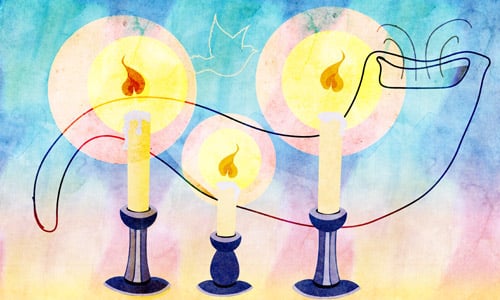

How to Observe Yom Kippur

How to Observe Yom Kippur

Chabad.org


Yom Kippur In Brief

Yom Kippur is the holiest day of the year, when we are closest to G‑d and to the essence of our souls. Yom Kippur means “Day of Atonement,” as the verse states, “For on this day He will forgive you, to purify you, that you be cleansed from all your sins before G‑d.”1

It is held on the 10th day of Tishrei, coming on the heels of Rosh Hashanah (the Jewish New Year, which is on the first and second days of Tishrei).

For nearly 26 hours (in 2017, from several minutes before sunset on Sept 29 until after nightfall on September 30) we “afflict our souls” by avoiding the following five actions:

  • Eating or drinking (in case of need, see here and consult a medical professional and a rabbi)
  • Wearing leather shoes
  • Applying lotions or creams
  • Washing or bathing
  • Engaging in conjugal relations

Like Shabbat, no work is to be done, and special holiday candles are lit before the onset of the holy day.

Opening the synagogue ark.

The day is spent in the synagogue, where we hold five prayer services:

  • Maariv, with its solemn Kol Nidrei service, on the eve of Yom Kippur;
  • Shacharit, the morning prayer, which includes a reading from Leviticus followed by the Yizkor memorial service;
  • Musaf, which includes a detailed account of the Yom Kippur Temple service;
  • Minchah, which includes the reading of the Book of Jonah;
  • Neilah, the “closing of the gates” service at sunset, followed by the shofar blast marking the end of the fast.

Beyond specific actions, Yom Kippur is dedicated to introspection, prayer and asking G‑d for forgiveness. Even during the breaks between services, it is appropriate to recite Psalms at every available moment.

What to Do Before Yom Kippur

Photo: Chaya Mishulovin, Lubavitch Chabad of Skokie

Forty days before Yom Kippur, on the first of Elul, we begin blowing the shofar every morning and reciting Psalm 27 after the morning and afternoon prayers. In Sepharadic communities, it is customary to begin saying Selichot early every morning (Ashkenazim begin just a few days before Rosh Hashanah)—building an atmosphere of reverence, repentance and awe leading up to Yom Kippur.

For the week before Yom Kippur (known as the 10 Days of Repentance), special additions are made to prayers, and people are particularly careful with their mitzvah observance.

We are all human, and we occasionally slip. Is there anyone you may have offended or otherwise hurt? Go ahead and ask for their forgiveness. Are you carrying any grudges? Now is the time to sincerely and wholeheartedly let them go.

Just as Yom Kippur is a day of fasting, the day before Yom Kippur is set aside for eating and preparing for this holy day. Here are some of the activities that we do on the day before Yom Kippur:

  • Kaparot is often performed in the wee hours of this morning
  • There is a beautiful custom to request and receive a piece of honey cake, so that if, G‑d forbid, it was decreed that we need be recipients, it be fulfilled by requesting honey cake and being blessed with a sweet year
  • We eat two festive meals, one in early afternoon and another right before the commencement of the fast.
  • Many have the custom to immerse in a mikvah on this day.
  • Extra charity is given. In fact, special charity trays are set up at the synagogue before the afternoon service, which contains the Yom Kippur Al Cheit prayer.
What We Do After Yom Kippur 
Lulavim and etrogim for sale in Israel prior to Sukkot (file photo).
Lulavim and etrogim for sale in Israel prior to Sukkot (file photo).

After night has fallen, the closing Neilah service ends with the resounding cries of the Shema prayer: “Hear O Israel: G‑d is our L‑rd, G‑d is one.” Then the congregants erupt in joyous song and dance (a Chabad custom is to sing the lively “Napoleon’s March”), after which a single blast is blown on the shofar, followed by the proclamation, “Next year in Jerusalem.”

We then partake of a festive after-fast meal, making the evening after Yom Kippur a yom tov (festival) in its own right.

Indeed, although Yom Kippur is the most solemn day of the year, it is suffused with an undercurrent of joy; it is the joy of being immersed in the spirituality of the day and expresses confidence that G‑d will accept our repentance, forgive our sins, and seal our verdict for a year of life, health and happiness.

There is a custom that after Yom Kippur, we immediately begin (planning) construction of the sukkah, which we will use for the joyous holiday of Sukkot, which follows in just five days


Zawartość publikowanych artykułów i materiałów nie reprezentuje poglądów ani opinii Reunion’68,
ani też webmastera Blogu Reunion’68, chyba ze jest to wyraźnie zaznaczone.
Twoje uwagi, linki, własne artykuły lub wiadomości prześlij na adres:
webmaster@reunion68.com