Archive | July 2024

Canada Has Appointed an Israel Basher to a Major Job; But There Is Still Time to Act

Canada Has Appointed an Israel Basher to a Major Job; But There Is Still Time to Act

Ian Cooper


Canadian Prime Minister Justin Trudeau holds a press conference on the sidelines of the UNGA in New York, US, Sept. 21, 2023. Photo: REUTERS/Mike Segar

My kids have a game called, “Who Said That?” The rules are simple: one player picks a card that has a quote on it, and offers three choices for the speaker or writer.

Let’s play our own version, with this quote:

Contrary to conventional wisdom (which is far more convention than it is wisdom), terror is not an irrational strategy pursued solely by fundamentalists with politically and psychologically warped visions of a new political, religious or ideological order. It is in fact, a rational and well-calculated strategy that is pursued with surprisingly high success rates.

Was that said by:

  1. Osama Bin Laden;
  2. Timothy McVeigh; or
  3. Canada’s newly appointed Chief Commissioner of the Canadian Human Rights Commission, Birju Dattani?

The correct answer is 3.

The quote above is taken from a 2015 presentation Dattani made to showcase his research as a postgraduate student in England at the London School of Economics, and the School of Oriental and African Studies.

During this time, Dattani also tweeted that “Palestinians are Warsaw Ghetto Prisoners of Today” — which linked to an article with the same title. Another tweet linked to an article suggesting a connection between Israeli actions and summary executions by the Nazis and others.

On another occasion, Dattani shared a stage with a member of an Islamic fundamentalist group that’s banned in Britain, wants to impose Sharia law worldwide, and, of course, opposes the existence of Israel.

A reasonable observer might infer a pattern, and wonder how Dattani passed the vetting that surely must have preceded his appointment to his new post, which he’s set to assume on August 8.

So how did this happen?

To begin with, Dattani had previously served as executive director of the Yukon Territory’s Human Rights Commission, and most recently, at a Toronto community college — roles that did not involve a great deal of public scrutiny.  Moreover, he went by a different name, Mujahid Dattani, during his student days.

Mistakes happen. But this is the third time in the past 18 months that Canadian Prime Minister Justin Trudeau’s Liberal government has stumbled into a major scandal that rocks the trust of the Jewish community.

Last year, it emerged that the Canadian government had awarded a six-figure anti racism consulting contract to Laith Marouf, the son of a Syrian diplomat who opined that “Zionism is Nazism, and Apartheid Canada was a model for both of them,” and had posted this July 2021 tweet about former Justice Minister Irwin Cotler and the National Summit to Combat Antisemitism Cotler was hosting on behalf of the Canadian government:

In a nation of more than 40 million people, surely there was a better candidate to lecture Canada’s broadcasting industry on the alleged scourge of racism than some antisemite who was spewing hate within plain sight of the nearest Google search.

The Canadian Ministry of Heritage has tried to recover the money it paid to Marouf, but since he’s currently living in Lebanon and busy running “Free Palestine Television,” a venture he launched after the October 7 Hamas massacre, the prospect for getting anything back from him is beyond remote.

The third low point was the government’s feting of a Waffen SS veteran in Parliament last September, which cost the Speaker of the House his job.

To call the relationship between Canada’s Jewish community and Trudeau’s governing Liberals “troubled” would be a polite understatement at this point.

And the government has only itself to blame.

The Trudeau Liberals aren’t a collection of raging antisemites, but their fealty to an intersectional ideology that’s hostile to the Jewish State and that sometimes bumbles into open antisemitism has given them a blind spot. Which is why, where the Jews are concerned, Trudeau and his party can’t stop stepping on these metaphorical rakes.

According to intersectional dogma, Jews — and Zionists especially — are “white,” and, as such, are members of an oppressor class that can be offended with little concern.

If someone seeking to be the nation’s top human rights adjudicator had demonstrated bias against any other group — Black, Indigenous, trans, or Muslim, for example — that bias would have been disqualifying at the outset.

If it was missed after an appointment was announced, the outrage would have been widespread, Trudeau’s apology swift, and the job offer immediately rescinded.

Dattani is still set to assume his new role.

His appointment has been made more untenable by virtue of the fact that the job has become more important than it was a few months ago.

An unapologetic progressive activist, Trudeau recently passed an Online Harms Act with broad reaching powers. Some of the measures, such as new obligations imposed on social media platforms to monitor child pornography and so-called revenge porn, are unambiguously good ideas.

But the legislation also gives the Canadian Human Rights Commission new powers to regulate “communication of hate speech” with fines of up to C$50,000 (US$36,500).

The potential chilling effect of that cudgel has always been problematic, which is why ensuring the Commission’s leadership is both unbiased and seen to have unimpeachable judgment is critical.

One might be inclined to attribute the views publicly expressed by Dattani during his student days as the strident immoderation of youth.

In most other jobs, that might be a good enough explanation.

But how would a Chief Commissioner Dattani respond to a Laith Marouf? Would his willingness to sanction Marouf be tempered by fellowship over their shared opposition to Israeli policies? Would his views be any different if instead of being an antisemite, Marouf was a white supremacist, a homophobe, or a cheerleader of militant West Bank settlers?

How would Dattani view the excesses in his own rear view mirror, many of which no doubt have him cringing for reasons beyond the high-status job (which pays between C$335,100 and C$394,200, plus a generous pension) he stands to lose as a result of them.

Very few people are the sum of the worst online posts they send out into the sea of cognitive effluent that is social media.

But the person who is expected to deter and — if necessary, punish — that kind of behavior ought not to be someone who has online excesses of his own, which were made under a different name, and not candidly disclosed to those who vetted him for the job.

At last count, antisemitic outrages represented 56% of reported hate crimes in Toronto, Canada’s largest city. In such a climate, having questions of anti-Jewish bias hang over the nation’s newly empowered hate crimes czar would profoundly undermine the legitimacy of the role and the prospects of success for Trudeau’s new Online Harms bill.

The Canadian Justice Department is currently investigating Dattani’s past conduct. One can only hope that at the end of the process, the government finds itself with a Chief Commissioner who comes to the role with less baggage.


Ian Cooper is a Toronto-based lawyer.


Zawartość publikowanych artykułów i materiałów nie reprezentuje poglądów ani opinii Reunion’68,
ani też webmastera Blogu Reunion’68, chyba ze jest to wyraźnie zaznaczone.
Twoje uwagi, linki, własne artykuły lub wiadomości prześlij na adres:
webmaster@reunion68.com
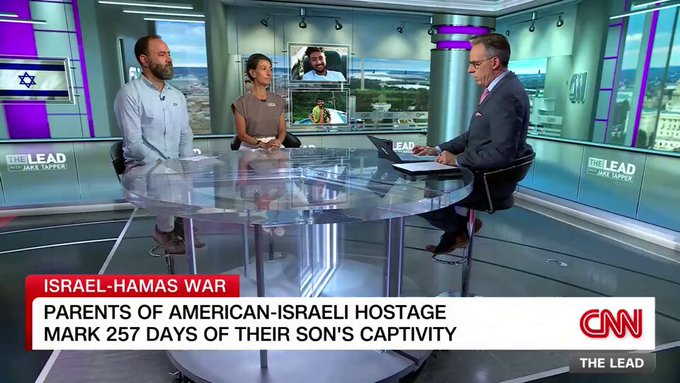

Brak zainteresowania amerykańskich mediów sprawą amerykańskich zakładników, jak również mediów 23 innych krajów, których obywatele też są zakładnikami w Gazie

Zrzut z ekranu


Brak zainteresowania amerykańskich mediów sprawą amerykańskich zakładników, jak również mediów 23 innych krajów, których obywatele też są zakładnikami w Gazie

Daled Amos
Tłumaczenie: Małgorzata Koraszewska


Dziewiętnastego czerwca Jake Tapper z CNN przeprowadził wywiad z rodzicami Hersha Goldberga-Polina, jednego z zakładników przetrzymywanych w Gazie przez terrorystów Hamasu. W wywiadzie jedna kwestia jest boleśnie jasna. Apatię dziennikarzy wobec jeńców Hamasu przewyższa jedynie obojętność innych krajów poza Izraelem, których obywatele są przetrzymywani w więzieniach przez terrorystów:

Tapper: Jest coś, nad czym zawsze się zastanawiałem przez cały ten proces od 7 października: jest ośmiu zakładników z podwójnym obywatelstwem amerykańsko-izraelskim, w tym twój syn. Uważa się, że pięciu z nich, w tym twój syn, żyje. Trzej z nich nie. Czy jesteście zaskoczeni, że w amerykańskich mediach i wśród amerykańskich polityków nie mówi się więcej o fakcie, że grupa terrorystyczna przetrzymuje w Gazie pięciu prawdopodobnie żyjących amerykańskich zakładników?

Rachel Goldberg-Polin: Zdecydowanie uważam, że to szokujące, że olbrzymia większość Amerykanów nie ma pojęcia, że obecnie, kiedy teraz rozmawiamy, ośmiu obywateli USA jest przetrzymywanych jako zakładnicy w Gazie. Czuję to tak mocno, pamiętam, kiedy Brittney Griner była niesprawiedliwie przetrzymywana. I oczywiście Evan Gershkovich,  który nadal przebywa w areszcie. Dla mnie to nazwiska dobrze znane. Zdecydowana większość Amerykanów nie ma pojęcia, że tych ośmiu obywateli USA jest przetrzymywanych. To już 257 dni i uważam, że to  po prostu jest szokujące.

Pani Goldberg-Polin nie wyjaśnia obojętności mediów w USA wobec amerykańskich zakładników w Gazie. Taka apatia przypomina nam podobny brak entuzjazmu, jaki wykazują amerykańskie media w przypadku relacjonowania historii Ahlam Tamimi, sprawczyni masakry w Sbarro, która żyje jako gwiazda medialna w Jordanii, gdzie król Abdullah odmawia przestrzegania postanowień traktatu ekstradycyjnego nakazującego przekazanie Tamimi do USA, by stanęła tam przed sądem.

Media zdradzają swoją odpowiedzialność za relacjonowanie ważnych historii mających wpływ na życie obywateli amerykańskich, co powoduje ignorancję, jaką widzimy na temat tego, co się dzieje, i podważa popularne poparcie USA dla ratowania zakładników i radzenia sobie z zagrożeniem ze strony terrorystów Hamasu.

Jak jednak wynika z wywiadu, kraje, których obywatele zostali porwani, są nie mniej apatyczne:

Rachel Goldberg-Poline: Ludzie też nie są świadomi, że wśród 120 pozostałych zakładników są przedstawiciele 24 różnych narodów. Są to chrześcijanie, żydzi, muzułmanie, hinduiści i buddyści. Bardzo rzadko słyszę, jak ktoś występuje w obronie przetrzymywanych muzułmańskich Arabów, przetrzymywanych tajskich buddystów lub przetrzymywanych czarnych afrykańskich chrześcijan. Są tam Nepalczycy, Argentyńczycy, Niemcy, Polacy – po prostu o tym nie słychać. Próbują i nie wiem, kim są „oni”, ale świat próbuje stworzyć tę monolityczną, jednorodną grupę ludzi, co jest absolutną krzywdą i niesprawiedliwością wobec przetrzymywanych ludzi.

Jak często słyszymy, że zakładnicy pochodzą z 24 różnych krajów, a nie tylko z Izraela? Co jest przyczyną ich apatii?


Oto 24 kraje
, poza Izraelem, których obywatele są przetrzymywani w niewoli:

o  Argentyna
o  Austria
o  Brazylia
o  Bułgaria
o  Kanada
o  Kolumbia
o  Dania
o  Francja
o  Niemcy
o  Węgry
o  Włochy
o  Meksyk
o  Holandia
o  Paragwaj
o  Filipiny
o  Polska
o  Portugalia
o  Rumunia
o  Rosja
o  Serbia
o  Hiszpania
o  Tajlandia
o  Wielka Brytania
o  Stany Zjednoczone

Można było spodziewać się zjednoczonego, publicznego oburzenia.

Właściwie był jeden przypadek z kwietnia: Stany Zjednoczone i 17 innych krajów mających zakładników w Gazie wzywały do ich uwolnienia w zamian za zawieszenie broni

Administracja Bidena opublikowała apel przywódców 18 krajów, których obywatele są zakładnikami w Gazie, wzywający do ich natychmiastowego uwolnienia w zamian za „natychmiastowe i długotrwałe zawieszenie broni”, które doprowadzi do „zakończenia działań wojennych”.

Dziwne jest to, że złożenie publicznego oświadczenia zajęło krajom mającym tak wspólny interes w ratowaniu swoich obywateli sześć i pół miesiąca.

Kolejną dziwną rzeczą jest to, że niektóre kraje nie mogły zmusić się do przyłączenia się do tego publicznego oświadczenia. Nie wymienione na liście krajów uczestniczących:o  Włochy

o   Meksyk
o   Holandia
o   Paragwaj
o   Filipiny
o   Rosja
o   Włochy

Oto tekst oświadczenia ze strony internetowej Białego Domu:

Wzywamy do natychmiastowego uwolnienia wszystkich zakładników przetrzymywanych przez Hamas i Gazę od ponad 200 dni. Wśród nich są nasi obywatele. Los zakładników i ludności cywilnej w Gazie, chronionych na mocy prawa międzynarodowego, budzi zaniepokojenie międzynarodowe.

Podkreślamy, że rozpatrywane porozumienie w sprawie uwolnienia zakładników doprowadziłoby do natychmiastowego i długotrwałego zawieszenia broni w Gazie, co ułatwiłoby przypływ dodatkowej niezbędnej pomocy humanitarnej w całej Gazie i doprowadziłoby do wiarygodnego zakończenia działań wojennych. Gazańczycy będą mogli wrócić do swoich domów i na swoje ziemie po wcześniejszym przygotowaniu  schronienia i pomocy humanitarnej.

Zdecydowanie wspieramy trwające wysiłki mediacyjne mające na celu „sprowadzenie naszych ludzi do domu”. Ponawiamy nasz apel do Hamasu o uwolnienie zakładników i zakończmy ten kryzys, abyśmy wspólnie mogli skoncentrować nasze wysiłki na zapewnieniu pokoju i stabilności w regionie” – podsumowano w oświadczeniu.

Dlaczego 6 krajów odmówiło podpisania?

Jedną z wskazówek może być sposób, w jaki Israel National News donosiły o tym oświadczeniu w podtytule:

Stany Zjednoczone i 16 innych krajów, których obywatele zostali porwani przez Hamas, wydały wspólne oświadczenie, w którym obwiniają Hamas za przedłużanie wojny przez odmowę uwolnienia zakładników.

Przyjrzyj się jeszcze raz oświadczeniu.
Widzisz, czego brakuje?
Nie ma wzmianki o Izraelu.

Israel National News mają rację. Składając całkowicie ciężar uwolnienia zakładników na Hamas, oświadczenie to obciąża Hamas całkowitą odpowiedzialnością. Jest to sprzeczne z linią partyjną, zgodnie z którą Izrael musi najpierw zaakceptować przedłużone zawieszenie broni w wojnie z Hamasem.

Jednak kraje, które podpisały się pod oświadczeniem, nawet nie żądają uwolnienia wszystkich zakładników:

Przedstawione porozumienie, które doprowadziłoby do zawieszenia broni w Gazie po prostu poprzez uwolnienie kobiet, rannych, osób starszych i chorych zakładników, jest gotowe do wdrożenia, powiedział wysoki rangą urzędnik administracji, a Hamas go odrzucił.

Krajom tym zajęło pół roku zebranie się i wydanie wspólnego oświadczenia, a nie potrafią one nawet żądać uwolnienia wszystkich swoich obywateli.

Nie należy się spodziewać żadnego przejawu jedności w ONZ w jakiejś rezolucji Zgromadzenia Ogólnego wzywającej do bezwarunkowego uwolnienia zakładników. Takie moralne potępienie naruszenia prawa międzynarodowego i przyzwoitości moralnej wyraźnie wykracza poza możliwości Organizacji Narodów Zjednoczonych.

Nic dziwnego, że Hamas ma wrażenie, że może się utrzymać w nieskończoność.


Daled Amos (Bennet Ruda) – Izraelski bloger piszący o historii i problemach Bliskiego Wschodu, a w szczególności Izraela. http://daledamos.blogspot.com/


Zawartość publikowanych artykułów i materiałów nie reprezentuje poglądów ani opinii Reunion’68,
ani też webmastera Blogu Reunion’68, chyba ze jest to wyraźnie zaznaczone.
Twoje uwagi, linki, własne artykuły lub wiadomości prześlij na adres:
webmaster@reunion68.com


Before #MeToo—and After

Before #MeToo—and After


JUSTINE EL-KHAZEN


What becomes of women who won’t be defined as victims?

RENE BURRI/MAGNUM

On a night in early September of 1999, I found myself unable to sleep. I did what I always did back then when I couldn’t sleep: padded to the kitchen in the dark, got a beer out of the fridge, and brought it to the living room where I turned the TV on, volume low. No lights, no sound, nothing that would violate the cocoon of sleep in which I was supposed to have been enveloped.

I was curled up on the couch, the beer nearly empty, when I heard a strange sound. It was so faint I couldn’t have said what it was exactly. The sound of someone somewhere doing something quietly. But it wasn’t muffled by the walls or ceiling. I could hear it echoing along the hall that led from my bedroom to the kitchen.

I stood up with the intention of walking to investigate, and had an epiphany: I needed to leave—now—which I did, in my flannel pj’s with neither shoes nor contact lenses. When I opened the door of my building, I assumed there would be people walking by, a rescuer, but the streets were empty, not so much as a car passing by. Then, a man appeared at the end of my block. I should say “person.” My vision is bad enough that, unaided, I wouldn’t be able to tell the difference between a man and a woman, let alone the height or race or weight of the person I was seeing. Once he’d moved fully into the circle of light cast by a street lamp, he stopped. I couldn’t have said whether he was looking at me or away from me. Either way, he lingered there a minute, then walked on. I didn’t call out or ask for help. I just watched him walk away, certain for reasons I couldn’t explain that he was the one who had just been inside my apartment.

I rode my bike, shoeless, to a landscape architecture party to find my roommate. I berated her: “You said you’d be home by midnight!” She, drunkenly: “What are you, my mom?” A fair point, I realized, chastened. She came home with me anyway.

While on line for coffee before class the next morning, I asked a mutual friend if I’d been out of line. Was I acting like my roommate’s mom? Yes, she said. She told me to apologize, so later that day, my roommate and I got deli sandwiches for dinner, and I said I was sorry. Then she left for work in the children’s section of Barnes & Noble, and I settled onto our ratty couch to study, only I couldn’t focus, and before long, I heard our next door neighbor yelling at our landlord. She was demanding he put bars on her windows.

“He’s been here,” she screamed.

The hair on my arms puckered up. I knew that whomever she was talking about had been in my apartment the night before, so when she was done with the landlord, I rang her bell.

She let me in and explained that a string of now infamous rapes, and one murder, had occurred in the area. Had I not heard of the Center City rapist? He had broken into her apartment in the middle of the night earlier that summer, but a neighbor’s dog began to bark, waking her up and chasing him away. The FBI had set up a stakeout of her apartment, but he never came back.

I went home and pretended to read, absorbing nothing. Night fell. I didn’t bother to turn on the lights. I just sat there immobile on the couch until it occurred to me to call my parents and tell them the story. I was by this point camped out on the couch, which was near the front door and out of range of the phone on the wall in the kitchen. Instead, I reached for our cordless, which I clutched to my ear as I explained the strange sound, my sudden flight from the apartment, the racially ambiguous passerby who appeared to have been staring at me from under a street lamp. Then, the line went dead. I assumed it was just that the cordless had run out of batteries. I mulled venturing deeper into the apartment to place it in its cradle, but somehow that seemed like a bad idea, so I left, this time for Barnes & Noble.

As it turned out, though I hadn’t heard of the Center City rapist, everyone else had. He was big news, in Philly and beyond. He’d assaulted one woman, raped four and then gone on to murder a Wharton graduate student, Shannon Schieber. The case was a mystery: Either Schieber knew her attacker, or some sort of ultra stealth cat burglar had shimmied up to her balcony and slipped through the door, which was left standing open by the assailant, so there was no knowing if it was locked prior to the attack. Occam’s razor pointed to the first theory. A year and a half later, police somehow became convinced of the second.

Around the time Schieber was killed, reporters at The Philadelphia Inquirer began investigating a rash of sex crimes in Center City, all with an MO: The rapist slipped into his victims’ apartments via unlocked windows in the early hours of the morning, covered their faces with pillows so they couldn’t identify him and slipped out just as quietly as he’d come in. The series should have been easy enough for law enforcement to put together. Not only was the MO similar, but the victims all lived in the same neighborhood, only the police had systematically dismissed them, casting doubt on their credibility. Rather than investigating their claims of rape, the police placed their cases in a circular file titled “investigation of person,” a move that both improved rape stats for the city and saved police the trouble of investigating tougher cases. A serial rapist who slipped in and out of women’s apartments quietly in the middle of the night would have required some real police work. Police would have first needed to believe the victims, take solid evidence and statements, see the pattern, and then confirm it via DNA testing, only they did none of that.

Their failure to link those early cases meant eight women would later be attacked in Colorado, where the Center City rapist moved after the media frenzy in Philadelphia became too great. It also meant that, a year after he committed his first crime, he was still at large and on the prowl, leaving Schieber, leaving all the women of Philadelphia, exposed. As Schieber’s father put it: The Philadelphia police set his daughter up for murder.

They set me up too.

When I got to Barnes & Noble, I briefed my roommate. We decided I had not been out of line the night before. There was a maniac on the loose, and we were going to take action, the sort of hard-hitting action that clueless college girls take. Did we decamp for a friend’s house? No. Once we got home, we rang our upstairs neighbors’ bell and told them about the situation. Then we folded out the couch and went to sleep.

My mind lurched from one hellish dream to the next: There was a man with aviators and a windbreaker on, à la the Unabomber, standing over us. Next I heard sounds emerging from the hall, a slowly approaching footfall, but couldn’t move. Then there was the sound of an alarm: First it was inside the dream, and then I woke to find the doorbell ringing. My roommate and I parted the blinds to see two beat cops standing on our stoop.

At this point, I began screaming. I did not want my roommate to open the door or let the police in. I can remember the confused furrow in her brow. I wasn’t making any sense. I was screaming loudly enough that the neighbors came barreling down the stairs in their underwear. No one could understand what was going on with me, let alone calm me down. After a round of curious looks among them, the door was opened, and I fainted.

Upon coming to, I was told the police had been called because the phone line had been cut. What? That made no sense. By whom? The mutual friend I’d run into getting coffee had done a little research and come to the conclusion that I was not crazy: I lived smack dab in the middle of the territory a prolific, nationally famous, and as yet unapprehended rapist hunted. She called to tell me I should leave, but she kept getting a busy tone. Finally, she called the operator and asked her to do a line break. The operator informed her she couldn’t: The line had been cut.

“That’s ridiculous,” I told the police. “The cordless died. That’s it.”

One of them walked to the back of the apartment. The line for the phone entered the apartment in my roommate’s room. A few inches away from where it entered, the landlord had installed a split so that the line could travel in two directions: back into my room and forward into the rest of the house. The split was yanked out of the wall. It could have been an accident, I told the police. Never mind I’d been sitting on the couch when it happened. There was some feeling I wasn’t taking this seriously enough. It was agreed the FBI would come by in the morning. I didn’t see the need. I’d probably tripped on the line at some point. To leap to the conclusion that a notorious sexual predator had pulled it out was ridiculous. But in the 11 months that followed, it never fell out again.

A few days later when I explained to my English professor why I was late with the paper I was still too distracted to write, she gave me an extension and told me to buy a gun.

I laughed.

The case of the Center City rapist made something of a cultural splash. It spawned some Pulitzer Prize winning reporting, inspired an episode of Cold Case and a two-part episode on Law and Order: Special Victims Unit, starring Tracy Pollan. The TV episodes are unsettling. Certain details trickle in: the rapist’s uncanny ability to slip into women’s apartments. He puts a pillow over his victims’ faces so they can’t identify him. There are references to the Philadelphia police department’s failure to take their complaints seriously. The denouement of the SVU episode reveals the rapist lying in a pool of his own blood. His victims got the trial thrown out of court on purpose, so they could band together and kill him themselves, by far and away the episode’s most satisfying detail. They were on the same wavelength as my English professor, only they took a more liberal view of what constitutes “self-defense.” “Street justice is always bloody,” Ice-T’s character says.

In addition to these cultural high- and low-lights, the case actually changed the way sex crimes are policed. The Women’s Law Project, a public interest legal organization in Pennsylvania, worked with the Philadelphia police department and other advocate groups to reform the department’s procedures and culture and correct past wrongs. The plan they came up with is called The Philadelphia Model. It has been adopted by police departments around the world.

One of the most novel reforms involved inviting advocates to audit sex crimes files, not just cases that have been dismissed, but a random sampling of those that are open as well. The goal is to review police work to make sure it’s thorough—and free of anti-victim bias. Journalists in cities across the country have contacted the Women’s Law Project to report similar failings in special victims units in their cities. The Law Project also successfully lobbied the FBI to change its woefully outdated definition of rape, a move that lowers the bar for how individual states define it.

The advocates who came up with the model actually test-drove it by reviewing all cases from 1995 to 1997 marked “investigation of person,” an effort that resulted in the prosecution of 681 new felony rapes and 1,141 other sex crimes.

Perhaps the greatest of #MeToo’s failings is that it centers itself on a storyline in which women are violated and shamed with seemingly no counternarrative.

Another important element of the model is reforming police culture. Before the model, police did not assume the victim’s credibility. They worked from a place of skepticism that required victims to convince police that the attack against them was real. This was a common starting point for rape investigations nationwide, part of a general law enforcement mentality about rape. The framers of the model called attention to this bias, inspiring a sea change in the way police approach victims across the country—and a host of trainings and workshops designed to help police do better.

Once it became clear that the Philadelphia Special Victims Unit had failed to see the link between rape cases—and that a woman had been murdered as a result—the department’s culture and commitment changed overnight. A task force, led by two homicide detectives known for being dogged when it came to difficult cases, was created. Sex crimes detectives worked with crime labs to disseminate the DNA evidence they’d collected to police departments across the country and 1,200 tips were followed up on. Plainclothes officers sat in Center City bars on a nightly basis to survey the clientele in the hopes that a face in the crowd matched the one in the composite sketch. Plainclothes female officers walked the streets of Center City at night, in an attempt to lure their quarry. Detectives cast a wide net, even looking at clowns from a circus that had passed through town. All to no avail. The statute of limitations was in danger of running out on the earliest assaults, so prosecutors took the unusual step of charging the rapist’s DNA. No one in Philly wanted to let this go, but they would have to, for a little while anyway.

Then, in August 2001, a civilian dispatcher spotted an all points bulletin about a string of rapes in Fort Collins, Colorado. The MOs were the same. By September, the DNA had been matched.

Though the series had been discovered, the rapist himself remained elusive—even as he became more daring. In one year alone, he attacked seven women. Then, a detective in the major crimes unit in Philadelphia built a database of men who had lived in both cities. He was able to whittle the list down to 40 names. Detectives in both cities worked to eliminate men from the list—until they got to 34, and discovered a suspect whose movements and former addresses lined up with the string of attacks: Troy Graves. Fort Collins detectives got a court order for his DNA, but before the results had even come in, Graves confessed to everything. It took five years and untold man hours, but in the end, Graves was outmaneuvered.

Eighteen years later, when #MeToo launched, it dawned on me for the first time in my life that, technically, I meet the definition of a victim. It was a moment of total cognitive dissonance for me: I’d never even thought of myself as a survivor, let alone a victim. I was simply someone who had stayed ahead of the currents of sexual violence running through the cities in which I lived. I’ve never felt cowed by danger or wounded by its manifold existence in my life. As a result, I had no interest in joining the chorus of #MeToo because I knew that if I did I would turn events that were, for me, anecdotes into episodes that defined me. And I knew that whatever social currency I scored by doing so would come at the expense of my power to tell my story on my own terms.

Back then, I actually thought Alyssa Milano invented it. What better way to burnish a fading star than to become an activist, acquire a few million followers and let the puff pieces rain.

But the truth was so much more cynical. Activist and educator Tarana Burke coined the phrase “me too” in 2006, before there were hashtags, to raise awareness of how common sexual assault is, and to give survivors a sense of community around experiences that can be shameful and isolating. It was meant to shine a light on women whose stories are invisible to the culture at large. Sexual violence affects all women. Around 20% of all American women have been sexually assaulted—but not all victims are created equal. The case of Girl X, a Black child who was brutally assaulted in a Chicago housing project just a few weeks after JonBenét Ramsey was killed, received almost no media attention. Meanwhile, Ramsey’s murder set the pre-internet world on fire. All that attention didn’t make Ramsey any less dead, but it did make her more visible. Burke developed “me too” through her work with girls whose stories will never be splashed across the pages of People magazine. How fitting, then, that the Rose McGowans of the world should co-opt it.

The problem with #MeToo wasn’t just that it served one demographic: powerful, rich, mostly white women. Movie stars recounted the lurid details of their encounters with Weinstein. Women in media cataloged the transgressions against them in a spreadsheet, and therein lay the real issue: 55% of sexual assaults occur at or near the victim’s home. Only 12% of assault victims report that they were working at the time of the assault. #MeToo went viral as a workplace harassment movement—among the most well-heeled workers in America no less—when it was created to bring attention to the problem of sexual assault in our society as a whole. On the basis of age alone, #MeToo was out of step with the problem it purported to point up: 70% of sexual assault victims are under the age of 18, too young to find themselves stuck in an office cubicle.

#MeToo inspired a wave of sexual harassment legislation, culminating in the Biden administration’s Ending Forced Arbitration Act, which prohibits employers from forcing female employees to arbitrate disputes related to sexual harassment. The impact of #MeToo on the workplace is clear and unequivocal, which is something, but the gains all went to the top. Its effects didn’t trickle down to help the victims of sexual assault.

Today, only a fraction of all rapists will do time for their crimes, around 0.25%. There’s still a 99.75% chance their attackers will go free, and sexual assault is one of the most underreported crimes there is—only around 30% of rapes are reported—so the chance that a rapist will be incarcerated is actually much lower, along the lines of 0.0075%.

Women were on their own before #MeToo, and they’re on their own now. If anything, the system is even more stacked against them than it was before.

In 2018, the number of rapes reported in New York City jumped from 1,449 to 1,794, a bump of 18.5%. It seems reasonable to attribute this to #MeToo. The consensus is that at the very least it destigmatized coming forward. For the three years prior—2015, 2016, and 2017—the number of reported rapes hovered in the 1,440’s, so the rate was stable going into 2018. 2018 and 2019 saw a sharp spike in reported rapes, likely due to #MeToo, but by 2020, the number returned to just below its previous level, at 1,427. After that, a wave of violent crime took hold in New York City. As a result, rape stats have climbed to their highest levels since 2005.

In fact, since 2017, the rate of prosecution for sexually based offenses has actually fallen in New York City. In 2021, the Manhattan DA declined to prosecute a whopping 49% of cases, up from 37% in 2017. The citywide rate of arraignment for felonies fell modestly, by 5%, between 2018 and today.

But the total number of felony cases sentenced to incarceration in 2018, 5,740, plummeted to a disturbing low in 2020, around 1,151. The number has rebounded slightly, up to 2,180 last year, but that’s still a drop of 62%. Lest you imagine that those numbers mean crime is somehow down: Reported felonies are up by 25%. So felonies are up, but the rate of incarceration is down.

Why?

Incredibly, there’s now a contingency of #MeToo feminists who want to see rates of incarceration for rapists go down. The good women of the Law Project in Philadelphia represent the basic disposition of Second and Third Wave feminism toward sex crimes: They worked to get police to hold sex criminals maximally accountable, work that still seems vitally necessary today—though not to Fourth Wave, #MeToo inspired activists. Their agenda is to promote “non carceral feminism,” meaning they want to limit the power of the criminal justice system to prosecute sex offenders. Instead, they want mandatory sex ed nationwide and guaranteed mental health coverage. It’s hard to say what they think this will achieve. Do they think men rape women because they have no idea how sex works or they’re having an off day? Either way, not only is this agenda misogynistic; it represents a total failure to understand how little the criminal justice system does for victims of sexual assault. Women were on their own before #MeToo, and they’re on their own now. If anything, the system is even more stacked against them than it was before.

When I was growing up, feminism came in the form of Riot Grrrls. Two decades before the Silence Breakers, they talked about sexual violence. They confessed their experiences angrily, made fun of misogyny, exuded a fuck-you attitude and were awesome on their own terms. And I idolized them, which may have been why I never doubted my ability to outfox or outfight anyone who crossed me.

Perhaps the greatest of #MeToo’s failings is that it centers itself on a storyline in which women are violated and shamed with seemingly no counternarrative. Even before its viral takeover, psychologists and sociologists were chattering about the rise of what they called “victimhood culture.” I shudder to imagine what that will mean for girls who carry their image of themselves as victims out into the world. Because the world loves to victimize women, and I can’t help but wonder if #MeToo hasn’t primed them to meet it halfway.

A year after the Center City rapist episode, I found myself riding the New York subway during the midmorning lull. I was one of just a few people in the car, my nose buried in an issue of Granta. At some point when the train was screeching under the river to Brooklyn, I felt someone’s eyes on me. I looked up to find a man with a teardrop tattoo next to his eye, exposing himself to me. I could tell by the way he was staring at me that this was a prelude to something. He stood up, so I stood up. He stepped toward me, so I stepped toward him. He seemed about to pounce, so I lunged at him. He dodged me and made for the door. I actually laughed, as he ducked into York Street station and sprinted toward the stairs.

I know that laughing in the face of a sexual predator isn’t normal. I’ve learned to dissociate when faced with a threat, which is useful for remaining calm and in control, though it’s not the greatest coping mechanism to carry with you through life—but it kept me safe. It spared me from seeing myself as a victim. And I wouldn’t have it any other way.


Justine el-Khazen is a writer living in Brooklyn, New York.


Zawartość publikowanych artykułów i materiałów nie reprezentuje poglądów ani opinii Reunion’68,
ani też webmastera Blogu Reunion’68, chyba ze jest to wyraźnie zaznaczone.
Twoje uwagi, linki, własne artykuły lub wiadomości prześlij na adres:
webmaster@reunion68.com


Can an Israel-Hezbollah war be deescalated? – opinion

Can an Israel-Hezbollah war be deescalated? – opinion

FELICE FRIEDSON


Every word and every second count; the time for a diplomatic solution is slipping away.

HEZBOLLAH DEPUTY LEADER Sheikh Naim Qassem speaks at a rally in Beirut, supporting Palestinians in Gaza. He has reiterated that ‘if there is a ceasefire in Gaza, we will stop without any discussion.’ / (photo credit: ZOHRA BENSEMRA/REUTERS)

When leaders of terrorist organizations speak, their words must be considered carefully.

Plans for October 7 were provided clearly and unambiguously within the rants of Iran’s proxy leadership. Whether out of disbelief or arrogance, Israel’s defense echelon tragically left the gates to disaster open – quite literally – by ignoring the threats from Hezbollah leader Hassan Nasrallah and other Iranian proxies such as Yemen’s Houthis. Each agency’s responsibility for the resulting horrors will be debated and investigated for decades.

Now, following eight of history’s bloodier months, foes have drawn a line in the sand by making a ceasefire in the Gaza Strip a condition for virtually any potential stability in the region. Ask almost anyone from Kiryat Shmona, within firing range of the Lebanese border, if they feel secure enough to return to homes abandoned after October 7.

Israel has been retooling its message strategically. The phrase “to remove Hamas” is key to understanding Israel’s position on a ceasefire, and rumors suggest the possibility of Palestinian Authority involvement in Gaza at the end of the war. The trial balloons and cracks in the end-of-war messaging may also point to diplomatic channels pressing Israel to stop the war.

Sheikh Naim Qassem, Hezbollah’s deputy leader, reiterated in an interview with the Associated Press that “if there is a ceasefire in Gaza, we will stop without any discussion.” Lebanese Foreign Minister Abdullah Bou Habib delivered a message through Azerbaijani Foreign Minister Jeyhun Bayramov to Israeli Foreign Minister Israel Katz, stating that Lebanon did not want a war. Katz responded, stating, “We need to return our residents to their homes. If it is not through a diplomatic solution, it will be through war.”

Enter the conciliators. Traditional allies such as the Europeans cajole and threaten the Jewish state to answer the call for calm, and America lines up new friends in the region such as the United Arab Emirates – an extremely important relationship – to make their voices heard with promised support for postwar Gaza. All of which points to unrelenting international pressure to halt the war.

THE FLAGS of the US, United Arab Emirates, Israel and Bahrain are seen on the side of a road in Netanya, in September. (credit: FLASH90)

Adding to the plan, Hamas demands that all Israeli forces be withdrawn. The deal would effectively tie Israel’s hands while setting it up for a future October 7. Even if one-tenth of Hamas’s infrastructure remains and its leadership continues to rule Gaza, the future for Israel looks uncertain

The latest rounds of fighting in Gaza align with US aims to prevent a regional war and confront Iran directly. The tactical operation could serve as a barometer of whether Israel will enter a larger war with Hezbollah.

The Iranian-backed proxy has been clear in its messaging, stating that its goal is to stop the fighting in Gaza. It doesn’t seem as though Tehran is looking to escalate hostilities with Israel, regardless of the number of rockets they fired into the Jewish state’s northern borders since October 8.

However, Iran’s mission to the United Nations, writing on June 28 on the X platform, formerly known as Twitter, warned Israel that if it launches a full-scale attack on Hezbollah in Lebanon, “an obliterating war will ensue.”

Iran has used its prowess and its proxies to showcase its military capabilities in the region and exert pressure as they deem necessary.

These exercises have been partially a rehearsal (or dry run) to cunningly expose the world to their capabilities and a litmus test in understanding Israel and the international communities’ reactions, both militarily and diplomatically.

Divisions on end of war strategy

AN INTERNAL division on end-of-war strategy has pitted Defense Minister Yoav Gallant against Prime Minister Benjamin Netanyahu. The former, a key interlocutor with the United States, has attempted to calm the situation, fearing a larger conflagration, and sees a need for an end-of-war strategy.

He said over the weekend that a diplomatic solution was preferable to war and that Israel was not looking for a war with Hezbollah. But if the Iran-back armed group decided to escalate the situation, Israel would “know what to do.”

The war that Israel initiated as a response to the October 7 invasion of Israel’s southern border was conceptualized by Netanyahu with three goals: destroying Hamas, killing the leadership, and bringing back the hostages who were forcefully held captive in Gaza.

The first goal is one that the IDF chief of staff has said is nearly attained. The military can presumably finish the job of dismantling Hamas’s operational terrorist infrastructure. But this depends on a monitored Philadelphi corridor and all tunnels originating in Egypt and winding through Gaza eliminated.

The second goal of ridding Gaza of all its terrorists seems unattainable, which leaves the war-torn area in a state of uncertainty.

As for the hostages, one can hope that in whatever deal may be cut with the Iranian-backed proxy, all hostages will be released. Fear that some hostages remain as bargaining chips for future negotiations leaves this chapter open in this unsettling war that has brought endless death and destruction, insecurity to Israel, and a decimated Gaza needing to be rebuilt.

“A complete and permanent ceasefire in Gaza” is Nasrallah’s demand. But even if an all-out war with Lebanon is averted, the 150,000 long-range missiles aimed at Israel, as well as the Houthis’s bag of tricks and drones, won’t offset any ceasefire or diplomatic solution.

As for the 80,000 civilians who have not been able to return to their residences since October, a ceasefire won’t bring them peace of mind or home.

The clock is ticking and an all-out war looms. Every word and every second count; the time for a diplomatic solution is slipping away.


The writer is president and CEO of The Media Line news agency and founder of the Press and Policy Student Program, the Mideast Press Club, and the Women’s Empowerment Program. She can be reached at ffriedson@themedialine.org


Zawartość publikowanych artykułów i materiałów nie reprezentuje poglądów ani opinii Reunion’68,
ani też webmastera Blogu Reunion’68, chyba ze jest to wyraźnie zaznaczone.
Twoje uwagi, linki, własne artykuły lub wiadomości prześlij na adres:
webmaster@reunion68.com


My, Żydzi z Polski

Wiszniewska, Irena, Społeczno-obyczajowe, rok wydania 2014, format 135 x 210


My, Żydzi z Polski

Aleksandra Lipczak


Wiszniewska, dziennikarka, w latach 90. korespondentka belgijskich i francuskich mediów, wykonała ciekawą pracę: przeczesała kawał Polski, by porozmawiać z Żydami, którzy mają do powiedzenia interesujące rzeczy na temat swojego żydostwa. Porozmawiała z Żydami z Warszawy, Łodzi i Wrocławia oraz z małych miast. Z Żydami religijnymi i nie. Z takimi, którzy o swoim żydostwie dowiedzieli się w wieku 40 lat i tymi, którzy chodzili do żydowskich przedszkoli i jeździli na obozy Fundacji Laudera. Uznających żydowskość za trzon swojej tożsamości albo jeden, niekoniecznie najważniejszy, z jej wielu składników. Odbyła nawet rozmowy z paroma “Polakami, którzy chcą być Żydami”. Wyłonił się z tego fascynujący i złożony portret bez tezy.

To książka niezwykła, przede wszystkim ze względu na swoją “normalność” – jak zauważyła na portalu Forum Żydów Polskich Aleksandra Buchaniec-Bartczak (patrz “młodzieżowa”, pomarańczowa okładka). Rozmówcy Wiszniewskiej mówią o swoim żydostwie otwarcie, niekoniecznie w cieniu Zagłady: Jan Gebert przedstawia się jako “żydkolog”, a ktoś inny wyznaje, że żydostwo kojarzyło mu się zawsze tylko z czymś pozytywnym. Antysemityzm jest, owszem, w tle (większy, czy mniejszy niż w innych krajach Europy – co do tego zdania rozmówców są podzielone), ale przekaz jest taki: Żydzi z Polski, zwłaszcza ci najmłodsi, noszą swoją żydowskość bez kompleksów, mówią lekko o tematach, które jeszcze do niedawna wymuszały mimowolne ściszenie głosu. W Polsce – jak konstatuje wielu z nich – mimo dobrze trzymających się uprzedzeń – nastała przecież “moda” na bycie Żydem i odkrywanie własnych żydowskich korzeni lub wątłych “korzonków”, jak ironicznie nazywa je któryś z rozmówców Wiszniewskiej.

O tym , że po 89’ miał miejsce renesans życia żydowskiego w Polsce, wiadomo. Książka Wiszniewskiej ma jednak tę ciekawą właściwość, że komplikuje zbyt uproszczony obraz i nadwątla “utrwalone narracje” na ten i wiele innych tematów. Po pierwsze, ustami rozmówców, rozprawia się z mitem “Polski bez Żydów” po wojnie. “Dominuje wątek o braku życia żydowskiego, o tkwieniu w szafach, o obawie przed ujawnieniem się. I że dopiero wraz z nadejściem wolności, po 1989 roku, minął strach i rozpoczął się rozkwit życia żydowskiego” – mówi Wiszniewskiej Bella Szwarcman-Czarnota. W taką wizję nie do końca wpisują się historie, których wysłuchuje dziennikarka. Owszem, dużo tu wyznań o korzeniach odkrytych już w dorosłym wieku, ujawnionych przez przypadkowe spotkanie albo czyjeś wyznanie na łożu śmierci. Ale jest też urodzona w 1945 roku Izabella Szwarcman –Czarnota, opowiadająca o kołysankach w jidysz, który był jej pierwszym językiem czy łódzki rabin Symcha Keller, który mówi o nieprzerwanym nigdy ciągu pokoleń i tradycji w swojej gminie (“To wszystko zostało, ja to przejąłem po moich poprzednikach, którzy byli stąd, jak ja”). “Mieliśmy życie społeczne, literaturę, muzykę i teatr. Były kluby, kolonie, obozy, gazety” – mówi Szwarcman-Czarnota. “W moim przekonaniu nie udałaby się odbudowa czy budowa tego życia żydowskiego, które mamy obecnie (…), bez tych enklaw w Legnicy, we Wrocławiu, w Bielsku-Białej, w Katowicach (…)”.

“My, Żydzi z Polski” komplikują też narrację dotyczącą religijnego charakteru odrodzenia. W książce Wiszniewskiej równie wyraźnie słychać głos zaangażowanych świeckich Żydów. Jan Gebert, syn Konstantego Geberta, uważanego za jednego z ojców odrodzenia, stwierdza wprost: ojciec zniechęcił nas do religii (“Może trochę za bardzo mu na tym zależało, może trochę za bardzo naciskał”). “Z czasem judaizm stał się dla mnie bardziej systemem wartości niż wiarą. Na pierwszym miejscu zacząłem stawiać kwestie sprawiedliwości społecznej” – mówi społecznik przed trzydziestką, Jan Śpiewak. Pokoleniowe napięcie to zresztą jeden z ciekawszych wymiarów książki Wiszniewskiej. Młodzi Żydzi to najbardziej frapująca, “niepoprawna politycznie” grupa jej rozmówców. Krytykujący działanie gminy, nie do końca odnajdujący się w tradycyjnej wspólnocie, a zarazem przejęci jej przyszłością. Zastanawiający się, kim są dziś i będą Żydzi, na czym może zasadzać się ich tożsamość, jeśli odjąć religię. “Szczerze mówiąc, uważam, że nie ma przyszłości dla Żydów w tym kraju. Jesteśmy jednym z ostatnich pokoleń, potem będą takie popłuczyny” – mówi Śpiewak.

Nie oznacza to jednak, że nie ma w “Żydach z Polski” miejsca na religię. Wiszniewska znalazła ludzi, którzy umieją pięknie opowiadać o religijnym doświadczeniu i tradycji (patrz na przykład: Paweł Passini). Inni opowiadają z kolei o obyczajach i bywają w odsłanianiu (swojej) intymności bardzo szczerzy (wspomnienia z obrzezania w latach 90. to temat niemal na film). Czy o duchowość chodzi, czy o “insiderskie” historie, ciekawy materiał i opowieści aż wylewają się z tego zbioru. Jeśli ktoś będzie się chciał kiedyś dowiedzieć o tym, jak wyglądało życie żydowskie w Polsce w początkach XXI wieku, znajdzie tu wszystko lub bardzo wiele: stosunki w gminie, pokoleniowe przemiany, napięcie na linii religijność-świeckość, obyczajowy szczegół. A także lęk czy zeświecczona wspólnota ma szansę przetrwać czy raczej rozmyje się w zglobalizowanym, zmiksowanym świecie idei i tożsamości.

Właściwie można czytać “Żydów z Polski” jako książkę o dylematach z tożsamością w ogóle, żydowską i nie. W końcu, “dlaczego w tym dwudziestym pierwszym wieku, gdy mamy szanse czuć się Europejczykami, pielęgnujemy zagubione tożsamości przodków?” – jak pyta Wiszniewska jedną z rozmówczyń. Wiele do rzeczy ma tu nadzieja – pewnie płonna, jak zauważa we wstępie Irena Grudzińska-Gross – że “z palimpsestu przeszłości da się odtworzyć coś prawdziwego, autentycznego, bezpośredniego”.

Książka Wiszniewskiej to też, a może przede wszystkim, zbiór rozmów z ciekawymi ludźmi. O ich rodzinach. O powikłanych albo prostych losach. Chcąc nie chcąc, również o współczesnej Polsce. Jeden z rozmówców Wiszniewskiej zżyma się na festiwale kultury żydowskiej i upupiającą wizję tejże, która zaspokaja tęsknoty i potrzeby etnicznych Polaków. “My, Żydzi z Polski” zapewniają okazję, by usłyszeć żydowski (wielo)głos bez pośredników


Irena Wiszniewska
“My, Żydzi z Polski”
Wydawnictwo Czarna Owca
Wymiary: 135 mm x 210 mm
Liczba stron: 400
Okładka: miękka
ISBN: 978-83-7554-809-9
http://www.czarnaowca.pl/

Autorka: Aleksandra Lipczak, lipiec 2014


Zawartość publikowanych artykułów i materiałów nie reprezentuje poglądów ani opinii Reunion’68,
ani też webmastera Blogu Reunion’68, chyba ze jest to wyraźnie zaznaczone.
Twoje uwagi, linki, własne artykuły lub wiadomości prześlij na adres:
webmaster@reunion68.com