Archive | 2026/06/07

Trump po decyzji Hezbollahu: “Libańczycy naprawdę mają przechlapane”

Liban po ataku Izraela, 28 maja 2026 r. (Fot. REUTERS/Stringer)


Trump po decyzji Hezbollahu: “Libańczycy naprawdę mają przechlapane”

Marta Urzędowska


Libańscy terroryści odrzucili rozejm uzgodniony przez Izrael i władze Libanu. Oznacza to kontynuację wojny Izrael-Hezbollah, która nie pozwala zakończyć też konfrontacji z Iranem i odblokować cieśniny Ormuz.

Naim Kassim nie przebiera w słowach. Szef Hezbollahu, w oświadczeniu wyemitowanym w czwartek (5.06) przez telewizję grupy Al-Manar, stwierdza, że jego ludzie nie przyjmują rozejmu wypracowanego przez Izrael i libański rząd.

Terrorysta wyjaśnia, że wypracowane w Waszyngtonie między przedstawicielami Izraela i libańskiego rządu porozumienie o zawieszeniu broni oznacza „kapitulację, porażkę i realizację celów wroga”.

Dodaje, że – dopóki Izraelska armia nie przestanie bombardować libańskich miejscowości, północny Izrael również nie będzie bezpieczny. – Nas interesuje pełne zakończenie izraelskiej agresji, zawieszenie broni i wycofanie się izraelskich sił. Nikomu nie obiecywaliśmy, że przestaniemy stawiać opór tak długo, jak długo trwa izraelska okupacja – wylicza, domagając się od libańskiego rządu, by zakończył rozmowy z Izraelczykami, które nazywa „farsą”.

Trump nie doprowadził do rozejmu pomiędzy Izraelem a Hezbollahem

Stanowisko Kassima oznacza, że terroryści będą ostrzeliwać północny Izrael, dopóki Izraelczycy nie przestaną bombardować celów grupy w Libanie i nie wycofają się z kraju. Oznacza też fiasko wysiłków Donalda Trumpa, który w ostatnich dniach zapewniał, że rozmawiał zarówno z Izraelczykami, jak i z Hezbollahem i obie strony na jego prośbę zgodziły się „przestać strzelać”.

Amerykanin angażuje się w rozejm, bo wojna w Libanie utrudnia mu zakończenie konfliktu z Iranem. Rozpoczął się pod koniec lutego, kiedy USA i Izrael zaatakowały irańskie cele i przez kilka tygodni kontynuowały ataki. W odpowiedzi Irańczycy ostrzeliwali Izrael i kraje arabskie rejonu Zatoki Perskiej, a do tego zamknęli kluczową dla transportu ropy cieśninę Ormuz, utrudniając handel surowcem i sprawiając, że jego ceny szaleją.

Wojna w Libanie ściśle związana jest z konfliktem w Iranie. Kiedy Amerykanie i Izraelczycy zaczęli atakować irańskie cele, libański Hezbollah, sojusznik Teheranu, rozpoczął ostrzał północnego Izraela. W odpowiedzi Izraelczycy bombardują Bejrut i południe Libanu i prowadzą na miejscu lądową ofensywę.

Do tego budują na południu kraju tzw. strefę buforową, czyli wprowadzili tam swoich żołnierzy, odcięli tę część Libanu od reszty kraju wysadzając mosty, a dziś wyburzają miejscowe wioski, by okoliczna ludność nie mogła do nich wrócić. Oznacza to, że Izrael – choć rozmawia o rozejmie – jednocześnie planuje w Libanie długotrwałą okupację.

Trump: “Hezbollah do mnie dzwonił. Libańczykom należy się pokój”

Oferta rozejmu, którą w czwartek odrzucił lider libańskich terrorystów, jest mocno niejasna. Zawiera m. in. zapis, że „wszyscy bojownicy Hezbollahu zostaną ewakuowani” z terenów między izraelską granicą a rzeką Litani, ok. 30 km na północ od granicy. To tereny dziś okupowane przez izraelską armię.

Jednocześnie Amerykanie mieliby pomóc utworzyć na miejscu „strefy pilotażowe, w których libańskie siły zbrojne miałyby wyłączną kontrolę”. Nie wiadomo, gdzie dokładnie miałyby powstać takie strefy, jak miałyby działać i jaką konkretnie rolę mieliby odgrywać na miejscu Amerykanie.

Do tego wprowadzenie w życie takich postanowień byłoby trudne, bo libańska armia jest o wiele słabsza od Hezbollahu, a libański rząd nie ma nad grupą kontroli i nie jest w stanie zmusić jej do przestrzegania jakiegokolwiek porozumienia. Choć większość Libańczyków nie popiera Hezbollahu, nie ma też szans, by zgodzili się na izraelską okupację, a obecność izraelskich żołnierzy na południu kraju poprawia notowania grupy, która stawia im opór.

Jeśli nie uda się uzgodnić innej wersji porozumienia kończącego konflikt w Libanie, nie ma mowy o skutecznych negocjacjach z Iranem. Teheran powtarza, że nie będzie żadnego dealu, ani otwarcia cieśniny Ormuz, jeśli Izrael nie przestanie bombardować Libanu i nie wycofa z kraju swoich żołnierzy.

Trump nie traci rezonu. Jeszcze w kilka godzin po oświadczeniu Kassima, zapewniał że rozmawiał z terrorystami.

Hezbollahowcy do mnie zadzwonili i powiedzieli: “Może by to zakończyć”?

– opowiadał dziennikarzom zgromadzonym w czwartek w Gabinecie Owalnym.

Donald Trump Fot. REUTERS/Evan Vucci

– Myślę, że zobaczycie, jak różne rzeczy się tam zdarzą. To niby trochę inny świat, ale jednak jest połączony z Iranem. No i byłoby bardzo miło, gdyby Liban zaznał trochę pokoju – tłumaczył amerykański prezydent.I dodał:

Jest ciągle atakowany od tylu lat, Libańczycy naprawdę mają przechlapane. I byłoby bardzo miło, gdyby to się mogło skończyć.

Kolejne rozmowy przedstawicieli Libanu i Izraela zaplanowano na 22 czerwca. Tymczasem izraelski minister obrony, Israel Katz ogłosił, że izraelska armia „na razie będzie kontynuować ostrzał i operacje lądowe, by rozmontować terrorystyczną infrastrukturę” w Libanie. W czwartek (4.06) Izraelczycy przeprowadzili na południu Libanu serię nalotów, w których zginęło kilkanaście osób.

Od początku obecnej konfrontacji w Libanie zginęło co najmniej 3,5 tys. osób, a ponad milion zostało uchodźcami. W tym samym czasie po obu stronach granicy zginęło 26 izraelskich żołnierzy i czwórka izraelskich cywilów.


Redagował Michał Olszewski


Zawartość publikowanych artykułów i materiałów nie reprezentuje poglądów ani opinii Reunion’68,
ani też webmastera Blogu Reunion’68, chyba ze jest to wyraźnie zaznaczone.
Twoje uwagi, linki, własne artykuły lub wiadomości prześlij na adres:
webmaster@reunion68.com

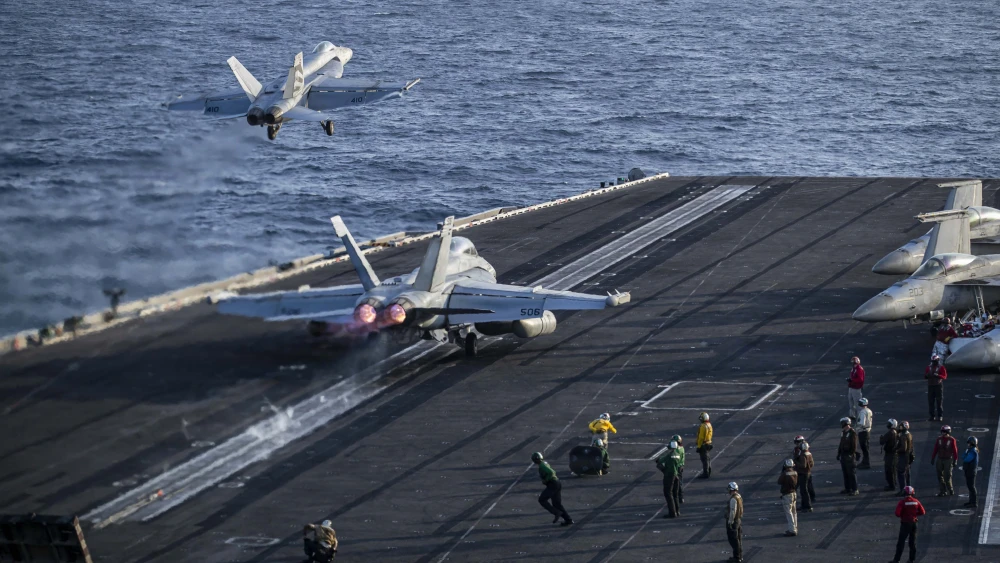

US forces down Iranian missiles and drones across Gulf region


US forces down Iranian missiles and drones across Gulf region

Joshua Marks


CENTCOM said all Iranian attacks failed as the U.S. intercepted strikes on Kuwait and Bahrain and hit a drone site on Qeshm Island.

An F/A-18E Super Hornet assigned to Strike Fighter Squadron 151 and an EA-18G Growler assigned to Electronic Attack Squadron 133 launch from the flight deck of the Nimitz-class aircraft carrier USS Abraham Lincoln in the U.S. 5th Fleet area of operations, May 9, 2026. U.S. Navy photo by NAVCENT Public Affairs.

Central Command said early on Wednesday that American and partner forces had intercepted multiple Iranian missile and drone attacks across the Gulf region overnight, while also conducting retaliatory strikes and enforcing maritime restrictions.

According to CENTCOM, Iran launched several ballistic missiles toward regional targets late Tuesday into early Wednesday. Two missiles aimed at Kuwait failed mid-flight, while three others targeting Bahrain were intercepted by U.S. and Bahraini air defenses. Kuwaiti authorities confirmed air defenses were actively engaging incoming threats, and Bahrain’s Interior Ministry reported warning sirens were activated.

Kuwait’s Foreign Ministry announced that the Iranian attacks targeting its territory killed one person and injured several others. Health Ministry spokesperson Dr. Abdullah Al-Sanad later reported that at least 63 people were injured and “seven urgent major surgeries have been performed” since the “brutal Iranian attack on the State of Kuwait.”

In a statement, Kuwait City condemned the attacks “that once again targeted vital and civilian infrastructure, including Kuwait International Airport, killing one person and injuring others, in addition to causing damage to vital infrastructure including diplomatic missions.”

Kuwait’s civil aviation authority earlier on Wednesday declared a state of emergency at Kuwait International Airport following an Iranian attack involving drones and missiles that caused several injuries and extensive damage, officials said. Flights were suspended or diverted to other airports as authorities assessed the impact of the attack. Hostile drones struck the airport’s main passenger terminal (T1), damaging the building and injuring several individuals, according to a statement by Defense Ministry spokesman Saud Abdulaziz Al-Otaibi.

During the overnight hours, residents near Iran’s Qeshm Island reported explosions, according to the Iranian regime-aligned Mehr News Agency.

CENTCOM said U.S. forces had earlier shot down three Iranian drones targeting civilian maritime traffic and conducted a self-defense strike on an Iranian military ground control station on Qeshm Island.

In a statement posted at 2:57 a.m. local time, CENTCOM rejected Iranian Revolutionary Guard claims that U.S. positions, including the Fifth Fleet headquarters in Bahrain, had been successfully struck, calling the assertions false and stating that all Iranian attacks had failed.

At 4:26 a.m. local time, CENTCOM reported an additional wave of Iranian drones targeting U.S. forces in Kuwait. The drones were intercepted by air defenses, with no American casualties or damage reported.

Separately, CENTCOM said it had disabled a Botswana-flagged oil tanker, the M/T Lexie, on Tuesday after the vessel ignored repeated warnings and attempted to proceed toward Iran’s Kharg Island. A U.S. aircraft struck the ship’s engine room with a Hellfire missile, rendering it inoperable. The command said the action was part of an ongoing maritime blockade, under which six vessels have been disabled and 122 redirected since April.

CENTCOM said no U.S. personnel were harmed in the overnight incidents and that forces remain on high alert amid continued tensions despite an ongoing ceasefire.


Zawartość publikowanych artykułów i materiałów nie reprezentuje poglądów ani opinii Reunion’68,
ani też webmastera Blogu Reunion’68, chyba ze jest to wyraźnie zaznaczone.
Twoje uwagi, linki, własne artykuły lub wiadomości prześlij na adres:
webmaster@reunion68.com


Turkey Weighs Major Defense Overhaul as Iran Conflict Reshapes Warfare


Turkey Weighs Major Defense Overhaul as Iran Conflict Reshapes Warfare

Ailin Vilches Arguello


Turkish President Tayyip Erdogan speaks during a ceremony for the handover of new vehicles to the gendarmerie and police forces in Istanbul, Turkey, Nov. 28, 2025. Photo: REUTERS/Murad Sezer

As tensions continue to rise across the Middle East, Turkish security circles are calling for a major overhaul of the country’s defense strategy while stepping up efforts to strengthen air defenses, expand military readiness, and protect Ankara’s growing regional ambitions amid rising competition with Israel.

The US–Israeli military campaign against Iran and the ensuing regional war have significantly reshaped regional security dynamics, driving a shift in Turkish threat perceptions and defense priorities, according to a new assessment by Turkey’s National Intelligence Academy (MIA), a state-run research and higher education institution under the country’s National Intelligence Organization (MİT).

MIA’s new report calls on the Turkish government to bolster air and missile defenses, strengthen the protection of critical infrastructure, enhance security for senior officials, and maintain dialogue with Israel despite rising tensions — all intended to address shifting geopolitical dynamics.

As evidence from current conflicts shows, modern warfare is shaped not only by military capabilities, but also by industrial output, artificial intelligence, communications networks, infrastructure resilience, and a state’s capacity to maintain sustained operations under severe pressure.

With such dynamics rapidly transforming the battlefield, MIA’s latest assessment points to the growing vulnerability of centralized military structures, calling for greater use of distributed command-and-control systems, backup networks, and more flexible operational models capable of functioning even under sustained attacks or system disruptions.

Besides conventional battlefield operations, modern conflicts are increasingly focused on the infrastructure that underpins military capability, with energy facilities, communications networks, logistics hubs, radar systems and data centers emerging as primary targets.

According to the report, this means the Turkish government can no longer base defense planning solely on conventional military assets but must instead adopt a comprehensive security doctrine integrating military, cyber, electronic, intelligence, and psychological dimensions.

Among the assessment’s main recommendations are expanding Turkey’s air and missile defense systems, boosting sustainable defense-industrial capacity, strengthening the protection of critical infrastructure, improving resilience to information warfare, and overall readiness for crisis scenarios.

More importantly, the report also emphasizes the need to keep state functions running without interruption during crises, arguing that distributed systems, backup capabilities, and alternative operating models are essential to sustaining operational effectiveness if command structures or critical facilities are attacked.

Addressing mounting geopolitical tensions across the region, MIA’s assessment warns that Israel’s military and strategic approach could create new points of friction with Turkey — particularly in Syria and the eastern Mediterranean — while suggesting that the Jewish state may seek to expand its operational footprint in Syria and Lebanon.

In this shifting regional context, the report argues that Turkey, a NATO ally, is increasingly perceived within Israeli political and military circles as a strategic challenge, raising the prospect of a relationship marked by sustained competition and recurring tensions.

Turkey’s extensive ties with Hamas and other terrorist groups and Islamist movements, including the Muslim Brotherhood, have long concerned officials not only in Israel but also across the Western world.

Since the outbreak of the Gaza war in 2023, however, Turkish President Recep Tayyip Erodgan has emerged as one of Israel’s fiercest critics on the global stage, comparing the country to Nazi Germany and even threatening to invade.

Yet MIA warns Ankara against severing communication channels with Israel, instead urging a more balanced strategy that combines diplomacy with deterrence — preserving a workable basis for dialogue while sustaining Turkey’s military readiness and regional coordination capabilities.

While preserving diplomatic engagement, the report points to the need for Ankara to simultaneously strengthen military preparedness and deepen strategic coordination with regional partners.

According to MIA’s assessment, Turkey’s military capabilities, defense-industrial capacity, diplomatic flexibility, and broad regional reach position Ankara to play a potentially stabilizing role in an increasingly volatile security environment while also expanding its regional influence and strategic ambitions.

However, the report comes at a time of domestic unrest for Turkey.

Last month, Turkish riot police forced their way into the main opposition party’s headquarters to evict its ousted leadership.

Police stormed the Republican People’s Party (CHP) building in Ankara, firing tear gas and rubber bullets to disperse supporters and officials who had barricaded themselves inside and were shouting and throwing objects at the entrance.

Days earlier, a Turkish court ousted CHP leader Ozgur Ozel, annulling the results of the 2023 party congress where he was elected chairman, citing irregularities in a ruling that dealt a major blow to Erdogan’s challengers and posed a test for democracy in Turkey.

Ozel then led supporters on a march to the Turkish parliament. The ousted CHP leadership condemned the court ruling as a “judicial coup,” arguing Erdogan’s government has been targeting his political opponents through the judiciary. Turkish authorities countered that the judiciary is independent and that it is not using the courts to undermine the opposition.


Zawartość publikowanych artykułów i materiałów nie reprezentuje poglądów ani opinii Reunion’68,
ani też webmastera Blogu Reunion’68, chyba ze jest to wyraźnie zaznaczone.
Twoje uwagi, linki, własne artykuły lub wiadomości prześlij na adres:
webmaster@reunion68.com