Archive | 2026/07/12

Dokończyć robotę

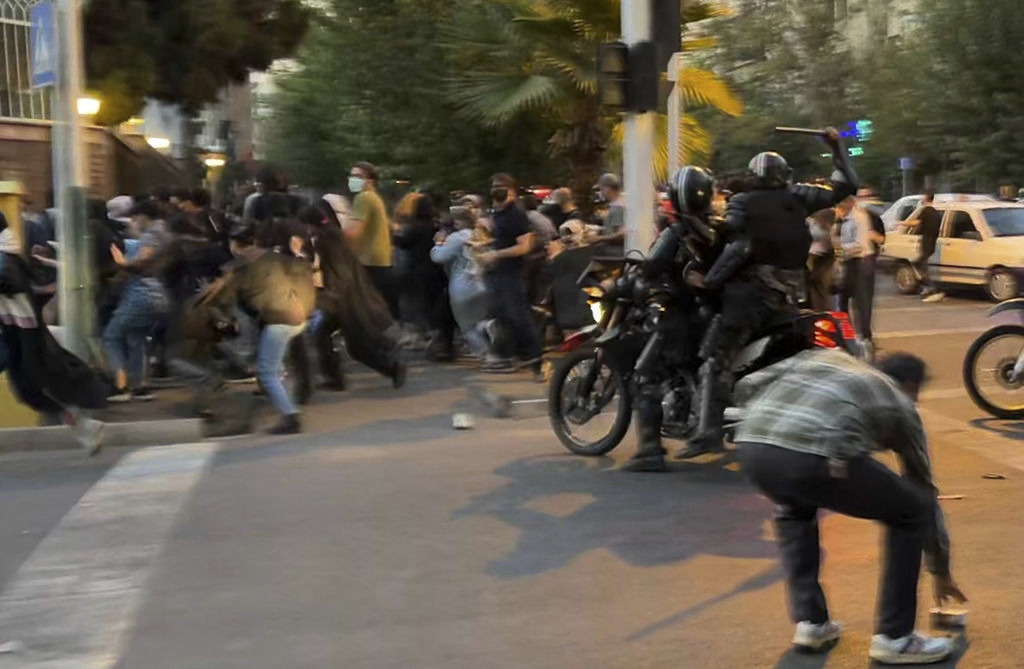
Na zdjęciu: Irańska policja ściga protestujących przeciwko reżimowi i bije ich pałkami w Teheranie, 19 września 2022 r. (Zdjęcie: AFP via Getty Images)

Dokończyć robotę

Majid Rafizadeh
Tłumaczenie: Andrzej Koraszewski


Reżim Iranu musimy widzieć takim, jakim on jest: jako potężnie uzbrojoną bandę zbirów oraz — według rządu USA — “największego państwowego sponsora terroryzmu” od dziesiątków lat. Reżim irański utrzymuje władzę dzięki brutalnej sile, która terroryzuje nie tylko jego sąsiadów i szerszy świat za pośrednictwem pełnomocników, pocisków balistycznych i bliskiej zdolności nuklearnej, lecz także własną populację liczącą około 93 milionów ludzi. Dekady represji, “eksportowania rewolucji” i ideologicznego ekstremizmu ukształtowały jego tożsamość, głęboko zakorzenioną w antyamerykanizmie, antysemityzmie i pogardzie wobec własnych obywateli.

W latach 1979, 1999, 2009, 2017–2018, 2019, 2022, pod koniec 2025 i na początku 2026 roku Irańczycy masowo wychodzili na ulice w ogólnokrajowych protestach przeciwko załamaniu gospodarczemu, represjom i nieudolnym rządom. Za każdym razem reżim odpowiadał bezwzględnymi masakrami — ostatnio w styczniu 2026 roku, kiedy siły bezpieczeństwa wprowadziły blackouty i otworzyły ogień do cywilnych demonstrantów z karabinów maszynowych i karabinów snajperskich. Reżim Iranu, według prezydenta USA Donalda J. Trumpa, zabił “co najmniej 42 tysiące protestujących” w ciągu kilku dni.

Reżim irański — dysponujący setkami tysięcy uzbrojonych ludzi w Korpusie Strażników Rewolucji Islamskiej, milicji Basidż i innych formacjach bezpieczeństwa — utrzymuje kontrolę nad społeczeństwem bez jakichkolwiek ograniczeń wobec własnych obywateli. Miliony nieuzbrojonych cywilów, niezależnie od odwagi, nie są w stanie przeciwstawić się takiej sile.

Administracja Trumpa, współpracując z Izraelem, wykonała mocny pierwszy krok poprzez precyzyjne uderzenia, które znacząco osłabiły irańską infrastrukturę wojskową, zdolności nuklearne i możliwości projekcji siły. Same bombardowania nie zmieniły jednak podstawowej ideologii reżimu ani jego psychopatycznej brutalności. Reżim Iranu nadal utrzymuje antyamerykańską postawę, wspiera swoich pełnomocników i prowadzi wewnętrzne represje. Nie dąży do reform, lecz do ponownego dozbrojenia i zemsty. Dlatego zmiana reżimu nie jest opcjonalna — jest konieczna.

Wysłanie amerykańskich wojsk lądowych na terytorium Iranu byłoby kosztowne pod względem ludzkim i finansowym. Sami odważni Irańczycy stanowią miliony “żołnierzy na miejscu” — gdyby tylko mieli środki, by się bronić i przechylić równowagę sił.

Zwycięska walka amerykańskich kolonii o niepodległość od Wielkiej Brytanii w dużej mierze opierała się na uzbrojonych obywatelach. Kolonialne milicje i minutemani — zwykli ludzie posiadający własną broń palną — odegrali decydującą rolę od pierwszych strzałów pod Lexington i Concord aż po kluczowe bitwy. Bez uzbrojonej ludności gotowej do oporu te improwizowane siły nie byłyby w stanie prowadzić długiej walki przeciwko zawodowej armii. Amerykańskie prawo do posiadania broni nie było dodatkiem po fakcie; stanowiło fundament obalenia tyranii.

Amerykański senator Lindsey Graham niedawno opowiedział się za “rozwiązaniem w duchu Drugiej Poprawki”:

“Uwielbiam pomysł rozwiązania w duchu Drugiej Poprawki dla narodu irańskiego… Gdybym był prezydentem Trumpem i byłbym Izraelem, uzbroiłbym Irańczyków po zęby, aby mogli wyjść na ulice uzbrojeni i odwrócić losy walki wewnątrz Iranu… Dajcie im broń, aby mogli powstać tak jak my, by zniszczyć ten reżim”.

Trump również zauważył, że Irańczycy nie mają broni, by przeciwstawić się reżimowym snajperom i siłom bezpieczeństwa.

Iran graniczy lądowo z Irakiem, Turcją, Afganistanem, Pakistanem, Azerbejdżanem, Turkmenistanem i Armenią. Należy wykorzystać kreatywne i bezpieczne kanały — we współpracy z grupami opozycyjnymi i dysydentami wewnątrz Iranu — aby dostarczać broń, amunicję i środki obronne bezpośrednio Irańczykom. Nie chodzi o tworzenie chaosu, lecz o przywrócenie równowagi, tak aby reżimowi despoci nie mogli bezkarnie nadal masakrować nieuzbrojonych tłumów.

Zasada prawa obywateli do posiadania broni, której znaczenie potwierdziła historia Stanów Zjednoczonych, ma zastosowanie również tutaj. W Iranie mogłoby to neutralizować reżimowych egzekutorów miasto po mieście bez konieczności zagranicznej okupacji.

Równolegle do uzbrajania irańskich cywilów USA i ich sojusznicy muszą utrzymywać maksymalną presję gospodarczą: blokady, sankcje i izolację, które odetną reżim od zasobów potrzebnych do represji i awanturnictwa.

Są sytuacje, w których nawet góry dyplomacji nie działają. Czy Adolf Hitler w Niemczech albo premier Japonii Hideki Tōjō rozbroili się i zreformowali?

Krótko mówiąc: uzbroić naród irański. Gospodarczo zdusić reżim. Pozwolić samym Irańczykom zdecydować o swojej przyszłości. Taki jest jasny wniosek z kolejnych irańskich powstań tłumionych przy użyciu przeważającej siły ognia oraz z historii powstania samych Stanów Zjednoczonych. Irańczycy pokazali swoją wolę. Zmiana reżimu dokonana przez samych Irańczyków — wyposażonych w środki obrony i chronionych — jest jedynym trwałym rozwiązaniem.


Zawartość publikowanych artykułów i materiałów nie reprezentuje poglądów ani opinii Reunion’68,
ani też webmastera Blogu Reunion’68, chyba ze jest to wyraźnie zaznaczone.
Twoje uwagi, linki, własne artykuły lub wiadomości prześlij na adres:
webmaster@reunion68.com


Turkey is no ally to entrust with the F-35


Turkey is no ally to entrust with the F-35

Fiamma Nirenstein


Ankara’s record—from hosting Hamas to buying Russian missile systems—raises questions about whether it should receive America’s most advanced fighter jet.

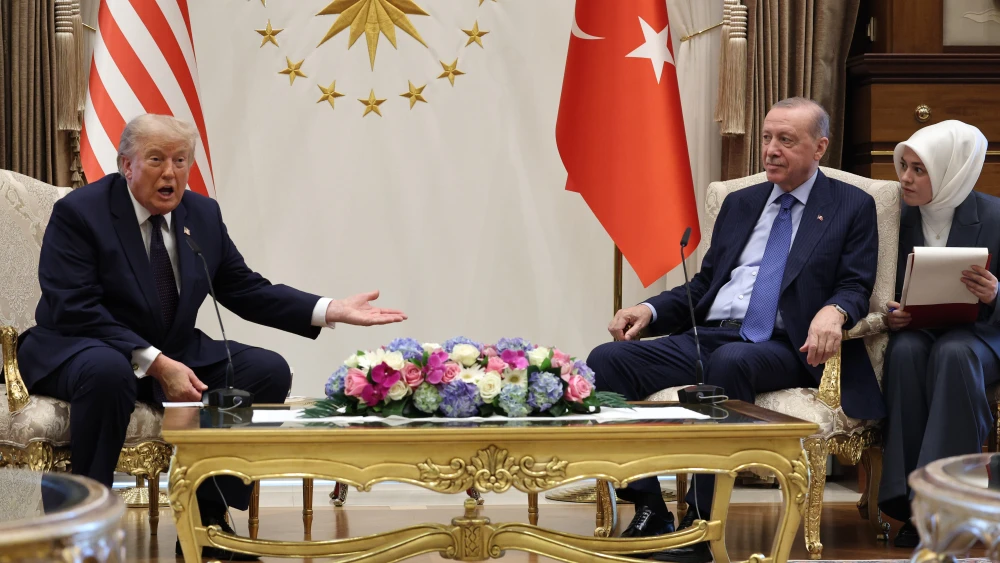
U.S. President Donald Trump at a bilateral meeting at the Bestepe Presidential Compound with Turkish President Recep Tayyip Erdoğan, following Trump’s arrival to attend the annual NATO Summit in Ankara, on July 7, 2026. Photo by Win McNamee/Getty Images.

Once, the world seemed relatively straightforward. On one side stood the United States and the democratic world; on the other, the Soviet Union, China and their satellites, where democracy was never a governing principle.

Today, the picture is far more complicated.

Even as tensions with the Shi’ite regime in Iran intensify once again, U.S. President Donald Trump has embraced an alliance with another problematic regional power: Turkey, an Islamist, authoritarian Sunni state whose trajectory the late historian Bernard Lewis once warned would ultimately resemble that of Iran.

Turkey was once a source of hope. As a member of NATO, it was widely seen as a bridge between the Islamic world and the West. That vision has long since collapsed. Under President Recep Tayyip Erdoğan, Turkey has become a vehicle for aggression and ideological hostility.

Trump has suggested he trusts Erdoğan because, although Turkey initially appeared ready to side with Iran during the recent conflict, it ultimately aligned itself with Washington. That confidence is reportedly reinforced by U.S. Ambassador to Turkey Tom Barrack, who strongly supports a strategic triangle of Turkey, Syria and Iraq as a cornerstone of American regional policy—a vision that leaves little room for Israel.

Yet Erdoğan, who openly presents himself as the leader of a revived Ottoman sphere of influence and as a champion of the Muslim Brotherhood, is a highly questionable recipient for one of America’s most advanced fighter aircraft.

Over the years, he has consistently worked against Egyptian President Abdel Fattah el-Sisi, seeking to fracture the moderate Sunni bloc aligned with the West. That bloc gave birth to the Eastern Mediterranean energy partnership linking Egypt, Israel, Greece and Cyprus—one of the region’s most innovative strategic initiatives.

Greece views Turkey as an increasingly aggressive neighbor. Cyprus remains divided, with Turkey continuing to occupy the northern half of the island. Erdoğan has only recently begun rebuilding fragile ties with Saudi Crown Prince Mohammed bin Salman.

Meanwhile, Ankara has openly hosted Hamas leaders, praised the Oct. 7 massacre, allowed flotillas to depart for Gaza from Turkish territory and made hostility toward Israel a centerpiece of its foreign policy. Erdoğan routinely compares Israeli Prime Minister Benjamin Netanyahu to Adolf Hitler and has spoken of Jerusalem as a future Turkish objective. Turkish Foreign Minister Hakan Fidan recently declared, “Israel is a burden humanity can no longer bear.”

There are practical reasons as well for caution.

Turkey’s 2019 purchase of the Russian S-400 missile defense system triggered U.S. congressional sanctions and led to its removal from the F-35 program because of concerns that sensitive technology could ultimately be exposed to Russia—or even China. Reversing that decision would take years even if Washington chose to do so.

The United States must also preserve Israel’s Qualitative Military Edge, a longstanding bipartisan commitment that remains central to American policy.

Israel also provides strategic advantages that few regional partners can match. Even today, U.S. military operations can be launched from Israeli territory, while many surrounding Arab states continue to deny such access.

Asked about selling F-35s to Turkey, Netanyahu recently said simply, “I wouldn’t do it.”

Given Erdoğan’s record, his ambitions and the uncertainty surrounding the Middle East’s future, that advice deserves careful consideration.

Indeed, if Trump has come to recognize how difficult it is to reach a durable agreement with the revolutionary Islamist regime in Tehran, he should also ask whether any long-term strategic understanding with an increasingly Islamist, authoritarian and messianic Turkey can truly be relied upon. That is a question Washington cannot afford to ignore.


Fiamma Nirenstein is an Italian-Israeli journalist, author and senior research fellow at the Jerusalem Center for Security and Foreign Affairs (JCFA). An adviser on antisemitism to Israel’s Ministry of Foreign Affairs, she served in the Italian Parliament (2008-2013) as vice president of the Foreign Affairs Committee. A founding member of the Friends of Israel Initiative, she has written 15 books, including October 7, Antisemitism and the War on the West, and is a leading voice on Israel, the Middle East, Europe and the fight against antisemitism.


Zawartość publikowanych artykułów i materiałów nie reprezentuje poglądów ani opinii Reunion’68,
ani też webmastera Blogu Reunion’68, chyba ze jest to wyraźnie zaznaczone.
Twoje uwagi, linki, własne artykuły lub wiadomości prześlij na adres:
webmaster@reunion68.com


Almost Half of American Muslims Hold “Favorable” View Towards Hamas, Poll Finds


Almost Half of American Muslims Hold “Favorable” View Towards Hamas, Poll Finds

Corey Walker


Hamas fighters on Feb. 22, 2025. Photo: Majdi Fathi via Reuters Connect

Nearly half of American Muslims hold a favorable view of Hamas, the terrorist group that has controlled Gaza, according to a new Pew Research Center poll published Thursday.

Some 44 percent of American Muslims indicated a “favorable” opinion of Hamas — far outstripping every other religious group surveyed — according to the poll, which surveyed 12,574 US adults from May 4-17, 2026, with a margin of error of plus or minus 1.3 percentage points. Pew oversampled Jewish and Muslim adults to allow for reliable comparisons between the two groups. The finding suggests a deepening political divide over the war in Gaza, even as the survey was conducted before Hamas’ July 6 announcement that it was dissolving its formal governing body over the territory — a step that stopped short of disarmament, one of the central demands of the US-brokered ceasefire plan.

According to the survey, American Muslims represent an outlier within the broader US public in their views of Hamas. By comparison, four percent of White evangelical Protestants, six percent of White Protestants who are not evangelical, 17 percent of Black Protestants, eight percent of Catholics, two percent of Jews, and 11 percent of religiously unaffiliated Americans hold a favorable opinion of Hamas.

The findings also echo a separate 2024 poll commissioned by the UK-based Henry Jackson Society, which found that 46 percent of British Muslims support Hamas.

Hamas, which seized control of Gaza from the rival Fatah movement in 2007, launched a massacre throughout southern Israel on Oct. 7, 2023, killing roughly 1,200 people, kidnapping 250 others, and engaging in mass rape. Israel subsequently launched a military campaign to dismantle the terror group and rescue the hostages — an effort that caused widespread destruction across the enclave and has also strained relations between the American Jewish and Muslim communities. Earlier this month, on July 6, Hamas announced it was dissolving its Gaza governing body and transferring administrative authority to a technocratic committee backed by the United Nations, though the group has so far declined to disarm.

Among the poll’s other findings are widely disparate views in how American Muslims see Israel and its people compared with the general US public. Just 26 percent of Muslims hold a favorable view of the Israeli people. By contrast, at least half of every other religious group surveyed — 83 percent of Jews, 74 percent of White evangelical Protestants, 55 percent of White Protestants who are not evangelical, 51 percent of Catholics, and 50 percent of Black Protestants — view the Israeli people favorably.

The survey also finds that Muslims are the only religious group in which about half hold a favorable view of the Palestinian Authority (PA), which controls the West Bank: 50 percent of Muslims view the PA favorably, compared with just 31 percent of Black Protestants, 20 percent of Catholics, 20 percent of White Protestants who are not evangelical, 10 percent of White evangelical Protestants, and 10 percent of Jews.

The Palestinian Authority, which exercises limited self-governance in the West Bank and has long faced accusations of corruption, has for years run a so-called “pay-for-slay” program that rewards terrorists and their families for carrying out attacks against Israelis. Under the policy, the PA makes payments to Palestinian prisoners held in Israeli jails, the families of “martyrs” killed in attacks on Israelis, and Palestinians injured while carrying out terrorist attacks.

The poll’s findings lay bare a growing rift over Israel and the Palestinians heading into the 2026 midterm election cycle. Muslim politicians such as Rep. Rashida Tlaib (D-MI), Rep. Ilhan Omar (D-MN), and Democratic Senate candidate Abdul El-Sayed (D-MI) have grown increasingly vocal in their opposition to Israel over the nearly three years since the Gaza war began. Several of these politicians have been criticized for declining to directly condemn terrorist groups such as Hamas and Hezbollah while accusing Israel of “genocide.”

As Muslim politicians continue to gain prominence in the US and across Europe, the substantial support for terrorist groups and hostility toward Israel documented within the American Muslim community may carry consequences for US foreign policy.


Zawartość publikowanych artykułów i materiałów nie reprezentuje poglądów ani opinii Reunion’68,
ani też webmastera Blogu Reunion’68, chyba ze jest to wyraźnie zaznaczone.
Twoje uwagi, linki, własne artykuły lub wiadomości prześlij na adres:
webmaster@reunion68.com