Texas Joins Legal Action Against American Muslims for Palestine as Move to ‘Counter Hamas Terrorism’


Texas Joins Legal Action Against American Muslims for Palestine as Move to ‘Counter Hamas Terrorism’

David Swindle


Texas Attorney General Ken Paxton speaks during AmericaFest, the first Turning Point USA summit since the death of Charlie Kirk, in Phoenix, Arizona, US, Dec. 20, 2025. Photo: REUTERS/Cheney Orr

Texas Attorney General Ken Paxton on Tuesday announced the state would join Virginia and Iowa in the filing of a legal brief against the nonprofit activist group American Muslims for Palestine (AMP) and other organizations which he characterized as “radical” in order “to combat Hamas terrorism.”

“Radical Islamic terrorist groups like Hamas must be decimated and dismantled, and that includes their domestic supporting branches,” Paxton posted on the social media platform X.

“Terrorism relies on complex networks and intermediaries, and the law must be enforced against those who knowingly provide material support,” Texas’s top legal officer added in a statement. “My office will continue to defend Americans who have been brutally affected by terrorism and ensure accountability under the law.”

In November, Texas began more aggressive legal efforts against organizations long alleged by researchers and law enforcement to be part of a domestic Hamas support network in the United States. Gov. Greg Abbott announced on Nov. 18, the designation of the Muslim Brotherhood and the Council on American-Islamic Relations (CAIR) as terrorist organizations.

A month later, Paxton filed a motion defending the designation in court, countering a suit by the Dallas-Fort Worth and Austin chapters of CAIR. “My office will continue to defend the governor’s lawful, accurate declaration that CAIR is an FTO [foreign terrorist organization], as well as Texas’s right to protect itself from organizations with documented ties to foreign extremist movements,” Paxton said at the time.

In its latest statement, Paxton’s office described how on Oct. 8, 2023, one day after Hamas’s invasion of and massacre across southern Israel, the groups AMP and National Students for Justice in Palestine (NSJP) “declared that they were ‘part of’ a ‘Unity Intifada’ under Hamas’s ‘unified command.’”

“Those who have been victimized by Hamas’s terrorism brought claims against the radical groups under the federal Anti-Terrorism Act,” the statement continued. “Attorney General Paxton’s brief is in support of the victims and was filed to ensure terrorist supporters are brought to justice.”

The legal brief references the “unity intifada” and “unified command” sentiments before stating, “They should be taken at their word. And just like their predecessor organizations — convicted or admitted material supporters of Hamas — they should be held accountable.”

The brief charges, “Defendants here are alleged to have provided material support for Hamas, the brutal terrorist regime that not only oppresses millions in Gaza but that also murdered more than a thousand innocents and kidnapped hundreds more. States have an interest in ensuring that valid claims brought under material support statutes are allowed to be litigated in court and that any violators are held accountable.”

Last year, Virginia’s Attorney General Jason Miyares — whose name appears at the lead of the brief — sought to press AMP to reveal its funding sources, which a judge ruled it needed to do May 9, 2025.

The latest brief provides a history lesson about how AMP and NSJP “did not begin their material support for Hamas on Oct. 8, 2023; rather, their material support has been going on for decades — both as the current organizations and through predecessor entities. Indeed, AMP was founded after a predecessor organization and five of its board members were convicted of providing material support for Hamas.” The brief describes the network beginning when “first, the Muslim Brotherhood founded the ‘Palestine Committee’ in 1988 to fund the terrorist organization Hamas.”

This network included “several organizations providing Hamas financial, informational, and political support,” the legal document explained. “Among those organizations were the Holy Land Foundation for Relief and Development and the Islamic Association for Palestine (IAP), organizations founded and controlled by senior members of Hamas leadership.”


Zawartość publikowanych artykułów i materiałów nie reprezentuje poglądów ani opinii Reunion’68,
ani też webmastera Blogu Reunion’68, chyba ze jest to wyraźnie zaznaczone.
Twoje uwagi, linki, własne artykuły lub wiadomości prześlij na adres:
webmaster@reunion68.com



Prezydent Izraela w Davos: Pokój między Izraelczykami i Palestyńczykami jest konieczny

Prezydent Izraela Icchak Herzog. (Fot. REUTERS/Romina Amato)


Prezydent Izraela w Davos: Pokój między Izraelczykami i Palestyńczykami jest konieczny

Anna Wyrwik


Prezydent Izraela Icchak Herzog skomentował też apel Donalda Trumpa o prewencyjne ułaskawienie premiera Benjamina Netanjahu.

W czwartek podczas porannej sesji na Światowym Forum Ekonomicznym w Davos odbyła się rozmowa z prezydentem Izraela Icchakiem Herzogiem. Spotkanie prowadził Fareed Zakaria, politolog, współpracujący m.in. z „Newsweekiem”, „Washington Post” i telewizją CNN. Tematem były ostatnie wydarzenia na Bliskim Wschodzie – bombardowania Iranu przez USA i Izraela, irańskie protesty czy sytuacja w Strefie Gazy.

– Czy uważa pan, że Izrael jest w bezpieczniejszej i lepszej sytuacji niż w ciągu ostatnich dekad? – zapytał Zakaria. 

Herzog odparł, że owszem, ale, jak dodał, “wciąż wiszą nad nami ciemne chmury”. Odniósł się w ten sposób do wciąż istniejącego zagrożenia ze strony Iranu i Hezbollahu. Skomentował też protesty Irańczyków.

– Naród irański pragnie zmian. Naród irański zasługuje na zmiany. Zasługuje na godne życie – powiedział. Dodał, że irański reżim „zniszczył życie tysiącom rodzin”.

– I wiesz, co mnie zadziwia? Gdzie są wszyscy ci, którzy atakowali nas za to, że się bronimy? (…) Gdzie są ci wszyscy ludzie? Dlaczego nie widzimy ich demonstrujących przed irańskimi ambasadami lub na ulicach miast na całym świecie? (…) To pokazuje wielką hipokryzję, która nas otacza – powiedział. 

W rzeczywistości takie protesty się odbyły – m.in. w Wielkiej Brytanii, Szwajcarii czy we Francji.

Herzog o Strefie Gazy: Mieszkańcy Gazy zasługują na dobre życie

Herzog podkreślił też „niesamowity wysiłek dyplomatyczny prezydenta Trumpa” włożony w to, by osiągnąć pokój w Strefie Gazy. Docenił 20-punktowy plan Trumpa.

– Realnym testem [Rady Pokoju Trumpa] będzie opuszczenie Gazy przez Hamas – powiedział Herzog. – A także oczywiście jak najszybszy powrót naszego zakładnika Rana Gviliego.

Chodzi o ciało sierżanta policji izraelskiej, ostatniego zakładnika przetrzymywanego w Strefie Gazy. 

Prezydent Izraela mówił też o Palestyńczykach w Strefie Gazy.

– Mieszkańcy Gazy, dzieci Gazy zasługują na dobre życie – powiedział. – Powinni mieć dobre życie, tak jak my wszyscy. Zasługują na dobre życie w regionie, ale nie pod karabinami terrorystów – dodał.

wojennych zażądają większych praw i własnej państwowości.

– Rezolucja Rady Bezpieczeństwa [ONZ] i 20-punktowy plan stworzyły horyzont do osiągnięcia tego celu – powiedział Herzog. – Myślę, że to bardzo ważne, ale kwestią jest, czy po stronie palestyńskiej będą reformy oraz jak zapewnić pokój i bezpieczeństwo Izraelczykom.

Herzog wspomniał, że Izrael wszedł w rok wyborczy (wybory parlamentarne są zaplanowane na październik), co sprawia, że w kraju na pewno będzie burzliwa debata. Podkreślił, że jako prezydent nie angażuje się w tę walkę i pozostaje ostrożny w komentowaniu, ale zaznaczył, że po 7 października 2023 roku „wśród Izraelczyków nastąpiło wiele przemyśleń i analiz na temat najlepszego sposobu współżycia z naszymi sąsiadami”.

– Uważam, że konieczne jest zbudowanie przyszłości opartej na koegzystencji i pokoju między Izraelczykami a Palestyńczykami – dodał.

Proces Netanjahu. Herzog zapytany o ułaskawienie

Herzoga zapytano też o toczące się od 2020 roku przeciwko premierowi Izraela postępowania. Netanjahu zarzuca się łapówkarstwo, oszustwo i nadużycie zaufania w trzech oddzielnych sprawach karnych. 

– Prezydent Trump zwrócił się do pana z bezpośrednią prośbą o ułaskawienie premiera Netanjahu z góry za wszelkie popełnione przez niego przestępstwa. Czy ułaskawi Pan premiera Netanjahu? – spytał Zakaria na koniec rozmowy.

– Zgodnie z naszym prawem i wytycznymi każdy taki wniosek musi przejść przez określoną procedurę – odpowiedział Herzog. I dodał: – Muszę działać zgodnie z przepisami. Wielokrotnie powtarzałem, że ogromnie szanuję prezydenta Trumpa, ale mamy oczywiście własny system prawny, a ja będę działał w jego ramach.

Prezydent dodał, że wielokrotnie podkreślał, iż sprawa sądowa, w której centrum znajduje się Netanjahu, powinna zostać rozstrzygnięta polubownie.


Zawartość publikowanych artykułów i materiałów nie reprezentuje poglądów ani opinii Reunion’68,
ani też webmastera Blogu Reunion’68, chyba ze jest to wyraźnie zaznaczone.
Twoje uwagi, linki, własne artykuły lub wiadomości prześlij na adres:
webmaster@reunion68.com

Coalition partners back Netanyahu on opposition to Gaza Executive Board members


Coalition partners back Netanyahu on opposition to Gaza Executive Board members

JNS Staff


“The countries that resuscitated Hamas cannot be the ones that replace it,” said Israeli Finance Minister Bezalel Smotrich.

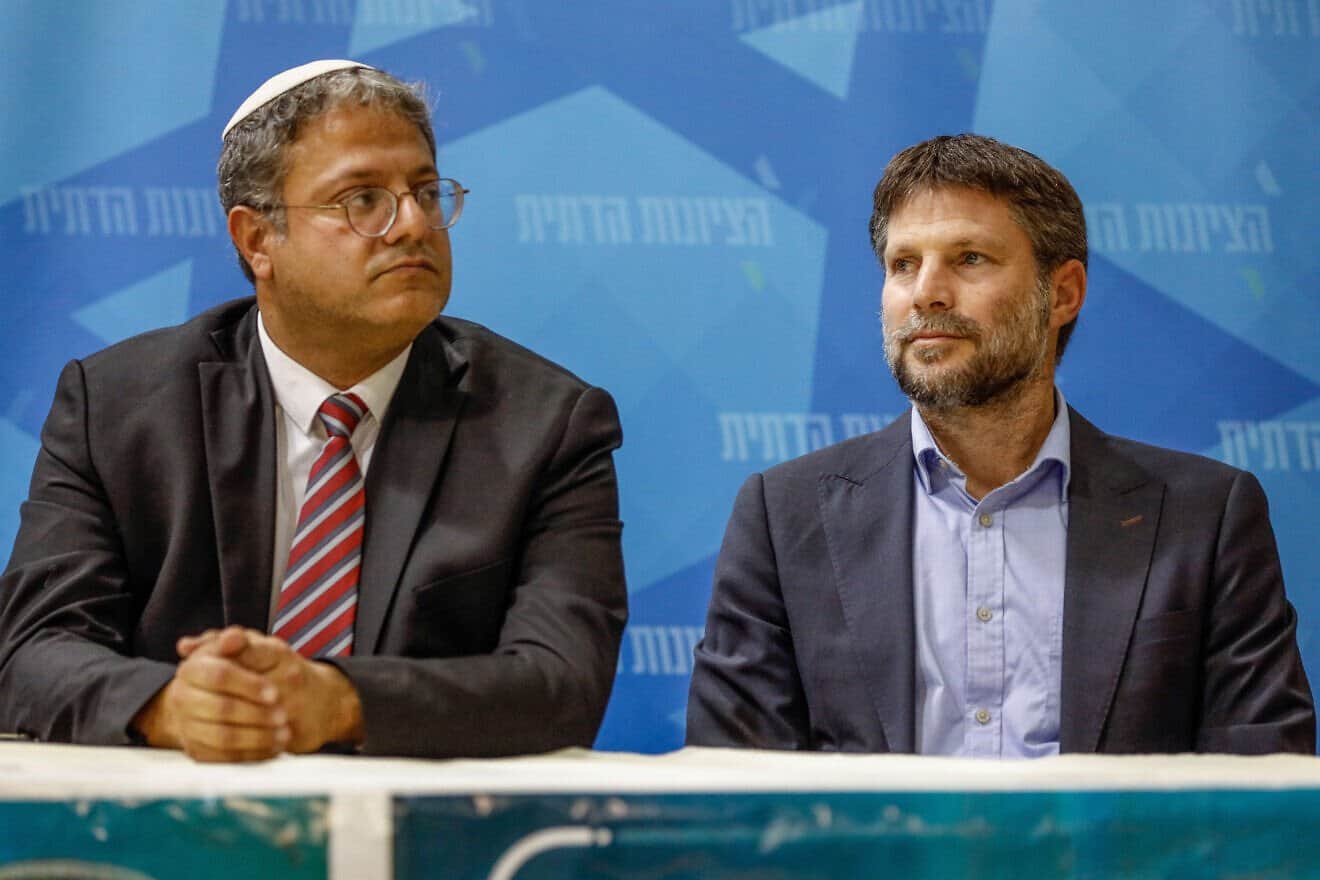
Itamar Ben-Gvir, head of the Otzma Yehudit political party, and Bezalel Smotrich, chairman of the Religious Zionism party, at an election campaign event in Sderot, on Oct. 26, 2022. Photo by Flash90.

Israeli Prime Minister Benjamin Netanyahu’s right-wing coalition partners on Saturday rallied behind the premier after he voiced opposition to the composition of President Donald Trump’s Gaza Executive Board.

“The countries that resuscitated Hamas cannot be the ones that replace it. Those that support it and continue to host it even now will not be given a foothold in Gaza. Period,” tweeted Israeli Finance Minister Bezalel Smotrich, referring to the inclusion of Qatar and Turkey.

“Our brave fighters did not risk their lives in a tremendous national mobilization just to swap one problem for another,” Smotrich wrote. “The prime minister must insist on this, even if it requires managing a dispute with our great friend and with President Trump’s envoys.”

The Gaza Executive Board, led by the United States and composed of officials from countries such as Turkey, Qatar and Egypt, “runs contrary to [Israel’s] policy,” Netanyahu’s office said on Saturday evening.

The announcement of its establishment “was not coordinated with Israel and runs contrary to its policy,” Jerusalem’s statement continued.

It added that Israeli Foreign Minister Gideon Sa’ar was instructed to discuss the matter with his American counterpart, Marco Rubio, who was named on Friday as a founding member of the Executive Board.

According to Smotrich’s post, “the original sin” was Jerusalem’s decision against establishing “a military administration, encouraging emigration and settlement and in this way ensuring Israel’s security for many years.”

That refusal, Smotrich continued, “gave rise to strange, convoluted arrangements to manage civilian life in Gaza that are not Hamas or the Palestinian Authority.” However, he added: “Even under that assumption, there must be red lines.”

Israeli National Security Minister Itamar Ben-Gvir tweeted that he “supports the prime minister regarding his important statement.”

“Gaza doesn’t need any ‘executive board’ to oversee its ‘reconstruction,’” he wrote. “It must be cleared of Hamas terrorists, who must be destroyed, alongside encouraging large-scale voluntary emigration in line with President Trump’s original plan.”

Trump said in February that the United States should “take over” Gaza and relocate its two million residents before clearing it and rebuilding.

Ben-Gvir on Saturday called on Netanyahu to instruct the Israel Defense Forces to “prepare to return to the war in the Strip with overwhelming force, in order to achieve the war’s central goal: Hamas’s destruction.”

Amichai Chikli, Israel’s diaspora affairs and combating antisemitism minister and a member of Netanyahu’s ruling Likud Party, said Jerusalem “cannot and will not accept” Turkish influence on its southern border, tweeting: “Erdoğan’s Turkey is Hamas.”

Turkish President Recep Tayyip Erdoğan has turned his country “into a regional aggressor responsible for unprecedented massacres and brutal repression, from the Kurds in Afrin, Aleppo, and Deir Hafir, to Alawites and Druze,” wrote Chikli.

The Gaza Executive Board includes members such as U.S. Special Envoy Steve Witkoff and Trump’s son-in-law Jared Kushner, as well as Turkish Foreign Minister Hakan Fidan, Qatari diplomat Ali Al-Thawadi and Egyptian General Intelligence Service Director Maj. Gen. Hassan Rashad.

Fidan in July 2024 expressed “deep sorrow” after top Hamas terrorist Ismail Haniyeh was assassinated in Tehran.

“I learned with deep sorrow that my dear brother Ismail Haniyeh was martyred in Iran,” Fidan wrote in a July 31, 2024, post on X. Fidan said Haniyeh “never lost his faith in peace,” and offered condolences.

Calling Haniyeh a “symbol” of Palestinian “resistance,” Fidan said his “noble memory will live on in the just cause of the Palestinian people.”

The Gaza Executive Board will assist the high representative for Gaza, former U.N. diplomat Nickolay Mladenov, as well as the new National Committee for the Administration of Gaza, another committee under the Board of Peace that comprises 15 Palestinians and is led by former Palestinian Authority Deputy Transportation Minister Ali Sha’ath.


Zawartość publikowanych artykułów i materiałów nie reprezentuje poglądów ani opinii Reunion’68,
ani też webmastera Blogu Reunion’68, chyba ze jest to wyraźnie zaznaczone.
Twoje uwagi, linki, własne artykuły lub wiadomości prześlij na adres:
webmaster@reunion68.com


Anti-Israel Michigan Senate Candidate Promoted Group Behind Holocaust Memorial Protests


Anti-Israel Michigan Senate Candidate Promoted Group Behind Holocaust Memorial Protests

Corey Walker


Former Wayne County Health Director Abdul El-Sayed, a Democrat now running for US Senate in Michigan, speaks at a “Hands Off” protest at the state Capitol in Lansing, Michigan, on April 5, 2025. Photo: Andrew Roth/Sipa USA via Reuters Connect

Abdul El-Sayed, a Democratic candidate for US Senate in Michigan, is facing scrutiny over his past fundraising and public support for a political advocacy group whose affiliates organized anti-Israel protests at Holocaust memorial sites in Washington, DC, and the Detroit metro area.

El-Sayed previously recorded a fundraising video and appeared at multiple events in support of Justice, Education, Technology PAC (JET-PAC), an organization focused on expanding the political influence of Muslim Americans in US politics. In the video, posted online in 2018, El-Sayed urged viewers to donate to the group, praising its efforts to train Muslim Americans in civic engagement and advocacy.

JET-PAC later drew widespread condemnation after its medical advocacy arm, Doctors Against Genocide, helped organize protests outside the US Holocaust Memorial Museum in Washington and the Zekelman Holocaust Center in Farmington Hills, Michigan. The demonstrations condemned Israel’s military campaign against the Palestinian terrorist group Hamas in Gaza and described the war as a “genocide,” language that Jewish leaders and Holocaust educators denounced as false, antisemitic, and deeply offensive.

Doctors Against Genocide (DAG) called on activists to obtain free tickets to the Holocaust Museum in Washington with the intention of protesting inside the facility before moving the demonstration to the White House. The planned protest sparked backlash from Jewish organizations and community leaders, who argued that targeting Holocaust memorial sites crossed a moral line.

The group ultimately canceled the demonstration.

“The goal of our event was to visit the Holocaust Museum to express our empathy for the horrors of that genocide. Additionally, we wanted to bring awareness to the ongoing genocide in Gaza,” the group said in a statement.

“Our initial communication did not sufficiently convey this, leading to misinterpretations and unfounded accusations,” it continued. “As DAG we stand against all hate of vulnerable people, whether that hate comes in the form of antisemitism, anti-Palestinianism, anti-Black hate, anti-White hate, or any other prejudice. Never again for all.”

In a later statement, the group apologized for a “lack of clarity” but continued to imply that the Holocaust is comparable to Israel’s military operations against Hamas, the Palestinian terrorist group that launched the war with its Oct. 7, 2023, invasion of and massacre across southern Israel.

Comparing Israel to Nazi Germany is antisemitic, according to the International Holocaust Remembrance Alliance (IHRA) definition of antisemitism, which has been adopted by dozens of governments and hundreds of civic institutions around the world.

Despite the backlash, DAG, which is a program of JET-PAC, later orchestrated a protest outside the Zekelman Holocaust Center in July 2024, once again sparking outrage from local Jewish community leaders. 

Organizers of the protest explained that they targeted the museum over its purported positive portrayal of Israel and alleged unwillingness to elevate the historical displacement of Palestinian Arabs.

“The museum is not objective. They present the history that the right-wing will allow them to put on. The question we have for them is: How are you now going to portray the Nakba,” said Rene Lichtman, a Holocaust survivor and organizer of the demonstration.

“Nakba,” the Arabic term for “catastrophe,” is used by Palestinians and anti-Israel activists to refer to the establishment of the modern state of Israel in 1948.

“You end the story, and I know because I’ve been speaking here forever, with the happy ending of the Jews, the [Nazi concentration] camp survivors coming to Israel,” Lichtman continued. “But that is no longer the ending. We know that from the last eight months. What about the Palestinian people?”

Mark Jacobs, a lawyer, community activist, and co-director of the Coalition for Black and Jewish Unity, said protests at Holocaust centers amount to an attack on Jewish historical memory.

“I find it pretty grotesque that the protesters would select the Holocaust Center, a solemn and sacred place, to essentially call for the eradication of Israel, which was created as a safe harbor for the Jewish people after the world’s worst genocide,” Jacobs told Deadline Detroit in July, referring to the Zekelman protest. “But of course we have seen a steady stream of antisemitic protests, vandalism, and violence at various Jewish sites throughout the US and the world since the barbarism of Oct. 7.”

At the protest outside the Zekelman Holocaust Center, speakers accused Israel of war crimes and criticized what they described as the influence of “Israel’s lobbyists.” Dr. Nadal Jboor, a featured speaker and member of Doctors Against Genocide, said Israel’s military actions should be stopped through international pressure, calling a ceasefire a “medical intervention.”

JET-PAC, founded by former Cambridge, Massachusetts city councilor Nadeem Mazen, has described its mission as empowering Muslim Americans politically. El-Sayed appeared at JET-PAC galas and panels alongside the group’s leadership and promoted the organization on social media over multiple years, calling it “amazing.”

In the 2018 fundraising video, El-Sayed said JET-PAC was “incredibly important for engagement, political engagement for the Muslim community,” adding that the group helped people “fight for and advocate for a more just, more equitable, more sustainable society.”

El-Sayed’s support for the organization raises questions about his policies toward the Jewish community and combating extremism in the wake of the Holocaust memorial protests, which occurred amid a historic rise in antisemitic hate crimes across the US following Hamas’s Oct. 7, 2023, massacre across southern Israel.

El-Sayed’s campaign did not respond to a request for comment for this story.

The controversy has unfolded as El-Sayed and another Michigan Senate candidate, state Sen. Mallory McMorrow, have both publicly accused Israel of committing genocide, positions that have alienated some Jewish voters in the battleground state. 

Just days before the anniversary of the Oct. 7 atrocities, McMorrow called Israel’s response in Gaza a “moral abomination,” saying it was “just as horrendous” as the attack carried out by Hamas-led Palestinian terrorists, who perpetrated the deadliest massacre of Jews since the Holocaust.

However, McMorrow has since softened her stance on the Israel-Hamas war, recently lamenting in an interview that the term “genocide” has become a “purity test” for many progressive Democrats. 

Detroit-based community activist and philanthropist Lisa Mark Lis said McMorrow’s comments echoed antisemitic tropes and amounted to political pandering.

Lis wrote in a Facebook post that McMorrow’s comment “feeds into the Jew-hatred tropes and is a lie.”

El-Sayed has not publicly addressed the Holocaust museum protests directly, but his past fundraising and advocacy for JET-PAC have drawn new attention as Jewish leaders warn that invoking genocide rhetoric at Holocaust memorials represents a dangerous normalization of antisemitism.

Jewish organizations have repeatedly stressed that criticism of Israeli policy does not justify protests at institutions dedicated to memorializing the murder of six million Jews, arguing that such actions exploit Holocaust memory and inflame anti-Jewish hostility.

The progressive champion was a prominent supporter of the “Uncommitted movement,” a coalition of Democratic officials which refused to support the 2024 Kamala Harris presidential campaign over what they characterized as her support for Israel. However, El-Sayed later clarified that he would support Harris over Donald Trump in the general election.  

El-Sayed has been especially critical of Israel’s war in Gaza. On Oct. 21, 2023, two weeks after the Hamas-led slaughter of 1,200 people and kidnapping of 251 hostages in southern Israel, the progressive politician accused Israel of “genocide.” The comment came before the Israeli military launched its ground campaign in Gaza.

He also compared Israel’s defensive military operations to the Hamas terrorist group’s conduct on Oct. 7, writing, “You can both condemn Hamas terrorism AND Israel’s murder since.”

In comments to Politico, El-Sayed criticized Democrats’ handling of the Israeli-Palestinian conflict, arguing that they should become the “party of peace and justice” and said that they “ought not to be the party sending bombs and money to foreign militaries to drop bombs on other people’s kids in their schools and their hospitals.” He called on Democrats to stop supporting military aid for Israel, saying, “We should be spending that money here at home.”

Recent polling has shown El-Sayed trailing both McMorrow and Democratic primary frontrunner US Rep. Haley Stevens among voters.


Zawartość publikowanych artykułów i materiałów nie reprezentuje poglądów ani opinii Reunion’68,
ani też webmastera Blogu Reunion’68, chyba ze jest to wyraźnie zaznaczone.
Twoje uwagi, linki, własne artykuły lub wiadomości prześlij na adres:
webmaster@reunion68.com

Kobane znów staje się ofiarą naszych grzechów

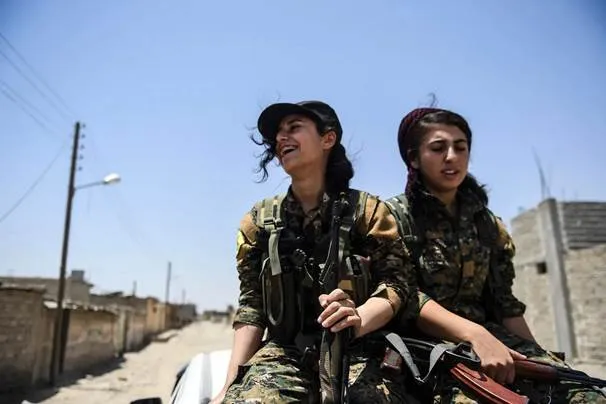
Photo via AFP


Kobane znów staje się ofiarą naszych grzechów

Nervana Mahmoud


Miasto Kobane, zamieszkane głównie przez Kurdów, trafiło na pierwsze strony międzynarodowych mediów w 2014 roku, gdy bojownicy ISIS — świeżo po błyskawicznej kampanii w Iraku i Syrii — przez miesiące oblegali miasto. Oblężenie to skłoniło koalicję pod przewodnictwem Stanów Zjednoczonych do rozpoczęcia nalotów na pozycje ISIS oraz do udzielenia wsparcia naziemnego i logistycznego Syryjskim Siłom Demokratycznym (SDF).

W tamtym czasie napisałam artykuł o Kobane zatytułowany „Ofiara naszych grzechów”.

Nie wyobrażałam sobie, że dwanaście lat później miasto stanie w obliczu podobnego scenariusza — z jednym, tak ważnym wyjątkiem.

Tym razem Kurdowie są sami.

Stany Zjednoczone postanowiły ich porzucić na rzecz postasadowskiego, islamistycznego rządu w Damaszku, pod hasłem „zjednoczenia Syrii”.

Amerykański wysłannik do spraw Syrii, Tom Barrack, napisał na platformie X, że sytuacja „fundamentalnie się zmieniła”, twierdząc, iż Damaszek „jest teraz gotów i jest w stanie przejąć odpowiedzialność za bezpieczeństwo, w tym kontrolę nad ośrodkami detencyjnymi ISIS i obozami”.

To twierdzenie rozpada się w zderzeniu z rzeczywistością.

Siły rządowe Syrii nie tylko walczą z kurdyjskimi bojownikami — one ich zabijają. Co gorsza, pojawiły się nagrania wideo, na których widać, jak syryjscy żołnierze wypuszczają członków ISIS i innych zatwardziałych dżihadystów z więzień kontrolowanych wcześniej przez Kurdów, po przejęciu tych placówek. To nie jest stabilizacja. To recykling terroru.

Podczas gdy kurdyjskie siły desperacko próbują odeprzeć ataki prorządowych milicji z południa Kobane, pytanie nie brzmi już „czy” miasto upadnie — lecz „kiedy”. Szanse są brutalnie nierówne. Ich wrogowie są bezwzględni, rozzuchwaleni i wspierani przez regionalne potęgi, takie jak Turcja i Katar. Ich dawny sojusznik — Stany Zjednoczone — zniknął, gdy byli najbardziej potrzebni.

Nie sposób nie zastanawiać się, czy prezydent Trump w ogóle rozumie, co dzieje się w Syrii. Złożoność pola walki, charakter zaangażowanych aktorów i konsekwencje wzmacniania islamistycznych sił — wszystko to zdaje się ginąć w natłoku intensywnego lobbingu ze strony Turcji, Kataru i Arabii Saudyjskiej w Waszyngtonie. Wizerunek „zreformowanego” syryjskiego rządu centralnego został starannie wykreowany i chętnie zaakceptowany.

Ale ci, którzy uważnie śledzili sytuację w Syrii, znają prawdę: nic fundamentalnego się nie zmieniło.

Dwanaście lat temu Kobane krwawiło, podczas gdy świat debatował.

Dziś krwawi ponownie — tym razem porzucone, odizolowane i zdradzone.

Kobane wciąż jest ofiarą naszych grzechów, a historia zapamięta, kto się odwrócił.

Każde słowo, które napisałam w 2014 roku, pozostaje aktualne

„Miasto Kobane upada na naszych oczach. Czarne flagi tak zwanego Państwa Islamskiego Iraku i Syrii (ISIS) powoli rozciągają się nad budynkami tego nieszczęsnego kurdyjskiego miasta w północnej Syrii. Prędzej czy później opór kurdyjskich bojowników, którzy obecnie heroicznie próbują bronić Kobane, załamie się pod naporem średniowiecznego barbarzyństwa ISIS, dodatkowo wzmocnionego nowoczesną bronią. Tragedia Kobane może wydawać się nieistotna w szerszym kontekście burzliwego Bliskiego Wschodu, jednak jasno ukazuje błędne myślenie wielu w świecie arabskim, a co niepokojące — również w Turcji.

Wybiórcze oburzenie

Porównajmy przytłumioną reakcję na dekapitacje kurdyjskich bojowniczek czy gwałty i przymusowe małżeństwa jazydzkich kobiet z bojownikami ISIS do głośnych, gniewnych reakcji, jakie wywołały ostatnia izraelskie działania w Gazie. Zdumiewająca cisza jest tym bardziej problematyczna, że zarówno muzułmańskie reżimy, jak i opinia publiczna zgodnie twierdzą, iż ISIS nie reprezentuje islamu, a jego chore działania są sprzeczne z religią. Wyobraźmy sobie, że to Izrael ściąłby głowy trzem palestyńskim zamachowczyniom. Reakcje prawdopodobnie przerosłyby wszelkie oczekiwania: od protestów na ulicach miast Zachodu po akty przemocy wobec izraelskich celów na całym świecie. Zrozumiałe? Tak — niewinna śmierć ludzi i oblężenie Gazy są godne potępienia. Ale dlaczego nie oburzamy się równie mocno w sprawie Kurdów? Odpowiedź tkwi w naszej egoistycznej dwulicowości: troszczymy się tylko o współplemieńców, ale potępiamy innych, gdy oni nie troszczą się o nas.

Brak empatii wobec mniejszości

Źródła naszej wybiórczości i uprzedzeń sięgają głęboko w pokolonialny nacjonalizm i islamizm, które rozprzestrzeniły się na Bliskim Wschodzie od połowy XX wieku. Arabskość (arabizm) promowała wizję jednego zjednoczonego świata arabskiego — tygla, który mniejszości etniczne miały zaakceptować. Islamiści z kolei głosili ideę „Ummy” — utopijnej jedności muzułmańskiej, której inne grupy religijne muszą się podporządkować. W poszukiwaniu tych iluzorycznych tożsamości zbiorowych, mniejszości (czy to etniczne, czy religijne) często postrzegano z podejrzliwością. Każde dążenie do separatyzmu lub federalizmu uznawano za atak na wspólną wizję.

Gdy Saddam Husajn ostrzelał Kurdów bronią chemiczną w Halabdży, nie brakowało arabskich apologetów, którzy przedstawiali Kurdów jako agentów sił zewnętrznych, częściowo winnych własnemu losowi. Podobnie rzecz miała się z syryjskimi Kurdami, których — zwłaszcza w tureckich prorządowych mediach — ukazuje się jako terrorystów lub zwolenników reżimu Asada. Dzieje się tak mimo że Kurdowie od 2004 roku mają długą historię buntów przeciwko Asadowi. To odczłowieczanie mniejszości, takich jak Kurdowie, ma na celu zrzucenie z siebie odpowiedzialności za okrucieństwa dokonywane w imię naszej religii lub naszych państw.

Wąsko pojęty interes własny

Flirtowanie z grupami islamistycznymi ma długą historię na Bliskim Wschodzie. Reżimy i przywódcy wielokrotnie błędnie zakładali, że korzystanie z islamistów jako taniego narzędzia do realizacji celów politycznych jest łatwe i powoduje kosztów. I za każdym razem ta iluzja kończyła się krwawo. Sadat w Egipcie uwolnił wielu islamistów z więzień jako taktyczny ruch przeciwko naseryzmowi. Później obrócili się przeciwko niemu i zamordowali go w 1981 roku. Ostatnio arabskie państwa Zatoki, takie jak Katar i Arabia Saudyjska, uznały Arabską Wiosnę za okazję do obalenia wrogich reżimów, takich jak Asad w Syrii. Naiwnie sądziły, że finansowanie radykalnych dżihadystów doprowadzi do jego upadku. Tak się nie stało, ponieważ szejkowie z Zatoki nie docenili skali wsparcia, jakie Iran i Hezbollah były gotowe udzielić reżimowi Asada. Zamiast pokonać Asada, Katar i inni przyczynili się do stworzenia radykalnych potworów, takich jak ISIS. Kobane to tylko jedna z wielu tragicznych konsekwencji endemicznej politycznej krótkowzroczności, która skłoniła autokratów do igrania z ogniem radykalizmu. Rola Kataru jest dziś ujawniona, ale emirat tego kraju wciąż cieszy się luksusowym pałacem w Dosze, w przeciwieństwie do biednych Syryjczyków (Kurdów i Arabów), śpiących w prowizorycznych namiotach jako uchodźcy w Turcji — wskutek jego lekkomyślnych decyzji.

Myślenie życzeniowe

Turcja Erdogana jest równie winna jak wielu przedstawicieli świata arabskiego. Jego otwarte oburzenie z powodu sytuacji w Gazie i zamachu stanu w Egipcie kontrastuje z lekceważeniem losu Kurdów w Kobane. Do niedawna Turcja — mimo oficjalnych zaprzeczeń — udzielała cichego wsparcia antyasadowskim grupom, w tym ISIS. Tureckie władze nie postrzegają walki o Kobane jako tragedii, lecz jako szansę polityczną na wyrównanie rachunków z kurdyjskimi partyzantami, takimi jak Partia Pracujących Kurdystanu (PKK) — lub przynajmniej jej syryjską odnogą, którą Turcja uznaje za organizację terrorystyczną.

Największym błędem Ankary jest jednak założenie, że obalenie reżimu Asada zakończy radykalizm i rozwiąże tragedię Syrii. Może był to sensowny argument w 2012 roku, zanim rewolucja w Syrii uległa radykalizacji i fragmentacji, ale dziś już nie. Upadek syryjskiego reżimu teraz wywołałby tylko kolejne walki pomiędzy antyasadowskimi milicjami i ugrupowaniami. Krwawa jatka po Asadzie z łatwością przyćmiłaby dotychczasowe okrucieństwa. A nawet jeśli do niej nie dojdzie, osłabiona, wyczerpana Syria będzie nową, koszmarną wersją Libii — tyle że bez ropy — z niewyobrażalnymi konsekwencjami dla bezpieczeństwa narodowego Turcji. Taka Syria nie przejmie odpowiedzialności za sojuszników, nie poradzi sobie z resztkami reżimu Asada, ani nie stawi czoła zemście Hezbollahu. Czy Erdogan w ogóle pomyślał o tym, co będzie po Asadzie? Prawdopodobnie nie. Jest tak zafiksowany na jego pokonaniu, że nie widzi niczego poza tym.

Sukces ISIS nie wynika z jego brutalności czy barbarzyństwa, lecz z głębokiego zrozumienia powyższych bolączek świata arabskiego i tureckiego. Doskonale rozumieją, że wybiórczy gniew zapewni im parasol przed powszechnym oburzeniem, a obojętność wobec mniejszości pozwoli im bezkarnie wykorzystywać Kurdów. ISIS to pasożyt, który żywi się chorobami, egoizmem i polityczną krótkowzrocznością Bliskiego Wschodu. Nie miejmy złudzeń: ISIS rozumie Arabów i Turków lepiej, niż oni rozumieją samych siebie.


Link do oryginału: https://substack.com/home/post/p-185231343

Nervana Mahmoud Substack, 20 stycznia 2026

Nervana Mahmoud – Egipska lekarka, komentatorka i publicystka. Na swoim blogu prezentuje cotygodniowe informacje z Egiptu, pisze artykuły o liberalnym islamie, o prawach kobiet, o muzułmańskim radykalizmie i ogólnie, o sytuacji na Bliskim Wschodzie. Jej artykuły publikowane są w prasie arabskiej, ale również w prasie brytyjskiej. Od kilku lat przeniosła się na stałe do Wielkiej Brytanii.


Zawartość publikowanych artykułów i materiałów nie reprezentuje poglądów ani opinii Reunion’68,
ani też webmastera Blogu Reunion’68, chyba ze jest to wyraźnie zaznaczone.
Twoje uwagi, linki, własne artykuły lub wiadomości prześlij na adres:
webmaster@reunion68.com