Archive | December 2023

Chanuka pełna światła. Uroczysty koncert chanukowy 2023/5784


Chanuka pełna światła. Uroczysty koncert chanukowy 2023/5784

Natasza Majewska


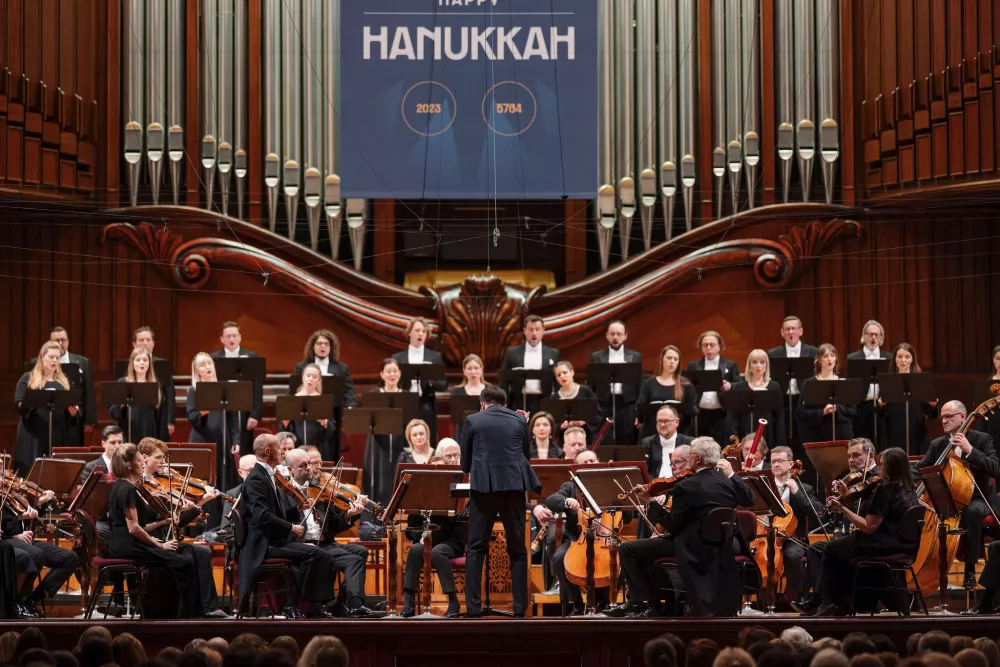
7 grudnia już po raz trzeci spotkaliśmy się w Filharmonii Narodowej, by uroczystym koncertem świętować Chanukę i zakończenie kolejnego roku intensywnej pracy Żydowskiego Instytutu Historycznego.

.

fot. Andrzej Stawiński

W tegorocznym programie znalazło się niezwykle efektowne oratorium Juda Machabeusz Georga Friedricha Händela w wykonaniu Orkiestry i Chóru Filharmonii Narodowej pod dyrekcją Macieja Tomasiewicza. Partie solowe zaśpiewali Aneta Kapla-Marszałek (sopran), Anna Krawczuk (alt) i Krzysztof Matuszak (bas). Uroczystość jak co roku poprowadził Andrzej Sułek.

– Chanuka to radosne święto, podczas którego wspominamy wyzwolenie Izraela spod władzy Greków – rozpoczęła od przybliżenia historii święta dyrektorka ŻIH Monika Krawczyk. – Na pamiątkę tego wydarzenia sprzed prawie 2200 lat Żydzi przez osiem dni po zmroku zapalają świeczki chanukowe – każdego dnia o jedną więcej. Śpiewają przy tym pieśń Maoz cur, hymn na cześć Boga, odmawiają błogosławieństwa i cieszą się ze zwycięstwa światła nad ciemnością, tak fizyczną, jak i duchową. Życzę Państwu Bożego błogosławieństwa z okazji wszystkich nadchodzących świąt i Chanuki pełnej światła. Niech blask świec chanukowych połączy nas dzisiaj we wspólnym przeżywaniu tej radości i zachęci do budowania więzi i dobrych relacji. Wesołych i pogodnych świąt!

Pierwszą świecę na tegorocznej chanukii zapalił rabin Szalom Dow Ber Stambler.

– Słowo „Chanuka” to jest z rdzenia hebrajskiego słowa chinuch: edukacja i wychowanie – mówił. – To święto jest piękną okazją dla każdego dobra. Każdy rodzic, każdy nauczyciel powinien upewnić się, że dzieci wokół niego mają dobrą edukację. Że mają atmosferę, mają warunki i mają jasne wartości co do praw człowieka, co do wzajemnego szacunku. Dzisiaj zapalimy jedną świecę, ale jutro to już nie wystarczy i będą dwie świece, i trzy świece – bo jeśli chodzi o dobre rzeczy, to to, co było wczoraj wystarczające, dzisiaj już nie jest wystarczające i trzeba dodać i dodać – aż do liczby osiem, która jest symbolem nieskończoności.

– A więc świętujmy teraz Chanukę, to święto światła, żebyśmy zawsze pamiętali różnicę między złem a dobrem i wspierali dobro – zakończył część oficjalną ambasador Izraela Yacov Livne.

Po zapaleniu świecy i poznaniu fascynującej historii powstania oratorium Juda Machabeusz, którą przedstawił nam Andrzej Sułek, mogliśmy wsłuchać się w tę muzyczną opowieść o zwycięstwie, które co roku świętujemy. Dziękujemy za to wspólne świętowanie i jeszcze raz życzymy Państwu jak najwięcej dobra i światła – aż do nieskończoności.

fot. Andrzej Stawiński (1).jpg
fot. Andrzej Stawiński (10).jpg
fot. Andrzej Stawiński (11).jpg
fot. Andrzej Stawiński (12).jpg
fot. Andrzej Stawiński (14).jpg
fot. Andrzej Stawiński (16).jpg
fot. Andrzej Stawiński (17).jpg
fot. Andrzej Stawiński (18).jpg
fot. Andrzej Stawiński (19).jpg
fot. Andrzej Stawiński (2).jpg
fot. Andrzej Stawiński (20).jpg
fot. Andrzej Stawiński (21).jpg
fot. Andrzej Stawiński (22).jpg
fot. Andrzej Stawiński (24).jpg
fot. Andrzej Stawiński (25).jpg
fot. Andrzej Stawiński (26).jpg
fot. Andrzej Stawiński (27).jpg
fot. Andrzej Stawiński (28).jpg
fot. Andrzej Stawiński (29).jpg
fot. Andrzej Stawiński (3).jpg
fot. Andrzej Stawiński (30).jpg
fot. Andrzej Stawiński (32).jpg
fot. Andrzej Stawiński (33).jpg
fot. Andrzej Stawiński (34).jpg
fot. Andrzej Stawiński (35).jpg
fot. Andrzej Stawiński (36).jpg
fot. Andrzej Stawiński (37).jpg
fot. Andrzej Stawiński (38).jpg
fot. Andrzej Stawiński (39).jpg
fot. Andrzej Stawiński (4).jpg
fot. Andrzej Stawiński (40).jpg
fot. Andrzej Stawiński (41).jpg
fot. Andrzej Stawiński (42).jpg
fot. Andrzej Stawiński (5).jpg
fot. Andrzej Stawiński (7).jpg
fot. Andrzej Stawiński (8).jpg

Partnerami koncertu było Muzeum Getta Warszawskiego i Towarzystwo Społeczno-Kulturalne Żydów w Polsce.

Organizator:

Instytucja organizowana przez.png [138.45 KB]

Partnerzy:

MGW_logo_PL_czerwone.png [55.88 KB]tskz_logo_2021.jpg [576.38 KB]


Zawartość publikowanych artykułów i materiałów nie reprezentuje poglądów ani opinii Reunion’68,
ani też webmastera Blogu Reunion’68, chyba ze jest to wyraźnie zaznaczone.
Twoje uwagi, linki, własne artykuły lub wiadomości prześlij na adres:
webmaster@reunion68.com


It’s Time for Congress to Open Harvard’s Books

It’s Time for Congress to Open Harvard’s Books

ADAM ANDRZEJEWSKI


The U.S. tax code and federal contracts swell the coffers of wealthy Ivy League universities that teach hatred is OK. Taxpayers should cut them off.

.

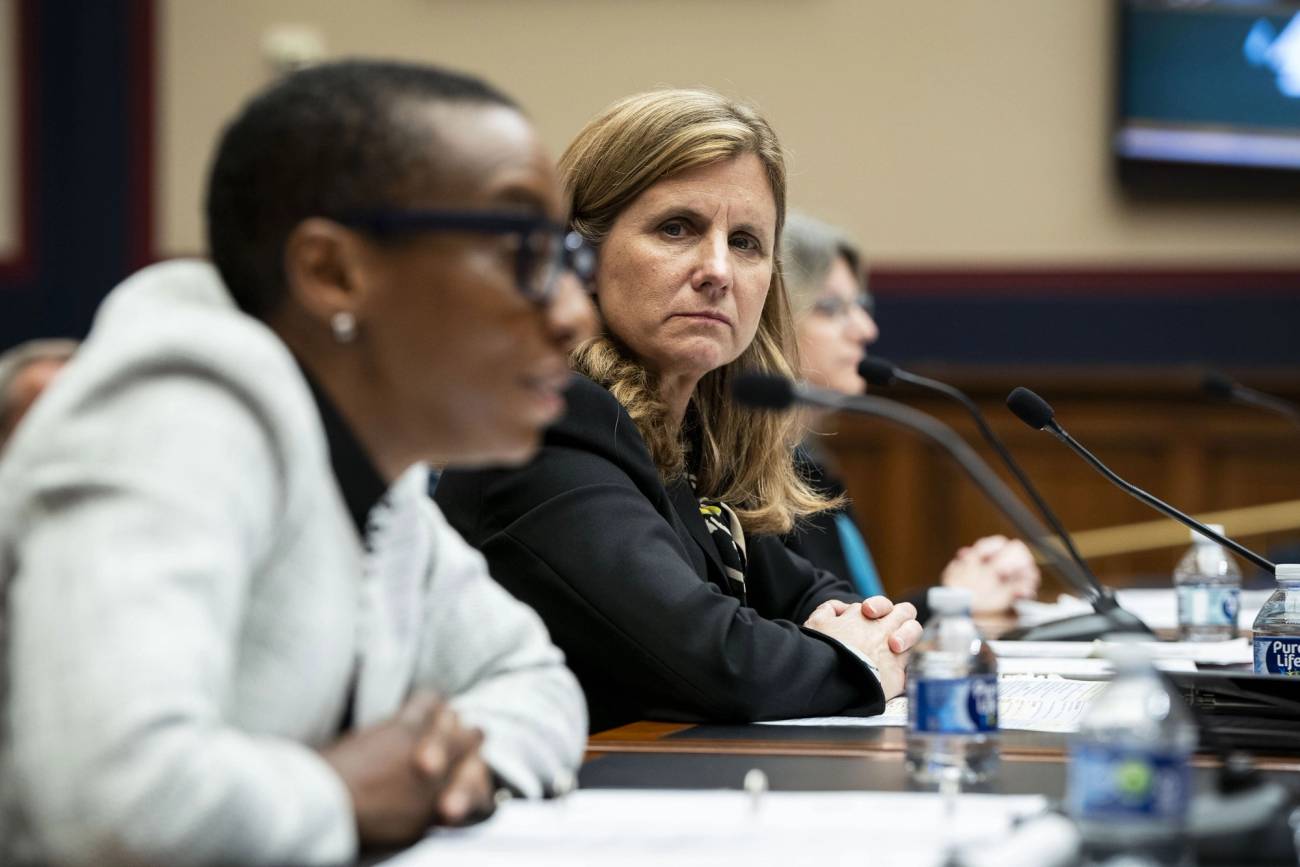
From left: Claudine Gay, the president of Harvard University, Liz Magill, the former president of University of Pennsylvania, and Dr. Sally Kornbluth, the president of Massachusetts Institute of Technology / HAIYUN JIANG/BLOOMBERG VIA GETTY IMAGES

In their congressional testimony last week, the presidents of Harvard, Massachusetts Institute of Technology, and the University of Pennsylvania refused to denounce terrorism or explain whether calls for the genocide of Jews represent harassment or bullying on their campuses. Parents who watched this spectacle are wondering where the $80,000 a year they pay in tuition is going, and whether the “education” their children are receiving is worth the price tag. American taxpayers who can hardly afford an Ivy League education but are equally disturbed by the moral rot they’re seeing might be even more alarmed to discover that they are personally underwriting it.

While parents should be free to pay for any form of education they want, the fact is American taxpayers contribute more to Harvard than the parents of Harvard students do. Prohibitively expensive universities that turn out students who believe that open antisemitism and championing terrorism are forms of “social justice” do so on the taxpayer’s dime. That’s because they all enjoy tax-exempt status as “educational” public charities. But are these institutions in fact serving the public interest? And how much are the lessons that students are learning at these wealthy “public charities” costing the American taxpayer?

The auditors at OpenTheBooks.com, a nonprofit government-spending watchdog which I direct, examined 10 universities—the Ivy League, plus Stanford and Northwestern. We found that during a five-year period from 2018-22 these wealthy universities collected $45 billion in taxpayer subsidies, special tax treatment, and federal payments. In fact, these universities collected a stunning $33 billion in federal contracts and grants. It therefore seems these schools are more federal contractors than educators—with federal payments exceeding undergraduate student tuition.

Additionally, the universities we surveyed profit handsomely from “nonprofit” tax breaks amounting to a benefit of roughly $12 billion. Wealthy universities pay only a 1.4% “excessive endowments” tax on their gains whereas wealthy individuals pay up to 23.4% on their capital gains.

The University of Pennsylvania, whose then-president (she resigned on Saturday), Liz Magill, seemed to smirk at the idea of being questioned by Congress, collected $3.7 billion in U.S. government grants and contracts, mostly for research, between 2018 and 2022. Over the same five-year period, Penn’s endowment ballooned to $21 billion from $13.4 billion.

It seems these schools are more federal contractors than educators—with federal payments exceeding undergraduate student tuition.

What is Penn doing with the U.S. government money it deposits into its swollen coffers? In September 2023, UPenn helped sponsor the Palestine Writes Festival, which organizers claim is “dedicated to celebrating and promoting cultural productions of Palestinian writers and artists.” However, the event showcased multiple writers deemed antisemitic by the Anti-Defamation League, most famously Pink Floyd’s Roger Waters, and, initially, poet Refaat Alareer. After the Oct. 7 massacre and reports that at least one baby’s remains were found in an oven, Alareer tweeted “with or without baking powder?”

Just days before Oct. 7, then-UPenn President Liz Magill had refused to move the event off campus. In the eyes of many donors, Magill then failed to sufficiently condemn or even bother to regulate or police ensuing protests that included chants of “from the river to the sea”—a call for the ethnic cleansing of Jewish citizens of Israel—and vandalism of school property. Angered donors include billionaire Cliff Asness, former trustee Vahan Gureghian, and venture capitalist David Magerman. In a letter to Magill, Magerman wrote, “I am deeply ashamed of my association with” the university. “I refuse to donate another dollar.” Investor Steve Eisman went so far as to demand his name be removed from a scholarship, telling CNBC, “I do not want my family’s name associated with [Penn], ever.”

An aide to House Committee on Education and the Workforce chairwoman Virginia Foxx said that Columbia University President Minouche Shafik was invited to the hearing, but had declined over a scheduling conflict. Nevertheless, Columbia’s own lightning-rod moments won’t soon be forgotten. Business school assistant professor Shai Davidai gathered students and asked them to record a 10-minute declaration in hopes they would spread it across the globe on social media. He called Shafik a “coward” for allowing pro-Hamas chants and rallies to go unchecked. “Imagine not being able to go to your work because your boss does not value your life, because your boss supports pro-terror organizations,” he said. His message for parents was brutal: “we cannot protect your child.”

Columbia’s five-year, taxpayer-funded haul? $5.8 billion in U.S. taxpayer money—while its endowment swelled to $13.3 billion from $10.5 billion.

That brings us to Harvard. Donor Bill Ackman, CEO of Pershing Square Capital Management, has helped spearhead the revolt of donors and Ivy League parents after dozens of university groups signed a letter blaming Israel for Hamas’ barbarism. Through open letters shared with journalists and exhaustive posts on X, Ackman has chronicled antisemitism at Harvard, calling the situation “dire and getting worse.”

Here’s just one example at Harvard: at a so-called “die in,” protesters physically surrounded an Israeli graduate student, blocking his vision and ability to navigate the campus. His fellow students grabbed at him, shoved him, and shouted “shame!”, boxing him in and intimidating him. While reports were filed with the university police department and the FBI, Harvard would not comment on internal disciplinary actions.

Harvard has collected $3.3 billion in federal contracts and grants. With a $50.9 billion endowment, Harvard obviously doesn’t need taxpayer money to coddle discrimination or antisemitism. But then why is it receiving federal money to begin with—not to mention massive federal tax breaks on its endowment?

Following the congressional hearing, multiple UPenn students filed a lawsuit against the school for running afoul of civil rights law by failing to apply its code of conduct against anti-Israel agitators, hiring “rabidly antisemitic professors” and ignoring requests for help from Jewish students. Speaking to reporters at the Capitol complex, plaintiff Eyal Yakoby said, “36 hours ago, I along with most of campus, sought refuge in our rooms as classmates and professors chanted proudly for the genocide of Jews while igniting smoke bombs and defacing school property.”

If none of this sounds particularly charitable, there is plenty to be done about it. Currently, these institutions can both fundraise from vast alumni networks while also raking in billions from the government. While donors pad the endowments that ostensibly keep the lights on, prestige-building research is funded to the hilt by taxpayers. But the same body that held this tense hearing also holds America’s purse strings.

In addition to examining the tax-exempt status of institutions that tolerate open antisemitism and other expressions of radical bigotry, House appropriators need to go line by line with a red pen through the $7 billion doled out each year to these 10 wealthy universities. A laundry list of projects are either wasteful, wacky, driven by radical ideology, or all of the above. In 2022, Penn spent over $700,000 studying “structural racism and discrimination in pandemic vaccine allocation.” It spent $2 million of our tax revenue to “support the preservation of cultural heritage sites” of minorities in northern Iraq.

In 2012, Columbia famously spent $5.7 million on fake voicemails from the year 2065, after the world has supposedly been decimated by climate change. Cornell in 2014 took $1 million for a study, “Where It Hurts the Most to Be Stung By a Bee.”

More fundamentally, lawmakers should revisit what it means to be a public charity in the tax code. As others have observed, these wealthy universities are “hedge funds with schools attached.” Why such wealthy institutions should continue to enjoy public sponsorship while incubating discrimination, racism, and antisemitism and advocating on behalf of terrorists seems like a good question for Congress to answer.

Public funding of any type of discrimination simply cannot be tolerated.


Adam Andrzejewski is CEO and Founder of OpenTheBooks.com, the largest private database of public expenditures.


Zawartość publikowanych artykułów i materiałów nie reprezentuje poglądów ani opinii Reunion’68,
ani też webmastera Blogu Reunion’68, chyba ze jest to wyraźnie zaznaczone.
Twoje uwagi, linki, własne artykuły lub wiadomości prześlij na adres:
webmaster@reunion68.com


Lies about civilian casualties

Lies about civilian casualties

JOSEPH FRAGER


Israeli soldiers during the Gaza ground operation, Nov. 13, 2023. Credit: IDF.

Many people do not know that Israel’s 1948 War of Independence took close to 10 months. Israel’s current war against Hamas, which has been dubbed Israel’s Second War of Independence, is now in its third month. Most military analysts believe it will take at least three more months to finish the job.

Part of the reason Israel is now fighting its third major ground war against Hamas is that it never was allowed to complete the task in 2008 and 2014. Yet U.S. President Joe Biden said this past week, “I want [Israel] to be focused on how to save civilian lives—not stop going after Hamas, but be more careful.” Headlines say things like, “U.S. wants Israel to narrow scale of attack in Gaza.”

This is unacceptable. Israel has to be allowed to do what it has to do in order to survive. Otherwise, the Hamas threats to repeat the Oct. 7 massacre will, God forbid, be realized.

No army in the world does more than Israel’s to protect civilians. Soldiers have literally sacrificed themselves in order to do so. Avoiding civilian casualties is all the more difficult because Hamas knows that the IDF is a humane army. Thus, Hamas routinely uses human shields. Nonetheless, the IDF’s “civilian casualty ratio”—the ratio of civilian casualties vs. combatant casualties—is the best in the world.

America’s civilian casualty ratio in World War II was approximately 2:1. That means for every combatant killed, two civilians died. In the Iraq War, it is estimated that from 2003-2023 approximately 174,000 civilians were killed vs. 39,900 combatants. This is close to 4.5:1. The Iraq War was similar in many ways to Israel’s current war against Hamas. Yet Israel’s civilian casualty ratio in Gaza is far better than America’s in Iraq. At the most, it is around 2:1 if we accept likely inflated figures from the Hamas-controlled Gaza Health Ministry.

The U.S. would do well to emulate Israel’s approach to civilians located in combat zones, especially urban areas. No one wants to see civilians die in war, but to single out Israel for supposed indifference to civilian lives is unfair and based on lies.

Israel has its work cut out for it. The tunnel war in particular is the hardest type of war to fight. But Israel is making steady progress. In due time, God willing, it will be victorious. Pressure from America is not helpful. Let Israel finish the job.


JOSEPH FRAGER – Dr. Joseph Frager is a lifelong activist and physician. He is chairman of Israel advocacy for the Rabbinical Alliance of America, chairman of the executive committee of American Friends of Ateret Cohanim and executive vice president of the Israel Heritage Foundation.


Zawartość publikowanych artykułów i materiałów nie reprezentuje poglądów ani opinii Reunion’68,
ani też webmastera Blogu Reunion’68, chyba ze jest to wyraźnie zaznaczone.
Twoje uwagi, linki, własne artykuły lub wiadomości prześlij na adres:
webmaster@reunion68.com


Nie stosujcie wobec Żydów dziwacznej, teoretycznie chrześcijańskiej etyki


Nie stosujcie wobec Żydów dziwacznej, teoretycznie chrześcijańskiej etyki

Elder of Ziyon
Tłumaczenie: Małgorzata Koraszewska


artykule opublikowanym w New York Times wyświęcony pastor Esau McCaulley omawia, jak ważne jest, by duchowni zajmowali się teologicznymi kwestiami związanymi z wojną, zwłaszcza obecną wojną w Gazie.

Przeanalizujmy jedno rzucone mimochodem zdanie w artykule, zdanie uważane za tak oczywiste, że nie wymaga linku: pokazuję jego kontekst i zaznaczam je pogrubioną czcionką.

Centralna nauka chrześcijaństwa wywodząca się z Księgi Rodzaju, tekstu, który dzieli ze swoimi żydowskimi bliźnimi, utrzymuje, że każdy człowiek, niezależnie od kraju pochodzenia, jest stworzony na obraz Boga i zasługuje na szacunek. Nie jesteśmy osamotnieni w tym przekonaniu. Podobną ideę wyrażają inne tradycje religijne i świeckie. Daje to szansę na współpracę. Wiara w nieocenioną wartość człowieka może być moralną kotwicą w wzburzonym morzu sprzecznych trosk.

Nie ma bardziej istotnego momentu na podkreślanie tej podstawowej prawdy niż czas wojny, kiedy człowieczeństwo przeciwników zostaje odrzucone. Walka o godność cywilów palestyńskich i izraelskich jest aktem teologicznym, gdy cele zwycięstwa i ochrony niewinnych walczą między sobą o supremację. Nadanie równej wartości istotom ludzkim po obu stronach konfliktu nie oznacza tworzenia moralnej równoważności między Izraelem a Hamasem. Wymaga uznania życia osób niewalczących w Izraelu i Gazie za równie święte.

Nie mam powodu wątpić, że jest to trafne przedstawienie etyki chrześcijańskiej, że każde życie ludzkie jest równie cenne. 

Ale czy wszystkie armie naprawdę ignorują człowieczeństwo swoich przeciwników? 

IDF z całą stanowczością tego nie robi. I, twierdzę, że Kodeks Etyczny IDF jest bardziej etyczny niż etyka opisana przez tego pastora. 

„Ruach Cahal”  IDF-u wymienia trzy podstawowe wartości. Dwa z nich to:

1. Celem IDF jest ochrona istnienia państwa Izrael, jego niepodległości oraz bezpieczeństwa jego obywateli i mieszkańców.

3. IDF i jej żołnierze są zobowiązani do ochrony godności ludzkiej. Należy cenić wszystkich ludzi, niezależnie od rasy, wyznania, narodowości, płci, statusu czy roli.

Wśród dziesięciu dodatkowych wartości, które wywodzą się z wartości podstawowych, są:

(1) Życie ludzkie

Żołnierz IDF będzie przede wszystkim chronić życie ludzkie, uznając jego najwyższą wartość i naraża siebie lub innych na ryzyko wyłącznie w zakresie niezbędnym do wypełnienia jego misji.

Świętość życia w oczach żołnierzy IDF znajdzie wyraz we wszystkich ich działaniach, w przemyślanym i skrupulatnym planowaniu, w bezpiecznym i inteligentnym szkoleniu oraz we właściwym wykonywaniu ich misji. Oceniając ryzyko dla siebie i innych, będą stosować odpowiednie standardy i będą stale dbać o ograniczenie narażania życia w zakresie niezbędnym do wykonania misji.

(2) Czystość broni

Żołnierz IDF będzie używał siły zbrojnej jedynie w celu ujarzmienia wroga w niezbędnym zakresie i ograniczy użycie siły, aby zapobiec niepotrzebnemu zaszkodzeniu ludzkiego życia, zdrowia, godności i mienia.

Czystość broni żołnierzy IDF polega na ich samokontroli w użyciu siły zbrojnej. Będą używać broni wyłącznie w celu osiągnięcia swojej misji, bez powodowania niepotrzebnego narażania życia lub zdrowia ludzkiego; godności lub mienia, zarówno żołnierzy, jak i ludności cywilnej, ze szczególnym uwzględnieniem bezbronnych, czy to w czasie wojny, czy podczas rutynowych działań związanych z bezpieczeństwem, czy też w czasie braku walki lub w czasie pokoju.

Każde życie ludzkie jest święte. Ale każdy przedkłada życie jednych nad inne: swoje, swojej rodziny, swojego plemienia, a w przypadku żołnierza – przede wszystkim swoich towarzyszy, swojego narodu i własnych obywateli. 

Twierdzenie, że każde życie ludzkie jest równej wartości, może być ładnym hasłem, ale w rzeczywistości nikt nie trzyma się tej normy. A jeśli ktoś chce żyć według tego standardu etycznego, może porzucić swoje rodziny, aby ratować życie najbardziej bezbronnych ludzi na świecie, ponieważ taki standard nie tylko na to pozwala, ale wydaje się tego wymagać. 

Nie mają jednak prawa nalegać, aby inni żyli według ich niemożliwych, niepraktycznych i w ostatecznym rachunku niemoralnych standardów. 

Kodeks Etyczny IDF jest w najwyższym stopniu etyczny. Nie „odrzuca człowieczeństwa” Palestyńczyków, bez względu na to, co twierdzą media. Jednak żołnierze traktują priorytetowo obronę własnych towarzyszy i narodu, a w tej wojnie oznacza to zapewnienie, że Hamas nie będzie mógł spełnić swoich „etycznych” standardów ludobójstwa wobec Żydów. 

Etyczny imperatyw zniszczenia Hamasu, zanim będzie mógł zorganizować kolejny 7 października, jest o wiele ważniejszy niż pozwolenie mu na przetrwanie i ponowny atak. Co oznacza, że cywile, których Hamas używa jako żywych tarcz, są zabijani nie dlatego, że ich życie jest bezwartościowe, ale dlatego, że IDF przypisuje najwyższą wartość swoim obywatelom. Giną, ponieważ Hamas używa ich jako głównej linii obrony, a za ich życie odpowiada Hamas. 

Świadomość, że media będą winić Izrael za śmierć tych, których Hamas cynicznie wykorzystuje, jest drugą linią obrony Hamasu. W pewnym sensie artykuły takie jak ten, które pośrednio opisują IDF jako bezduszne potwory, również wykonują plany Hamasu i mogą ostatecznie pomóc Hamasowi w osiągnięciu jego ludobójczych celów.

Jakie to etyczne!

IDF rzeczywiście stoi w obliczu trudnych problemów etycznych. Wszyscy eksperci, którzy badali metody IDF, doszli do tego samego wniosku – przywiązuje się bardzo dużą wagę do ludności cywilnej po stronie wroga, wyższą niż większość lub wszystkie armie w historii. Hamas o tym wie i wykorzystał tę moralność do osiągnięcia własnych celów, jakim jest zachowanie własnego życia i mordowanie Żydów. 

Jeśli potrzebujesz dowodu, przeczytaj historię o tym, jak grupy terrorystyczne w Gazie zwerbowały pacjentkę poparzoną w Gazie, by przedostała się do Izraela i próbowała wysadzić się w powietrze w szpitalu, w którym ją leczono w 2005 roku. 

Ironią losu jest to, że Izrael uważa się za winnego tego, co jest całkowitym przeciwieństwem jego rzeczywistego zachowania. 

Izrael poświęcił znacznie więcej uwagi tym kwestiom, niż kiedykolwiek zrobił to publicysta „New York Timesa”. Wygłaszanie wykładów na temat moralności przez tych, których koncepcja moralności przygotowałaby grunt pod zwycięstwo prawdziwego zła, jest obrazą dla wszystkich Izraelczyków. A każdy kodeks moralny, który pozwala autentycznie złej stronie na ciągłe próby unicestwienia wszystkich Żydów, aż Żydzi nauczą się bronić „właściwie”, nie jest żadnym kodeksem moralnym.


Zawartość publikowanych artykułów i materiałów nie reprezentuje poglądów ani opinii Reunion’68,
ani też webmastera Blogu Reunion’68, chyba ze jest to wyraźnie zaznaczone.
Twoje uwagi, linki, własne artykuły lub wiadomości prześlij na adres:
webmaster@reunion68.com


Latest Attack on Jews in Beverly Hills Proves We Can’t Trust Others With Our Safety

Latest Attack on Jews in Beverly Hills Proves We Can’t Trust Others With Our Safety

Pini Dunner


A Torah scroll. Photo: RabbiSacks.org.

It has been a remarkable week — Beverly Hills was all over the news, in the US and across the world. But this time, not for celebrity shenanigans or movie gossip — but because of a violent hate crime. Truthfully, I’m still trying to get my head around it.

Last Saturday morning, two stalwart members of our community, Raphy and Rivka Nissel, were walking to shul for Shabbat services, when they were suddenly set upon by a violent stranger.

The attacker, Jarris Jay Silagi, yelled, “Jew, give me your jewelry!” He then used his belt buckle to hit Raphy over the head, causing a laceration that required several stitches.

Rather than yielding to their assailant, the Nissels yelled for help and gave chase. Shocked by their vigorous response, Silagi ran off, but he was soon arrested by the police. Silagi was later charged with various felonies — including assault with a deadly weapon, attempted robbery, assault by means of force likely to produce great bodily injury, and elder abuse. On Tuesday, Silagi pled not guilty to the charges, and he is currently being held on $1,310,000 bail.

Shockingly, this incident occurred just an hour after Silagi had been released without bail for a misdemeanor. Silagi also has an extensive rap sheet, and is obviously a career criminal. Despite all that, what makes this latest crime stand out even more is that it involved an antisemitic outburst. Clearly, the explosion of antisemitism that has erupted across the United States since the Hamas-perpetrated October 7 massacre in southern Israel and Israel’s military response in Gaza, has seeped into every level of society.

Jews wherever they live are now considered targets just for being Jews. It is open season against Jews, and no Jew is safe from attack.

To be fair, the support for the Nissels and the Jewish community since the attack has been noteworthy. Los Angeles Mayor Karen Bass and California Governor Gavin Newsom both condemned the attack, and highlighted the antisemitic aspect of the assault, as did Los Angeles County District Attorney George Gascón.

The Beverly Hills Police Department has also been eager to emphasize their increased efforts going forward to ensure community safety, particularly for religious institutions and Jews walking the streets, in light of the attack and the ongoing Israel-Hamas conflict.

But somehow all this supportive froth seems hollow, at best. The recent paroxysm of antisemitism — marked by attacks against Jews and visible symbols of the Jewish faith — cannot be mitigated or prevented by sanctimonious virtue signaling and faux outrage.

On Tuesday, beleaguered Harvard president, Claudine Gay, attended a public menorah lighting hosted by Harvard’s Chabad representative, Rabbi Herschy Zarchi. The previous day, Gay told the Harvard Crimson that “threats to our Jewish students have no place at Harvard, and will never go unchallenged.”

But Rabbi Zarchi’s heartfelt address at the menorah lighting told a different story.

Apparently, the powers-that-be at Harvard insisted that the public menorah had to be dismantled each night. “After everyone leaves the Yard, we’re going to pack it up,” Zarchi revealed. “We have to hide it somewhere,” he said, as Harvard won’t “allow us to leave the menorah here overnight, because there’s fear that it’ll be vandalized.” How exactly is that ‘threats against Jews never going unchallenged’, President Gay? It sounds more like ‘Harvard has capitulated to bigots.’”

And to be clear, for those who insist that anti-Zionism is not the same as antisemitism — how do you reconcile the fact that a Jewish religious symbol in Harvard is being targeted by vandals in the wake of the October 7 massacre, or that Jews walking in Beverly Hills are being targeted?

I am willing to accept that there are passionate anti-Israel activists who are not necessarily antisemites. But are there any anti-Israel activists willing to concede that Israel’s actions in Gaza are being used as a cover by antisemites to feast on what animates them most — unfiltered Jew-hatred and unfettered Jew-targeting? Because it would appear that there are a lot more of this kind of anti-Israel activist than of the other kind.

As we all grapple with the unsettling rise of antisemitism, from the streets of Beverly Hills to the halls of Harvard, and in multiple other places across the country and around the world, this sudden turn of events must become an urgent wake-up call. In the final analysis, despite our best efforts over so many years, and the social capital we have invested in our political leaders and into our national institutions, it is time to acknowledge that our ultimate security lies not in human efforts, but in God.

King David’s words in Psalm 146:3, “Do not put your trust in princes,” resonate as profoundly today as when they were first recorded over three millennia ago. It is also a lesson vividly illustrated in the Biblical story of Joseph, as expounded by the late Rabbi Jonathan Sacks. Notwithstanding Joseph’s exceptional acumen and strengths, his fate was not exclusively contingent on human actions, but rather on Divine will.

Rabbi Sacks writes about Joseph’s reliance on Pharaoh’s butler to get out of prison, a trust that was met with disappointment, as the Torah records at the end of Parshat Vayeishev (Gen. 40:23): “The butler did not remember Joseph; he forgot him.” As a result of putting his faith in the butler to effect his release, Joseph languished in prison for a further two years, and only then did he experience his elevation to great power, as recorded at the beginning of Parshat Mikeitz.

As Rabbi Sacks puts it, “God answers our prayers, but often not when we thought or how we thought. Joseph sought to get out of prison, and he did get out of prison … but not immediately, and not because the butler kept his promise.”

Joseph’s experience mirrors our own experiences, where human promises and what we imagined were guaranteed protections have proven to be unreliable. Although we must always work tirelessly for safety and justice via human means, the outcome of our efforts often rests in Hands that are far more powerful than our own.

As we stand up against the current wave of antisemitism, we should remember that our strength lies not just in our communal resilience and external support from loyal gentile friends, but far more in our faith in God, which must be constant and unequivocal.

God’s message to Joseph was that expecting the butler to come through while losing sight of Divine help was not seeing the wood for the trees. Joseph’s journey from despair to triumph teaches us about the balance of effort and faith. We do our part, but we must recognize that the final deliverance, often unforeseen and unexpected, comes from a higher source.


The author is a rabbi in Beverly Hills, California.


Zawartość publikowanych artykułów i materiałów nie reprezentuje poglądów ani opinii Reunion’68,
ani też webmastera Blogu Reunion’68, chyba ze jest to wyraźnie zaznaczone.
Twoje uwagi, linki, własne artykuły lub wiadomości prześlij na adres:
webmaster@reunion68.com