Archive | April 2025

Argentina Prosecutor Seeks Arrest Warrants for Iran’s Supreme Leader Over 1994 AMIA Bombing

Argentina Prosecutor Seeks Arrest Warrants for Iran’s Supreme Leader Over 1994 AMIA Bombing

Ailin Vilches Arguello


People hold images of the victims of the 1994 bombing attack on the Argentine Israeli Mutual Association (AMIA) community center, marking the 25th anniversary of the atrocity in Buenos Aires. Photo: Reuters/Agustin Marcarian.

The lead prosecutor in the case of the 1994 bombing of the Argentine Israelite Mutual Association (AMIA) Jewish community center in Buenos Aires has petitioned Argentina’s federal court to issue national and international arrest warrants for Iran’s so-called “supreme leader,” Ayatollah Ali Khamenei, over his alleged involvement in the deadly terrorist attack.

On Tuesday, Sebastián Basso — who succeeded former prosecutor Alberto Nisman after his murder in 2015 — requested that federal Judge Daniel Rafecas summon the Iranian leader for questioning and issue an international arrest warrant through Interpol.

He also ordered Argentina’s federal security forces to arrest Khamenei if he enters Argentine territory.

This latest legal move represents a significant shift from the country’s past approach in the case, in which the Iranian leader was treated as enjoying diplomatic immunity. Basso claimed that “this approach does not align with international law,” especially regarding crimes against humanity and acts of terrorism.

According to Argentinian local newspaper Clarin, the lead prosecutor argued that Khamenei was directly involved in planning the 1994 AMIA bombing in Buenos Aires — the deadliest terrorist attack in Argentina’s history, in which 85 people were killed and more than 300 wounded.

The Iranian leader “led the decision to carry out a bomb attack in Buenos Aires in July 1994 and issued executive order (fatwa) 39 to carry it out,” Basso wrote in the resolution submitted to the court.

Khamenei not only has the final word in Iranian state matters, according to Basso, but also “all of Iran’s military and foreign policies are under his direct supervision.”

“It is also undeniable that … Khamenei is the main supporter of groups with military capabilities, such as Hezbollah,” the lead prosecutor said, referring to the Lebanese terrorist group and Iran’s chief proxy force.

He explained that Khamenei appointed Hezbollah’s recently slain secretary-general, Hassan Nasrallah, as his representative in Lebanon.

In 2006, former prosecutor Nisman formally charged Iran for orchestrating the attack and Hezbollah for carrying it out. Nine years later, he accused former Argentine President Cristina Fernández de Kirchner of attempting to cover up the crime and block efforts to extradite the suspects behind the AMIA atrocity in return for Iranian oil.

The alleged cover-up was reportedly formalized through the memorandum of understanding signed in 2013 between Kirchner’s government and Iranian authorities, with the stated goal of cooperating to investigate the AMIA bombing.

In April 2024, Argentina’s second-highest court ruled that the 1994 attack in Buenos Aires was “organized, planned, financed, and executed under the direction of the authorities of the Islamic State of Iran, within the framework of Islamic Jihad.” The court also said that the bombing was carried out by Hezbollah terrorists responding to “a political and strategic design” by Iran.

The court additionally ruled that Iran had been responsible for the 1992 truck bombing of the Israeli embassy in Buenos Aires, which killed 29 people.

Last year, Judge Rafecas requested Interpol to arrest four Lebanese citizens as part of the AMIA bombing investigation, citing “credible evidence that the four collaborated with Hezbollah’s military wing or acted as its operational agents.”

Since the terrorist attacks in 1992 and 1994, diplomatic relations between Buenos Aires and Tehran have remained strained, with this latest move and Argentina’s growing support for Israel under current President Javier Milei further intensifying tensions.


Zawartość publikowanych artykułów i materiałów nie reprezentuje poglądów ani opinii Reunion’68,
ani też webmastera Blogu Reunion’68, chyba ze jest to wyraźnie zaznaczone.
Twoje uwagi, linki, własne artykuły lub wiadomości prześlij na adres:
webmaster@reunion68.com


Udawanie rozbrajania Hezbollahu nic nie pomoże


Udawanie rozbrajania Hezbollahu nic nie pomoże

Hussain Abdul-Hussain
Tłumaczenie: Małgorzata Koraszewska


Prezydent Aoun i premier Salam nie traktują poważnie rozbrajania milicji wspieranej przez Iran, wygłosili przemówienia, ale nawet nie kiwnęli palcem.

Liban udaje, że rozbraja Hezbollah i myśli, że świat w to wierzy. Następnie, gdy świat zwraca się do Bejrutu, libańscy oficjele wpadają w zbiorowe urojenie i za eskalację militarną obwiniają „izraelską agresję”. Liban łamie teraz zobowiązania z umowy o zawieszeniu broni i  egzekwowaniu 1701, którą podpisał w listopadzie, w której zobowiązał się rozbroić Hezbollah, żeby w zamian uzyskać pełne wycofanie się wojsk izraelskich z ich terytorium.  

Libańscy politycy, w tym prezydent Joseph Aoun i premier Nawaf Salam, rozpowszechniają obecnie dwa rodzaje dezinformacji.

Po pierwsze, gdy Aoun i Salam opisują eskalację militarną jako „izraelską agresję”, uważają, że świat i Libańczycy zapomnieli, że to Hezbollah 8 października 2023 r. rozpoczął tę wojnę z Izraelem, bez żadnego powodu. Od tego czasu każda akcja Izraela była uważana za działanie w samoobronie. Liban to zaczął. Liban jest agresorem.

Po drugie, Liban obiecał rozbroić Hezbollah, po czym odzyskał swoje terytorium. Potem jednak Bejrut zmienił formułę i wycofał się ze swoich obietnic. Teraz libańscy politycy mówią, że gwałtowne ataki Libanu na Izrael są wynikiem ciągłej obecności Izraela na terytorium Libanu i że Izrael musi się wycofać i zaprzestać atakowania Hezbollahu, wtedy i tylko wtedy Liban rozbroi proirańską milicję.

Zbiorowe urojenie Libanu dominuje w korytarzach władzy kraju, które często przemierzają ci sami ludzie co wcześniej. Zauważmy, że „doradcy” prezydenta Josepha Aouna to pozostałości z czasów jego poprzednika Michela Aouna. Podobnie, Salam i jego najlepsi pomagierzy – ministrowie Tarek Mitri, Ghassan Salameh i Amer Bsat – uprawiają politykę w Libanie od ponad dwudziestu lat. Nabih Berri jest przewodniczącym Izby od 1992 r., a to, co pozostało przy życiu z przywództwa Hezbollahu, jest na miejscu od lat 80. Nawet ustawodawcy „Zmiany” nie są nowicjuszami na arenie politycznej.

To kazirodcze zamknięte grono libańskich polityków odizolowało Libańczyków od globalnej debaty, regionalnych trendów i – co najważniejsze – od rzeczywistości. Libańscy decydenci i ich doradcy żyją teraz w świecie, w którym polityka zastępuje strategię, a sofistyka zastępuje działanie.

Podążając za sofistyką, zarówno Aoun, jak i Salam nie potrafią wypowiedzieć słów Hezbollah i rozbrojenie w jednym zdaniu. Obaj unikają wypowiadania słowa Hezbollah. Zamiast tego wygłaszają poetyckie frazesy o podtrzymywaniu libańskiej suwerenności i monopolizowaniu decyzji o wojnie i pokoju.

Hezbollah zakwestionował jednak nawet ogólne oświadczenia Aouna i Salama. Mohamad Raad, szef parlamentarnego bloku Hezbollahu, powiedział, że ktokolwiek rości sobie prawo do monopolu na „decyzje o wojnie i pokoju, nie jest realistyczny ani prawdomówny”.

Od czasu do czasu ktoś z zespołu Aouna lub Salama mówi to, co myśli jeden lub drugi. Wicepremierowi Tarekowi Mitriemu wyrwało się z ust, że gabinet obiecał zmonopolizować suwerenność, ale nie sprecyzował, kiedy. Oznacza to, że nawet jeśli Salam kiedykolwiek wypowiedział słowa „rozbroić Hezbollah”, nigdy nie powiązał tego z harmonogramem.

Kiedy Salam został zmuszony do odpowiedzi na pytanie o rozbrojenie Hezbollahu, powiedział kanałowi Al-Arabiya w wywiadzie, że „kwestia broni Hezbollahu została załatwiona”. Libański premier udawał, że Hezbollah został rozwiązany. Następnego dnia, w odpowiedzi na jego oświadczenie, Hezbollah wystrzelił sześć rakiet na Izrael, pokazując Salamowi, kto tu rządzi.

Według porozumienia o zawieszeniu broni rozbrojenie Hezbollahu miało zostać zakończone w ciągu 60 dni od podpisania go 27 listopada. Dziś rozwiązanie milicji Hezbollahu wydaje się bardziej odległe niż kiedykolwiek.

Tymczasem Aoun powiedział za zamkniętymi drzwiami, że gdyby Libańskie Siły Zbrojne (LAF) próbowały rozbroić Hezbollah, wybuchłaby wojna domowa. Wygląda na to, że Aoun woli wojnę z Izraelem niż taką, która wyrwie suwerenność z rąk Hezbollahu.

Aoun i Salam nie traktują poważnie rozbrojenia Hezbollahu. Wygłaszali przemówienia i wydawali oświadczenia, które sprawiają wrażenie, że chcą to zrobić, ale w rzeczywistości nawet nie kiwnęli palcem. Hezbollah pozostał uzbrojony i zarządza wojną i pokojem.

Wojna między Hezbollahem a Izraelem wyniosła Liban na szczyt listy priorytetów Ameryki. Po tym, jak spiker Berri i były premier Najib Mikati cofnęli obietnicę złożoną przez szefa Hezbollahu Hassana Nasrallaha, że ta wojna jest i będzie związana z wojną w Gazie, Waszyngton odebrał zmianę w libańskim stanowisku jako skruchę.

Od tego czasu Waszyngton robi, co może, aby dać Libańczykom szansę na rozbrojenie Hezbollahu i przywrócenie suwerenności ich państwa. Ale jeśli Aoun i Salam będą kontynuować politykę zamiast prowadzić rzeczywiste działania, Waszyngton straci zainteresowanie i pozwoli Izraelowi kontynuować robienie tego, co zamierzał: zniszczyć fizycznie Hezbollah.

Liban straci kolejną okazję, by wydostać się z pęt Hezbollahu. Jak głosi przysłowie, Waszyngton może zapędzić libańskiego konia do rzeki, ale nie może zmusić go do picia. Liban będzie musiał pić sam. Musi zmierzyć się ze swoimi demonami i rozbroić Hezbollah. Jeśli Aoun i Salam boją się wojny z milicją wspieraną przez Iran, powinni przygotować się na wznowienie straszniejszej wojny z Izraelem oraz na długotrwałą izolację, ubóstwo i życie na gruzach.


Hussain Abdul-Hussain – Iracko-libański dziennikarz mieszkający w Waszyngtonie. Pracuje jako analityk w instytucie Fundacji Defence of Democrecies. Wcześniej pracował w utworzonej przez amerykański Kongres Arabic TV, przed tym był reporterem w wychodzącej w Bejrucie The Daily Star. Jest absolwentem Amerykańskiego Uniwersytetu w Bejrucie, gdzie studiował historię Bliskiego Wschodu.


Zawartość publikowanych artykułów i materiałów nie reprezentuje poglądów ani opinii Reunion’68,
ani też webmastera Blogu Reunion’68, chyba ze jest to wyraźnie zaznaczone.
Twoje uwagi, linki, własne artykuły lub wiadomości prześlij na adres:
webmaster@reunion68.com


Netanjahu nieuchwytny dla Międzynarodowego Trybunału Karnego. W których krajach może czuć się bezpiecznie?

Netanjahu nieuchwytny dla Międzynarodowego Trybunału Karnego. W których krajach może czuć się bezpiecznie?

Michał Kokot
Kim Son Hoang (Der Standard)
Kostas Zafeiropoulos (Efsyn)
Boroka Parászka, HVG


Binjamin Netanjahu w Budapeszcie (Fot. REUTERS/Bernadett Szabo)

Teoretycznie wszystkie państwa Unii Europejskiej powinny zatrzymać izraelskiego premiera w związku z nakazem aresztowania wydanym przez MTK. Z różnych powodów chronią go Węgry, Grecja, Niemcy i Polska.

– Viktorze, jesteś z nami w Unii Europejskiej, w ONZ i właśnie zająłeś odważne stanowisko w sprawie Międzynarodowego Trybunału Karnego. To ważne, by wszystkie demokracje przeciwstawiły się tej skorumpowanej organizacji – mówił Benjamin Netanjahu do Viktora Orbána pod koniec swojej wizyty w Budapeszcie w ubiegłym tygodniu.

Węgry nie zatrzymały Netanjahu. Orbán: MTK to sąd polityczny

Netanjahu, ścigany przez MTK w związku ze zbrodniami wojennymi w Strefie Gazy, przyjechał do Budapesztu w zeszły czwartek. Na Węgrzech, gdzie spędził cztery dni, został przyjęty z honorami (członkostwo nadał mu m.in. Narodowy Uniwersytet Służby Publicznej — kuźnia kadr Fideszu). W weekend izraelski i węgierski premier udali się na wycieczkę łodzią po Dunaju, gdzie rozmawiali w cztery oczy.

Podczas wizyty izraelskiego premiera Orbán zapowiedział wycofanie Węgier z Międzynarodowego Trybunału Karnego. – To już nie jest bezstronny, praworządny trybunał, ale raczej sąd polityczny. To oczywiste w obliczu jego decyzji w sprawie Izraela – stwierdził podczas konferencji prasowej.

Orbán zaprosił swojego izraelskiego odpowiednika do Budapesztu jeszcze pod koniec listopada, dzień po wydaniu przez MTK nakazu aresztowania. Obiecał wtedy, że na Węgrzech może czuć się bezpiecznie.

Podwodny kabel łączy interesy Grecji, Cypru i Izraela

Węgierskiego i izraelskiego premiera od lat łączy sojusz polityczny. Obydwaj w podobny sposób budują autokratyczne struktury państw i stosują podobne metody w dojściu do władzy. Kontestują również autorytet międzynarodowych instytucji, zarzucających im korupcję, łamanie zasad demokracji i praworządności.

Ale Orbán nie był pierwszym przywódcą unijnego kraju, który spotkał się z izraelskim premierem po wydaniu nakazu aresztowania przez MTK. Kilka dni przed podróżą Netanjahu na Węgry do Izraela przybył grecki premier Kiriakos Mitsotakis.

Fot. Dawid Żuchowicz / Agencja Wyborcza.pl

Przywódcy rozmawiali o wspólnym projekcie elektroenergetycznym Grecji, Cypru i Izraela. Projekt utrudnia zachowanie Turcji, która od lat jest z Grekami w sporze. Latem ub. roku tureckie okręty wojenne uniemożliwiły włoskiemu statkowi badawczemu kontynuowanie prac nad układaniem kabla na dnie morza poza greckimi wodami terytorialnymi, na południe od wysp Kasos i Karpathos. 

Choć kabel nie powoduje trwałych zmian w dnie morskim (co jest istotne z punktu widzenia prawa międzynarodowego), a jego ułożenie nie wymaga pozwolenia, Turcja arbitralnie uważa, że ułożenie takiego kabla elektrycznego jest wyrazem greckiej kontroli nad szelfem kontynentalnym wysp i nie zamierza tego uznać.

Izrael w tym konflikcie — zarówno dla Grecji, jak i greckich Cypryjczyków — jest ważnym politycznym sojusznikiem.

Austria: pytanie o zatrzymanie Netanjahu “czysto hipotetyczne”

Również inni członkowie UE mają kłopot z tym, jak traktować nakaz aresztowania wobec Netanjahu. Austriackie ministerstwo spraw zagranicznych przyznaje, że na mocy Statutu Rzymskiego Austria jest zobligowana do wykonania nakazów aresztowania wydanych przez MTK.

Rzeczniczka resortu zaraz jednak dodaje, że pytanie o aresztowanie izraelskiego premiera jest „czysto hipotetyczne”, ponieważ „wysoce nieprawdopodobne jest, aby osoba poszukiwana przez MTK podróżowała przez jeden z krajów, który do niego należy i tym samym narażała się na ryzyko aresztowania”.

Polska, Niemcy i Włochy nie aresztują Netanjahu

A jednak Netanjahu, podróżując do Polski lub Niemiec, najprawdopodobniej nie musiałby obawiać się zatrzymania. W styczniu premier Donald Tusk zapowiedział, że każdy izraelski szef rządu zostanie podjęty na uroczystościach obchodów obozu zagłady w Auschwitz (gdzie podczas II wojny światowej zginęło milion Żydów).

z kolei niemiecki urząd kanclerski krótko po wydaniu nakazu oświadczył, że „rząd federalny jest jednym z największych zwolenników MTK”, a „postawa ta wynika z niemieckiej historii”, jednak ze względu na historię Niemcy łączą z Izraelem „wyjątkowe stosunki i duża odpowiedzialność”. Kilka miesięcy później Olaf Scholz zapowiedział, że aresztowania Netanjahu nie będzie, jeśli zjawi się on w Niemczech.

Również rząd Włoch poinformował, że nie zatrzyma Netanjahu. – Wydaje mi się, że wszystko jest jasne. Istnieją immunitety i muszą być przestrzegane — oświadczył w styczniu Antonio Tajani, wicepremier i szef włoskiego MSZ, odpowiadając na pytanie dziennikarzy, czy premier Izraela zostanie aresztowany, jeśli przyjedzie do Włoch.

Trybunał wciąż poszukuje 31 podejrzanych

Takie działania mogą podkopać autorytet Trybunału, którego wysiłki, by zatrzymać podejrzanych o zbrodnie wojenne, i tak nierzadko kończą się fiaskiem. Jak dotąd istniejący od 2002 r. Trybunał zdołał wydać 11 wyroków skazujących, ale tylko sześć z nich dotyczyło zbrodni wojennych i zbrodni przeciwko ludzkości (pozostałe miały niższą rangę). Wszyscy skazani byli Afrykańczykami, pochodzącymi z Demokratycznego Republika Konga, Mali i Ugandy.

Cztery wyroki Trybunału zakończyły się uniewinnieniami. W aresztach MTK przebywa obecnie 21 podejrzanych, a 31 osób (w tym Netanjahu i Putin) wciąż są poszukiwani. Zarzuty zostały wycofane wobec siedmiu podejrzanych ze względu na ich śmierć.


Tekst powstał w ramach projektu PULSE, europejskiej inicjatywy wspierającej międzynarodową współpracę dziennikarską.


Zawartość publikowanych artykułów i materiałów nie reprezentuje poglądów ani opinii Reunion’68,
ani też webmastera Blogu Reunion’68, chyba ze jest to wyraźnie zaznaczone.
Twoje uwagi, linki, własne artykuły lub wiadomości prześlij na adres:
webmaster@reunion68.com


Israel’s High Court just shattered the international courts’ false Gaza narrative

Israel’s High Court just shattered the international courts’ false Gaza narrative

John Spencer, Arsen Ostrovsky


The truth matters. The law matters. And what Israel’s Supreme Court just showed is that even in the fog of war, when politics runs hot and justice often runs cold, there is still room for reasoned, moral and lawful adjudication.

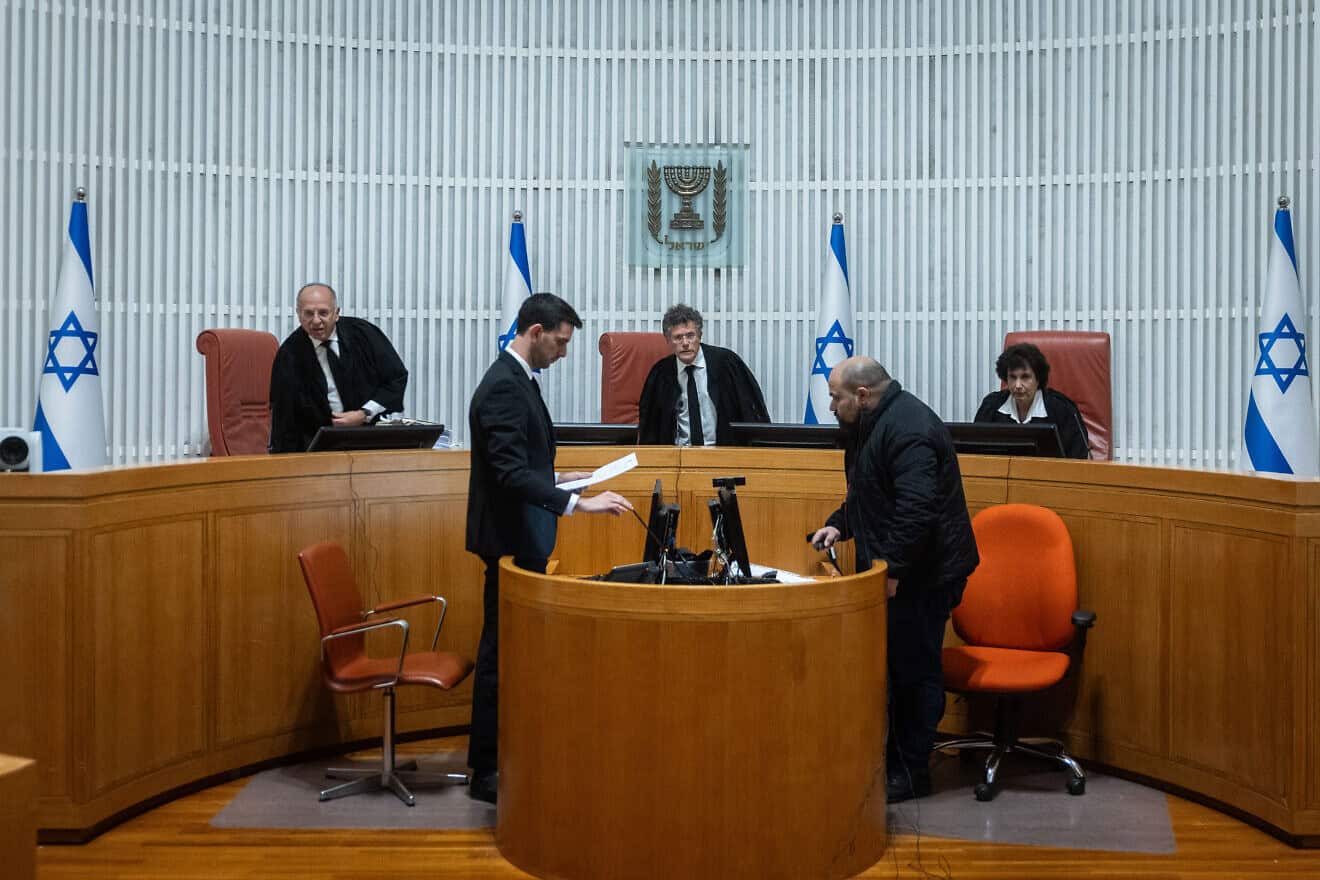
Israeli Supreme Court Justice (now its president) Yitzhak Amit (center) hears a petition on the appointment of the civil service commissioner, Jerusalem, Feb. 6. 2025. Photo by Chaim Goldberg/Flash90.

On March 27, 2025, Israel’s High Court of Justice, led by Chief Justice Yitzhak Amit, delivered a measured, fact-driven and deeply legal judgment, reaffirming that Israel’s decision to halt aid to Gaza, following Hamas’s rejection of the U.S. proposal to continue the hostage-ceasefire negotiations, was fully compliant with international law. The ruling should send a powerful signal to international bodies like the International Criminal Court (ICC) and International Court of Justice (ICJ), which have rushed to indict and accuse with politically charged narratives untethered from operational facts and legal substance.

The High Court found that Israel is not in violation of international humanitarian law in its decision to halt the facilitation of aid to Gaza and—critically—is not an occupying power in the Strip. This rebuke, coming from Israel’s own top court—widely regarded as one of the most independent in the world—matters immensely. It is everything the ICC and ICJ have failed to be: rooted in evidence, guided by law and aware of the real-world consequences of war against terrorist enemies who embed themselves within civilian populations.

This was no rubber stamp. Israel’s Supreme Court has a longstanding history of challenging its own government, particularly on national security policy. The idea that this court would serve as a political puppet is laughable to anyone familiar with Israel’s democratic and judicial culture.

What the High Court did was what international tribunals have refused to do: look at the facts. After reviewing extensive classified materials, multiple hearings and actual data—not rhetoric—the court ruled that Israel has met and continues to meet its obligations under both international and domestic law. It confirmed that Israel facilitates humanitarian aid to civilians, with no quantitative restrictions, and has taken extensive steps to coordinate with international aid groups—even amid a complex war against a terrorist army that systematically steals that same aid.

The court also addressed allegations that Israel was using starvation as a method of warfare. Citing the entry of 25,000 aid trucks carrying over 57,000 tons of food since Jan. 19—during the first phase of the hostage-ceasefire agreement—it found no violation of the prohibitions on starvation or collective punishment, “not even remotely.” The court emphasized that international law only obliges a state to facilitate the passage of humanitarian supplies when there is no reason to believe they are being diverted for hostile use. Given overwhelming evidence that Hamas has been systematically stealing aid and repurposing it for military operations, including hostage captivity, the court concluded that Israel acted within the bounds of international law when it halted certain aid flows.

This legal conclusion echoes longstanding principles under the Fourth Geneva Convention, specifically Article 23, as well as similar provisions in the U.S. Defense Department Law of War Manual and customary international law: Aid is not unconditional when it risks empowering a belligerent force. Even U.S. President Joe Biden underscored this in Oct. 2023, saying that if Hamas diverted aid, the assistance would—and should—stop.

Critically, the court also rejected claims that Israel is subject to the legal obligations of an occupying power. Based on an in-depth factual analysis—including Hamas’s continued control in large areas of Gaza, reestablishment of its administrative functions and Israel’s lack of effective governmental authority—the court concluded that the laws of belligerent occupation simply do not apply. In doing so, it directly rebutted the ICJ’s 2024 advisory opinion, which took a broader, speculative view of Israeli authority without full access to facts, participants, or classified military intelligence.

Let’s be clear: No court on Earth scrutinizes its own military in wartime the way Israel’s does. No other democracy has fought such sustained urban combat against a genocidal enemy hiding in homes, schools, hospitals and mosques, while remaining under the microscope of its own judiciary. And yet, Israel’s legal system not only holds to—but exceeds—the standards expected by the international community.

Contrast this with the ICC, which has moved with stunning speed toward possible indictments of Israeli officials, all while ignoring Hamas’s brutalities or pretending that Oct. 7 never happened. Contrast it, too, with the ICJ, which entertained South Africa’s politicized genocide charges without addressing the deeply asymmetric reality of this war: that Israel is fighting a defensive campaign against a terrorist group that openly vows to repeat the massacre of its civilians.

Israel’s High Court recognized what the world must not forget: the “Iron Swords” war was forced upon Israel after one of the most horrific terrorist attacks in modern history. It was also, as the court stated, “forced on the uninvolved civilians of Gaza” by Hamas and its allies, who embed themselves among civilians, steal aid and carry out military operations from protected civilian infrastructure.

The court acknowledged the humanitarian suffering in Gaza. It also acknowledged the limits of what Israel can control in a warzone, especially when international organizations operate in Gaza without coordinating with Israeli forces. And yet, even with these challenges, the court documented how Israel has improved aid flows, opened more crossing points, coordinated access and constantly evaluated the humanitarian situation—without violating its legal obligations.

This ruling is a judicial firewall against politicized attacks on Israel’s legitimacy. It is an affirmation—by a court rooted in the rule of law—that international law is not a weapon to be used selectively against democracies defending themselves.

The truth matters. The law matters. And what Israel’s Supreme Court just showed is that even in the fog of war, when politics runs hot and justice often runs cold, there is still room for reasoned, moral and lawful adjudication.

That’s more than can be said for the tribunals in The Hague.


John Spencer is chair of urban warfare studies at the Modern War Institute (MWI) at West Point, codirector of MWI’s Urban Warfare Project and host of the “Urban Warfare Project Podcast.” He served for 25 years as an infantry soldier, which included two combat tours in Iraq. He is the author of the book “Connected Soldiers: Life, Leadership, and Social Connection in Modern War” and co-author of “Understanding Urban Warfare.”

.


Arsen Ostrovsky is a human rights attorney and CEO of the International Legal Forum, an Israel-based NGO and global network of lawyers standing up for Israel and combating antisemitism in the legal arena. You can follow him on Twitter at: @Ostrov_A.


Zawartość publikowanych artykułów i materiałów nie reprezentuje poglądów ani opinii Reunion’68,
ani też webmastera Blogu Reunion’68, chyba ze jest to wyraźnie zaznaczone.
Twoje uwagi, linki, własne artykuły lub wiadomości prześlij na adres:
webmaster@reunion68.com


Trump hopes Netanyahu is ‘being appreciated, because he’s been a great leader’

Trump hopes Netanyahu is ‘being appreciated, because he’s been a great leader’

Alex Traiman


There is a great battle of civilizations taking place, a World Series, that includes the West.
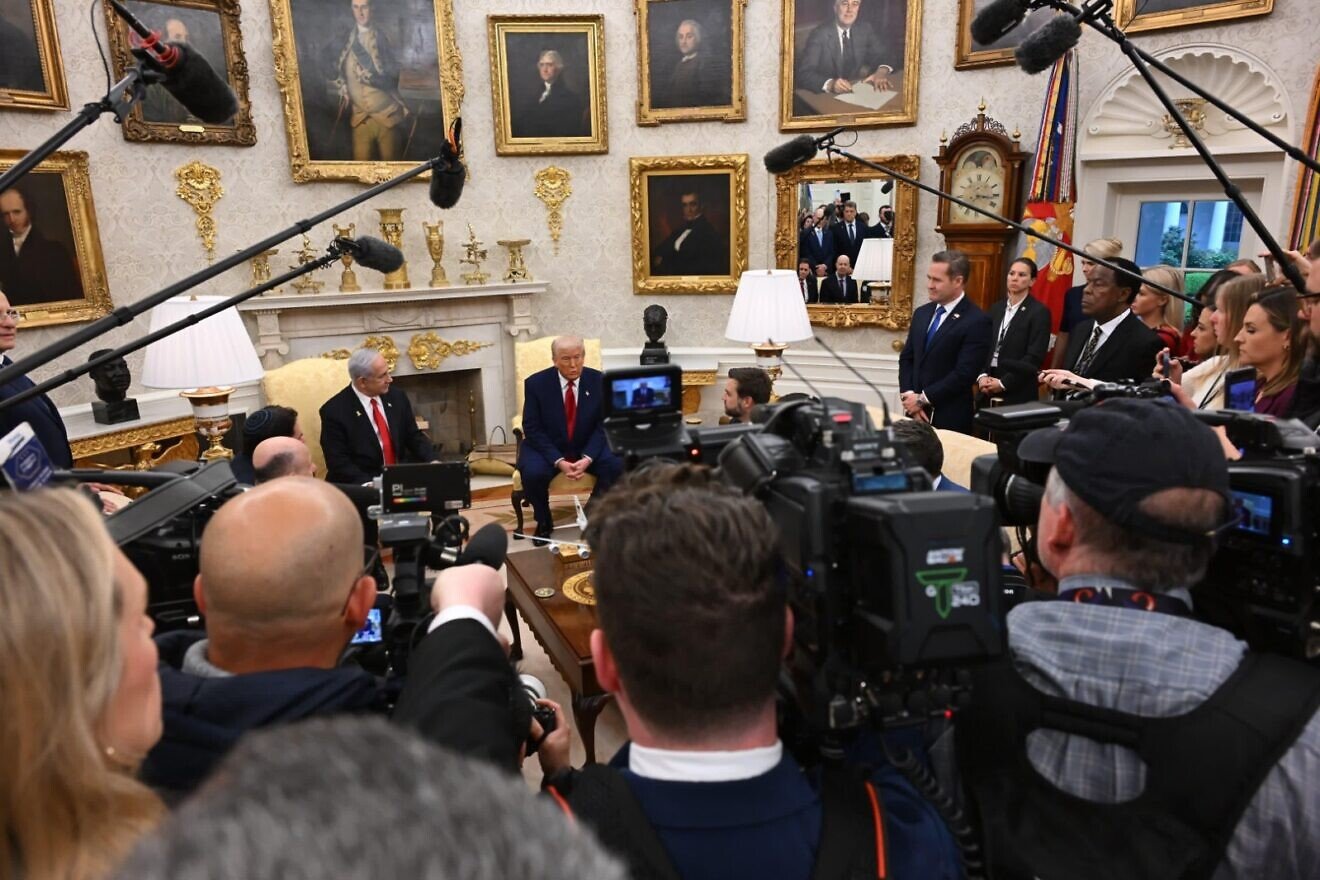
U.S. President Donald Trump and Prime Minister Benjamin Netanyahu talk to the press at the White House on April 7. Photo by Avi Ohayon/GPO.

Among all the other headlines on Iran, Gaza, hostages, Houthis, Turkey and tariffs, one of the statements U.S. President Donald Trump made to the media with Israeli Prime Minister Benjamin Netanyahu on April 7 was perhaps seen as a throwaway line. Yet it may have been among the most important statements made during the lengthy press conference.

Regarding Netanyahu, Trump stated: “I hope he’s being appreciated, because he’s been a great leader.”

From inviting Netanyahu to be the first world leader to meet him at the White House after his Jan. 20 inauguration to inviting him now a second time before many world leaders have even gone once, making him the first leader to come to the Oval Office to discuss the administration’s controversial new tariffs, Trump has demonstrated that he truly respects Israel and its prime minister.

“We appreciate you being here, and we are a friend of Israel. As you know, I always say that I’m by far the best president that Israel has ever had,” Trump stated, while acknowledging that most Israelis see it the same way. 

“And it’s an honor to be so, and to be so proud. We have many friends in Israel. They are not in an easy area; it doesn’t go easy, but we are helping them. And likewise, they have been helping us very much,” he said.

A large and vocal minority within Israel refuses to acknowledge Netanyahu’s leadership, even as he has been navigating some of the most difficult challenges in Israel’s history. For the prime minister’s reflexive detractors, Netanyahu can do nothing right—even the things that are seemingly obvious to everyone.

On this trip, Netanyahu was ensuring the world’s most important superpower is in lockstep with Israel on long list of complicated issues related to the complex multifront war, regional realignment and now an economic realignment.

Times of Israel article summarizing Netanyahu’s trip was titled, “After softball visit to Hungary, Netanyahu strikes out in DC meeting with Trump.”

The article started by acknowledging that just prior to the meeting with Netanyahu, the baseball world champions, the Los Angeles Dodgers, came to visit Trump in the White House. The piece went on to use baseball analogies to chronicle what the author perceived as three swings and misses by Netanyahu in the Oval Office: That he didn’t secure tariff relief; that America will reenter nuclear talks with Iran; and that Trump is a friend of Netanyahu’s enemy, President Recep Tayyip Erdoğan of Turkey. And it implied that Netanyahu had been on a cushy state-funded vacation in Budapest.

The piece was a foul ball. Netanyahu’s meetings with Hungarian Prime Minister Viktor Orbán and then Trump were not only highly productive; they were essential. And both are likely to prove highly consequential in the weeks ahead.

Defeating the International Criminal Court

Facing an arrest warrant issued by the International Criminal Court, it is essential for Netanyahu to demonstrate that he is not completely landlocked.  If the Israeli leader can touch down in a major European capital, and be treated with pomp and circumstance, it belittles the court’s attempt to bully Israel.

When Orbán announced that Hungary would withdraw from the ICC for becoming a “political tool,” Netanyahu praised his ally. “This is not only important for us, it’s important for all democracies. It’s important to stand up to this corrupt organization that has equated a democracy that is challenged for its very existence by the most horrific terrorist powers on earth.”

Netanyahu went on to predict: “You are the first, I dare to say I don’t think the last, but the first state that walks out of this corruption and this rottenness. I think it will be deeply appreciated not only in Israel but in many, many countries around the world.”

If Netanyahu does not prevail over the court, IDF soldiers could be next on the warrant list. Hundreds of thousands of Israelis would be prevented from safely leaving Israel’s borders. The weeks ahead will prove whether Netanyahu’s prediction that other countries will follow Hungary’s lead is correct, and whether Israel will ultimately win the battle against the International Criminal Court.

There is a great battle of civilizations taking place, a World Series, that includes the West. There is a battle for the soul of Europe, the soul of America and the soul of Israel. 

Viktor Orbán is a leading figure in the battle for Europe.  Donald Trump is attempting to reset American power and a broken world order. And Benjamin Netanyahu is on the frontlines against radical Islamic forces as well as anti-Israel and anti-nationalist Western powers. All three are fighting against their own well-funded domestic deep states.

Removing daylight

When the president of the United States sends an invitation to an Israeli prime minister, there is little choice but to accept. Especially now. Israel desperately relies on American assistance for critical munitions and weapon supplies and international backing as it fights Hamas, as well as Iran and its band of terror proxies.

Israel needs American backing for any plans to resettle hundreds of thousands of Gazans outside the battered Strip, or for any military campaign to destroy Iran’s nuclear program. And while Trump has proven himself to be a loyal ally, there is plenty of room for America and Israel to veer into differing policy directions. 

A face-to-face meeting can aid in realignment and reduce any perceived daylight between America and Israel. The prime minister had been working on arranging a second meeting with Trump in the coming weeks, after the Passover holiday. 

The issue of tariffs prompted a more urgent get-together. Israel, like so many other countries in the world, was about to get hit with a stiff tariffs regime on exports to America. With America being Israel’s largest export market, mostly in the hi-tech sector, Israel’s economy stood to lose big.

Negotiating tariffs

Netanyahu advanced his upcoming trip to jump to the front of the line of leaders wanting to discuss tariffs. The leadoff visit brought Netanyahu into a position of both national and global leadership.

In the Oval Office, Netanyahu told Trump regarding existing Israeli tariffs on American products, “We are going to eliminate the tariffs and rapidly,” adding, “We’re going to also eliminate trade barriers, a variety of trade barriers that have been put up unnecessarily.”

He then said, “We will eliminate the trade deficit with the United States. We intend to do it very quickly. We think it’s the right thing to do…. I think Israel can serve as a model for many countries who ought to do the same.”

Trump was gracious, stating, “I appreciate very much what you said about the tariffs.”

The Times of Israel and other Netanyahu critics pointed to the fact that Trump did not commit to reducing the newly announced 17% tariff on Israeli goods. They explained the lack of a tangible takeaway as Trump’s inherent rejection of Netanyahu’s offer, and therefore a diplomatic failure.

Maintaining leverage

However, it is very likely that Israel has indeed improved its economic position. There was no way Trump was going to publicly announce the results of his discussions with Netanyahu over tariffs. 

The reason is simple: Dozens of other heads of nations are about to follow Netanyahu’s lead and try negotiating new trade agreements with the United States.

Had Trump announced any reduction of Israel’s tariffs, it would have created a baseline for negotiations with other countries. There was simply no way the author of “The Art of the Deal” was going to put his cards on the table and give up negotiating leverage ahead of a marathon round of calls with other heads of state.

Meanwhile, it was clear that Trump welcomed Netanyahu’s statements, eager to demonstrate to other nations that if they want to negotiate a reduction, they should follow Netanyahu’s lead.

A conciliatory approach

With Netanyahu typically a recipient of Trump’s material support, the visit provided an appropriate opportunity for Netanyahu even up the deficit of diplomatic tradeoffs by giving Trump what it was Trump wanted: a world leader coming to him publicly with a conciliatory approach on trade.

Following his visit to the White House, Netanyahu stated, “President Trump has asked countries to reduce their trade deficits with the United States to zero. I told him, ‘This is not so difficult for us. We will do it.’ This is the little that we can do for the U.S. and its president, who does so much for us.”

Let my people go!

Trump spent a major portion of the press briefing talking about the plight of the remaining Israeli hostages, and the barbaric conditions in which they are being held. It is clear the issue has struck a major nerve, and that while dealing with numerous other issues, Trump is prioritizing the return of the hostages.

Trump did Netanyahu a favor by stressing that not only are he and his Middle East envoy Steve Witkoff working hard to secure the return of the hostages, but so is Netanyahu. At home, Netanyahu faces continual baseless accusations by his longtime political opponents that he is abandoning the hostages. 

For months, anti-Netanyahu protestors were busy repairing their image by supporting the families of the hostages, after attempting to tear the country to shreds in the weeks before Oct. 7, 2023. Yet, in recent weeks, the movement has returned to the same divisive and destructive rhetoric and tactics. 

Most of the country now realizes that the anti-Netanyahu movement’s focus on the hostages is ultimately disingenuous. The issue was carefully selected because the protest organizers projected from the outset that Netanyahu would be unlikely to succeed in resolving the hostage crisis.

In fact, this is the very reason the movement chose the phrase “Bring Them Home” as the centerpiece of their signage and protests, instead of the more appropriate “Let my people go!” While the latter phrase places responsibility for the hostages’ release on Hamas, “Bring them home” puts the responsibility squarely on Netanyahu.

Meanwhile, Netanyahu has proved his detractors wrong, returning 196 of 255 hostages so far, and focusing immense attention on trying to negotiate additional releases.

While noting that “the Israeli people want the hostages out, more than anything. They want the hostages out,” Trump acknowledged Netanyahu’s persistence. “This man is working very hard with us to do that. I mean, I don’t know. I hope he’s being appreciated, because he’s been a great leader. He’s working very, very hard on the hostages and many other things.”

Following the meeting, Netanyahu stated, “The president looked at me and told the journalists who were present: ‘This man is working constantly to free the hostages.’ I hope that this shatters the lie that is being circulated to the effect that I am not working for them, that I don’t care. I do care, and I am doing it, and we will be successful.”

‘I don’t understand why Israel gave up Gaza’

Meanwhile, Trump doubled down on his paradigm-shifting statements in February regarding the United States taking a leading role in the rebuilding of Gaza while resettling Gazans outside of the now-battered Strip.

Asked what he thought about Gaza, Trump stated, “I think it’s an incredible piece of important real estate, and I think it’s something that we would be involved in. But you know, having a force like the United States there, controlling and owning the Gaza Strip, would be a good thing, because right now, all it is for years and years, all I hear about is killing and Hamas and problems. And if you take the people, the Palestinians, and move them around to different countries, and you have plenty of countries that will do that.”

Then Trump acknowledged what members of the Israeli right have been saying for years, since Israel’s fateful 2005 disengagement. (It should also be noted that Israel’s left was incensed by right-wing street protests against the ill-fated withdrawal.)

“I don’t understand why Israel never gave it up. Israel owned it. It wasn’t this bad,” he said. Then, referring to Netanyahu, Trump noted, “So, I can say he wouldn’t have given it up. I know him very well. There’s no way.”

Land for peace formula: ‘Not good’

Taking a strong dig at Ariel Sharon, a right-wing, Likud Party prime minister who went on to unilaterally implement the very same left-wing policy he vowed to oppose in a general election, Trump stated, “They took oceanfront property, and they gave it to people for peace. How did that work out? Not good.”

The comment sent a strong signal about Trump’s stance on left-wing delusions regarding a future Palestinian state in the biblical provinces of Judea and Samaria, referred to as the West Bank by those who don’t want the rest of the world to know it is historic, indigenous Jewish territory.

Resettling Gazans = Total victory

Moving one million Gazan residents or more out of the Strip to other countries will shift the entire balance of power within the Israeli- Palestinian conflict, turning Palestinians from a demographic threat between the Jordan River and the Mediterranean Sea into an ethnic minority.

Netanyahu on Tuesday credited Trump for his bold and refreshing thinking, stating that the two leaders, “discussed President Trump’s vision, because we are currently in contact with countries that are talking about the possibility of taking in many Gazans. This is important because in the end, this is what needs to happen.”

Meanwhile, it is clear that Netanyahu’s team has been influencing “Trump’s vision.”  Resettling the Gazans has long been an unstated war aim and will represent the ultimate “total victory” Netanyahu has been referring to over Hamas.

Getting the hostages home and resettling Gazans elsewhere would be an inning-ending double play.

‘Iran is going to be in great danger’

Diffusing the ticking time bomb of Iran’s illicit nuclear weapons program without military intervention would certainly be a dream scenario. 

A military conflict could have severe consequences for Israel, as well as for other countries in the region. Iran has already threatened to launch attacks on Iraq, United Arab Emirates, Bahrain, Qatar or Saudi Arabia if America launches military strikes.

Yet, a non-military solution can only be accomplished with the credible threat of maximum economic sanctions and military force. With snapback sanctions on Iran set to go into effect in the coming weeks, significant economic pressure is nearly in place.

More importantly, America’s punishing airstrike campaign across Yemen, targeting Iran’s terror proxy, the Houthis, is proof positive that Trump is not afraid to use targeted military force to restore law and order to the Middle East. Furthermore, there is a precedent. America pressured Libya to allow U.S. inspectors to come into the country and dismantle its nuclear program.

This appears to be Trump’s preferred path, and Netanyahu appears to be onboard. Both leaders made it patently clear that they are unwilling to accept a nuclear Iran.

“I think if the talks aren’t successful with Iran, I think Iran is going to be in great danger, and I hate to say, great danger, because they can’t have a nuclear weapon,” Trump stated in the Oval Office. “You know, it’s not a complicated formula. Iran cannot have a nuclear weapon … and if the talks are not successful, I actually think it would be a very bad day for Iran if that’s the case.”

Trump is attempting a two-out rally to pressure Iran to give up its illicit nuclear program. But it is clear that the count is full. The Israeli Air Force is swinging the bat on deck, with the U.S. Air Force coming up after.

Netanyahu on Tuesday said of the meeting with Trump that first, “We agree that Iran will not have nuclear weapons. This can be done by agreement, but only if this agreement is Libyan style: They go in, blow up the installations, dismantle all of the equipment, under American supervision and carried out by America. This would be good.”

Netanyahu and Trump also seem to be on the same page that negotiations must not turn into an attempt for Iran to step out of the box and buy extra time. “The second possibility, that will not be, is that they drag out the talks. Everyone understands this. We spoke about this at length,” said the Israeli premier.

Jive Turkey

One of the war’s biggest surprises was the sudden fall of Bashar Assad, and Turkey’s push into belligerent push into northern Syria via its own proxy, Hayat Tahrir a-Shams (HTS), and its desire to establish military bases in the country.

Israel took bold action in the immediate aftermath of Assad’s fall to destroy the overwhelming majority of Syria’s military assets. The last thing Israel wants is a militarized terror group—HTS, formerly affiliated with Al-Qaeda—on its northern border.

Netanyahu stated on Tuesday that “Turkey wants to establish military bases in Syria, and this endangers Israel. We oppose this and are working against it. I told President Trump, who is my friend and also a friend of [Turkish President Recep Tayyip] Erdogan: ‘If we are in need of your help, we will discuss it with you.’”

In the press briefing, Trump pledged to help mediate between Israel and Turkey, if necessary. “I told the prime minister, I said, just maybe if you have a problem with Turkey, I really think I’m going to be able to work it out. And I have a very, very good relationship with Turkey and with their leader, I think we’ll be able to work it out. So I hope that’s not going to be a problem.”

Trump noted that Turkey has essentially taken control of Syria “through surrogates.” There are multiple ways to deal with this problem. One would be to open up another military front. Trump seeks to de-escalate the region’s conflicts. It appears he is willing to accept Erdogan’s “very smart” move, provided that Syria remains essentially demilitarized, and Erdogan does not directly threaten Israel.

If Erdogan is not content, Trump is willing to step in. “Any problem that you have with Turkey, I think I can solve,” Trump said.

Great closeness and friendship

Netanyahu concluded by acknowledging the importance of his rapidly scheduled meeting with Trump. “I have just finished my second visit to the U.S. in two months, a very warm visit with my friend President Donald Trump. You could be impressed from the great closeness and friendship between us, which was expressed in the issues we discussed,” he said.

The trip to America, preceded by the trip to Hungary, were both wins for the prime minister. Rather than strike out or be humiliated, like his opponents falsely project, Netanyahu demonstrated that he remains at the top of his game, in a league of his own. 

Israel’s beleaguered prime minister scored several runs with a series of the base-clearing line drives in the gap.


Alex Traiman is the CEO and Jerusalem bureau chief of the Jewish News Syndicate (JNS) and host of “Jerusalem Minute.” A seasoned Israeli journalist, documentary filmmaker and startup consultant, he is an expert on Israeli politics and U.S.-Israel relations. He has interviewed top political figures, including Israeli leaders, U.S. senators and national security officials with insights featured on major networks like BBC, Bloomberg, CBS, NBC, Fox and Newsmax. A former NCAA champion fencer and Yeshiva University Sports Hall of Fame member, he made aliyah in 2004, and lives in Jerusalem with his wife and five children.


Zawartość publikowanych artykułów i materiałów nie reprezentuje poglądów ani opinii Reunion’68,
ani też webmastera Blogu Reunion’68, chyba ze jest to wyraźnie zaznaczone.
Twoje uwagi, linki, własne artykuły lub wiadomości prześlij na adres:
webmaster@reunion68.com