Archive | 2026/11/24

Merkel potwierdza niemiecką Staatsräson

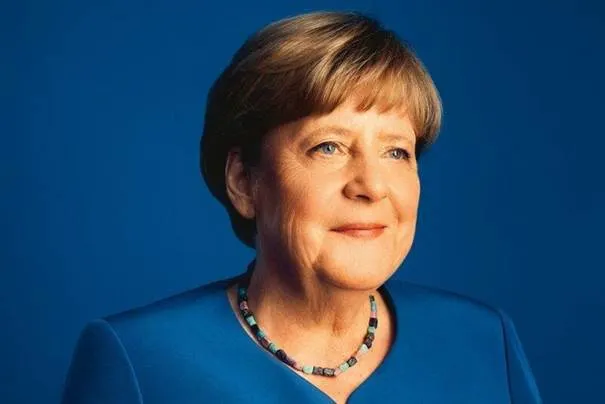
Angela Merkel. Fot. Raimond Spekking, licencja Creative Commons.


Merkel potwierdza niemiecką Staatsräson

Hugh Fitzgerald


Angela Merkel ma wiele na sumieniu i za wiele rzeczy powinna odpowiedzieć. To ona w 2015 roku otworzyła na oścież bramy Niemiec przed milionem migrantów, w przeważającej większości muzułmanów, niemądrze ogłaszając: „Wir schaffen das!”, czyli „Damy radę!”. Miała przez to na myśli, że my, naród niemiecki, jesteśmy w stanie skutecznie zintegrować tych migrantów z naszym społeczeństwem.

Jednak, jak się okazało, Niemcy nie byli w stanie „dać rady”. Nie dlatego, że zabrakło im dobrej woli, lecz dlatego, że sami muzułmanie masowo napływali do Niemiec jako migranci podający się za osoby ubiegające się o azyl. Przybywali nie po to, by pracować, lecz by żerować na wszelkich świadczeniach oferowanych przez hojny niemiecki system opieki społecznej, w tym na bezpłatnych lub w znacznym stopniu dotowanych mieszkaniach, darmowej opiece medycznej, bezpłatnej edukacji, zasiłkach rodzinnych i wielu innych przywilejach.

Nie spieszyło im się do podejmowania pracy zarobkowej. Woleli żyć z świadczeń, a kiedy zapragnęli czegoś więcej, nierzadko zajmowali się przestępczością – napadami rabunkowymi na ulicach, włamaniami do domów, kradzieżami w sklepach i handlem narkotykami.

Nie chcą asymilować się ze społeczeństwem stworzonym przez niewiernych, ponieważ wiedzą, że podczas gdy muzułmanie są „najlepszym z ludów”, niewierni są „najpodlejszymi spośród istot stworzonych”.

Merkel ma wiele do wyjaśnienia nie tylko własnemu narodowi, lecz także wszystkim narodom Europy, których rządy poszły za jej przykładem i wpuściły do swoich krajów miliony muzułmanów.

Jednak w kwestii Izraela Merkel pozostała niezachwiana, stojąc na straży słynnej Staatsräson, czyli „racji stanu”, zgodnie z którą zapewnienie bezpieczeństwa Izraelowi stanowi fundamentalny interes państwa niemieckiego i pozostaje niewzruszonym zobowiązaniem narodu oraz rządu Niemiec.

Więcej na temat najnowszych wypowiedzi Merkel dotyczących Izraela, w których broni ona wojny prowadzonej przez państwo żydowskie przeciwko Hamasowi i sprzeciwia się próbom izolowania Izraela, można przeczytać w artykule Ailin Vilches Arguello zatytułowanym „Angela Merkel broni wojny Izraela przeciwko Hamasowi i sprzeciwia się próbom izolowania państwa żydowskiego”, opublikowanym w „Algemeiner” 16 listopada 2026 roku:

Była kanclerz Niemiec Angela Merkel stanęła w obronie militarnej odpowiedzi Izraela podczas wojny w Strefie Gazy, przeciwstawiając się narastającej krytyce międzynarodowej oraz coraz liczniejszym kampaniom antyizraelskim, których celem jest bojkotowanie, delegitymizowanie i izolowanie państwa żydowskiego na arenie światowej.

W wywiadzie dla niemieckiego podcastu „Kaffee und Fluchen” Merkel wyraziła solidarność z Izraelem, uznając nadzwyczajną trudność prowadzenia walki z palestyńską organizacją terrorystyczną Hamas, której dobrze udokumentowana strategia polega na rozmieszczaniu terrorystów wśród cywilnej infrastruktury Strefy Gazy.

„Nigdy nie musiałam podejmować tak trudnej decyzji” – powiedziała. „Kiedy Hamas ma bunkry pod przedszkolami i szpitalami, a jego bojownicy zajmują tam pozycje, zniszczenie tych obiektów wojskowych nieuchronnie oznacza uderzenie w znajdującą się nad nimi infrastrukturę cywilną. To sprawia, że zadanie staje się znacznie bardziej skomplikowane”.

Wypowiedzi Merkel padają w czasie nasilających się międzynarodowych wysiłków zmierzających do bojkotu i izolowania państwa żydowskiego po inwazji Hamasu na południowy Izrael i masakrze dokonanej tam 7 października 2023 roku. Potwierdzają one wieloletni sojusz Niemiec z Jerozolimą w obliczu rosnącej presji dyplomatycznej.

Merkel, która ustąpiła ze stanowiska w grudniu 2021 roku po 16 latach sprawowania urzędu kanclerza Niemiec i którą zastąpił Olaf Scholz, przekonywała, że każda sensowna dyskusja o wojnie musi przede wszystkim uwzględniać rolę Hamasu w wywołaniu konfliktu oraz nieustające zagrożenie, jakie ta organizacja terrorystyczna stanowi dla Izraela.

„7 października to nie Izrael zaatakował Strefę Gazy, lecz Hamas przypuścił atak na Izrael”- powiedziała…

Powinno to być stwierdzenie oczywiste. Jednak w dzisiejszej Europie bynajmniej nie jest ono powszechnie akceptowane, a wypowiedzenie tej prostej prawdy wymaga odwagi politycznej.

„Jeśli porównamy uwagę poświęcaną Izraelowi z zainteresowaniem innymi kryzysami, takimi jak sytuacja w Jemenie, gdzie miliony dzieci głodują, czy w Sudanie, dostrzeżemy wyraźną dysproporcję. Podczas gdy Izrael poddawany jest niezwykle intensywnej kontroli, innym katastrofom humanitarnym poświęca się znacznie mniej uwagi” – powiedziała.

Merkel słusznie zwraca uwagę na obsesyjne zainteresowanie Izraelem i jego rzekomymi przewinieniami – na czele z rzekomym „ludobójstwem” w Strefie Gazy-— które pozostawia w międzynarodowych mediach niewiele miejsca na relacjonowanie znacznie większych katastrof.

Należą do nich dramat 5,2 miliona Jemeńczyków zmuszonych do opuszczenia swoich domów, żyjących w tymczasowych schronieniach i cierpiących z powodu poważnego niedożywienia, a także los piętnastu milionów Sudańczyków, którzy zostali przesiedleni. Wielu z nich uciekło z obszarów objętych walkami, a część całkowicie opuściła kraj.

Była kanclerz Merkel przypomniała niemieckim odbiorcom, że to Hamas, a nie Izrael, rozpoczął wojnę w Strefie Gazy; że Niemcy muszą niezłomnie trzymać się swojej Staatsräson, polegającej na zapewnieniu bezpieczeństwa państwu Izrael; oraz że muszą zdecydowanie przeciwstawiać się próbom izolowania państwa żydowskiego.

Do prób tych należy uznawanie „państwa Palestyna” przez coraz większą liczbę państw europejskich – Hiszpanię, Irlandię i Norwegię – nieustanna wojna prowadzona przeciwko Izraelowi na forum ONZ, gdzie w ciągu ostatniego roku Zgromadzenie Ogólne przyjęło siedemnaście rezolucji przeciwko państwu żydowskiemu, podczas gdy przeciwko wszystkim pozostałym 193 państwom członkowskim łącznie uchwalono zaledwie cztery, a także, rzecz jasna, antyizraelskie tłumy wykrzykujące swoją nienawiść do państwa żydowskiego na ulicach wielu europejskich miast.

Pozostaje teraz mieć nadzieję, że Angela Merkel zrobi jeszcze jedną rzecz: uzna, że muzułmanie, do których przyjazdu do Europy tak nierozważnie zachęcała w 2015 roku, byli nosicielami antysemickiego wirusa, i że w ramach zrewidowanej Staatsräson Niemcy muszą zrobić wszystko, co w ich mocy, aby ograniczyć liczebność populacji muzułmańskiej w Europie.


Link do oryginału: https://jihadwatch.org/2026/11/merkel-reaffirms-germanys-staatsrason


Zawartość publikowanych artykułów i materiałów nie reprezentuje poglądów ani opinii Reunion’68,
ani też webmastera Blogu Reunion’68, chyba ze jest to wyraźnie zaznaczone.
Twoje uwagi, linki, własne artykuły lub wiadomości prześlij na adres:
webmaster@reunion68.com


CUNY Has a Huge Antisemitism Problem; Its Leaders Help Lead the Mamdani Administration


CUNY Has a Huge Antisemitism Problem; Its Leaders Help Lead the Mamdani Administration

Jeffrey Lax


CUNY School of Law in New York City. Photo: Evulaj90 / Wikimedia Commons.

New York City Mayor Zohran Mamdani’s 33-page Strategy to Combat Antisemitism credits the Sanitation Department with being “responsive and respectful” about garbage pickup on Jewish holidays. It praises the Parks Department for swiftly removing swastikas.

The City University of New York (CUNY) appears once, in the caption of a photo showing the mayor at Queensborough Community College’s Holocaust center on Yom HaShoah. The mayor was glad to honor the memory of murdered Jews on a CUNY campus, yet his plan has nothing to say about the Jews on CUNY campuses today.

Anyone who knows CUNY’s record should be outraged.

I have taught full time at CUNY’s Kingsborough Community College since 2004, and I have served as a department chair for the past 16 years. I have watched Jew-hatred take root on our campuses, and so have federal and state investigators.

In 2021, the US Equal Employment Opportunity Commission found reasonable cause to believe that CUNY/Kingsborough discriminated and retaliated against observant Jewish faculty, including me, because of religion. The EEOC found that we were shut out of a faculty caucus and that CUNY failed to take corrective action despite numerous complaints, creating a hostile work environment.

In June 2024, the US Department of Education’s Office for Civil Rights (OCR) told the chancellor it had concerns that CUNY and its colleges failed to respond promptly and effectively to harassment, ran inadequate investigations, and failed to interview relevant witnesses. It flagged CUNY’s failure to provide system-wide training on antisemitism. To resolve nine complaints, six of them alleging anti-Jewish harassment at Hunter, Brooklyn College, Baruch, CUNY Law, and the central office, CUNY agreed to reopen or open investigations, report the results and remedies to Washington, retrain its investigators and campus peace officers, and survey students at all 25 schools.

Three months later, Judge Jonathan Lippman, New York’s former chief judge, sent Gov. Kathy Hochul a 146-page report that was built on more than 200 interviews. CUNY’s policies for handling antisemitism, he concluded, “need to be significantly overhauled.” He called its complaint system “ineffective,” a “black box” that “may cause more harm than good,” and found bylaws that hadn’t been updated in almost a decade. His 13-point plan called for a center focused first on antisemitism, a publicly named antisemitism monitor, a victim’s advocate, and a rebuilt complaint portal.

The mayor’s plan mentions none of it. It uses the words “higher education” twice, both times to praise a K-12 hire. Furthermore, the four agencies the administration chose as partners for year one don’t include CUNY.

Maybe that’s because the people who run CUNY helped build the mayor’s administration.

Chancellor Félix Matos Rodríguez, the man the federal civil rights letter was addressed to, sat on Mamdani’s transition committee on youth and education. So did James Davis, an Israel critic and president of the Professional Staff Congress, CUNY’s faculty union. CUNY’s chief operating officer, Hector Batista, served on the government operations committee. By CUNY’s own count, no less than 20 of its faculty and staff advised the transition.

Then Mamdani hired from CUNY. His first deputy mayor, Dean Fuleihan, came from the CUNY Institute for State & Local Governance. His chief counsel, Ramzi Kassem, came from CUNY Law, the school named in two of the federal antisemitism complaints.

Mamdani’s own record on CUNY tells the rest. At a Brooklyn College campaign event in September 2025, he declared that “no faculty member should be disciplined for supporting Palestinian human rights,” backing four adjuncts CUNY had let go, reportedly due to antisemitic/pro-Hamas behavior associated with anti-Israel protests. Three of them have since been reinstated, including one who was filmed chanting “down, down, down with Zionist scum.”

At City College last November, a speaker at a school-sponsored interfaith event complained that he was “sitting next to a Zionist,” meaning a Hillel director, and urged Muslim students to walk out. About 100 did.

Zionist. That is the word Mamdani’s plan refuses to print. As I wrote last month, the strategy never names Zionism and declares that defining antisemitism isn’t “necessary or useful.” On campus, “Zionist” is how the haters find their Jewish targets. In a 2025 ADL survey of 209 Jewish professors, 37.8% said they felt a need to hide their Jewish or Zionist identity on campus.

The mayor can’t claim CUNY is someone else’s problem. He appoints five of its 17 trustees, and its community colleges, including mine, are “overseen and directly funded by New York City.”

All of this is compounded by Mamdani’s announcement this week, disbanding the NYPD’s Strategic Response Group (SRG), which handled counterterrorism and protests. Eliminating the police from handling protests, many of which we already have seen turn violent and injurious, is a frightening prospect for every Jew in the city, but especially on our campuses, which have already encountered many protests and riots. Absurdly and dangerously, new and unnamed civilians with unknown credentials, will now have “dialogue” with protestors who turn into violent rioters.

What, then, when “dialogue” fails? These civilians themselves will get hurt, as will the targets of the riot. Mamdani is inviting riots and violence to our streets and on our campuses.

Mamdani’s strategy should press CUNY’s board for public, campus-by-campus reporting on Lippman’s recommendations and the OCR settlement, and say in writing that Jews targeted as “Zionists” are protected by federal, state, and city law.

Mamdani’s plan found a line to thank the Sanitation Department. Meanwhile, the excluded Jews of CUNY, whose mistreatment three federal and state reviews have documented, are being treated like garbage.


Jeffrey Lax is a professor of law at the City University of New York and the founder of S.A.F.E. Campus. He holds a J.D. from Benjamin N. Cardozo School of Law and a master’s degree from Baruch College’s Zicklin School of Business. Professor Lax is a frequent legal and political commentator on Fox News, Newsmax, and other major media outlets and is active on X at @CUNY_Prof. 


Zawartość publikowanych artykułów i materiałów nie reprezentuje poglądów ani opinii Reunion’68,
ani też webmastera Blogu Reunion’68, chyba ze jest to wyraźnie zaznaczone.
Twoje uwagi, linki, własne artykuły lub wiadomości prześlij na adres:
webmaster@reunion68.com


‘Completely Incoherent’: Legal Experts Slam Divided ICJ Genocide Ruling, Warn of Implications for Israel


‘Completely Incoherent’: Legal Experts Slam Divided ICJ Genocide Ruling, Warn of Implications for Israel

Debbie Weiss


A general view inside the International Court of Justice (ICJ), at the start of a hearing where South Africa requests new emergency measures over Israel’s operations in Rafah, in The Hague, Netherlands, May 17, 2024. Photo: REUTERS/Yves Herman

A divided International Court of Justice (ICJ) has made genocide easier to prove while insisting it has not changed the rules, legal experts warned after a landmark ruling against Myanmar that could strengthen South Africa’s case against Israel.

In a 9-6 decision on Thursday, the UN’s highest court found Myanmar responsible for genocide against its Rohingya Muslim minority during a brutal 2017 military campaign. It was the first time the court had held a state directly responsible for genocide, but six dissenting judges accused the majority of weakening the legal standard for proving the crime.

Prof. Yuval Shany, an international law expert at the Hebrew University of Jerusalem and a senior fellow at the Israel Democracy Institute, told The Algemeiner that “formally the bar remains the same,” referring to the requirements of “only reasonable inference and fully conclusive evidence.”

In other words, the court still requires genocide to be the only reasonable explanation for a state’s actions. But Shany said its willingness to consider a wider range of evidence together, rather than concentrating on the military campaign itself, had made that standard easier to meet.

“It has become easier to prove genocide,” he said.

The ruling could complicate Israel’s defense against South Africa’s accusation that its war against the Hamas terrorist group in Gaza violated the 1948 Genocide Convention.

Genocide requires proof of an intention to destroy a national, ethnic, racial, or religious group, in whole or in part. Civilian deaths, even those resulting from war crimes, are not enough on their own to establish that intent.

In Myanmar’s case, however, the ICJ considered not only the military’s actions in 2017 but also decades of discriminatory laws, anti-Rohingya rhetoric, earlier security operations, and the forced displacement of civilians. The judges concluded that the evidence, taken together, demonstrated an intention to destroy a substantial part of the Rohingya population.

The same approach could allow the court to consider Israel’s policies toward Gaza before the Oct. 7, 2023, attack, including the blockade and previous rounds of conflict with Hamas, when examining South Africa’s allegations.

Andrew Fox, a former British Army major and senior associate fellow at the Henry Jackson Society, told The Algemeiner that the judges had said they were “changing nothing” but had in fact “changed everything.”

Fox pointed to the expanded assessment of evidence, the court’s interpretation of the convention’s provision concerning the destruction of a group “in part,” and the considerable weight it gave to UN investigative reports.

The court’s reliance on UN reports is especially relevant to Israel, which has repeatedly challenged the impartiality and accuracy of international investigations into its conduct in Gaza.

In September 2025, a UN commission chaired by Navi Pillay, who also serves as a judge on the ICJ, accused Israel of committing genocide in Gaza, a finding Jerusalem rejected as a politically motivated fabrication. Pillay, who won the 2026 Nobel Peace Prize, has faced years of accusations of antisemitism and entrenched anti-Israel bias. She previously endorsed sanctions against what she called “apartheid Israel” and dismissed concerns about antisemitism within her commission as a “diversion.” Following her Nobel win, Israel’s Foreign Ministry accused her of promoting the “genocide lie” and enabling antisemitism within the UN.

Nobel Peace Prize laureate Navi Pillay enters the courtroom on the day the International Court of Justice (ICJ) delivers its judgment in the case brought by Gambia accusing Myanmar of genocide against the Rohingya Muslim minority, in The Hague, Netherlands, Nov. 19, 2026. Photo: REUTERS/Piroschka van de Wouw

Israel has also disputed UN-backed assessments of humanitarian conditions in Gaza, particularly the Integrated Food Security Phase Classification’s (IPC) August 2025 declaration of famine in parts of the territory. Israeli officials challenged the methodology and underlying data. By July 2026, the IPC no longer classified any area of Gaza as experiencing famine, while a separate survey of child malnutrition found low rates of acute malnutrition.

The Myanmar ruling could now give greater legal weight to disputed UN reports accusing Israel of genocide, potentially strengthening South Africa’s case despite serious questions about the investigations’ credibility and accuracy.

The court also found that a military campaign against an armed insurgency could constitute genocide if the evidence established an intention to destroy a protected population.

Myanmar, which called the ruling “unfair,” maintained that its campaign was a response to attacks by Rohingya militants. The ICJ rejected that explanation as insufficient to account for the systematic killing of civilians, widespread sexual violence, attacks on fleeing families, and destruction of villages.

The circumstances in Gaza are substantially different. Israel launched its war after Hamas’s Oct. 7 massacre, in which approximately 1,200 people were killed and 251 abducted. Its military confronted an armed terrorist organization that had embedded tunnels, weapons facilities, and command centers within densely populated civilian areas.

As Fox pointed out, Myanmar’s military systematically targeted Rohingya communities rather than limiting its operations to insurgents, and there was no record of evacuation warnings comparable to those issued by Israel in Gaza.

In a separate interview with author Dan Senor on the “Call me Back” podcast, Fox noted that Israel had been compiling evidence of its military objectives, civilian-protection measures, and humanitarian assistance. He argued that targeting records, assessments of proportionality and evidence of evacuation warnings would be critical to demonstrating that Israel was fighting Hamas rather than attempting to destroy the Palestinian population.

Israel has consistently maintained that its campaign targeted the Hamas terrorist group, not Palestinians as a people. South Africa, however, argues that the destruction in Gaza, humanitarian conditions, and statements by Israeli officials establish genocidal intent.

Fox acknowledged that inflammatory remarks by far-right ministers Itamar Ben-Gvir and Bezalel Smotrich could complicate Israel’s defense, but emphasized that neither sat on the war cabinet directing the Gaza campaign or had operational authority over the IDF, limiting the weight their statements should carry as evidence of genocidal intent.

He also warned that remarks by Israeli officials had sometimes been quoted without the context clarifying that they were referring to Hamas rather than the Palestinian population. Distinguishing political rhetoric and individual misconduct from government-directed military policy, he argued, would be essential to Israel’s defense.


Israeli soldiers operate at the opening to a tunnel at Al Shifa Hospital compound in Gaza City, amid the ongoing ground operation of the Israeli army against Hamas, in the Gaza Strip, Nov. 22, 2023. Photo: REUTERS/Ronen Zvulun

Six of the ICJ’s 15 judges dissented in the Myammar case, accusing the majority of weakening the strict standard for proving genocide. They argued that evidence of atrocities, mass displacement or persecution does not necessarily prove an intention to destroy a population and that the court had failed to rule out other explanations for Myanmar’s conduct before concluding that genocide had occurred.

The dissenters also challenged the heavy reliance on UN investigative reports and warned that the ruling risked transferring the burden of proof onto the accused state.

British barrister Natasha Hausdorff, legal director of UK Lawyers for Israel Charitable Trust, condemned both the outcome and the court’s conflicting legal interpretations.

“This dog’s dinner of an outcome is a perfect example of what happens when international courts and tribunals become politicized,” Hausdorff told The Algemeiner.

“The weaponization of international law on the legal threshold for genocide has occasioned entirely incoherent legal analysis across multiple contradictory positions from the judges of the ICJ.”


Zawartość publikowanych artykułów i materiałów nie reprezentuje poglądów ani opinii Reunion’68,
ani też webmastera Blogu Reunion’68, chyba ze jest to wyraźnie zaznaczone.
Twoje uwagi, linki, własne artykuły lub wiadomości prześlij na adres:
webmaster@reunion68.com