
Archive | 2026/11/16

Jak Izraelczycy reagują na decyzję Trumpa o zakończeniu pomocy wojskowej do końca roku


Jak Izraelczycy reagują na decyzję Trumpa o zakończeniu pomocy wojskowej do końca roku

Hugh Fitzgerald


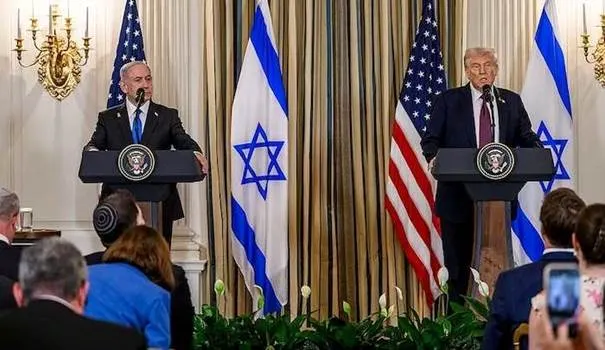
Prezydent Donald Trump i premier Izraela Benjamin Netanjahu. Źródło: Biały Dom, domena publiczna.

Izrael dysponował formalnym zobowiązaniem Stanów Zjednoczonych do przekazywania mu 3,8 miliarda dolarów rocznie przez dziesięć lat, począwszy od 2018 roku. Zobowiązanie to miało wygasnąć z końcem 2028 roku. Tymczasem prezydent Trump, niemal mimochodem, jak gdyby była to sprawa bez większego znaczenia, ogłosił, że do końca bieżącego roku zakończy wszelką pomoc wojskową dla Izraela. W Izraelu natychmiast wywołało to powszechną konsternację.

Prezydent Izraela Icchak Herzog powiedział, że wiadomość ta spadła na niego „jak grom z jasnego nieba”. Wielu przywódców politycznych, w tym lider partii Jesz Atid, ubolewało nad tym, że pomoc zostanie wstrzymana zbyt gwałtownie, aby izraelski establishment obronny mógł odpowiednio dostosować swoje plany. Premier Izraela Benjamin Netanjahu, którego Trump wskazał jako osobę, która jako pierwsza rzuciła ten pomysł, nie zaprzeczył temu twierdzeniu, za co spotkała go fala potępienia. Jak zauważało wielu Izraelczyków, czym innym jest mieć dziesięć lat na przygotowanie się do zakończenia pomocy wojskowej, a czym innym zaledwie dwa miesiące. A przecież nie są to czasy pokoju. Osaczone państwo żydowskie prowadzi wojnę na pięciu frontach: przeciwko Hamasowi w Strefie Gazy, Hezbollahowi w Libanie, Huti w Jemenie, siłom asz-Szary w Syrii oraz swojemu najgroźniejszemu wrogowi – Islamskiej Republice Iranu.

Więcej informacji na temat zapowiedzianego przez Trumpa zakończenia pomocy wojskowej dla Izraela w ciągu dwóch miesięcy oraz reperkusji tej decyzji w samym Izraelu można znaleźć tutaj: „Prawdziwe skutki wstrzymania przez Trumpa pomocy wojskowej dla Izraela — analiza”, Sam Sokol, JTA, 6 listopada 2026 r.:

„Perspektywa zakończenia amerykańskiej pomocy wojskowej dla Izraela w ciągu zaledwie kilku miesięcy zaniepokoiła Izraelczyków, wywołując widmo osłabienia bezpieczeństwa w czasie, gdy kraj ten nadal walczy z wrogami na wszystkich frontach.

Jednak ambasador USA w Izraelu stwierdził, że decyzja ta leży w najlepszym interesie stosunków amerykańsko-izraelskich, a premier Benjamin Netanjahu dał do zrozumienia, że działania zmierzające do zmiany dotychczasowego stanu rzeczy mogły zostać uzgodnione z Jerozolimą…

Owszem, to prawda, że Netanjahu zarówno w styczniu, jak i w maju tego roku sugerował, iż dobrym pomysłem byłoby stopniowe uniezależnienie Izraela od amerykańskiej pomocy wojskowej. Wyraźnie jednak zaznaczał, że jego zdaniem proces ten powinien trwać dziesięć lat, a nie dwa miesiące. To zasadnicza różnica.

Mimo to Netanjahu, nie chcąc znaleźć się w sytuacji, w której musiałby krytykować posunięcie Trumpa, udawał, że w pełni je popiera, i sugerował, że owszem, decyzja została uzgodniona między Waszyngtonem a Jerozolimą.

„Choć chcielibyśmy wierzyć, że potrafimy poradzić sobie sami, trzeba zrozumieć, że ta pomoc wojskowa nie sprowadza się jedynie do zwykłego przekazania Izraelowi pieniędzy” — powiedział Tur-Paz, emerytowany podpułkownik rezerwy Sił Obronnych Izraela, który do niedawna zasiadał w Komisji Spraw Zagranicznych i Obrony Knesetu…

Izrael nie może po prostu dowolnie dysponować otrzymywaną pomocą wojskową. Jest zobowiązany przeznaczać 90% tych środków na zakup amerykańskiego uzbrojenia, a do 2028 roku odsetek ten ma wzrosnąć do 100%.

Powtórzmy dla jasności: Netanjahu godzi się na twierdzenie, jakoby zaakceptował – zamiast sprzeciwić się – dwumiesięczny termin zakończenia pomocy, ponieważ chce uniknąć konfliktu z Trumpem. Potrzebuje bowiem jego przychylności, jeśli zamierza przekonać go do przeprowadzenia kolejnego „zdecydowanego” ataku na Iran.

Roczna kwota 3,8 miliarda dolarów jest w przeważającej części [90%] wydawana w Stanach Zjednoczonych na zakup komponentów uzbrojenia lub systemów uzbrojenia produkowanych w amerykańskich fabrykach. Huckabee zauważył, że produkcja ta stworzyła miejsca pracy dla Amerykanów. Memorandum o porozumieniu zawarte między oboma krajami przewiduje utrzymanie pomocy na tym poziomie do 2028 roku…

Jak to więc właściwie jest? Czy Huckabee popiera zakończenie pomocy za dwa miesiące, wiedząc, że 90% tych środków musi być wydawane w Stanach Zjednoczonych, a do 2028 roku Izrael będzie zobowiązany przeznaczać 100% tej pomocy na zakup amerykańskiego uzbrojenia, co przecież „stworzyło miejsca pracy dla Amerykanów”? A jeśli amerykańska pomoc wojskowa zostanie wstrzymana, czy Izrael, dysponując własnymi środkami, nie zacznie wydawać większej ich części poza Stanami Zjednoczonymi, w tym kierując środki na własny przemysł obronny?

Z pewnością antyizraelska brygada w Kongresie, której szeregi znacznie się ostatnio powiększyły, nie będzie już mogła atakować Izraela za korzystanie ze wsparcia w postaci pomocy wojskowej. Nie będzie jednak miała najmniejszego problemu ze znalezieniem innych aspektów izraelskiej polityki, które będzie mogła potępiać. Jej członkowie będą też mogli teraz skoncentrować się na swoim ostatecznym celu – narzuceniu całkowitego embarga na dostawy broni dla osaczonego państwa żydowskiego.

Pozostaje nam jedynie mieć nadzieję, że Trump ponownie przemyśli swoją decyzję – jest przecież podatny na wahania nastroju i raz po raz sam sobie zaprzecza – i ostatecznie postanowi utrzymać w mocy pierwotne porozumienie, przewidujące przekazywanie Izraelowi 3,8 miliarda dolarów rocznie w ramach pomocy wojskowej do 2028 roku.

„Oni tak naprawdę nie ograniczają pomocy, lecz jedynie przekwalifikowują ją jako »wspólne projekty« i ukrywają w budżecie obronnym. Amerykanie będą płacić więcej, a Kongres będzie miał nad tym jeszcze mniejszą kontrolę” – napisał na Twitterze Matt Duss, dyrektor generalny Center for International Policy i były doradca senatora Berniego Sandersa (demokraty z Vermont) do spraw polityki zagranicznej…

Jeśli twierdzenie skrajnie lewicowego Matta Dussa jest prawdziwe, część izraelskich obaw związanych z zapowiedzianym przez Trumpa ograniczeniem pomocy może osłabnąć. Duss utrzymuje, że pomoc wojskowa zostanie po prostu przekwalifikowana jako „wspólne projekty” izraelskiego i amerykańskiego sektora obronnego.

„Gdy Izrael stanie się „integralną częścią nowego regionalnego modelu bezpieczeństwa i współpracy handlowej”, będzie mógł „pozwolić sobie na stopniowe wygaszenie relacji ze Stanami Zjednoczonymi opartych na finansowaniu wojskowym” – twierdzono w programowym dokumencie z 2025 roku, dodając, że „w latach 2029–2047 Stany Zjednoczone powinny stopniowo zastępować finansowanie zakupów uzbrojenia bezpośrednią sprzedażą sprzętu wojskowego Izraelowi”, podobnie jak w latach 90. Izrael stopniowo uniezależniał się od bezpośredniej pomocy gospodarczej.

Zwróćmy jednak uwagę: autorzy tego dokumentu programowego z 2025 roku zakładali znacznie dłuższy okres stopniowego wycofywania pomocy wojskowej – proces ten miał zakończyć się dopiero w 2047 roku. Wówczas przejście od finansowania zakupów uzbrojenia przez Izrael do bezpośredniej sprzedaży mu sprzętu wojskowego, już bez takiego finansowania, zostałoby w pełni zakończone.

Jeśli Izrael przestanie otrzymywać bezpośrednią pomoc wojskową, Kongresowi, który wkrótce ma zostać zdominowany przez antyizraelskich demokratów, trudniej będzie mu zaszkodzić, grożąc zrobieniem czegoś, co już zostało dokonane arbitralną decyzją Trumpa. Izraelscy urzędnicy mogą ubolewać nad niespodziewanie szybkim tempem ograniczania pomocy, ale przynajmniej będą zadowoleni, że pomoc ta nie będzie już przedmiotem nacisków ze strony Kongresu. Nadal będą też mogli liczyć na planowane rozszerzenie wspólnych przedsięwzięć izraelskiego i amerykańskiego sektora obronnego, obejmujących „dwustronne badania nad technologiami obronnymi, ich rozwój, testowanie, ocenę, integrację oraz współpracę przemysłową”. W przypadku tych przedsięwzięć trudno będzie dokładnie ustalić, jaka część środków faktycznie przyniesie korzyści Izraelowi.


Link do oryginału: https://jihadwatch.org/2026/11/how-israelis-are-responding-to-trumps-decision-to-end-military-aid-by-years-end

Jihad /watch, 9 listopada 2026


Zawartość publikowanych artykułów i materiałów nie reprezentuje poglądów ani opinii Reunion’68,
ani też webmastera Blogu Reunion’68, chyba ze jest to wyraźnie zaznaczone.
Twoje uwagi, linki, własne artykuły lub wiadomości prześlij na adres:
webmaster@reunion68.com


Israeli ambassador accompanies UN envoys into Hamas tunnel in Gaza


Israeli ambassador accompanies UN envoys into Hamas tunnel in Gaza

JNS Staff


A delegation of diplomats from all over the world visited the Gaza Envelope and saw firsthand the atrocities committed by Hamas.

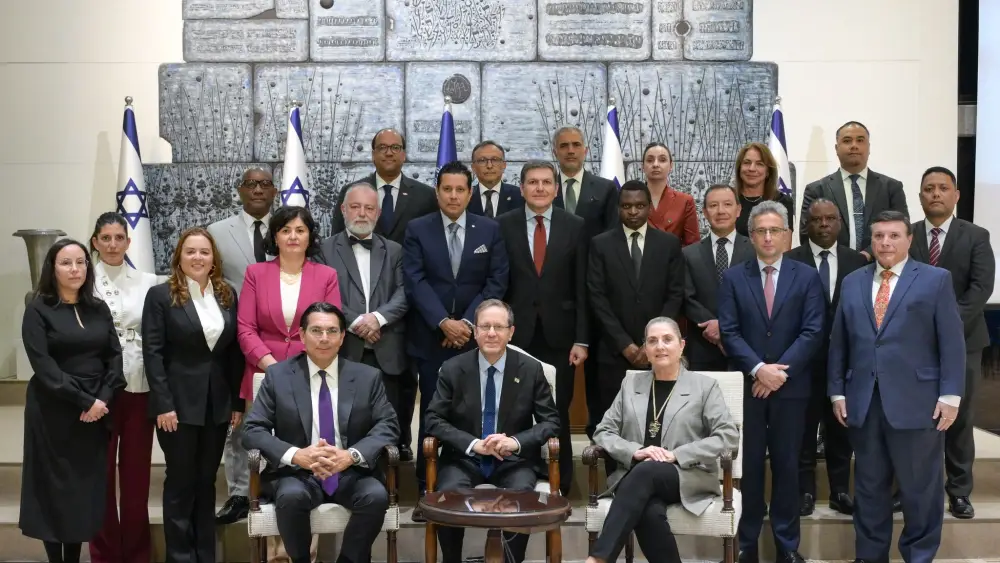
Israeli President Isaac Herzog and his wife, Michal Herzog, meet a delegation of U.N. ambassadors and diplomatic envoys led by Israeli Ambassador to the United Nations Danny Danon at the President’s Residence in Jerusalem, Nov. 15, 2026. Photo by Maayan Toaf/GPO.

Israeli ambassador to the U.N. Danny Danon on Sunday led a delegation of U.N. ambassadors and diplomats from Europe, Africa, the Pacific, Latin America and the Caribbean on a visit to a tunnel built by Hamas in the Gaza Strip.

“There, we showed them firsthand the threat that residents of Israeli communities near the Gaza border still face,” Danon tweeted.

The diplomat further stressed that as long as Hamas continued to rearm and rebuild its terrorist capabilities, “Gaza has no future.”

Turning to Hamas’s “disinformation campaign” placing blame on Israel over an alleged humanitarian crisis in the Strip in light of winter, Danon said that the blame should be pointed at Hamas.

The tour in the tunnel was accompanied by commander of the Israel Defense Forces’ Southern Command, Maj. Gen. Yaniv Asor.

Earlier in the day, Danon and the ambassadors visited Israeli communities near the Gaza border.

“We began our visit at Kibbutz Kfar Aza, where we saw the homes in which Hamas murdered and kidnapped innocent civilians during the [Oct. 7, 2023,] attack,” he shared.

Anyone witnessing this place cannot remain indifferent to what the terrorists from Gaza had committed, he said.

The delegation and Danon then met with Israeli President Isaac Herzog and his wife, Michal Herzog, at the President’s Residence in Jerusalem.

“The President briefed the ambassadors on the challenges Israel faces on the international stage,” wrote Danon.

He added that the Jewish state will strengthen its ties with the countries that joined this delegation and maintain “open, direct, and substantive dialogue with their ambassadors at the U.N.” *>

Michal Herzog: Disappointed by UN denial of Oct. 7 sexual violence

In a separate statement, the president said that he had discussed the regional challenges Israel is facing with the envoys.

“The issue of Iran is looming over us, threatening the entire region. There are also issues to resolve here through dialogue with Lebanon, dialogue with Syria, and of course the implementation of U.N. Security Council Resolution 2803 on Gaza, which calls for the disarming of Hamas as the next step, which is the real test for everything,” Herzog said.

“Once Hamas is disarmed, the technocratic government will go in, and there will be a brand new chapter in the history of the people of Gaza, including on the humanitarian issues,” he added.

The president thanked the visiting diplomats and praised Danon for defending Israel at the United Nations.

Michal Herzog addressed the use of sexual violence during the Oct. 7, 2023, Hamas massacre and against Israeli hostages held in Gaza, criticizing the response of international organizations.

“The use of sexual violence as a weapon of war on Oct. 7 and thereafter, as we heard the stories from the hostages who came back from Gaza, is a major issue,” she said.

“Frankly, we were very disappointed by some of the international organizations, specifically UN Women, who not only closed their eyes to what happened on Oct. 7, but actually denied it,” she continued.

The first lady said Israeli experts in international law had developed tools, subsequently adopted by the United Nations, for collecting evidence of sexual violence.

“We, as Israeli women, took it upon ourselves to deliver a universal message: not only a message on behalf of the Israeli victims who no longer have a voice because they were murdered, but also on behalf of women around the world,” she said.

Danon said the visit was intended to provide diplomats with a firsthand understanding of Israel’s security challenges.

“We brought the ambassadors to Jerusalem so they could see the reality on the ground firsthand, a reality that is too often distorted in the halls of the United Nations,” he said.


Zawartość publikowanych artykułów i materiałów nie reprezentuje poglądów ani opinii Reunion’68,
ani też webmastera Blogu Reunion’68, chyba ze jest to wyraźnie zaznaczone.
Twoje uwagi, linki, własne artykuły lub wiadomości prześlij na adres:
webmaster@reunion68.com


Charity Receiving Prize Money From ‘Celebrity Traitors’ Win Linked to Hamas, Accused of Antisemitism


Charity Receiving Prize Money From ‘Celebrity Traitors’ Win Linked to Hamas, Accused of Antisemitism

Shiryn Ghermezian


Demonstrators attend the “Lift The Ban” rally organised by Defend Our Juries, challenging the British government’s proscription of “Palestine Action” under anti-terrorism laws, in Parliament Square, in London, Britain, Sept. 6, 2025. Photo: REUTERS/Carlos Jasso

The charity picked by the winner of the BBC One reality show “Celebrity Traitors” to receive his share of the prize money has accused Israel of genocide, partnered with organizations repeatedly linked to Hamas, and had former staff members quit due to an antisemitic work environment.

The finale of the British gameshow aired on Friday, and two winners were crowned: comedian, podcaster, and BBC Radio 2 host Romesh Ranganathan, and actor and musician Sebastian “Bash” Croft. The duo took home the £83,000 ($110,900) prize, funded by the broadcaster’s license fee payers, and each winner’s share went to their charity of choice.

Ranganathan, 48, donated his winnings to the Refugee Council, and Croft, 24, donated his $55,450 winnings to Choose Love, formerly known as Help Refugees. The UK-registered charity helps refugees and displaced communities, and Croft is an ambassador and former volunteer.

Choose Love posted last month on its website about helping a young girl named Rua’a and her family living in the Yarmouk Camp in “Palestine” and made claims about “Israel’s genocide” in the Gaza Strip.

“Palestinians like Rua’a are still experiencing a genocide and the physical wounds and mental trauma are life-changing,” the charity wrote. Choose Love also talked about Palestinians in Gaza suffering while living “under war and siege.”

In 2025, Choose Love joined over 400 public figures in signing an open letter that accused the British government of being complicit in Israel’s “war crimes” and the “genocide” taking place in Gaza. The open letter also called on then-British Prime Minister Keir Starmer to stop all UK arms sales and licenses to Israel. When filmmaker Hassan Akkad worked at Choose Love, he posted a message on social media that said: “What is happening in Palestine/ Israel is settler colonization, military occupation, land theft, and ethnic cleansing. There is an active oppressor (Israel) and an oppressed (Palestine). A colonizer (Israel) and colonized (Palestine).”

A senior Jewish employee at Choose Love left the charity after claiming it became hostile to Jews following the Oct. 7, 2023, massacre, according to The Telegraph. A former child refugee who has worked closely with Choose Love, and asked to stay anonymous, also told the publication: “After Oct. 7, a lot changed with that charity and a lot of the Jewish people working in it or with it were forced out, or felt they had to leave, as far as I could see.”

“I got to know the Jewish people who worked there, as they care a lot about refugees, as many of them come from families who were refugees,” the whistleblower added. “But, suddenly, there were people associated with the charity excusing Oct. 7 and pushing pro-Palestine stuff, and I think that’s when some of the problems started.”

On the anniversary of the Oct. 7 attacks last year, Choose Love posted a statement on Instagram that said, “Stop the genocide. Stand with humanity,” according to a screenshot of the since-deleted post that was shared by The Telegraph. 

Choose Love has Palestinian-led partners that it helps raise money for. They include Taawon (Welfare Association), an organization funded by the Islamic Development Bank, which funds Hamas to the tune of hundreds of millions of dollars, according to NGO Monitor.

Choose Love also works in partnership with the Palestine Children’s Relief Fund (PCRF), which has repeatedly been tied to Hamas while its senior members have expressed praise for Hamas terrorists and their Oct. 7 massacre in southern Israel. Ashraf Abu Issa, a PCRF board member as of February 2025, shared a video on Oct. 7, 2023, during the Hamas attacks in Israel, that promoted “the liberation of Palestine, all of it, from the river to the sea,” according to Honest Reporting. In November 2023, a month after the Hamas atrocities, PCRF’s Tampa chapter held a fundraiser with Hatem Fariz, who pleaded guilty in 2006 to providing services to Palestinian Islamic Jihad, another terrorist group. Former PCRF chairman Khaled Abughazaleh also reportedly led a delegation that met with officials from Gaza’s Health Ministry, which is run by Hamas.

NGO Monitor reported in May that the PCRF partners with Islamic Relief Palestine (IRPAL), which is an “affiliate” of Islamic Relief Worldwide (IRW) and has its own extensive ties to Hamas and its senior members. Israel banned IRW in 2014 because of its alleged role in funneling money to the Palestinian terrorist group. PCRF also runs the pediatric cancer unit inside Al-Rantisi Children’s Hospital in Gaza City, according to NGO Monitor. In November 2023, the IDF released “evidence of Hamas infrastructur  at Rantisi – video of explosives, suicide vests, and even a motorcycle used in the Oct. 7 attacks, hidden in a basement.”

A BBC spokesperson gave a statement to The Telegraph about Choose Love’s past and Croft’s decision to give his winnings from “Celebrity Traitors” to the charity.

“As millions of viewers already know, the charities are a personal choice of the winners,” the spokesperson said. “Choose Love is a registered charity in the UK, regulated by the Charity Commission. It is a shame that we cannot just celebrate a fantastic TV moment for what it is.”

The British volunteer-led charity Campaign Against Antisemitism (CAA) said on Friday that Choose Love is “an extremely troubling choice of recipient for BBC license fee funds.”

“The BBC has a horrendous track record when it comes to antisemitism, with incidents coming one after another after another,” CAA added. “There is an urgent need for fundamental reform at the BBC, to restore the impartiality on which it could once pride itself. Until then, the licence fee must be suspended.”


Zawartość publikowanych artykułów i materiałów nie reprezentuje poglądów ani opinii Reunion’68,
ani też webmastera Blogu Reunion’68, chyba ze jest to wyraźnie zaznaczone.
Twoje uwagi, linki, własne artykuły lub wiadomości prześlij na adres:
webmaster@reunion68.com