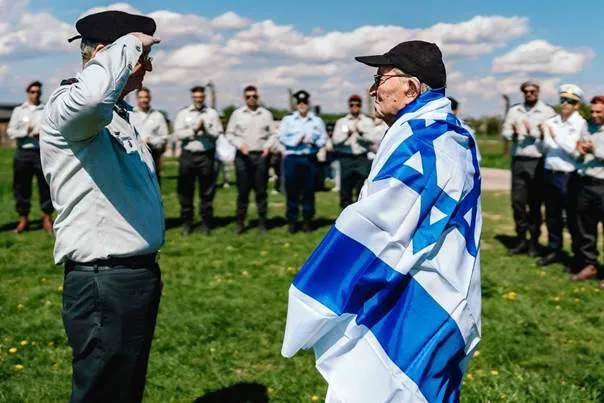

Największym pomnikiem Holokaustu jest Izrael.


Największym pomnikiem Holokaustu jest Izrael.

Joshua Hoffman


Czas ucieka.

Szacuje się, że obecnie żyje już tylko około 196 600 ocalałych z Holokaustu. Za kilka lat niemal połowa z nich odejdzie.

Okno, w którym możemy jeszcze usłyszeć ich głosy, uścisnąć ich dłonie, spojrzeć im w oczy — szybko się zamyka. Wkrótce pamięć o Holokauście całkowicie przejdzie do sfery historii. Ale nasz obowiązek upamiętniania ofiar, zarówno tych, które zginęły, jak i tych, które przetrwały, nie kończy się wraz z ich życiem.

Aby prawdziwie uczcić ofiary Holokaustu — szczególnie w Międzynarodowy Dzień Pamięci o Holokauście — samo wspomnienie nie wystarczy. Współczucie nie wystarczy. Nawet edukacja nie wystarczy.

Największym aktem pamięci, jaki możemy im ofiarować — odpowiedzią nie tylko na ich cierpienie, ale i na historyczny stan rzeczy, który to cierpienie umożliwił — jest przyjęcie tego, co mogło wszystko zmienić: żydowskiej siły, żydowskiej tożsamości narodowej, żydowskiego prawa do samostanowienia, syjonizmu.

Tak, syjonizmu. Nie obelgi, nie oszczerstwa, nie karykatury, które zbyt wielu na świecie zaakceptowało, ale syjonizmu w jego najczystszej postaci: przekonania, że Naród Żydowski, jak każdy inny naród, ma prawo do samostanowienia w swojej ojczyźnie.

Holokaust nie był wyłącznie zbrodnią niewyobrażalnego okrucieństwa. Był zbrodnią możliwą z powodu bezpaństwowości Żydów. Z powodu ich bezsilności. Z powodu sytuacji, w której Żydzi byli rozproszeni, niechronieni i zdani na łaskę innych — łaskę, która zawiodła ich w komorach gazowych, lasach, gettach i dołach śmierci. „Nigdy więcej” to nie modlitwa, kazanie, naklejka na zderzaku ani hashtag. To bezkompromisowa polityka. A tą polityką jest współczesne Państwo Izrael.

Dla Żydów Izrael nie jest po prostu kolejnym krajem; to odpowiedź. To największy projekt dekolonizacyjny, jaki kiedykolwiek widział świat: lud tubylczy — wygnany, rozproszony i prześladowany przez tysiąclecia — powraca do domu i odzyskuje suwerenność. Podczas gdy znaczna część Zachodu łamie sobie głowę nad prawami ludów rdzennych, Izrael jest ich żywym wcieleniem. Podczas gdy aktywiści skandują hasła o wyzwoleniu, współcześni Izraelici urzeczywistnili je w całej pełni.

Nie czcimy ofiar Holokaustu poprzez rozbijanie żydowskiej tożsamości na denominacje i podziały, lecz przez potwierdzenie żydowskiej wspólnotowości. Nazistowskie Niemcy, ich kolaboranci i sympatycy nie pytali swoich ofiar, czy zapalają świece szabatowe, czy wierzą w Boga albo czy popierają syjonizm. Zabijano ich jako Żydów. A zatem i my musimy żyć jako Żydzi — zjednoczeni w tożsamości, wspólni w przeznaczeniu, suwerenni we własnej ojczyźnie.

Obsesja na punkcie denominacyjnych etykietek — reformowani, konserwatywni, rekonstrukcjoniści, ortodoksyjni „na pół etatu”, tradycyjni, ale niereligijni — w tym kontekście to forma drobnomieszczaństwa. Duchowy luksus bezpieczeństwa.

Gdy życie żydowskie jest bezpieczne, spieramy się o liturgię i halachę. Ale gdy życie żydowskie jest zagrożone, nic z tego nie ma znaczenia. W Auschwitz nie było oddzielnych grup modlitewnych. W getcie warszawskim nikt nie pytał, z jakim seminarium rabinicznym się utożsamiasz, zanim zapędzono cię do bydlęcego wagonu. Getta, doły, komory gazowe — zburzyły iluzję podziałów. Świat widział jedną kategorię: Żyda.

I my również musimy odzyskać tę jasność widzenia — nie dlatego, że religijna praktyka i duchowość nie mają znaczenia. (Mają.) Nie dlatego, że wiara nie ma znaczenia. (Ma.) Ale dlatego, że wspólnota narodowa ma równie wielkie, jeśli nie większe znaczenie.

W gruncie rzeczy wspólnota narodowa poprzedza wszystko inne. Żyd, który nie chodzi do synagogi, nadal należy do Am Israel. Żyd, który nie pości w Jom Kipur, nadal nosi etykietę, której świat mu nie pozwala zapomnieć. A Żyd w Tel Awiwie, nawet jeśli nigdy nie postawił stopy w jesziwie, ma większe znaczenie dla żydowskiej ciągłości niż komitet rabinów spierających się o rytuały w Manhattanie.

Nie ma „Izraela reformowanego”, „Izraela konserwatywnego” czy „Izraela ortodoksyjnego”. Jest tylko Medinat Jisrael — suwerenne państwo Narodu Żydowskiego. I istnieje ono nie z powodu teologicznego konsensusu, lecz z historycznej konieczności. To odpowiedź na Hitlera, na pogromy, na wygnanie.

To samo dotyczy polityki. Nie ocalimy przyszłości Narodu Żydowskiego, udając, że wszyscy głosujemy tak samo — lub że powinniśmy. Zarówno w Izraelu, jak i w diasporze Żydzi reprezentują pełne spektrum polityczne. Są żydowscy progresywiści i konserwatyści, Żydzi machający tęczowymi flagami i Żydzi noszący czarne kapelusze, Żydzi maszerujący za klimatem i Żydzi broniący osiedli w Judei i Samarii. To nie jest słabość — to dowód na to, że jesteśmy narodem, nie partią.

Domaganie się politycznej jednolitości w imię żydowskiej tożsamości oznacza całkowite niezrozumienie żydowskiej tożsamości. Świat żydowski nigdy nie był monokulturą. Zawsze się spieraliśmy. Zawsze się różniliśmy. Sam Talmud jest księgą sporów. Ale tym, co nas utrzymało przy życiu, była głębsza prawda pod powierzchnią tych sporów: że pomimo wszelkich podziałów jesteśmy jednym narodem. Am echad b’lev echad — jednym ludem, jednym sercem.

Nie musimy rozcieńczać naszej polityki, by trzymać się razem. Musimy jedynie pamiętać, że nasze wspólne przetrwanie — i pamięć o tych, którzy nie przetrwali — ma większe znaczenie niż jakikolwiek polityczny spór.

Tak więc — spierajmy się o reformę sądownictwa. Spierajmy się o osiedla. O relacje diaspory z Izraelem. O Netanjahu. Ale róbmy to w rodzinie. Nie odchodząc od stołu. Z pokorą tych, którzy wiedzą, że gdyby żyli w 1939 roku, świat nie interesowałby się tym, na kogo głosowali.

Aby naprawdę uczcić ofiary Holokaustu, musimy wznieść się ponad nasze wąskie definicje plemienia, wyznania i partii. Musimy żyć zgodnie z lekcją, jaką przyniosła ich śmierć: że to, co nas łączy, musi być ważniejsze niż to, co nas dzieli. Jeśli to zdołamy — jeśli potwierdzimy pierwszeństwo wspólnoty nad polityką, narodu nad niuansami — nie tylko zapamiętamy ofiary. Ocalimy ich sens.

Jeśli w imię ofiar Holokaustu uczynimy z żydowskiej tożsamości bufet, w którym każdy wybiera, co chce, i nazywa to autentycznością — zdradzimy jedność, którą już dawno narzuciła nam historia. Właściwa odpowiedź na sześć milionów zamordowanych to nie więcej etykietek. To mniej. A może tylko jedna: Żyd.

Aby zbudować przyszłość godną tych, którzy zginęli, musimy przestać kłócić się o to, kto jest „wystarczająco żydowski” albo czyje żydostwo jest „bardziej autentyczne”. Potrzebujemy mniej brandingu, więcej przynależności. Mniej kłótni, więcej budowania. Stawka jest zbyt wysoka, pamięć zbyt święta, odpowiedzialność zbyt wielka.

Żydowska wspólnota narodowa nie jest opcją — to obowiązek. To dar opłacony krwią. A jeśli o tym zapomnimy — jeśli przedłożymy nasze plemienne spory nad nasze przetrwanie — zawiedziemy ofiary Holokaustu nie tylko w pamięci, lecz również w znaczeniu.

Aby je uczcić, nie możemy przepraszać za to, że przeżyliśmy. Nie możemy się umniejszać, by przypodobać się światu, który patrzył, jak płoniemy. Nie możemy powierzać naszego bezpieczeństwa, kultury ani istnienia dobrej woli narodów, które zbyt często nie okazywały ani dobrej woli, ani pamięci.

Musimy wychowywać dzieci, które mówią po hebrajsku, znają swoją historię, wiedzą, że bezpieczeństwo Żydów nie podlega negocjacjom, uczą się, że niezachwiana żydowska duma to jedyna odpowiedź na antysemityzm we wszystkich jego formach — i rozumieją, że — jak trafnie powiedział słynny ocalały z Holokaustu Elie Wiesel — „nie można być Żydem bez Izraela”.

Musimy bronić i wspierać izraelskich żołnierzy przed fałszywymi etykietkami „ciemiężców” i „kolonizatorów”, bo to oni są strażnikami żydowskiej ciągłości. Musimy mówić prawdę o naszej przeszłości, by zabezpieczyć naszą przyszłość. Nie tylko dla siebie, ale dla tych, którzy nie dostali tej szansy.

.
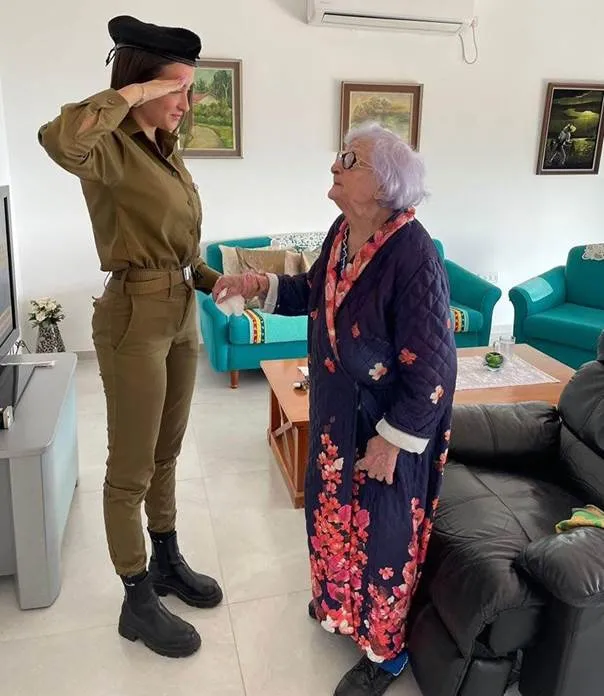
A nade wszystko — by uczcić ofiary Holokaustu — nie możemy nigdy przepraszać za Izrael ani za syjonizm. Nie teraz. Nigdy. Ani w czasie pokoju, ani w czasie wojny. Ani gdy lecą rakiety, ani gdy ulice są spokojne. Ani gdy świat patrzy, ani gdy udaje, że nie widzi.

Syjonizm nie jest zbrodnią, za którą trzeba się tłumaczyć. To sprawiedliwość, która zbyt długo była odwlekana i wreszcie została wymierzona. To nie kolonializm, to odwrócenie kolonializmu. To nie ekstremizm, to prosta konstatacja, że Żydzi zasługują na to, co inni uznają za oczywiste: dom, armię, flagę, przyszłość.

Naród Żydowski nie jest nikomu winien wyjaśniania swojego istnienia. Nie jesteśmy winni tłumom internetowym czy ulicznym. Nie musimy uzasadniać naszej ojczyzny nieskazitelnym zachowaniem ani negocjować naszej suwerenności pod warunkiem globalnej aprobaty. Legitymizacja Izraela nie została nam podarowana przez ONZ. Została zdobyta: walką, krwią i powrotem.

Pamięć o Holokauście bez żydowskiej siły to tylko turystyka tragedii. Jeśli świat chce pamiętać o martwych Żydach, a jednocześnie krytykuje żywych za to, że się bronią — to nie jest pamięć, to moralna perwersja. Lekcja Holokaustu nie brzmiała: „bądźmy milsi dla mniejszości”. Brzmiała: Nigdy nie pozwól nikomu innemu decydować o naszym przetrwaniu. Za żadną cenę.

Gdy więc mówią nam, że musimy być „antysyjonistami”, by zostać przyjętymi — musimy odmówić. Gdy żądają, by dopuszczać tylko „dobrych Żydów” — musimy odmówić. Gdy nalegają, by żydowska tożsamość była akceptowana tylko wtedy, gdy żydowska siła zostanie odrzucona — musimy wyprostować się jeszcze bardziej. Bo jedyną rzeczą groźniejszą od żydowskiej siły jest żydowska bezsilność.

A jeśli mamy uczcić pamięć o sześciu milionach zamordowanych za to, że nie mieli państwa — naszym zadaniem nie jest być skruszonymi spadkobiercami tej pamięci, lecz bezkompromisowymi strażnikami jej lekcji. Nie pochylamy głów ze wstydu za to, że mamy państwo. Unosimy głowy z dumą, że przeżyliśmy na tyle długo, by je zbudować.

Syjonizm nie jest naszym wstydem. Jest naszą zemstą — na tych, którzy chcieli nas wymazać, i im się nie udało. Na świecie, który zamknął drzwi, a teraz musi pukać do naszych. Na ciszy roku 1942, której odpowiedzią są syreny roku 1948.

Największym pomnikiem Holokaustu nie jest tablica. Jest paszport. Izraelski. Trzymany przez żydowskie dziecko, urodzone w żydowskiej ziemi, pod żydowskim niebem, które nigdy nie zazna, co to znaczy być bezpaństwowcem.
To w ten sposób czcimy ofiary: nie przeprosinami, lecz trwałością.

Nadejdzie dzień, gdy ostatni ocalały z Holokaustu wyda ostatni oddech. W tym dniu święta pałeczka zostanie przekazana w całości nam.
Nie bądźmy biernymi żałobnikami. Bądźmy budowniczymi. Bądźmy obrońcami. Bądźmy nieprzejednanymi Żydami i Syjonistami.


Future of Jewish
The greatest memorial for the Holocaust is Israel.
Future of Jewish is the ultimate newsletter by and for people passionate about Judaism and Israel. Subscribe to better understand and become smarter about the Jewish world…
Read more

Zawartość publikowanych artykułów i materiałów nie reprezentuje poglądów ani opinii Reunion’68,
ani też webmastera Blogu Reunion’68, chyba ze jest to wyraźnie zaznaczone.
Twoje uwagi, linki, własne artykuły lub wiadomości prześlij na adres:
webmaster@reunion68.com


Suspect in car-ramming at Chabad headquarters faces multiple hate-crime charges


Suspect in car-ramming at Chabad headquarters faces multiple hate-crime charges

Mike Wagenheim, JNS Staff


“The attacks are only intensifying in New York, and the response requires more than a statement,” the Israeli consul general in New York stated.

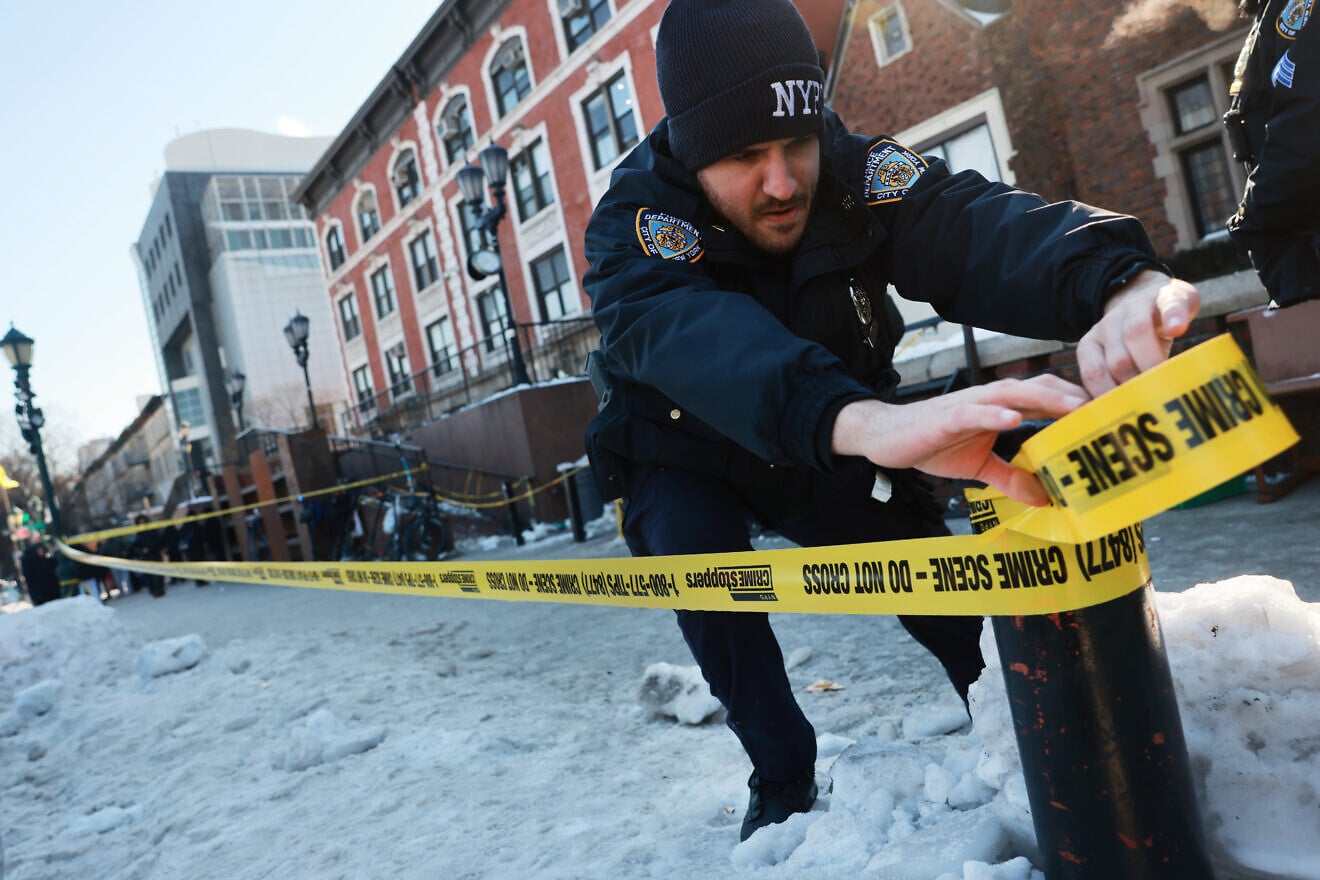
Police put up crime scene tape as members of the Chassidic Jewish community gather outside of the Chabad Lubavitch world headquarters, where a man was arrested Wednesday evening after repeatedly crashing his car into a door of the building, Jan. 29, 2026 Credit: Spencer Platt/Getty Images.

Dan Sohail, 36, is suspected of driving a car five times into the doors to a synagogue at Chabad-Lubavitch world headquarters in the Crown Heights neighborhood of Brooklyn, N.Y., on Wednesday evening, Joseph Kenny, chief of detectives at the New York City Police Department, said at a press conference.

The suspect, of Carteret, N.J., “had recently connected with the Lubavitch community,” and removed blockades from the same site the prior day, Kenney said.

“This incident is being investigated as a hate crime, and the NYPD’s hate crime task force took the lead on this case,” Kenny said. “We are collaborating with our state and federal partners.”

He added that Sohail has been charged with “attempted assault one and two as a hate crime, reckless endangerment two as a hate crime, criminal mischief two and three as a hate crime and aggravated harassment as a hate crime.”

The suspect claimed he lost control of the car because he was wearing clunky boots, the chief of detectives said. “It’s a hate crime based on his attack on the synagogue,” Kenny said, noting that the suspect knew it was a synagogue.

Ofir Akunis, Israeli consul general in New York, stated that “this is the new reality in New York for Jews.”

“We are seeing one antisemitic attack followed by the next on houses of worship, targeting Jews simply because they are Jewish,” he stated. “The attacks are only intensifying in New York, and the response requires more than a statement. We warned that changing the definition of antisemitism and lifting the ban on boycott initiatives against Israel could lead to an increase in attacks, and regrettably, that is what is happening.”

Zohran Mamdani, mayor of New York City, axed all of his predecessors’ recent executive orders, including those designed to protect Jews in the city, within hours of taking over control of City Hall. Mamdani, who has said he would have the Israeli prime minister arrested in New York, has also said that he is interested in divesting the city with the largest Jewish population outside of the Jewish state from Israel Bonds.

“This attack is part of a growing wave of antisemitic incidents driven by an organized, long-running campaign to dehumanize Jews and delegitimize the existence of the Jewish state,” Akunis stated. “Toxic and violent rhetoric is a central component of this propaganda. Antisemitism must be confronted decisively.”

‘A living, breathing thing’

Video footage that has emerged appears to show the suspect removing barricades and telling bystanders to move before he began ramming his vehicle into the entrance doors to Chabad’s global headquarters in Brooklyn.

The suspect was at the location weeks prior, reportedly claiming that he was Jewish, and young students were said to have offered him religious services.

The NYPD said that no one was injured in the attack and that the driver was arrested without incident. The department told JNS that it responded at about 8:45 p.m. to 770 Eastern Parkway, where officers saw a gray Honda sedan, which “collided into entrance doors at the bottom of a sloped driveway in front of 770 Eastern Parkway.”

Wednesday, the 10th of Shevat, is one of the most important days of the calendar for Chabad, with tens of thousands from around the world converging on the site to mark the 75th anniversary of the Lubavitcher Rebbe assuming the leadership role in 1951.

New York Gov. Kathy Hochul and Mamdani were among those who issued comments on Wednesday night. The governor said that “for the second day in a row, Jewish New Yorkers were the targets of antisemitic violence” and that “an attack against the Jewish community is an attack against all New Yorkers.”

The mayor, who has released several statements decrying antisemitism that has not related to anti-Zionism, said that the ramming at Chabad “is deeply alarming, especially given the deep meaning and history of the institution to so many in New York and around the world.”

“Any threat to a Jewish institution or place of worship must be taken seriously,” added the mayor, who is reportedly considering two people, who are said to be anti-Chassidic, to run the city office to combat Jew-hatred. “Antisemitism has no place in our city, and violence or intimidation against Jewish New Yorkers is unacceptable.”

Dan Mannarino, of PIX11 News, asked Mamdani about the incident on Thursday.

“I was there on the scene last night at 770 Chabad world headquarters, and it was a horrifying incident where a man repeatedly and intentionally crashed his car into the building,” the mayor said. “I am so thankful that no one was hurt, and we know that this is a building that has immense meaning to so many Jewish New Yorkers and those across the world.”

The mayor said that the attack “took place on the yahrzeit of Rabbi Schneerson and the leadership of Rabbi Menachem Mendel Schneerson, and this is just a day after the day when we remember the victims of the Holocaust.”

“We know that antisemitism is not simply something of the past to be learned about. It is a living, breathing thing that we have to combat every day,” he told PIX11.

‘A deeply disturbing act of violence’

Asked, in light of the New York City Council’s scheduled announcement of a task force to fight Jew-hatred, when he would name a leader to the mayoral office to combat antisemitism, Mamdani said that “we are actually in our final interviews for that position.”

“That is going to be a key position that delivers on our commitment to root out antisemitism across the five boroughs and make this a city where Jewish New Yorkers are not just safe but frankly celebrated and cherished,” the mayor said.

“Sometime next week?” Mannarino asked.

“We’re working on the timeline, but it is in the final stages,” Mamdani said.

The Orthodox Union stated that it stands “with the Chabad community and is thankful to the Almighty that there were no injuries in the disturbing car-ramming incident outside 770 Eastern Parkway, a place that holds deep meaning for many Jews around the world.”

“This incident is the latest reminder of the sacred responsibility of those in positions of authority to prioritize the safety and security of the Jewish community, especially during this time of unprecedented threats,” the OU said.

Yaacov Behrman, a Chabad spokesman, stated that the driver had trespassed previously at a Chabad house in New Jersey. CBS News reported that Sohail told people at the Chabad that he was homeless and wanted to convert to Judaism. Counselors called to the scene reportedly recommended that he seek mental health counseling.

Additional media reports suggested that Sohail was denied access to a yeshiva in the Garden State.

Motti Seligson, a spokesman for the Chabad movement, stated that the site where the ramming took place is “perhaps the most replicated building in the world because of the light, joy, Torah and a confident Judaism that emanates from it to all corners of the world.”

Both New York senators weighed in.

Senate Minority Leader Chuck Schumer (D-N.Y.) said that “770 is not simply a religious institution. It’s an important spiritual home for the Chabad Jewish community, and this antisemitic attack against it is deeply disturbing.”

“This blatant act of antisemitism is not only an attack on this one building but an attack on Jewish people across New York and the world,” stated Sen. Kirsten Gillibrand (D-N.Y.). “Chabad headquarters is a faith home for so many, and this is a deeply disturbing act of violence.” 

Harmeet Dhillon, U.S. assistant attorney general for civil rights, said that she initiated a civil-rights investigation of the incident.


Zawartość publikowanych artykułów i materiałów nie reprezentuje poglądów ani opinii Reunion’68,
ani też webmastera Blogu Reunion’68, chyba ze jest to wyraźnie zaznaczone.
Twoje uwagi, linki, własne artykuły lub wiadomości prześlij na adres:
webmaster@reunion68.com


BBC Apologizes for Not Mentioning Jews During Holocaust Remembrance Day Coverage


BBC Apologizes for Not Mentioning Jews During Holocaust Remembrance Day Coverage

Shiryn Ghermezian


The BBC logo is displayed above the entrance to the BBC headquarters in London, Britain, July 10, 2023. Photo: REUTERS/Hollie Adams

The BBC apologized on Tuesday night after at least four of its presenters failed to mention the murder of Jews in the Holocaust during the national broadcaster’s coverage of International Holocaust Remembrance Day.

“BBC Breakfast” presenter Jon Kay said on air Tuesday morning that Holocaust Remembrance Day was “for remembering the six million people murdered by the Nazi regime over 80 years ago.” Several BBC broadcasts by some of its most well-known presenters included similar comments that omitted the mention of Jewish victims when discussing the Holocaust.

In one broadcast, “BBC News” presenter Martine Croxall also said Holocaust Remembrance Day is a day “for remembering the six million people who were murdered by the Nazi regime over 80 years ago.”

BBC World News presenter Matthew Amroliwala introduced a bulletin on his show with the same scripted line.

On the BBC Radio 4 program “Today,” presenter Caroline Nicholls discussed plans to mark Holocaust Remembrance Day and said in part: “Buildings across the UK will be illuminated this evening to mark Holocaust Memorial Day, which commemorates the six million people murdered by the Nazi regime more than 80 years ago.”

“Is the BBC trying to sever all ties with their Jewish listeners? Even on Holocaust Memorial Day, the BBC cannot bring itself to properly address antisemitism,” the Campaign Against Antisemitism posted on X. “This is absolutely disgraceful broadcasting. BBC, we demand an explanation for how this could have happened.”

The BBC addressed the mishap in a statement released late Tuesday.

“The ‘Today’ program featured interviews with relatives of Holocaust survivors, and a report from our religion editor. In both of these items we referenced the six million Jews murdered during the Holocaust,” the statement read in part, as cited by GB News. “‘BBC Breakfast’ featured a project organized by the Holocaust Educational Trust in which a Jewish survivor of the Holocaust recorded her memories. In the news bulletins on ‘Today’ and in the introduction to the story on ‘BBC Breakfast’ there were references to Holocaust Memorial Day which were incorrectly worded, and for which we apologize. Both should have referred to ‘six million Jewish people’ and we will be issuing a correction on our website.”

Karen Pollock, chief executive of the Holocaust Educational Trust, said in a post on X that the BBC’s not mentioning Jews during its coverage of Holocaust Remembrance Day is “hurtful, disrespectful, and wrong.”

“The Holocaust was the murder of six million Jewish men, women, and children. Any attempt to dilute the Holocaust, strip it of its Jewish specificity, or compare it to contemporary events is unacceptable on any day,” she added.

Danny Cohen, the BBC’s former director of television, said the mistake, especially on Holocaust Remembrance Day, “marks a new low point” for the broadcaster. He said the mishap will surely be hurtful to many in the Jewish community “and will reinforce their view that the BBC is insensitive to the concerns of British Jews.”

“It is surely the bare minimum to expect the BBC to correctly identify that it was six million Jews killed during the Holocaust,” said Cohen, as cited by the Daily Mail. “To say anything else is an insult to their memory and plays into the hands of extremists who have desperately sought to rewrite the historical truth of history’s greatest crime.”

This year’s Holocaust Remembrance Day marks the 81st anniversary of the liberation of the Auschwitz-Birkenau Nazi concentration camp in 1945. On Tuesday, King Charles and the Queen Camilla lit candles at Buckingham Palace in honor of the annual commemoration and hosted a reception for Holocaust survivors and their families. Last year, King Charles, who is patron of the Holocaust Memorial Day Trust, became the first British monarch to visit Auschwitz on the 80th anniversary of its liberation.

Tuesday was not the first time that the BBC has come under fire for its coverage of issues concerning the Jewish community or Israel.

In February 2025, the BBC apologized for “unacceptable” and “serious flaws” in its documentary about Palestinian children living in the Gaza Strip, after it was revealed that the documentary’s narrator was the son of a senior Hamas official. An internal review by the British public broadcaster also revealed that the documentary breached the BBC’s editorial guidelines on accuracy.

In July, the BBC apologized for streaming a live performance by the British punk rap duo Bob Vylan at the Glastonbury Festival, during which the band’s lead singer led the audience in chanting “Death to the IDF,” referring to the Israel Defense Forces.

Also last year, the host of “Good Morning Britain” apologized on-air for failing to mention Jewish victims of the Holocaust during her coverage of International Holocaust Remembrance Day.


Zawartość publikowanych artykułów i materiałów nie reprezentuje poglądów ani opinii Reunion’68,
ani też webmastera Blogu Reunion’68, chyba ze jest to wyraźnie zaznaczone.
Twoje uwagi, linki, własne artykuły lub wiadomości prześlij na adres:
webmaster@reunion68.com


Odebranie Zagładzie statusu wydarzenia granicznego jest operacją polityczną. Polemika z esejem Andrzeja Ledera [OPINIA]


Odebranie Zagładzie statusu wydarzenia granicznego jest operacją polityczną. Polemika z esejem Andrzeja Ledera [OPINIA]

Beata Lewkowicz, Anne Goldschmid, Jan Hartman


Publikacja tekstu Andrzeja Ledera na łamach OKO.press w dniu 27 stycznia, w Międzynarodowym Dniu Pamięci o Ofiarach Holokaustu, wywołała poruszenie nie dlatego, że dotyczy on konfliktu izraelsko-palestyńskiego, krytycznie odnosząc się do Izraela, lecz dlatego, że jego autor przekracza granice odpowiedzialności za słowa, wpisując się w dyskurs nienawiści, oparty na kłamliwych kliszach i zniesławieniach.

Nie chodzi w tym tekście o realny spór polityczny ani o ocenę bieżących decyzji rządu Izraela, lecz o zbudowanie kontekstu, w którym znów będzie można oskarżyć Izrael o ludobójstwo, ponawiając, wszechobecny w propagandzie dżihadystów i bezmyślnie (?) powielany przez liczne środowiska lewicowe na całym świecie, gest stawiania znaku równości między Zagładą a śmiercią dziesiątek tysięcy palestyńskich cywilów w wojnie wypowiedzianej Izraelowi przez Hamas i jego potężnych popleczników. Ten propagandowy zabieg, wokół którego zbudowany jest tekst Ledera, nie jest zwykłym retorycznym nadużyciem, lecz aktem symbolicznej przemocy, normalizującym myślenie o Żydach jako zbiorowym sprawcy i tym sposobem przygotowującym grunt pod odbudowę najgroźniejszych resentymentów.

Tekst Ledera pełen jest niesłychanych tez i konstrukcji intelektualnych, do których nie sposób odnieść się w zwięzłej prasowej polemice. Nasza odpowiedź skupi się na kilku elementach, które można zilustrować tymi oto cytatami: “Izrael dokonuje ludobójczych zbrodni. W samym Izraelu bardzo niewielu przeciw temu protestuje, większość popiera. Rzuca to na Izraelczyków mroczny cień, ogarnia tym cieniem żydowskie społeczności diaspory [które] przypominają zbrodnie popełnione przez Hamas, szczególnie te 7/10, pomijając całkowicie te popełnianie przez Siły Obronne Izraela (…) Ten smutny stan rzeczy odsyła mnie do innych, podobnie ponurych okoliczności. Myślę o stanie społeczeństwa niemieckiego tuż po drugiej wojnie światowej (…) Otóż myślę, że — i mówiąc szczerze, mam nadzieję, że coś podobnego [jak po wojnie w Niemczech] zdarzy się w Izraelu. Że rodzące się dziś pokolenie nie będzie mogło spokojnie żyć w cieniu dzisiejszych zbrodni. Że za pewien czas zada swoim ojcom i matkom pytanie: co wtedy robiliście?”.

Wrogość wyzierająca zza tych słów zapiera nam dech w piersiach i budzi w nas przerażenie. Jak coś takiego mógł napisać Polak, Żyd, uznany intelektualista, będący dla tysięcy ludzi autorytetem? Dlaczego self-hating Jew [ang. Żyd nienawidzący samego siebie, określenie Żydów atakujących państwo izraelskie i wspólnotę żydowską] stał się dziś dominującą postacią na intelektualnej scenie żydowskiej diaspory?

Tekst Andrzeja Ledera nie jest niefortunnym potknięciem ani prowokacją obliczoną na rezonans. Jest świadomym zerwaniem z powojennym minimum odpowiedzialności intelektualnej, zgodnie z którym najcięższe pojęcia — takie jak “ludobójstwo” — wymagają rygoru definicyjnego, dowodowego i moralnego. Autor ustanawia dla siebie pozycję uprzywilejowaną: mówi jako Żyd, jako ktoś “dzielący ciężar dziedzictwa”, a więc rzekomo uprawniony do ostrzejszego osądu. Ten gest nie wzmacnia jednak odpowiedzialności za słowo, lecz ją zawiesza. Żydowska tożsamość (wiadoma polskiej opinii publicznej) zostaje użyta instrumentalnie — nie po to, by ograniczyć oskarżenie, lecz by je uwiarygodnić i rozszerzyć.

Najpoważniejsze nadużycie polega na rezygnacji z rygoru pojęciowego. Gdy w pewnym momencie autor stwierdza, że nie ma znaczenia autentyczność publikowanych obrazów z Gazy, istnienie intencji eksterminacyjnej ani fakt używania ludności cywilnej jako żywych tarcz przez Hamas, “ludobójstwo” przestaje być kategorią prawną i historyczną, a staje się wyłącznie epitetem moralnym. W tym momencie nie opisuje już rzeczywistości — produkuje wroga absolutnego. Odpowiedzialność zostaje oderwana od czynu i przypisana tożsamości. Krytyka państwa Izrael przechodzi płynnie w oskarżenie całego społeczeństwa, a następnie diaspory, która rzekomo “wpisuje się w narrację”, ponieważ nie rezygnuje z przypominania o zbrodniach Hamasu, w tym o 7 października.

Kulminacją tej konstrukcji jest owa analogia do społeczeństwa niemieckiego po II wojnie światowej i wyrażona nadzieja na podobne “przebudzenie” w Izraelu. To oskarżenie o najwyższym możliwym ciężarze symbolicznym, lokujące Izrael w cieniu III Rzeszy. Analogii tej nie neutralizują deklaracje troski — analogia nazistowska służy nie korekcie polityki, lecz delegitymizacji.

Szczególnie niebezpieczny jest przezierający z tekstu Ledera postulat relatywizacji Zagłady, ubrany w język racjonalności i “myślenia bez tabu”. Odebranie Zagładzie statusu wydarzenia granicznego nie jest aktem odwagi intelektualnej, lecz operacją polityczną, która rozszczelnia barierę chroniącą debatę publiczną przed powrotem zbiorowych oskarżeń, stygmatyzacji i historycznych nadużyć.

Publikacja tekstu Ledera 27 stycznia [w Międzynarodowy Dzień Pamięci o Ofiarach Holokaustu, obchodzony w rocznicę wyzwolenia obozu koncentracyjnego Auschwitz] przez OKO.press była świadomym przesunięciem ramy moralnej i aktem moralnej przemocy wobec pamięci ofiar Zagłady. Nie jest to krytyka polityki Izraela, lecz konstrukcja, która pod pozorem antysyjonizmu normalizuje myślenie o Żydach jako zbiorowym sprawcy, a ofiary Zagłady czyni zakładnikami w propagandowej grze, w ostatecznym rozrachunku wspierającej cele polityczne tych sił, które pragną zetrzeć Izrael z powierzchni ziemi.

Fundamentalnym błędem i nadużyciem w eseju Ledera jest sugerowanie kolektywnej odpowiedzialności Żydów oraz przyjęcie tezy o ludobójstwie jako aksjomatu. Choć autor deklaruje, że krytykuje wyłącznie Izrael, w praktyce konsekwentnie rozszerza odpowiedzialność na Żydów jako zbiorowość, w tym diasporę, posługując się klasyczną figurą antysemicką: zbiorowego podmiotu moralnego.

Ta logika nie pojawia się w żadnym innym konflikcie. Autor nie mówi o “dzieleniu ciężaru” przez Rosjan po Buczy, ani przez Irańczyków po masowych egzekucjach. Jest to podwójny standard oparty wyłącznie na tożsamości etniczno-religijnej. Pojęcie “ludobójstwa” zostaje użyte jako narzędzie moralnego szantażu, bez analizy intencji, definicji prawnej i sporów wśród ekspertów. Emocjonalna enumeracja obrazów zastępuje argumentację, a autentyczność materiałów wizualnych zostaje uznana za nieistotną. W ten sposób pojęcie ludobójstwa zostaje rozbrojone i sprowadzone do propagandowego efektu.

Szczególnie groźna jest analogia do III Rzeszy, budowana za pomocą języka niemieckiej kultury pamięci: “pytania zadawanego ojcom i matkom”, “zaprzeczenia prawdy”, “godziny zero”. Te pojęcia nie są neutralne — tworzą ramę interpretacyjną właściwą dla społeczeństwa sprawców Zagłady. Poprzez takie teksty, jak esej Ledera, z biegiem lat Żydzi przesuwani są w społecznej świadomości na pozycję sprawców — tę samą, którą zajmowali przez wiele dekad Niemcy. Teraz to Żydzi mają być Niemcami, rzec by można, “Niemcami XXI w.”. I to z poręki żydowskich intelektualistów, z których autorytetem wszak nie wypada nawet polemizować. Skoro sam Andrzej Leder mówi, że współcześni Żydzi będą musieli tłumaczyć się swoim wnukom z popełnianych dziś zbrodni, to któż śmiałby to podważyć. My jednakże taką śmiałość mamy. Sądzimy, że bardziej prawdopodobne jest, iż dzieci i wnuki będą nas pytać: dlaczego Izrael i USA zatrzymały się w pół drogi i nie zniszczyły Hamasu do końca — dla dobra Izraela, Palestyńczyków i całego świata.

Leder nie tylko usprawiedliwia nienawistny dyskurs pod gasłem From the River to the Sea Palestine will be Free [ang. “Od rzeki Jordan po morze Palestyna będzie wolna”, antysemickie hasło oznaczające zamiar zniszczenia Izraela] i powiela haniebną kliszę, jakoby Izraelczycy robili Palestyńczykom to, co niegdyś Żydom czynili Niemcy. Dodatkowo jeszcze wspiera i tłumaczy odrzucanie zarzutu antysemityzmu przez młodych uczestników masowych protestów antyizraelskich, przypisując tym protestom autentycznie moralną motywację, a za to zupełnie pomijając oczywistą inspirację i organizacyjny współudział w nich organizacji dżihadystycznych. W ten sposób antysemityzm zostaje zrelatywizowany, a realna wrogość wobec Żydów — usprawiedliwiona jako efekt uboczny polityki Izraela.

Tekst udaje analizę, lecz w istocie jest aktem oskarżenia; udaje uniwersalizm, lecz stosuje selektywną etykę; udaje troskę o Żydów, lecz realnie pogarsza ich bezpieczeństwo symboliczne, dostarczając intelektualnego alibi tym, którzy już uznali, że “z Żydami jest coś nie tak”.

Zadajemy Andrzejowi Lederowi kilka prostych pytań:

  • Czy chce, aby Izrael osiągnął swój cel, jakim jest zniszczenie Hamasu, czy może chce, aby Hamas przetrwał?
  • Czy Izrael miał moralny obowiązek poniechać dążenia do całkowitego wyeliminowania Hamasu, nawet kosztem dziesiątek tysięcy ofiar cywilnych, czy może to raczej Hamas miał moralny obowiązek natychmiast przerwać rozpętaną przez siebie wojnę poprzez wydanie zakładników i poddanie się?
  • Czy ma Andrzej Leder jakąś szczególną wiedzę pozwalającą oszacować liczbę ofiar cywilnych, które mogłyby zostać oszczędzone, gdyby Izrael prowadził wojnę w inny sposób? Jaka to liczba? O jaki sposób prowadzenia wojny by chodziło?
  • A może autor sądzi, że Izrael po prostu nie powinien tej wojny prowadzić w ogóle, oddając zwycięstwo Hamasowi i stojącym za nim siłom?
  • Czy przyznaje, że śmierci ofiar cywilnych winni się nie tylko żołnierze izraelscy odpalający pociski, lecz także terroryści z Hamasu, którzy z premedytacją kryją się pośród cywili oraz utrudniają ich ewakuację?
  • Czy przyznaje, że ta współwina Hamasu za ofiary cywilne jest systematycznie pomijana i przemilczana przez niezliczonych komentatorów, obwiniających wyłącznie Izrael?
  • Czy przyznaje, że w narracji lewicowej wina Hamasu ogranicza się niemalże wyłącznie do zbrodni 7/10, którą niejako bierze się w nawias, usprawiedliwiając dalsze postępki tej organizacji?
  • Czy przyznaje, że Hamas jest organizacją terrorystyczną, której krwawa działalność, wymierzona w Izraelczyków i Palestyńczyków, niweczy szanse na pokój i na powstanie palestyńskiego państwa, czy też gotów jest uznać, że jest to organizacja walcząca o wolność Palestyńczyków, a wojna, którą prowadzi obecnie z Izraelem jest wojną o “sprawę palestyńską”?
  • Czy oprócz Izraela zna jakiś inny kraj, gdzie żyją miliony Palestyńczyków, a który dawałby im choćby cień szansy na utworzenie palestyńskiego państwa na swoim terytorium bądź dawał Palestyńczykom prawa choćby zbliżające się do tych, jakimi cieszą się liczni Palestyńczycy będący pełnoprawnymi obywatelami Izraela?

To nie są pytania, na które można odpowiedzieć “to zależy” albo “i tak, i nie”. Odpowiedź na te pytania (lub jej brak) będzie testem na to, po czyjej stronie w tej wojnie jest Andrzej Leder. Jeśli nie jest po żadnej, to znaczy, że gotów jest zaakceptować dalsze istnienie totalitarnego reżimu Hamasu w Gazie i te wszystkie nieszczęścia, jakie Hamas sprowadza na naród palestyński i żydowski.

Nie dajemy Andrzejowi Lederowi wyboru: albo odpowie na te pytania, albo nie. A brak odpowiedzi też będzie odpowiedzią. Bardzo wymowną i jednoznaczną.


Anne Goldschmid jest publicystką i eseistką zajmująca się problematyką pamięci historycznej. Jan Hartman jest filozofem i etykiem, profesorem Uniwersytetu Jagiellońskiego. Beata Lewkowicz jest niezależną publicystką.


Zawartość publikowanych artykułów i materiałów nie reprezentuje poglądów ani opinii Reunion’68,
ani też webmastera Blogu Reunion’68, chyba ze jest to wyraźnie zaznaczone.
Twoje uwagi, linki, własne artykuły lub wiadomości prześlij na adres:
webmaster@reunion68.com


The Genocide Slur Is Not Just for Jews


The Genocide Slur Is Not Just for Jews

John Spencer


Judging Israel’s wartime behavior through epithets, TikTok clips, and faulty balance sheets poses a direct danger to American lives

A member of the Syrian Democratic Forces, backed by U.S. special forces, stands on a building near Raqa’s stadium as they clear the last positions on the frontline on October 16, 2017 in the Islamic State group’s crumbling stronghold. / BULENT KILIC/AFP via Getty Images

The casual use of the word genocide to target Israel is not only a slur—it is also dangerous to Americans. That’s because, if this ahistorical, amoral, and largely evidence-free way of judging war is allowed to take hold in public discourse and, worse, harden into international legal practice, it will not remain confined to one conflict or one ally. It will be turned on the United States and every other military that may have to fight and win in cities.

Israel is not the endpoint of the debate over the rules of war in the age of TikTok. It is the test case. If the rules are rewritten here, American soldiers will inherit them in the next urban war.

I hope we never see another Gaza war again, a war in which an enemy builds a strategy around civilian suffering not as the tragic cost of fighting that’s to be avoided whenever possible, but as the path to victory itself—a strategy of human sacrifice for political gain. These slogans of genocide and the normalization of lawfare risk stripping any law-abiding military of the ability to defend itself or protect innocent civilians from harm.

This matters because the legal and moral test is not whether the death toll in a given battle or conflict is high or low: That number can often be a measure of how determined an adversary is to keep fighting. The test is how a force fights. Proportionality is not a civilian death quota. It is an assessment of whether expected incidental harm would be excessive in relation to the concrete and direct military advantage anticipated—a judgment made under uncertainty, with imperfect information, against an adaptive enemy. Precautions are not a public relations checklist. They are measures that are feasible under the circumstances, balancing mission accomplishment and force protection.

The problem is the framework that is increasingly being normalized, in which lawfare replaces law, moral arithmetic replaces judgment, statistics replace intent, and civilian deaths become proof of illegality by default.

Genocide under international law requires intent to destroy a protected group in whole or in part. That intent is the defining legal element. Without it, the charge collapses. When genocide becomes a label applied whenever civilian casualties are high, the term loses meaning, and law becomes a weapon rather than a restraint.

There has been no genocide in Gaza. Israel has not intentionally targeted civilians. Its intent has been to return hostages, dismantle Hamas as a military and governing organization following the Oct. 7 mass casualty attack, and do so while sustaining civilian life under extraordinarily difficult combat conditions. Intent matters. Context matters. Law matters.

Israel has taken more measures to reduce civilian harm than any military in history operating in dense urban terrain against an enemy deliberately embedded among civilians. These measures include mass warnings before strikes, evacuation corridors coordinated at scale, daily humanitarian pauses, precision targeting based on layered intelligence, and operational restraints that deliberately increase risk to its own soldiers to reduce harm to civilians. No other military facing an enemy that systematically hides among the population has attempted civilian harm mitigation at this scale, over this duration, while under constant attack.

Hamas, by contrast, has openly declared and operationalized a strategy of using civilians as shields. It has tortured, sexually abused, starved, and murdered hostages. It has threatened civilians who attempt to leave combat zones or accept unauthorized aid. All of this constitutes war crimes. When international discourse erases this distinction and instead accuses the defender of genocide, it does not protect civilians. It rewards the most cynical and unlawful tactics in modern warfare.

The genocide accusation collapses further when measured against observable reality rather than slogans. Israel has conducted this war while facilitating a scale of humanitarian assistance, medical access, vaccination campaigns, and civilian protection measures unprecedented in a conflict where the defending force does not control the territory and the enemy does. Aid, food, water, fuel, medical supplies, and vaccines have entered Gaza throughout the war, even as Hamas retained territorial control and continued fighting. Israel coordinated humanitarian corridors, medical evacuations, and pauses in combat while under attack. No historical case of genocide includes a state feeding, vaccinating, providing medical care to, and sustaining the civilian population of the territory in which it is supposedly committing extermination.

Wanting to destroy your enemy is not genocide. It is war. War is not illegal, and in some cases, it is necessary. The aim of many of those accusing Israel of genocide is in fact to make it impossible for any law-abiding nation to defend itself against those who openly proclaim their desire to destroy us, and imagine that our adherence to law and to norms of conflict will assist them in achieving their aims.

I have watched this trap coming for years. Urban warfare is my profession. I have advised four-star generals and other senior U.S. Army leaders through strategic research groups from the Pentagon to the U.S. Military Academy. For more than a decade, I have researched, written, lectured, advised, and taught exclusively on how wars are fought in cities and what that means for strategy, law, and civilian protection. I designed and taught the only course built specifically to improve the ability of division and brigade commanders and their staffs to plan, conduct, and sustain large-scale urban operations. From Iran’s Fallujah and Mosul to Gaza, the pattern is consistent: As war becomes more urban, legitimacy becomes more contested, and adversaries increasingly weaponize civilian harm, information, and legal narratives to constrain democratic militaries.

Lawfare is not a slogan or a metaphor. It is the deliberate use of legal frameworks, legal language, and legal institutions as weapons to achieve military or political objectives that cannot be achieved on the battlefield. In urban warfare, where civilians, infrastructure, and combatants are inseparable, lawfare becomes especially potent. Legal accusations are used to delegitimize an opponent’s operations, constrain commanders’ decisions, fracture alliances, and shift attention away from enemy conduct and military necessity. At the same time, armed groups use those same narratives to legitimize their own tactics, including embedding among civilians, using protected sites for military purposes, and engineering humanitarian crises to generate international pressure.

Well-intentioned efforts to reduce civilian harm can often produce perverse incentives when they become political slogans rather than operational guidance grounded in the law of armed conflict. I warned years ago that the Political Declaration on Explosive Weapons in Populated Areas, while born of understandable humanitarian concern, would have exactly this effect if interpreted as a blanket condemnation of certain weapons or effects rather than a call for disciplined, context-based decision-making. I saw the same thinking embedded in much of the criticism of Israel’s use of 2,000-pound bombs in urban areas—criticism often stripped of the history and context of why such munitions might be required against Hamas fighters buried in tunnels and bunkers underground.

But doesn’t prohibiting the use of powerful weapons save lives? Very often, the answer is no, it does not. Vilifying a munition in the abstract, rather than assessing the legality and the necessity of its use in context, can prolong battles and ultimately cost more lives. When such initiatives become rigid political tests instead of legal standards applied to real battlefield conditions, they push fighting deeper into cities and put more civilians at risk. While the intent may be to limit collateral damage, the likely effect is to validate and encourage the very tactics that make urban warfare so deadly: human shields, the military use of protected sites, and the deliberate blending of fighters into the population.

That is why the current genocide discourse is so corrosive. Criticism of allies is not and has never been the problem. Democracies argue. Democracies investigate. Democracies debate. Within Israeli society, every political decision related to the country’s wars is hotly and publicly debated by politicians, commentators, ex-generals, human-rights organizations, and the mothers and other family members of combatants. On both the American left and the right, there is no visible lack of criticism of Israel—much of it nonsense.

The problem is the framework that is increasingly being normalized, in which lawfare replaces law, moral arithmetic replaces judgment, statistics replace intent, and civilian deaths become proof of illegality by default. That framework does not restrain war. It rewards the worst forms of it. It creates a future in which lawful self-defense becomes politically and legally impossible for the very states that attempt to fight within the law, while armed groups are free to violate every rule and be rewarded with political and moral legitimacy.

The new pseudo-legal framework that has been pioneered by critics of Israeli wartime behavior leans heavily on moral equivalency presented as empathy. The argument is simple and emotionally powerful, a perfect fit for the age of instant social media outrage: If every child’s life has equal value, then any military action that results in civilian death must be immoral. Just look at your screen.

The moral premise is true. The conclusion is false. This framing deliberately erases the most basic distinction in both moral reasoning and the law of war: the difference between deliberate murder and unintended collateral harm, between civilians targeted as a strategy and civilians tragically harmed despite a force’s effort to distinguish and take feasible precautions. The law of war does not ask whether all deaths of children are equally sad or whether images of dead bodies in a hospital corridor are equally disturbing. It asks whether civilians were targeted, whether force was proportionate to a legitimate military objective, and whether feasible precautions were taken, given conditions on the ground. Lawfare seeks to dissolve those distinctions.

Israel is not the endpoint of the debate over the rules of war in the age of TikTok. It is the test case. If the rules are rewritten here, American soldiers will inherit them in the next urban war.

Just war theory is the moral foundation of the modern law of armed conflict. It begins with the recognition that civilian deaths in war are tragic and morally weighty. But it also insists that tragedy alone does not determine legality or morality. Jus in bello is built on discrimination and proportionality, not on the fantasy of bloodless war or a morality in which both sides must be harmed equally. The purpose of restraint is not to make war painless. It is to limit suffering while preserving the possibility of lawful self-defense against enemies who will not be restrained.

The most damaging move in today’s discourse is the treatment of numbers as verdicts. Civilian-to-combatant ratios are presented as legal conclusions. Counts of destroyed buildings are treated as evidence of intent. Claims about food supplies, aid convoys, and infrastructure damage are wielded as if they automatically determine whether a military is complying with international law. Context is dismissed as excuse-making. Command intent is treated as propaganda. Enemy conduct is minimized or ignored. This is not analysis. It is the conversion of war into a spreadsheet and then the conversion of that spreadsheet into a moral tribunal.

Our current global infatuation with civilian-to-combatant ratios or aggregated death totals is not and cannot be how war works. Raw numbers are not law. They are not proof of distinction or proportionality. They are not evidence of intent. They are, at best, one contested data point among many. In urban warfare, they are almost always unknowable in real time.

Yet in Gaza, the world has watched casualty figures released within minutes of operations, updated daily with a precision down to single digits, often presented as an emotional plea rather than an analytical assessment, as if the most important legal and moral questions could be resolved by an accountant’s ledger. This is unprecedented in modern conflict, especially in dense urban combat, and it is operationally implausible on its face.

In Gaza, numbers are announced almost immediately despite rubble, tunnel collapses, secondary explosions, and active firefights. Determining who was present in a structure, who was directly participating in hostilities, who was coerced into remaining, and who was killed by regrettable but unavoidable secondary effects requires investigation, intelligence fusion, and time. Treating instantaneous casualty reporting as legal truth is not accountability. It is epistemic fiction.

At the same time, there is a powerful and understandable human impulse to compare Gaza to something else. To another battle. Another city fight in Iraq or Syria. Another war that might help make sense of the suffering. Inevitably, such comparisons drift toward hyperbole—the point of which is to overthrow the process of reasoned distinction-making through which law-bound nations act while declaring the enemy’s most heinous actions to be permissible in the face of an absolute world-historical evil that is often named but never demonstrated.

The sad truth is that there is no meaningful comparison to Gaza. Israel is not fighting a counterinsurgency shaped over two decades with control of terrain and population. It is not a conflict in which civilians had viable options to flee to neighboring states. It does not involve the obliteration of a city by a wonder weapon. It’s a war fought in a sealed enclave where one side spent more than 20 years preparing the battlefield, constructing hundreds of miles of tunnels beneath homes, hospitals, schools, and streets, and where civilians have not been permitted safe passage through borders such as Egypt. It is also a war being fought in the age of instantaneous global communication, when algorithms on platforms like TikTok, X, and others push the most horrific images of war to billions of people in real time.

Some of the images we see from Gaza are tragically real. Others are fabricated, misleading, or stripped of context that would give them meaning. All are consumed faster than facts can be verified. In this environment, people understandably struggle to know what is true or false, legal or illegal, moral or immoral, as war unfolds in real time. This confusion does not restrain violence. It incentivizes lawfare and accelerates the collapse of legitimacy in ways that the world’s armies have never experienced before.

In Gaza, one side follows the law of war as a matter of doctrine and accountability. Hamas, as a matter of strategy, deliberately seeks to erase the distinctions the law depends on. Hamas fighters do not wear uniforms. They operate from within civilian structures. They embed command centers in hospitals, weapons in schools, and fighters in residential buildings. They deliberately exploit civilian density and protected sites to complicate targeting and magnify poststrike narratives. Under those conditions, it is impossible for any outside observer to distinguish in real time who was participating in the hostilities and who was not. It is especially impossible for a Hamas-controlled authority to credibly separate combatants from civilians, given that its incentives lie in every case in the opposite direction.

This is not an argument for indifference to civilian suffering. The opposite is true. Civilian deaths should never be minimized or excused. They should be investigated, understood, and punished when unlawful. A professional military should always seek to reduce civilian harm, not because it is politically convenient, but because it is morally right and strategically wise.

But moral seriousness is often something entirely different than the moral theater that plays well on social media. Moral seriousness does not declare guilt by statistics. It does not erase the difference between deliberate murder and collateral harm. It does not treat the kidnapping and murder of civilians as morally interchangeable with deaths caused in the course of lawful military operations against an enemy that embeds among civilians. That equivalency is not compassion. It is a surrender of judgment.

The United States has lived this reality in its own urban fights long before Gaza. In Fallujah, Ramadi, Tal Afar, and Mosul, and Syria’s Raqqa, American forces confronted enemies who deliberately embedded among civilians, transformed mosques, schools, hospitals, and apartment blocks into defensive strongpoints, and waged information warfare alongside kinetic combat. The United States adapted tactics, improved intelligence, tightened targeting processes, and increased precision. It did what professional militaries do.

But no amount of adaptation can eliminate civilian harm in major urban combat. That is not a moral failure. It is the nature of war in cities. History proves this at scale. When American forces fought to liberate the Philippines’ Manila in 1945, the battle became one of the most destructive urban fights of World War II. Over four weeks of combat, approximately 100,000 civilians were killed alongside roughly 17,000 Japanese defenders. Thousands of American and Allied civilians were held as internees, along with prisoners of war, inside the city. The devastation was immense. Yet no serious legal or historical analysis frames the United States as having committed genocide in Manila. The intent was not to destroy the Filipino people. It was to defeat an enemy that turned a city into a fortress and carried out systematic atrocities against civilians. Civilian death, however tragic, did not redefine lawful military necessity as criminal intent then, and it cannot be allowed to do so now.

The Korean War underscores the same point even more starkly. Roughly 2 million North and South Korean civilians were killed over 37 months of war. If the same statistical logic now applied to Gaza were imposed retroactively, stripped of context about who died, how they died, and who killed them, that figure would translate into more than 54,000 civilian deaths every single month. Yet the Korean War is understood, correctly, as a lawful collective defense against invasion, not as a genocide.

This is what happens when the laws of armed conflict are replaced by statistical absolutism. Law becomes a tool of political warfare. Legal terms become slogans. The side that fights lawfully becomes uniquely vulnerable, judged not by intent or conduct, but by the inevitable suffering that accompanies urban combat.

When civilian suffering becomes the decisive weapon, advantage flows to those who want civilians to suffer. If accusation and optics define legality, the optimal strategy is to embed among civilians, prevent evacuation, fight from protected sites, and manipulate information so that every death becomes ammunition. That is not the protection of civilians. It is the exploitation of them.

If this logic becomes the standard, the result will not be fewer civilian deaths. It will be more. The new standard by which Israel “committed genocide” in Gaza will validate hostage taking, the use of human shields, the engineering of humanitarian crises, and the manipulation of casualty figures as weapons. It will tell future adversaries that the fastest way to defeat a democratic military is not to fight it, but to endanger civilians until the defender is condemned for trying to stop the violence. In that world, urban areas become more lethal, not less. Civilians become more vulnerable, not more protected.

The implications for the United States military are direct and dire. Every serious contingency in the Pentagon’s war-planning scenarios involves dense urban terrain. Defending Seoul, Taipei, or NATO’s eastern flank means fighting in cities where civilians cannot be separated from the battlefield and where adversaries are trained to exploit information and lawfare as much as maneuvers and firepower. If civilian harm alone becomes proof of criminality, democratic militaries face an impossible choice: Fight and be condemned, or refrain and concede defeat.

Accusations of genocide being leveled against Israel do not merely constitute baseless defamation of an ally, as I have personally seen with my own eyes during six research trips to Gaza over the course of the war. It is a weapon aimed at lawful self-defense. The tragedy of civilian suffering in war is real. It should never be denied. But turning tragedy into a legal verdict without proof of intent is not moral progress. It is paralysis.

If baseless slander becomes law, lawful self-defense becomes impossible. And if lawful self-defense becomes impossible, democracies will have lost the next wars before they begin.


John Spencer is the Executive Director of the Urban Warfare Institute. He is the coauthor of Understanding Urban Warfare.


Zawartość publikowanych artykułów i materiałów nie reprezentuje poglądów ani opinii Reunion’68,
ani też webmastera Blogu Reunion’68, chyba ze jest to wyraźnie zaznaczone.
Twoje uwagi, linki, własne artykuły lub wiadomości prześlij na adres:
webmaster@reunion68.com