The ‘Two-State Solution’ to Kill Jews, Destroy Israel

The ‘Two-State Solution’ to Kill Jews, Destroy Israel

Bassam Tawil


  • After the 2007 Hamas takeover, the Gaza Strip became an independent Palestinian state controlled by Hamas, with its own government, parliament, police force, and multiple armed groups. The Hamas rulers of the Gaza Strip, in addition, had exclusive control over the border with Egypt, which was also abandoned by Israel.
  • In the absence of any Israeli military or civilian presence inside Gaza, Hamas had a chance to turn the coastal strip into a prosperous area, a “Singapore” or “Dubai” on the Mediterranean. Instead, the terror group chose to manufacture and smuggle weapons, including rockets and missiles, and invest tens of millions of dollars in building a vast network of tunnels for stockpiling its weapons, facilitating the concealed movement of terrorists, and providing shelter for its leaders and members
  • [T]he war is continuing because of Hamas’s refusal to release the remaining Israeli hostages, relinquish control over the Gaza Strip and lay down its weapons. Hamas, backed and armed by Iran, is determined to fight to the last Palestinian because its primary goal is to destroy Israel and replace it with an Islamist state.
  • For more than a decade, these payments [to the Palestinian “pay-for-slay” program] have amounted to more than $300 million annually. Last year, the PA’s payments increased by $1.3 million per month. The murder of Jews is what the European Union and many European countries have been funding.
  • By advocating a “two-state solution,” France, Canada and Britain are essentially authorizing a genocide.
  • Before reviving their idea, the French, Canadians and British need to look at the results of all of the polls. They consistently show that most Palestinians support Hamas and the armed struggle against Israel. The last thing Palestinians and Israelis need now is to transplant the failed Gaza model onto the West Bank.
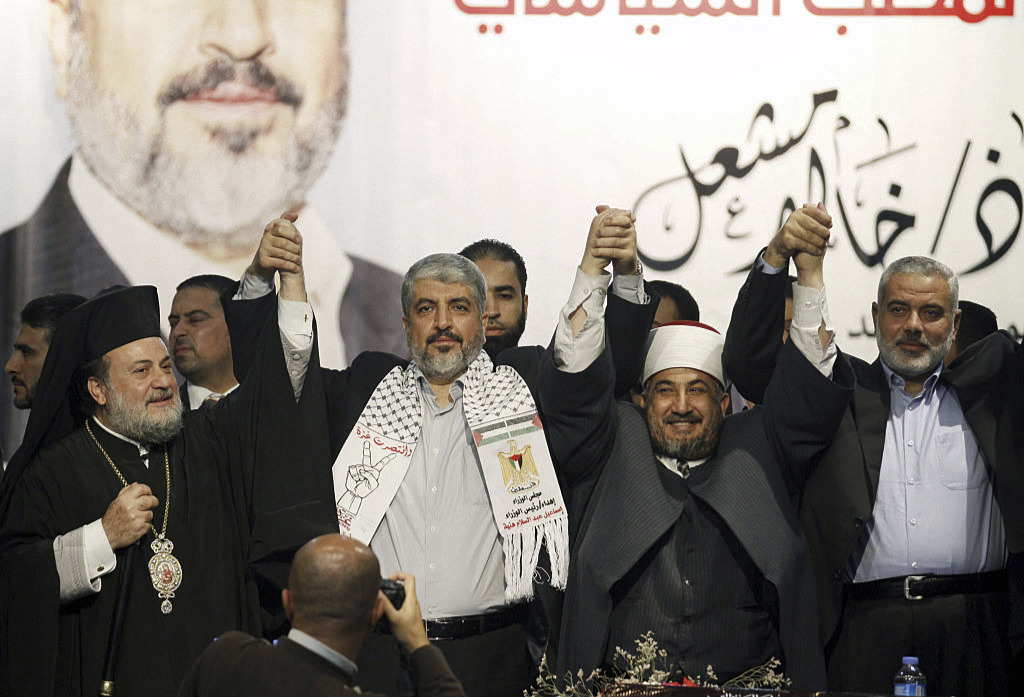
After the 2007 Hamas takeover, the Gaza Strip became an independent Palestinian state controlled by Hamas, with its own government, parliament, police force, and multiple armed groups. The Hamas rulers of the Gaza Strip, in addition, had exclusive control over the border with Egypt, which was also abandoned by Israel. Pictured: Khaled Mashaal (2nd L), head of Hamas’ “political bureau” holds hands with Gaza’s Greek Orthodox Archbishop Alexios (L) and Hassan al-Jojo (2nd R), president of the Islamic Sharia Appeals Court, along with Hamas’ then leader in Gaza, Ismail Haniyeh (R), at a government rally in the Gaza Strip on December 9, 2012. (Photo by Mohammed Abed/AFP via Getty Images)

As the Hamas-Israel war in the Gaza Strip enters its 20th month, France, Britain and Canada have revived the talk about the need to establish a Palestinian state. In a joint statement in mid-May, the leaders of the three countries proclaimed:

“We are committed to recognizing a Palestinian state as a contribution to achieving a two-state solution and are prepared to work with others to this end.”

Next month, the United Nations is scheduled to host an international conference, co-chaired by France and Saudi Arabia, to advance the idea of a “two-state solution” between Israel and the Palestinians.

According to the UN:

“As outlined in General Assembly resolution 79/81, the Conference will produce an action-oriented outcome document entitled ‘Peaceful settlement of the question of Palestine and implementation of the two-State solution.'”

“Indeed, only the implementation of a two-state solution will restore peace, prosperity and security for Israelis, Palestinians, and the entire region,” Anne-Claire Legendre, advisor to the French president for the Middle East and North Africa, said in a statement on May 23.

“The June [UN] Conference must mark a transformative milestone for the effective implementation of the two-state solution. Within the framework of this conference, we will work with everybody who wishes to be involved to craft a roadmap for peace and security for all, based on two states, Israel and Palestine, living side by side in peace and security within secure and recognized borders.”

Any talk about a “two-state solution” in the aftermath of the October 7, 2023 Hamas-led attack on Israel is a sick joke. The “two-state solution” died on that day, when thousands of Hamas terrorists and “ordinary” Palestinians from the Gaza Strip invaded Israel, murdered 1,200 people and wounded thousands. Another 251 Israelis were kidnapped to the Gaza Strip, where 58 – dead and alive – are still held as hostages.

In many respects, before October 7, the Gaza Strip was an independent and sovereign Palestinian state controlled by the Iran-backed terrorist group, Hamas.

In 2005, Israel withdrew from the entire Gaza Strip and handed it over, unconditionally, to the Palestinian Authority (PA) headed by Mahmoud Abbas. Less than two years later, Hamas staged a violent coup, toppling the PA and seizing full control over Gaza and its two million Palestinian residents.

After the 2007 Hamas takeover, the Gaza Strip became an independent Palestinian state controlled by Hamas, with its own government, parliament, police force, and multiple armed groups. The Hamas rulers of the Gaza Strip, in addition, had exclusive control over the border with Egypt, which was also abandoned by Israel.

In the absence of any Israeli military or civilian presence inside Gaza, Hamas had a chance to turn the coastal strip into a prosperous area, a “Singapore” or “Dubai” on the Mediterranean. Instead, the terror group chose to manufacture and smuggle weapons, including rockets and missiles, and invest tens of millions of dollars in building a vast network of tunnels for stockpiling its weapons, facilitating the concealed movement of terrorists, and providing shelter for its leaders and members.

On October 7, during a de facto ceasefire, Hamas terrorists and thousands of “ordinary” Palestinians breached the border with Israel with the purpose of slaughtering and abducting as many Jews as possible.

The Israeli towns and villages near the border with the Gaza Strip that were invaded by the Palestinians were not “illegal settlements.” Rather, they were in Israel proper, within its internationally recognized borders. The Israelis murdered and wounded on that day were not “illegal settlers.” Rather, they were Israeli citizens residing within Israel’s borders.

To many Palestinians, any Israeli is considered a “settler” and an appropriate target for murder, especially under the Palestinian Authority’s lucrative “pay-for-slay” jobs-program set up under Mahmoud Abbas. The more Jews you murder, the larger the payments. For more than a decade, these payments have amounted to more than $300 million annually. Last year, the PA’s payments increased by $1.3 million per month. The murder of Jews is what the European Union and many European countries have been funding (see, for instance, here and here).

Ironically and tragically, many of the Israelis who were butchered and kidnapped on October 7 were peace activists. They believed in the “two-state solution.” Some had even volunteered driving sick Palestinians from the Gaza Strip for medical treatment in Israeli hospitals.

Yocheved Lifschitz, an 85-year-old Israeli peace activist who was kidnapped and later freed by Hamas, confronted Hamas leader Yahya Sinwar during a visit to hostages in a tunnel. She asked him: “Aren’t you ashamed of having done this to people who have always worked for peace with the Palestinians?”

Vivian Silver, a Canadian-Israeli peace activist, was murdered in the Hamas-led attack on October 7. For many years, she worked within her kibbutz, Be’eri, to organize programs to help Gazans, such as job training, and ensuring that Gazan construction workers at the kibbutz were paid fairly. Silver was also the co-founder of Women Wage Peace, a grassroots interfaith organization. She also volunteered with Road to Recovery and Project Roxana to transport Gazan patients to Israeli hospitals.

The Palestinians who invaded Israel on October 7 did not distinguish between one Israeli and another. They did not care whether the Israelis they murdered supported a “two-state solution” or not. They did not even distinguish between Israeli Jews and Israeli Arabs. Notably, 20 Israeli Arabs were murdered during the attacks or by Hamas rocket launches in the ensuing days. There were also 71 foreign victims on October 7, mostly Thai workers.

The October 7 invasion should be seen as a declaration of war on Israel by the Hamas-controlled Palestinian state in the Gaza Strip. Hamas planned and initiated this war since before 2020. It has brought death and destruction not only on Israelis, but also on the Palestinian residents of the Gaza Strip.

Twenty months later, the war is continuing because of Hamas’s refusal to release the remaining Israeli hostages, relinquish control over the Gaza Strip and lay down its weapons. Hamas, backed and armed by Iran, is determined to fight to the last Palestinian because its primary goal is to destroy Israel and replace it with an Islamist state.

Under the current circumstances, those who talk about a “two-state solution” to achieve peace and prosperity between Israelis and Palestinians are actually seeking to reward Hamas for perpetrating the worst crime against Jews since the Holocaust.

By pushing for a “two-state solution,” France, Canada and Britain are sending a message to Hamas and other Palestinians that October 7 was worthwhile because it will bring them an independent and sovereign state.

By advocating a “two-state solution,” France, Canada and Britain are essentially authorizing a genocide.

There is another problem: Can these countries or the UN guarantee that a Palestinian state in the West Bank would not be used in the future as a launching pad to attack Israel? Of course not.

Whether Hamas will officially admit it or not, that is the main reason it, and its backers in Iran and Qatar, want a “state.” Do you think they want it to grow avocadoes?

There is no doubt that a Palestinian state would be controlled by Hamas or other extremist Palestinians who do not believe in Israel’s right to exist. A poll published earlier this month showed that if presidential elections in the Palestinian Authority were held today, Hamas leader Khaled Mashaal would win 68% of the votes, compared to 25% for the incumbent Mahmoud Abbas. When asked which political party or movement they supported, the largest percentage (32%) said they preferred Hamas, followed by Abbas’s ruling Fatah faction (21%). Twelve percent selected third parties, and 34% said they do not support any of them or do not know.

If new PA parliamentary elections were held today, the poll showed, Hamas would win 43% of the votes as opposed to 28% for Fatah. The poll also found that 40% of the Palestinians believe that Hamas is the most deserving of representing and leading the Palestinian people, while only 19% believe that Fatah is the most deserving.

The so-called two-state solution, sadly, is only a recipe for more violence, terrorism and bloodshed — not security, stability and peace.

Before reviving their idea, the French, Canadians and British need to look at the results of all of the polls. They consistently show that most Palestinians support Hamas and the armed struggle against Israel. The last thing Palestinians and Israelis need now is to transplant the failed Gaza model onto the West Bank.


Bassam Tawil is a Muslim Arab based in the Middle East. His work is made possible through the generous donation of a couple of donors who wished to remain anonymous. Gatestone is most grateful.


Zawartość publikowanych artykułów i materiałów nie reprezentuje poglądów ani opinii Reunion’68,
ani też webmastera Blogu Reunion’68, chyba ze jest to wyraźnie zaznaczone.
Twoje uwagi, linki, własne artykuły lub wiadomości prześlij na adres:
webmaster@reunion68.com


Murdered Israeli Embassy Staffer Lost Many Close Friends Who Accused Her of ‘Being Complicit in Genocide’

Murdered Israeli Embassy Staffer Lost Many Close Friends Who Accused Her of ‘Being Complicit in Genocide’

Shiryn Ghermezian


Yaron Lischinsky and Sarah Lynn Milgrim who were shot and killed as they left an event at the Capital Jewish Museum, pose for a picture at an unknown location, in this handout image released by Embassy of Israel to the US on May 22, 2025. Photo: Embassy of Israel to the USA via X/Handout via REUTERS

The public diplomacy team at the Israeli embassy in Washington, DC, where Sarah Lynn Milgrim worked until she was murdered in an antisemitic terrorist attack last week, said the American-Jewish native of Overland Park, Kansas, had a fallout with many close friends because of her job at the embassy.

Sawsan Hasson is head of the public diplomacy department at the Israeli embassy and was Milgrim’s supervisor. On Saturday, Hasson shared a lengthy post in memory of Milgrim, 26, on her LinkedIn page that was signed by the entire public diplomacy team. In the post, Milgrim is first described as a lover of animals and nature who “possessed a wisdom far beyond her years, coupled with an effortless charm that made people feel instantly seen and valued.” The post then revealed details about how Milgrim’s job at the embassy resulted in her losing a number of friendships with those who accused Israel of “genocide.”

Milgrim joined the public diplomacy department at the Israeli embassy in Washington soon after the Hamas-led deadly terrorist attacks in Israel on Oct. 7, 2023.

“When she made the decision to join the embassy team, she went through an incredibly difficult period,” read the LinkedIn post. “Many of her closest friends turned their backs on her. They accused her of being complicit in genocide, implied she was a terrible person for accepting the role, and ultimately cut off all contact.”

“But Sarah stood firm. She knew exactly who she was and what she believed in. She was a peacemaker,” the post added. “Her commitment to peace and diplomacy also led her to work closely with the US administration. Sarah was a respected voice in policy discussions, where she built bridges between communities and advocated for mutual understanding. She brought knowledge, empathy, and conviction to every room she entered — always with the goal of building a better future.”

Milgrim “rebuilt her life” and “soon formed an entirely new circle of friends” after joining the staff at the Israeli embassy, according to the LinkedIn post. She was “unapologetically herself,” lived by the Jewish concept of being a “light unto the nations,” and made it her mission “to bring light to those who were ostracized for their pro-Israel views.”

Milgrim and 30-year-old Yaron Lischinsky — her soon-to-be fiancé and colleague at the Israeli embassy — were both gunned down as they were leaving an event hosted by the American Jewish Committee (AJC) at the Capital Jewish Museum in Washington, DC, on May 21. Lischinsky, who was Christian, planned to propose to Milgrim this week during their trip to Israel for the Jewish holiday of Shavuot, according to Israeli Ambassador to the US Yechiel Leiter. Lischinsky worked in the embassy’s political department.

The lone gunman, who law enforcement identified as 31-year-old Elias Rodriguez from Chicago, has been charged with two counts of first-degree murder, the murder of foreign officials, causing death through the use of a firearm, and using a firearm during a violent crime. Officials said additional charges may be added. Rodriguez shouted “Free Palestine” before he was arrested at the scene soon after the shooting and the Justice Department is investigating the attack as both an act of terrorism and a hate crime, according to Jeanine Pirro, the interim top federal prosecutor in Washington.

“This brutal, antisemitic violence has no place in our country or anywhere in civilization,” added Attorney General Pamela Bondi. “We will follow the facts and secure the most severe possible punishment for the perpetrator of this heinous crime, which robbed two wonderful young people of a bright future together.”

“Make no mistake: This attack was targeted, antisemitic violence,” said FBI Assistant Director in Charge Steven Jensen. “The FBI will continue to pursue all leads and use all available resources to investigate this heinous murder.”

Milgrim was an environmental activist who advocated for climate and sustainability issues as well as LGBTQ+ rights. She also worked with women’s rights groups and minorities “and was deeply committed to advancing rights for people with disabilities,” according to the public diplomacy department at the Israeli embassy. A week before her murder, she co-organized an Earth Day event that featured Israeli environmental nonprofit leaders, according to a blog post written by Milgrim’s friend.


Zawartość publikowanych artykułów i materiałów nie reprezentuje poglądów ani opinii Reunion’68,
ani też webmastera Blogu Reunion’68, chyba ze jest to wyraźnie zaznaczone.
Twoje uwagi, linki, własne artykuły lub wiadomości prześlij na adres:
webmaster@reunion68.com


Dlaczego Trump stawia bardziej na państwa arabskie niż na Izrael [LE FIGARO]

Donald Trump na Bliskim Wschodzie (Fot. REUTERS/Brian Snyder)


Dlaczego Trump stawia bardziej na państwa arabskie niż na Izrael [LE FIGARO]

Adrien Jaulmes / Le Figaro


[ Glupie pytanie/tytul. Trump wie ze moze ufac Izraelowi ale nie Arabom ]
Głośna podróż Trumpa do trzech naftowych monarchii w Zatoce Perskiej wskazuje na nowe, znacznie bardziej pragmatyczne podejście Ameryki do regionu. A także sugeruje, że wpływ Izraela na politykę USA będzie malał.
embed

Korespondencja z Waszyngtonu

George W. Bush próbował aktywnie przekształcać świat arabski. Barack Obama próbował się od niego dystansować. Trump stawia na powrót USA, ale przy podejściu, które można nazwać asertywnym realizmem.

Pierwsza oficjalna podróż zagraniczna Trumpa podczas jego drugiej kadencji była manifestacją nowych reguł dyplomatycznych prezydenta, który podjął się przedefiniowania roli USA na świecie.

Kontrowersyjny, oględnie mówiąc, styl Trumpa czasami przesłania to, co kluczowe w jego polityce zagranicznej. Na przykład akurat jego podejścia do Bliskiego Wschodu nie można określić całkowitym zerwaniem z przeszłością, przeciwnie – rysuje się powrót do niektórych tradycyjnych podstaw amerykańskiej dyplomacji w regionie.

Arabia Saudyjska została potwierdzona jako główny regionalny sojusznik Waszyngtonu. I chociaż Izrael nadal korzysta z bezwarunkowej amerykańskiej ochrony, Trump zasygnalizował – poprzez ominięcie Izraela podczas tej podróży – że Stany Zjednoczone stawiają własne interesy na pierwszym miejscu.

Chodzi tu o: pacyfikację konfliktów na Bliskim Wschodzie, stabilność na rynku ropy naftowej i lukratywne kontrakty handlowe, w szczególności zbrojeniowe, z krajami, od których Chiny i Rosja mają być trzymane z daleka, jak Katar czy ZEA.

W swoim przemówieniu w Rijadzie Trump nie krył swojej fascynacji Arabią Saudyjską. „Kocham ją aż za bardzo”, powiedział autorytarnemu następcy tronu Mohammedowi Bin Salmanowi.

Nie jest pierwszym amerykańskim prezydentem, który ma słabość do Saudów. Sojusz zawarty w 1945 r. na krążowniku „Quincy” między Franklinem D. Rooseveltem a Ibn Saudem, założycielem państwa noszącego imię jego rodu, został w ciągu dekad potwierdzony przez liczne amerykańskie interwencje wojskowe w regionie. Najpierw w latach 80. w celu ochrony Saudów i królestw Zatoki Perskiej przed zagrożeniem ze strony irańskiej rewolucji szyickiej. Następnie w latach 1990-91, aby bronić ich przed Irakiem Saddama Husajna. Przejawiło się to w jeszcze bardziej niezwykły sposób na początku XXI w., kiedy USA przymknęły oko na narodowość sprawców ataków z 11 września 2001 r. i oszczędziły Arabii Saudyjskiej jakichkolwiek sankcji lub innego rodzaju reperkusji.

Wszyscy amerykańscy prezydenci faworyzowali kontrakty zbrojeniowe i stabilne dostawy ropy z Zatoki, regularnie wyciszając krytykę rządów tych w zasadzie bez wyjątku autokratycznych sojuszników.

Żadnej krytyki za łamanie praw człowieka

Trump poszedł jednak teraz jeszcze dalej. W przeciwieństwie do administracji G.W. Busha, która kładła pewien nacisk na demokratyczne aspiracje społeczeństw arabskich, starając się oprzeć na nich transformację Bliskiego Wschodu, czy Obamy, który potępił korupcję arabskich reżimów w swoim przemówieniu w Kairze w 2009 r. – tuż przed falą buntów, które wstrząsnęły regionem – Trump skrytykował swoich poprzedników i wykluczył jakąkolwiek amerykańską ingerencję w wewnętrzne sprawy arabskich sojuszników USA.

„Błyszczące cuda Rijadu i Abu Zabi nie zostały stworzone ani przez tak zwanych inżynierów przemian, neokonserwatystów czy liberalne organizacje non-profit, takie jak te, które wydały biliony dolarów, zaniedbując rozwój Kabulu, Bagdadu i wielu innych stolic w regionie” – powiedział Trump w swoim przemówieniu w Rijadzie 13 maja. „Pokój, dobrobyt i postęp nie wynikają z radykalnego odrzucenia waszego dziedzictwa, ale raczej z akceptacji waszych tradycji narodowych, które tak bardzo kochacie”, wyjaśnił Trump, porzucając mesjanistyczny dyskurs, który charakteryzował amerykańską politykę w regionie przez ostatnie ponad dwie dekady lat.

Trump powstrzymał się od jakiegokolwiek krytykowania sojuszników. Zamiast izolacjonizmu praktykowanego przez jego administrację wobec Europy, Trump powtórzył swoje obietnice obrony sojuszników z Zatoki Perskiej.

„Nigdy nie zawaham się użyć amerykańskiej potęgi, jeśli będzie to konieczne do obrony USA lub pomocy w obronie naszych sojuszników” – mówił Trump – „i nie będzie litości dla żadnego wroga, który spróbuje zaszkodzić nam lub im”.

Jego ostentacyjna odmowa ingerowania w politykę wewnętrzną świata arabskiego kontrastowała bardzo z wystąpieniami członków jego administracji skierowanymi do europejskich sojuszników, m.in. potępieniem Niemców i Brytyjczyków za rzekomy brak poszanowania wolności słowa.

Rośnie dystans między Trumpem a Netanjahu

Ten „neorealizm” Trumpa obejmuje również korektę amerykańskiego stanowiska wobec Izraela. Owszem, zasada braku ingerencji i krytyki polityki wewnętrznej dotyczy również Izraelczyków. Od początku swojej kadencji Trump dał premierowi Benjaminowi Netanjahu carte blanche na Zachodnim Brzegu i w Strefie Gazy. Jednak wpływ Netanjahu na amerykańską politykę gwałtownie zmalał.

Izrael poczekał do końca podróży Trumpa z rozpoczęciem nowej ofensywy przeciwko Hamasowi w Strefie Gazy. Istnieją jednak oznaki, że Waszyngton nie jest zadowolony z tego przeciągania i rozogniania konfliktu. Utrudnia to misję specjalnego wysłannika Trumpa, Steve’a Witkoffa, który stara się wynegocjować zawieszenie broni i uwolnienie ostatnich zakładników. Wiceprezydent J.D. Vance zrezygnował z wizyty w Izraelu w tym tygodniu, oficjalnie z „powodów logistycznych”, ale według amerykańskich źródeł, aby uniknąć sugerowania, że administracja Trumpa popiera tę nową ofensywę.

Także inne sygnały wskazują na dystansowanie się amerykańskiej dyplomacji od Izraela. Ostatnie uwolnienie zakładników w Strefie Gazy zostało wynegocjowane przez Waszyngton bezpośrednio z Hamasem, bez udziału Izraelczyków. Negocjacje z jemeńskimi rebeliantami Huti, które doprowadziły do zawieszenia ataków na statki korzystające z morskich szlaków w regionie, były prowadzone za pośrednictwem Omanu, a Izraelczycy także nie zostali włączeni do rozmów.

Ale przede wszystkim Netanjahu, który zdawał się wierzyć, że może namówić na amerykański udział w ataku na irańskie obiekty nuklearne, został zamiast tego poinformowany, że negocjacje z Teheranem zostają wznowione. Co więcej, izraelski premier musi obserwować również rosnący wpływ prezydenta Recepa Tayyipa Erdogana na Trumpa. Ankara zabiega o powrót do programu samolotów myśliwskich F-35, z którego została wykluczona w odwecie za zakup rosyjskich systemów przeciwlotniczych – a to wzbudziło obawy Izraela o jego przewagę powietrzną w regionie.

Pokój na Bliskim Wschodzie jako okazja do zarobienia

Zniesienie amerykańskich sankcji wobec nowego reżimu syryjskiego, ogłoszone z zaskoczenia przez Trumpa podczas podróży – to decyzja podjęta za radą Turcji i Saudów – również zwiększyło strategiczne obawy Izraela.

Wznowienie negocjacji z Iranem to spektakularny zwrot Trumpa, który gwałtownie krytykował porozumienie podpisane z Teheranem przez Obamę w 2015 r. i zerwał je podczas swojej pierwszej kadencji, czy normalizacja stosunków z byłym syryjskim dżihadystą, który przejął władzę w zrujnowanym przez dekadę wojny domowej kraju wskazują przede wszystkim na duże pole manewru, jakie daje mu w zasadzie brak wewnętrznej opozycji w USA. Każda z tych decyzji, gdyby była podjęta przez prezydenta Demokratę, spotkałaby się z gwałtownym atakiem Republikanów w Kongresie, a teraz została zaakceptowana, choć niechętnie, nawet przez zwolenników twardej linii wobec Teheranu.

Ta swoboda działania pozwala Trumpowi realizować jego dyplomatyczny cel, jakim jest Bliski Wschód spokojny, czyli zapewniający okoliczności do prowadzenia lukratywnych interesów, zarówno przez USA jako państwo, jak i przez Trumpa, jego rodzinę i znajomych.

Wznowienie izraelskiej ofensywy w Strefie Gazy, a przede wszystkim niechęć Izraela do znalezienia akceptowalnego wyjścia z konfliktu, prawdopodobnie zwiększy irytację Trumpa wobec Izraela. Netanjahu, który regularnie wywiera wpływ na amerykańską politykę za pośrednictwem swoich republikańskich sojuszników w Kongresie, teraz musi układać się z prezydentem, który zacieśniając relacje z arabskimi monarchiami jest znacznie mniej podatny na jego presję.


Zawartość publikowanych artykułów i materiałów nie reprezentuje poglądów ani opinii Reunion’68,
ani też webmastera Blogu Reunion’68, chyba ze jest to wyraźnie zaznaczone.
Twoje uwagi, linki, własne artykuły lub wiadomości prześlij na adres:
webmaster@reunion68.com


US citizen arrested for threats to ‘burn down’ US embassy branch in Tel Aviv, kill Trump

US citizen arrested for threats to ‘burn down’ US embassy branch in Tel Aviv, kill Trump

JNS Staff


“This defendant is charged with planning a devastating attack targeting our embassy in Israel, threatening death to Americans and President Trump’s life,” the U.S. attorney general stated.

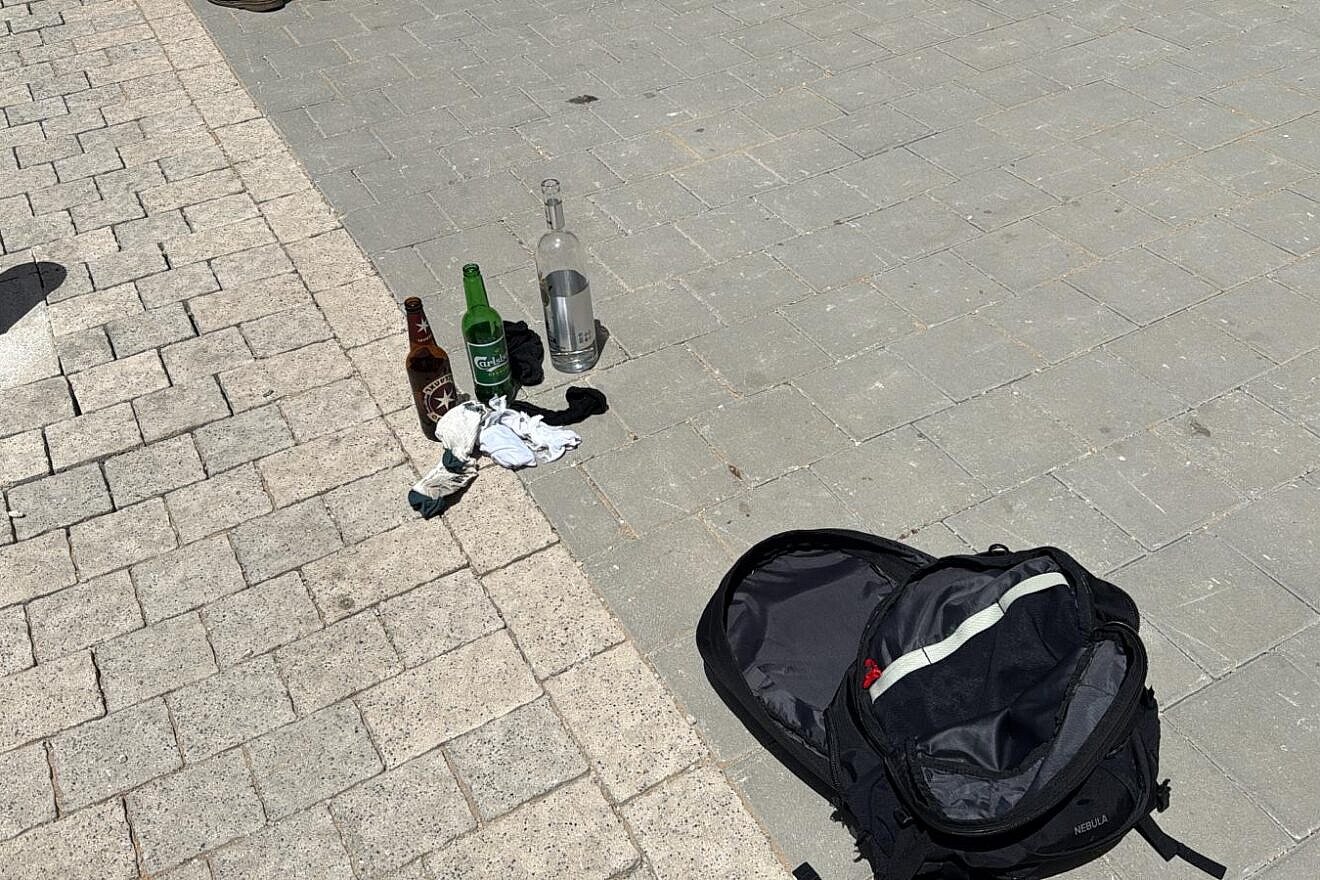
A backpack and Molotov cocktails recovered from a dual U.S.-German citizen who allegedly spat on a security guard outside the U.S. embassy branch artist in Tel Aviv on May 19, 2025. Credit: Israel Police.

Joseph Patrick Neumeyer appeared in federal court in Brooklyn, N.Y., on Sunday, where the 28-year-old, dual U.S.-German citizen was charged with threatening to kill U.S. President Donald Trump and to bomb a U.S. embassy branch in Tel Aviv.

Israel deported Neumeyer, of Colorado, to New York on Saturday, per the U.S. Justice Department. He faces up to 20 years in prison and up to $250,000 in fines, per the department.

“This defendant is charged with planning a devastating attack targeting our embassy in Israel, threatening death to Americans and President Trump’s life,” stated Pam Bondi, the U.S. attorney general. “The department will not tolerate such violence and will prosecute this defendant to the fullest extent of the law.”

“Neumeyer not only made threats against Americans and U.S. diplomatic missions, but also allegedly attempted to carry out those threats by bringing potentially deadly devices to the U.S. embassy in Tel Aviv,” stated Steven Jensen, assistant director in charge of the FBI Washington field office. 

“Let his arrest carry an unmistakable message,” Jensen stated. “The FBI and our partners will aggressively pursue those who attempt to harm U.S. citizens and interests abroad.”

The U.S. government alleges that on May 19—in the month after he arrived in Israel—Neumeyer wrote, “Join me this afternoon in Tel Aviv
and “We are burning down the U.S. embassy” on Facebook.

“Join me as I burn down the embassy in Tel Aviv.  Death to America. Death to Americans,” he wrote, directing an expletive at “the west,” per the criminal complaint.

On May 19, Neumeyer spat on a guard outside the U.S. embassy branch artist in Tel Aviv but was able to flee, while yelling profanities, as the guard sought to detain him. After a guard grabbed him by the backpack, Neumeyer managed to break free and escape, leaving the backpack behind, per the complaint.

“Law enforcement recovered from Neumeyer’s backpack several bottles that had been turned into improvised incendiary devices, commonly known as ‘Molotov cocktails,’” per the Justice Department. “Authorities confirmed the presence of flammable fluid in the bottles.”

The complaint described a guard noticing a “strong odor of ‘pure’ alcohol emanating from the backpack” and “a bottle with black cloth protruding from its neck.”

Neumeyer’s social-media accounts allegedly had “threatening posts that, among other things, called for the assassination of President Donald J. Trump,” according to the department, which said that law enforcement tracked him to his hotel and arrested him.

Among the screen captures detailed in the criminal complaint are also a threat against billionaire entrepreneur Elon Musk and a reference to Texas Gov. Greg Abbott.


Zawartość publikowanych artykułów i materiałów nie reprezentuje poglądów ani opinii Reunion’68,
ani też webmastera Blogu Reunion’68, chyba ze jest to wyraźnie zaznaczone.
Twoje uwagi, linki, własne artykuły lub wiadomości prześlij na adres:
webmaster@reunion68.com


An Open Letter to Hamas’ Defenders

An Open Letter to Hamas’ Defenders

Elisa Albert


We have so much to chat about—as soon as the war we never wanted is over

Tablet Magazine

Hi, Terror Apologist!

I don’t know who you are, why you care about the plight of Jews in the diaspora or in Israel, how long you’ve been involved with Jewish-Arab peace and coexistence movements, or how much you have personally at stake with the safety of Israeli Jews or people in Gaza, but I’m so glad you’re here.

Perhaps you’re a gentile with a social justice bent and you’ve recently become interested in a centuries-old conflict between people you don’t know in a place you’ve never been near. Perhaps you are on an exciting algorithmic adrenaline ride, learning as you go. Perhaps you are an assimilated Jew with some intellectual curiosity and the epigenetic trauma response of trying to cover your ass so you’ll be accepted by the secular world. Whatever the case, you are alive and well and safe enough in this moment to be putting forth some sort of argument for—or implicit defense of—terrorism. You might be doing so from an Israel bomb shelter, in which case I salute you and would love to discuss the absolute necessity of a two-state solution, the complete removal of Netanyahu and his cronies, a total withdrawal from Judea and Samaria, and the travesty of what unfolded in Gaza since we unilaterally withdrew in 2005 and found ourselves under rocket fire literally two hours later—once our hostages are home and Hamas is destroyed. Assuming you aren’t a random careless internet dilettante who will be on to the next “cause” by then.

We can talk about war crimes, morality, good and evil, when this war we never wanted is over. Assuming you won’t be on to the next cause by then.

We weep for the plight of the Palestinian people and for the ignorance and naïveté of so many who believe that anyone but Hamas is responsible for their current suffering. Someday, when this war we didn’t want is over, I’d love to discuss the radicalization of the oppressed. And the fomenting of extremism, and Israeli intellectuals who have been warning against this very scenario for decades. When this war we did not want is over, we can grab coffee and talk about Iran and Saudi Arabia and Qatar. And Jordan and Egypt and Yemen. We can talk about building terror infrastructure under a hospital, about the concept of “martyrdom,” about propaganda. We can talk about squandered opportunities. We can talk about Hamas’ misdirected/stolen billions in aid. We can talk about means and ends and which ends justify which means. We can talk about how a population that doubled over the past 20 years can possibly be said to be a victim of genocide. We can talk about war crimes, morality, and good and evil when this war we never wanted is over. Assuming you won’t be on to the next cause by then.

Meanwhile, our hearts are broken and our hopes for peace are dashed yet again, but we have long memories and a powerful will to live.

Am yisrael chai.

Be safe, and pray for the safety of others—

Elisa


Elisa Albert is the author of three novels and a story collection. Her fiction and essays have appeared in n+1, the Guardian, The New York TImes, New York Magazine, Lilith, Bennington Review, Michigan Quarterly Review, and elsewhere. THE SNARLING GIRL, now out from Clash Books, represents a decade’s worth of personal essays and literary criticism. 


Zawartość publikowanych artykułów i materiałów nie reprezentuje poglądów ani opinii Reunion’68,
ani też webmastera Blogu Reunion’68, chyba ze jest to wyraźnie zaznaczone.
Twoje uwagi, linki, własne artykuły lub wiadomości prześlij na adres:
webmaster@reunion68.com