
The false narrative about post-9/11 Islamophobia legitimizes antisemitism


The false narrative about post-9/11 Islamophobia legitimizes antisemitism

Jonathan S. Tobin


The obsession with a mythical backlash against Muslims promoted by the political left and liberal media didn’t just distort anniversary coverage. It builds sympathy for Islamist Jew-hatred.
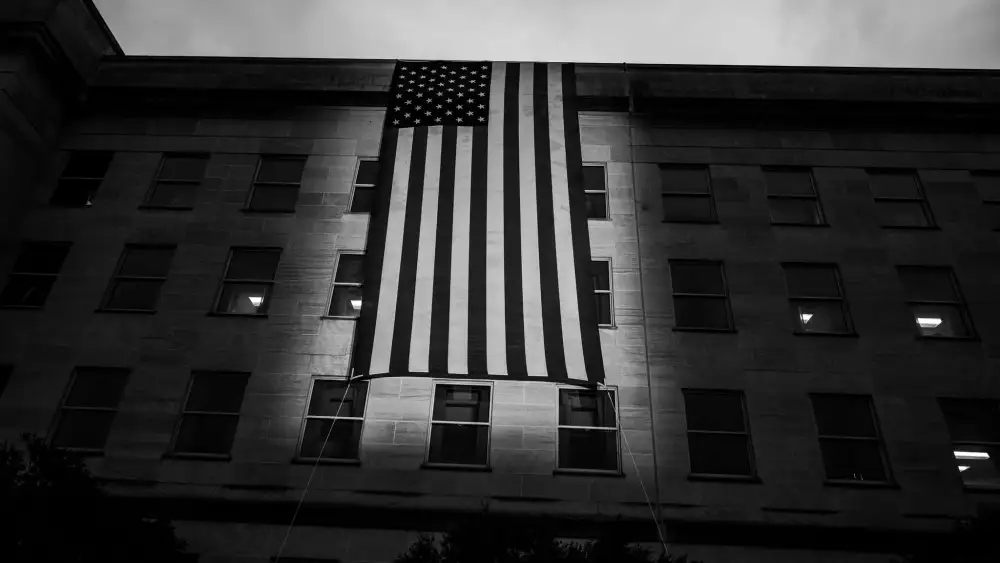
A scene near a ceremony at the Pentagon in observance of the 25th anniversary of the 9/11 terror attacks, Sept. 11, 2026. Credit: Molly Riley/White House.

The 25th anniversary of the terrorist attacks on America on Sept. 11, 2001 has come and gone. Despite criticisms and pleas from many of the families of the victims as well as others, New York City Mayor Zohran Mamdani attended the ceremony held at the 9/11 Memorial Plaza in what was Ground Zero on that awful day. After days of massive attention focused on the commemoration of the attacks, the media and the political class quickly moved on to other contemporary issues and crises.

But before this moment fades into memory, it’s worth pausing and considering how understanding this historical event not only informs how the world thinks about 9/11 and its aftermath. Equally, if not more important, is the ability of mainstream liberal media, opinion leaders and politicians to shape the narrative about it, guiding discourse about today’s challenges that ought to, but often aren’t, linked to the threat the attacks represented.

Who are the true victims of 9/11?

Take, for example, the home page of The New York Times on Friday, September 11. Among its top stories were the following items: “Islamophobia Shaped a Generation of Muslim New Yorkers” and “Facing Islamophobia, Mamdani Keeps Focus on 9/11 Victims.”

As conservative commentator Ben Shapiro put it in an X post that described the feelings of many: “If you were an alien who landed on Earth this morning, and you were reading the top headlines on the NYT’s webpage, you would immediately assume that 9/11 was an attack on Muslims.”

Those stories weren’t the only ones the newspaper published that day about the anniversary, some of which discussed the actual victims of the Al-Qaeda terrorists who were responsible for the murder of the 2,977 people at the World Trade Center in Lower Manhattan, the Pentagon in Washington and on a field in Shanksville, Pa. Still, Shapiro’s comment aptly characterized the way so much of the country’s chattering classes prefer to think about 9/11.

They may be willing to note that the crimes committed that day were the doing of Al-Qaeda, an Islamist terror organization. But once that basic fact is acknowledged—many conspiracy theorists on the far left and far right prefer, of course, to blame the Jews for this and every other global calamity—they prefer to treat the attacks as if they were not connected to Islamist beliefs about the need for jihad against the West. Nor do they note that those ideas are supported by hundreds of millions of Muslims worldwide, even if some argue that a majority of the world’s 1.9 billion believers in Islam do not.

More to the point, they have continued to treat Muslims as if they were the primary victims of the 9/11 attacks because of an alleged backlash against them, which fueled the wave of Islamophobia the Times references in its articles.

The newspaper, like much of the mainstream press, treats this backlash as if it were an obvious fact that can be asserted without the need to prove it. Indeed, they have been doing that for the better part of the last two decades. But, as I first pointed out in October 2010 in Commentary magazine, the claim that American Muslims were subjected to widespread and/or systematic discrimination or violence is simply a myth. At that time, the hoax about a 9/11 backlash was used to support an effort to build a Muslim community center and mosque on the footprint of one of the buildings destroyed in the World Trade Center disaster.

The failed effort to build that center and mosque was rooted in a desire to flip the narrative about the terror attacks to focus on the sufferings of Muslims, rather than people who were murdered by Al-Qaeda or the generational war Islamists were waging against the West. While it was never built, the supporters of this project did succeed in doing something more important: They helped set the tone of media commentary about Islamophobia then and since, while downplaying the truth about Islamism.

A myth promoted by interested parties

To point this out is not to deny some examples of prejudice or increases in reported hate crimes against Muslims after 9/11. But most were anecdotal and not rooted in objective proof. Indeed, the studies often cited as backing up these claims are the works of groups funded by left-wing donors whose purpose is to depict the United States as Islamophobic. Others, like Georgetown University’s Bridge Institute, were created and funded by Qatar, the main sponsor of the Muslim Brotherhood.

More objective studies, like FBI hate-crime statistics, point to a very different conclusion. They show a huge increase in religion-based hate crimes in the past 25 years. Its victims, however, are Jews, not Muslims. Though making up less than 2% of the American population, reported hate crimes against Jews have consistently made up the overwhelming majority of such offenses in the United States.

U.S. government officials, starting with President George W. Bush, who laughably repeatedly insisted that Islam was “a religion of peace,” bent over backwards to disassociate Al-Qaeda (and then its successors and fellow Islamists, such as ISIS, Hamas and Hezbollah) from normative Muslim ideas. At the same time, American popular culture similarly generally shunned depictions of Muslim terrorists in films and TV shows or explorations of how they were inspired by their faith for fear of validating prejudice.

This dovetailed with the way progressives were imposing new doctrines about race, intersectionality and settler-colonialism on American academia during this same period. It led to a generation being indoctrinated in toxic ideas that labeled Muslims as Third World peoples who were always victims of “white” imperialism and racism, regardless of their own actions. At the same time, Jews and the State of Israel were falsely depicted as “white” oppressors who were always in the wrong, even when they were—as during the Hamas-led Palestinian-Arab terror attacks in southern Israeli communities on Oct. 7, 2023—the victims of atrocities, torture, rape, kidnapping and murder.

Radical doctrines v. the facts

While these radical obsessions exacerbated racial divisions in the United States, they led most of the chattering classes to assume that Americans were Islamophobic while granting a permission slip to an unprecedented surge of antisemitism, especially after Oct. 7.

But as the Times’s account of Mamdani’s plight as a victim of Islamophobia makes clear, most of what falls under the rubric of that form of prejudice is actually something very different.

If many New Yorkers and others are critical of Mamdani, it’s not because they hate Muslims. It’s because they understand that he is someone who has dedicated his career to supporting Islamists and seeking the destruction of the only Jewish state on the planet. The same applies to other supposed contemporary victims of Islamophobia, like Michigan Senate candidate Dr. Abdul El-Sayed.

Indeed, the organization most often cited by liberal media sources as the authority on Islamophobia—the Council on American-Islamic Relations (CAIR)—was founded as a front group for fundraisers for Hamas and is guilty of spreading Jew-hatred. The majority of what CAIR labels as “Islamophobia” is nothing more than noting prejudice against Jews and examples of antipathy for Western civilization that emanates from the Muslim community.

And far from such views being relegated to the margins where hate groups dwell, they have been mainstreamed by the corporate press, as well as the former Biden administration, which created a “National Strategy to Counter Islamophobia and Anti-Arab Hate” by following CAIR’s lead. Just as shocking was Biden’s willingness to include CAIR as a consultant in its confused and ineffective effort to counter antisemitism.

If a generation of Muslims thinks of themselves as victims, it is not because they have been subjected to a campaign of hate and violence in the United States. It’s because they have been taught—as is the case with so many others of their fellow Americans—that their country is irredeemably racist. They may deny that they are the ones spreading hate. But their widespread involvement in spreading prejudice and bigotry against Jews and Israel, or organizing pro-Hamas rallies on college campuses and in U.S. city streets after Oct. 7, cannot be denied. Yet since their prejudices have been validated by those who focus on Islamophobia while ignoring antisemitism, they continue to point to 9/11 as if they are the ones who were wronged that day and ever since.

The impulse to oppose all forms of prejudice is laudable. Yet one of the primary reasons why antisemitism is out of control in the United States is because those who spread it have largely been granted a pass for doing so because of lies about America after 9/11 and leftist doctrines about race. The belief that the Jews and Israel are inherently evil and guilty of horrible crimes like “genocide” and “apartheid” was once only believed by those who dwelled in the fever swamps of American politics on the far left and far right. But now, such blood libels are routinely given credence by publications like the Times.

By treating the backlash myth as fact and depicting Mamdani—a politician whose entire career has been dedicated to spreading blood libels against the Jewish state—as a victim of prejudice rather than a hate-monger, outlets like the Times didn’t just get the 9/11 anniversary story wrong. Sadly, it has become part of the mindset that has allowed American antisemitism to fester and go mainstream.


Jonathan S. Tobin is editor-in-chief of the Jewish News Syndicate, a senior contributor for The Federalist, a columnist for Newsweek and a contributor to many other publications. He covers the American political scene, foreign policy, the U.S.-Israel relationship, Middle East diplomacy, the Jewish world and the arts. He hosts the JNS “Think Twice” podcast, both the weekly video program and the “Jonathan Tobin Daily” program, which are available on all major audio platforms and YouTube. Previously, he was executive editor, then senior online editor and chief political blogger, for Commentary magazine. Before that, he was editor-in-chief of The Jewish Exponent in Philadelphia and editor of the Connecticut Jewish Ledger. He has won more than 60 awards for commentary, art criticism and other writing. He appears regularly on television, commenting on politics and foreign policy. Born in New York City, he studied history at Columbia University.


Zawartość publikowanych artykułów i materiałów nie reprezentuje poglądów ani opinii Reunion’68,
ani też webmastera Blogu Reunion’68, chyba ze jest to wyraźnie zaznaczone.
Twoje uwagi, linki, własne artykuły lub wiadomości prześlij na adres:
webmaster@reunion68.com


The Palestinian Authority Prioritizes Terrorists’ Salaries Over Salaries for Workers


The Palestinian Authority Prioritizes Terrorists’ Salaries Over Salaries for Workers

Itamar Marcus


Palestinian Authority President Mahmoud Abbas visiting the West Bank city of Jenin. Photo: Reuters/Mohamad Torokman

The Palestinian Authority (PA) has once again demonstrated that paying salaries to terrorists is a higher priority than paying Palestinians who work for a living.

Ahead of upcoming local elections, the PA Central Elections Commission has ruled that PA employees must resign from their jobs, and therefore relinquish their salaries, if they wish to run for office. Terrorists receiving payments from the PA, however, may keep their terror-reward payments while running for election.

PA Central Elections Commission spokesman Fareed Taamallah explained that the requirement applies only to those currently working as PA employees:

A [PA] employee who holds a position, receives his salary from the state, and is currently engaged in his work is required to resign from his position [to run in the elections] and attach proof of resignation to the candidacy application.

He clarified that this does not apply to individuals who receive allowances from the state but are not currently employed as [PA] employees, such as retirees, prisoners, the wounded [i.e., 2 categories of terrorists], or recipients of social benefits.

[Ma’an, independent Palestinian news agency, Sept. 7, 2026]

The distinction is revealing.

An ordinary PA employee must surrender his salary to become a candidate. A terrorist imprisoned for attacking Israelis, or a terrorist wounded while carrying out an attack, may continue receiving PA payments and still run for office.

Taamallah’s statement also provides yet another admission that the PA continues its notorious Pay-for-Slay program.

Despite PA leader Mahmoud Abbas’ claims of reform, Palestinian terrorists in prison are still receiving payments from the PA precisely because they are prisoners.

Once again, the PA has confirmed two facts: Pay-for-Slay continues, and the PA grants terrorists privileges that it denies to ordinary employees.

Palestinians who earn their salaries through public service must give them up to seek elected office; terrorists rewarded for murdering or attempting to murder Israelis do not.


The author is the Founder and Director of Palestinian Media Watch, where a version of this article first appeared. 


Zawartość publikowanych artykułów i materiałów nie reprezentuje poglądów ani opinii Reunion’68,
ani też webmastera Blogu Reunion’68, chyba ze jest to wyraźnie zaznaczone.
Twoje uwagi, linki, własne artykuły lub wiadomości prześlij na adres:
webmaster@reunion68.com


Bernard-Henri Lévy opowiada historię Omara Mohammeda


Bernard-Henri Lévy opowiada historię Omara Mohammeda,

Anne Goldschmid and Bernard-Henri Lévy.


Bernard-Henri Lévy opowiada historię Omara Mohammeda, irackiego historyka, który pod pseudonimem “Mosul Eye” dokumentował z ukrycia terror ISIS w okupowanym Mosulu. Ryzykował życiem, aby ocalić nazwiska zamordowanych, świadectwa zbrodni i ślady świata, który islamiści usiłowali unicestwić. To tekst o odwadze i o pamięci jako formie oporu: zabójcy mogą odebrać człowiekowi życie, ale nie powinni dostać prawa do wymazania jego imienia. Przetłumaczyłam ten artykuł dla polskich czytelników. To właśnie takich ludzi powinni honorować i takie historie udostępniać wszyscy polscy Omarowie, zamiast gloryfikować sprawców zamachów na cywilów.

Człowiek, który patrzył w niebyt

Historie Omara Mohammeda o latach terroru ISIS w Mosulu trzeba przeczytać

Bernard-Henri Lévy

W październiku 2018 roku pisałem na tych łamach o tajemniczym irackim blogerze ukrywającym się pod pseudonimem “Mosul Eye”, czyli “Oko Mosulu”. Właśnie opublikował zdumiewające fotografie zrobione w ruinach starego miasta, niedawno wyzwolonego spod władzy ISIS, które stało się epicentrum światowego dżihadyzmu. Na zdjęciach były kamienie, a na nich hebrajskie inskrypcje. Z niebytu wyłaniały się pozostałości synagogi, o której istnieniu nikt wcześniej nie wiedział.

Napisałem wtedy, że trzeba ocalić wszystko, co właśnie wydobyło się na powierzchnię z dawnej żydowskiej obecności w starożytnej Niniwie. Zaalarmowałem organizacje zajmujące się ratowaniem zabytków zagrożonych przez wojnę. Przygotowano projekty renowacji. Niestety najpierw głupota, a później haniebne przepisy wprowadzone przez irackie władze pozostające pod wpływem Iranu skutecznie blokowały ich realizację i robią to nadal.

W 2016 roku, kiedy rozpoczęła się bitwa o wyzwolenie miasta, pojechałem tam, aby nakręcić film dokumentalny “Bitwa o Mosul”. To właśnie “Oko Mosulu” prowadziło nas w terenie. Na jego blogu znajdowaliśmy wszystko: informacje o ruchach wojsk, o pozycjach, które właśnie padały, i tych, które wciąż się broniły, o dzielnicach, do których można było się zapuścić, oraz o tych, które ISIS zaminowało. Drogi, które rano były jeszcze otwarte, chwilę później nagle odcinano. Dochodziły do tego posterunki, mosty oraz miejsca, w których zauważono snajperów albo samochody pułapki. W najstarszych częściach miasta trzeba było znać splątaną sieć ulic, przejścia między dzielnicami i ślepe zaułki. Dla zagranicznej ekipy, która przyjechała filmować bitwę, jeden niewłaściwy skręt mógł oznaczać śmierć. “Oko Mosulu” było naszym kompasem. Naszym nieznanym przyjacielem. Człowiekiem, który być może uratował nam życie.

Teraz człowiek ukrywający się za tym “Okiem” wydał w Stanach Zjednoczonych książkę. Nosi ona tytuł “Mosul Eye” i opowiada niewiarygodną historię autora tego bloga. Nazywa się Omar Mohammed. Dziś kieruje Inicjatywą Badań nad Antysemityzmem działającą w ramach Programu Badań nad Ekstremizmem na Uniwersytecie George’a Washingtona. Wcześniej był historykiem. Miał 29 lat, kiedy ISIS wkroczyło do jego miasta. Mógł uciec, ale postanowił zostać i przez wiele miesięcy prowadził podwójne życie.

Wtapiał się w tłum, zapuścił brodę, chodził do meczetów, w których głosili kazania mordercy, słuchał, zadawał pytania i sprawdzał pogłoski. Jednocześnie stworzył niezwykle pomysłowy system przekazywania informacji na zewnątrz. Internet był śledzony? Korzystał z wielu połączeń i tajnych sposobów dostępu. Facebook został zablokowany? Przenosił się na WordPressa albo Twittera. Notatki mogły go zdradzić? Rozpraszał je, ukrywał i przechowywał w wersjach odręcznych lub przepisanych na komputerze. Policja ISIS wpadła na jego trop? Zmieniał głos, przechodził z arabskiego na angielski i sprawiał wrażenie, że nadal przebywa w Mosulu, choć zdążył już wyjechać do Turcji. W ten sposób przedarł się elektronicznie przez mury miasta, a jego niewidzialne oko stało się spojrzeniem świata skierowanym na umęczony Mosul.

Powstała książka jest dokumentem wyjątkowym. Opowiada o latach terroru w Mosulu i pokazuje, jak wygląda zwykłe życie pod rządami islamskiego faszyzmu. Jest w niej wszystko. Publiczne egzekucje, na które Mohammed zmuszał się chodzić, żeby usłyszeć nazwiska skazanych i zarzucane im winy. Ścinanie głów. Kamienowanie. Ludzie zrzucani z dachów budynków. Chrześcijanie wypędzani z miasta, ich ograbione domy i zniszczone kościoły. Jazydzi obróceni w niewolników. Młode dziewczęta gwałcone tak bestialsko, że lekarze, których świadectwa zbierał Mohammed, patrzyli, jak umierają wskutek odniesionych obrażeń. Wreszcie jego własny brat Ahmed, który pozostał w zachodnim Mosulu i zginął w 2017 roku, trafiony odłamkiem pocisku moździerzowego prosto w serce.

Tę książkę trzeba przeczytać. Jest wyjątkowym świadectwem tego, czym staje się życie pod panowaniem islamizmu. Jest także opowieścią o niezwykłym człowieku i dowodem tego, do czego zdolna jest odwaga, kiedy okoliczności doprowadzają człowieka do granic wytrzymałości. Trzeba ją wreszcie przeczytać jako wspaniałą lekcję o potędze historii.

Co właściwie robi Omar Mohammed? Zapisuje nazwiska ludzi, których zabójcy chcieli zamienić w bezimienne ofiary. Zachowuje ślady rzeczy, które sprawcy usiłowali wymazać. Tym, którzy chcieliby, żeby ich ofiary umarły dwukrotnie, najpierw fizycznie, a później w ludzkiej pamięci, przeciwstawia archiwum i chroni prawdę.

Odsłania się tutaj dziwny fortel życia. Aby przetrwać, wybiera ono coś, co najmniej je przypomina: dokument, datę, nazwisko zapisane w notesie. Krótko mówiąc, martwą literę, która paradoksalnie nie pozwala, by ostatnie słowo należało do niebytu.

Bernard-Henri Lévy jest autorem książki “Israel Alone”. Artykuł przełożyła z francuskiego na angielski Emily Hamilton, z francuskiego na polski – ja.


Zawartość publikowanych artykułów i materiałów nie reprezentuje poglądów ani opinii Reunion’68,
ani też webmastera Blogu Reunion’68, chyba ze jest to wyraźnie zaznaczone.
Twoje uwagi, linki, własne artykuły lub wiadomości prześlij na adres:
webmaster@reunion68.com


France’s Young Voters Rally Behind Anti-Israel Far Left as Political Extremes Rise Ahead of 2027 Presidential Race


France’s Young Voters Rally Behind Anti-Israel Far Left as Political Extremes Rise Ahead of 2027 Presidential Race

Ailin Vilches Arguello


Jean-Luc Melenchon, leader of French far-left opposition party La France Insoumise (France Unbowed – LFI), gestures as he delivers a speech during a campaign rally in Bondy near Paris, France, March 4, 2026. Photo: REUTERS/Abdul Saboor

As candidates on both the far right and far left gain ground ahead of France’s 2027 presidential election, growing support among young voters for the latter is deepening concerns over the direction of a nation increasingly divided along ideological lines.

France’s increasingly polarized political landscape is giving momentum to competing forces on both extremes, with far-right Rassemblement National (RN) leader Marine Le Pen enjoying unprecedented support as radical-left La France Insoumise (LFI) leader Jean-Luc Mélenchon continues to build a strong base — leaving many with little sense of comfort from either side of the political spectrum.

Under France’s two-round presidential system, the two candidates who receive the most votes in the first round advance to a runoff, with current polling pointing to a potential Le Pen-Mélenchon showdown as the most likely second-round scenario.

Mélenchon is one of France’s most controversial political figures, but he has also emerged as a particularly powerful force among younger voters, turning the radical left into a major destination for a generation increasingly seeking political change.

In the 2022 presidential election, Mélenchon finished third overall but drew significant support from younger voters, winning 31 percent of those aged 18 to 24 and 34 percent of voters between 25 and 34.

Some experts point to the party’s economic and social agenda as a major reason for its appeal, including promises to redistribute wealth by taxing corporations and high earners, raise wages, confront climate change, and support the Palestinian cause.

Young people in France have also embraced Mélenchon’s pledge to launch a “citizens’ revolution” designed to give the public a greater role in government, with LFI arguing that the movement gives younger generations a meaningful role as political actors rather than simply treating them as voters.

France 24 on Monday published a video report featuring interviews with young French voters expressing support for radical change.

“I think there’s something rational and humanistic in saying that it’s not right that some people have an obscene amount of money and do things that are harmful to the planet and harmful to others,” one activist said. “We could just say, ‘Actually, let’s redistribute it.’”

With substantial support among young voters, experts say Mélenchon’s ability to maintain that momentum could bolster his standing ahead of the 2027 election and put the far left within reach of the presidential runoff.

Yet Mélenchon remains a deeply controversial figure. He has pledged to withdraw France from NATO and called for “bringing Russia back into the European concert,” while his repeated antisemitic and anti-Israel rhetoric has drawn fierce criticism, with Jewish community leaders accusing him of promoting hostility toward Jews and Israelis across the country.

Earlier this year, Mélenchon was again at the center of controversy after appearing to threaten Israel with international military action.

He claimed that Israeli Prime Minister Benjamin Netanyahu was seeking to occupy southern Lebanon, where Israeli forces have been fighting the Iran-backed terrorist group Hezbollah, and called for an international military deployment against Israel.

He had also described the Israeli military as “genocidal forces,” adding to accusations that his increasingly hostile rhetoric is helping fuel the ongoing surge in antisemitism across France.

Mélenchon has a long history of pushing anti-Israel policies and of making antisemitic comments — such as suggesting that Jews killed Jesus, echoing a false claim that was used to justify antisemitic violence and discrimination throughout the Middle Ages in Europe.

He has previously said that “antisemitism remains residual in France,” remarks critics said downplayed a sharp surge in anti-Jewish hatred that erupted following the Hamas-led invasion of and massacre across southern Israel on Oct. 7, 2023.

The far-left presidential candidate has also appeared to openly support Hezbollah and referred to the French Jewish community as “an arrogant minority that lectures to the rest.”

However, these controversies do not appear to rank among the top concerns for many of France’s young voters, who increasingly say they want the next presidential election to bring about “real social and political change” in the country.

Recent polling has also exposed a troubling generational divide over antisemitism, with younger people in France expressing more antisemitic attitudes than older generations, including roughly 35 percent of those aged 18 to 24 who said they would justify attacks against Jews who support Israel.

On the far-right, Le Pen holds a commanding position in the race to succeed incumbent French President Emmanuel Macron, with new polling placing her well ahead of other contenders and pointing to the continued strength of the RN as the 2027 election approaches.

Conducted by French polling research firm Toluna Harris Interactive, the findings placed Le Pen in the low-to-mid 30 percent range in the first round, depending on the candidates, while head-to-head scenarios showed her holding a substantial lead over Mélenchon. 

Le Pen, a two-time presidential candidate who lost to Macron in both previous elections, entered the 2027 race after a court ruling shortened her period of ineligibility following her embezzlement conviction, allowing her to regain her eligibility to run for office.

Le Pen’s own history of antisemitic rhetoric and the RN’s controversial past have also raised concerns among France’s Jewish community.

Survey findings over the past couple years indicate that a significant proportion of both RN and LFI backers have hostility toward the Jewish community.

Ipsos, a market research and consulting firm, conducted a survey of the French public for the Representative Council of Jewish Institutions of France (CRIF), the main representative body of French Jews, in late 2024 to examine the country’s attitudes toward the Jewish community.

The survey found that, for people aged 18 to 24, only 53 percent think that the majority of Jews are well integrated into the population, compared to 84 percent of French people more broadly.

Overall, the results showed that 52 percent of those who support RN and 55 percent of those who support LFI adhere to at least six antisemitic stereotypes. And a third of LFI supporters indicated they adhere to at least nine such prejudices.

According to the survey, 20 percent of LFI supporters consider the departure of Jews from France desirable, compared to 15 percent of those who back RN.

Similarly troubling, the results showed that 25 percent of LFI supporters have “sympathy” for Hamas, and 40 percent refuse to label the Palestinian Islamist group as a terrorist organization.

With Macron’s second term coming to an end, the continued strength of both the far right and far left reflects a political center that has struggled to recover, as economic frustration, concerns over immigration, and broader dissatisfaction with the political establishment have created fertile ground for hardline movements on both sides.


Zawartość publikowanych artykułów i materiałów nie reprezentuje poglądów ani opinii Reunion’68,
ani też webmastera Blogu Reunion’68, chyba ze jest to wyraźnie zaznaczone.
Twoje uwagi, linki, własne artykuły lub wiadomości prześlij na adres:
webmaster@reunion68.com


‘I Love Jewish Girls’: Historic Runway Show for New York Fashion Week Centers on Jewish Identity, Pride


‘I Love Jewish Girls’: Historic Runway Show for New York Fashion Week Centers on Jewish Identity, Pride

Shiryn Ghermezian


Designer Elizabeth Sutton (left), designer Shani Grosz (center), and Miss Haifa 2024 Daniela Sonnenfeld at the “I Love Jewish Girls” fashion show, part of New York Fashion Week, on Sept. 10, 2026. Photo: Scott Goldberg

A runway show that took place in New York City on Thursday night as part of New York Fashion Week was the first-of-its-kind to celebrate Jewish and Israeli designers from around the world who showcased a wide range of looks that expressed Jewish pride.

The event, titled “I Love Jewish Girls,” was the first Jewish-themed runaway show at New York Fashion Week, according to organizers, who also noted that the majority of the models were Jewish.

Artist and designer Elizabeth Sutton opened the runway show at Léman Ballroom wearing a stunning gown and matching headpiece by Israeli brand Shani, while other designers and brands featured on the runway included tailor Yosel Tiefenbrun, Aviad Arik Herman, Mikael Aghal, Yaron Minkowski, Shalosh, Miriya Love, Tomer Peretz, and Tribe True Tradition.

The 18 designers showcased at the event hailed from Israel, Brazil, Mexico, and across the US. The models included former Miss Haifa 2024 Daniela Sonnenfeld, actress Jenny Anne Hochberg, the recently titled Miss Universe Israel Danielle Yablonka, rapper Kosha Dillz, activist Zach Sage Fox, and philanthropist Ari Ackerman.

The runway show, which drew about 500 people in attendance, was divided into segments that showcased different looks, from modest attire to ready-to-wear and couture. The featured items included sweaters that said “Stop Antisemitism” and “chutzpah,” shirts with the message “I love Jewish boys,” apparel featuring Star of Davids and the Israeli flag, swimsuits with Jewish symbols, and a dress that resembled a tallit worn by Jewish men while praying. Fern Mallis, who created New York Fashion Week, was among those in attendance, as well as 10-year-old fashion designer Max Alexander.

Jewish Mexican artist Alejandro Glatt has several artworks that feature the message “I Love Jewish Girls” and formulated the concept for the runway show following an experience in late May at Miami Swim Week. “One of my friends asked me to make a bikini with my art and he was set to debut the swimwear at Miami Swim Week,” Glatt told the audience at Thursday night’s event. “Two weeks before the show, I got a call and they told me, ‘Your art is too political, we need to cancel you and we cannot have you in the show anymore.’”

Glatt was still determined to show his designs and organized his own show at Miami Swim Week, where he also showcased the work of other Jewish designers. After his success in Miami, he decided to bring the “I Love Jewish Girls” runway show to New York Fashion Week.

Thursday night’s event was organized by Glatt in collaboration with Tobi Rubinstein, a leading figure in the fashion industry. The fashion show was co-produced by EPN Fashion Week in coordination with the Israeli Consulate in New York.

“We’re not screaming in the streets with hatred and propaganda. We are walking the runway to remind the world that Judaism and fashion are intricately interwoven, from 7th Avenue in New York City to the streets of Tel Aviv,” Rubinstein told The Algemeiner. “There’s a reason why there’s a statute on 7th Avenue of an old man with a yarmulke [hunched] over a sewing machine. That wasn’t put there just recently or after Oct. 7 … And we’re living at a time when the fashion industry is also subject to a lot of antisemitism. So, what do we do? We don’t hide. We go, ‘I love Jewish girls’ bold and in your face.”

Thursday night’s event included special performances by Israeli singer and cantor Dudu Fisher and Iranian-American singer Ghazal Mizrahi, who sang in both Hebrew and Farsi. A handful of Jewish vendors were also present, and the evening ended with a shofar blowing, to welcome in the Jewish holiday of Rosh Hashanah that starts on Friday night.

“I think this is the time that we have to show off and stand up, not just for ourselves but also for Israel,” Fisher told The Algemeiner exclusively backstage before performing “Hatikvah,” “God Bless America,” and “Jerusalem of Gold.”

“We [the Jews] are here to stay forever,” he added. “For 2,000 years they are trying to kill us, slaughter us, rape us, and — we’re [still] here. And we’re going to be here for many, many years.”

“In the current atmosphere of rising antisemitism, this event demonstrates our resilience and the strength of the Jewish and Israeli spirit,” Yael Hashavit, head of the cultural affairs department for the Israeli Consulate in New York, said while addressing the audience. “We never break. We continue to show our neshama [soul], our spirit, our ability to create beauty, and express our feelings through color, fabric and imagination. And we are good at it.”


Zawartość publikowanych artykułów i materiałów nie reprezentuje poglądów ani opinii Reunion’68,
ani też webmastera Blogu Reunion’68, chyba ze jest to wyraźnie zaznaczone.
Twoje uwagi, linki, własne artykuły lub wiadomości prześlij na adres:
webmaster@reunion68.com