Trump na wspólnej konferencji z Netanjahu zapowiada rozmowy z Iranem

7.04.2025, Waszyngton, Donald Trum i Benjamin Netanjahu


Trump na wspólnej konferencji z Netanjahu zapowiada rozmowy z Iranem

Agnieszka Kwiatkowska


Zakończenie tych rozmów sukcesem leży w interesie Iranu – powiedział prezydent USA. Z kolei premier Izraela zapowiedział nowe porozumienie w sprawie Strefy Gazy, które pozwoli uwolnić zakładników z rąk Hamasu.

– Prowadzimy bezpośrednie rozmowy z Iranem. To się zacznie w sobotę. Mamy bardzo duże spotkanie i zobaczymy, co się wydarzy – zapowiedział prezydent Donald Trump podczas spotkania z premierem Izraela Beniaminem Netanjahu, który przyjechał z wizytą do Białego Domu. 

Nawiązując do ewentualnego użycia siły, Trump stwierdził, że w interesie Iranu jest, by tego uniknąć. – Więc zobaczymy, czy możemy tego uniknąć, ale jesteśmy na bardzo niebezpiecznym terytorium. I mam nadzieję, że te rozmowy zakończą się sukcesem. I myślę, że byłoby w najlepszym interesie Iranu, gdyby zakończyły się sukcesem – podkreślił. 

Iran wcześniej odrzucił ofertę Trumpa dotyczącą bezpośrednich negocjacji w sprawie swojego programu nuklearnego, oferując zamiast tego pośrednie rozmowy. Oferta Trumpa, którą wysłał do irańskiego przywódcy Ajatollaha Alego Chameneiego w marcu, zawierała propozycje negocjacji w sprawie nowego porozumienia nuklearnego, z dwumiesięcznym ultimatum na osiągnięcie porozumienia.

Trump w poniedziałek wyraził optymizm, że rozmowy zakończą się sukcesem i przekonają Iran do zaniechania programu nuklearnego. Prezydent USA stwierdził, że jeśli rozmowy nie zakończą się sukcesem, “będzie to bardzo zły dzień dla Iranu”.

Netanjahu zapowiada nowe porozumienie w sprawie Gazy

Podczas tej samej konferencji prasowej w Białym Domu premier Izraela stwierdził, że wspólnie z USA pracuje nad nowym porozumieniem w sprawie Strefy Gazy, które pozwoliłoby uwolnić wszystkich zakładników. 

Zaznaczył również, że mieszkańcy Strefy Gazy powinni móc opuścić to terytorium, jeżeli wyrażą taką wolę. Zarówno Trump, jak i Netanjahu zapewnili, że robią wszystko, by uwolnić zakładników pozostających w niewoli Hamasu i innych palestyńskich organizacji terrorystycznych.

– Dobrze byłoby, gdyby siły pokojowe, takie jak Stany Zjednoczone, kontrolowały i posiadały Strefę Gazy – stwierdził  Trump. – Jeśli weźmiesz ludzi, Palestyńczyków, i przeniesiesz ich do różnych krajów – a jest wiele krajów, które to zrobią – naprawdę masz strefę wolności – stwierdził prezydent USA.

Netanjahu odniósł się również do ceł, które Trump nałożył na kilkadziesiąt państw świata. – Izrael bardzo szybko zlikwiduje deficyt handlowy z USA i niepotrzebne bariery handlowe, stając się wzorem wolnego handlu dla świata – ogłosił Netanjahu. 

Premier Izraela jest pierwszym zagranicznym przywódcą, który osobiście spotkał się z Trumpem po nałożeniu ceł. Towary z Izraela zostały objęte 17-proc. stawką, mimo że dzień przed ich ogłoszeniem rząd w Jerozolimie zniósł wszystkie nieliczne, pozostające jeszcze w mocy cła importowe na amerykańskie towary.

Stany Zjednoczone są największym partnerem handlowym Izraela. Według statystyk amerykańskiego rządu w 2024 r. izraelski eksport do USA osiągnął wartość ponad 22 mld dol., a import ze Stanów Zjednoczonych – blisko 15 mld dol. Deficyt USA w handlu z Izraelem wynosi więc ok. 7 mld dol.

Siedzący obok Netanjahu Trump nie odpowiedział jednoznacznie, czy obniży cła nałożone na Izrael. – Nie zapominajcie, że bardzo pomagamy Izraelowi. Wiecie, dajemy Izraelowi 4 miliardy dolarów rocznie. To dużo. Dajemy Izraelowi miliardy dolarów rocznie. Miliardy. To jedna z najwyższych kwot, a dajemy pieniądze wielu krajom  stwierdził prezydent USA. 


Red. Katarzyna Ozga


Zawartość publikowanych artykułów i materiałów nie reprezentuje poglądów ani opinii Reunion’68,
ani też webmastera Blogu Reunion’68, chyba ze jest to wyraźnie zaznaczone.
Twoje uwagi, linki, własne artykuły lub wiadomości prześlij na adres:
webmaster@reunion68.com


A University of Florida Teacher Promotes Hatred for Israel; Will the State Act?

A University of Florida Teacher Promotes Hatred for Israel; Will the State Act?

Molly Seghi


The University of Florida campus. Photo: Wiki Commons.

Despite the University of Florida (UF)’s strong administrative support for Zionist students post-Oct. 7, the concerns highlighted in a recent American Jewish Committee (AJC) report — finding that nearly one-third of American Jewish college students have encountered faculty-promoted antisemitism — remain relevant on campus.

Malini Johar Schueller, a professor in UF’s English department, is the faculty adviser for the school’s chapters of Students for Justice in Palestine (SJP) and, more recently, Jewish Voice for Peace (JVP). Schueller regularly uses her academic position to spread her anti-Israel ideology, fostering and fueling a hostile atmosphere on campus.

Schueller is listed as the #1395 endorser of the US Campaign for the Academic and Cultural Boycott of Israel Organizing Collective and the #2259 signer of the only publicly-made signed statement of the Scholars Against the War on Palestine. She is also a member of Faculty & Staff for Justice in Palestine at UF.

A little over a month after the Oct. 7 massacre carried out by Palestinian terrorists, Schueller changed her cover photo on Facebook from a photo of her and her husband to the Palestinian flag. In December 2023, she shared a photo of a bus advertisement originally posted by Refaat Alareer in 2021 reading “NORMAL PEOPLE BOYCOTT ISRAEL.” The caption claimed that “you do not have to be a Muslim or Arab to support Palestine, you just need not be an asshole,” to which she responded, “So true.”

A few months later, Schueller shared sentiments amidst the rise of encampments that swept the nation in late April 2024, hoping that UF faculty would follow in the footsteps of NYU faculty who “protected” protesters from arrest threats.

Schueller’s activism escalated beyond merely pro-Palestinian or anti-Israel sentiments and made statements supporting Palestinian “resistance” — a term that has been often used by Palestinians themselves to justify violence against Israelis and Jews.

For example, on the anniversary of the Oct. 7 massacre, Schueller proclaimed: “Resistance is justified when people are occupied,” a commonly used chant to excuse violence against Israelis and Jews, according to CAMERA’s Dictionary of Hamas Supporters’ Chants and Slogans.

Schueller’s Orlando Sentinel piece, “False anti-Semitism charges blind us to real bigotry,” accuses Israel of being a settler-colonial and apartheid state, claims disputed by groups like the Anti-Defamation League and American Jewish Committee — as well as by many non-Jewish organizations and scholars. She further asserts that accusations of antisemitism wrongly portray all Jews as monolithic supporters of Israel, but a Pew Research Center report contradicts her claim, showing that most Jewish people oppose BDS, highlighting her tendency to amplify minority viewpoints at the expense of the majority.

As an educator, Schueller is positioned to teach the next generation of leaders, yet she openly boasts of using her academic position to advance her unacademic activism. Her teaching methods are outlined in her 2024 research article titled “Teaching Palestine: Challenges of Identification and Alliance.” In it, she advocates for an “activist reading” of Palestinian literature. She pushes students to see Palestinians through a “radical alterity” framework. She also uses and cites the work of authors, such as Susan Abulhawa, who reject the Jewish indigenous connection to the land of Israel and laud Hamas’s Oct. 7 massacre.

Schueller’s courses include Introduction to Postcolonial Theory and Comparative Settler Colonialisms. Required readings are heavily one-sided, relying on activists and ideologues such as Frantz Fanon, Edward Said, and Abuhawa. Among the other readings is a text by Ghassan Kanafani, a former senior member of the US-designated Popular Front for Liberation of Palestine.

The student groups she advises, UF Students for Justice in Palestine (SJP) and Jewish Voice for Peace (JVP), champion the same anti-Zionist rhetoric she promotes.

UF SJP, for example, regularly posts similarly ideological messaging that crosses into antisemitic conspiracy theorizing, such as depicting “Zionist colonialism” as a profit-making conspiracy. They have erected displays repeating the antisemitic “Zionism is racism” canard, famously rejected by the United States and rescinded by the United Nations. UF SJP is intolerant of opposing viewpoints and has led harassment campaigns to shut down events featuring Israeli speakers.

Both the state government and university administration have been steadfast on their policies defending Jewish students and academic freedom. And as the Fall 2024 semester approached, Ray Rodrigues, the chancellor of the state university system, directed a state-mandated course syllabi evaluation for courses related to antisemitism for Florida’s 12 public universities.

But courses like Schueller’s fell through the cracks because they lacked specified keywords.

UF must take decisive action to continue to protect academic integrity and ensure that its classrooms remain spaces for genuine intellectual inquiry, not platforms for political indoctrination. Schueller’s teaching and activism may have violated UF’s Academic Freedom and Responsibility regulation. The university must conduct a thorough review of her course materials to ensure academia is disparate from activism. By demanding transparency, upholding academic standards, and rejecting the misuse of university resources for activism, UF can reaffirm its commitment to fostering a campus where all students can engage in open, respectful discourse without fear of discrimination.


Molly Seghi is a sophomore journalism student at the University of Florida. She is also the 2024-2025 CAMERA on Campus fellow.


Zawartość publikowanych artykułów i materiałów nie reprezentuje poglądów ani opinii Reunion’68,
ani też webmastera Blogu Reunion’68, chyba ze jest to wyraźnie zaznaczone.
Twoje uwagi, linki, własne artykuły lub wiadomości prześlij na adres:
webmaster@reunion68.com


Wojna socjalizmu z Żydami – od Marksa do dzisiaj


Wojna socjalizmu z Żydami – od Marksa do dzisiaj

Elder of Ziyon
Tłumaczenie:
Małgorzata Koraszewska


(Jest to kontynuacja mojego cyklu na temat supersesjonizmu jako cechy definiującej  antysemityzm.)

Karol Marks w pracy W kwestii żydowskiej (1843) bardzo jasno wyraził antysemityzm, w takich fragmentach jak „Jaki jest świecki kult Żyda? Handlarz. Jaki jest jego świecki Bóg? Pieniądz”. Ale esej pokazuje również jego pragnienie oczyszczenia świata z narodu żydowskiego jako narodu i żydowskich idei, mówiąc: „W ostatecznej analizie emancypacja Żydów jest emancypacją ludzkości od judaizmu”.

Marks nie był po prostu antysemitą – uważał Żydów i judaizm za bezpośrednie obalenie swoich teorii, zagrożenie dla całego swojego światopoglądu.

W artykule The Russian Loan w „New York Daily Tribune” z 4 stycznia 1856 r. pisze: „Ale tylko dlatego, że Żydzi są tak silni, nadeszła pora celowego demaskowania i stygmatyzowania ich organizacji”. Chciał wziąć na cel Żydów, ponieważ Żydzi – nie tylko żydowscy bankierzy, ale Żydzi – stanowili zagrożenie dla całego jego światopoglądu.

Jednak Marks doskonale wiedział, że Żydzi nie urodzili się burżuazją. Żydowscy bankierzy, których nienawidził, zaczynali jako robotnicy i drobni przedsiębiorcy w najlepszym razie, i sami ciężko pracowali, by zostać bankierami. W teorii marksistowskiej mobilność klasowa była rzadka, a robotnicy w kapitalizmie mogli jedynie aspirować do stania się „drobną burżuazją” jak sklepikarze. Żydowski sukces, który Marks atakuje w tym artykule, podważa sam rdzeń jego teorii.

To nie jest jedyny sposób, w jaki judaizm stanowi bezpośrednie wyzwanie dla zasad marksistowskich. Według Marksa moralność jest kształtowana wyłącznie przez systemy ekonomiczne, podczas gdy dla judaizmu moralność jest niezależna od klasy lub materializmu. Według Marksa jednostki są kształtowane przez swoją klasę i warunki ekonomiczne i nie mają prawdziwie wolnej woli; dla judaizmu wolna wola jest podstawą. Według Marksa wszyscy ludzie są definiowani przez swoją klasę – proletariat lub burżuazję; europejscy Żydzi nie tylko wykroczyli poza to uproszczone szufladkowanie, ale judaizm koncentruje się zarówno na wyżynach, jakie Żydzi mogą osiągnąć jako jednostki, jak i jako Naród Wybrany, przy czym klasowa przynależność jednostek jest całkowicie nieistotna.

To jest początek socjalistycznego supersesjonizmu, ale to nie jest cała historia. Marksistowska i socjalistyczna nienawiść rozszerzyła się na syjonizm i Izrael.

Nowopowstały Izrael był silnie socjalistyczny. Partia Pracy dominowała politykę, a programy socjalne były (i są) ważną częścią struktury życia Izraela. Związek Radziecki uznał Izrael wkrótce po tym, jak ogłosił on niepodległość, mając nadzieję, że stanie się radzieckim satelitą. Izrael pokazał swoje poparcie dla Zachodu w 1949 r., z rosnącymi powiązaniami z USA pod rządami Trumana, co wywołało sowiecką negatywną reakcję i wkrótce ZSRR stał się najzacieklejszym wrogiem syjonizmu.

Jednym ze sposobów, w jaki sukces Izraela był najbardziej bolesny, było to, że był miejscem prawdopodobnie najbardziej udanego eksperymentu socjalistycznego w historii: systemu kibuców. Te wspólne gospodarstwa wkrótce produkowały 40% izraelskiej produkcji rolnej i były ekonomicznie opłacalne w latach 40. i 50. XX wieku. Porównajmy to z radzieckimi eksperymentami kolektywizacji gospodarstw rolnych w latach 30., które zakończyły się ogromną porażką i były przyczyną głodu, który zabił miliony ludzi.

To było coś więcej niż tylko zazdrość o socjalistyczny sukces Izraela. Cały powód, dla którego kibuce działały, polegał na tym, że przyciągały Żydów, którzy byli nie tylko entuzjastycznymi socjalistami, ale także entuzjastycznymi syjonistami. Nie pracowali dla abstrakcyjnego proletariatu; pracowali dla swoich kibuców, dla swoich rodzin, dla Izraela. Pracowali razem, ponieważ wszyscy Żydzi pochodzili z tego samego plemienia, ich współpracownicy byli naprawdę ich braćmi, a nie tylko towarzyszami. To żydowski partykularyzm sprawił, że kibuce działały, podczas gdy przymusowa kolektywizacja zawiodła w Związku Radzieckim i wszędzie indziej. Duma z bycia częścią narodu żydowskiego motywowała kibucników do ciężkiej pracy; system radziecki motywował lenistwo. Jak głosił dowcip z lat 70., nie kupuj radzieckiego samochodu Łada wyprodukowanego w poniedziałek lub piątek, ponieważ pracownicy byli albo na kacu, albo nie mogli się doczekać, żeby się napić – tak czy inaczej, niska jakość towarów wytwarzanych przez scentralizowaną gospodarkę stanowiła ostry kontrast z izraelskimi socjalistycznymi pracownikami, którzy byli dumni ze swojej pracy.

Zarówno Sowieci, jak i syjoniści tworzyli plakaty propagandowe przedstawiające uśmiechnięte kobiety pracujące na farmach. Tylko te izraelskie odzwierciedlały rzeczywistość.

Radziecka nienawiść do Izraela rosła wraz z równoległym antysemityzmem. Zbieg z Rumunii, Ion Mihai Pacepa szczegółowo opisał, jak radzieckie KGB utworzyło Organizację Wyzwolenia Palestyny (OWP) w 1964 r., opracowując jej statut w Moskwie, aby przedstawić Palestyńczyków jako uciskany naród potrzebujący wyzwolenia, narrację mającą na celu osłabienie Izraela i Zachodu.

Po zwycięstwie Izraela nad państwami arabskimi sprzymierzonymi z ZSRR w 1967 r., KGB wszedł na najwyższe obroty, z masowymi kampaniami anty-syjonistycznymi nie tylko w ZSRR, ale na całym świecie. Artykuł w „London Observer” z lat 70. twierdził, że Izrael ma „obozy koncentracyjne”. ZSRR przewodził rezolucji ONZ z 1975 r. uznającej syjonizm za formę rasizmu. Nowe lewicowe ruchy studenckie na Zachodzie, w tym grupy takie jak Students for a Democratic Society (SDS) w USA, przyjęły postawy anty-syjonistyczne, często wykorzystując propagandę radziecką. Wykładowcy nauk humanistycznych i społecznych, szczególnie w dziedzinach takich jak studia postkolonialne, zaczęli włączać te idee do programów nauczania – w latach 80. kursy na uniwersytetach takich jak UC Berkeley przedstawiały Izrael jako państwo kolonialno-osadnicze.

Te idee nie ograniczały się do uniwersytetów. Związki zawodowe, organizacje pozarządowe zajmujące się prawami człowieka, ruchy polityczne i media były pod wpływem radzieckiej propagandy antysyjonistycznej. Duża część dzisiejszej retoryki antyizraelskiej, takiej jak „apartheid” i „kolonializm”, pochodzi wprost z radzieckiej propagandy. Od samego początku nie była to zwykła krytyka Izraela: było to żądanie demontażu Izraela i przekształcenia syjonistów w wyrzutków. Im większe sukcesy odnosił Izrael – czy to w wojnie, czy w pokoju, ekonomiczne czy kulturowe – tym bardziej ujawniał wady socjalistycznych ideałów, pokazując, że „właściwa strona historii” była niewłaściwą stroną.

Według socjalistów przemoc jest bardzo po „właściwej stronie historii”. Marks chciał zobaczyć rewolucję robotniczą; gdy to się nie wydarzyło, socjaliści po prostu zdefiniowali wszelkie ataki na „imperialistów” jako część ich „walki”.

To socjalistyczne przyjęcie przemocy znalazło naturalnego sojusznika w palestyńskich grupach marksistowskich, takich jak Ludowy Front Wyzwolenia Palestyny (LFWP), założony przez George’a Habasza w 1967 r. LFWP, przy znacznej pomocy ze strony Związku Radzieckiego, przyjął terror jako swój preferowany środek do osiągnięcia utopijnego raju bez Izraela. Grupa przeprowadziła niesławne ataki, takie jak jednoczesne porwanie samolotów w 1970 r., z lądowaniem w Dawson’s Field, gdzie ta grupa utopijnych socjalistów oddzieliła Żydów od pozostałych pasażerów.

Stosowanie terroru wcale nie przeczy socjalizmowi. Romantyzacja terroru trwa do dziś, z nieokiełznaną radością z ataków Hamasu z 7 października, jak na przykład plakat na Columbia University porównujący paralotnie, których Hamas używał do mordowania Żydów, do „chmary kolorowych ważek”.

Syjonizm dowodzi, że marksizm jest błędny. Izrael dowodzi, że marksizm jest błędny. Żydzi dowodzą, że marksizm jest błędny. Judaizm dowodzi, że marksizm jest błędny. Nawet ludzie, których marksiści wybierają jako swoich bohaterów, dowodzą, że marksizm jest błędny.

Nic dziwnego, że dzisiejsi socjaliści na kosztownych zachodnich uniwersytetach odmawiają debaty z syjonistami, a zamiast tego krzyczą, że chcą świata „wolnego od syjonizmu” – współczesne echo marksistowskiej idei „supersesjonizmu”, mającej na celu zatarcie żydowskiej odrębności.


Zawartość publikowanych artykułów i materiałów nie reprezentuje poglądów ani opinii Reunion’68,
ani też webmastera Blogu Reunion’68, chyba ze jest to wyraźnie zaznaczone.
Twoje uwagi, linki, własne artykuły lub wiadomości prześlij na adres:
webmaster@reunion68.com


Behind Hungary’s turnaround, budding alliance with Israel

Behind Hungary’s turnaround, budding alliance with Israel

Alex Traiman


Balázs Orbán, Hungary’s lead political adviser, told JNS that Budapest and Jerusalem are fighting back against globalist “neoliberal values” and countering with an “era of sovereignty.”

.

Hungary is quickly turning into Israel’s most important ally, and one of the most consequential countries in Europe. The Eastern European nation is home to Israel’s third-largest Jewish community and is among the most popular vacation destinations for Israelis.

Common policies, which begin with standing firmly against Jew-hatred, are at the heart of the alliance, and the same political forces—the progressive left and radicalized Muslims—that have sought to prevent the Jewish state from emerging as a strong sovereign nation are attempting to do the same to Hungary.

In their efforts to strengthen their respective nations, Israeli Prime Minister Benjamin Netanyahu and Viktor Orbán, the Hungarian prime minister, have found common ground and formed a strong working alliance, evidenced by the royal greeting Netanyahu received in Budapest last week.

Since the International Criminal Court, a stand-alone judicial body in The Hague which is not connected to the United Nations, issued an arrest warrant for Netanyahu on faulty war crimes charges in February, the Israeli premier cannot touch down securely throughout much of Europe. But not only did Orbán welcome Netanyahu with open arms. He formally withdrew Hungary from the ICC and said that the once “important court” has become a political tool, as so many international bodies have.

“If you look around and see the international organizations U.N., EU and Council of Europe and then some of the organizations, they’re getting more and more involved in politics in a bad way, political ideology in a bad way,” said Balázs Orbán, the Hungarian government’s political director and chief domestic and foreign policy advisor to Viktor Orbán. “Unfortunately it became obvious for us that the same happened with the ICC in the last years.”

Orbán shares a last name and common political philosophy with the much older prime minister, but the two are not related. The political adviser, 39, is a rising political star in Hungary and in conservative political circles worldwide.

“If you are dealing with a biased, politically motivated international court, which is affecting your sovereignty and it’s making peace harder in the Middle East, this is not something Hungary should belong to,” Orbán told JNS. “This is why we decided to leave.”

“We need international structures, but international structures which are not biased or based on woke ideology, but which are neutral,” he said.

Orbán explained that Hungary has sought a role as an international peace maker, recently proposing to help immediately end the war between Russia and Ukraine.  On a peace seeking mission that included stops in Kiev, Moscow, Beijing and Washington, Hungary determined that both primary parties to the conflict, Russia and Ukraine, are committed to fighting.

“They don’t want to close the conflict,” Orbán said. “So we need mediators and we need diplomats who are doing their part of the job.”

“All these globalist international organizations are utilizing a progressive toolkit to promote their own ideology,” he added. “I think it’s very bad for all nation states.”

Israeli Prime Minister Benjamin Netanyahu and his wife Sara Netanyahu were received by Hungarian Prime Minister Viktor Orbán and his wife with an honor guard at a welcoming ceremony in Budapest, April 3, 2025. Credit: Avi Ohayon/GPO.

Because of that “destabilizing agenda,” the world is currently dealing with “an era which is full of conflicts,” he said. “It’s very hard to manage it. It’s very hard to avoid a war.”

Hungary would like to see peace emerge in the Middle East as well. “We were horrified when we saw the terror attacks against Israel,” Orbán told JNS. “We think that Israel has a right to defend itself.”

“Israel’s stability is important for the stability of the Middle East, and all countries need to work together with Israel to stabilize the Middle East,” he said. “How do you want to do that if you have a warrant against the acting prime minister, who is supported by the Israeli people? It makes no sense. International courts shouldn’t intervene based on a clear political motivation.”

Hungary began to improve relations when it was faced with its own domestic challenge of dealing with a movement of immigrants from the Middle East. Led at the time by Brussels and Berlin, Western Europe wanted all European nations to absorb an influx of Muslim immigrants from the Middle East.

Hungary understood that the proposed policy threatened to turn a proud nation with a unique history and cultural character into an annex of the societies from which they were fleeing.

With Hungary facing this growing strategic threat, “the prime minister decided that safety and security and strategy cooperation with Israel was very important,” Orbán told JNS.

Protecting Hungary’s large Jewish community became paramount, unlike failed efforts in cities like Paris, London and Brussels.
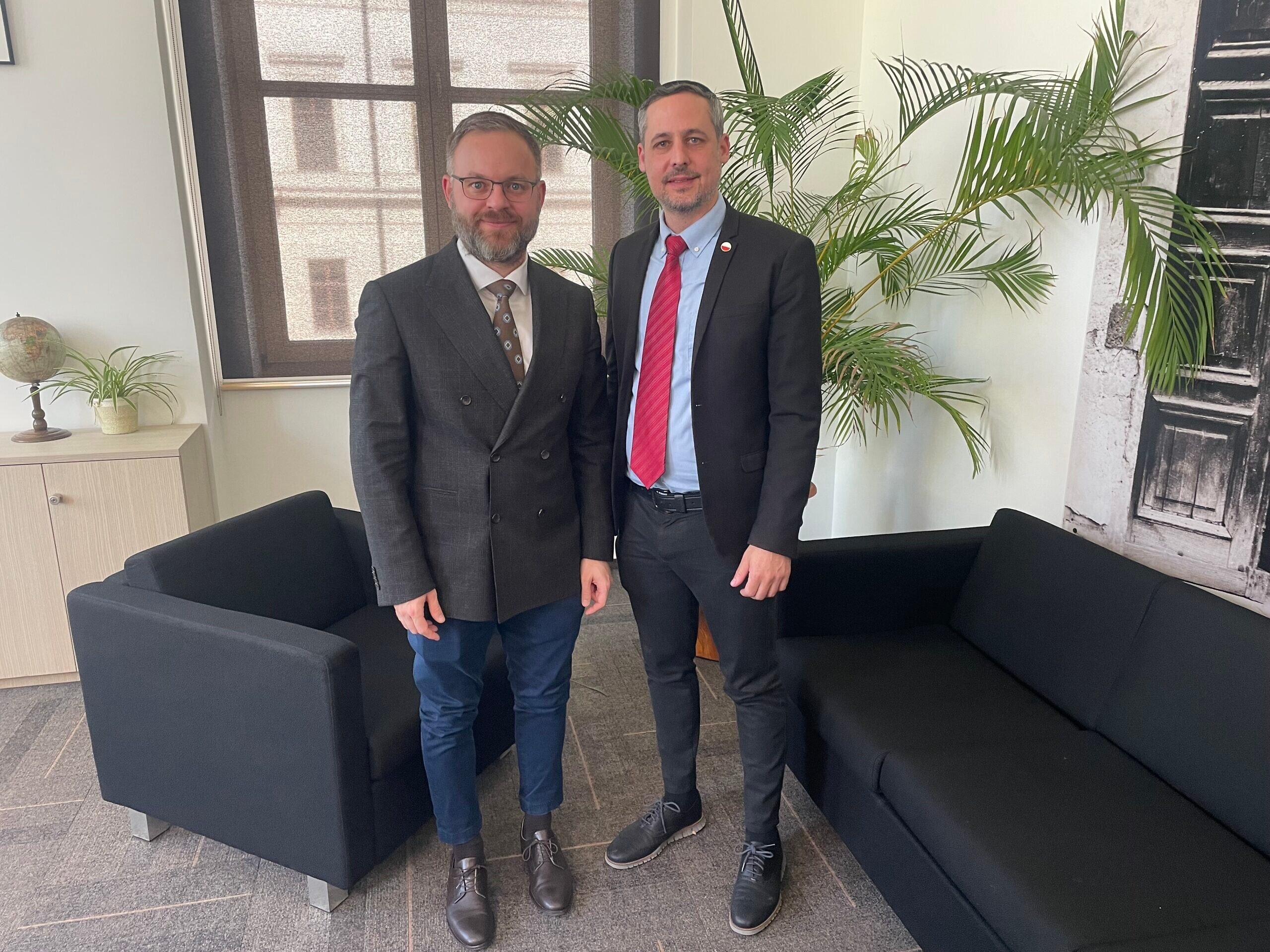
Balázs OrbánBalázs Orbán, member of the Hungarian National Assembly and political director for Hungarian Prime Minister Viktor Orbán, with Alex Traiman, CEO and Jerusalem bureau chief at JNS, at University of Public Service Budapest, where Israeli Prime Minister Benjamin Netanyahu received an honorary doctorate, April 4, 2025. Credit: Courtesy.

Orbán explained that the relationship between Hungary and Israel centers on three main pillars. First, “there is a general approach in Hungary which means zero tolerance on antisemitism, and it’s based on the idea that all Hungarian citizens should be protected.”

The second issue is migration. “We learned the lesson that this is a serious issue,” Orbán said.

The third pillar is a deep “strategic partnership between the two countries based on the friendship of the two leaders,” he said. “They know each other. They trust each other, so this is how you develop international, good international relations and this is what is happening between two countries.”

Over the past decade, Hungary has pushed back hard against the European Union and rejected calls for the mostly-Christian country to open its borders to millions of Muslim migrants. It has done so at great cost to its economy, in the form of EU sanctions.

“Hungary has to pay, every day, 1 million Euro because we don’t let the illegal migrants in, but it’s money which is worth it to spend,” Orbán said. “It is outrageous that we are under sanctions because of this.”

He pledged that Hungary will recoup those lost funds. “If you let those people in, the social costs and the financial costs would be much higher than 1 million euro per day,” he said.

The decision was not an autocratic policy. Hungary put the issue of Muslim migration to a national referendum to give citizens a role in the decision making. “This is why we Hungarians are very tough on that, and we have a zero illegal migration policy,” Orbán said.

“In this modern era in Europe, you want to fight against antisemitism. It would mean a very tough fight against illegal migration,” Orbán told JNS.

Netanyahu BudapestIsraeli Prime Minister Benjamin Netanyahu and his wife Sara Netanyahu were received by Hungarian Prime Minister Viktor Orbán and his wife with an honor guard at a welcoming ceremony in Budapest, April 3, 2025. Credit: Avi Ohayon/GPO.

The European Union has been promoting what Orbán refers to as a “neoliberal agenda” of pan-continentalism over strong nationalism, and the United Nations and other international institutions have been pushing a world order, in which national ambitions were meant to take a back seat.

“Look at the European Union. Look at Brussels. They isolated themselves from the Russians and cut energy cooperation, which caused serious harm for the European economy and competitiveness,” he said. “They started a trade war against China, which is the biggest market for many companies and based on ideological differences.”

He added the bloc similarly chose to isolate itself from the Trump administration.

“Hungary wants to go the other way around,” Orbán said. “We are a member of the European Union, but we maintain a relationship with Russia. We have a strategic partnership with China. We have a strategic partnership with the United of America, and we are looking for opportunities based on our own national interest.”

Noting that conservative ideology is making a strong comeback across Europe, Orbán said that “everybody respects sovereign countries, strong leadership, and everybody sees that the new world order has come.”

“We have to figure out the new rules, because the old rules are not working anymore,” he said.

Orbán added that the neoliberal push was not coming only from the European Union or international agencies like the United Nations and the International Criminal Court. Hungary did not have strong relations with the previous U.S. administration, under President Joe Biden, he said.

Hungary is also prioritizing the traditional family unit, according to Orbán.

The Biden administration was “promoting gender issues, which is kind of an anti-traditional family issue, so if somebody wants to promote an ideology which is against traditional way of life and traditional families, and having as many children as we can have, this is problematic,” he said.

Over time, “it will cause the decay or the decline of the society,” Orbán said.

Worse, the Biden administration and the billionaire George Soros support Hungary’s political opposition—similar to a problem that Netanyahu has contended with in Israel—according to Orbán.

Netanyahu HungaryIsraeli Prime Minister Benjamin Netanyahu and his wife Sara Netanyahu were received by Hungarian Prime Minister Viktor Orbán and his wife with an honor guard at a welcoming ceremony in Budapest, April 3, 2025. Credit: Avi Ohayon/GPO.

“Many opposition media, many opposition politicians, and actually the campaign of the latest opposition ‘united front’ was financed by American taxpayers money,” he said. He added that such financing “is undermining the legitimacy and the credibility of the United States.”

“I’m not the one who should talk from an American taxpayer position but as an outsider, I can see why they are so frustrated, because your American taxpayer money is used by the government” to “spread this progressive, Open Society ideology all over the world,” he said. “I think it’s the biggest corruption scandal of the world.”

“If Hungarian politics is financed out by a foreign country, I think it’s unacceptable,” he said. “It doesn’t matter whether it’s financed from China, the United States, or Austria or Germany.”

“I think it’s unacceptable and I think that it would also be unacceptable for you as well in Israel,” he said. “Israeli politics should be financed by the Israelis from Israel, not from outside.”

Hungary has much closer ties to the Trump administration and Orbán is not shy about showing how satisfied he is that U.S. President Donald Trump won, noting that his boss had openly predicted the president would be reelected.

“We are very thankful and I think it was a very good decision from the United States point of view to try to get rid of these corrupt structures,” he said. “We want to catch up, because now it’s time to act against these media outlets and NGOs and politicians. It’s again, a sovereignty issue for us.”
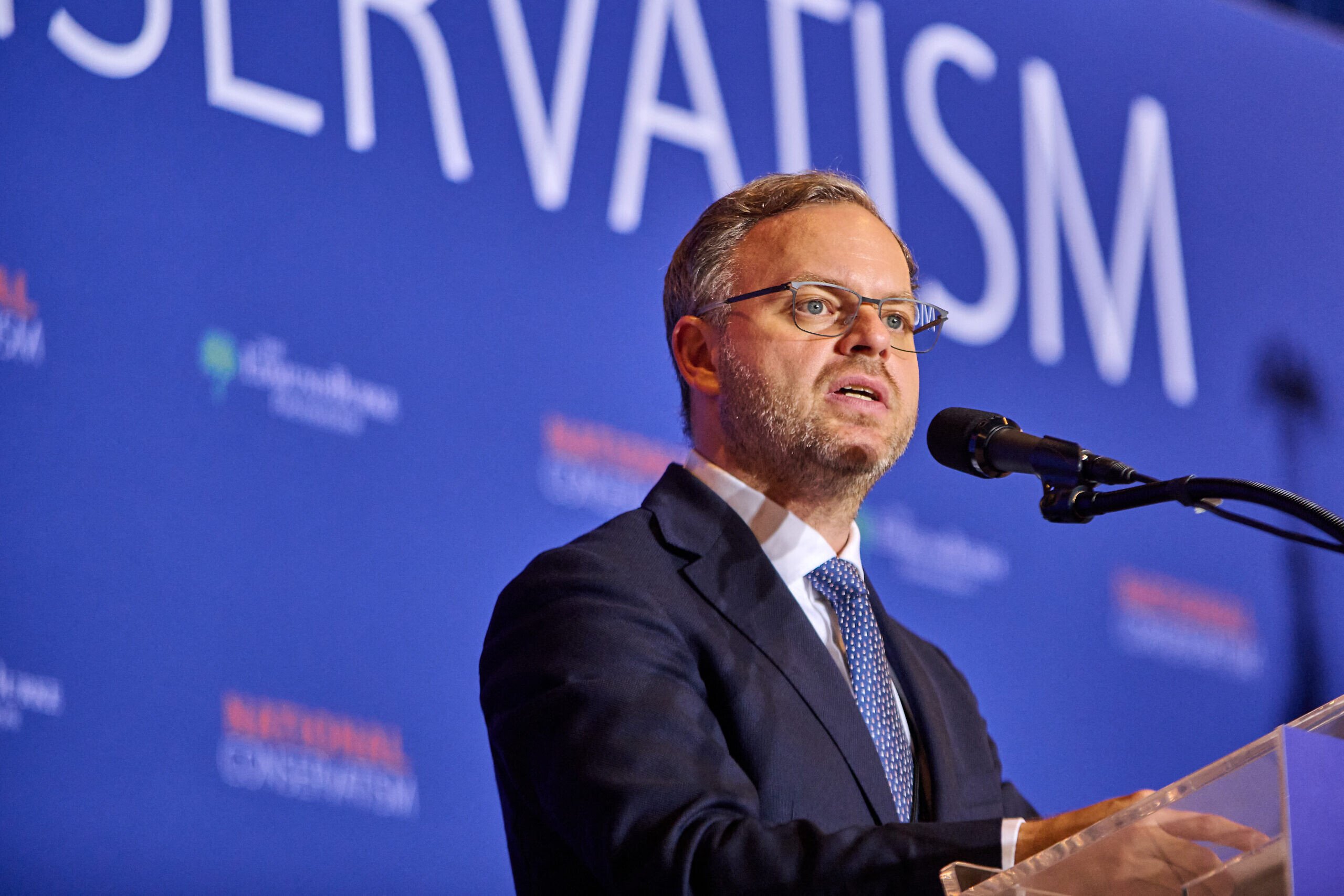
Balázs Orbán GettyBalázs Orbán, member of the Hungarian National Assembly and political director for Hungarian Prime Minister Viktor Orbán, speaks at the National Conservative Conference in Washington D.C., July 9, 2024. Credit: Dominic Gwinn/Middle East Images/AFP via Getty Images.

Orbán is afraid that with the Trump administration now opposing the neoliberal ideology, the push will be made even more powerfully from Europe.

“We have one fear that we see that since the liberals and the progressive positions are weakening in Washington, they will try to move to Brussels and they will try to use the European taxpayer money and use the European institutions to get new resources and to find new so-called donors and to increase their activities here in the continent,” he said.

Hungary’s policies have aroused the ire of progressives, but conservatives across Europe have taken notice and are following Hungary’s lead.

Miklós Szánthó, the director general of the country’s Center for Fundamental Rights, told JNS Hungary’s conservative resurgence responds to what conservatives realized internationally, “not only in Israel or in Hungary, but western in Europe, in the United States and in South America as well.” Conservatives worldwide understood that there was a progressive war “against our fundamental values of God, home and family.”

Europe is engaged in a deep “ideological clash,” according to Szánthó.

“Hungary is protecting its borders and it’s protecting its sovereignty and national identity,” he said. “But Western Europe, at least the urbanized regions of Western Europe, are lost. That is for sure.”

Szánthó said that the ideological battle is “the globalists versus the sovereigns.”

To push their ideological agenda, the globalists attempt to “destabilize the country’s social stability and undermine the state’s sovereignty. They try to remove stable, conservative, right-wing governments with foreign aid,” he said. “Those liberal practices I think are the same in Israel. In Hungary, in Western Europe, in the United States, globalists go on a political witch hunt to get their way, and they use lawfare against Trump, against Orbán, against France’s Le Pen, against Netanyahu. Those practices are the same.” (Marine Le Pen is a French politician.)

The so-called sovereigns are fighting back, according to Szánthó. “I would call it an international conservative renaissance or international conservative counter revolution of the common sense,” he said.

“I think that Israeli conservatives should play a leading role, because you are engaged in the same fight for the very same Judeo-Christian values of our civilization,” he said.

Orbán believes that both Netanyahu and the Hungarian prime minister are critical players in reshaping global politics.

“We see that we are entering in an era of—it’s a new world order,” Orbán told JNS.

The Hungarian political adviser referred to the movement as an “era of sovereignty,” in which countries can thrive by implementing unique political and economic systems and having the strong capability of “defending their own sovereignty.”

“What we see now is that a new kind of equilibrium is starting to emerge,” Orbán said.  “It’s obvious that these neoliberal principles failed. They’re not working anymore, and the power balance inside the world has changed.”

Countries are beginning to shift back to their original “political structures, different economic structures and different civilizational backgrounds,” he said.


Alex Traiman is the CEO and Jerusalem bureau chief of the Jewish News Syndicate (JNS) and host of “Jerusalem Minute.” A seasoned Israeli journalist, documentary filmmaker and startup consultant, he is an expert on Israeli politics and U.S.-Israel relations. He has interviewed top political figures, including Israeli leaders, U.S. senators and national security officials with insights featured on major networks like BBC, Bloomberg, CBS, NBC, Fox and Newsmax. A former NCAA champion fencer and Yeshiva University Sports Hall of Fame member, he made aliyah in 2004, and lives in Jerusalem with his wife and five children. 


Zawartość publikowanych artykułów i materiałów nie reprezentuje poglądów ani opinii Reunion’68,
ani też webmastera Blogu Reunion’68, chyba ze jest to wyraźnie zaznaczone.
Twoje uwagi, linki, własne artykuły lub wiadomości prześlij na adres:
webmaster@reunion68.com