Archives

In Elections Appeal to Israeli Arabs, PM Lapid Pledges to Boost Fight Against Crime

In Elections Appeal to Israeli Arabs, PM Lapid Pledges to Boost Fight Against Crime

Algemeiner Staff


Weapons seized by the Israel Police and the IDF in northern Israel, March 24, 2022. Photo: Israel Police

With weeks left before Israel’s next round of elections, Prime Minister Yair Lapid is appealing to the country’s Arab minority by promising to fight a years-long crime wave that has bloodied their communities.

In a video released in the lead up to elections in November, Lapid described “the fight against crime in the Arab sector” as a main priority of his government, which would be intensified after elections. “We will make an effort that has never been made here, to invest in the personal security of the citizens of Israel — with an emphasis on Arab society,” said the premier.

He pledged to “invest the necessary resources” and “bring the best people” to tackle the core issues important to Arab society: “The education of your children; the creation of job opportunities, especially for youths; housing plans; and integration into public services.”

“After years of neglect, Israel’s Arab citizens deserve to have a government that works for them,” said Lapid.

The appeal comes amid a crime wave affecting Arab Israeli society, which drew national attention last month following the murder of an Arab-Israeli woman and her teenage daughter in the central city of Lod.

A survey released late last month by the Abraham Initiatives, a nonprofit that aims to improve Jewish-Arab relations in Israel, found that an appeal by Lapid to Arab voters could increase their turnout — which is expected to hit record lows — by some 22 percent.

The crime wave has become a flashpoint issue in recent years, driving mass protests in Arab communities. Israel’s Arab minority, which makes up some 21 percent of the population, faces a disproportionate risk of murder compared to Jews, who constitute a 74 percent majority.

Between 2015-2019 in Israel, 56 percent of victims of crimes against the person — which encompasses violations ranging from threats to murder, attempted murder, and murder itself — were Jewish, while 44 percent were not, according to the Knesset Research and Information Center. The status quo appears to have impacted the sense of personal safety of Israeli Arabs, who were more than twice as likely to express a “very great or great” fear of facing violence in their neighborhood in a 2021 survey by Israel’s Central Bureau of Statistics.

The Abraham Initiatives tallied 47 fatalities in Arab society in the first half of 2022, the majority men under 40 years old. 52 fatalities were recorded in the same period the previous year, which ultimately ended with 126 Arab Israelis killed for reasons related to crime and violence. This was a continuation of the yearly increase in fatalities in the Arab sector, which saw 96 people killed in 2020, 89 in 2019, and 71 in 2018, according to the group.

Activists have said years of under-policing and neglect contributed to the ascendance of organized crime and proliferation of illegal weapons in Arab communities, while police have blamed a lack of trust and cooperation from the sector.

Last year, the Israeli cabinet approved a multi-year, NIS 30 billion (some $9 billion) plan to tackle disparities in the Arab sector, including education, healthcare, and infrastructure, as well as a second, NIS 2.4 billion (some $700 million) plan specifically to fight crime in Arab society.


Zawartość publikowanych artykułów i materiałów nie reprezentuje poglądów ani opinii Reunion’68,
ani też webmastera Blogu Reunion’68, chyba ze jest to wyraźnie zaznaczone.
Twoje uwagi, linki, własne artykuły lub wiadomości prześlij na adres:
webmaster@reunion68.com


News From Israel- October 03, 2022

News From Israel- October 03, 2022


ILTV Israel News


A deadly spike in terror attacks over the last 24 hours…

More and more Russians fleeing Moscow’s mobilization order… Though some are having trouble getting to Israel as planned…

An incredible discovery along the Northern Israeli border.


Zawartość publikowanych artykułów i materiałów nie reprezentuje poglądów ani opinii Reunion’68,
ani też webmastera Blogu Reunion’68, chyba ze jest to wyraźnie zaznaczone.
Twoje uwagi, linki, własne artykuły lub wiadomości prześlij na adres:
webmaster@reunion68.com


BDS opposition to Project Nimbus will harm Arab-Israelis, too – opinion

BDS opposition to Project Nimbus will harm Arab-Israelis, too – opinion

EMILY SCHRADER


The anti-Zionist BDS movement is politicizing an apolitical project that will benefit all of Israel’s citizens, including two million Arabs..

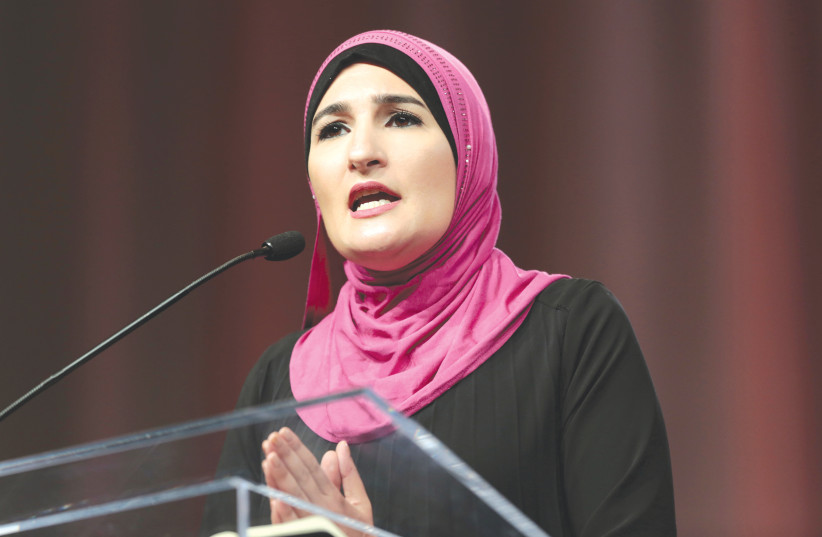
LINDA SARSOUR’S MPower group and Jewish Voice for Peace have led a campaign to demonize Amazon and Google over their contribution to Israeli ‘apartheid.’ /  (photo credit: REBECCA COOK/REUTERS)

Once again, the ugly BDS movement has reared its head over the landmark $1.2 billion (NIS 408 b.) Project Nimbus contract between Israel and tech giants Amazon and Google. Under the guise of civic action by employees, fringe anti-Israel groups, such as Jewish Voice for Peace (JVP) and Linda Sarsour’s MPower group have led a campaign to demonize the two companies over their contribution to Israeli “apartheid.” In the process, they are politicizing an apolitical project that will benefit all of Israel’s citizens, including two million Arabs.

Project Nimbus, according to Google, focuses exclusively on upgrading cloud computing services at the government level for ministries, such as finance, healthcare, transportation, and education, in an effort that will create over 3,000 jobs for Israeli Arabs and Jews alike. The project has nothing to do with military or weapons technology. But that’s never stopped anti-Israel activists from, once again, hijacking the narrative to make every single issue somehow about Palestinians.

This past week, protests against Project Nimbus took place in four locations, intended to give the impression there is a tremendous pushback from within the companies involved. The reality, however, is quite different.

he protesters claimed that Project Nimbus could be misused to oppress and surveil Palestinians, despite the fact that Google and Amazon confirmed that’s not related to the project in any capacity. Google’s representative even stated, “Today’s protest group is misrepresenting the contract. Our work is not directed at highly sensitive or classified military workloads relevant to weapons or intelligence services.”

Opposition to project stems from anti-Israel agenda

Much of the opposition to the project isn’t even stemming from the employees themselves, but from activists with a concerted agenda against Israel. From day one, the campaign “No Tech for Apartheid” was organized by JVP and MPower, not by the employees of the companies.

Smartphone with Google and Amazon apps are seen placed on keyboard in this illustration picture taken on June 25, 2021. (credit: REUTERS/DADO RUVIC/ILLUSTRATION

One of the organizations even purchased the domain name before the campaign was launched, in October 2021. Yet, both organizations have intentionally left their logos off any campaign materials in order to give the false impression that the campaign is simply that of ordinary Amazon and Google workers.

Despite their nefarious attempts to paint a picture of massive resistance, the reality is that Amazon employs 1.6 million people and Google employs over 150,000. Even if there are several hundred workers who are opposed to Project Nimbus, it is statistically insignificant.

Yet with the backing and efforts of anti-Israel groups like MPower, the opposition to Project Nimbus is being incorrectly reported as an organic campaign by workers rather than what it is: an astroturfing campaign by two fringe groups obsessed with Israel. Naturally, the press made no mention of JVP and MPower in their protest coverage, but only mentioned the leader of the campaign, a former Google employee who is also a JVP activist.

Unfortunately for these disingenuous activists, Amazon and Google, who already operate in Israel, aren’t the slightest bit interested in the self-sabotaging campaign to boycott Israel.

Israel’s gov’t working to include Arabs in tech sector

Perhaps the most ridiculous aspect of the entire campaign is that while they are accusing Israel of apartheid, just a few months ago, Israel announced a new $70 million (NIS 239 m.) plan to recruit more Arab Israelis into the booming tech sector.

The program will help integrate and foster entrepreneurship in the Arab sector as part of a five-year initiative to advance high-tech and science programs in Arab communities. It is being spearheaded by the Ministry of Innovation, Science and Technology, and the Ministry of Social Equality, together with the Israel Innovation Authority. Ironically, these ministries are likely to benefit by the work of Project Nimbus, meaning that these protesters are campaigning for a cause that will ultimately harm Arabs in Israel.

This is hardly the first time an anti-Israel campaign harms not only Israeli Arabs but also Palestinian workers. One of the inherent flaws in the proclaimed agenda of the Boycott, Divestment, Sanctions (BDS) movement is that it disproportionately harms Palestinian workers who are impacted by boycotts, such as what is occurring with Sodastream. The fizzy drink machine creator had a factory over the green line that employed hundreds of Palestinians but eventually relocated partially due to harassment, leaving dozens of Palestinians without jobs. But that’s not of concern for the BDS movement, which isn’t actually seeking a better future for Palestinians, rather, they seek the destruction of Israel.


The writer is the CEO of Social Lite Creative and a human rights activist.


Zawartość publikowanych artykułów i materiałów nie reprezentuje poglądów ani opinii Reunion’68,
ani też webmastera Blogu Reunion’68, chyba ze jest to wyraźnie zaznaczone.
Twoje uwagi, linki, własne artykuły lub wiadomości prześlij na adres:
webmaster@reunion68.com


What Has the Game-Changing Abraham Accords Accomplished After 2 Years?

What Has the Game-Changing Abraham Accords Accomplished After 2 Years?

Israel Kasnett / JNS.org


Israel’s Prime Minister Benjamin Netanyahu, US President Donald Trump and United Arab Emirates (UAE) Foreign Minister Abdullah bin Zayed display their copies of signed agreements as they participate in the signing ceremony of the Abraham Accords, normalizing relations between Israel and some of its Middle East neighbors, in a strategic realignment of Middle Eastern countries against Iran, on the South Lawn of the White House in Washington, US, September 15, 2020. Photo: REUTERS/Tom Brenner/

 Jerusalem this week was in a festive mood as United Arab Emirates Foreign Minister Sheikh Abdullah bin Zayed Al Nahyan arrived to mark the second anniversary of the Abraham Accords.

On September 15, 2020, Sheikh Abdullah and Israeli Prime Minister Benjamin Netanyahu signed a normalization agreement known as the Abraham Accords, together with Bahraini Foreign Minister Abdullatif bin Rashid Al Zayani, at a ceremony on the White House lawn, chaired by then-US President Donald Trump.

While State Department spokesman Ned Price has in the past refused to call the Abraham Accords by name, referring instead to “normalization agreements,” the accords, forged during Trump’s tenure, led to normalized relations between Jerusalem and a number of Arab countries, namely the UAE, Bahrain, Morocco and, in partial measure, Sudan.

Most important, the accords have also led to a massive reconfiguration of Israel’s position in the Middle East, with the Jewish state now seen by Arab countries as an ally and asset, instead of a sworn enemy.

In a meeting with Israel’s President Isaac Herzog on Thursday, Sheikh Abdullah said, “This is historic, but I think in many ways this is a relationship which very few thought that in two years it would be as successful.”

Israel has spent much energy touting the success of the Abraham Accords and encouraging other countries to join. In July, US President Joe Biden visited Israel and Saudi Arabia, where there was speculation over warming ties between Jerusalem and Riyadh.

While Jordan and Egypt remain aloof from the developments, in part due to the Palestinian issue as well as widespread anti-Israel public sentiment in the two countries, the Abraham Accords, and Israel’s subsequent close ties with the UAE and Bahrain in particular, have led to agreements on everything from tourism to defense. Trade between the countries has reached approximately $2 billion annually and is expected to pass $10 billion within the next five years; Israeli officials point to this as a sure sign of success, with more to come.

But a poll in July by the Washington Institute reports that the proportion of those who view the Abraham Accords favorably in Saudi Arabia, Bahrain and the UAE “has dropped over the past year to a minority view,” David Pollock and Dylan Kassin said in an analysis.

According to them, “current attitudes contrast with the relative optimism exhibited by a significant percentage of Emiratis, Bahrainis, Saudis and even some Egyptians in the months after the announcement of the Abraham Accords.”

The authors also noted, however, that the data “indicates a countercurrent of openness to allowing business and social ties with Israelis in some parts of the Gulf, especially in comparison to their peers in Egypt, Kuwait and the Levant.” Opposition to allowing business or sports ties with Israel “remains at 85 percent in Egypt and 87 percent in Jordan despite long-standing official relations,” they wrote.

It is unclear whether there is a difference in these countries between the older generation, which has spent decades considering Israel as an enemy, and the younger generation, which is connected on social media and may have differing opinions on the subject.

Critics note that the Abraham Accords have failed in a number of ways. First, they have not led to new agreements with other Gulf Cooperation Council countries such as Oman, Qatar or Saudi Arabia, and they do not appear to have led to an improved view of Israel on the street. The agreements have also not led to any tangible improvement on the Palestinian front.

The March 2022 “Negev Summit” — a gathering of foreign ministers from Bahrain, Egypt, Israel, Morocco and the UAE, and facilitated by US Secretary of State Antony Blinken— went off course when Blinken used it to talk about the Palestinian issue instead of focusing on Iran, which was the original purpose of the gathering.

However, according to Gerald Feierstein and Yoel Guzansky of the Middle East Institute, “normalization has opened new opportunities for defense and security cooperation, especially among Israel, Bahrain and the UAE, which share a common perspective on the security threat posed by Iran.”

They said the Negev Forum that grew out of the Negev Summit, and which folded Egypt into the Abraham Accords coalition, “offered additional possibilities for cooperation on shared interests, including energy, food and water security, health and other issues.”

Jonathan Schanzer, senior vice president of research at the Foundation for Defense of Democracies, told JNS that “normalization is a process, not an event. There is no timeline or handbook for establishing warm ties after decades of enmity.”

Still, he remains optimistic about Israel’s ties with the UAE, Bahrain and Morocco. He is also confident that other Arab countries “will prioritize their national interests over the Palestinian issue.”

“Much of the region is undeniably ready to steer their countries toward stability and prosperity,” Schanzer said.

Others are optimistic as well.

Former Bahraini Ambassador to the US Houda Nonoo, the first Jewish ambassador to be appointed by an Arab country, told JNS, “We must celebrate the milestones between our nations. Through our support of them, coupled with the guiding light that our leaders and their diplomatic emissaries provide, we are able to watch as this relationship reaches its true potential. If this past year is any indication, the relationship between Bahrain and Israel is strong and will continue to flourish.”

She quoted the Chinese proverb that says, “One generation plants the trees; another gets the shade.”

“Our generation signed the accords to create a better future for our children and generations to come,” Nonoo said.

Avi Hasson, CEO of Start-Up Nation Central, said the Abraham Accords “unleashed great opportunity and potential for our region,” noting that the dialogue has shifted from defense and security to innovation and collaboration.

Hasson believes that trade and investment between Israel and the Abraham Accord countries “will double in 2023 and that innovation and technology will continue to play a significant part” in the relationships and cooperation.

In a video interview with the Im Tirzu NGO, former US Middle East envoy Jason Greenblatt suggested that instead of focusing on who will sign next, “we have to recognize the momentum that has happened since the Abraham Accords.”

“Rather than pressure Saudi Arabia and ask, ‘When are you going to sign?’” it is important to recognize that Saudi Arabia “is going through a tremendous transformation,” Greenblatt said.

As an example, he noted that Saudi Arabia has opened up air routes for flights to and from Israel. He added that “while a relationship with Israel is on that list somewhere, it is not on the highest part of the list.”

He believes this is true of Qatar as well but is unsure where Oman stands today.

In 2018, then-Premier Netanyahu visited Oman and met with Sultan Qaboos bin Said, leading to speculation over warming ties. But since Qaboos’s death in 2020, Oman has preferred to maintain a working relationship with Israel, without signing any agreement.

Greenblatt noted that Kuwait and Lebanon are not considering normalization agreements with Israel. However, reports have surfaced over the last few months suggesting that both countries were at some point considering their possibilities.

Avi Melamed, a commentator on Arab affairs and a former Israeli intelligence official, told JNS he does not foresee Saudi Arabia, Oman, Qatar or Kuwait officially joining the Abraham Accords in the near future, “though there is business being conducted between Israel and many of these countries.”

Melamed believes the countries that signed normalization agreements with Israel will deepen the relationships in the coming years “with an emphasis on intelligence, anti-missile and -rocket technologies and cyber, as well as advanced technologies that help solve and mitigate environmental and climate challenges.”


Zawartość publikowanych artykułów i materiałów nie reprezentuje poglądów ani opinii Reunion’68,
ani też webmastera Blogu Reunion’68, chyba ze jest to wyraźnie zaznaczone.
Twoje uwagi, linki, własne artykuły lub wiadomości prześlij na adres:
webmaster@reunion68.com


News From Israel- September 29, 2022

News From Israel- September 29, 2022

ILTV Israel News


Israel approves the use of attack-drones in Judea and Samaria, following recent escalations around the holidays.

MK Amichai Chikli banned from running with the Likud in upcoming elections. How will the party react?

An incredible organization that is changing the lives of thousands of Israeli Children…


Zawartość publikowanych artykułów i materiałów nie reprezentuje poglądów ani opinii Reunion’68,
ani też webmastera Blogu Reunion’68, chyba ze jest to wyraźnie zaznaczone.
Twoje uwagi, linki, własne artykuły lub wiadomości prześlij na adres:
webmaster@reunion68.com