
Archive | 2026/09/13

Szwecja: minister edukacji nosi Gwiazdę Dawida na znak solidarności


Szwecja: minister edukacji nosi Gwiazdę Dawida na znak solidarności

Hugh Fitzgerald


Celowe wyzwanie rzucone „lewicowej partii”.


Szwecja, podobnie jak wiele krajów europejskich, doświadcza fali antysemityzmu; podsycają ją liczni muzułmańscy migranci, których ten kraj przyjął. Jednak jedna migrantka, Simona Mohamsson, szwedzka minister edukacji i była muzułmanka, na znak solidarności ze szwedzkimi Żydami nosi Gwiazdę Dawida. Więcej o tej niezwykłej kobiecie można przeczytać tutaj: „Boy George nie jest sam: zobacz odważny gest urodzonej w muzułmańskiej rodzinie szwedzkiej polityk w obronie Żydów”, Aaron Hanscom, PJMedia, 19 sierpnia 2026 r.:

Po zamachu terrorystycznym na Bondi Beach w grudniu 2025 roku, podczas którego w trakcie obchodów Chanuki zastrzelono 15 osób, wicepremier Szwecji Ebba Busch wygłosiła mocne przesłanie poparcia dla narodu żydowskiego. Stwierdziła, że masakra w Australii była ostrzeżeniem pokazującym, jak niebezpieczna może stać się retoryka „globalizacji intifady”. Busch powiedziała również, że wobec gwałtownego wzrostu antysemityzmu na całym świecie nawet noszenie Gwiazdy Dawida może narazić człowieka na niebezpieczeństwo oraz że Żydzi mają prawo żyć bezpiecznie w Szwecji.

Od czasu tych wypowiedzi sytuacja społeczności żydowskiej w Szwecji – liczącej 20 tysięcy osób i będącej największą w Skandynawii – tylko się pogorszyła. Szwedzki Związek Młodzieży Żydowskiej opublikował po 7 października raport „Nie jesteśmy tutaj mile widziani”, zawierający wyniki ankiety przeprowadzonej wśród żydowskich studentów i pracowników uczelni. Szokujące 90% respondentów stwierdziło, że od 7 października bezpieczeństwo na uniwersytetach uległo pogorszeniu, a 70% miało niewielkie lub bardzo niewielkie zaufanie do tego, że instytucje społeczne będą w stanie im pomóc, jeśli doświadczą antysemityzmu.

Ten antysemityzm można było zobaczyć podczas antyizraelskiego protestu w lipcu 2025 roku w mieście Umeå. Na szubienicach wisiały manekiny ubrane w pasiaki z nazistowskich obozów koncentracyjnych, z Gwiazdami Dawida i numerami więźniarskimi. W widocznym miejscu umieszczono transparent ze słowami „Ludobójstwo to ludobójstwo to ludobójstwo”, a oczywiście nie zabrakło także kłamstwa o „zabójcach dzieci”, przedstawionego za pomocą postaci w kefii, trzymającej lalkę niemowlęcia i otoczonej palestyńskimi flagami.

A skąd pochodzi większość tego antysemityzmu? Suzan Quitaz odpowiedziała na to pytanie w artykule z 2024 roku dla Jerusalem Center for Security and Foreign Affairs:

Liczne badania i sondaże wykazały istnienie korelacji między islamizmem a wzrostem współczesnego antysemityzmu w społeczeństwach zachodnich, w tym w Szwecji. Jeśli chodzi o Szwecję, islam w krótkim czasie stał się drugą co do wielkości religią w kraju. Około 20% spośród 10 milionów mieszkańców Szwecji jest pochodzenia innego niż szwedzkie; według niektórych szacunków w Szwecji mieszka 810 tysięcy muzułmanów. Szwecja, podobnie jak inne kraje europejskie, doświadczyła od 2010 roku ogromnego napływu uchodźców i imigrantów. Większość z nich stanowili muzułmanie. W latach 2014–2016 Szwecja zajmowała drugie miejsce po Niemczech pod względem liczby przyjętych uchodźców, głównie Syryjczyków uciekających przed wojną domową; przyjęła ponad 200 tysięcy osób, z których 77% stanowili muzułmanie.

Wojna domowa w Syrii dobiegła końca. Czy szwedzki rząd odeśle teraz dziesiątki tysięcy syryjskich „uchodźców” do ich kraju, skoro nie mają już powodów, by obawiać się, że znajdą się w samym środku trwającej wojny?

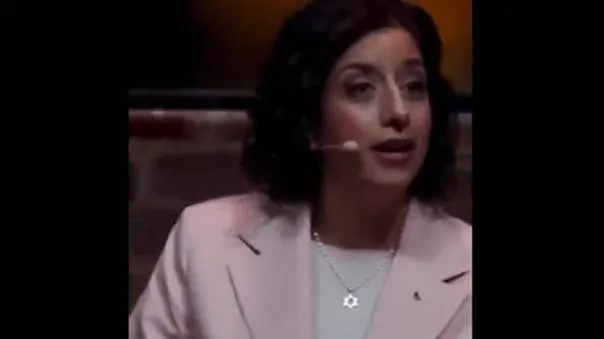
W obliczu tego gwałtownego wzrostu antysemityzmu odważny gest urodzonej w muzułmańskiej rodzinie szwedzkiej polityk nabiera w tym tygodniu dodatkowego znaczenia. Liderka szwedzkiej Partii Liberalnej, Simona Mohamsson, podczas poniedziałkowej debaty przywódców partii miała na szyi naszyjnik z Gwiazdą Dawida. „Noszę Gwiazdę Dawida dla dzieci, które w dzisiejszej Szwecji nie mają odwagi jej nosić” – powiedziała Mohamsson, która jest również szwedzką minister edukacji. Daniel Schatz, autor książki Sweden’s Relations with Israel and the Palestinians: An Untold History („Stosunki Szwecji z Izraelem i Palestyńczykami: nieopowiedziana historia”), nazwał ten moment „uderzającym”, ponieważ Mohamsson „zdecydowała się nosić właśnie ten symbol, który wielu szwedzkich Żydów boi się dziś publicznie eksponować”…

Mam ogromny szacunek dla nie-Żydów takich jak Mohamsson i Boy George, którzy mają odwagę stanąć po stronie Żydów i Izraela, i nadal będę zwracał uwagę na ich odwagę, kiedy tylko będę mógł.

To słowa dziennikarza Aarona Hanscoma, autora tego tekstu. Oddał Simonie Mohamsson sprawiedliwość, „zwracając uwagę na jej odwagę” w obronie szwedzkich Żydów. Obyśmy wszyscy poszli i czynili podobnie jak ludzie pokroju Mohamsson.

Daniel Schatz na swoim koncie X pisał:

„Jednym z najbardziej wstrząsających momentów kampanii wyborczej w Szwecji był ten z poniedziałkowej telewizyjnej debaty liderów partii, kiedy Simona Mohamsson, liderka Partii Liberalnej i szwedzka minister Edukacji i Integracji, pojawiła się z Gwiazdą Dawida. Mohamsson urodziła się jako Simona Mohammed. Jej ojciec jest Palestyńczykiem, a matka Libanką z szyickiego muzułmańskiego środowiska. To sprawiło, że ten gest był szczególnie wymowny. Mohamsson wyjaśniła swój wybór: „Noszę Gwiazdę Dawida za dzieci, które nie odważają się tego robić w dzisiejszej Szwecji”. Zmierzyła się z Partią Lewicy w związku z ujawnieniami, że jej posłowie wysyłali listy wsparcia do palestyńskich więźniów skazanych za ataki terrorystyczne na Izraelczyków. „Uważam, że Partia Lewicy musi ponieść odpowiedzialność za wysyłanie listów miłosnych do Hamasu i szerzenie strachu na naszych ulicach”, powiedziała. Jej komentarze nastąpiły po powtarzających się kontrowersjach związanych z politykami Partii Lewicy, którzy rozpowszechniali antysemickie teorie spiskowe i wyrażali poparcie dla grup terrorystycznych. Od 7 października demonstracje pro-palestyńskie w Szwecji zawierały antysemicką retorykę i wyrażenia poparcia dla organizacji terrorystycznych takich jak Hamas, PFLP i Hezbollah. W miesiącach po 7 października kraj odnotował prawie pięciokrotnie więcej antysemickich przestępstw z nienawiści niż w tym samym okresie rok wcześniej. Badanie wśród szwedzkich Żydów wykazało, że cztery piąte respondentów czuło się niepewnie, nosząc publicznie żydowskie symbole, podczas gdy prawie połowa rozważała opuszczenie Szwecji z powodu antysemityzmu. W tym kontekście Gwiazda Dawida Mohamsson stała się celowym aktem solidarności z nękaną szwedzką społecznością żydowską: wybrała noszenie właśnie tego symbolu, który wielu szwedzkich Żydów boi się teraz pokazywać.”


Zdjęcie: Simona Mohamsson, zrzut ekranu z X.

Link do oryginału: https://www.frontpagemag.com/sweden-minister-of-education-wears-star-of-david-as-a-sign-of-solidarity/?utm_source=FrontPage+Magazine&utm_campaign=a406dbe05a-EMAIL_CAMPAIGN_2026_09_09_03_47&utm_medium=email&utm_term=0_57e32c1dad-a406dbe05a-520618396&mc_cid=a406dbe05a&mc_eid=5cd77c7fa1

Front Page Magazine, 9 września 2026


Zawartość publikowanych artykułów i materiałów nie reprezentuje poglądów ani opinii Reunion’68,
ani też webmastera Blogu Reunion’68, chyba ze jest to wyraźnie zaznaczone.
Twoje uwagi, linki, własne artykuły lub wiadomości prześlij na adres:
webmaster@reunion68.com

25 years after 9/11, memory and resolve endure at Jerusalem memorial


25 years after 9/11, memory and resolve endure at Jerusalem memorial

Sharon Altshul


Families, first responders and officials gather in Jerusalem to honor the victims and reaffirm the U.S.-Israel bond.

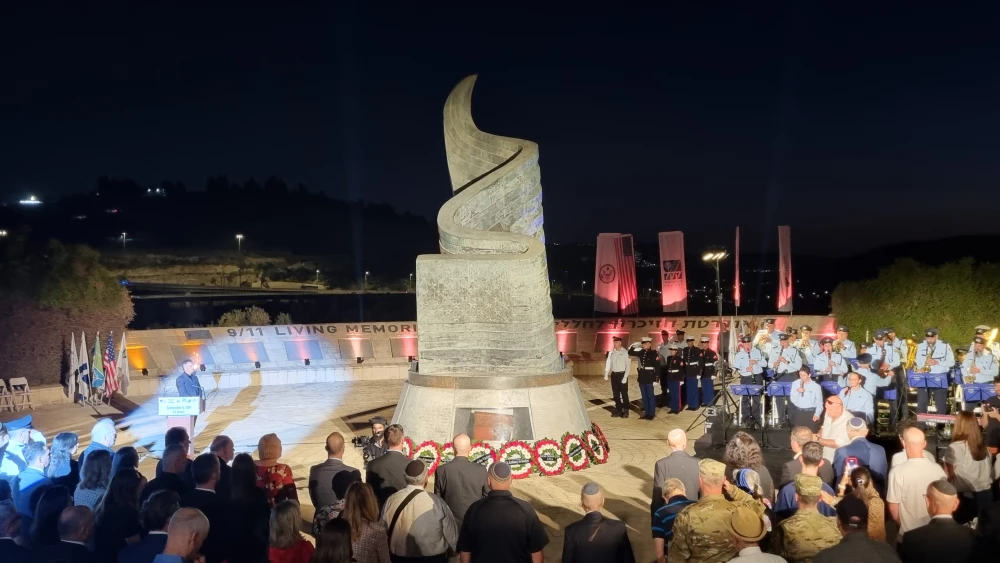
Participants gather at the 9/11 Living Memorial in Jerusalem’s Arazim Valley to mark the 25th anniversary of the Sept. 11 terrorist attacks, Sept. 9, 2026. Photo by Sharon Altshul.

As the sun descended over the Judean Hills on Wednesday evening, Sept. 9, roses were placed beside the names of the nearly 3,000 people killed in the United States on Sept. 11, 2001.

The setting was the 9/11 Living Memorial in Jerusalem’s Arazim Valley, where an American flag rises skyward in the form of a 30-foot (9-meter) bronze flame.

This year’s ceremony was held two days before the 25th anniversary of the terrorist attacks because Sept. 11 falls on the eve of Rosh Hashanah, the Jewish New Year.

The passage of a quarter-century has not diminished the meaning of the memorial or the personal grief of those who lost loved ones.

For Suri and Henoch Morgenstern of Woodmere, N.Y., Wednesday night marked their first time attending the annual ceremony at the Jerusalem memorial. Their daughter, Nancy Morgenstern, was among those killed in the World Trade Center.

“Here now, we wanted to talk about Nancy and have her remembered,” Suri told JNS.

Nancy was 32 and the oldest of five children. A vibrant woman who enjoyed cycling and running, she had worked as a travel agent for seven years before becoming an administrative assistant at the Cantor Fitzgerald financial services firm on the 104th floor of the North Tower.

No employee in Cantor Fitzgerald’s offices survived after American Airlines Flight 11 struck the tower.

For the Morgenstern family, the loss was compounded by the agonizing uncertainty that followed. They waited two and a half years before they could finally sit shivah for their daughter.

In August 2002, the family purchased the first ambulance for the Ramot Beit Shemesh community in Nancy’s memory. They have continued to honor her through acts of giving.

On Wednesday night, they stood among hundreds gathered beneath the flame-shaped flag.

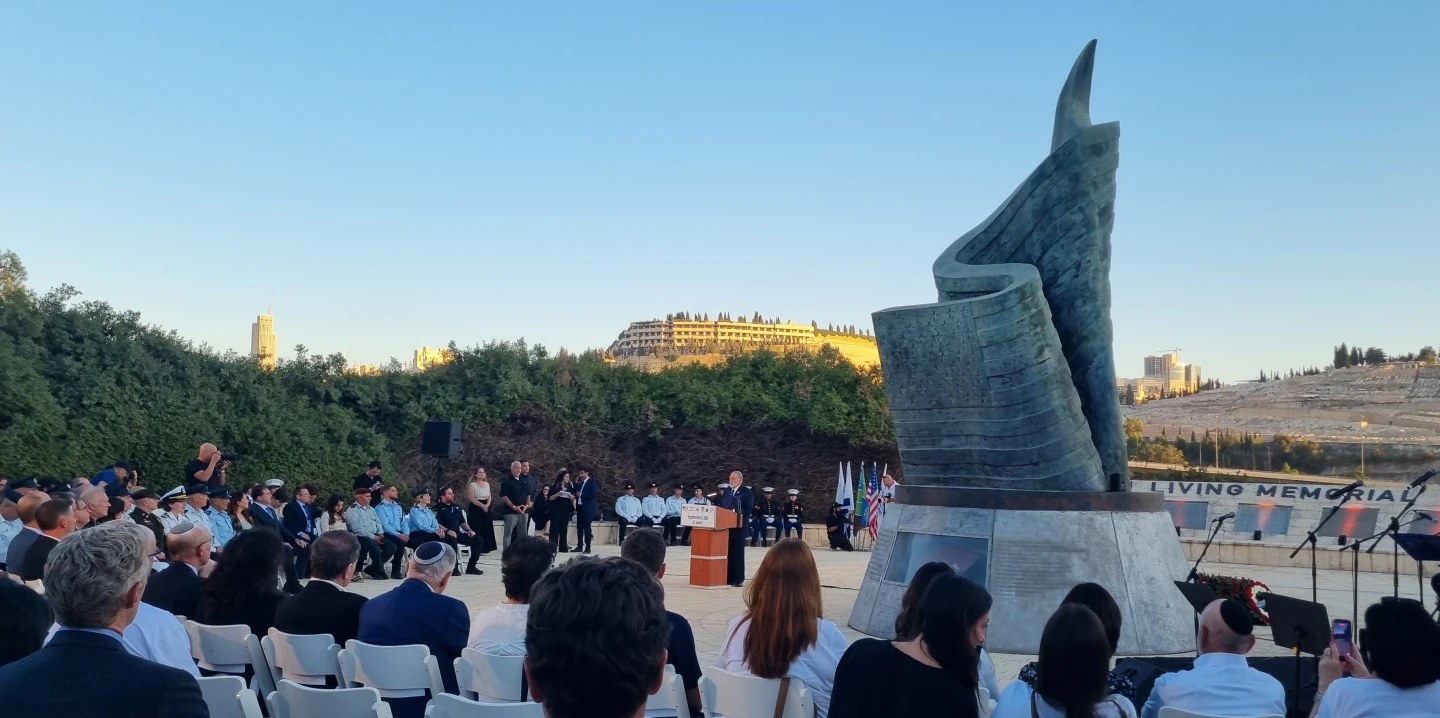
U.S. Ambassador to Israel Mike Huckabee speaks at a ceremony marking the 25th anniversary of the Sept. 11 terrorist attacks at the 9/11 Living Memorial in Jerusalem, Sept. 9, 2026. Photo by Sharon Altshul.

‘A wake-up call’

“Twenty-five years after the horrific September 11 attacks, we remember the 2,977 innocent lives taken and the families who have carried that loss,” U.S. Ambassador to Israel Mike Huckabee said at the ceremony.

Huckabee began his remarks with a personal memory of his father, a firefighter. As a young boy, he recalled visiting the fire station and sliding down the pole.

That memory took on a different meaning as he spoke about the firefighters and first responders who ran toward the burning buildings on Sept. 11.

“It was a wake-up call,” Huckabee said, emphasizing the courage of those who responded to the attacks.

Among the stories of extraordinary bravery was that of Rick Rescorla, head of security for Morgan Stanley. Thanks to evacuation planning and regular drills, approximately 2,700 Morgan Stanley employees in the South Tower were able to escape.

Rescorla returned to the building to help others. He never came out.

For Huckabee, honoring that day means remembering not only those whose lives were taken but also those who understood that their responsibility was to run toward danger while others ran away.

The toll continues

That responsibility, speakers emphasized, did not end on Sept. 11, 2001.

Professor Marc Wilkenfeld, a board-certified specialist in occupational and environmental medicine, has spent the past 25 years treating 9/11 first responders and studying the long-term health consequences of exposure to the toxic environment created by the attacks. After making aliyah, he continued his work in Jerusalem at Hadassah Medical Center Ein Kerem’s Occupational Health Department.

Speaking to JNS, Wilkenfeld stressed that the death toll from 9/11 did not end that morning.

“More than 9,000 more have died since,” he said. “Thousands more struggle with cancer, PTSD and lung disease. These are still people we have to care for.”

The legacy of Sept. 11 was also reflected in the presence at the ceremony of American and Israeli firefighters, police representatives and U.S. military personnel.

Israel Police spokesperson Dean Elsdunne told JNS that while the nature of the terrorist threat has changed over the past 25 years, the principle of confronting it has not.

“The threats have evolved over 25 years, but the alliance between Israel and the U.S. hasn’t changed,” he said.

“For those of us in uniform, ‘Never Forget’ isn’t just a phrase for a ceremony. It’s how we operate.”

An ‘unbreakable bond’

The ceremony also highlighted the enduring U.S.-Israel relationship.

Eyal Ostrinsky, chairman of Keren Kayemeth LeIsrael-Jewish National Fund, said the two countries share an “unbreakable bond.”

Russell Robinson, CEO of Jewish National Fund-USA, spoke of turning dreams into reality, planting trees and refusing to allow terrorism to destroy hope.

“Hope is more powerful than terrorism,” he said, calling on people to live lives of meaning and purpose.

The memorial embodies that connection.

Established in 2009 by KKL-JNF and JNF-USA, it is the only memorial outside the United States displaying the names of all those killed in the 9/11 attacks. Created by Israeli artist Eliezer Weishoff together with KKL-JNF landscape architect Yechiel Cohen, the bronze sculpture depicts the American flag transforming into a flame.

A piece of steel recovered from the ruins of the World Trade Center is incorporated into its base.

Around it are the names, arranged alphabetically, each representing a life, a family and a story.

Five Israelis were among those killed: Alona Avraham, Leon Lebor, Daniel Lewin, Shai Levinhar and Hagai Shefi.

As darkness settled over the Judean Hills, representatives of KKL-JNF, JNF-USA and the U.S. embassy jointly lit the memorial torch. Wreaths were placed at the foot of the flame, aided by U.S. Marines and Israeli firefighters.

The Israel Police Orchestra and Special in Uniform band performed, while the Heart of Nova group brought another layer of remembrance to the ceremony.

Tali Binar and Guy Ben-Shimon, survivors of the Supernova music festival massacre on Oct. 7, 2023, performed alongside Ofri Nahum, whose sister Nitzan was murdered in the attack.

American actress Patricia Heaton at a ceremony marking the 25th anniversary of the Sept. 11 terrorist attacks at the 9/11 Living Memorial in Jerusalem, Sept. 9, 2026. Photo by Sharon Altshul.

American actress Patricia Heaton also participated, reciting a poem at the memorial ceremony before returning to the United States.

The connection between two generations of terrorism was underscored by a 27-year-old U.S. Army veteran whose mother worked at the Pentagon on Sept. 11. Five of her mother’s colleagues were killed. In all, 59 passengers and crew aboard American Airlines Flight 77 and 125 people at the Pentagon were killed when the hijacked plane struck the building.

The juxtaposition was impossible to miss: a memorial to the victims of one generation of terrorism standing in a country still confronting the consequences of another.

Yet the evening was not solely about grief. It was about memory and resolve—remembering those who were murdered, those who survived, those who rushed toward danger, those who became ill years later and those who continue to confront terrorism today.

In the fading light, visitors moved along the memorial wall, stopping at individual names to place red roses. Twenty-five years after the deadliest terrorist attack in American history, the names remain etched in stone—and the obligation to remember endures.


Zawartość publikowanych artykułów i materiałów nie reprezentuje poglądów ani opinii Reunion’68,
ani też webmastera Blogu Reunion’68, chyba ze jest to wyraźnie zaznaczone.
Twoje uwagi, linki, własne artykuły lub wiadomości prześlij na adres:
webmaster@reunion68.com

From the Editor: As Jews Enter the New Year, the 25th Anniversary of 9/11 Offers an Important Reminder


From the Editor: As Jews Enter the New Year, the 25th Anniversary of 9/11 Offers an Important Reminder

Aaron Kliegman


People attend the ‘Light Over Darkness’ vigil honoring victims and survivors of a deadly mass shooting during a Jewish Hanukkah celebration at Bondi Beach on Dec. 14, in Sydney, Australia, Dec. 21, 2025. Photo: REUTERS/Hollie Adams

You are far more likely to die from an Islamist terror attack in the foreseeable future than a war with China.

That’s not to diminish the threat from Beijing, which poses the greatest long-term strategic challenge to the West. But it means that an ISIS-inspired nut could realistically run into a supermarket in New York or Sydney tomorrow with a knife shouting “Allahu Akbar!”

Unlikely, sure, but possible. I’d argue the odds of China invading Taiwan tomorrow are lower.

The point is, the global war on terrorism isn’t over, even if we don’t like to use such language anymore.

Jews should be more aware of this reality than most for two reasons. First, they are disproportionally targeted on every continent except Antarctica (our reporting on the Jewish community there is admittedly a little thin). And second, the world’s only Jewish state is now leading the civilized world in the fight against global jihadist terrorism, a quarter century after the US declared a “war on terror.”

It’s fitting, then, that Rosh Hashanah begins this year on the evening of the 25th anniversary of the 9/11 terrorist attacks. As Jews around the world celebrate the new year, they can remember that the privilege of continuing a 4,000-year-old heritage carries a burden: eternal vigilance. The Jewish story of survival, continuity, and flourishment, despite unparalleled persecution, includes the ongoing fight against modern jihadist terrorism. Israel is keenly aware of this fact.

Too many people, however, seem to think Islamist terrorism receded into the background of history — perhaps when the US withdrew from Afghanistan, if not earlier.

The irony is that the Taliban now control Afghanistan, reportedly allowing al Qaeda to operate there in an environment eerily reminiscent of the world on Sept. 10, 2001.

The terrorist threat extends well beyond where the 9/11 attacks were planned. For example, Al Qaeda’s affiliate in the Sahel, Jama’a Nusrat ul-Islam wa al-Muslimin (JNIM), has besieged Mali’s capital and wreaked havoc across the region, while its Somali affiliate, al-Shabaab, continues to drive instability in the Horn of Africa.

Meanwhile, a resurgent terrorist threat from Islamic State (ISIS) has US officials alarmed, with the group’s branches spreading across the Middle East and Africa and carrying out attacks in places far afield such as Russia. ISIS has also inspired attacks around the world, from the US to Australia.

“In region after region, terrorist groups are outpacing the ability of local governments to respond,” US Sen. Ted Cruz (R-TX) said at a hearing of the Senate Subcommittee on Africa and Global Health Policy in April. “The failures threaten our interest globally and endanger the American homeland. The threat is rapidly growing and demands attention.”

Then there’s Hamas, Hezbollah, the Houthis — and more of Iran’s network of terrorist proxies, which are largely based in the Middle East but operate across Eurasia, Africa, and even the Western Hemisphere. Just this year, a new Iran-backed group claimed responsibility for a string of arson and bombing attacks in Europe, primarily against Jewish targets.

All of this sounds grim, but it doesn’t mean the war on terror was a failure. Actually, it was largely a success.

Above all, there was no subsequent major terrorist attack on US soil after the Twin Towers fell. Indeed, only one lethal incident directed by a foreign jihadist organization took place in the country since 9/11: the 2019 shooting at Naval Air Station Pensacola, where an al Qaeda operative killed three people. That was the only “success” among several thwarted and otherwise failed plots.

Other atrocities — such as the Pulse nightclub attack in Florida in 2016 — were perpetrated by lone-wolf, self-radicalized jihadists inside the US.

There were many additional attacks around the world, from Madrid in 2004 to Moscow in 2024. But better airport security, improved international efforts to stop the terrorist money flow, and an entire counterterrorism infrastructure built in the wake of 9/11 have made such tragedies significantly more difficult to perpetrate, particularly in the US. And critically, much of the Sunni Arab world, led by Saudi Arabia and the UAE, have cracked down on radicalism and moderated what they teach in schools.

Still, this is a multi-generational struggle against an enemy that thinks in terms of centuries, even millennia, not election cycles. And as Jews should be aware, this multifaceted Islamist enemy is not done trying to kill.

Since last Rosh Hashanah, Jewish communities suffered the Bondi and Manchester atrocities, both perpetrated by jihadists.

Then in March, an assailant rammed a truck full of explosives into a Michigan synagogue, prepared to open fire on children inside before being stopped by security and killing himself. The attacker was inspired by and even linked to Hezbollah, according to the FBI.

Months earlier, the US saw the return of fatal antisemitic violence, with Jewish victims killed in such attacks for the first time since 2019. Specifically, two Israeli embassy staffers were shot dead in Washington, DC, last May, followed weeks later by a firebombing in Colorado that killed one person and left several others injured. In each case, authorities said the assailant called for a “Free Palestine” and indicated he was motivated by the Gaza war.

In the Middle East, Hamas, Hezbollah, and Iran are maniacally trying to destroy Israel, home to roughly half the world’s Jews and the Jewish people’s only true place of refuge, while also plotting attacks across Europe and beyond. The Israelis are actively fighting all these forces, even as much of the Western world criticizes them for it.

Of course, this is not just about Jews. In Nigeria, for example, Islamist terror groups are slaughtering Christians. And Muslims are always the main targets of jihadists seeking to impose Islamic supremacism wherever they can.

This really is a civilizational struggle, with Israel leading the charge. Those wishing to isolate Israel risk, among other things, making all of us more vulnerable to terrorism — Jews and non-Jews alike.

Amid the hostility, Jews in Israel and the diaspora are doing what they do best: surviving and living well. After all, life goes on; the Jewish people endure. And thanks to the Mossad and the IDF, a lot of terrorists die.

Rosh Hashanah’s coinciding with 9/11 presents an opportunity to reflect on the constant, never-ending vigilance that’s required of the Jewish people to ensure their own survival, especially after Oct. 7, 2023.

Jewish and Israeli life will continue, amid all the terrorism and antisemitism. The people who brought monotheism to the world and laid the moral, legal, and spiritual foundation for Western civilization will always have a special responsibility to continue the tradition — and therefore carry a unique burden to be targeted for it. As I’ve written before, antisemitism persists so stubbornly and pervasively because people believe Jews are the “chosen people,” and they see in Israel that same chosenness.

In multiple ways, the Jewish people are on the frontlines of the war on terror. As we enter the year 5787, Jews should not underestimate the jihadist threat, but they should rest well knowing they are the standard-bearers of civilization in the fight. Large chunks of the world don’t appreciate this fact, which means that Jews just need to be that much more honorable in performing their duty to the world.


Aaron Kliegman is the executive editor of The Algemeiner.


Zawartość publikowanych artykułów i materiałów nie reprezentuje poglądów ani opinii Reunion’68,
ani też webmastera Blogu Reunion’68, chyba ze jest to wyraźnie zaznaczone.
Twoje uwagi, linki, własne artykuły lub wiadomości prześlij na adres:
webmaster@reunion68.com
