Archive | 2026/09/09

ONZ w drodze ku nieznanemu

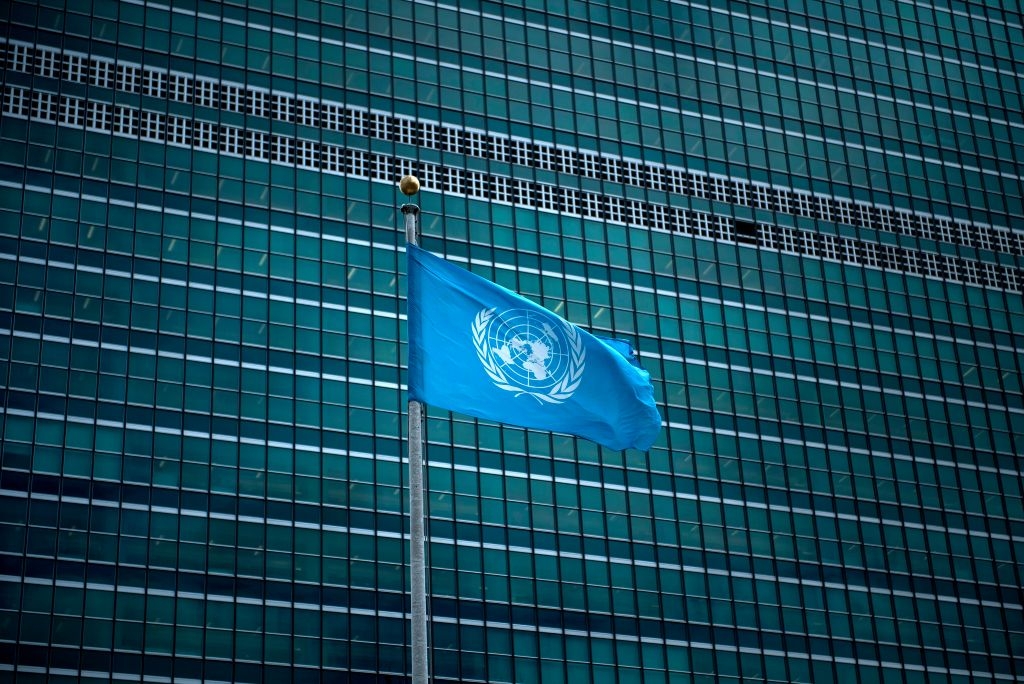
(Zdjęcie: Brendan Smialowski/AFP via Getty Images)

ONZ w drodze ku nieznanemu

Amir Taheri
Tłumaczenie: Andrzej Koraszewski


Antonio Guterres, sekretarz generalny Organizacji Narodów Zjednoczonych, wkrótce zacznie opróżniać swoje biurko i szykować się do emerytury, a oceny jego kadencji wahają się od “znośnej” po “przeciętną”. Są również tacy, którzy wysoko cenią jego żarliwą obronę Palestyńczyków oraz krytyczne stanowisko wobec izraelsko-amerykańskiej wojny przeciwko Islamskiej Republice Iranu. Są też tacy, którzy potępiają go właśnie za te kontrowersyjne stanowiska.

Prawdziwym problemem jest jednak spadek znaczenia i autorytetu stanowiska, które niegdyś uważano za najwyższą funkcję dyplomatyczną na świecie. Utworzono je w czasie, gdy powojenny porządek światowy zmierzał ku zimnej wojnie, wychodząc z założenia, że dyplomatyczny bufor pomiędzy dwoma wyłaniającymi się blokami będzie w stanie amortyzować wstrząsy i zapobiec kolejnemu konfliktowi zbrojnemu.

Jednym z kluczowych założeń było uczynienie wojny praktycznie niemożliwą, chyba że zostałaby ona specjalnie usankcjonowana przez Radę Bezpieczeństwa Organizacji Narodów Zjednoczonych. Kierowana przez USA interwencja na Półwyspie Koreańskim była pierwszą wojną usankcjonowaną przez Radę Bezpieczeństwa ONZ.

Jednak nawet wówczas sekretarz generalny ONZ Trygve Lie, norweski działacz związkowy, który został dyplomatą, otwarcie krytykował stanowisko Waszyngtonu – przyjmując taką postawę, aby pokazać, że sekretarz generalny nie jest jedynie bezwolną pieczątką Rady Bezpieczeństwa. Lie zajął również niezależne stanowisko podczas kryzysu związanego z nacjonalizacją irańskiej ropy, kiedy Wielka Brytania zagroziła inwazją na Iran.

Co ciekawe, ani USA, ani Wielka Brytania nie poczuły się dotknięte stanowiskiem Liego. Niepisana zasada głosiła, że sekretarz generalny ONZ musi być postrzegany jako instytucja stojąca ponad interesami państw członkowskich. Zasady tej mniej więcej przestrzegano, gdy Liego zastąpił szwedzki dyplomata Dag Hammarskjöld. Umożliwiło to Hammarskjöldowi aktywne wspieranie procesu dekolonizacji, zwłaszcza w Afryce Subsaharyjskiej – kwestii, którą interesował się szczególnie i która mogła doprowadzić do jego śmierci w tajemniczej katastrofie lotniczej, o którą obwiniano CIA i/lub belgijskich najemników.

Hammarskjöld spotykał się z krytyką za swoje niejednoznaczne stanowisko wobec szeregu tragicznych wydarzeń, w tym masowych protestów w zdominowanych przez Związek Radziecki Polsce i na Węgrzech oraz brytyjsko-francusko-izraelskiej inwazji na Egipt w 1956 roku.

Birmański dyplomata U Thant, który zastąpił Hammarskjölda, na nowo zdefiniował tę funkcję jako zasadniczo biurokratyczną. Nadzorował rozszerzanie działalności ONZ na nowe obszary, zatrudniał kolejnych pracowników i pomagał organizować kolejne konferencje.

Spośród następców U Thanta jedynie peruwiański dyplomata Javier Pérez de Cuéllar zdołał zakończyć swoją kadencję bez kontrowersji – by nie powiedzieć: skandalu. Austriak Kurt Waldheim, który początkowo popierał chomeinistyczny przewrót w Iranie, został zdemaskowany jako były nazistowski oficer uczestniczący w łapankach Żydów w Grecji. Egipcjanin Boutros Boutros-Ghali zdołał nastawić przeciwko sobie niemal wszystkich, wyciągając na światło dzienne kilka trupów z szafy, i ostatecznie poprzestał na jednej kadencji. Ghańczyk Kofi Annan dobrze się prezentował w niezwykle trudnych czasach, lecz ostatecznie jego reputację splamił skandal związany z irackim programem “ropa za żywność”.

Zgodnie z porozumieniem między państwami członkowskimi sekretarz generalny musi pochodzić z państwa innego niż pięć krajów dysponujących prawem weta w Radzie Bezpieczeństwa. W ubiegłym roku Zgromadzenie Ogólne zaostrzyło zasady i wprowadziło większą przejrzystość procesu wyboru sekretarza generalnego.

Zgodnie z tradycją następny sekretarz generalny powinien pochodzić spoza Europy i Azji, co pozostawia Amerykę Łacińską i Afrykę jako dwa główne obszary poszukiwań. Państwa Ameryki Łacińskiej wystawiły kilku kandydatów, ale tylko dwoje z nich ma profil odpowiadający wymaganiom tego stanowiska.

Jednym z nich jest Rafael Grossi, argentyński dyrektor generalny Międzynarodowej Agencji Energii Atomowej. Jego problem polega na tym, że Javier Milei, obecny prezydent Argentyny, nie jest jego zwolennikiem. A ponieważ Milei należy do faworytów prezydenta USA Donalda Trumpa, może to również oznaczać niechęć Waszyngtonu.

Była prezydent Chile Michelle Bachelet Jeria stoi przed podobnym problemem. Nowy prezydent Chile José Antonio Kast znajduje się po przeciwnej stronie politycznego spektrum i również jest blisko związany z Trumpem, który uważa Bachelet za zaciekłą lewaczkę.

Afryka ma dwóch kluczowych kandydatów.

Pierwszym jest były prezydent Senegalu Macky Sall, orędownik tak zwanego “globalnego Południa”. Państwa europejskie odnoszą się do Salla z nieufnością, choćby z powodu jego zabiegania o względy Władimira Putina w samym środku wojny na Ukrainie. Co gorsza, Sall musi zmierzyć się z senegalskim wymiarem sprawiedliwości w związku z szeregiem zarzutów dotyczących jego kontrowersyjnej prezydentury. Jeszcze do zeszłego miesiąca Dakar niechętnie odnosił się do poparcia jego kandydatury.

Drugim liczącym się kandydatem z Afryki jest Olara Otunnu, ugandyjski ekonomista, którego życiorys obejmuje pracę w organizacjach międzynarodowych. Wisienką na torcie w tym CV jest krótka znajomość z byłym prezydentem USA Billem Clintonem w minionych czasach. Pytanie brzmi, czy Uganda jest w stanie zmobilizować poparcie dla Otunnu poza własnymi granicami.

Niektórzy członkowie zabiegają o to, aby na stanowisko sekretarza generalnego wybrano kobietę. Pomysł ten pojawił się po raz pierwszy, gdy była premier Pakistanu Benazir Bhutto była faworytką na to stanowisko. Sama jednak wykluczyła się z rywalizacji, woląc próbę odzyskania stanowiska premier Pakistanu. Została zamordowana, gdy była na drodze do osiągnięcia swojego celu w Islamabadzie.

A co, jeśli przed wrześniowym posiedzeniem Zgromadzenia Ogólnego w Nowym Jorku pojawi się czarny koń?

Mówi się o dwóch innych kobietach.

Jedną z potencjalnych kandydatek mogłaby być Audrey Azoulay, francusko-marokańska była dyrektor generalna UNESCO, która pełniła również funkcję francuskiej minister kultury. Mogłaby zdobyć poparcie zarówno Unii Afrykańskiej, jak i Unii Europejskiej, nie wspominając już o Lidze Arabskiej. Problem może jednak stanowić jej podwójne obywatelstwo. Tak czy inaczej, jej kandydaturę musiałby zgłosić Rabat lub Paryż – albo oba te miasta.

Drugą wymienianą możliwością jest Rebecca Grynspan Mayufis. Jako dyplomatka z Kostaryki – najmniej kontrowersyjnego państwa Nowego Świata – a zarazem kobieta, mogłaby skorzystać na szerokim konsensusie.

Nawet wtedy w ostatniej chwili magik może wyciągnąć z kapelusza królika. Zdarzało się to już wcześniej.

Niezależnie od tego, kto obejmie stanowisko, prawdziwe pytanie brzmi: czemu właściwie ma ono służyć? Przy wszystkich swoich niedociągnięciach Guterres nie był nawet konsultowany w sprawie żadnego z najważniejszych wydarzeń swojej kadencji, nie mówiąc już o zaoferowaniu mu choćby stołka przy stole najważniejszych graczy. Kierowanie przeciwko niemu osobistych ataków jest, delikatnie mówiąc, niesprawiedliwe.

Co może zrobić sekretarz generalny, kiedy państwa dysponujące prawem weta, takie jak Rosja i USA, wszczynają wojny albo – jak Chiny – grożą ich wszczęciem?

Jeśli funkcja ta ma być jedynie elementem dekoracyjnym, jak było w przypadku Kofiego Annana, wystarczy dowolny fotogeniczny, wielojęzyczny mężczyzna lub kobieta. Jeśli zaś do kierowania rozrośniętą i kosztowną machiną zapewniającą intratne posady potrzebne są zdolności menedżerskie, należałoby wyjść poza krąg dyplomatów i zwrócić się ku nowemu, młodszemu pokoleniu liderów biznesu.

W przededniu Zgromadzenia Ogólnego świat – a wraz z nim zmiany na stanowisku genseka ONZ – nadal zmierza ku nieznanemu.


Zawartość publikowanych artykułów i materiałów nie reprezentuje poglądów ani opinii Reunion’68,
ani też webmastera Blogu Reunion’68, chyba ze jest to wyraźnie zaznaczone.
Twoje uwagi, linki, własne artykuły lub wiadomości prześlij na adres:
webmaster@reunion68.com


The new libel to destroy Israel


The new libel to destroy Israel

Melanie Phillips


Violence in the “West Bank” is being malevolently misrepresented.

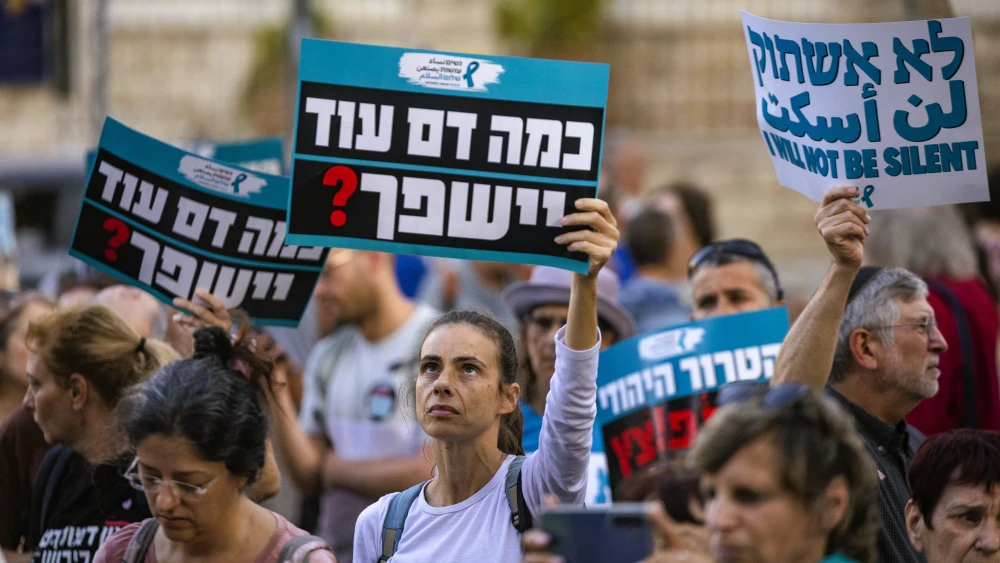
Protesters demonstrate at Paris Square in central Jerusalem against attacks by extremist Jewish settlers on Palestinians in the West Bank, Sept. 2, 2026. Photo by Yonatan Sindel/Flash90.

As every part of the “Gaza genocide” mass libel is exposed as a total fabrication, the new mass libel of “settler violence” has replaced it.

From the politicians, NGOs and mainstream media that promulgated the genocide lie, there’s been no acknowledgment of the collapse of the grotesque falsehoods they promoted about starvation and wanton killing of health workers and journalists that have fueled unprecedented attacks on Jews throughout the West.

Instead, without drawing breath, they’re promoting the new purported Israeli mass atrocity of “settler violence.”

This is doing far more damage than the genocide charge. That was patently preposterous, an inversion of the reality of genocidal Palestinian Arab attack and Israel’s supremely just war of self-defense.

By contrast, the claim of “settler violence” carries an element of truth that is being vastly exaggerated to damage the State of Israel itself.

The narrative in the West is that fanatical and violent Israeli “settlers” harass and attack local Arabs to drive them off their land, so that these ultra-nationalist religious Jews can erect yet more “illegal” outposts in a land grab across the “West Bank” of Judea and Samaria.

In recent days, this has spawned a sub-narrative of violent “settlers” laying siege to Arabs cowering inside their homes in the villages of Qusra and Jalud.

There’s no doubt that there’s a problem with fanatical Israeli youths attacking Arab property or mosques that has not been properly addressed. The Israel Defense Forces have now arrested a 19-year-old Israeli over the disturbances in Qusra. The authorities should have shut this problem down, but reprehensibly have not.

But these violent Israelis are very small in number.

David Zini, the head of the Israeli Security Agency (or Shin Bet), has said there’s a hard core of 70 to 100 offenders, mostly not even “settlers” at all but delinquent youths from elsewhere in the country.

Other Israeli sources put the number of these delinquents at between 200 and 500.

But half a million Israeli residents live in these disputed territories—overwhelmingly law-abiding people. And while they are being grotesquely defamed across the West, they are coming under violent and sometimes murderous attack by Arabs every single day.

The overwhelming majority of attacks in these disputed areas are by Arabs on Jews—thousands of incidents of rock-throwing, stabbings, arson, car-rammings, criminal damage and murder.

Moreover, the stories of these sieges have another side.

Last Shabbat, there was a reported siege of an Arab house on Talpiot hill near Jerusalem, with masked Israelis arriving by car.

But according to local Israeli residents, dozens of masked Arab rioters from the nearby village of Kfar Qasim, accompanied by foreign media photographers, ascended the hill, threw stones at residents, and set up barricades to thwart the arrival of IDF forces.

More Arabs then reportedly entered an abandoned house, barricaded themselves inside, and threw stones from it at the Jews in an attempt to brand the incident as another “siege.” Videos shot by local Israeli residents showed masked Arabs throwing stones while foreign journalists stood behind them filming.

On the same Shabbat, masked men described as “settlers” attacked an NBC crew in nearby Jalud. The American journalists were investigating a very similar claim that settlers had “besieged” an Arab family’s property.

The NBC footage itself shows masked men driving directly up to a camera crew, attacking them and leaving. But there was no evidence that these were even Israelis, let alone “settlers.”

There’s also a pattern of American involvement in these situations.

Loui Ridi, a Palestinian American from Ohio who lives full-time in America, said he built his house—the “siege” house—in Qusra three years ago.

In The New York Times, Ridi acknowledged that a week after the siege began, he returned to the house carrying an American flag “as a signal to the American people and the U.S. government to take action” and “impose sanctions on these settlers.”

As Reuters reported, when Ridi arrived, he made his way to Qusr “accompanied by several journalists.” Has anyone ever heard of a siege that a person actually joins behind the siege lines from outside, while brandishing a flag and accompanied by a phalanx of journalists? Does that sound like desperation—or a political stunt?

All these accounts are obviously difficult to verify. But media reports of “settler violence” don’t even acknowledge there’s another side to these stories. Nor do these journalists ask any blindingly obvious questions.

For example, why do so many foreign film crews just happen to be on the scene when Israeli “settlers” launch their unprovoked attacks? Or why are there multiple similar claims of sieges on family homes on the same day?

Or why do spontaneous attacks on local Arabs by Israelis coincide with the regular arrival of foreign activists who provoke the IDF and create violent disturbances, as was filmed in Hebron—by another amazing coincidence—last Shabbat?

The overwhelming majority of attacks in these disputed areas are by Arabs on Jews—thousands of incidents of rock-throwing, stabbings, arson, car-rammings, criminal damage and murder.

In recent days, while politicians and journalists whipped up “settler violence” claims into a feeding frenzy, residents in the Judean hills reported that Arabs from a local village had infiltrated the grazing areas of an Israeli farm and scattered lethal poison hidden inside the herds’ drinking troughs.

Jewish shepherds who arrived to find their dying goats—videos of which were posted on social media—said they were attacked with stones by dozens of Arabs lying in wait nearby.

Jewish residents say farmers’ herds are regularly being stolen and turning up in the Arab casbah. When IDF troops go in to retrieve them, they are set upon by hundreds of Arabs with stones and fireworks.

Israelis’ extremist or revenge attacks on Arabs, their homes or their mosques are happening, and they are shocking and inexcusable—as are their nihilistic attacks on IDF soldiers. But this is a highly complex situation that’s being weaponized to delegitimize and destroy Israel itself.

Western media and politicians never acknowledge attacks on the “settlers,” who have been effectively dehumanized.

The prevailing unwisdom is that they shouldn’t be there in the first place because they are in “illegal occupation of Palestinian land.” So if they are attacked or even murdered, they’re asking for everything they get, and their plight doesn’t even deserve a mention.

Apart from the callous inhumanity of this attitude, it also displays gross ignorance of history and international law.

Unfortunately, a significant number of IDF members and police, who are on the left along with most mainstream Israeli media outlets, also hate the “settlers” and produce a distorted picture on which the venomous West greedily feeds. And Israeli politicians, including the prime minister and president, have merely condemned the Israeli “rioters” and refrained from presenting the other side of the story.

Those who assume that this means the “settler violence” canard is true would do well to remember how in 2000, the Israelis leapt to take responsibility for the apparent shooting and killing of a Palestinian Arab child, Mohammed al-Durah, when a demonstration in the Gaza Strip during the Second Intifada apparently came under IDF fire.

Subsequent evidence revealed that the boy had not been killed and that the whole demonstration was staged.

But the Israelis were less concerned with establishing the truth than with tamping everything down and making the issue go away. The result was a libel against Israel that incited untold numbers of killings, including the murder of American journalist Daniel Pearl.

The same politically craven thinking seems to be operating here. Israel is now under enormous pressure over “settler violence” from both the Trump administration and American Jews, for whom this has become the No. 1 issue because they, too, believe the distorted accounts.

In addition to finally dealing properly with the true miscreants, Israel should not only be responding with the real story behind these “settler attacks,” including the role of foreign provocateurs. It should be telling the world that its citizens have the legal right to live in these disputed territories. It should also be publicly listing every single Arab attack on these Jewish residents.

But as ever, the Israeli government thinks there’s no point trying to persuade the incorrigibly anti-Jewish West of the truth and justice of Israel’s cause.

The result is untold damage being done to the Jewish state, as yet again it fails to engage with the war being waged against it on the battleground of the mind.


Melanie Phillips, a British journalist, broadcaster and author, writes a weekly column for JNS. Currently a columnist for The Times of London, her new book, Fighting the Hate: A Handbook for Jews Under Siege, has just been published by Wicked Son. Her previous book, The Builder’s Stone: How Jews and Christians Built the West and Why Only They Can Save It, was published in 2025. Access her work at: melaniephillips.substack.com.


Zawartość publikowanych artykułów i materiałów nie reprezentuje poglądów ani opinii Reunion’68,
ani też webmastera Blogu Reunion’68, chyba ze jest to wyraźnie zaznaczone.
Twoje uwagi, linki, własne artykuły lub wiadomości prześlij na adres:
webmaster@reunion68.com


France, Canada Join UK in Expanding Trade Sanctions on Israeli Communities in West Bank


France, Canada Join UK in Expanding Trade Sanctions on Israeli Communities in West Bank

Ailin Vilches Arguello


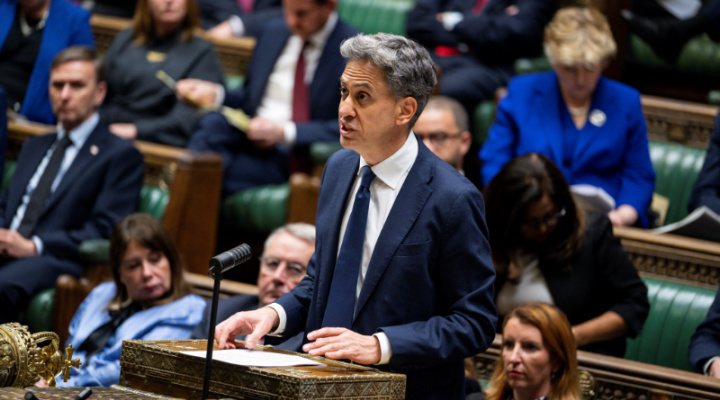
Britain’s Foreign Secretary Ed Miliband speaks at the House of Commons in London, Britain, Sept. 8, 2026. Photo: HOUSE OF COMMONS/Handout via REUTERS

France and Canada will join the United Kingdom in imposing new trade sanctions on Israeli communities in the West Bank, marking one of the most far-reaching Western measures yet as international efforts to boycott and isolate the Jewish state continue to grow.

During a speech in the British Parliament on Tuesday, Foreign Secretary Ed Miliband announced a sweeping package of sanctions targeting Israeli settlements in the West Bank, along with a series of additional punitive measures, in what marks one of London’s sharpest rebukes of Israel as relations between the two longtime allies deteriorate.

In a sharp break from Britain’s longstanding foreign policy, the country’s top diplomat accused the Jewish state of “unlawful occupation” of the West Bank, denouncing what he described as an “expansionist agenda via illegal settlements.”

Miliband further accused Israelis of fueling escalating violence against Palestinians, warning that “settler terrorism is rampant.”

“The British government agrees that there is ethnic cleansing of Palestinians in areas of the West Bank – perpetrated by settler terrorists,” Miliband said during his speech. “The Israeli government has turned a blind eye to this and, worse, members of it have made statements and taken actions to support the forced displacement of Palestinians.”

Unlike the current framework, a sweeping trade prohibition goes further by legally blocking goods produced in the West Bank from entering the British market, rather than simply imposing differentiated trade rules or labeling requirements — significantly tightening restrictions and fundamentally reshaping Britain’s trade policy toward the region.

Expected to take effect within six to nine months, London’s new policy measures will ban imports of goods from Israeli communities in the West Bank and impose sanctions on companies and individuals that “facilitate settlement expansion,” including those providing construction, infrastructure, financing, or real estate services for such development.

The British government will also deny licenses for arms and other exports deemed to materially support what British officials called Israel’s “occupation,” ban advertising for settlements in the UK, and sanction a group of “extremist settlers” accused of supporting or inciting violence against Palestinians.

Some analysts were quick to note that such actions will hurt Palestinian workers, thousands of whom work for Israeli employers in West Bank settlements and could lose their jobs as a result.

France and Canada have announced they will both join Britain in imposing their own import bans on goods from Israeli communities in the West Bank, adding to growing boycott efforts aimed at economically isolating the Jewish state.

The measures mark another escalation in the growing rift between Israel and the two Western allies amid the war in Gaza, with Paris and Ottawa backing efforts to recognize a Palestinian state last year and France also pressing within the European Union to end the bloc’s association agreement with Israel.

According to Miliband, several other European countries — including Denmark, Finland, Iceland, Poland, Portugal and Sweden — have also pledged to back the UK’s latest measures, signaling growing support for the British initiative.

“The unlawfulness of the occupation should be reflected in the economic relationships we choose to have with the occupied territories,” the top British diplomat said. 

Eleven other countries ultimately joined the UK in saying they would “introduce national and/or support European restrictions on trade in goods with settlements which are illegal under international law, or that they are actively considering these and other measures, in accordance with their national procedures,” according to a joint statement.

Even as the bilateral relationship between Israel and the UK comes under increasing strain, Miliband said Britain would maintain trade with the Jewish state within the Green Line and continue to oppose the broader boycott, divestment, and sanctions (BDS) movement against Israel.

“Our argument is not with the people of Israel, with whom the UK has unshakable bonds,” he said. “Our argument is with the conduct of its government.”

Experts noted that the economy of Israel proper and the West Bank are inextricably linked, making it virtually impossible to take such punitive measures against the latter without affecting the Israeli economy.

Israeli Foreign Minister Gideon Saar sharply denounced the British government’s latest measures, announcing the closure of the British consulate in Jerusalem and warning other countries against taking similar action against Israel.

The top Israeli diplomat rejected Miliband’s accusations as “outrageous lies,” denouncing the British government’s “hostile actions” as driven by domestic political considerations in London.

“The British move is morally distorted, and constitutes blatant interference in the affairs of a sovereign state and its electoral process,” Saar said in a statement. “The message to every government that harms us is clear: You will lose your influence and relevance in the region.”
.

In coordination with Israeli Prime Minister Benjamin Netanyahu, Saar announced further retaliatory measures, including barring Britain from the US-led Gaza coordination mission in Israel, ending British training for Palestinian Authority forces in the West Bank, and banning 12 elected officials and British citizens involved in anti-Israel or antisemitic activities from entering the country.

US Ambassador to Israel Mike Huckabee had also warned that Washington could retaliate against Britain amid the escalating dispute, accusing the British government of “Jew hate” and describing its actions as “discrimination against the Jewish people.”

Britain’s Jewish community has also voiced strong opposition to the government’s latest measures, warning that they could undermine prospects for peace while further worsening an already hostile climate for Jews and Israelis across the country.

UK Chief Rabbi Sir Ephraim Mirvis accused British authorities of playing “gesture politics,” arguing that such measures only “embolden those, at home and abroad, who use hatred as a weapon against Jews.”

“The measures announced amount to little more than political flag bearing for mendacious anti-Israel rhetoric and those who harbor a dangerous obsession with the Jewish state,” Mirvis wrote in a post on X. “These measures will succeed only in bolstering the very extremism they seek to target.”

“On the eve of Rosh Hashanah and at a time when our community is more vulnerable than ever to the wave of extremism that has been building over recent years, these sanctions do nothing to advance the cause of peace. Nor do they make anyone safer – quite the contrary,” he continued.
.

So far, Ireland, Belgium, Norway and Spain are the only European countries to have advanced comprehensive legislative efforts aimed at banning trade with Israeli settlements, while Slovenia has encountered legal and political obstacles that have delayed similar measures.

The Netherlands is also expected to join such efforts, with a new law set to take effect on Sept. 22 that goes beyond similar measures elsewhere by banning imports from Israeli communities not only in the West Bank beyond the Green Line, but also from the Golan Heights.

According to market estimates, goods produced in Israeli communities beyond the Green Line account for about 1 percent of Israel’s exports, meaning exports from these areas to the EU are estimated at roughly $200 million annually, or about 0.3 percent of Israel’s total exports.

Under the current Israeli government, settlement construction in the West Bank has accelerated, with new housing approvals and the legalization of previously unauthorized communities expanding Israel’s presence in the territory — land Palestinians seek as part of a future independent state and which most of the international community considers a violation of international law.

Israel disputes claims that the settlements are illegal, pointing to historical and legal ties to the land as well as arguing they provide strategic depth and security considerations.

Earlier this year, the Israeli government announced plans to advance the E1 project, a settlement initiative east of Jerusalem that would effectively bisect the West Bank and sever its connection to East Jerusalem — a move that drew widespread international condemnation and renewed calls from some governments for sanctions against Israel.


Zawartość publikowanych artykułów i materiałów nie reprezentuje poglądów ani opinii Reunion’68,
ani też webmastera Blogu Reunion’68, chyba ze jest to wyraźnie zaznaczone.
Twoje uwagi, linki, własne artykuły lub wiadomości prześlij na adres:
webmaster@reunion68.com