
Archive | 2026/09/19

Wojna Islamskiej Republiki Iranu z chrześcijanami


Wojna Islamskiej Republiki Iranu z chrześcijanami

Uzay Bulut


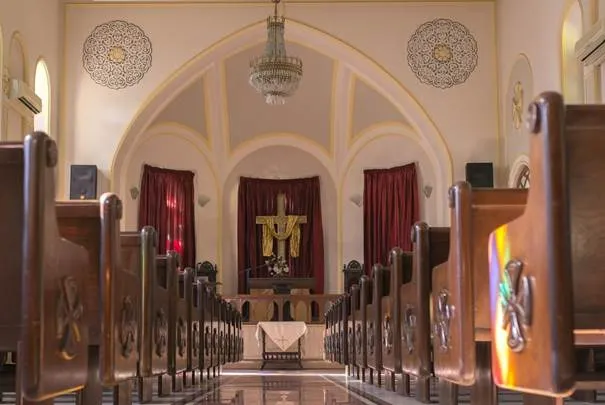
Zwykłe praktyki religijne chrześcijan są w Islamskiej Republice Iranu uznawane za przestępstwa i podlegają karze. Chrześcijanie są aresztowani i więzieni pod zarzutami związanymi z działalnością religijną, taką jak chrzest, Komunia Święta, wspólna modlitwa czy studium Biblii, również wtedy, gdy odbywają się one za granicą. W ubiegłym miesiącu siły bezpieczeństwa reżimu przystąpiły do przejęcia Ewangelickiego Kościoła św. Piotra w Teheranie, wybudowanego w 1876 roku (na zdjęciu). Nakazano mieszkańcom kompleksu kościelnego opuścić swoje domy, a wiernym polecono znaleźć inny kościół. (Źródło zdjęcia: Herbert Karim Masihi/Wikimedia Commons)

Nowy raport roczny za 2026 rok, zatytułowany „Scapegoats: Rights Violations Against Christians in Iran” („Kozły ofiarne: Naruszenia praw chrześcijan w Iranie”), opublikowany przez organizację Article18 we współpracy z Open Doors, Christian Solidarity Worldwide i Middle East Concern, rzuca alarmujące światło na prześladowania chrześcijan w Iranie.

Zgodnie z raportem co najmniej 21 chrześcijan zostało w 2025 roku skazanych na kary pozbawienia wolności za domniemany udział w rozpowszechnianiu Biblii w Iranie. Oprócz więzienia wymierzano im również inne kary, takie jak grzywny, zesłanie oraz pozbawienie praw obywtelskich.

W czerwcu 2025 roku dwoje konwertytów na chrześcijaństwo zostało skazanych na podstawie artykułu 500 kodeksu karnego za „działalność propagandową na rzecz dewiacyjnych chrześcijańskich przekonań »syjonistycznych«, sprzecznych z systemem Islamskiej Republiki Iranu”. Każde z nich skazano na 10 lat więzienia. Oskarżono ich również o „rozprowadzanie przemycanych towarów” (Biblii) na podstawie artykułów 22 i 24, za co otrzymali dodatkowo dwa lata pozbawienia wolności oraz grzywny. Proces odbył się zaocznie, a jedynym materiałem dowodowym były Biblie i inne publikacje chrześcijańskie znalezione w ich domach.

Jak stwierdza raport, pogarda wobec Biblii widoczna jest także w określaniu jej mianem „zakazanej książki” w innym akcie oskarżenia przeciwko dwóm Irańczykom pochodzenia ormiańskiego oraz trzem konwertytom na chrześcijaństwo. W czerwcu 2025 roku postawiono im zarzuty „propagandy” i „zmowy”, a w listopadzie skazano ich łącznie na ponad 50 lat więzienia. W innych wyrokach sądowych wydanych w 2025 roku Biblia była określana jako księga „zniekształcona”, „dewiacyjna”, „zepsuta” lub „wprowadzająca w błąd”.

Raport wskazuje również na inne niepokojące tendencje, w tym rosnące zaangażowanie Korpusu Strażników Rewolucji Islamskiej (IRGC) w aresztowanie chrześcijan, zwłaszcza osób zajmujących się rozpowszechnianiem Biblii; poważne przypadki złego traktowania zatrzymanych chrześcijan; konsekwentne stosowanie artykułu 500 kodeksu karnego (dotyczącego „propagandy sprzecznej ze świętą religią islamu”) do skazywania chrześcijan; a także monitorowanie ich działalności za granicą, między innymi uczestnictwa w seminariach teologicznych.

Korpus Strażników Rewolucji Islamskiej odgrywa obecnie coraz większą rolę w gromadzeniu informacji o irańskich chrześcijanach oraz ich prześladowaniu. Ponieważ oficjalnym zadaniem IRGC jest obrona Islamskiej Rewolucji, rosnąca liczba aresztowań chrześcijan sugeruje, że reżim postrzega ich jako zagrożenie.

Kościoły domowe zostały uznane za grupy wrogie państwu. Udział funkcjonariuszy IRGC w nalotach charakteryzuje się zazwyczaj większą brutalnością. Przykładowo wieczorem 6 lutego 2026 roku co najmniej 20 funkcjonariuszy IRGC w cywilnych ubraniach wtargnęło na zgromadzenie około 80 chrześcijan w Gatab, w prowincji Mazandaran. Skonfiskowali Biblie i instrumenty muzyczne oraz aresztowali konwertytkę na chrześcijaństwo, Somayeh Rajabi.

Funkcjonariusze IRGC wybierali osoby noszące krzyżyki, zrywali je z ich szyi i przeprowadzali rewizje osobiste. Po zranieniu kilku osób uniemożliwili personelowi medycznemu udzielenie im pomocy. Dzień po zatrzymaniu Rajabi pozwolono na krótką rozmowę telefoniczną z rodziną, podczas której poinformowała, że przebywa w więzieniu w Sari. Następnie została przeniesiona do więzienia Mati Kola w Babol. 8 marca zwolniono ją za kaucją przekraczającą 40 000 dolarów po postawieniu zarzutów „zgromadzenia i zmowy” oraz „propagandy przeciwko reżimowi”. 15 kwietnia Rajabi i sześć innych osób zostało wezwanych do prokuratury w Babol w celu złożenia końcowych wyjaśnień – ostatniego etapu przed wniesieniem aktu oskarżenia. Do chwili opublikowania raportu nie pojawiły się żadne dalsze informacje na temat sprawy.

W 2021 roku irański parlament znowelizował artykuły 499 i 500 kodeksu karnego, zaostrzając kary i rozszerzając zakres przepisów wobec osób, którym można postawić zarzut przynależności do grup „mających na celu zakłócenie bezpieczeństwa kraju” lub prowadzenia „propagandy przeciwko Islamskiej Republice Iranu”.

Organizacje zajmujące się ochroną praw człowieka, takie jak Article18, ostrzegały, że przepisy te zostaną wykorzystane do „zduszenia… wolności” oraz nasilenia kryminalizacji mniejszości. Komitet Praw Człowieka Organizacji Narodów Zjednoczonych wezwał następnie Islamską Republikę Iranu do „uchylenia lub zmiany” tych przepisów.

Mimo to Islamska Republika Iranu nadal wykorzystuje swoje przepisy do jeszcze intensywniejszego zwalczania chrześcijan. Według raportu w 2025 roku aresztowano 254 irańskich chrześcijan – niemal dwukrotnie więcej niż w 2024 roku – i skazano ich łącznie na ponad 280 lat pozbawienia wolności.

W zdecydowanej większości przypadków (blisko 90%) zarzuty wobec chrześcijan stawiano na podstawie znowelizowanego artykułu 500 kodeksu karnego, który penalizuje „propagandę sprzeczną ze świętą religią islamu”.

Skazywanie i więzienie chrześcijan trwa nadal. 3 lipca organizacja Article18 poinformowała, że sąd apelacyjny utrzymał w mocy wyroki pięciu irańskich chrześcijan, skazanych łącznie na ponad 70 lat więzienia za zwykłe praktyki religijne, takie jak modlitwa, udzielanie chrztu, przyjmowanie Komunii Świętej i obchodzenie Bożego Narodzenia.

Oprócz kar więzienia państwo skonfiskowało należący do nich majątek osobisty, w tym Biblie i inną literaturę chrześcijańską, rzekomo na potrzeby „badań” prowadzonych przez Ministerstwo Wywiadu. Podobnie postąpiono w innej sprawie w ubiegłym roku, gdy dwóch chrześcijan skazano na 12 lat więzienia za „przemyt” Biblii do Iranu.

W ubiegłym miesiącu siły bezpieczeństwa reżimu przystąpiły do przejęcia Ewangelickiego Kościoła św. Piotra w Teheranie. Nakazano mieszkańcom kompleksu kościelnego opuścić swoje domy, a wiernym polecono znaleźć inny kościół. Przejęcie kościoła św. Piotra, wybudowanego w 1876 roku i znanego również jako Kościół Qavam, oraz eksmisja jego mieszkańców, należących do uznawanych przez państwo ormiańskiej i asyryjskiej wspólnot chrześcijańskich, nastąpiły po tym, jak państwowa instytucja przystąpiła do wykonania orzeczenia sądu wydanego niemal 30 lat temu.

Wyrok, wydany przez Sąd Rewolucyjny w 1998 roku, nakazywał przekazanie całego kompleksu kościelnego – obejmującego około 10 akrów, na których znajdują się dwie szkoły i dziesiątki domów – organizacji Execution of Imam Khomeini’s Order (EIKO). EIKO odpowiada również za konfiskaty asyryjskich kościołów prezbiteriańskich w Tebrizie i Meszhedzie, kościoła należącego do Kościoła Zborów Bożych w Gorgan oraz ośrodka rekolekcyjnego w Karadżu.

Według raportu organizacji Open Doors poświęconego sytuacji w Iranie:

„Najbardziej narażeni są konwertyci na chrześcijaństwo. Kościoły domowe są regularnie poddawane nalotom, po których następują aresztowania, przesłuchania, wywieranie presji, aby wydawać innych chrześcijan, oraz długotrwałe kary więzienia. Najczęściej stawiane są im zarzuty naruszenia »bezpieczeństwa narodowego«. Warunki w więzieniach są dramatyczne, a kwoty kaucji bywają wygórowane do tego stopnia, że rujnują finansowo całe rodziny. Chrześcijanie, którzy zostają zwolnieni, zazwyczaj muszą zaakceptować surowe warunki, takie jak zesłanie do innej części Iranu lub narzucona autocenzura… Każdego roku tysiące konwertytów uciekają z Iranu, aby uniknąć prześladowań.”

Od 47 lat naród irański pozostaje pod rządami reżimu, który brutalnie tłumi wszelkie odmienne głosy, poglądy i przekonania.

Od 47 lat Islamska Republika systematycznie represjonuje własnych obywateli, w tym muzułmańską większość, stosując bezwzględną przemoc państwową, dyskryminację oraz prześladowania polityczne wymierzone w każdego, kto sprzeciwia się radykalnym religijnym i politycznym nakazom władz.

Obywatele krytykujący reżim lub protestujący przeciwko trudnej sytuacji gospodarczej narażeni są na rozbudowaną inwigilację, arbitralne zatrzymania i użycie śmiercionośnej siły. Kobiety i dziewczęta, które odmawiają podporządkowania się obowiązkowi noszenia hidżabu, spotykają się z brutalnymi represjami, więzieniem oraz fizycznym i seksualnym znęcaniem się ze strony tzw. policji moralności.

Oprócz prześladowania własnej muzułmańskiej ludności Islamska Republika Iranu uznaje również za przestępstwo przechodzenie na chrześcijaństwo, działalność kościelną oraz drukowanie i posiadanie Biblii. Drukowanie i rozpowszechnianie Biblii na terytorium Iranu jest przestępstwem od czasu zamknięcia Towarzystwa Biblijnego przez islamski reżim w 1990 roku.

Na całym świecie Towarzystwo Biblijne odgrywa kluczową rolę w tłumaczeniu, wydawaniu i rozpowszechnianiu Biblii. Jego obecność w Iranie sięga 1811 roku, kiedy Henry Martyn przybył do tego kraju i dokonał rewizji swojego perskiego przekładu Nowego Testamentu.

Sytuacja ta uległa zmianie w lutym 1990 roku, gdy władze reżimu przeprowadziły nalot na siedzibę Towarzystwa Biblijnego Iranu w Teheranie i nakazały jego zamknięcie. Organizacja ta przez dziesięciolecia była głównym wydawcą i dystrybutorem Biblii oraz literatury chrześcijańskiej w języku perskim. Jej likwidacja położyła kres legalnemu drukowi i publikacji chrześcijańskich tekstów w języku perskim – używanym przez zdecydowaną większość Irańczyków – i stanowiła istotne zaostrzenie działań państwa zmierzających do ograniczenia publicznego dostępu do nauczania religii chrześcijańskiej.

Od czasu przymusowego zamknięcia i konfiskaty siedziby Towarzystwa Biblijnego w Teheranie w 1990 roku chrześcijanie mają poważne trudności z dostępem do drukowanych egzemplarzy Biblii, a irańskie władze uznały import i rozpowszechnianie Biblii za działalność przestępczą.

Rok po zamknięciu Towarzystwa Biblijnego przedstawiciel Iranu przy Organizacji Narodów Zjednoczonych poinformował specjalnego sprawozdawcę ONZ, że Towarzystwo zostało „tymczasowo zamknięte” do czasu zakończenia dochodzenia w sprawie „naruszeń praw i przepisów Islamskiej Republiki Iranu”, nie wskazując jednak, o jakie przepisy chodzi. Dodał, że „gdy sytuacja oskarżonych zostanie wyjaśniona, Towarzystwo będzie mogło wznowić działalność”.

Jednak 36 lat później Towarzystwo Biblijne w Iranie nadal pozostaje zamknięte, a Biblia i inne książki chrześcijańskie są często traktowane jako nielegalna kontrabanda oraz dowód popełnienia przestępstwa.

Zwykłe praktyki religijne chrześcijan również są kryminalizowane i karane przez islamski reżim. Chrześcijanie są aresztowani i więzieni pod zarzutami związanymi z działalnością religijną, taką jak chrzest, Komunia Święta, wspólna modlitwa czy studium Biblii, również wtedy, gdy odbywają się one za granicą.

28 grudnia 2025 roku w Iranie wybuchły masowe protesty, które przerodziły się w trwające wiele tygodni ogólnokrajowe demonstracje domagające się zakończenia rządów Islamskiej Republiki.

„Reakcja władz na te protesty była przerażająca. Według doniesień zginęło wiele tysięcy osób, w tym kilku chrześcijan, a skutki represji dotknęły każdego Irańczyka – niezależnie od jego wyznania” – stwierdza najnowszy raport przygotowany przez Article18, Open Doors, Christian Solidarity Worldwide i Middle East Concern.

Ten sam reżim, który terroryzuje własnych obywateli, domaga się również prawa do rozwijania i budowy broni jądrowej oraz pocisków balistycznych, a także planuje dalsze wykorzystywanie wirówek do wzbogacania uranu w swoim podziemnym ośrodku w Pickaxe Mountain. Islamska Republika zapowiedziała również pobieranie „opłat” za komercyjną żeglugę przez Cieśninę Ormuz oraz utrzymanie kontroli nad swoim głównym pełnomocnikiem terrorystycznym – Hezbollahem, który obecnie sprawuje dominującą rolę w Libanie, niegdyś nazywanym – przed wojną domową z lat 1975–1990 – „Szwajcarią Bliskiego Wschodu”.

Islamska Republika Iranu nie ma zamiaru zrezygnować z eksportowania terroryzmu na cały Bliski Wschód. Finansuje, zbroi i szkoli sieć swoich terrorystycznych pełnomocników, obejmującą – obok Hezbollahu w Libanie – także Hutich w Jemenie oraz różne islamskie bojówki w Syrii i Iraku.

Memorandum o porozumieniu podpisane w Islamabadzie przez administrację Donalda Trumpa z Iranem jest najprawdopodobniej postrzegane przez reżim Korpusu Strażników Rewolucji Islamskiej jako pozbawiony znaczenia dokument niewiernych. Nie powstrzyma ono ich nienawiści wobec chrześcijan, Żydów, własnych obywateli ani Zachodu.


Uzay Bulut – turecka dziennikarka, Distinguished Senior Fellow w Gatestone Institute.

Link do oryginału: https://www.gatestoneinstitute.org/22678/iran-war-on-christians?utm_source=substack&utm_medium=email

Gatestone Institute, 7 lipca 2026


Zawartość publikowanych artykułów i materiałów nie reprezentuje poglądów ani opinii Reunion’68,
ani też webmastera Blogu Reunion’68, chyba ze jest to wyraźnie zaznaczone.
Twoje uwagi, linki, własne artykuły lub wiadomości prześlij na adres:
webmaster@reunion68.com


The false narrative about post-9/11 Islamophobia legitimizes antisemitism


The false narrative about post-9/11 Islamophobia legitimizes antisemitism

Jonathan S. Tobin


The obsession with a mythical backlash against Muslims promoted by the political left and liberal media didn’t just distort anniversary coverage. It builds sympathy for Islamist Jew-hatred.

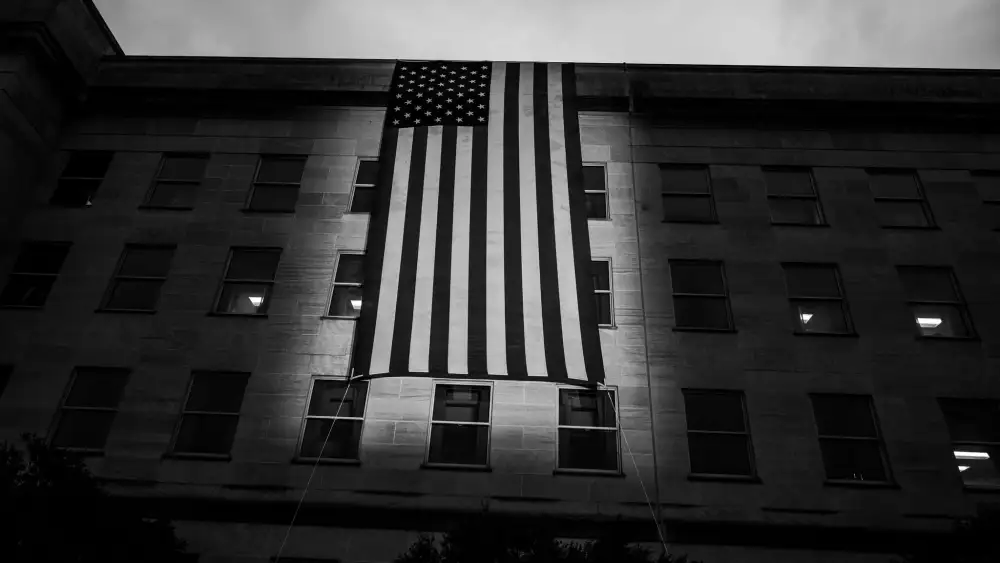
A scene near a ceremony at the Pentagon in observance of the 25th anniversary of the 9/11 terror attacks, Sept. 11, 2026. Credit: Molly Riley/White House.

The 25th anniversary of the terrorist attacks on America on Sept. 11, 2001 has come and gone. Despite criticisms and pleas from many of the families of the victims as well as others, New York City Mayor Zohran Mamdani attended the ceremony held at the 9/11 Memorial Plaza in what was Ground Zero on that awful day. After days of massive attention focused on the commemoration of the attacks, the media and the political class quickly moved on to other contemporary issues and crises.

But before this moment fades into memory, it’s worth pausing and considering how understanding this historical event not only informs how the world thinks about 9/11 and its aftermath. Equally, if not more important, is the ability of mainstream liberal media, opinion leaders and politicians to shape the narrative about it, guiding discourse about today’s challenges that ought to, but often aren’t, linked to the threat the attacks represented.

Who are the true victims of 9/11?

Take, for example, the home page of The New York Times on Friday, September 11. Among its top stories were the following items: “Islamophobia Shaped a Generation of Muslim New Yorkers” and “Facing Islamophobia, Mamdani Keeps Focus on 9/11 Victims.”

As conservative commentator Ben Shapiro put it in an X post that described the feelings of many: “If you were an alien who landed on Earth this morning, and you were reading the top headlines on the NYT’s webpage, you would immediately assume that 9/11 was an attack on Muslims.”

Those stories weren’t the only ones the newspaper published that day about the anniversary, some of which discussed the actual victims of the Al-Qaeda terrorists who were responsible for the murder of the 2,977 people at the World Trade Center in Lower Manhattan, the Pentagon in Washington and on a field in Shanksville, Pa. Still, Shapiro’s comment aptly characterized the way so much of the country’s chattering classes prefer to think about 9/11.

They may be willing to note that the crimes committed that day were the doing of Al-Qaeda, an Islamist terror organization. But once that basic fact is acknowledged—many conspiracy theorists on the far left and far right prefer, of course, to blame the Jews for this and every other global calamity—they prefer to treat the attacks as if they were not connected to Islamist beliefs about the need for jihad against the West. Nor do they note that those ideas are supported by hundreds of millions of Muslims worldwide, even if some argue that a majority of the world’s 1.9 billion believers in Islam do not.

More to the point, they have continued to treat Muslims as if they were the primary victims of the 9/11 attacks because of an alleged backlash against them, which fueled the wave of Islamophobia the Times references in its articles.

The newspaper, like much of the mainstream press, treats this backlash as if it were an obvious fact that can be asserted without the need to prove it. Indeed, they have been doing that for the better part of the last two decades. But, as I first pointed out in October 2010 in Commentary magazine, the claim that American Muslims were subjected to widespread and/or systematic discrimination or violence is simply a myth. At that time, the hoax about a 9/11 backlash was used to support an effort to build a Muslim community center and mosque on the footprint of one of the buildings destroyed in the World Trade Center disaster.

The failed effort to build that center and mosque was rooted in a desire to flip the narrative about the terror attacks to focus on the sufferings of Muslims, rather than people who were murdered by Al-Qaeda or the generational war Islamists were waging against the West. While it was never built, the supporters of this project did succeed in doing something more important: They helped set the tone of media commentary about Islamophobia then and since, while downplaying the truth about Islamism.

A myth promoted by interested parties

To point this out is not to deny some examples of prejudice or increases in reported hate crimes against Muslims after 9/11. But most were anecdotal and not rooted in objective proof. Indeed, the studies often cited as backing up these claims are the works of groups funded by left-wing donors whose purpose is to depict the United States as Islamophobic. Others, like Georgetown University’s Bridge Institute, were created and funded by Qatar, the main sponsor of the Muslim Brotherhood.

More objective studies, like FBI hate-crime statistics, point to a very different conclusion. They show a huge increase in religion-based hate crimes in the past 25 years. Its victims, however, are Jews, not Muslims. Though making up less than 2% of the American population, reported hate crimes against Jews have consistently made up the overwhelming majority of such offenses in the United States.

U.S. government officials, starting with President George W. Bush, who laughably repeatedly insisted that Islam was “a religion of peace,” bent over backwards to disassociate Al-Qaeda (and then its successors and fellow Islamists, such as ISIS, Hamas and Hezbollah) from normative Muslim ideas. At the same time, American popular culture similarly generally shunned depictions of Muslim terrorists in films and TV shows or explorations of how they were inspired by their faith for fear of validating prejudice.

This dovetailed with the way progressives were imposing new doctrines about race, intersectionality and settler-colonialism on American academia during this same period. It led to a generation being indoctrinated in toxic ideas that labeled Muslims as Third World peoples who were always victims of “white” imperialism and racism, regardless of their own actions. At the same time, Jews and the State of Israel were falsely depicted as “white” oppressors who were always in the wrong, even when they were—as during the Hamas-led Palestinian-Arab terror attacks in southern Israeli communities on Oct. 7, 2023—the victims of atrocities, torture, rape, kidnapping and murder.

Radical doctrines v. the facts

While these radical obsessions exacerbated racial divisions in the United States, they led most of the chattering classes to assume that Americans were Islamophobic while granting a permission slip to an unprecedented surge of antisemitism, especially after Oct. 7.

But as the Times’s account of Mamdani’s plight as a victim of Islamophobia makes clear, most of what falls under the rubric of that form of prejudice is actually something very different.

If many New Yorkers and others are critical of Mamdani, it’s not because they hate Muslims. It’s because they understand that he is someone who has dedicated his career to supporting Islamists and seeking the destruction of the only Jewish state on the planet. The same applies to other supposed contemporary victims of Islamophobia, like Michigan Senate candidate Dr. Abdul El-Sayed.

Indeed, the organization most often cited by liberal media sources as the authority on Islamophobia—the Council on American-Islamic Relations (CAIR)—was founded as a front group for fundraisers for Hamas and is guilty of spreading Jew-hatred. The majority of what CAIR labels as “Islamophobia” is nothing more than noting prejudice against Jews and examples of antipathy for Western civilization that emanates from the Muslim community.

And far from such views being relegated to the margins where hate groups dwell, they have been mainstreamed by the corporate press, as well as the former Biden administration, which created a “National Strategy to Counter Islamophobia and Anti-Arab Hate” by following CAIR’s lead. Just as shocking was Biden’s willingness to include CAIR as a consultant in its confused and ineffective effort to counter antisemitism.

If a generation of Muslims thinks of themselves as victims, it is not because they have been subjected to a campaign of hate and violence in the United States. It’s because they have been taught—as is the case with so many others of their fellow Americans—that their country is irredeemably racist. They may deny that they are the ones spreading hate. But their widespread involvement in spreading prejudice and bigotry against Jews and Israel, or organizing pro-Hamas rallies on college campuses and in U.S. city streets after Oct. 7, cannot be denied. Yet since their prejudices have been validated by those who focus on Islamophobia while ignoring antisemitism, they continue to point to 9/11 as if they are the ones who were wronged that day and ever since.

The impulse to oppose all forms of prejudice is laudable. Yet one of the primary reasons why antisemitism is out of control in the United States is because those who spread it have largely been granted a pass for doing so because of lies about America after 9/11 and leftist doctrines about race. The belief that the Jews and Israel are inherently evil and guilty of horrible crimes like “genocide” and “apartheid” was once only believed by those who dwelled in the fever swamps of American politics on the far left and far right. But now, such blood libels are routinely given credence by publications like the Times.

By treating the backlash myth as fact and depicting Mamdani—a politician whose entire career has been dedicated to spreading blood libels against the Jewish state—as a victim of prejudice rather than a hate-monger, outlets like the Times didn’t just get the 9/11 anniversary story wrong. Sadly, it has become part of the mindset that has allowed American antisemitism to fester and go mainstream.


Jonathan S. Tobin is editor-in-chief of the Jewish News Syndicate, a senior contributor for The Federalist, a columnist for Newsweek and a contributor to many other publications. He covers the American political scene, foreign policy, the U.S.-Israel relationship, Middle East diplomacy, the Jewish world and the arts. He hosts the JNS “Think Twice” podcast, both the weekly video program and the “Jonathan Tobin Daily” program, which are available on all major audio platforms and YouTube. Previously, he was executive editor, then senior online editor and chief political blogger, for Commentary magazine. Before that, he was editor-in-chief of The Jewish Exponent in Philadelphia and editor of the Connecticut Jewish Ledger. He has won more than 60 awards for commentary, art criticism and other writing. He appears regularly on television, commenting on politics and foreign policy. Born in New York City, he studied history at Columbia University.


Zawartość publikowanych artykułów i materiałów nie reprezentuje poglądów ani opinii Reunion’68,
ani też webmastera Blogu Reunion’68, chyba ze jest to wyraźnie zaznaczone.
Twoje uwagi, linki, własne artykuły lub wiadomości prześlij na adres:
webmaster@reunion68.com


The Palestinian Authority Prioritizes Terrorists’ Salaries Over Salaries for Workers


The Palestinian Authority Prioritizes Terrorists’ Salaries Over Salaries for Workers

Itamar Marcus


Palestinian Authority President Mahmoud Abbas visiting the West Bank city of Jenin. Photo: Reuters/Mohamad Torokman

The Palestinian Authority (PA) has once again demonstrated that paying salaries to terrorists is a higher priority than paying Palestinians who work for a living.

Ahead of upcoming local elections, the PA Central Elections Commission has ruled that PA employees must resign from their jobs, and therefore relinquish their salaries, if they wish to run for office. Terrorists receiving payments from the PA, however, may keep their terror-reward payments while running for election.

PA Central Elections Commission spokesman Fareed Taamallah explained that the requirement applies only to those currently working as PA employees:

A [PA] employee who holds a position, receives his salary from the state, and is currently engaged in his work is required to resign from his position [to run in the elections] and attach proof of resignation to the candidacy application.

He clarified that this does not apply to individuals who receive allowances from the state but are not currently employed as [PA] employees, such as retirees, prisoners, the wounded [i.e., 2 categories of terrorists], or recipients of social benefits.

[Ma’an, independent Palestinian news agency, Sept. 7, 2026]

The distinction is revealing.

An ordinary PA employee must surrender his salary to become a candidate. A terrorist imprisoned for attacking Israelis, or a terrorist wounded while carrying out an attack, may continue receiving PA payments and still run for office.

Taamallah’s statement also provides yet another admission that the PA continues its notorious Pay-for-Slay program.

Despite PA leader Mahmoud Abbas’ claims of reform, Palestinian terrorists in prison are still receiving payments from the PA precisely because they are prisoners.

Once again, the PA has confirmed two facts: Pay-for-Slay continues, and the PA grants terrorists privileges that it denies to ordinary employees.

Palestinians who earn their salaries through public service must give them up to seek elected office; terrorists rewarded for murdering or attempting to murder Israelis do not.


The author is the Founder and Director of Palestinian Media Watch, where a version of this article first appeared. 


Zawartość publikowanych artykułów i materiałów nie reprezentuje poglądów ani opinii Reunion’68,
ani też webmastera Blogu Reunion’68, chyba ze jest to wyraźnie zaznaczone.
Twoje uwagi, linki, własne artykuły lub wiadomości prześlij na adres:
webmaster@reunion68.com