
Archive | 2026/09/28

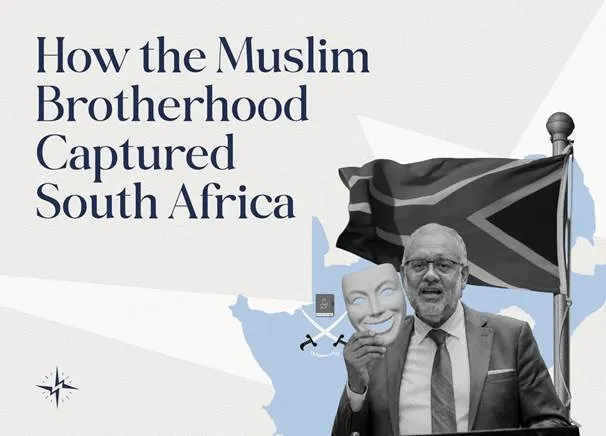
Jak Bractwo Muzułmańskie przejęło Republikę Południowej Afryki


Jak Bractwo Muzułmańskie przejęło Republikę Południowej Afryki

Ayaan Hirsi Ali


Budowanie islamistycznego bastionu za pośrednictwem rządzącego ANC


Wspomnij o Bractwie Muzułmańskim, a większość ludzi pomyśli o Kairze albo być może o Gazie. Niewielu spogląda poza Bliski Wschód. Ten odruch jest zrozumiały. Jest też błędny. Bractwo nigdy nie było projektem regionalnym, lecz globalnym. Dzięki długofalowej cierpliwości i taktycznej dyscyplinie rozszerzyło swoje wpływy aż po Republikę Południowej Afryki.

Historia zaczyna się w 1954 roku, kiedy Egipt zdelegalizował Bractwo i zmusił jego przywódców do emigracji. Najbardziej wpływowy spośród nich, Yusuf al-Qaradawi, uciekł do Kataru. Rodzina panująca dała mu coś więcej niż azyl: dała mu platformę. Z Dohy Qaradawi zbudował sieć ideologiczną, a w 2004 roku nadał jej instytucjonalną formę, powołując Międzynarodową Unię Uczonych Muzułmańskich. Organizacja reprezentuje dziś dziesiątki tysięcy radykalnych duchownych i dziesiątki organizacji islamskich na całym świecie. Karadawi stał również na czele Union of Good, organizacji parasolowej, na którą Waszyngton nałożył później sankcje za finansowanie operacji terrorystycznych Hamasu.

Projekt ten potrzebował sojuszników poza Bliskim Wschodem, a Republika Południowej Afryki stała się jednym z jego najbardziej niezawodnych państw-gospodarzy. Ebrahim Gabriels, wojujący islamista i były przewodniczący krajowej Muslim Judicial Council, nawiązał bliskie kontakty z kręgiem Karadawiego. Ebrahim Rasool, były ambasador RPA w Waszyngtonie, połączył Bractwo z Afrykańskim Kongresem Narodowym i pielęgnował bliskie relacje między nimi. Każdy ruch potrzebuje także publicznej twarzy, która wzbudza zaufanie. W Republice Południowej Afryki rolę tę pełnił Imtiaz Sooliman. Założyciel Gift of the Givers przyjął nawet osobiste wyróżnienie od Karadawiego. Jako szef największej na kontynencie organizacji niosącej pomoc w przypadku katastrof Sooliman zdobył ogromną społeczną sympatię. Reputacja ta umożliwiła mu finansowanie działań i propagowanie poglądów znacznie bardziej skrajnych, niż sugerowałby jego starannie pielęgnowany wizerunek humanitarysty.

Potem nastąpiła dyplomatyczna zdrada. Jako minister stosunków międzynarodowych i współpracy Naledi Pandor prowadziła rozmowy z przywódcami Hamasu i wspierała za granicą sieci lobbystyczne Bractwa. Wróciła do Pretorii niewzruszona i oznajmiła swoim rodakom, że opowiadanie się po stronie krwiożerczych ekstremistów jest po prostu normalną praktyką w stosunkach międzypaństwowych.

Nic z tego nie wydarzyło się przypadkiem.

Lata świadomego i celowego organizowania doprowadziły Republikę Południowej Afryki do Międzynarodowego Trybunału Sprawiedliwości, gdzie oskarżyła Izrael o ludobójstwo. Sieć Karadawiego dostarczyła ideologii. Katar, przyjaciel zarówno Hamasu, jak i Bractwa, dostarczył pieniędzy. Republika Południowej Afryki przekształciła tę agendę w kampanię prawną.

Oskarżenie Izraela o ludobójstwo jest cyniczną operacją retoryczną. Ludobójstwo ma wyjątkowy ciężar moralny w pamięci Zachodu. Przywołuje zagładę europejskich Żydów w Auschwitz, zorganizowany przez państwo mord na rodzinach Tutsi w Rwandzie oraz masowe egzekucje w Srebrenicy. W każdym z tych przypadków dążono do systematycznego wymazania danej ludności z istnienia.

Zgodnie z prawem międzynarodowym ludobójstwo wymaga szczególnego zamiaru zniszczenia, w całości lub w części, grupy narodowej, etnicznej, rasowej lub religijnej. Izrael odpowiedział na niesprowokowany transgraniczny atak organizacji terrorystycznej, która zamordowała 1200 osób, gwałciła żony i córki oraz wzięła setki zakładników. Hamas rozmieszcza zasoby wojskowe w mieszkaniach cywilnych, podziemnych tunelach, szpitalach i szkołach oraz wykorzystuje cywilów, w tym dzieci, jako żywe tarcze. Taktyka ta zmienia przestrzenie cywilne w pola bitew, wystawia ludność na skutki walk miejskich i niszczy życie niewinnych ludzi. Wynikające z tego ofiary śmiertelne wśród ludności cywilnej są przerażające. Pokazują one niszczycielską cenę walki z wrogiem wykorzystującym cywilów jako żywe tarcze, a nie kampanię mającą na celu zniszczenie całego narodu. Izrael podjął bezprecedensowe działania w celu ograniczenia strat wśród ludności cywilnej: wykonał miliony telefonów ostrzegających przed ewakuacją, zrzucał ulotki ostrzegawcze i ustanowił korytarze humanitarne. Państwo dążące do całkowitej zagłady nie ostrzega cywilów, by opuścili obszary będące celem ataków, ani nie ułatwia ewakuacji medycznej.

Mimo to ta trująca nieprawda wciąż się utrzymuje. Przywódcy Republiki Południowej Afryki wykorzystują narrację o ludobójstwie do uzasadniania swojego dyplomatycznego sojuszu z międzynarodową siecią terrorystyczną.

Sojusz Pretorii z doktryną islamistyczną jest haniebny, ale stanowi kontynuację mroczniejszej historii. Historyk Milton Shain opisuje ją w książce Fascists, Fabricators and Fantasists: Antisemitism in South Africa from 1948 to the Present. Jego badania pokazują, jak antyżydowska wrogość przeniosła się z platform politycznych nacjonalistów z epoki apartheidu do ideologii rządzącej współczesnym państwem. Antysemityzm w Republice Południowej Afryki ma głębokie korzenie. Jest systemowy i nie można go oddzielić od historii rosnących wpływów Bractwa Muzułmańskiego.

W latach 1930–1948 ugrupowania takie jak Ossewabrandwag i Grey Shirts importowały ideologię nazistowską do Kapsztadu i Johannesburga. Partia Narodowa D.F. Malana ograniczała w latach 30. żydowską imigrację. Kiedy w 1948 roku partia przejęła władzę, przeniosła swoją podejrzliwość wobec żydowskich obywateli do struktur państwa.

Europejski faszyzm i islamizm z początku XX wieku opierały się na identycznych założeniach ideologicznych. Kiedy Hassan al-Banna założył w 1928 roku w Kairze Bractwo Muzułmańskie, zorganizował je wokół całkowitej militaryzacji, absolutnego ideologicznego konformizmu oraz opartej na teoriach spiskowych demonizacji Żydów. Pod koniec lat 30. Bractwo tłumaczyło i rozpowszechniało na Bliskim Wschodzie nazistowską propagandę, w tym Mein Kampf oraz Protokoły mędrców Syjonu. Oba ruchy odrzucały liberalną demokrację, podporządkowywały jednostkę kolektywowi i państwu oraz przedstawiały naród żydowski jako kosmiczne zło, które należy wyeliminować. Nazizm zdefiniował grozę poprzedniego stulecia; radykalny islam definiuje kryzys XXI wieku. W swoim niepowstrzymanym marszu przenosi hitlerowską nienawiść do czasów współczesnych.

Język polityczny zmienił się od lat 30., ale leżąca u jego podstaw wrogość pozostała. Obecnie w Republice Południowej Afryki mieszka nawet 70 tysięcy Żydów, z których wielu żyje w ciągłym strachu. W dzielnicy Sea Point w Kapsztadzie oraz Glenhazel w Johannesburgu społeczności żydowskie regularnie spotykają się z zastraszaniem i groźbami pozbawienia życia. Radykalne ugrupowania islamistyczne i organizacje fasadowe Bractwa Muzułmańskiego napędzają tę kampanię terroru, działając bezkarnie na terytorium Republiki Południowej Afryki. Ekstremiści atakują żydowskich obywateli z użyciem broni palnej i noży wyłącznie z powodu ich tożsamości. Tłumy popierające Hamas wymachują bronią, powiewają flagami dżihadystów i atakują mieszkańców w biały dzień, podczas gdy lokalne władze stoją z boku i się temu przyglądają.

Rezultat jest niepokojący, ale trudno uznać go za zaskakujący. Bractwo Muzułmańskie dostrzegło głęboko zakorzenioną w Republice Południowej Afryki wrogość wobec Żydów i wykorzystało ją, łącząc swój wojujący antysyjonizm z antysemityzmem partii rządzącej. Słowa Hassana al-Banny – „Izrael będzie istniał i będzie istniał nadal, dopóki islam go nie unicestwi, tak jak unicestwił innych przed nim” – do dziś nie straciły ani odrobiny swego jadu. Pozostają brutalnym nakazem całkowitego unicestwienia. Zmieniło się jedynie to, jak daleko dotarło to przesłanie. Pod patronatem Pretorii żądanie zniszczenia Izraela przeszło od ekstremistycznej retoryki do oficjalnej polityki. Ta zmiana zapewniła islamistom legitymizację, o którą zabiegali przez dziesięciolecia.


Link do oryginału:

Restoring the West by Ayaan Hirsi Ali
How the Muslim Brotherhood Captured South Africa
Mention the Muslim Brotherhood, and most people picture Cairo, or perhaps Gaza. Few look beyond the Middle East. That instinct is understandable. It is also wrong. The Brotherhood was never a regional project but a global one. Through long-term patience and tactical discipline, it has extended its reach as far as…

Zawartość publikowanych artykułów i materiałów nie reprezentuje poglądów ani opinii Reunion’68,
ani też webmastera Blogu Reunion’68, chyba ze jest to wyraźnie zaznaczone.
Twoje uwagi, linki, własne artykuły lub wiadomości prześlij na adres:
webmaster@reunion68.com


Netanyahu isn’t the reason pop singers spout blood libels


Netanyahu isn’t the reason pop singers spout blood libels

Jonathan S. Tobin


Attacks on musician Ed Sheeran after his craven apology for rapper Macklemore’s firing demonstrate that the mainstreaming of antisemitism fuels Israel’s unpopularity.

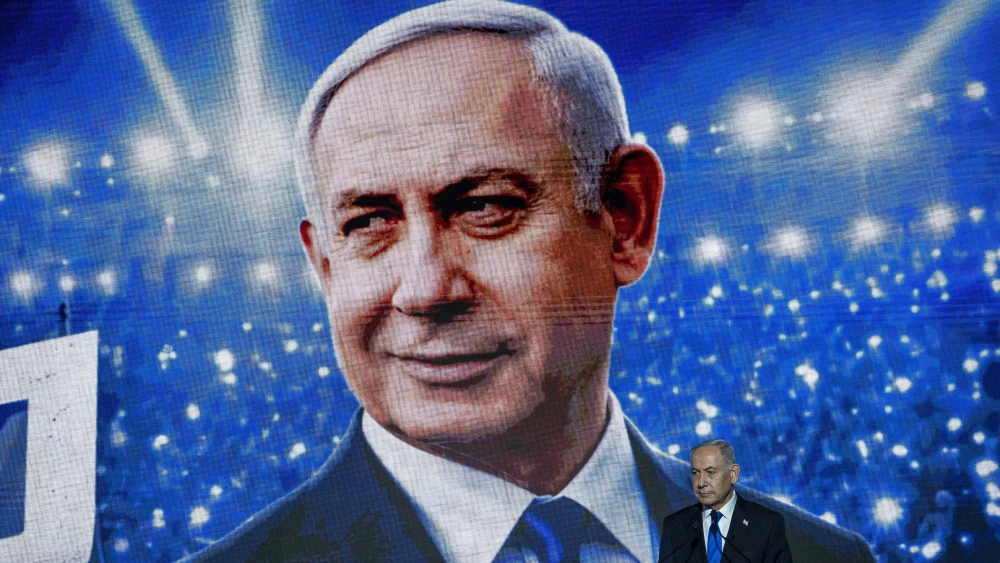
Israeli Prime Minister Benjamin Netanyahu attends a Likud Party election campaign event in Tel Aviv ahead of the upcoming general elections in October, Sept. 17, 2026. Photo by Flash90.

According to many American as well as some Israeli pundits, the marked decline in Israel’s popularity can be primarily attributed to one man. Those who cite the many polls that document the shrinking support for the Jewish state believe that Israeli Prime Minister Benjamin Netanyahu is the one to blame for the problem.

It seems logical. The downward trend has unfolded on his watch as the man who has led Israel for 15 and a half of the last 17 years. MS NOW morning host Joe Scarborough spoke for many when he claimed that the explanation couldn’t be that the United States had become 67% more antisemitic in the last decade. The only reason was, he asserted, Netanyahu’s alleged “radicalism.” And he was not being facetious.

The missing element

Still, in the most recent incident that once again demonstrated the widespread belief that Israel is the villain in the Middle East conflict, Netanyahu’s name didn’t come up.

The appalling dustup involving pop-music star Ed Sheeran, rapper Macklemore and New England Patriots owner Robert Kraft may be fading from the headlines. But the melodrama that widely pilloried Sheeran and Kraft among the chattering classes, while Macklemore became the darling of the “Free Palestine” crowd, didn’t center on Netanyahu’s “radicalism.” It was predicated on the assumption of commentators in venues ranging from The New York Times to Variety that claims whereby Israel was actively perpetrating a “genocide” are not merely credible but an unchallenged truth.

Macklemore, who has a history of not merely extreme leftist advocacy but open antisemitism, was dropped from his position as the opening act for Sheeran after spouting blood libels about Israel committing “genocide” and being an “apartheid” state on stage at a concert at MetLife Stadium in northern New Jersey. At that point, Kraft—a longtime Jewish philanthropist and prominent supporter of both Israel and efforts to combat antisemitism—along with other owners of National Football League stadiums where Sheeran was to perform, dictated that the rapper not appear at their venues. That led to a firestorm of criticism from Israel-bashers, including many in the arts world who also regularly make false claims about the Jewish state.

The wave of support for Macklemore’s stance, coupled with the abuse of Kraft and Sheeran, didn’t save the singer’s gig. But it did lead Sheeran to make a craven apology for not tanking his tour by standing by Macklemore at his next concert at Philadelphia’s Lincoln Financial Field on Sept. 18, while also pleading to be allowed to sing without being dragged into politics.

Though denouncing the atrocities of Oct. 7, he also felt compelled to bend the knee to the “genocide” claim. He said that Israel’s effort to prevent more such attacks by defeating the Islamist terror group that led the Palestinian-Arab assault on Israeli communities on Oct. 7, 2023, was illegitimate. “What is happening in Gaza is catastrophic and unjustifiable and disproportionate,” Sheeran said, apparently without noting that the war actually ended with a ceasefire and release—three years later—of the final Israeli hostages in October 2025. “My heart has been broken by the scale of devastation and loss of civilian life and loss of children’s lives. And the systemic injustice we’re seeing unfolding in the West Bank cannot be overlooked.”

Unsurprisingly, that didn’t save the singer-songwriter from being roundly denounced by many in the arts world, with only a few Jews like the singer Pink, who is Jewish, speaking up against the trend while also being bashed by the same people praising Macklemore.

The ‘genocide’ blood libel

The problem wasn’t the false claims that Kraft and other stadium owners, with Sheeran’s complicity, were repressing free speech, something that New York Times columnist Roxanne Gay characterized as “cartoon villainy” in a piece in which she actually described a vulgar antisemite like Macklemore as an eloquent and courageous advocate for human rights. Nor was the issue the allegedly outrageous policies of an Israeli prime minister.

The point of the argument, which resonated around the world, was something greater than a critique of one man or even his government. It was the claim that Israel’s attempt to defend its civilian population against a group that openly demands the destruction and the genocide of Israel’s Jewish population was itself misguided. The Israel-bashers don’t want a kinder and gentler Israel; they want no Jewish state at all.

What this controversy spells out is that the arguments about Gaza in venues like the Times newspaper, MS Now cable TV and other liberal outlets that covered the Macklemore story have largely ended. It is now possible to write or speak about the post-Oct. 7 war in such outlets as a “genocide” without even bothering to back up such preposterous claims. The claim that Israel is in the middle of an ongoing campaign to wipe out the Palestinian Arabs in the same manner that the German Nazis murdered 6 million Jews during the Holocaust or other acknowledged genocides, like that conducted by the Khmer Rouge under the leadership of Pol Pot in Cambodia in 1994 or the mass slaughter of Tutsis by Hutus in Rwanda in 1994, has been accepted as a historical fact rather than an outrageous lie.

We are at the point where an antisemitic blood libel about the Jewish state committing mass murder is routinely asserted in public discourse in the same manner as one might note any obvious, widely accepted fact.

Why this happened is a subject that can be debated. Even though its primary responsibility was to defend the country in the actual war being fought on several fronts against Iranian terror proxies, Israel’s government can be faulted for its failure to fight the public information war.

But contrary to Scarborough’s claims that it was Netanyahu and not antisemitism, what we have witnessed in the last three years was something that transcended the usual give-and-take of public diplomacy.

The war that followed the Oct. 7 attacks was destructive and bloody and replete with tragic episodes, as is the case with all armed conflicts. Israel was faced with the difficult military problem of defeating a genocidal terror movement dug into a crowded urban area that Hamas had turned into a fortified enclave during the period from 2007 to 2023, when it governed the Gaza Strip as an independent Palestinian state in all but name.

While objective military experts have maintained that Israel’s conduct in the Strip resulted in fewer civilian casualties than any other example of modern urban conduct, that’s not how the war has been portrayed in mainstream media. A generation of journalists who had been indoctrinated in toxic leftist ideas like critical race theory, intersectionality and settler-colonialism has come to believe the myth that Israelis and Jews are “white oppressors” and colonizers from Europe. Just as troubling, they have come to believe that their duty is political activism to spread such falsehoods, not the objective reporting of facts and truth.

In this way, outlets like the Times and countless other liberal outlets, in addition to podcasters on the far right like former Fox News host Tucker Carlson, have become willing stenographers for Hamas propaganda that has fueled the global swell in antisemitism that ensued after Oct. 7.

Seen in that context, the notion that Jerusalem could have singlehandedly reversed this with greater proficiency in advocacy or manipulating the algorithms of social-media platforms doesn’t stand up to scrutiny.

Just as wrong is the notion that all of this is a reaction to Israel’s prime minister.

The split between American and Israeli opinion

Contrary to Scarborough’s assumption, Netanyahu’s policies on fighting the war against the Islamist regime in Iran and its terror proxies—Hamas, Hezbollah and the Houthis—are not radical but actually centrist in an Israeli context.

Israelis, who will head to the polls on Oct. 27 to elect a new government, may be split on the question of how much blame Netanyahu should shoulder for Oct. 7 or whether he should go on leading their nation, especially with the coalition partners he’s been forced to include since other Zionist parties wouldn’t work with him except as part of unity wartime cabinets. But they are not divided on the question of pursuing that conflict. Indeed, the prime minister’s main opponents are all doing their best to claim that they will be equally, if not more zealous, in seeking the defeat of their country’s enemies.

The current disconnect between Israeli and American public opinion is stark.

As the most recent New York Times/Siena College poll on the subject showed, support for Israel is now largely a partisan issue. Democrats now back the Palestinians against Israel by 58% to 17%, and Republicans support it by a margin of 77% to 6%. Even when adding in those who identify as independents, who support the Palestinians by a smaller though still decisive 42% to 26% margin, it still leaves Americans as a whole split about the conflict, with 39% in favor of Israel, 36% for the Palestinians, 12% declaring they back both, and 13% saying they don’t know or didn’t answer.

That Democrats and Republicans are operating with different sets of facts about the Middle East is the tip-off that what we are seeing isn’t a normal reaction to a bad leader but the result of biased media.

Americans live in a hyper-partisan era in which they have effectively become part of a bifurcated society. They read, listen and watch different sets of media outlets which put forward competing narratives about virtually every issue. With respect to the Middle East, that is especially true. The point being is that if you get your news from places like the Times and by scrolling social-media platforms whose algorithms promote anti-Israel and anti-Jewish propaganda, including the blood libel about “genocide,” you’ve heard little if anything to refute such smears.

And that won’t change no matter who wins the next Israeli election.

If, in a few months, the prime minister of Israel is Gadi Eisenkot or any of the others who hope to replace Netanyahu, the circumstances that led to the Macklemore-Sheeran-Kraft debacle won’t have altered one bit.

At a moment when international media, academia and the arts world treat the genocide blood libel as a fact, antisemitism rooted in the ideas that Israelis and their Jewish supporters are bloodthirsty monsters killing children will continue to spread. Supposedly respectable outlets like the Times are backing up the blood libels with pieces that valorize antisemites like Macklemore or treat the documentary “NAZA” as an accurate depiction of Israeli criminality by writers like Gay or Michelle Goldberg, who are open about their opposition to the existence of a Jewish state. So long as that is true, the idea that all of this is Netanyahu’s fault falls apart.

Think what you like about Netanyahu. But keep in mind that his lengthy tenure in office has resulted in a situation where he has become a symbol of his country and the false assumptions about it more than anything else. In a media environment where antisemitic blood libels are treated as inarguable, Israel’s image isn’t likely to improve no matter who is leading it.


Jonathan S. Tobin is editor-in-chief of the Jewish News Syndicate, a senior contributor for The Federalist, a columnist for Newsweek and a contributor to many other publications. He covers the American political scene, foreign policy, the U.S.-Israel relationship, Middle East diplomacy, the Jewish world and the arts. He hosts the JNS “Think Twice” podcast, both the weekly video program and the “Jonathan Tobin Daily” program, which are available on all major audio platforms and YouTube. Previously, he was executive editor, then senior online editor and chief political blogger, for Commentary magazine. Before that, he was editor-in-chief of The Jewish Exponent in Philadelphia and editor of the Connecticut Jewish Ledger. He has won more than 60 awards for commentary, art criticism and other writing. He appears regularly on television, commenting on politics and foreign policy. Born in New York City, he studied history at Columbia University.


Zawartość publikowanych artykułów i materiałów nie reprezentuje poglądów ani opinii Reunion’68,
ani też webmastera Blogu Reunion’68, chyba ze jest to wyraźnie zaznaczone.
Twoje uwagi, linki, własne artykuły lub wiadomości prześlij na adres:
webmaster@reunion68.com


Iran suspected in bomb plot against RAF base used by US Air Force, UK police investigating – report


Iran suspected in bomb plot against RAF base used by US Air Force, UK police investigating – report

JERUSALEM POST STAFF


A British farmer who dialed emergency services told the BBC on Monday that she saw a “large group of hooded and masked men” near RAF Fairford.

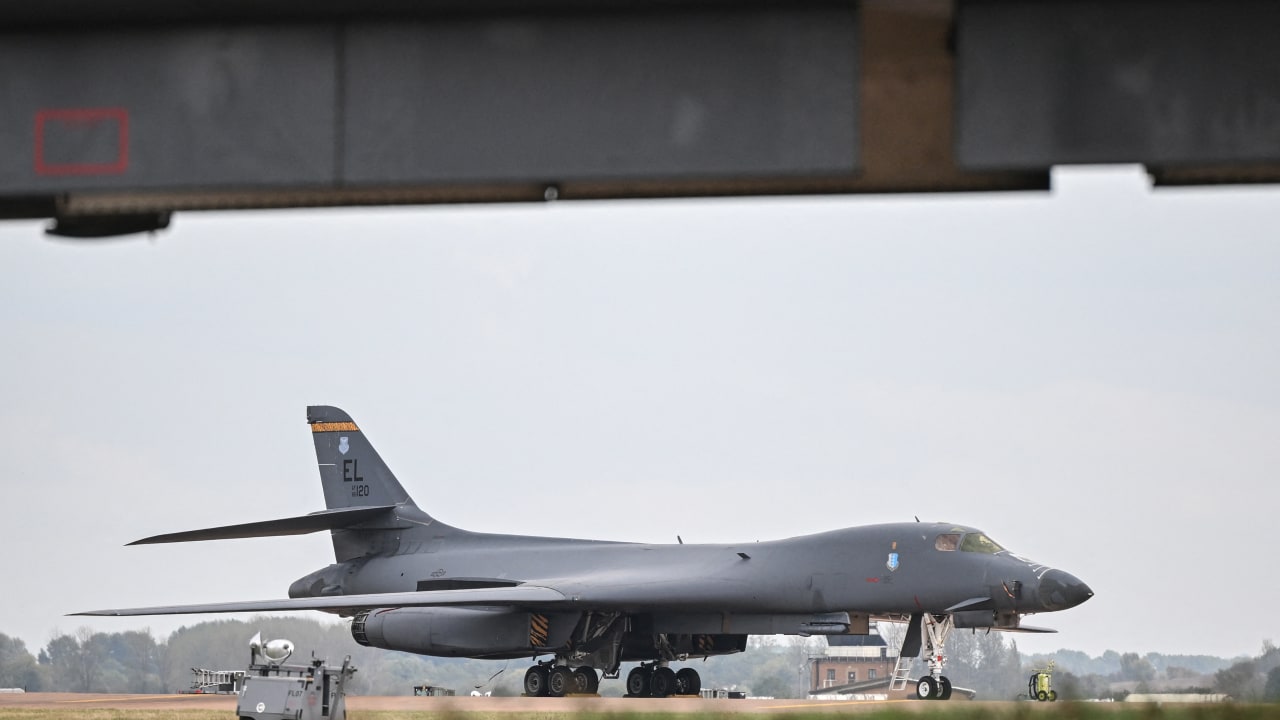
A US Air Force B-1 Lancer bomber is pictured on the tarmac at RAF Fairford base in Fairford, south-west England on September 27, 2026, as UK counter-terrorism police investigate an incident near the base in the village of Whelford. / (photo credit: JUSTIN TALLIS / AFP via Getty Images)

British counter-terrorism police are investigating whether Iran was behind a suspected bomb plot targeting RAF Fairford, a British air base used by US forces in operations against Iran, The Telegraph reported on Sunday.

Five men were arrested under the Explosives Act and on suspicion of preparing a terrorist act after three suspicious vans were reported traveling toward the Gloucestershire air base shortly after midnight, according to the report.

Gloucestershire Constabulary said police received a call at around 12:45 a.m. on Sunday concerning three suspicious vehicles traveling toward RAF Fairford. Armed officers responded and subsequently arrested five men in the nearby Whelford area.

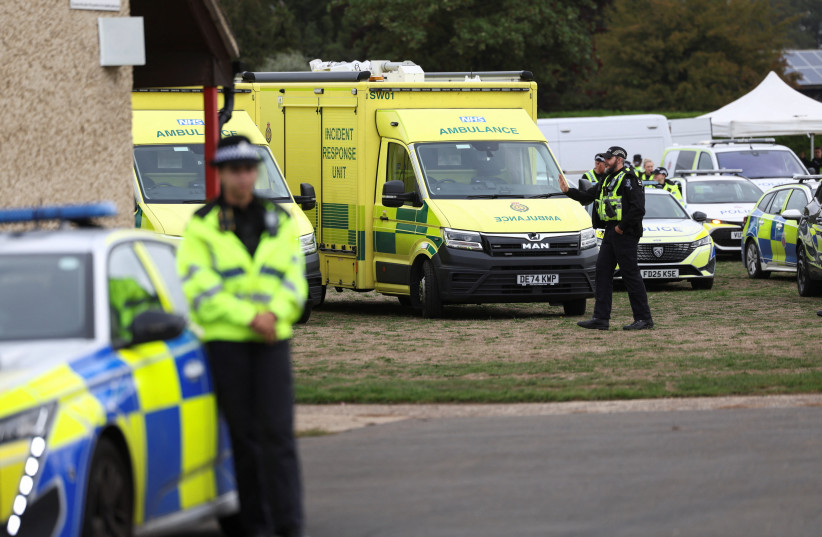
Counter Terrorism Policing took over the investigation, while an Army explosive ordnance disposal team examined the vehicles. Police established a 400-meter cordon and advised around 85 households to evacuate as a precaution.

The Telegraph reported that investigators were examining several possible motives, including an Iranian operation, Russian sabotage, or an Islamist plot. An Iran-linked motive was considered the most likely possibility, according to the report. British police have not publicly identified a suspected perpetrator or confirmed an Iranian connection.

Emergency vehicles are parked at Fairford Youth Football club, near RAF Fairford, which hosts US Air Force personnel, in Fairford, Gloucestershire, Britain, September 27, 2026. Police declared a major incident at UK’s Fairford air base after several men were arrested on suspicion of offences under t (credit: REUTERS/TOBY SHEPHEARD)

A British farmer who dialed emergency services told the BBC later on Monday that she saw a “large group of hooded and masked men” near RAF Fairford.

Trump: Suspects in bomb plot were ‘looking to do big damage’

US President Donald Trump said the arrested men were “looking to do big damage.”

“It was fantastic. Working with Britain, it was an amazing job,” Trump told reporters in the US.

“We had them under investigation. They were looking to do big damage to our fort, and working with the British worked out great.

“We had them under view for a long time, and we got them. Thank you.”

Footage from the scene showed several of the men shirtless and handcuffed near the air base, while aerial images showed a bomb-disposal robot moving between three white vans. Two of the vehicles had their rear doors open, with large black objects visible nearby.

One of the vans bomb-disposal specialists examined bore the words “FUEL 2YOU” in red lettering and displayed a phone number. The Telegraph said the number appeared to be one digit short and was not recognized when its reporters called it. The newspaper said it could find neither the company name in online searches nor a matching listing at Companies House.

Fuel2U, a mobile fuel delivery company based in Beaconsfield, told the newspaper that the vehicle had no connection to its business.

Base security recently increased amid arrival of US bomber aircraft

Security at RAF Fairford had already been increased in recent months. Protective screens were installed along parts of the perimeter after the base attracted attention from plane spotters as US bombers arrived.

The suspected plot prompted further security measures around RAF Fairford, while armed personnel and armored vehicles were also seen at other British bases used by the US military.

The investigation remains ongoing, and police have not publicly established a motive or said whether the incident was directed by Iran or any other foreign actor.

Later on Monday, UK Defense Minister Wes Streeting said it would be “very unwise” for him to speculate about the motives of the individuals arrested, when asked if Iran was involved in the incident.


Reuters contributed to this report.


Zawartość publikowanych artykułów i materiałów nie reprezentuje poglądów ani opinii Reunion’68,
ani też webmastera Blogu Reunion’68, chyba ze jest to wyraźnie zaznaczone.
Twoje uwagi, linki, własne artykuły lub wiadomości prześlij na adres:
webmaster@reunion68.com