Archive | 2026/09/23

Przemysł praw człowieka ma swoje ulubione ofiary

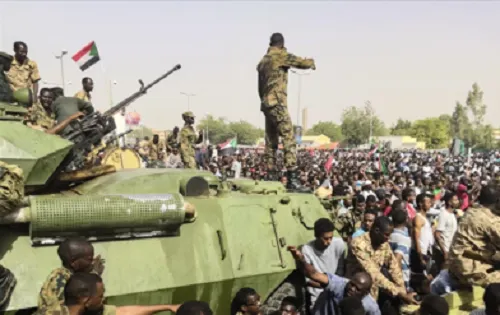
Sudan, źródło zdjęcia Wiki media.


Przemysł praw człowieka ma swoje ulubione ofiary

Pierre Rehov


Ulubionym rodzajem ofiary przemysłu praw człowieka jest ofiara politycznie użyteczna: taka, której cierpienie można przypisać przeciwnikowi – wyznaczonemu „złoczyńcy” – najlepiej takiemu, którego zachodni aktywiści już wiedzą, jak nienawidzić, naciskać i przeciwko któremu się organizować.

Dlatego palestyńskie ofiary, gdy można przedstawić Izrael jako domniemanego sprawcę krzywd, uruchamiają niezwykłą machinę oburzenia, podczas gdy sudańskie ofiary ludobójstwa, afgańskie kobiety pod rządami Talibów, irańscy demonstranci mordowani przez własny reżim czy prześladowani chrześcijanie w Nigerii – w dużej mierze nie.

Hierarchii nie wyznacza skala cierpienia; wyznacza ją polityczna użyteczność ofiary, a jeszcze bardziej – tożsamość „złoczyńcy”, który rzekomo dopuszcza się tych krzywd.

Są ofiary, które zyskują własne zaplecze społeczne. Ich twarze pojawiają się na transparentach, ich nazwiska są odczytywane podczas demonstracji, aktorzy na czerwonych dywanach noszą ich symbole, studenci okupują w ich imieniu budynki uniwersyteckie, a instytucje nagle odkrywają pilny moralny obowiązek wydawania oświadczeń. Są też ofiary, które umierają głównie samotnie, krótko odnotowane przez organizacje opłacane za to, by je liczyć, i niezauważone przez nikogo więcej.

Sudan należy do tej drugiej grupy. Wojna, która wybuchła w kwietniu 2023 roku między sudańską armią a Siłami Szybkiego Wsparcia, doprowadziła do tego, co agencja ONZ ds. uchodźców nazywa największym kryzysem przesiedleń i kryzysem humanitarnym na świecie, z blisko trzynastoma milionami ludzi wypędzonych ze swoich domów. Już rok temu, pod koniec października 2025 roku, po osiemnastomiesięcznym oblężeniu, RSF wkroczyły do El Fasher i zabijały jego mieszkańców z taką systematycznością, że badacze z Yale zidentyfikowali ślady krwi na zdjęciach satelitarnych. Misja ONZ ds. ustalania faktów uznała w lutym 2026 roku, że masowe egzekucje, zbiorowe gwałty i celowo wywoływany głód w społecznościach Zaghawa i Fur nosiły znamiona ludobójstwa, a zamiar ludobójczy był jedynym rozsądnym wnioskiem, na jaki pozwalały dowody.

Ustalenia te przyniosły – komunikaty! Żaden amerykański kampus nie został pokryty prosudańskimi obozowiskami protestacyjnymi. Żadna międzynarodowa kampania nie domaga się, by korporacje udowadniały swoją niewinność w odniesieniu do Chartumu czy transferów broni do sudańskich watażków, ocenianych przez amerykański wywiad. Darfur nosi dziś słowo „ludobójstwo”, zastosowane przez samą Organizację Narodów Zjednoczonych – i nie ma własnego zaplecza.

Porównanie z Gazą nie jest konkursem między trupami. Palestyńscy cywile zasługują na współczucie należne cywilom wszędzie. Tym, co zasługuje na analizę, jest propagandowa fabryka wojny. W ciągu kilku miesięcy od 7 października 2023 roku obozowiska protestacyjne, okupacje budynków i masowe aresztowania rozprzestrzeniły się od Columbii po Yale, New York University i dalej, przez Europę. We wrześniu 2025 roku zobowiązanie do odmowy wszelkiej współpracy z izraelskimi festiwalami, kinami i firmami produkcyjnymi zebrało ponad 5000 podpisów ludzi filmu, w tym jednych z największych nazwisk branży.

Afganistan jeszcze mocniej wystawia tę tezę na próbę. Pięć lat po powrocie Talibów do Kabulu UNESCO poinformowało niedawno, że 2,4 miliona afgańskich dziewcząt zostało pozbawionych dostępu do edukacji ponadpodstawowej. Afganistan pozostaje jedynym krajem, który formalnie zabrania dziewczętom i kobietom nauki powyżej poziomu szkoły podstawowej. Ponad siedemdziesiąt dekretów ograniczyło ich życie, a od września 2025 roku afgańskim kobietom zabroniono nawet wstępu do placówek Organizacji Narodów Zjednoczonych albo mogą opuszczać dom jedynie raz czy dwa razy w miesiącu.

Zachodni feminizm przez dziesięciolecia utrzymywał, że prawa kobiet są uniwersalne. Afganistan jest najczystszym dostępnym testem tej tezy: cała żeńska część społeczeństwa została dekretem usunięta z edukacji, zatrudnienia i życia publicznego, a nawet z samej obecności w przestrzeni publicznej – stan, który eksperci ONZ określają jako apartheid płciowy. Przed Harvardem nie stoi żadne stałe obozowisko domagające się wolności dla afgańskich kobiet, żaden ruch na rzecz wycofania inwestycji nie stał się modny, żaden symbol nie trafił na czerwony dywan. UN Women ostrzega, że represje są normalizowane, i informuje o pięćdziesięcioprocentowej luce finansowej w tegorocznych działaniach w Afganistanie. Kobiety pozostały tam, gdzie były; publiczność odeszła.

Iran rozwiał wszelkie pozostałe wątpliwości. Protesty, które rozpoczęły się pod koniec grudnia 2025 roku, rozprzestrzeniły się na wszystkie prowincje, a 8–9 stycznia 2026 roku siły bezpieczeństwa odpowiedziały karabinami i granatami, prowadząc ogień z dachów i z tyłów ciężarówek. Amnesty International opisuje masowe bezprawne zabójstwa jako dokonywane na bezprecedensową skalę. Tylko w tym roku zmasakrowano ponad 52 000 mężczyzn, kobiet i dzieci, czemu towarzyszyły całkowite wyłączenie internetu i dziesiątki tysięcy aresztowań. Specjalny sprawozdawca ONZ ds. Iranu szacował liczbę ofiar na ponad pięć tysięcy.

Reżim i tak już bił rekordy. Amnesty International udokumentowała 2159 egzekucji w Iranie w 2025 roku – ponad dwukrotnie więcej niż rok wcześniej i mniej więcej cztery piąte wszystkich egzekucji odnotowanych na świecie, co było najwyższym wynikiem krajowym od 1981 roku. Wśród skazanych znalazło się co najmniej 48 kobiet, najwięcej od dwóch dekad. Reakcją Zachodu na styczniową masakrę w Iranie były demonstracje diaspory i potępienie podpisane przez 800 ludzi filmu. Branża, która zebrała pięć tysięcy podpisów przeciw izraelskim festiwalom filmowym, zebrała osiemset przeciw rządowi, który właśnie w ciągu czterdziestu ośmiu godzin zastrzelił tysiące własnych obywateli – i jej własna prasa branżowa sama to zauważyła.

Irańscy studenci wrócili w lutym na kampusy w Teheranie, Meszhedzie i Isfahanie, trzymając fotografie kolegów i koleżanek zabitych w styczniu; wielu studentów nadal jest za to aresztowanych i wydalanych. Amerykańscy studenci, którzy okupowali budynki w sprawie Gazy, ryzykowali najwyżej postępowaniem dyscyplinarnym, a irańskim demonstrantom nie zaoferowali niczego.

W listopadzie 2025 roku uzbrojeni napastnicy uprowadzili 303 dzieci i 12 nauczycieli z katolickiej szkoły St. Mary’s w Papiri w Nigerii – było to porwanie większe niż uprowadzenie 276 dziewcząt z Chibok w Nigerii w 2014 roku, kiedy hashtag obiegł świat, a amerykańska pierwsza dama dała się nawet sfotografować z transparentem w dłoniach! Dzieci z Papiri wróciły do domów miesiąc później po negocjacjach dotyczących okupu, nie wywoławszy po drodze żadnej kampanii. Amerykańska Komisja ds. Międzynarodowej Wolności Religijnej, która od siedemnastu lat domaga się, by Waszyngton traktował Nigerię jako kraj szczególnej troski, doliczyła się blisko 53 000 cywilów zabitych tam od 2009 roku w ukierunkowanych aktach przemocy. Prześladowani chrześcijanie stanowią problem marketingowy: chrześcijaństwo funkcjonuje w zachodniej wyobraźni jako historyczna potęga, a nie jako współczesna grupa narażona na prześladowania.

Rasizm i skala także nie wyjaśniają tego schematu. Palestyńczycy nie są ani ludźmi Zachodu, ani nie mieszkają blisko kampusów, na których ich sprawa stała się dominująca, a demonstranci nie domagają się niczego, co naprawdę pomogłoby Palestyńczykom, na przykład wolności od tortur i arbitralnych aresztowań ze strony skorumpowanych przywódców, wolności słowa i prasy oraz edukacji, która przygotowałaby ich do produktywnego i dostatniego życia.

Zachodnie oburzenie wykształciło własną ekonomię polityczną: skuteczna sprawa potrzebuje czegoś więcej niż ofiar. Ulubiona ofiara to nie ta, która cierpi najbardziej, lecz ta, której cierpienie można wykorzystać politycznie. Skuteczna sprawa potrzebuje użytecznego „złoczyńcy”, najlepiej takiego, który już funkcjonuje w obowiązującej narracji. Izrael nadaje się do tej roli niemal idealnie. Jest sprzymierzony z Zachodem, demokratyczny, wspierany przez Waszyngton i stale dostępny dla dziennikarzy. Jego politycy odpowiadają na pytania, jego sądy wydają orzeczenia przeciw własnemu rządowi, a na wszystko to można wywierać nacisk.

Nic podobnego nie da się zorganizować przeciw Talibanowi. Columbia nie ma talibańskiego komitetu inwestycyjnego, przed którym można pikietować, Korpus Strażników Rewolucji Islamskiej nie prowadzi programu wymiany kulturalnej, który można by bojkotować, a sudańscy watażkowie są całkowicie obojętni na senat studencki w Kalifornii. Dyktatury są kiepskimi celami dla performatywnego aktywizmu, ponieważ dyktatorzy są odporni na przedstawienia. Atakowanie Izraela podłącza aktywistę do aparatu grup kampusowych, organizacji pozarządowych i sieci budowanych przez dziesięciolecia, z gotowymi hasłami i ustandaryzowanym słownictwem. Dziewiętnastolatek nie musi nic wiedzieć o Bliskim Wschodzie, żeby wziąć udział. Potrzebuje transparentu. Sudan wymaga odrobienia pracy domowej, a wiedza o reżimie w Iranie wymagałaby od niego przyznania, że przeciwnicy amerykańskiej potęgi często są gorsi od tego, czemu się przeciwstawiają.

Przemysł, który bez przerwy mówi o „intersekcjonalności”, zbudował hierarchię współczucia, w której ofiary i to, co im zrobiono, liczą się mniej niż to, kto tego dokonał i jaką polityczną opowieść można wokół tego zbudować. Nic z tego nie umniejsza cierpieniu Palestyńczyków, które dotknęło realnych ludzi. Pozostawia jednak wszystkich innych za drzwiami.

Konsekwencja jest jedyną rzeczą, której ta machina nie potrafi dostarczyć. Ruch, który naprawdę miałby na myśli to, co mówi o uniwersalnych prawach, mobilizowałby się w obronie jeńców, których właściciele niewolników, tacy jak Katar, dysponują ogromnymi aktywami. Protestowałby przeciw handlowi dziećmi i pobieraniu organów oraz bronił afgańskich kobiet i irańskich dysydentów. Palestyńscy cywile byliby bronieni jako cywile, a nie traktowani jako materiał dowodowy. Taki ruch byłby trudny do zmanipulowania, niemożliwy do monetyzacji i bezużyteczny dla każdej frakcji, która chciałaby go wykorzystać – co wystarczająco dobrze wyjaśnia, dlaczego nikt go nie zbudował.


Link do oryginału: https://www.gatestoneinstitute.org/22846/human-rights-industry

Gatestrone Institute, 13 września 2026


Pierre Rehov, absolwent prawa na Paris-Assas, jest francuskim reporterem, powieściopisarzem i dokumentalistą. Jest autorem sześciu powieści, w tym „Beyond Red Lines”, „The Third Testament” i „Red Eden”, tłumaczonych z języka francuskiego. Jego najnowszy esej poświęcony następstwom masakry z 7 października, „7 octobre – La riposte”, stał się bestsellerem we Francji. Jako filmowiec wyprodukował i wyreżyserował 17 filmów dokumentalnych, z których wiele realizowano z dużym ryzykiem w strefach wojennych na Bliskim Wschodzie, koncentrując się na terroryzmie, stronniczości mediów i prześladowaniu chrześcijan. Jego najnowszy dokument, „Pogrom(s)”, ukazuje kontekst dawnej nienawiści do Żydów w obrębie cywilizacji muzułmańskiej jako główną siłę stojącą za masakrą z 7 października.


Zawartość publikowanych artykułów i materiałów nie reprezentuje poglądów ani opinii Reunion’68,
ani też webmastera Blogu Reunion’68, chyba ze jest to wyraźnie zaznaczone.
Twoje uwagi, linki, własne artykuły lub wiadomości prześlij na adres:
webmaster@reunion68.com


Rabbi Attacked, Israeli Tourist Berated in Italy as Antisemitism Continues to Surge


Rabbi Attacked, Israeli Tourist Berated in Italy as Antisemitism Continues to Surge

Ailin Vilches Arguello


A Pro-Palestinian demonstrator waves a Palestinian flag during a national protest for Gaza in Rome, Italy, Oct. 4, 2025. Photo: REUTERS/Claudia Greco

Amid a worsening climate of anti-Israel hostility and rising antisemitism across Italy, Jews and Israelis are increasingly finding themselves targeted in public spaces, with a wave of recent incidents underscoring growing concerns over their safety and freedom.

In one of the latest episodes in northern Italy, a group of Israeli tourists on vacation were subjected to an alleged barrage of antisemitic abuse before being expelled from a restaurant in Limone sul Garda, a town on the western shore of Lake Garda.

According to one member of the group, who recounted their experience in a Facebook group for travelers in northern Italy, the friends were dining at a local spot, Jacky’s restaurant, when a waiter launched into an antisemitic tirade after they asked for the Wi-Fi password.

“You are animals. You are child murderers,” one of the waiters reportedly told the group.

The restaurant owners not only failed to intervene but also called police on the Israeli group as the confrontation unfolded. However, the Israelis said the officers instead apologized to them, acknowledging what had happened before the group left the restaurant.

In another disturbing incident, a 60-year-old rabbi was brutally attacked in Milan on Wednesday while waiting for a bus in the city’s western neighborhood of Bande Nere by three men who have since been arrested.

According to local media reports, the three men — reportedly of Arab origin — physically attacked the rabbi after recognizing him at a bus stop, kicking and punching him before ripping off his hat, stomping on him, and spitting on him.

Shortly after the assault, the rabbi filed a complaint with police but did not seek medical attention.

Local police later arrested the three alleged attackers at a nearby subway station, bringing the immediate confrontation to an end as authorities continued investigating the assault.

Walker Meghnagi, president of the Jewish Community of Milan, denounced the attack, warning that its brutality reflected the growing concerns facing the city’s Jewish community.

“Something so violent has never happened before. I’m ashamed of what’s happening,” Meghnagi told the local newspaper Adnkronos. “Now it’s easy to say those three men were arrested by the police, but how long can they stay out there to make sure these things don’t happen again?”

Like most countries across Europe and the broader Western world, Italy has seen a rise in antisemitic incidents over the last three years, in the wake of the Hamas-led invasion of and massacre across southern Israel on Oct. 7, 2023.

Across the country, Jewish individuals have been facing a surge in hostility and targeted attacks, including vandalism of murals and businesses, as well as physical assaults. Community leaders have warned that such incidents are becoming more frequent amid tensions related to the war in Gaza.

Earlier this year, the Milan-based CDEC Foundation (Center of Contemporary Jewish Documentation) confirmed that antisemitic incidents in Italy almost reached four digits for the first time last year, spiking to record levels.

Of 1,492 reports submitted through official monitoring channels, the CDEC formally classified a record high 963 cases as antisemitic.

By comparison, there were 877 recorded incidents in 2024, preceded by 453 such outrages in 2023 and just 241 in 2022.

In a recent string of incidents, an unknown group of individuals distributed hundreds of pamphlets across Italy urging citizens to report the presence, tourism, and businesses of “Israelis and Zionists” in the country, prompting sharp condemnation from Italian political figures and Jewish community leaders.

According to local reports, the pamphlets appealed to members of the public to cooperate with the initiative, which calls for action against what its organizers describe as “Zionist neo-colonization” in Italy.

Most of last year’s incidents, 643, occurred online on digital platforms, while 320 involved physical acts such as graffiti, vandalism, and desecration of synagogues in addition to discrimination, threats, and assaults.

In May, for example, a restaurant in Naples ejected an Israeli family, telling them, “Zionists are not welcome here.” Months earlier, demonstrators at a January protest in Bologna vandalized a synagogue, painting “Justice for a free Gaza.”

Physical attacks have also occurred.

In November, a pro-Palestinian individual brutally attacked a group of Orthodox Jewish American tourists at Milan’s Central Station, allegedly chasing one of the victims, punching and kicking him, and striking him in the head with a blunt metal ring.

During the attack, the assailant reportedly shouted antisemitic insults and threats, including “dirty Jews” and “you kill children in Palestine, and I’ll kill you.”

In September, a Jewish couple was walking through Venice in traditional Orthodox clothing when three assailants confronted them, shouted “Free Palestine,” and attacked them, slapping both.

This incident followed another attack on a Jewish couple in Venice the month before, when a man and his pregnant wife were harassed near the city center by three unknown individuals.

The attackers approached the couple, shouting antisemitic insults and calling the husband a “dirty Jew,” while physically assaulting them by throwing water and spitting on them.

One of the assailants later set his dog on the couple in an attempt to intimidate them before the group stole their phones.


Zawartość publikowanych artykułów i materiałów nie reprezentuje poglądów ani opinii Reunion’68,
ani też webmastera Blogu Reunion’68, chyba ze jest to wyraźnie zaznaczone.
Twoje uwagi, linki, własne artykuły lub wiadomości prześlij na adres:
webmaster@reunion68.com


UN Adviser Notorious for Anti-Israel Bias Calls for Ending Military Aid to Ukraine


UN Adviser Notorious for Anti-Israel Bias Calls for Ending Military Aid to Ukraine

Corey Walker


Francesa Albanese, the United Nations special rapporteur on the situation of human rights in the Palestinian territories, speaks at a conference, “A Cartography of Genocide: Israel’s Conduct in Gaza,” at the Roma Tre University, in Rome, Italy, Oct. 6, 2025. Photo: REUTERS/Remo Casilli

Francesca Albanese, the United Nations’ special rapporteur on the human rights situation in the Palestinian territories, is facing backlash for calling for an end to military assistance to Ukraine and arguing the war there serves a broader geopolitical interest in keeping Europe weak.

The controversy follows remarks Albanese made on September 19 at the Festival di Open in Parma, Italy. Asked about the war in Ukraine, Albanese said that she agreed with those who believe weapons shipments to Kyiv should stop and that the conflict should instead be brought back into the political arena for talks. She acknowledged that Russia invaded Ukraine and described the invasion as illegitimate, while arguing that there were broader political and geopolitical factors behind the conflict.

Albanese, who has a mandate from the UN to advise the international body on the Israeli-Palestinian conflict, acknowledged last week that she did not have a solution for ending the war in Ukraine and said that she was not an expert on the conflict.

“I agree with those who believe that we need to stop sending weapons to Ukraine and bring the discussion back into the political sphere,” Albanese said.

“I don’t have the solution for ending the war,” she continued, “but I am convinced that the situation in Ukraine is being exploited to justify that horrible argument that we are already at war and that it is a hybrid war.”

The UN adviser also suggested that there was a political calculation within NATO, which she said is led by the United States, that could benefit from a weaker Europe and prolong the conflict at the cost of Ukrainian lives.

“There are a number of reasons that led to that war, but a war remains a war and it is illegitimate,” she added.

Albanese lamenting what she described as a perceived double standard in the international community’s approach to Ukraine and the Israel-Hamas war in Gaza. She argued that international institutions were much more vigorous in applying international law to the conflict in Ukraine and suggested that the lack of sanctions applied to Israel indicated unfairness in application of such laws.

“What I said from the beginning to the diplomats I met, especially those from the Western world, was that when Russia invaded Ukraine, you applied international law exactly according to the books and manuals on how to respond to aggression, from A to Z,” she said. “How is it possible that, in the face of a case that, from the standpoint of aggression, presents similarities — I’m not saying the situations are the same, but there is still an act of aggression — such as Israel’s against Palestine, the same thing is not done?”

Critics were quick to castigate Albanese for her comments.

“Russian propaganda immediately seized on Albanese’s words and her UN title to validate Moscow’s narrative,” UN Watch executive director Hillel Neuer said in a statement. “Having acknowledged Russia’s aggression, she insinuated that there were ‘reasons’ for it and then sought to deprive its victim of the means to defend itself.”

Russia Direct, which is a Russian propaganda social media account, quickly reposted Albanese’s remarks while spotlighting her position  as a UN rapporteur.

Journalist Oz Katerji slammed Albanese as someone who “apologizes” for anti-regimes in Syria, Russia, and Iran, as well as for the Lebanese terrorist group Hezbollah. “So, of course she thinks Ukraine should be cut off from arms,” he added on social media.

Palestinian activist Ihab Hassan quoted Albanese as saying in 2024 that “the situation in Ukraine falls out of my mandate, and I cannot comment on that,” before noting that “she is publicly arguing that weapons shipments to Ukraine should stop.” He then asked, “So, what changed?”

Albanese has repeatedly presented the Gaza conflict through the framework of international law and alleged double standards. Her critics argue that her public interventions frequently move beyond the narrowly defined role of a UN special rapporteur and into political advocacy.

The UN’s special rapporteur system is designed to provide independent expertise on specific human-rights situations. Albanese’s mandate concerns human rights in the Palestinian territories, rather than European security or the Russia-Ukraine war.

Albanese, an Italian lawyer and academic, has held her current position since 2022. It authorizes her to monitor and report on alleged “human rights violations” that Israel supposedly commits against Palestinians in the West Bank and Gaza.

Critics of Albanese have long accused her of exhibiting an excessive anti-Israel bias, calling into question her fairness and neutrality.

Albanese has an extensive history of using her role at the UN to denigrate Israel and seemingly rationalize the Palestinian terrorist group Hamas’s attacks on the Jewish state.

In the months following Hamas’s Oct. 7, 2023, atrocities across southern Israel, Albanese accused Israel of committing “genocide” against the Palestinian people in revenge for the attacks and circulated a widely derided and heavily disputed report alleging that 186,000 people had been killed in the Gaza war as a result of Israeli actions.

The United Nations launched a probe into Albanese in 2024 for allegedly accepting a trip to Australia funded by pro-Hamas organizations. She also celebrated the anti-Israel protesters rampaging across US college campuses, saying they represented a “revolution” and gave her “hope.”

While speaking at a Washington, DC bookstore in October, Albanese also accused Israel of weaponizing the fallout of the Oct. 7 slaughters to justify the continued “colonization” of Gaza.

Citing her alleged antisemitism and intense anti-Israel posture, the Trump administration imposed sanctions on Albanese in 2025.

“Today I am imposing sanctions on UN Human Rights Council Special Rapporteur Francesca Albanese for her illegitimate and shameful efforts to prompt [International Criminal Court] action against US and Israeli officials, companies, and executives,” US Secretary of State Marco Rubio announced on X in July 2025.

“Albanese’s campaign of political and economic warfare against the United States and Israel will no longer be tolerated,” he added. “We will always stand by our partners in their right to self-defense.”


Zawartość publikowanych artykułów i materiałów nie reprezentuje poglądów ani opinii Reunion’68,
ani też webmastera Blogu Reunion’68, chyba ze jest to wyraźnie zaznaczone.
Twoje uwagi, linki, własne artykuły lub wiadomości prześlij na adres:
webmaster@reunion68.com